

Candid photography captures people during an unposed moment: a shared joke, a thoughtful pause, or an interaction that happens without instructions from the photographer. The subject can know you are taking pictures. What matters is that you are observing the moment rather than directing it.
To take better candid shots, get your exposure and focus ready, watch what people are doing, and wait for an expression or gesture that tells a story. You do not need to hide or surprise someone with a camera. These ten tips cover timing, camera settings, light, lenses, and ways to help people feel comfortable.
What Does Candid Photography Mean?
A candid photo records an action or expression that the photographer has not posed. For example, photographing friends laughing at a table is candid; asking them to look away and pretend to laugh is directed.
The opposite is a posed photo, where you arrange the subject's position, expression, or activity. Neither approach is automatically better. They serve different purposes, and a portrait session can include both.
Candid photography works in weddings, street photography, and family photography. A quiet moment can be as effective as a burst of action. Look for the hands, expressions, and surroundings that help the viewer understand what is happening.
Work openly and respect a person's request not to be photographed. Check the local rules and the venue's photography policy, and agree on access and boundaries with the organiser when covering an event. Do not assume that being able to take a photograph also gives you permission to publish it or use it in advertising.
Candid Photography Tips
10. Prepare Your Settings and Shoot Short Bursts
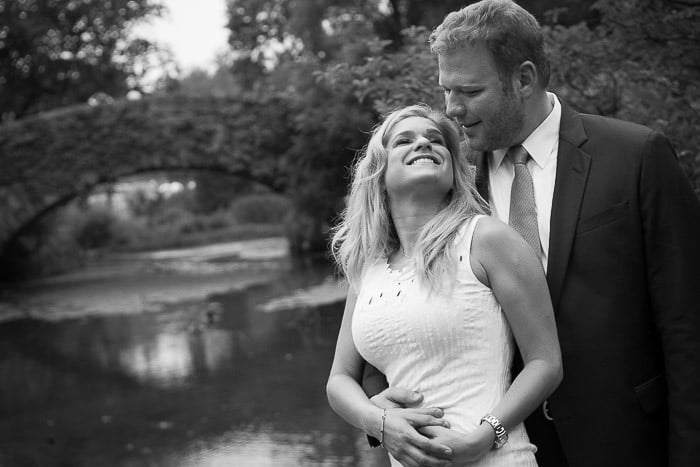
An expression can change between frames. A short sequence in burst mode gives you a choice of gestures and expressions without asking anyone to repeat the moment. I often end up with something fun and spontaneous.
Set the shutter speed before the action starts. These are starting points to check on your camera, not guarantees of sharpness:
- Quiet conversation or a brief pause: try 1/250 s.
- Walking or lively gestures: try 1/500 s.
- Running children or dancing: try 1/1000 s, then adjust for the movement and light.
Use a faster speed if a person is blurred. Close subjects moving across the frame and longer lenses may need more speed. If the light is too low, you must trade off shutter speed, aperture, and ISO, or wait for a slower moment.
Choose continuous autofocus for someone moving towards or away from you. Canon calls this Servo AF; other cameras may label it AF-C. If your camera has face or eye detection, check that it selects the person you intend to photograph. In a crowded scene, a smaller AF area can help you choose the subject. For a stationary person, single autofocus can be useful.
Start a short burst as the gesture develops, then release the shutter and keep watching. Burst mode does not fix missed focus or motion blur, and a long sequence can fill the camera's buffer and interrupt shooting.

9. Try a Lower Camera Angle
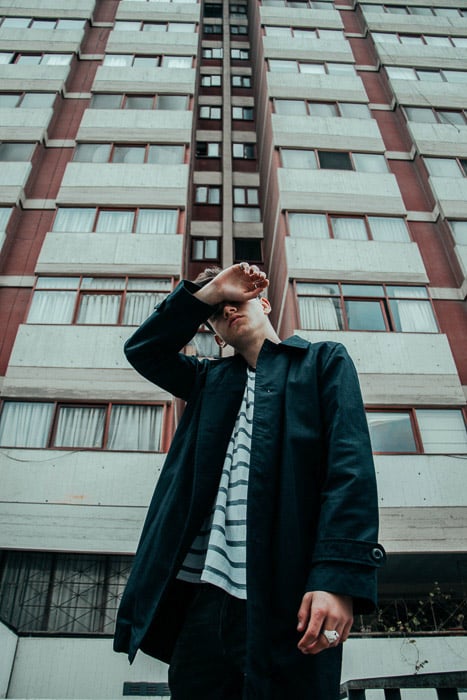
Shooting from waist or hip height changes the viewpoint. It can bring you closer to a child's eye level or show more of the surrounding buildings. Use it for composition, rather than to bypass someone's objection to being photographed.
A tilting screen or Live View can help you check the frame without raising the camera to your eye. Look for cut-off heads, a sloping horizon, and bright distractions before taking the shot. A wider lens includes more of the scene, but watch the edges for people or objects you did not intend to include.
Practise the angle with willing subjects. If you cannot see the screen, expect less precise framing and focus; do not rely on an unseen camera position for an important moment.
8. Move for Better Composition
Instead of asking a person to move, change your own position for a better composition. A step sideways may separate two faces or remove a distracting sign from behind someone's head.
Check the background and the light as well as the expression. Leave space in the direction a person is looking or moving. Include a second person's reaction when it helps explain the scene.
Move during a quiet interval, then settle into a position and wait. Constantly circling people can distract them, and an entire set from the same seat can feel repetitive. Aim for a mix of wider scenes and closer interactions without blocking guests or the activity.
7. Work With the Available Light
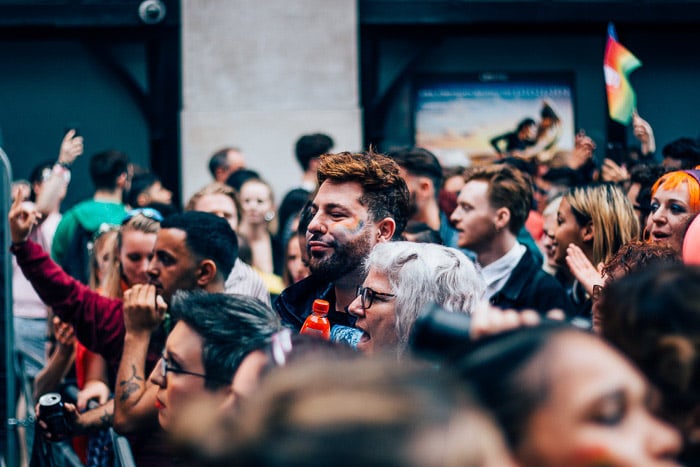
Using a flash can draw attention and change the look of a scene. If the available light is enough, you can work without it. Find a position near a window or another steady light source, then check the exposure before the moment develops.
There is no single indoor ISO. Set the shutter speed needed for movement and the aperture needed for focus, then raise ISO as needed. Higher ISO can make noise more visible, but keeping ISO low at the cost of a shutter speed that blurs your subject is often the worse compromise.
You can widen the aperture to admit more light. An aperture such as f/2 or f/2.8 may suit one person, but shallow depth of field can leave other faces soft. For people at different distances, try f/4 or f/5.6 and check whether enough of the group is in focus. These are starting points; distance, focal length, and the group's arrangement also matter.
Manual exposure with Auto ISO, where supported, lets you choose both shutter speed and aperture as the light changes. Aperture priority is another option, but watch the shutter speed: in dim light it may become too slow. A minimum-shutter setting for Auto ISO is camera-dependent and may be overridden when its ISO limit is reached.
If the scene is still too dark, move to better light or wait for less movement. Where flash is allowed and appropriate, agree on its use instead of sacrificing every shot to blur.
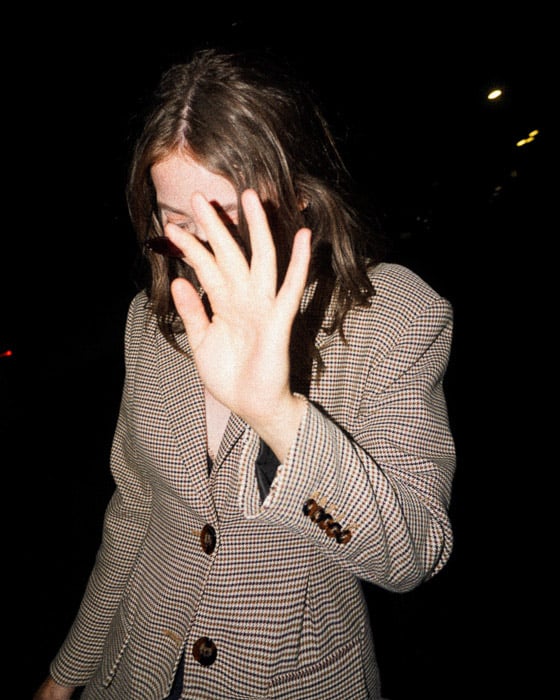
6. Ask Questions and Watch the In-Between Moments
A camera can make someone self-conscious. During a portrait session, a simple conversation gives them something to think about beyond where to put their hands.
Ask about a hobby, a recent trip, or something you have in common. Listen to the answer and watch how their expression changes. Give them time to respond rather than firing off questions while looking at your camera.
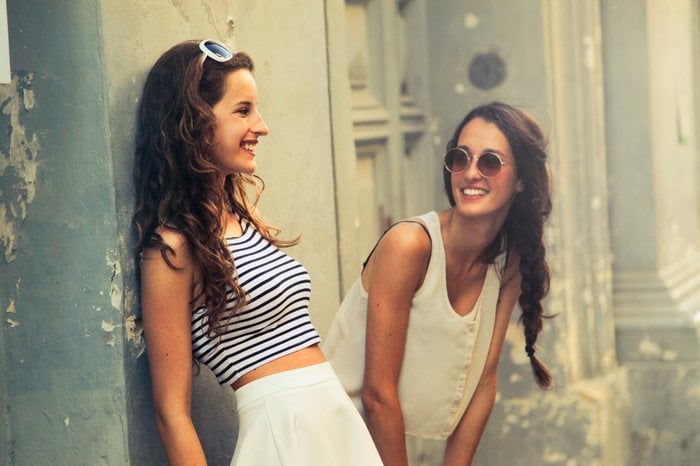
Wait for the moment in-between the moments. Often, your subjects wait until they don't think you are photographing. Then they allow their true personality to shine. I call this the moment in-between moments.
Explain that you will also photograph the relaxed intervals between posed shots. Keep watching as someone turns to a friend, finishes a story, or settles after laughing. You can lower the camera while talking and raise it when a natural expression appears; you do not need to pretend the session has stopped.
Before a quiet event, check the camera's actual shutter settings. Live View alone does not guarantee silent shooting. An electronic shutter can reduce shutter noise on supported cameras, but it can distort fast movement or produce banding under flickering light. Lens focusing or aperture movement may still be audible. Take a test picture in the venue before choosing that mode.
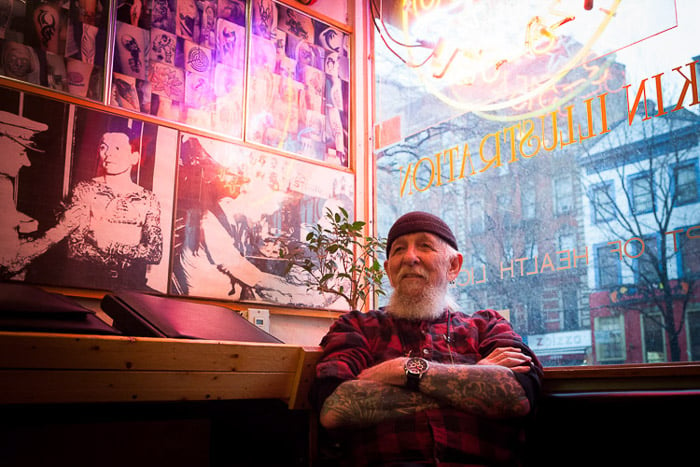
5. Get Close Without Taking Over
During events or weddings, a long zoom lens lets you work from farther away. But there are also times when being part of the room gives you a better view of an interaction.
I prefer the opposite approach: getting into the middle of the action and being part of the fun. When your presence is welcome, this can help people feel more comfortable around you.
Choose a position where your presence is welcome. Avoid interrupting conversations, crowding someone, or stepping into a private moment. If a person becomes uncomfortable, give them space.
Watch the whole group rather than staring at one person through the viewfinder. A speaker's gesture and a listener's reaction can make a stronger picture together than either face alone.
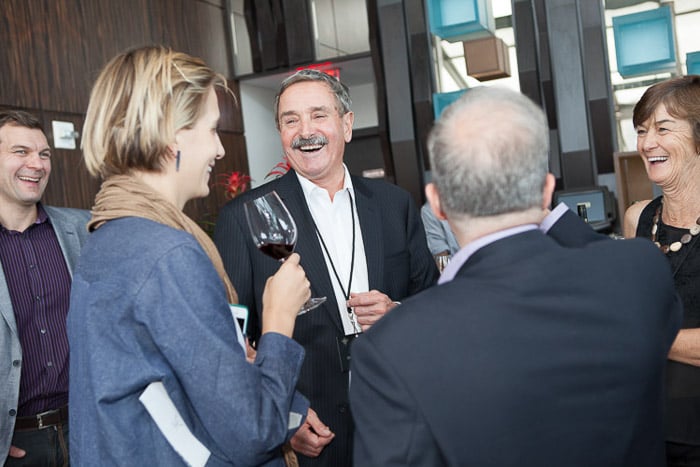
For conferences or quiet events, follow the organiser's instructions and move during breaks in the activity. Keep the camera ready, but give people time to settle.
Look for the start of a story, a shared glance, or the pause before laughter. Anticipating an interaction is more useful than taking an endless sequence after the expression has passed.
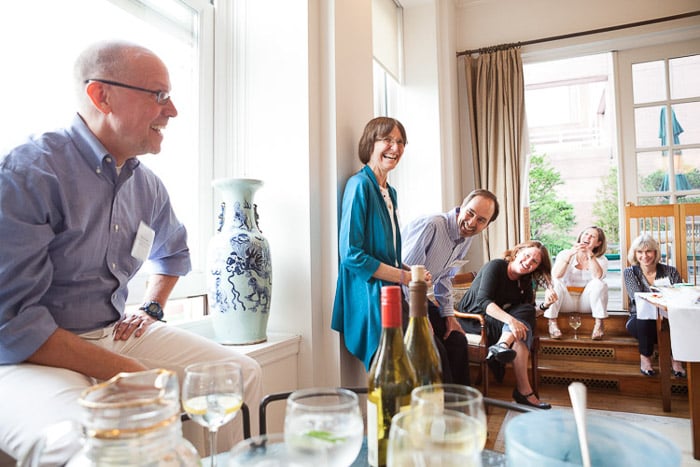
4. Choose a Lens for the Scene and Your Distance
There is no universal best lens for candid photography. A small prime can be easier to carry, while a zoom lets you change framing when you cannot move. I prefer to use light primes as well.
On a full-frame camera, a 28mm prime or 35mm lens is a useful starting point for people in their surroundings. A 50mm lens gives a tighter view from the same position. On an APS-C camera, those same focal lengths give a narrower field of view, so choose a shorter focal length if you want similar framing.
A wide maximum aperture can help in low light, but you do not have to shoot wide open. Select the aperture for the depth of field you need.
If you cannot get closer, telephoto lenses let you frame a person from farther away. Leave room for movement and keep the shutter speed high enough for both subject motion and camera shake.
A telephoto lens gives a narrower view, but camera position determines perspective. When you stand farther back to keep the person the same size in the frame, the background appears larger relative to them. Simply changing focal length from one position does not change those relative distances.
Choose the lens that lets you include the story while respecting the person's space. You can work with the lens you already have; being ready matters more than changing lenses at the wrong moment.
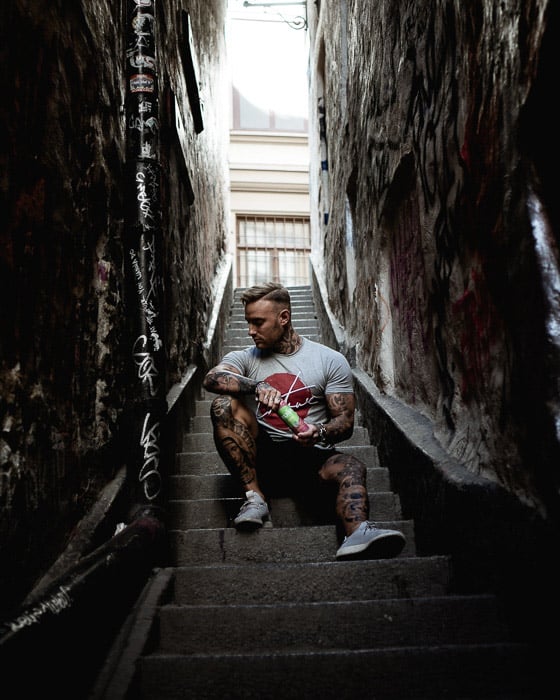
3. Separate Natural Poses From Candid Moments
If you ask someone to pose, the resulting photo is directed, even if it looks relaxed. That can still be a useful portrait, but it is different from an unposed moment.
Invite the person to choose a comfortable stance rather than holding an awkward position. Then watch for what happens between the poses: a glance towards a friend, a hand adjusting a sleeve, or a laugh after a comment.
A directed walk or conversation can produce natural expressions, but describe the setup honestly. Do not present an arranged scene as an untouched documentary moment. If someone grows uncomfortable, pause and change the approach rather than pushing for a reaction.

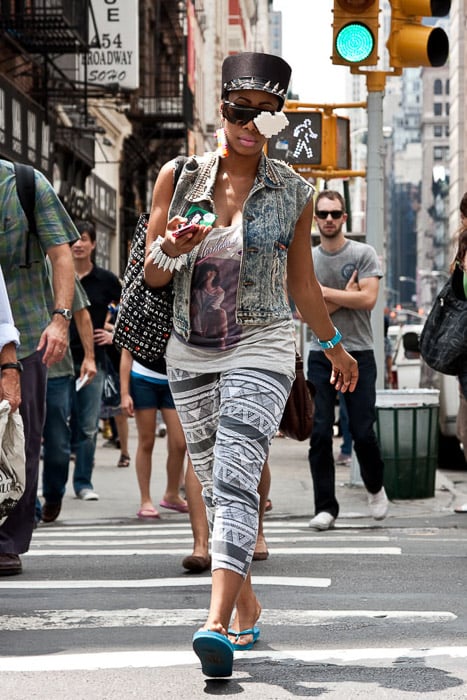
Photo by Thegiansepillo from Pexels
2. Explain That People Do Not Need to Perform
At an event, people may assume that every camera pointed their way means they should smile. Explain that you are also photographing them talking and enjoying the occasion, so they do not need to stop for each picture.
For wedding photography, agree with the couple on important people and moments ahead of time. Then observe those interactions without asking people to repeat them.
During a portrait session, let the subject know when you want a posed picture and when you are simply watching. Giving clear expectations helps you work patiently without asking someone to manufacture a supposedly spontaneous expression.
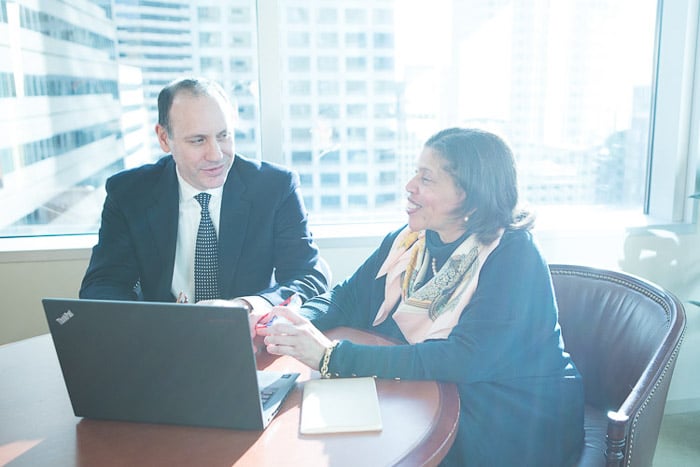
1. Find a Story and Wait for It to Develop
For candid street photography, choose a place where people, light, and background can work together. Find your frame before the interaction happens, and stay clear of paths and entrances.
You might notice a patch of light beside a market stall or a place where people stop to greet each other. Check exposure and focus, then wait for a gesture that connects a person to the setting. The aim is to show what is happening, not simply to photograph a stranger without being noticed.
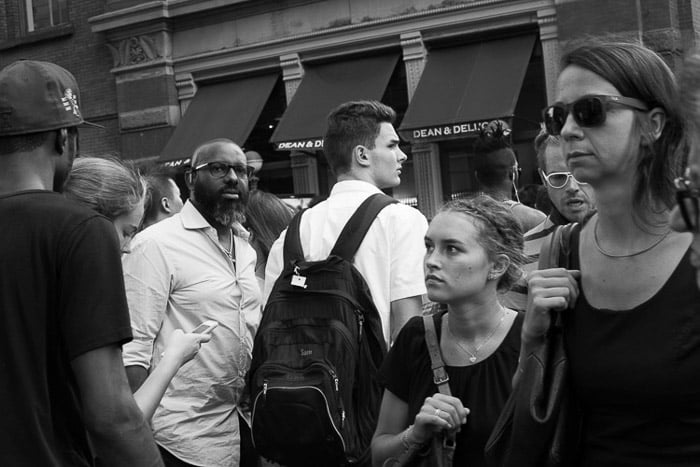
Keep watching beyond the first frame. One person may turn, another may react, or a hand may enter the scene and make the story clearer. Use a brief sequence when it helps, then lower the camera and reassess.
Include enough context to explain the moment, but look for distractions at the edges. For an event or family gathering, combine wider scenes, interactions, and small details. Together they can tell a more complete story than a set of isolated faces.
A useful practice exercise is to photograph one familiar activity with willing participants. Afterwards, choose three pictures that show the setting, an interaction, and a detail. Ask whether someone who was not there can understand the scene from those pictures.
Conclusion
Better candid photography comes from preparation and attention. Choose settings that suit the movement and light, find a useful position, and watch for expressions and gestures that explain the scene.
Keep people comfortable, respect their boundaries, and give the moment time to happen. Review your pictures for focus, background distractions, and the story they tell, then use what you learn the next time you shoot.
If you want to learn more about portrait photography, don’t miss out on our ebook – Profit from Portraits!