The best camera lens starts with two choices: the mount on your camera and the pictures you want to make. A small wide-angle lens is useful for travel. A longer lens gives you room to frame a portrait without standing close to someone’s face. A zoom lets you change the framing from one position.
This guide covers 19 mirrorless lenses for Canon RF, Nikon Z, Sony E, Fujifilm X, Micro Four Thirds, and L-mount cameras. It includes primes and zooms for portraits, travel, landscapes, and close-ups. These are different tools for different systems, so start with your camera mount before comparing them.
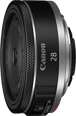
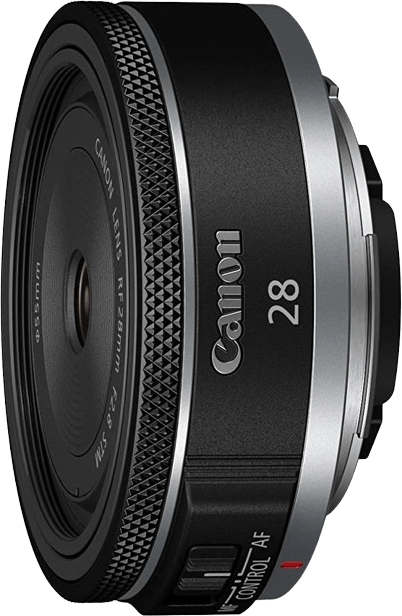
Our top pick for a compact everyday Canon RF lens is the Canon RF 28mm f/2.8 STM. It gives you a lovely wide-angle view with sharp optical quality. It’s also super compact with a pancake design. And it’s an affordable lens for Canon’s mirrorless cameras.
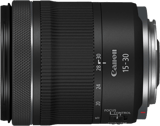
What Is the Best Camera Lens?
Choose a lens for the gap in your current kit. If your kit zoom already covers everyday pictures, a fast portrait prime or a longer telephoto may give you more useful options than another standard zoom.
The sections below group the lenses by camera system. The numbers belong to each section; a Nikon lens cannot replace a Canon lens on the same body. The list includes several generations, so match the full model name when you compare a product.
Three questions narrow the field fast. Which mount does your camera use? Lens mounts must match, and sensor coverage matters too. Prime or zoom? A prime has one focal length; a zoom changes the framing without a lens change. What do you photograph most? Wide angles suit landscapes and interiors. Longer focal lengths help you frame tight portraits from farther away. Maximum aperture, stabilization, and weight then decide which lens suits your work.
Which of These Lenses Is Best for Portraits?
For a tight portrait on a full frame camera, start with the dedicated portrait lenses already on this list: the Canon RF 135mm f/1.8L IS USM for Canon RF and the Nikon Z 85mm f/1.2 S for Nikon Z. The 135mm lens needs more working room, so it suits outdoor portraits and larger spaces. The 85mm lens gives a shorter working distance, but f/1.2 needs careful eye focus and may leave too little depth of field for both eyes.
For Sony E, the FE 50mm f/1.4 GM is useful for full-length portraits and pictures that include the surroundings. On a Sony APS-C body, its view is equivalent to 75mm on full frame. For portraits at events, the Nikon Z 70-180mm f/2.8 and Sony FE 70-200mm f/4 Macro G OSS II let you tighten the framing without moving closer.
Fujifilm X users can use the long end of the XF 16-55mm f/2.8 R LM WR II. On Micro Four Thirds, the 12-40mm and 12-35mm zooms cover everyday portraits as well as travel. These are general-purpose zooms, so their appeal is versatility rather than the widest possible aperture.
The 28mm Canon pancake remains a compact everyday choice. It is better suited to a person in their surroundings than a face photographed from very close range. Perspective comes from camera position: step back for a tight face portrait, then use a longer focal length to keep the framing.
If the lenses in this article don’t hit the spot, we’ve included more articles about lenses throughout the post. With some simple navigation, you’ll have no trouble finding the best camera lenses that are exactly right for you.
Use the links below to jump to the specific section you want:
- The Best Canon Lenses
- The Best Nikon Lenses
- The Best Sony Lenses
- The Best Fujifilm, Olympus, and Panasonic Lenses
The Best Canon Lenses
These five Canon RF lenses cover full frame EOS R cameras and also fit APS-C EOS R bodies. On Canon APS-C, multiply the focal length by 1.6 to compare the field of view with full frame. They do not mount directly on Canon EF or EF-M cameras.
You can see an overview of the best Canon lenses in the table below. And we look at each lens in more detail below. If you need something more specialized than a general-purpose lens, these Canon guides go deeper.
- The Best Wide-Angle Lenses for Canon
- The Best Macro Lenses for Canon
- The Best Canon Lenses for Sports Photography
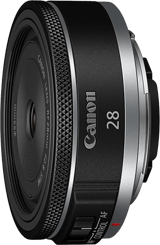
1. Canon RF 28mm f/2.8 STM
| Brand |
Brand
Canon
|
| Lens Mount |
Lens Mount
Canon RF
|
| Maximum Aperture |
Maximum Aperture
f/2.8
|
| Focal Range |
Focal Range
28mm
|
| Image Stabilization |
Image Stabilization
No
|
| Weight |
Weight
0.26 lb / 120 g
|
| Key Features |
Key Features
Pancake design, Canon Super Spectra Coating, aspherical element
|
| Best For |
Best For
Canon users looking for a ultra-compact, wide-angle prime lens
|
The Canon RF 28mm f/2.8 STM is exactly what many Canon users have been calling for. It’s a super-compact pancake lens for Canon mirrorless cameras. It’s sharp, small, and affordable.
The 28mm focal length gives you a lovely wide field of view. You can use it for landscape photography. It’s great for architectural exteriors. And the small size helps street photographers keep a low profile. The convenient size also means travel photographers can throw it in their camera backpack without adding too much extra weight.
The optical quality is excellent for a pancake lens. Despite the small barrel, the lens has three aspherical elements. These reduce lens distortion. And Canon’s Super Spectra Coating (SSC) minimizes flare and ghosting.
The STM autofocus system uses a gear-type stepping motor. This is a compact lens for stills and video, rather than a large telephoto built for distant action. It has no optical stabilization, so slow handheld exposures need support or a camera with in-body stabilization.
The Canon RF 28mm f/2.8 STM is a small prime for street and travel photography. On a Canon APS-C body it frames like a 44.8mm lens on full frame, so it becomes a standard everyday view rather than a wide-angle option.
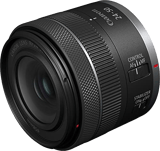
2. Canon RF 24-50mm f/4.5-6.3 IS STM
| Brand |
Brand
Canon
|
| Lens Mount |
Lens Mount
Canon RF
|
| Maximum Aperture |
Maximum Aperture
f/4.5-6.3
|
| Focal Range |
Focal Range
24-50mm
|
| Image Stabilization |
Image Stabilization
Yes
|
| Weight |
Weight
0.46 lb / 210 g
|
| Key Features |
Key Features
Image stabilization, Canon Super Spectra Coating, two aspherical elements
|
| Best For |
Best For
Canon mirrorless users who want an affordable standard-angle zoom lens
|
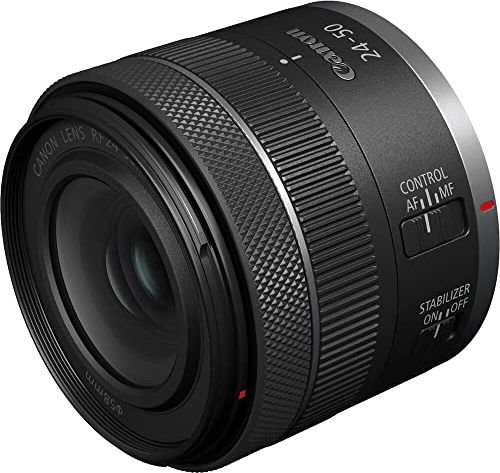
The Canon RF 24-50mm f/4.5-6.3 IS STM has a surprisingly low price. It’s a versatile zoom lens compatible with APS-C and full frame mirrorless cameras. Its short zoom range keeps the kit compact, but the modest maximum aperture makes it more suited to daylight than dim indoor events.
The 24-50mm focal length gives you excellent shot variety. Street photographers will love it. For a lens for real estate photography, room size matters: 24mm on full frame can cover larger spaces, but a small interior may need a wider lens. You can also use it for landscapes and portraits. All that makes it a fantastic travel lens too.
However, if you use this lens with an APS-C camera, you have to account for the crop factor. The focal length stays 24-50mm, but the field of view is equivalent to 38.4-80mm on full frame with a crop sensor camera like the Canon EOS R100. It’s still a versatile lens. And it allows you to capture portraits with a tighter composition.
You don’t get the best exposure control with a max aperture of f/4.5 at the short end and f/6.3 at the long end. This does limit you in low light.
But to compensate, Canon has equipped the lens with optical image stabilization. This reduces signs of camera shake. And that allows you to shoot at slower shutter speeds with reduced risk of blur. This improves your exposure options in low-light situations.
The optical performance is strong for a zoom lens in this price category. With two aspherical elements, there’s very little chromatic aberration. And the Super Spectra Coating reduces lens flare.
The price alone makes this one to consider. But the Canon RF 24-50mm f/4.5-6.3 IS STM also has image stabilization, excellent optical quality, and a versatile zoom range. Choose it for a small everyday kit; choose a faster lens when subject movement in low light is the priority.
3. Canon RF 15-30mm f/4.5-6.3 IS STM
| Brand |
Brand
Canon
|
| Lens Mount |
Lens Mount
Canon RF
|
| Maximum Aperture |
Maximum Aperture
f/4.5-6.3
|
| Focal Range |
Focal Range
15-30mm
|
| Image Stabilization |
Image Stabilization
Yes
|
| Weight |
Weight
0.86 lb / 391 g
|
| Key Features |
Key Features
Image stabilization, UD element, aspherical element, Canon Super Spectra Coating
|
| Best For |
Best For
Canon users who want an affordable wide-angle zoom lens
|
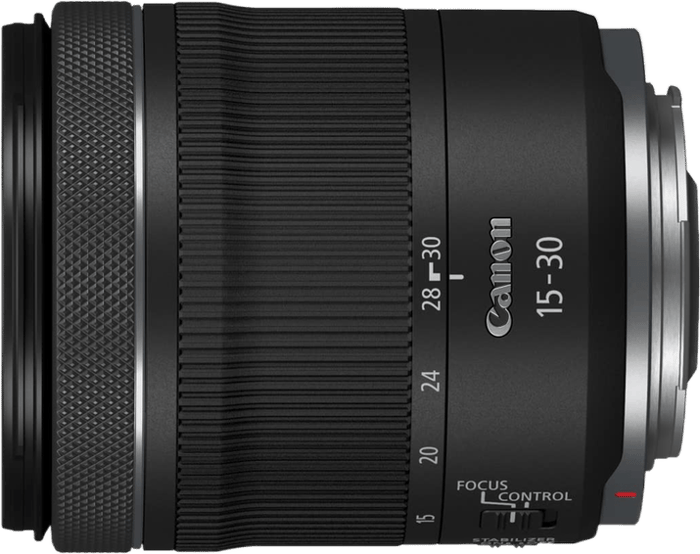
The Canon RF 15-30mm f/4.5-6.3 IS STM is another fabulous addition to the RF collection. It’s a wide-angle zoom with advanced features. And it also has an affordable price tag.
With a wide-angle focal range, you can use this lens for landscapes and cityscapes. And it’s a great option for real estate interiors or architecture photography.
The lens is compatible with full frame and APS-C cameras. But on Canon APS-C, its field of view is equivalent to 24-48mm on full frame; the lens remains a 15-30mm zoom. That still gives you wide angles and good shot variety.
It delivers excellent optical quality throughout the zoom range. You might experience some distortion at the very edges. But the Ultra-low Dispersion (UD) and aspherical elements keep aberration to a minimum. Canon’s special coating on the outer glass also reduces flare and ghosting.
The max aperture of f/4.5-6.3 is disappointing. It limits your control over depth of field. But image stabilization helps you in low-light situations. You can use slower shutter speeds for still subjects with less risk of camera-shake blur. Stabilization does not freeze a moving person.
The Canon RF 15-30mm f/4.5-6.3 IS STM is a classy lens at a reasonable price. It isn’t a pro-level lens. But you’re still getting a great deal with this wide-angle zoom.
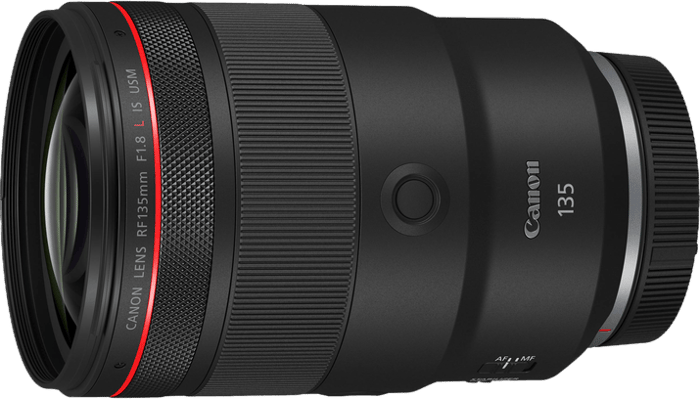
4. Canon RF 135mm f/1.8L IS USM
| Brand |
Brand
Canon
|
| Lens Mount |
Lens Mount
Canon RF
|
| Maximum Aperture |
Maximum Aperture
f/1.8
|
| Focal Range |
Focal Range
135mm
|
| Image Stabilization |
Image Stabilization
Yes
|
| Weight |
Weight
2.1 lb / 935 g
|
| Key Features |
Key Features
UD elements, Air Sphere Coating (ASC), image stabilization
|
| Best For |
Best For
Canon users looking for a pro-level lens for portrait and product photography
|
The Canon RF 135mm f/1.8L IS USM is an example of Canon’s supreme optical engineering. It isn’t a budget lens. But it’s a sensational piece of kit that’ll take your portrait photography to new heights.
You get excellent telephoto magnification with a 135mm focal length. It’s perfect for close-composition portrait photography. And it’s an ideal lens for product and food photography.
Sharpness and clarity are exactly what this lens delivers. The barrel houses 17 pristine glass elements. And these include three Ultra-low Dispersion (UD) lenses that keep chromatic aberration to a minimum. The outer glass also has an Air Sphere Coating (ASC) to minimize glare and flare.
With a fast f/1.8 maximum aperture, you get excellent exposure control. It also allows you to achieve a shallow depth of field in your portraits. You’ll have a smooth and rich background bokeh effect.
The lens also has optical image stabilization. This can reduce camera shake during a still portrait, but a moving subject still needs a suitable shutter speed. At f/1.8, focus on the nearer eye and stop down when you need more of the face sharp.
A Nano USM motor drives autofocus. The lens has separate manual-focus and control rings, which let you adjust focus and an assigned exposure setting from the barrel.
Size and cost are the two things to weigh up. At approximately 2.1 lb (935 g), the Canon RF 135mm f/1.8L IS USM is a substantial lens to carry for a long portrait session. The 135mm focal length also needs room between you and the subject. Choose it when tight portraits from a distance suit your work; for a small room, a shorter focal length is easier to use.
5. Canon RF 28-70mm f/2.8 IS STM
| Brand |
Brand
Canon
|
| Lens Mount |
Lens Mount
Canon RF
|
| Maximum Aperture |
Maximum Aperture
f/2.8
|
| Focal Range |
Focal Range
28-70mm
|
| Image Stabilization |
Image Stabilization
Yes
|
| Weight |
Weight
1.09 lb / 495 g
|
| Key Features |
Key Features
5.5-stop image stabilization, collapsible barrel, two UD elements, Super Spectra Coating
|
| Best For |
Best For
Canon mirrorless users who want a constant f/2.8 standard zoom without L-series bulk
|
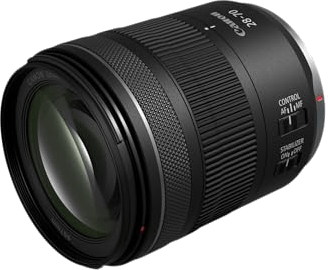
The Canon RF 28-70mm f/2.8 IS STM holds f/2.8 across its whole zoom range. Its constant maximum aperture is useful when you change framing in low light. This one collapses to 3.6 inches (92.2 mm) when you’re not shooting and weighs 1.09 lb (495 g). It is a compact standard zoom for an everyday or event kit.
The 28-70mm range is the workhorse span. It is wide enough for interiors and group shots, and long enough for head-and-shoulders portraits. Because the aperture stays at f/2.8 from one end to the other, your exposure doesn’t shift as you zoom. That matters when you’re working a wedding or an event and can’t stop to re-meter.
The optics are 15 elements in 12 groups, including two Ultra-low Dispersion elements and two glass-molded aspherical elements. Canon’s Super Spectra Coating handles flare. Canon rates the image stabilization at 5.5 stops at 70mm with the EOS R8, and coordinated stabilization at 7.5 stops in the center with the EOS R1. Those test ratings are not a guarantee for every camera or exposure. You also get a 9-blade aperture, a 67mm filter thread, and weather sealing.
The 28mm wide end is the main limit for a small interior or a large group. It does not give the wider framing of a 24mm standard zoom, so allow enough room to step back. The collapsing barrel is the other trade-off. You have to extend it before use, so include that step when you prepare for an event.
The Best Nikon Lenses
These Nikon lenses use the Z mount. The Z DX 24mm f/1.7 is designed for APS-C/DX coverage; the other four cover full frame/FX as well. On a Nikon DX body, use a 1.5x factor to compare field of view with full frame.
You can see these five Nikon Z lenses in the table below. Then we’ll look at each lens in more detail in the section below. If you want more info on a specific type of Nikon lens, follow these links.
1. Nikon Z 26mm f/2.8
| Brand |
Brand
Nikon
|
| Lens Mount |
Lens Mount
Nikon Z
|
| Maximum Aperture |
Maximum Aperture
f/2.8
|
| Focal Range |
Focal Range
26mm
|
| Image Stabilization |
Image Stabilization
No
|
| Weight |
Weight
0.28 lb / 127 g
|
| Key Features |
Key Features
All-element focusing, dust- and splash-resistant, custom control ring
|
| Best For |
Best For
Nikon users looking for a pancake prime lens
|
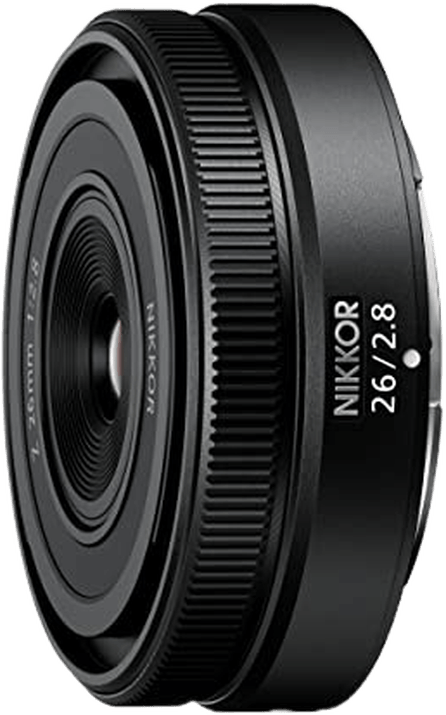
The Nikon Z 26mm f/2.8 is the perfect pancake lens for Nikon users. It’s compatible with full frame and APS-C Z cameras. It’s ultra-compact and lightweight. And it has been conditioned for outdoor shooting.
You get the advertised 26mm focal length when you use it with a full frame camera. But when you use it with an APS-C model, like the Nikon Z50, the field of view is equivalent to 39mm on full frame. The focal length itself remains 26mm. The field of view isn’t as wide, thanks to the crop factor. But it’s still a great lens for street photography.
All photographers will appreciate the fast f/2.8 aperture. It gives you excellent freedom with your exposure settings, allowing you to shoot in low-light situations.
The AF system is fast, smooth, and reliable. And the all-element focusing helps maintain the lens’ compact size. There’s very little expansion when you change focus. It’s a compact lens that stays compact.
You can use the lens’ control ring for manual focusing. But as a custom control ring, you can also set it to control other settings. It can adjust the aperture, ISO, or exposure compensation. It gives you an even more personal experience.
The Nikon Z 26mm f/2.8 is a robust lens for outdoor photography. It’s dust- and splash-resistant, so it can cope with a few drops of rain. That gives you all the more reason to invest in this sharp prime lens.
2. Nikon Z DX 24mm f/1.7
| Brand |
Brand
Nikon
|
| Lens Mount |
Lens Mount
Nikon Z
|
| Maximum Aperture |
Maximum Aperture
f/1.7
|
| Focal Range |
Focal Range
24mm
|
| Image Stabilization |
Image Stabilization
No
|
| Weight |
Weight
0.30 lb/ 135 g
|
| Key Features |
Key Features
Dust- and splash-resistant, video-optimized AF
|
| Best For |
Best For
Nikon users with an APS-C mirrorless camera
|
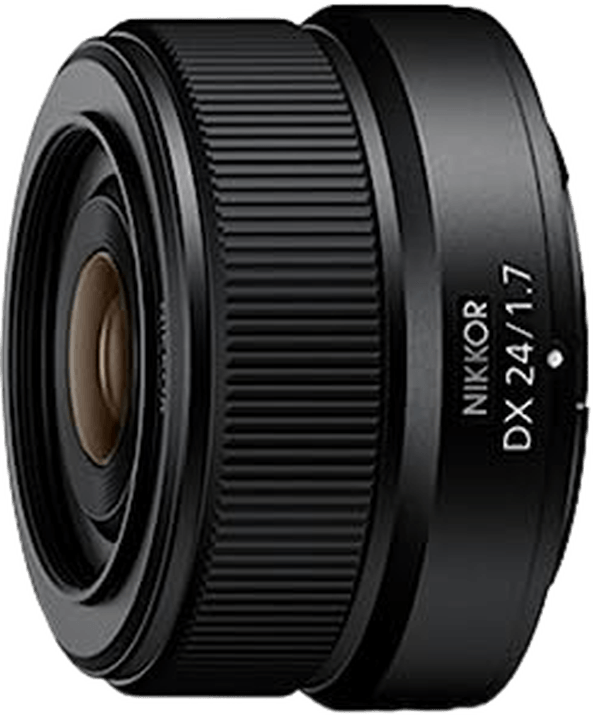
The Nikon Z DX 24mm f/1.7 is a superb wide-angle lens for APS-C mirrorless cameras. It isn’t exactly a pancake lens. But it is very compact and lightweight. It won’t add much ballast to your travel camera. And it’s an affordable lens to add to your collection.
On Nikon DX, 24mm gives a field of view equivalent to 36mm on full frame. That is useful for street scenes, people in their surroundings, and everyday travel pictures. It is not an ultra-wide lens for a cramped interior.
It’s also a great lens for video makers and vloggers. You can record yourself without having to position the camera miles away. And the autofocus is optimized for video recording. Nikon describes reduced focus breathing and quiet stepping-motor autofocus. This supports smooth focus changes, rather than guaranteeing zero sound or zero change in framing.
You have full creative control over your exposure settings. The fast f/1.7 aperture allows you to get a super-shallow depth of field. This gives you a lovely bokeh effect in your portraits or food photography shots. It also helps you shoot in low-light situations.
The Nikon Z DX 24mm f/1.7 makes a great travel option. Its dust- and drip-resistant design is useful outdoors, but it does not make the lens waterproof. It’s an affordable, versatile lens for photographers and vloggers.
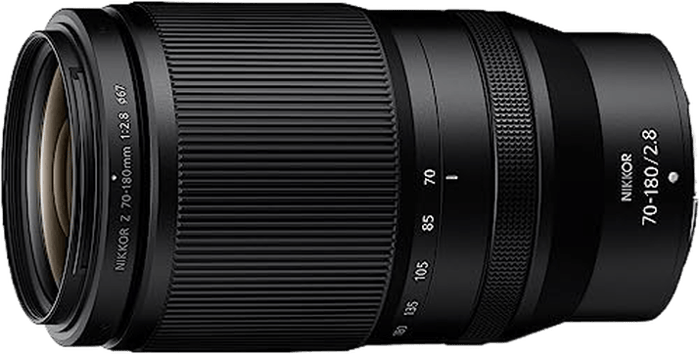
3. Nikon Z 70-180mm f/2.8
| Brand |
Brand
Nikon
|
| Lens Mount |
Lens Mount
Nikon Z
|
| Maximum Aperture |
Maximum Aperture
f/2.8
|
| Focal Range |
Focal Range
70-180mm
|
| Image Stabilization |
Image Stabilization
No
|
| Weight |
Weight
1.7 lb / 794 g
|
| Key Features |
Key Features
Optimized for video, 10.68 inch / 27 cm minimum focusing distance
|
| Best For |
Best For
Nikon users who want a versatile telephoto zoom lens
|
You’ll struggle to find a more versatile telephoto zoom than the Nikon Z 70-180mm f/2.8. It’s lightweight for a lens of this size. The optical quality is excellent. And you can use it to shoot a wide range of styles and genres.
The short end of the zoom range is great for portrait photography. The zoom gives you excellent flexibility when shooting. And the focal length allows you to get tight compositions for intimate portraits.
The other end of the zoom range gives you excellent magnification. You can get closer to your subject without moving your feet. It doesn’t have the reach of professional wildlife photography lenses. But it’s great for backyard bird photography. You can also use it for local sporting events.
When using the 70mm focal length, you get a 10.68 inch (27 cm) minimum focal distance. At 180mm, the minimum focus distance is 85 cm. Maximum reproduction reaches 0.48x, close to half life size rather than 1:1 macro. That makes it useful for flowers and larger details. That also means it’s a great choice for product photography.
Nikon designs the lens for reduced focus breathing and uses a quiet stepping motor. A microphone close to the camera can still record handling or operating noise. That’s why filmmakers can also use this lens with great success.
The fast aperture is another top selling point for this lens. The f/2.8 max aperture is fast enough for low-light shooting. And you can get a fabulous bokeh. But one major positive is the aperture stays constant throughout the entire zoom range. You don’t lose any aperture stops when you zoom in.
The Nikon Z 70-180mm f/2.8 has a very reasonable price tag for the lens you get. It combines a constant f/2.8 aperture with a portrait-to-telephoto range. It has no optical VR, so camera stabilization or support matters when you slow the shutter for a still subject.
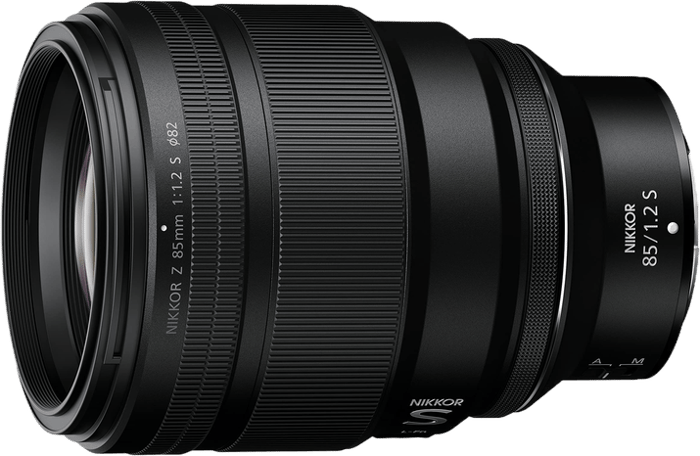
4. Nikon Z 85mm f/1.2 S
| Brand |
Brand
Nikon
|
| Lens Mount |
Lens Mount
Nikon Z
|
| Maximum Aperture |
Maximum Aperture
f/1.2
|
| Focal Range |
Focal Range
85mm
|
| Image Stabilization |
Image Stabilization
No
|
| Weight |
Weight
2.5 lb / 1.1 kg
|
| Key Features |
Key Features
11-blade aperture, nano crystal coating, ED and aspherical elements
|
| Best For |
Best For
Professional portrait photography
|
The Nikon Z 85mm f/1.2 S is an incredible lens for professional portrait photography. It isn’t a budget lens by any standards. But it’s one of Nikon’s best lenses in their Z or F ranges.
The 85mm focal length is perfect for portrait photography. It allows you to create intimate compositions without invading your subject’s personal space. And it’s still wide enough to photograph couples and groups. That’s ideal for wedding photography.
The optical quality is sensational. Its design prioritizes resolution and smooth transitions into out-of-focus areas. Each element has been crafted with precision and care. And the barrel includes Extra-low Dispersion (ED) and aspherical elements. These help reduce chromatic aberration.
Picture quality is improved further by the anti-reflective Nano Crystal Coating (NCC) on the glass. It reduces reflections that cause ghosting and lens flare. This allows you to shoot in harsher lighting conditions with better results.
We can’t ignore the superfast f/1.2 aperture. The low-light performance is excellent. But it also allows you to get a paper-thin depth of field. And the 11-blade round aperture gives you the smoothest bokeh you can imagine.
The L-Fn function button on the barrel gives you more hands-on control. You can assign custom controls to it, like subject tracking or AF lock. You get more focusing control without having to change the settings in the camera.
The Nikon Z 85mm f/1.2 S is a dedicated portrait option when a very wide aperture is central to your work. At about 1,160 g, it is a large lens, and there is no optical VR. You need a healthy budget for this one. But it’s a worthy investment for professional portrait photographers.
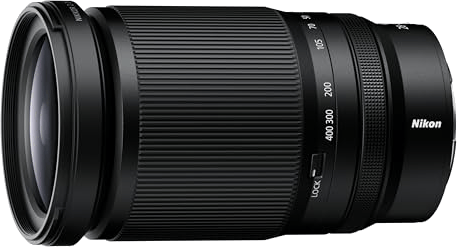
5. Nikon Z 28-400mm f/4-8 VR
| Brand |
Brand
Nikon
|
| Lens Mount |
Lens Mount
Nikon Z
|
| Maximum Aperture |
Maximum Aperture
f/4-8
|
| Focal Range |
Focal Range
28-400mm
|
| Image Stabilization |
Image Stabilization
Yes
|
| Weight |
Weight
1.6 lb / 725 g
|
| Key Features |
Key Features
14.3x zoom range, 5-stop Vibration Reduction, 0.35x maximum magnification, four ED elements
|
| Best For |
Best For
Nikon Z users who want one travel lens instead of three
|
The Nikon Z 28-400mm f/4-8 VR covers a 14.3x zoom range in a single 1.6 lb (725 g) lens. It takes you from a wide street scene to a 400mm telephoto without a lens change.
That makes it a travel lens first and foremost. You can shoot an architectural exterior at 28mm and a heron across the water at 400mm without opening your bag. On a DX body like the Z50 II, the crop factor turns it into a 42-600mm equivalent, which gives a narrow field of view useful for bird photography and local sport.
Nikon built it from 21 elements in 15 groups. Four Extra-low Dispersion elements and three aspherical elements keep a zoom this ambitious honest. Nikon rates Vibration Reduction at 5 stops, measured at the telephoto end under CIPA conditions. It focuses to 0.2 m at the wide end for a 0.35x maximum magnification, so close-ups are on the menu too. The diaphragm has 9 blades, the filter thread is 77mm, and the barrel is weather sealed.
The aperture is the price you pay. Its maximum aperture changes from f/4 at the wide end to f/8 at the telephoto end. In good light that’s fine. Indoors or at dusk you’ll be pushing ISO hard. At the long end, a distant background can still blur, but f/8 admits much less light than a fast telephoto aperture. For indoor sport or moving subjects at dusk, prioritize maximum aperture over this zoom’s range.
The Best Sony Lenses
These four Sony FE lenses use E-mount and cover full frame cameras. They also fit Sony APS-C E-mount bodies, with a 1.5x field-of-view factor. FE describes full frame coverage; E-mount is the mounting system.
Check out the quick rundown in the product table before our deeper dive into each lens below. If you can’t find the lens you need, these guides cover Sony options alongside the other systems.
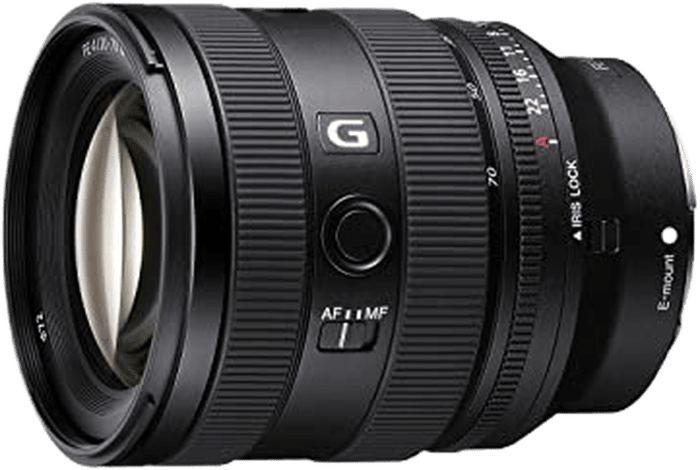
1. Sony FE 20-70mm f/4 G
| Brand |
Brand
Sony
|
| Lens Mount |
Lens Mount
Sony E
|
| Maximum Aperture |
Maximum Aperture
f/4
|
| Focal Range |
Focal Range
20-70mm
|
| Image Stabilization |
Image Stabilization
No
|
| Weight |
Weight
1.08 lb / 490 g
|
| Key Features |
Key Features
Two XD AF motors, video-optimized focus, AA lens element, focus-hold button, manual aperture ring
|
| Best For |
Best For
Sony users who need a versatile standard-angle zoom lens
|
The Sony FE 20-70mm f/4 G is a handy addition to any Sony lens collection. As an FE lens, it’s compatible with Sony’s full frame mirrorless cameras. It has crisp optical quality. And it has advanced features that give your photos a boost.
With a 20-70mm zoom range, you get a wonderfully wide shot variety. The 20mm end allows you to capture broad landscapes and architectural exteriors. The middle range is perfect for street photography. And you can shoot intimate portraits with the 70mm end.
That versatility makes it a great option for travel photography. And it’s fairly compact and lightweight. But the versatility means you don’t need to pack many other lenses in your travel backpack. This is an all-in-one solution for travel photography.
The f/4 max aperture isn’t the fastest. But it still gives you good control over your exposure settings. And you can still get a fabulous bokeh background thanks to the 9-blade circular aperture diaphragm.
This lens has Extra-low Dispersion (ED) and Advanced Aspherical (AA) elements to help control chromatic aberration. That design does not guarantee the absence of every distortion in every image.
The autofocus is another top selling point. It’s driven by two Extreme Dynamic (XD) linear motors. And that means the AF is super-responsive and smooth. Sony designs it for reduced focus breathing and quiet operation. It has no optical stabilization, so use the camera’s in-body system or support for slow handheld exposures. That’s good news for videographers.
The Sony FE 20-70mm f/4 G is perfect for photographers who like hands-on control. It has a manual aperture ring, just like 35mm film cameras. And there are iris-lock and focus-hold buttons on the barrel. It’s a truly interactive lens creative photographers will love.
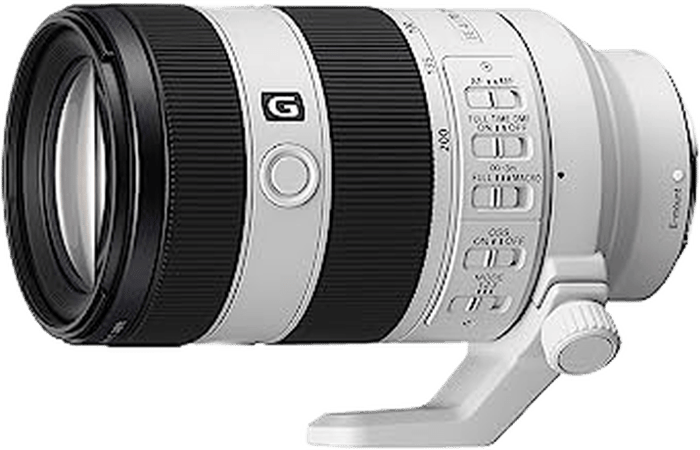
2. Sony FE 70-200mm f/4 Macro G OSS II
| Brand |
Brand
Sony
|
| Lens Mount |
Lens Mount
Sony E
|
| Maximum Aperture |
Maximum Aperture
f/4
|
| Focal Range |
Focal Range
70-200mm
|
| Image Stabilization |
Image Stabilization
Yes
|
| Weight |
Weight
1.7 lb / 794 g
|
| Key Features |
Key Features
Aspherical, ED, and super ED elements, Optical Steady Shot, four XD linear motors
|
| Best For |
Best For
Sony users who need a high-quality yet affordable telephoto zoom
|
The Sony FE 70-200mm f/4 Macro G OSS II is the perfect blend of performance and value. It isn’t exactly cheap. But considering the build quality and features, it offers great value for money.
The 70-200mm lens is one of the most popular lens types in photography. That’s because they offer excellent versatility. You can use them for anything from portraiture to sports photography. And this Sony lens is no different.
The optical design includes both aspherical and Advanced Aspherical (AA) elements. You also have three Extra-low Dispersion (ED) elements. And that’s backed up by one Super ED element. These elements help control aberrations across the zoom range.
You don’t have the fastest max aperture at f/4. But that is constant throughout the focal range. You don’t lose any stops when zooming in. And the lens’ 9-blade rounded aperture still gives you a smooth bokeh.
Sony’s Optical Steady Shot (OSS) stabilization system helps with handheld pictures of still subjects. It reduces the signs of camera shake, allowing you to work with slower shutter speeds. It does not freeze subject movement, so a moving person may still need a faster shutter speed.
Driven by four high-thrust Extreme Dynamic (XD) linear motors, the autofocus is fast, smooth, and quiet. It also employs a floating focus group system, which helps it achieve fast focusing speeds.
The Sony FE 70-200mm f/4 Macro G OSS II reaches 0.5x magnification throughout the zoom range. When you attach the Sony 2.0x teleconverter, it reaches life-size 1:1 magnification, with a 140-400mm range and an f/8 maximum aperture. The converter costs two stops of light, which matters for handheld close-ups. That is a useful option for macro photographers.
3. Sony FE 50mm f/1.4 GM
| Brand |
Brand
Sony
|
| Lens Mount |
Lens Mount
Sony E
|
| Maximum Aperture |
Maximum Aperture
f/1.4
|
| Focal Range |
Focal Range
50mm
|
| Image Stabilization |
Image Stabilization
No
|
| Weight |
Weight
1.1 lb / 517 g
|
| Key Features |
Key Features
11-blade aperture, ED element, XA element, Nano AR coating
|
| Best For |
Best For
Professional photographers looking for an ultra-sharp 50mm prime lens
|
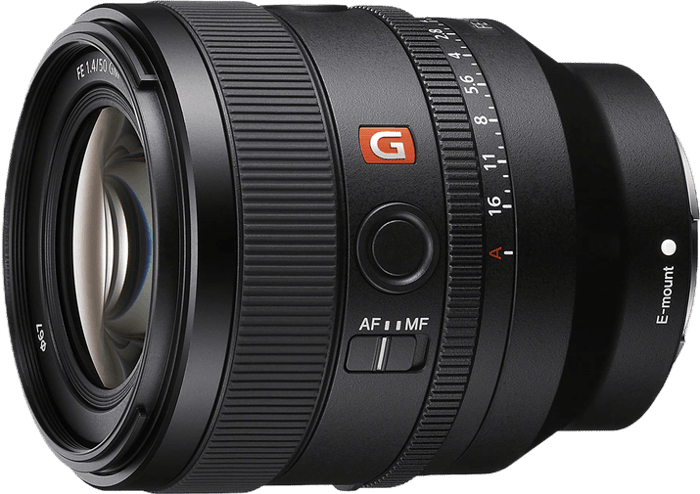
50mm prime lenses are some of the most popular in photography. But you won’t find many with better optics than the Sony FE 50mm f/1.4 GM. It’s a professional-grade prime lens. And it has advanced features experienced photographers will appreciate.
The optical design aims to control aberrations and preserve detail across the frame. There’s an Extra-low Dispersion (ED) element. And there are two Extreme Aspherical (XA) elements. These elements help control aberrations and distortion.
And with Sony’s Nano AR Coating II, you also get reduced flare, glare, and ghosting. There aren’t many 50mm lenses that can compete with this Sony masterpiece.
Low-light performance is another strength. The fast f/1.4 aperture allows you to work with less light. And you can achieve an ultra-shallow depth of field.
The lens also gives you even better bokeh thanks to its 11-blade diaphragm. The rounded blades help keep out-of-focus highlights rounded as you stop down. Background blur still changes with aperture, subject distance, and the distance to the background.
Like the previous Sony lenses, this prime has the Extreme Dynamic (XD) motor driving the autofocus. It’s accurate and quick. Sony designs it for quiet operation, though a nearby microphone can still pick up camera or lens sounds.
The Sony FE 50mm f/1.4 GM is a superb piece of equipment. It has no optical stabilization and a fixed angle of view. On Sony APS-C, that view is equivalent to 75mm on full frame, which is useful for tighter portraits when you have room to work.
4. Sony FE 28-70mm f/2 GM
| Brand |
Brand
Sony
|
| Lens Mount |
Lens Mount
Sony E
|
| Maximum Aperture |
Maximum Aperture
f/2
|
| Focal Range |
Focal Range
28-70mm
|
| Image Stabilization |
Image Stabilization
No
|
| Weight |
Weight
2.02 lb / 918 g
|
| Key Features |
Key Features
Constant f/2 aperture, four XD linear motors, 11-blade aperture, Nano AR Coating II
|
| Best For |
Best For
Sony full frame professionals who want prime-like light gathering in a zoom
|
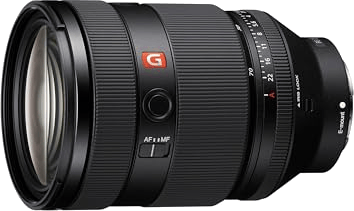
The Sony FE 28-70mm f/2 GM is a constant f/2 standard zoom for full frame E-mount cameras. It trades 4mm off the wide end of the classic 24-70mm and gives you a full stop of light back in exchange.
That stop is the whole argument. Compared with f/2.8, f/2 lets you use twice the shutter speed at the same ISO and exposure. That helps when you need to freeze people at a dim reception. And you get the background separation photographers usually buy primes for. An 11-blade circular aperture keeps the bokeh smooth. For wedding and event photographers, it combines wide and short-telephoto compositions without a lens change. It stops at 70mm, so it cannot supply an 85mm lens’s framing from the same position.
The optical formula runs to 20 elements in 14 groups, with three Extreme Aspherical elements, three Super ED elements, one ED element, and three more aspherical elements. Nano AR Coating II and a fluorine front element handle reflections and fingerprints. Four Extreme Dynamic linear motors drive autofocus. Sony specifies support for high-speed capture with compatible camera bodies; the lens does not set the camera’s recording frame rate. It focuses as close as 15 inches (38 cm) for 0.23x magnification, and the barrel carries a de-clickable aperture ring, an iris lock, and two focus-hold buttons. The filter thread is 86mm.
Three things count against it. It weighs 2.02 lb (918 g), which you feel by the end of a long day. It has no optical stabilization, so you’re relying on your camera’s in-body system. The 28mm wide end also limits framing in small interiors. Use the hood and choose your angle carefully around bright light sources. If you need 24mm, or you just want to carry less, the Sony FE 20-70mm f/4 G above is the smarter buy.
The Best Fujifilm, Olympus, and Panasonic Lenses
This section covers three different mounts. Fujifilm XF lenses fit X-series cameras. The Olympus/OM SYSTEM 12-40mm and Panasonic 12-35mm fit Micro Four Thirds. The Panasonic S 18mm uses L-mount for full frame cameras. Sharing a brand name does not make the two Panasonic mounts interchangeable.
Keep reading for more information on these lenses from Fujifilm, Olympus, and Panasonic. You can also click on the links below if you can’t find what you need here.
1. Fujifilm XF 8mm F3.5 R WR
| Brand |
Brand
Fujifilm
|
| Lens Mount |
Lens Mount
Fujifilm X
|
| Maximum Aperture |
Maximum Aperture
f/3.5
|
| Focal Range |
Focal Range
8mm
|
| Image Stabilization |
Image Stabilization
No
|
| Weight |
Weight
0.47 lb / 215 g
|
| Key Features |
Key Features
Weather-resistant construction, two ED elements, three aspherical elements
|
| Best For |
Best For
Fujifilm users looking for a high-grade wide-angle lens
|
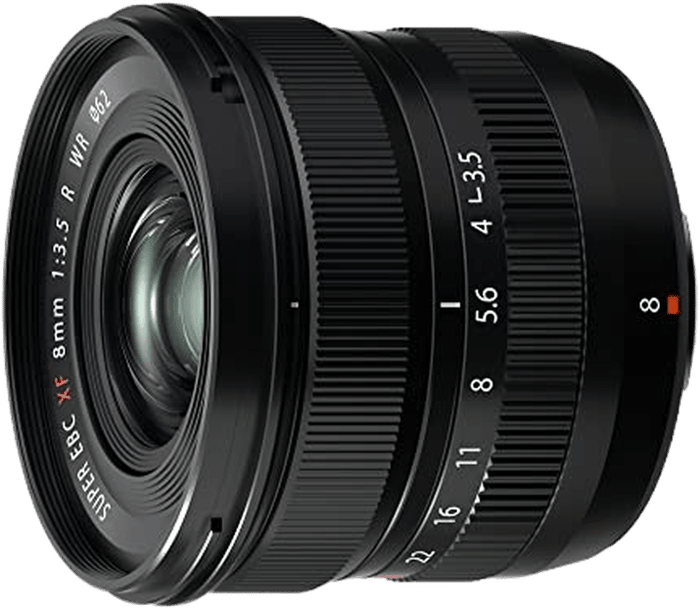
The Fujifilm XF 8mm F3.5 R WR is a beautiful wide-angle lens for Fujifilm’s X-series mirrorless cameras. It’s compact and lightweight. But the optical quality is professional standard.
The lens has an 8mm focal length, but this is equivalent to 12mm on a full frame camera. That means you still get an incredibly wide viewing angle. Fujifilm specifies a 121-degree angle of view.
With such a wide angle, you can shoot epic landscapes. Or you can capture cityscapes in urban areas. And it’s great for shooting large architectural structures. You can also use it for video recording. And the wide angle makes vlogging easy.
Despite the small size and light weight, the lens is packed with quality glass. There are two Extra-low Dispersion (ED) and three aspherical elements. These help control distortion and chromatic aberration. The elements also have a rectilinear design, which helps straight lines stay straight even at the very edges.
A max aperture of f/3.5 isn’t the fastest. The lens has no optical stabilization. A camera with in-body stabilization can help with camera shake; on a body without it, use suitable shutter speeds or support. It also has a fast and reliable AF motor. Fujifilm describes barely noticeable focus breathing, which is useful for video focus changes.
The Fujifilm XF 8mm F3.5 R WR is also a robust lens with weather-resistant protection. Its dust- and moisture-resistant design supports outdoor use, but it is not waterproof. It also has a surprisingly low price tag. It isn’t packed with features, but the quality is fantastic.
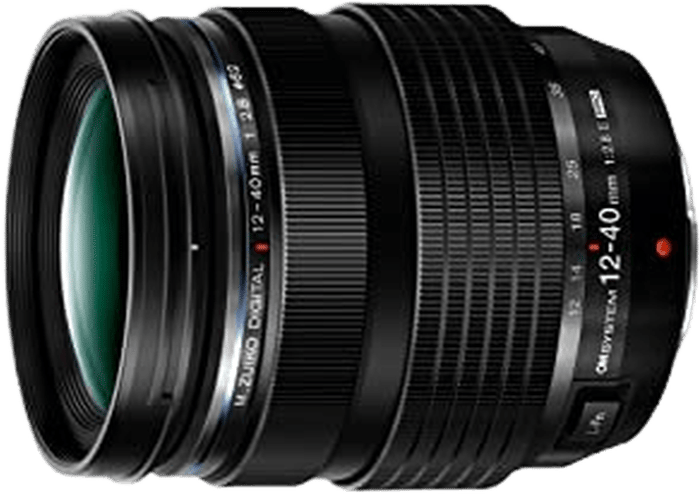
2. Olympus ED 12-40mm f/2.8 PRO II
| Brand |
Brand
OM System
|
| Lens Mount |
Lens Mount
Micro Four Thirds
|
| Maximum Aperture |
Maximum Aperture
f/2.8
|
| Focal Range |
Focal Range
12-40mm
|
| Image Stabilization |
Image Stabilization
No
|
| Weight |
Weight
0.8 lb / 380 g
|
| Key Features |
Key Features
Weather sealed, fluorine coating, manual focus clutch
|
| Best For |
Best For
Photographers with a Micro Four Thirds camera
|
The Olympus ED 12-40mm f/2.8 PRO II is the second-generation M.Zuiko 12-40mm standard zoom from OM SYSTEM. And this is a versatile zoom lens with a sensational build quality.
The focal length is 12-40mm. But on a Micro Four Thirds camera, its field of view is equivalent to 24-80mm on full frame. The focal length stays 12-40mm. That is a wide-angle to telephoto range of views, making it an incredibly versatile lens.
The construction is fantastic. The premium glass engineering gives you crisp and clear images with corner-to-corner sharpness. The fluorine coating helps with cleaning, while ZERO coating reduces flare. The lens has an IP53 rating when paired with a compatible sealed camera; this does not make the kit waterproof.
The MSC autofocus system is designed for fast, quiet focusing. Pulling the manual-focus clutch back engages manual focus. This lens has no optical stabilization, so slower handheld exposures rely on camera stabilization or support.
One of the great things about Micro Four Thirds cameras is that they all have the same lens mount. Whether it’s an Olympus or Panasonic camera, you can use the same lenses. That means you can use an Olympus lens with a Panasonic camera and vice versa. You have new freedom to mix and match.
One thing to be clear about is what f/2.8 buys you on this format. For the same framing, camera position, and output size, 12-40mm at f/2.8 on Micro Four Thirds gives depth of field similar to 24-80mm at f/5.6 on full frame. The lens still exposes as f/2.8; the comparison concerns depth of field, not a two-stop loss of exposure. If shallow depth of field is why you’re shopping, a Micro Four Thirds prime will serve you better.
3. Panasonic Lumix G 12-35mm f/2.8 OIS
| Brand |
Brand
Panasonic
|
| Lens Mount |
Lens Mount
Micro Four Thirds
|
| Maximum Aperture |
Maximum Aperture
f/2.8
|
| Focal Range |
Focal Range
12-35mm
|
| Image Stabilization |
Image Stabilization
Yes
|
| Weight |
Weight
0.67 lb / 306 g
|
| Key Features |
Key Features
Image stabilization, dust- and splash-resistant, nano coating
|
| Best For |
Best For
Panasonic photographers and filmmakers
|
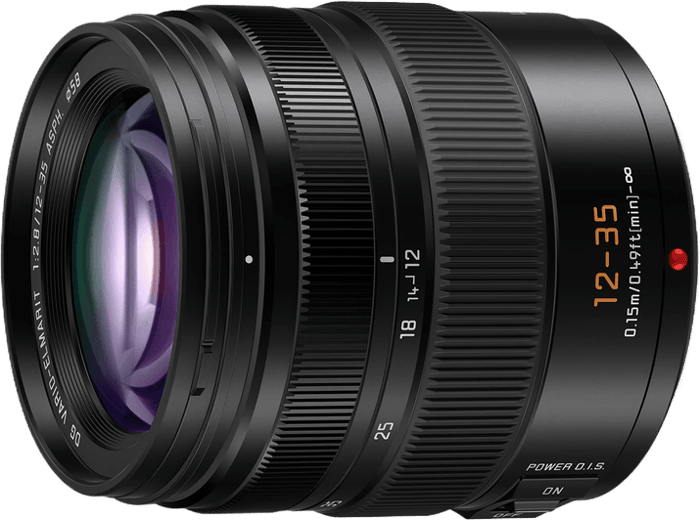
The Panasonic Lumix G 12-35mm f/2.8 OIS is a pro-level zoom lens at a reasonable price. Panasonic sells it as the Leica DG Vario-Elmarit 12-35mm f/2.8 ASPH Power O.I.S. (model H-ES12035). Check that model code before you buy, because an older Lumix G X Vario 12-35mm is still doing the rounds second-hand. Constructed in a partnership with Leica, you’ll struggle to find fault with the quality. And it has excellent features for photographers and videographers.
As a Micro Four Third (MFT) lens, the equivalent focal length is 24-70mm on a full frame camera. It’s a great option for street and travel photography. But you can also capture portraits with a tight composition. The wide-angle end also allows you to shoot vast landscape photography shots.
With a fast f/2.8 aperture, you get excellent low-light performance. It also allows you to use a shallow depth of field. But you get even more control with Optical Image Stabilization (OIS). It reduces signs of camera shake, so you can shoot with slower shutter speeds.
The picture quality is excellent. You get sharp images at any point in the focal range. And the Nano Surface Coating helps reduce ghosting and flare.
Panasonic designs the lens to suppress focus breathing and uses a focus drive compatible with 240-fps sensor communication. That communication rate is not a promise that every camera can record video at 240 fps.
The dust- and splash-resistance make the Panasonic Lumix G 12-35mm f/2.8 OIS a tough lens. And because it is an MFT lens, you can use it on Panasonic or Olympus MFT cameras.
4. Panasonic Lumix S 18mm f/1.8
| Brand |
Brand
Panasonic
|
| Lens Mount |
Lens Mount
Leica L
|
| Maximum Aperture |
Maximum Aperture
f/1.8
|
| Focal Range |
Focal Range
18mm
|
| Image Stabilization |
Image Stabilization
No
|
| Weight |
Weight
0.74 lb / 340 g
|
| Key Features |
Key Features
Splash-, dust-, and freeze-resistant, 3 aspherical elements
|
| Best For |
Best For
Panasonic Lumix S-series cameras
|
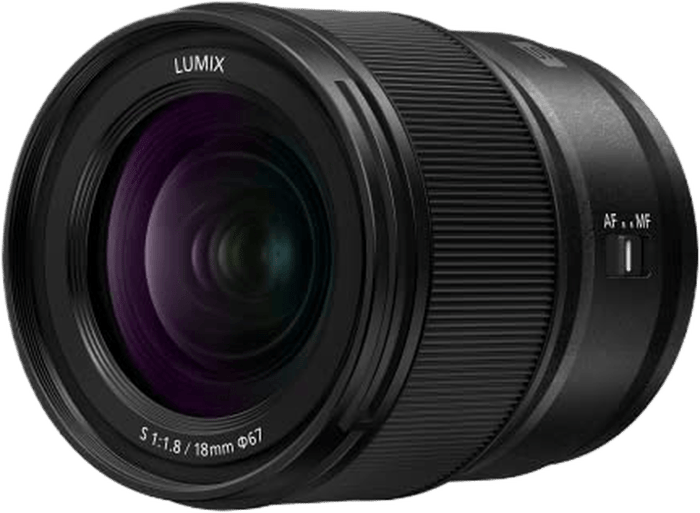
The Panasonic Lumix S 18mm f/1.8 is a simple yet elegant Panasonic lens. With the L-mount, it’s compatible with Panasonic S-series full frame cameras. And it’s optimized for photography and video production.
The 18mm focal length gives you a beautifully wide angle. Keep the camera level for architectural subjects: tilting an ultra-wide lens can make vertical lines converge. And as a full frame lens, you get a true 18mm focal length.
The sensational sharpness comes down to the quality of the glass elements. There’s a total of 13 elements in the barrel. And these include aspherical, Extra-low Dispersion (ED), and Ultra Extra-low Dispersion (UED) elements. These help control distortion and aberrations.
You get wonderful low-light performance with the f/1.8 aperture. And it allows you to get a smooth bokeh effect when using a shallow depth of field.
Panasonic cameras are famous for their video features. And thankfully, their lenses are up to the job of recording video. Panasonic describes suppressed focus breathing and smooth exposure changes for video. Aperture is controlled from the camera; this lens has no aperture ring. It also has no optical image stabilizer.
The Panasonic Lumix S 18mm f/1.8 is also a durable prime lens. Panasonic specifies dust- and splash-resistant construction and operation down to 14°F (-10°C). Those ratings do not make the lens waterproof.
5. Fujifilm XF 16-55mm f/2.8 R LM WR II
| Brand |
Brand
Fujifilm
|
| Lens Mount |
Lens Mount
Fujifilm X
|
| Maximum Aperture |
Maximum Aperture
f/2.8
|
| Focal Range |
Focal Range
16-55mm
|
| Image Stabilization |
Image Stabilization
No
|
| Weight |
Weight
0.9 lb / 410 g
|
| Key Features |
Key Features
12 weather-sealing points, 0.02-second linear AF motor, 11-blade aperture, inner focusing
|
| Best For |
Best For
Fujifilm X-series users who want a professional standard zoom
|
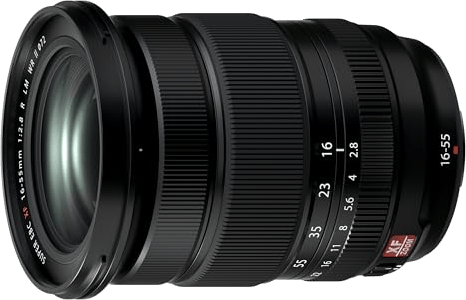
The Fujifilm XF 16-55mm f/2.8 R LM WR II is the professional standard zoom for Fujifilm’s X-series cameras. It gives you a 24-84mm equivalent range at a constant f/2.8, and it weighs 0.9 lb (410 g). Fujifilm describes a reduction of approximately 37% in weight from the original version.
It is designed for Fujifilm X-series cameras, including bodies with different sensor resolutions. A lower-resolution X body can still benefit from the lens’s range and constant aperture. Weather resistance runs to 12 sealing points, and a fluorine coating on the front element sheds water and smudges. It keeps working down to 14°F (-10°C), so winter landscape work is fair game.
Inside are 16 elements in 11 groups, including four aspherical elements, one Super ED element, and three ED elements. A linear motor provides fast, near-silent autofocus. The card’s 0.02-second figure is Fujifilm’s internal test at the wide end with an X-T4, phase-detection AF, and High Performance mode. It is not a promise for every camera or subject. The inner focusing system means the front element doesn’t rotate, so polarizers and graduated filters stay usable. It focuses to 11.8 inches (30 cm) with maximum magnification of 0.21x at the telephoto end, the aperture has 11 rounded blades, and the filter thread is 72mm. The aperture ring can be de-clicked for video; supported camera settings and firmware are needed for smooth exposure changes.
The catch is that neither version of this lens has optical stabilization. A body with in-body stabilization can reduce camera shake at slower shutter speeds. Without it, use a faster shutter, higher ISO, or support. Stabilization cannot freeze a moving subject. If your camera has no image stabilization of its own, decide whether you can use a faster shutter or support before choosing this unstabilized zoom.
Frequently Asked Questions
How Do I Know if a Lens Fits My Camera?
Match the mount name, not the brand. Canon’s EOS R cameras take RF lenses, Nikon’s Z-series cameras take Z lenses, Sony’s full frame mirrorless bodies use E-mount, with FE lenses providing full frame coverage, and Fujifilm’s X-series takes X-mount lenses. Panasonic and OM SYSTEM Micro Four Thirds cameras share the MFT mount, while Panasonic’s full frame S-series uses the L-mount instead. Our guide to lens mounts explains how each system differs and what an adapter can and cannot do.
Should I Buy a Prime Lens or a Zoom Lens?
A prime has one focal length, while a zoom covers a range. Many primes offer a wide maximum aperture, but compare the actual aperture and weight rather than assuming every prime is faster or lighter. A zoom saves you carrying two or three lenses and lets you recompose without moving. If you photograph one subject in a controlled setting, buy the prime. If you travel or shoot events, buy the zoom. Our prime lens and zoom lens roundups cover both in more detail.
Does the Focal Length Change on an APS-C or Micro Four Thirds Camera?
The focal length printed on the barrel never changes, but the field of view does. Most Nikon, Sony, and Fujifilm APS-C systems use a 1.5x field-of-view factor, so 24mm frames like 36mm on full frame. Canon APS-C uses 1.6x, giving 38.4mm equivalent framing. Micro Four Thirds crops by 2x, so a 12-40mm zoom frames like a 24-80mm. Read our guide to the crop factor before you buy a wide-angle lens for a crop-sensor body.
Is an f/2.8 Zoom Worth the Extra Money Over an f/4 Zoom?
It depends on where you shoot. An f/2.8 zoom gathers twice the light of an f/4 zoom, which matters indoors, at dusk, and at receptions. It also gives you noticeably more background blur. Compare the actual lenses: the wider aperture often adds weight and cost, but the models here differ in range and design too. For still subjects outdoors in daylight, f/4 may be enough. At the same focal length and camera position, however, f/4 gives more depth of field than f/2.8; stabilization does not replace the wider aperture for freezing subject movement.
Do I Still Need a Stabilized Lens?
Check your exact camera body: some have in-body stabilization and some do not. Optical stabilization can help with handheld pictures of still subjects, especially at longer focal lengths. IS, VR, OSS, and OIS identify lens stabilization systems. With an unstabilized camera and lens, use a faster shutter or support. Neither lens nor body stabilization freezes a moving subject.
Conclusion: The Best Lenses
Start with your mount, then choose the focal range for your subject. For portraits, decide how much working room you have and how much of the surroundings you want in the frame. For travel, compare the range and carrying weight. For close-ups, look at maximum magnification as well as minimum focus distance.
For a small everyday Canon RF kit, our top pick remains the Canon RF 28mm f/2.8 STM for its compact pancake design. It’s a reliable wide-angle lens for Canon’s R-series cameras. And it’s an affordable lens for photographers with a tight budget.
If you shoot another system, use its section to compare the lens with your needs. A travel zoom, a portrait prime, and an ultra-wide lens solve different problems; the first item is not automatically the right choice for your camera or subject. From there, work out which focal length you reach for most. Then decide whether a prime or a zoom suits the way you actually shoot. Our guide to camera lens types is the next stop if you are still weighing that up.