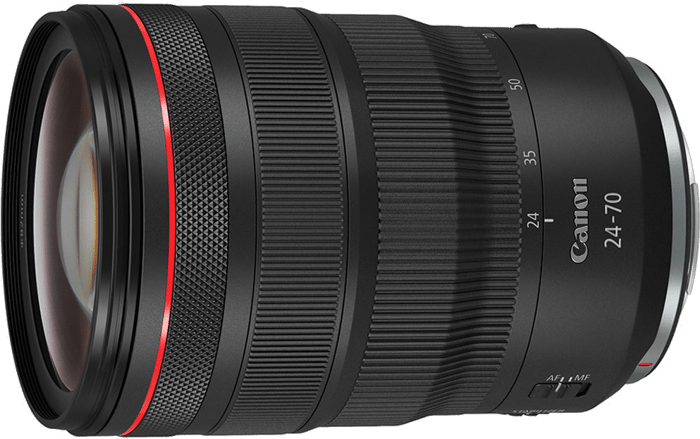
The Canon RF 24-70mm f/2.8L IS USM is the best zoom lens for most photographers. It covers wide scenes to tight portraits at a constant f/2.8, and its five stops of optical stabilization help on every EOS R body, including the ones without in-body stabilization. If you shoot Canon and want one lens for events, travel and family pictures, start here.
The rest of the list covers the other ways people use a zoom. There is a lighter f/4 lens that reaches further for travel, f/2.8 standard zooms for Nikon Z and Sony E, an ultra-wide for landscapes and interiors, two telephoto zooms at very different weights and budgets, and two Fujifilm lenses for APS-C shooters. Your camera's mount decides which of them you can use, so check it first.
The Best Zoom Lenses for Every Mount
A zoom lens is a trade between light, range and weight. A constant f/2.8 lens gives you faster shutter speeds indoors and more background blur, but it is heavier and covers less range. An f/4 zoom reaches further and weighs less, and it gives up one stop of light. The table ranks the lenses by how many photographers each one serves well, so read the Mount and Format fact first and skip the lenses your camera cannot take.
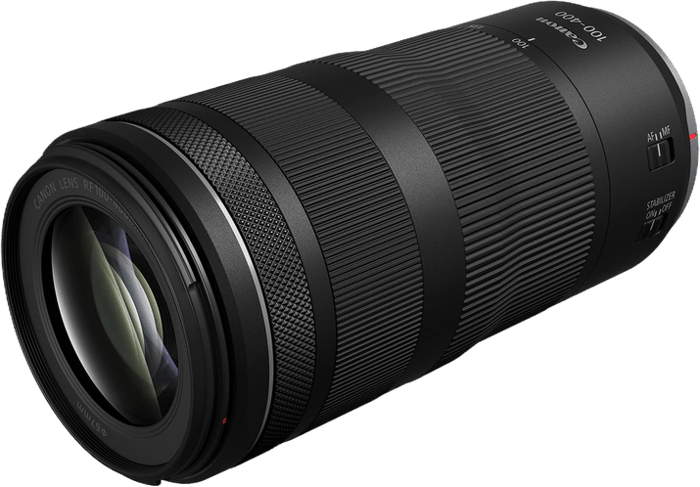
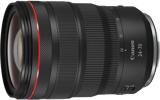
1. Canon RF 24-70mm f/2.8L IS USM
| Mount and Format |
Mount and Format
Canon RF, full frame
|
| Full-Frame Equivalent |
Full-Frame Equivalent
24-70mm
|
| Lens Stabilization |
Lens Stabilization
Optical IS, 5 stops
|
| Weight |
Weight
1.98 lb (900 g)
|
The Canon RF 24-70mm f/2.8L IS USM is the zoom most Canon mirrorless owners should buy first. The 24-70mm range runs from a room-wide view to a tight head-and-shoulders portrait, and f/2.8 stays available at every focal length. That makes it a strong lens for weddings, parties and travel days that move from indoors to outdoors.
Its biggest advantage over its rivals is the optical image stabilization. It is rated at five stops, and it matters most on bodies such as the EOS R8 and R50, which have no in-body stabilization. On a body that does have it, the two systems work together. The Nikon and Sony f/2.8 standard zooms below have no stabilization of their own.
It is an L-series lens with weather sealing, a zoom lock for carrying, and close focus of 8.3 in (21 cm). The cost is weight: at 900 g it is heavier than the Sony and Nikon equivalents, and it takes 82mm filters. If you shoot mostly in daylight and want more reach for less weight, we recommend the Canon RF 24-105mm f/4L IS USM instead. It weighs 700 g and keeps five stops of stabilization, but gives up one stop of light.
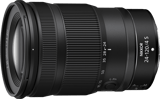
2. Nikon Z 24-120mm f/4 S
| Mount and Format |
Mount and Format
Nikon Z, full frame
|
| Full-Frame Equivalent |
Full-Frame Equivalent
24-120mm
|
| Lens Stabilization |
Lens Stabilization
None
|
| Weight |
Weight
1.39 lb (630 g)
|
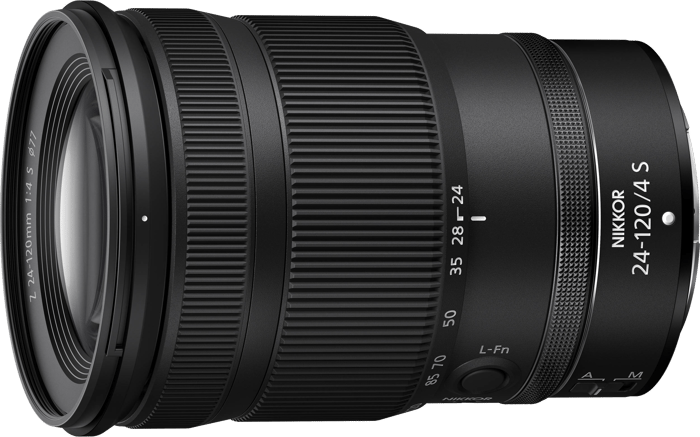
The Nikon Z 24-120mm f/4 S is the best everyday zoom here because it covers the most useful range in a lens you can carry all day. It reaches 120mm, which is almost twice the reach of a 24-70mm. At 630 g it is also lighter than every f/2.8 standard zoom on this list.
The extra reach changes what one lens can do. At 120mm you can isolate a detail on a building, frame a candid portrait from across a street or pick out a person on a stage. At 24mm you still get the wide view for rooms and landscapes. It focuses to 13.8 in (35 cm) and reaches 0.39x magnification, close enough for food, flowers and product details. It is an S-Line lens with weather sealing, and it takes common 77mm filters.
The constant f/4 aperture is the trade-off. It gives one stop less light than an f/2.8 zoom, so you need a higher ISO indoors at night, and backgrounds blur less at the same framing. The lens also has no optical VR, so it relies on the stabilization built into full-frame Z bodies. For dim events, the Nikon Z 24-70mm f/2.8 S II at number four is the better Nikon lens.
3. Sony FE 24-70mm f/2.8 GM II
| Mount and Format |
Mount and Format
Sony E, full frame
|
| Full-Frame Equivalent |
Full-Frame Equivalent
24-70mm
|
| Lens Stabilization |
Lens Stabilization
None
|
| Weight |
Weight
1.53 lb (695 g)
|
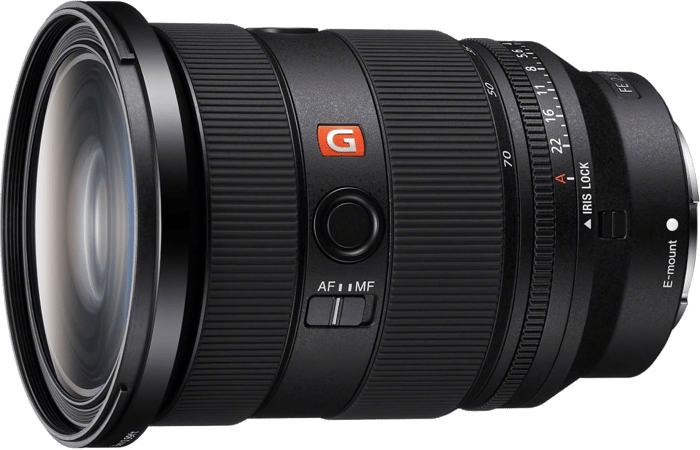
On a Sony full-frame camera, the Sony FE 24-70mm f/2.8 GM II is the standard zoom to buy. It gives the same range and constant f/2.8 as the Canon at number one, but it weighs 695 g. That is about 200 g less, and you notice the difference over a long day on a strap.
The lens has 11 aperture blades for round out-of-focus highlights, and it focuses to 8.3 in (21 cm) for close detail shots. It is weather sealed and uses Sony's G Master optics, the company's top lens line. For portraits at 70mm and indoor work at f/2.8, it does everything the Canon does.
The main difference is stabilization. The Sony has none in the lens, so it relies on the body. That is fine on any Sony full-frame mirrorless body with IBIS, but some APS-C bodies such as the a6400 have no stabilization at all. It also takes 82mm filters. If you would rather have a smaller, lighter Sony lens with a wider view, the Sony FE 20-70mm f/4 G at number eight weighs only 488 g, but gives up one stop of light.
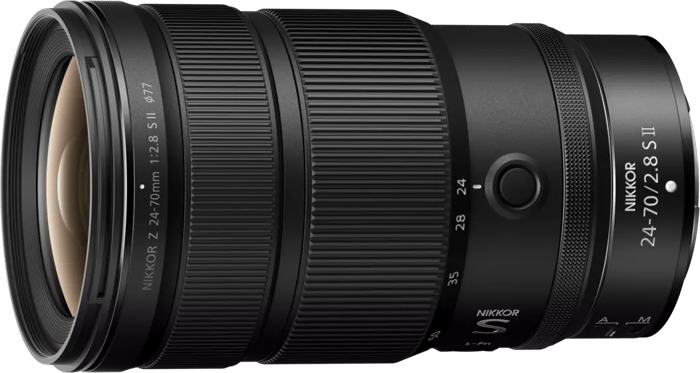
The Nikon Z 24-70mm f/2.8 S II replaces the original Z 24-70mm f/2.8 S as Nikon's f/2.8 standard zoom. Nikon calls it the first internal-zoom 24-70mm f/2.8 for full frame, so the barrel stays the same length from 24mm to 70mm. For Nikon Z owners who need f/2.8, it is the best choice.
The internal zoom keeps the balance of the camera the same as you zoom. That helps on a gimbal, on a leveled tripod head and with handheld video. At 675 g it is also 130 g lighter than the original, and it takes 77mm filters instead of 82mm.
It is an S-Line lens with 11 aperture blades, weather sealing and close focus of 9.4 in (24 cm) at 24mm. Like the Sony at number three, it has no optical stabilization, so it depends on the IBIS in full-frame Z bodies. On a DX body without IBIS, such as the Z50 II, you need faster shutter speeds. The lens is also longer than the Canon and Sony at its shortest setting, because the barrel is always at full length. For more reach at a lower weight, choose the Z 24-120mm f/4 S at number two.
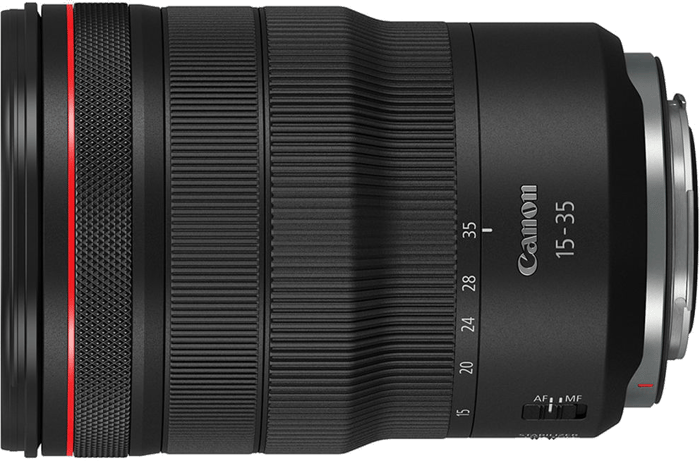
5. Canon RF 15-35mm f/2.8L IS USM
| Mount and Format |
Mount and Format
Canon RF, full frame
|
| Full-Frame Equivalent |
Full-Frame Equivalent
15-35mm
|
| Lens Stabilization |
Lens Stabilization
Optical IS, 5 stops
|
| Weight |
Weight
1.85 lb (840 g)
|
The Canon RF 15-35mm f/2.8L IS USM is the wide-angle zoom to pick for landscapes, interiors, architecture and night skies on Canon. It starts at 15mm, which is wider than any standard zoom on this list, and keeps f/2.8 across the range.
Most wide zooms rely on the body for stabilization, but this one has five stops of optical IS of its own. On a wide lens that lets you hand-hold slow shutter speeds in churches, museums and other places where a tripod is not allowed. The f/2.8 aperture also helps with stars and night street scenes. It focuses to 11 in (28 cm), close enough to make a foreground rock or flower large in the frame.
At 840 g it is heavy for a wide-angle lens, and its 82mm filter thread makes polarizers and ND filters expensive. If you shoot landscapes on a tripod at f/8, you are paying for light you will rarely use. For Nikon Z, the Nikon Z 14-24mm f/2.8 S starts even wider at 650 g but has no optical VR. For Sony, the Sony FE PZ 16-35mm f/4 G weighs only 353 g and adds a power zoom for video.
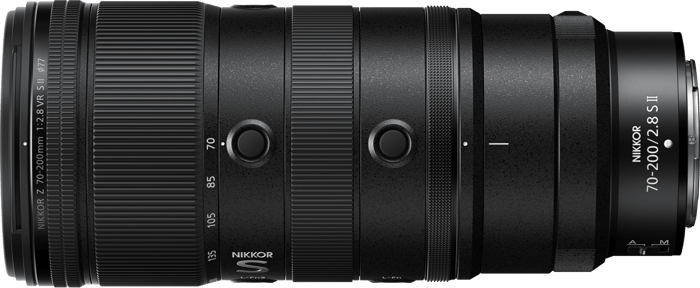
The Nikon Z 70-200mm f/2.8 VR S II is the best telephoto zoom here for sports, events and portraits. A 70-200mm f/2.8 lens lets you shoot fast subjects in poor light and blur busy backgrounds. This new version makes that much easier to carry.
It weighs 998 g without its tripod collar, which is 26% less than the original Z 70-200mm f/2.8 VR S. The zoom is internal, so the lens stays the same length and balance at 70mm and 200mm. Optical VR is rated at six stops, the highest stabilization rating on this list. It also takes 77mm filters, the same size as the Nikon standard zooms above. It works with Nikon's Z TC-1.4x and TC-2.0x teleconverters when you need more reach.
It is still a large lens for a full day of walking, and it is the most expensive kind of zoom on this page. If your telephoto use is daylight wildlife or sports, the Canon RF 100-400mm at number nine reaches twice as far for much less. Sony shooters should look at the Sony FE 70-200mm f/2.8 GM OSS II. It weighs 1,045 g and has optical stabilization.
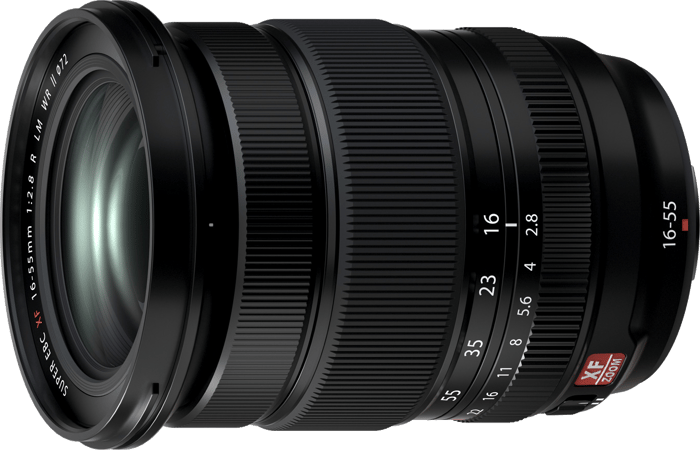
Fujifilm X shooters get the same all-purpose f/2.8 zoom from the Fujifilm XF 16-55mm f/2.8 R LM WR II. It gives the view of a 24-84mm lens on full frame at a constant f/2.8. That covers the same events, travel and portrait work as the full-frame 24-70mm lenses above.
The second version is far smaller than the first. It weighs 410 g against the original's 655 g, which suits the smaller X-series bodies much better. It has 11 aperture blades and weather sealing. It also has an aperture ring with a de-click switch, so you can change the aperture silently during video.
Like the original, it has no optical stabilization. On an X body with IBIS, such as the X-S20 or X-T5, that is not a problem. On a body without it, such as the X-T30 II, you need faster shutter speeds. It also stops at 55mm, the equivalent of 84mm. For more reach and a power zoom, the Fujifilm XF 18-120mm f/4 at number ten is the better Fujifilm choice. For ultra-wide work, the Fujifilm XF 8-16mm f/2.8 R LM WR is Fujifilm's f/2.8 wide zoom, but it has a bulbous front element that does not take screw-in filters.
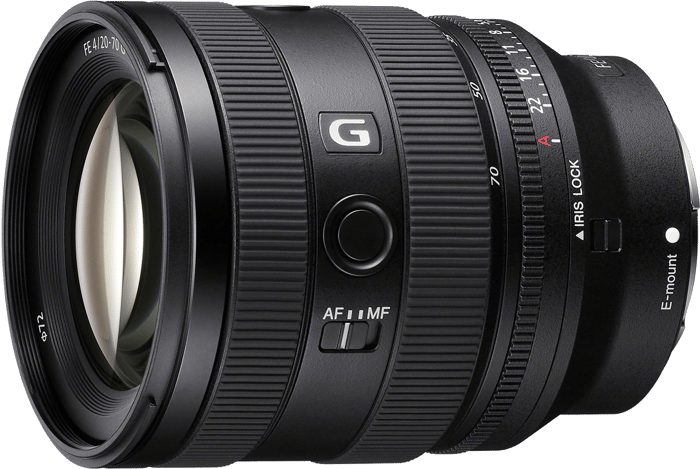
8. Sony FE 20-70mm f/4 G
| Mount and Format |
Mount and Format
Sony E, full frame
|
| Full-Frame Equivalent |
Full-Frame Equivalent
20-70mm
|
| Lens Stabilization |
Lens Stabilization
None
|
| Weight |
Weight
1.08 lb (488 g)
|
Sony full-frame owners who want a lighter everyday zoom should look at the Sony FE 20-70mm f/4 G. At 488 g it weighs about 200 g less than the 24-70mm f/2.8 GM II. It also starts at 20mm, a wider view than any other standard zoom on this list.
That 20mm start is the reason to choose it. You get more of the room indoors, more of the scene in landscapes and enough width for vlogging at arm's length. At 70mm you still have a useful portrait length. The lens takes 72mm filters, focuses to 9.8 in (25 cm) and reaches 0.39x magnification. It also has an aperture ring with a click on/off switch, an iris lock and two focus-hold buttons. The silent aperture ring is most useful when you film.
You give up one stop of light against the GM II, and at 70mm the f/4 lens does not blur backgrounds as much. Like most Sony zooms it has no optical stabilization, so it relies on the body. If you shoot indoor events or want portraits with more background blur, choose the Sony FE 24-70mm f/2.8 GM II at number three.
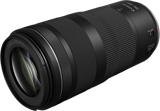
9. Canon RF 100-400mm f/5.6-8 IS USM
| Mount and Format |
Mount and Format
Canon RF, full frame
|
| Full-Frame Equivalent |
Full-Frame Equivalent
100-400mm
|
| Lens Stabilization |
Lens Stabilization
Optical IS, 5.5 stops
|
| Weight |
Weight
1.4 lb (635 g)
|
The Canon RF 100-400mm f/5.6-8 IS USM is the low-cost way to get real telephoto reach on Canon. It reaches 400mm, which is twice the reach of a 70-200mm. It is also one of the lightest lenses of its kind at 635 g.
The light weight is why it works so well for hiking, travel and the zoo. It is easy to carry next to a standard zoom, and its 5.5 stops of optical IS help you hand-hold at long focal lengths. It takes 67mm filters, so it is cheap to add a protective filter or polarizer. For daylight wildlife on Canon it is the best value telephoto here. It also focuses close enough at the long end for 0.41x magnification, useful for flowers and insects.
At 400mm the aperture is only f/8, so it needs good light, and in shade or at dusk your camera will push the ISO high. It also has no weather sealing, so take care in rain. Nikon Z owners who want a stronger, brighter telephoto can choose the Nikon Z 100-400mm f/4.5-5.6 VR S, which is sealed but weighs 1,355 g. Fujifilm owners who need more reach can look at the Fujifilm XF 150-600mm f/5.6-8 R LM OIS WR, which gives a 229-914mm equivalent view.
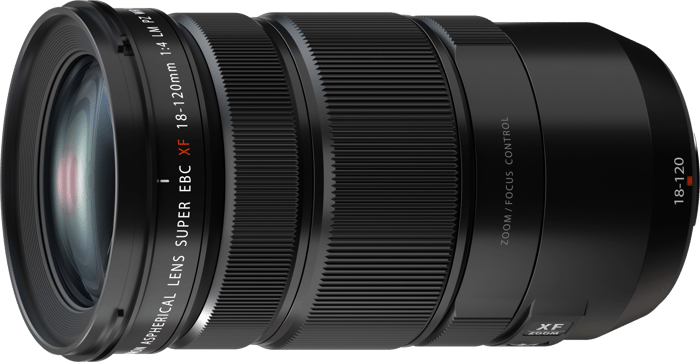
10. Fujifilm XF 18-120mm f/4 LM PZ WR
| Mount and Format |
Mount and Format
Fujifilm X, APS-C
|
| Full-Frame Equivalent |
Full-Frame Equivalent
27-183mm
|
| Lens Stabilization |
Lens Stabilization
None
|
| Weight |
Weight
1.01 lb (460 g)
|
The Fujifilm XF 18-120mm f/4 LM PZ WR is the one-lens Fujifilm zoom for travel and video. Its range is equivalent to 27-183mm on full frame, which covers street scenes, landscapes, portraits and distant details. The aperture stays at f/4 all the way through.
It suits video as well as stills. The power zoom gives smooth, even zooms that are hard to do by hand, and the constant f/4 keeps exposure the same while you zoom. It weighs 460 g and is weather sealed, so it is easy to carry on a full day out with an X-S20 or X-H2. For one-lens options on other mounts, see our best all-in-one lenses.
An f/4 aperture on an APS-C sensor gives less background blur than the f/2.8 XF 16-55mm II, and the lens has no optical stabilization. It also focuses only to 23.6 in (60 cm), so it is not a good choice for small subjects. If you shoot mostly stills indoors or portraits, the XF 16-55mm f/2.8 II at number seven is the better Fujifilm lens. Our best Fujifilm XF lenses list covers the primes as well.
How to Choose a Zoom Lens
Start With Your Mount and Sensor
A lens only works on the mount it was made for. Canon RF lenses fit EOS R bodies, Nikon Z lenses fit Z bodies, Sony FE lenses fit E-mount bodies, and Fujifilm XF lenses fit X bodies. Check your camera's mount before anything else.
The sensor size changes the view. The Fujifilm lenses are made for APS-C, so multiply their focal lengths by 1.5 to compare them with full-frame lenses. That is why the XF 16-55mm II frames like a 24-84mm lens. The Full-Frame Equivalent fact on each card does this calculation for you.
Choose f/2.8 or f/4 From the Light You Shoot In
An f/2.8 zoom gathers twice the light of an f/4 zoom. That lets you use a faster shutter speed or a lower ISO indoors, and it blurs the background more. If you shoot weddings, indoor sports or concerts, buy f/2.8. If you shoot mostly outdoors in daylight, an f/4 zoom such as the Nikon Z 24-120mm f/4 S gives you more range for less weight and money.
Check Stabilization Against Your Camera Body
Most full-frame mirrorless bodies have in-body image stabilization (IBIS), but several popular cameras do not. The Canon EOS R8 and R50, the Nikon Z50 II and the Sony a6400 have none. On those bodies, a lens without optical stabilization gives you no help against camera shake at slow shutter speeds. That is a strong reason for an EOS R8 or R50 owner to choose the stabilized Canon RF 24-70mm, RF 15-35mm or RF 100-400mm. Check your camera's specifications before you decide that stabilization does not matter.
Count the Cost of Filters
Large f/2.8 zooms often take 82mm filters, and good polarizers and ND filters cost more in that size. The Canon RF 24-70mm, RF 15-35mm and Sony FE 24-70mm GM II all use 82mm. The Nikon S II zooms use 77mm, and the Sony FE 20-70mm and Fujifilm XF 16-55mm II use 72mm. If you already own filters, buy a step-up ring or choose a lens that matches them. For more on matching lenses to jobs, see our guide to camera lens types and their uses.
Frequently Asked Questions
Is a Zoom Lens as Sharp as a Prime Lens?
The best modern zooms are sharp enough that your focus and shutter speed limit the picture long before the lens does. Primes still win on maximum aperture. A 50mm f/1.4 gathers three stops more light than an f/4 zoom and blurs backgrounds far more. Read our guide to what a zoom lens is and when you need one for more on the choice.
What Do the Letters After a Lens Name Mean?
They are the maker's feature codes. Canon's L marks its professional line, and IS means image stabilization. Nikon's S marks its higher-grade S-Line Z lenses, and VR means vibration reduction. Sony's GM means G Master, its top line. Fujifilm's WR means weather resistant, LM means linear motor and PZ means power zoom.
Conclusion: The Best Zoom Lenses
Our top pick is the Canon RF 24-70mm f/2.8L IS USM, the best zoom lens for most photographers on Canon RF. Its constant f/2.8 and five-stop stabilization cover events, travel and portraits on any EOS R body. If you want more reach and less weight, the Nikon Z 24-120mm f/4 S is the best everyday zoom on this list. For distant subjects in daylight, the Canon RF 100-400mm f/5.6-8 IS USM gives you 400mm of reach in a lens light enough to carry anywhere.
For other mounts, take the Sony FE 24-70mm f/2.8 GM II on Sony and the Fujifilm XF 16-55mm f/2.8 II on Fujifilm X. For a wider choice of standard zooms, see our list of the best 24-70mm lenses, and for longer lenses, our best telephoto lenses.