To fix grainy photos in Photoshop, start with noise reduction rather than blur. For a supported raw file, use Denoise in Adobe Camera Raw before opening the image in Photoshop. For a JPEG or an existing Photoshop layer, use the manual noise reduction controls in Camera Raw Filter or Filter > Noise > Reduce Noise.
Check the result at 100% and stop before hair, skin texture, or other fine details look smeared. A little remaining noise is often preferable to a smooth image with no texture. Noise reduction can improve a photo, but it cannot guarantee the recovery of detail that was never captured.
The steps below cover desktop Photoshop. The original screenshots farther down show an older Surface Blur workflow; they do not show the current AI Denoise interface.
First, Identify What Makes the Photo Look Grainy
Zoom in and look at a plain area, such as a wall or sky, then compare it with a detailed area:
- Digital noise: random brightness speckles are luminance noise; scattered colored speckles are color noise. High ISO and underexposure can make noise more noticeable. Noise reduction is the appropriate starting point.
- Added film grain: if a preset or edit added grain, reduce or disable that effect first. In Camera Raw, set Effects > Grain > Amount to zero. Grain already baked into an exported image or a film scan cannot be switched off this way.
- JPEG compression: blocks and halos around edges can come from compression. Start with the original file if you have it, or try Remove JPEG Artifacts in Photoshop's Reduce Noise filter.
- Blur or low resolution: soft edges, motion streaks, and large visible pixels are different problems. More noise reduction can make a blurred face softer; it does not replace missing focus or captured detail.
If the grain appeared during editing, compare the image with sharpening and grain effects turned off. This helps you avoid smoothing away real texture to fix an effect that you can simply reduce.
Use Camera Raw Denoise for a Supported Raw File
Open the original raw file with File > Open in Photoshop. It should open in Camera Raw before you reach the Photoshop canvas. Our Adobe Camera Raw guide explains how this raw-processing stage fits into an editing workflow.
- Open the Detail panel and select Denoise.
- Let Camera Raw process the image, then adjust the amount while comparing a noisy shadow with a detailed part of the subject.
- Reduce the amount if small features become too smooth or look unnatural. There is no single setting that suits every photo.
- Continue your edit and use Open to bring the adjusted image into Photoshop. To retain editable raw settings, hold Shift when using the Open control to open it as a Smart Object.
Adobe's June 2025 Camera Raw update brought AI enhancements into the edit controls without requiring a separate enhanced file. Older versions can use an Enhance dialog and create an enhanced DNG instead. Follow the interface in your installed version rather than expecting every tutorial screenshot to match.
Which Files Can Use AI Denoise?
Adobe's Denoise format list includes Bayer and X-Trans raw files, supported linear DNGs, Apple ProRAW, and other listed raw formats. It excludes non-raw files such as JPEG, TIFF, HEIC, PSD, and PSB, as well as certain raw formats such as Foveon and Pentax Pixel Shift files. A .dng extension alone does not establish eligibility.
AI Denoise is unavailable in Filter > Camera Raw Filter. Opening a rendered layer with that filter is different from opening the original raw file in Camera Raw. Converting a JPEG layer to a Smart Object does not turn it into a supported raw capture.
If Denoise is missing or disabled, check the file format, how you opened it, and your Camera Raw version first. If those are correct, use Adobe's GPU troubleshooting guidance. You can still try the manual controls below while resolving the problem.
Reduce Noise in a JPEG with Camera Raw Filter
For a JPEG or a photo already open on the Photoshop canvas, use manual noise reduction. Keep an untouched copy of the file.
- Select the image layer and duplicate it with Ctrl+J on Windows or Command+J on Mac.
- Choose Filter > Convert for Smart Filters. This makes the duplicate a Smart Object so you can revise the filter later.
- Choose Filter > Camera Raw Filter, then open Detail and its manual Noise Reduction controls. If the controls are collapsed, expand them.
- View the preview at 100%. Increase Luminance to reduce brightness speckles. Adjust its Detail control to balance texture against remaining noise, and Contrast if the result looks too flat or blotchy.
- Increase Color if colored speckles remain. Its Detail control balances fine color edges against color speckling; lowering it too far can let colors bleed.
- Click OK, then compare the filtered layer with the original by toggling its visibility. Double-click Camera Raw Filter under Smart Filters to revise the settings.
These controls involve a tradeoff: stronger smoothing can remove texture along with noise. Adobe's manual noise reduction reference explains what each slider changes. Work from the visible result instead of copying a fixed set of numbers.
Use a Smart Filter mask if the background needs more smoothing than the subject. Paint black on the mask to hide the filter from areas such as eyes, hair, or fabric, and white where you want it visible. Our Photoshop layer mask guide explains the basic masking controls.
Try Photoshop's Reduce Noise Filter
Filter > Noise > Reduce Noise is another option for an image layer. Apply it to the duplicate Smart Object so that you can compare and revise the result.
In the preview, balance Strength with Preserve Details. Use Reduce Color Noise for colored speckles. If the file has blocky compression artifacts, compare the result with Remove JPEG Artifacts enabled. These controls are described in Adobe's Reduce Noise documentation.
Keep Sharpen Details restrained. Making edges crisper does not recover every fine detail, and excess sharpening can make the remaining noise more obvious. The Advanced controls let you work on individual color channels if one is especially noisy, but they are not a required extra step for every photo.
Optional Surface Blur Workflow: Original Screenshot Example
Surface Blur is an alternative for smoothing areas with limited fine texture. It can preserve edges while blurring, but it can also erase detail that you want to keep. Try the noise reduction methods above first, then use Surface Blur selectively if needed.
The following screenshots and comparison are retained from the original tutorial. They illustrate its historical workflow, not a new test of Camera Raw Denoise. The original text did not document a complete set of settings, so the screenshots are not a preset to copy.
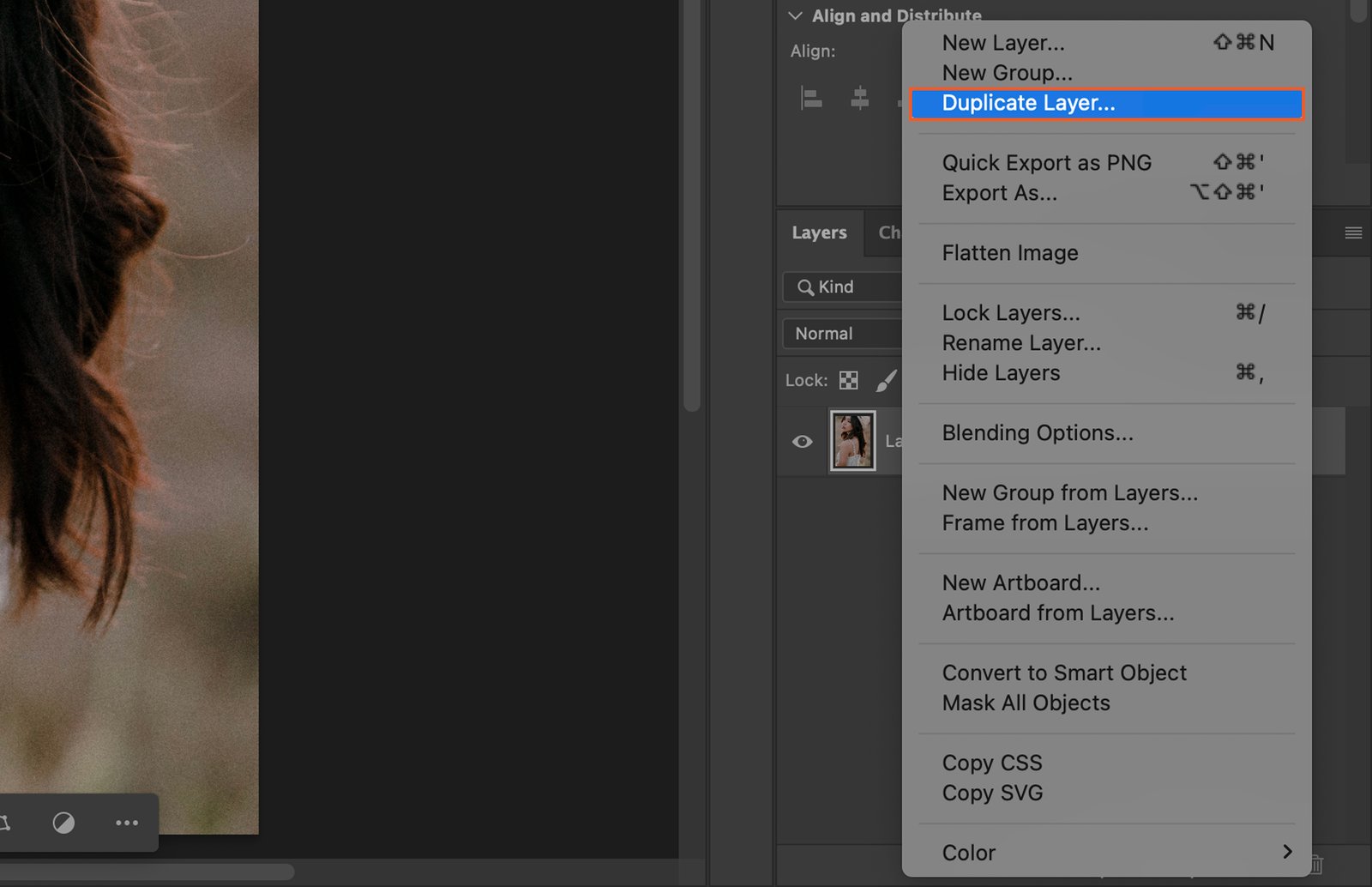
1. Duplicate the Background Layer
Create a copy of the original image layer. Keep the original visible below the copy so you can compare the effect and return to it.
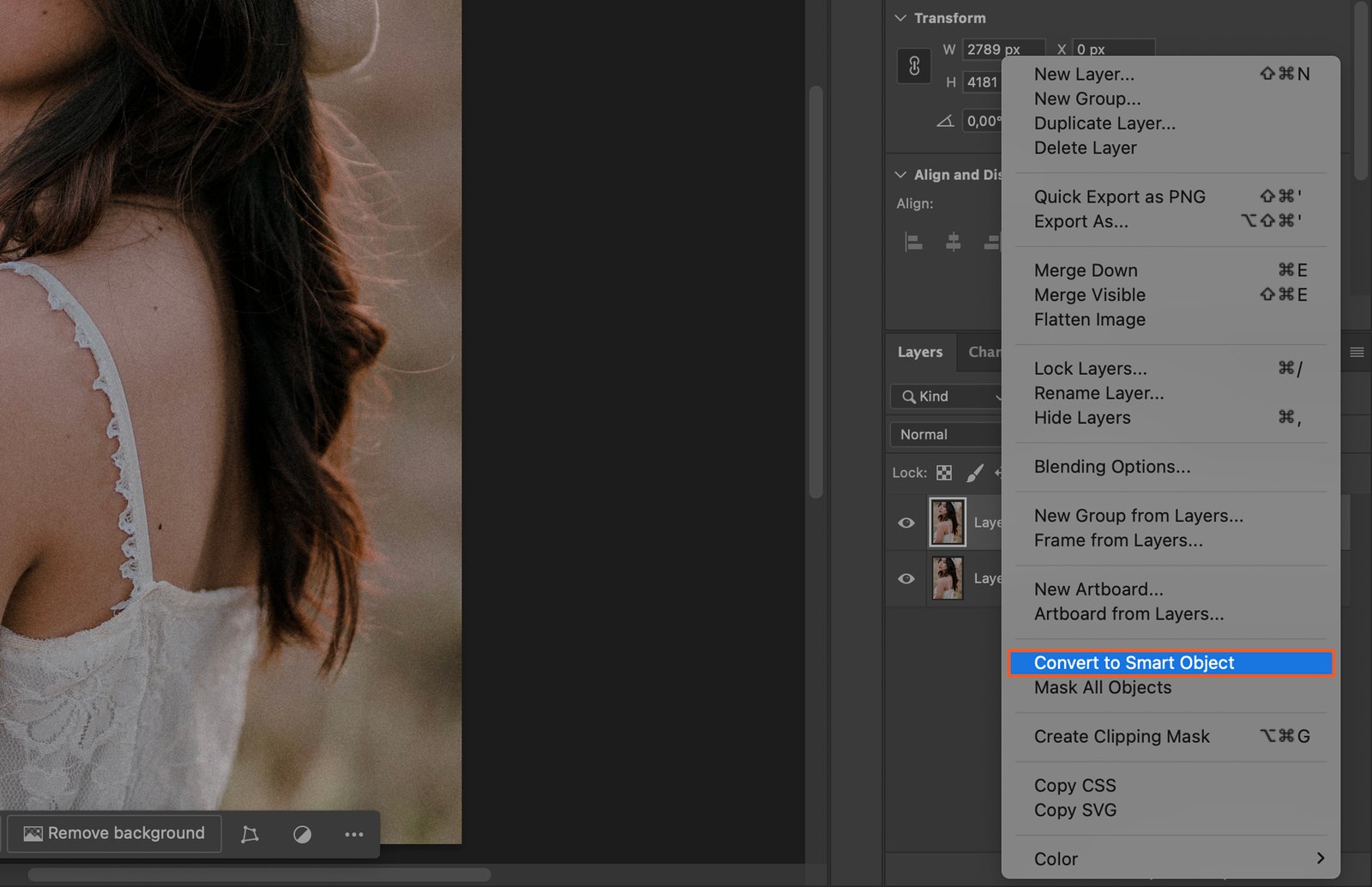
2. Convert the Copy into a Smart Object
Select the duplicate and choose Filter > Convert for Smart Filters, or right-click the layer and choose Convert to Smart Object. You can then adjust the filter later without permanently applying it to the original layer.
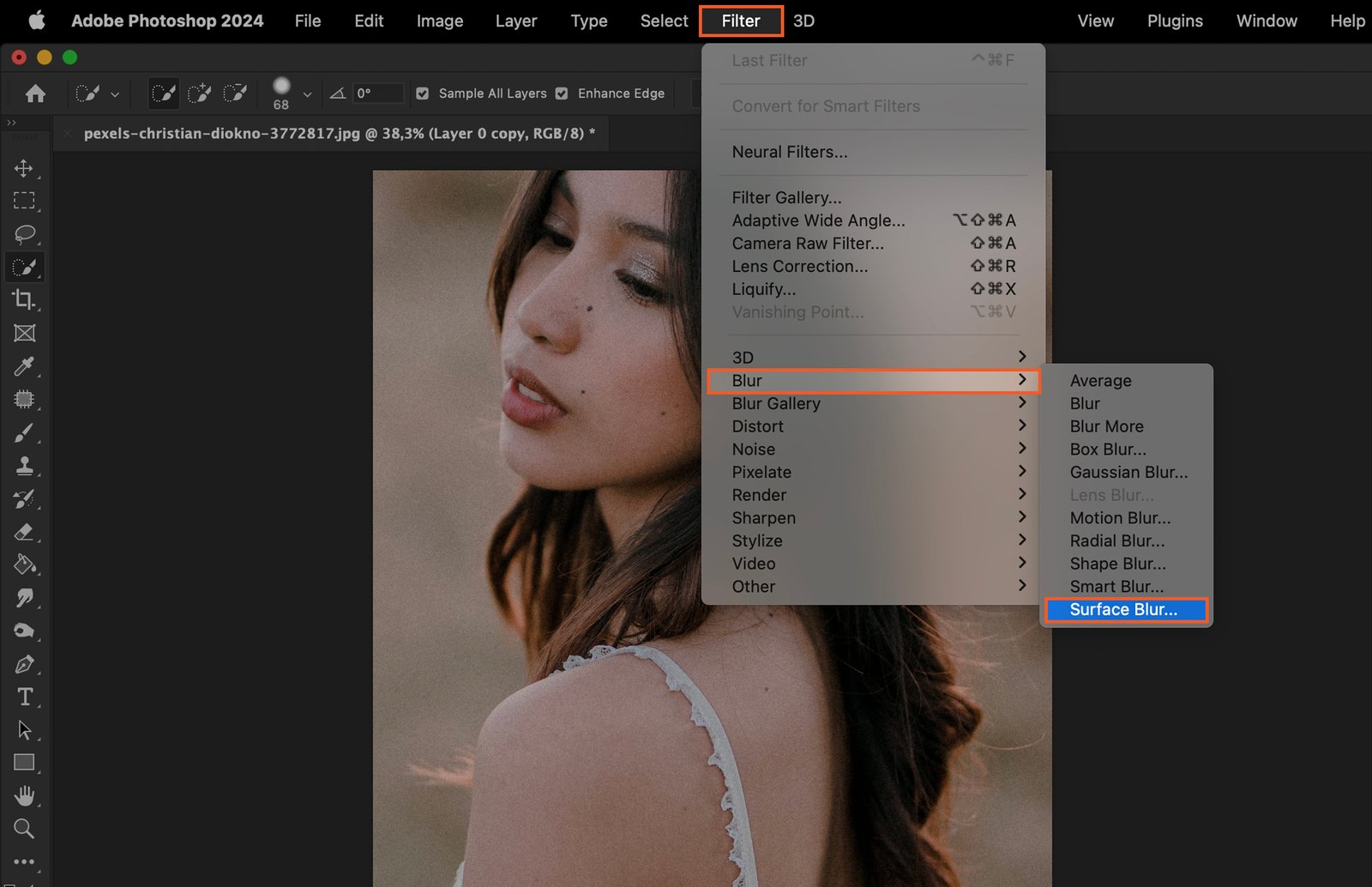
3. Apply Surface Blur
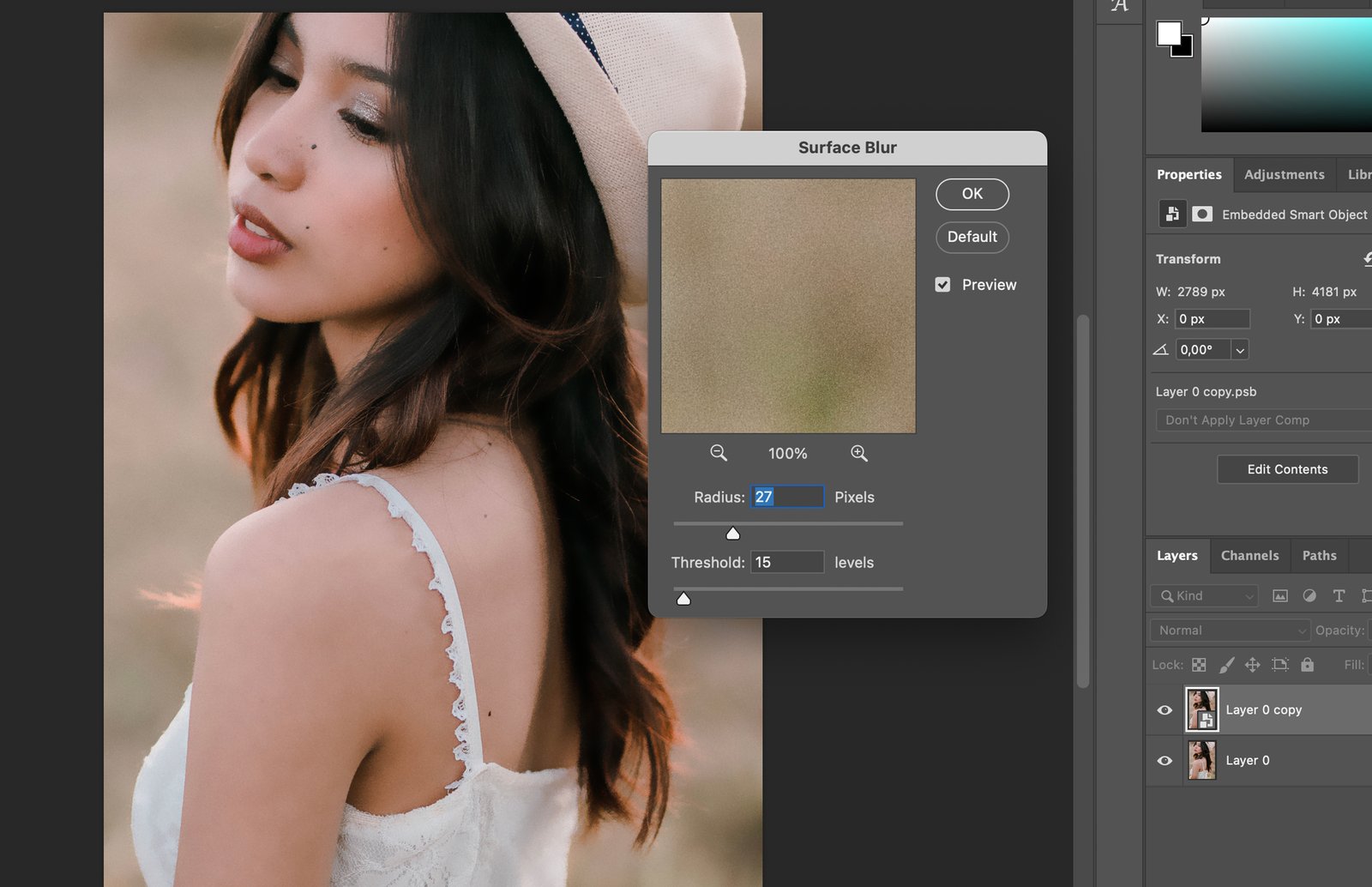
Choose Filter > Blur > Surface Blur. Use the preview to inspect both a smooth area and a detailed edge. Avoid judging the whole photograph from a small zoomed-out preview.
4. Adjust Radius and Threshold
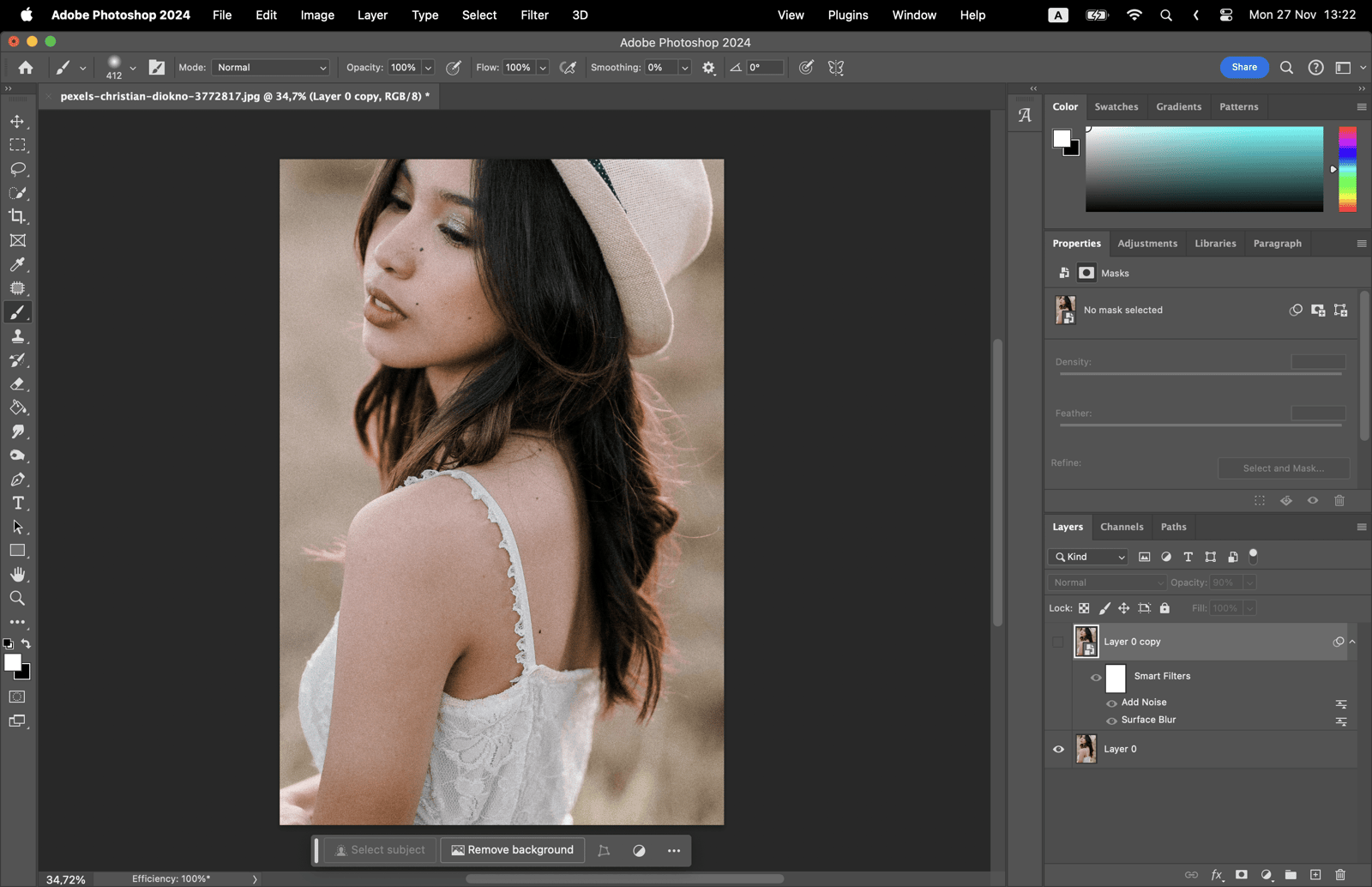
Radius sets the size of the sampled area. Threshold controls the tonal differences that affect the blur. Adjust both while checking whether the texture you want to keep remains visible. If hair, eyelashes, or fabric soften, reduce the effect or hide it in those areas with the Smart Filter mask.
5. Treat Added Noise as an Optional Effect
Add Noise Does Not Restore Detail
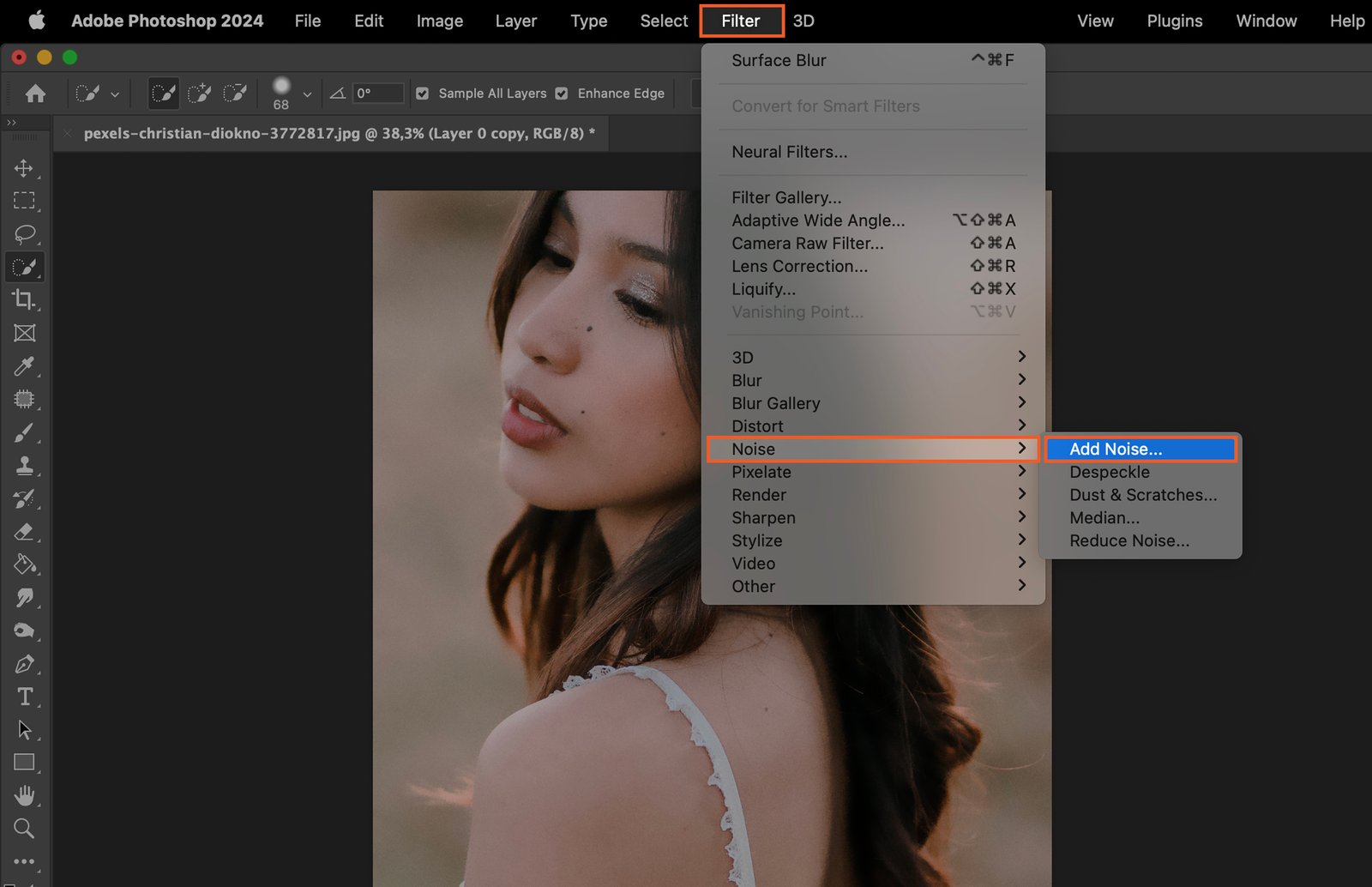
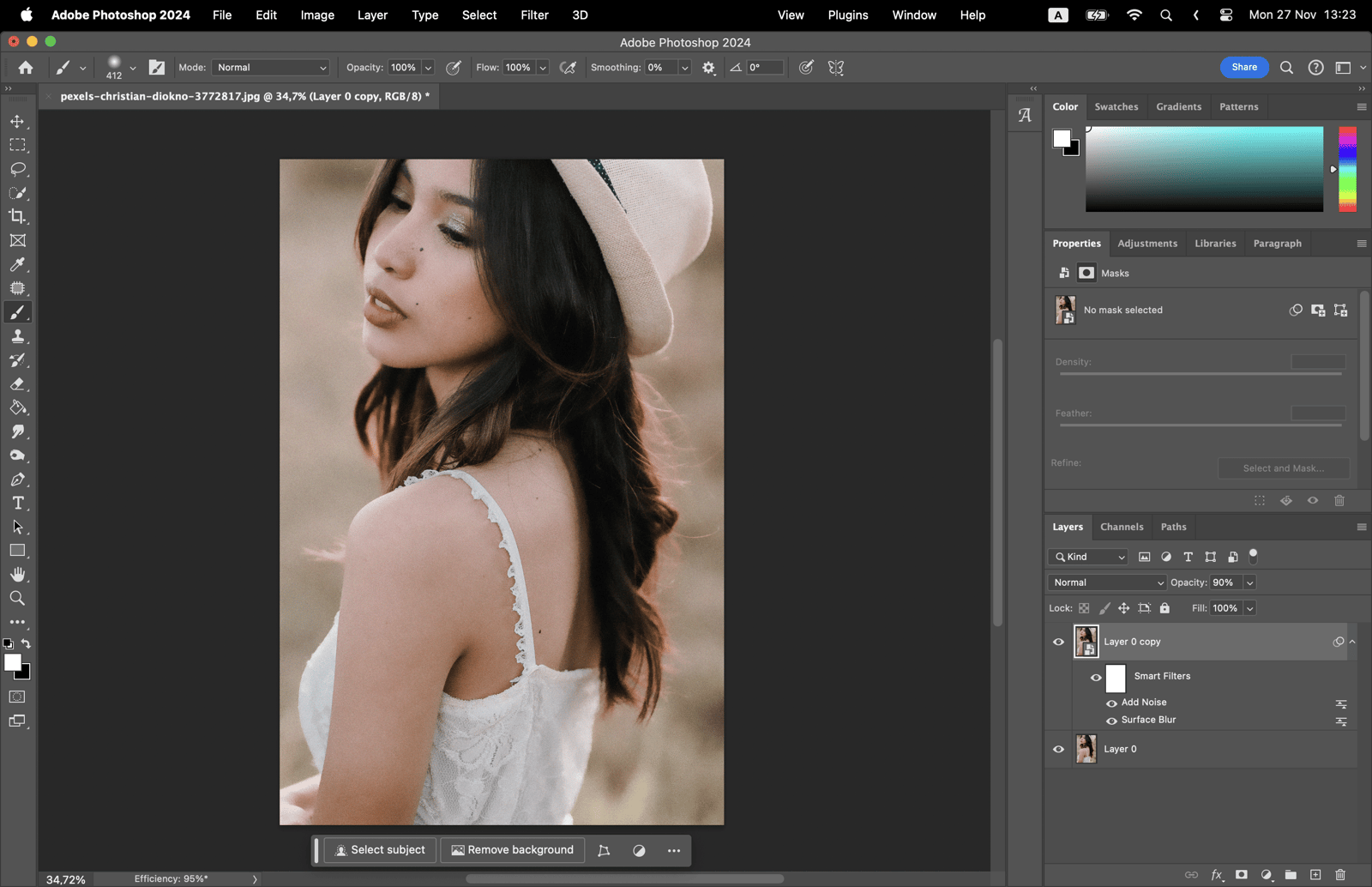
The original sequence used Filter > Noise > Add Noise after smoothing. This adds random texture; it does not restore the original detail removed by blur. Skip it when your aim is simply a cleaner photo. You might use a subtle texture for a deliberate retouched look, but that is a separate creative choice.
Gaussian Changes the Added Texture
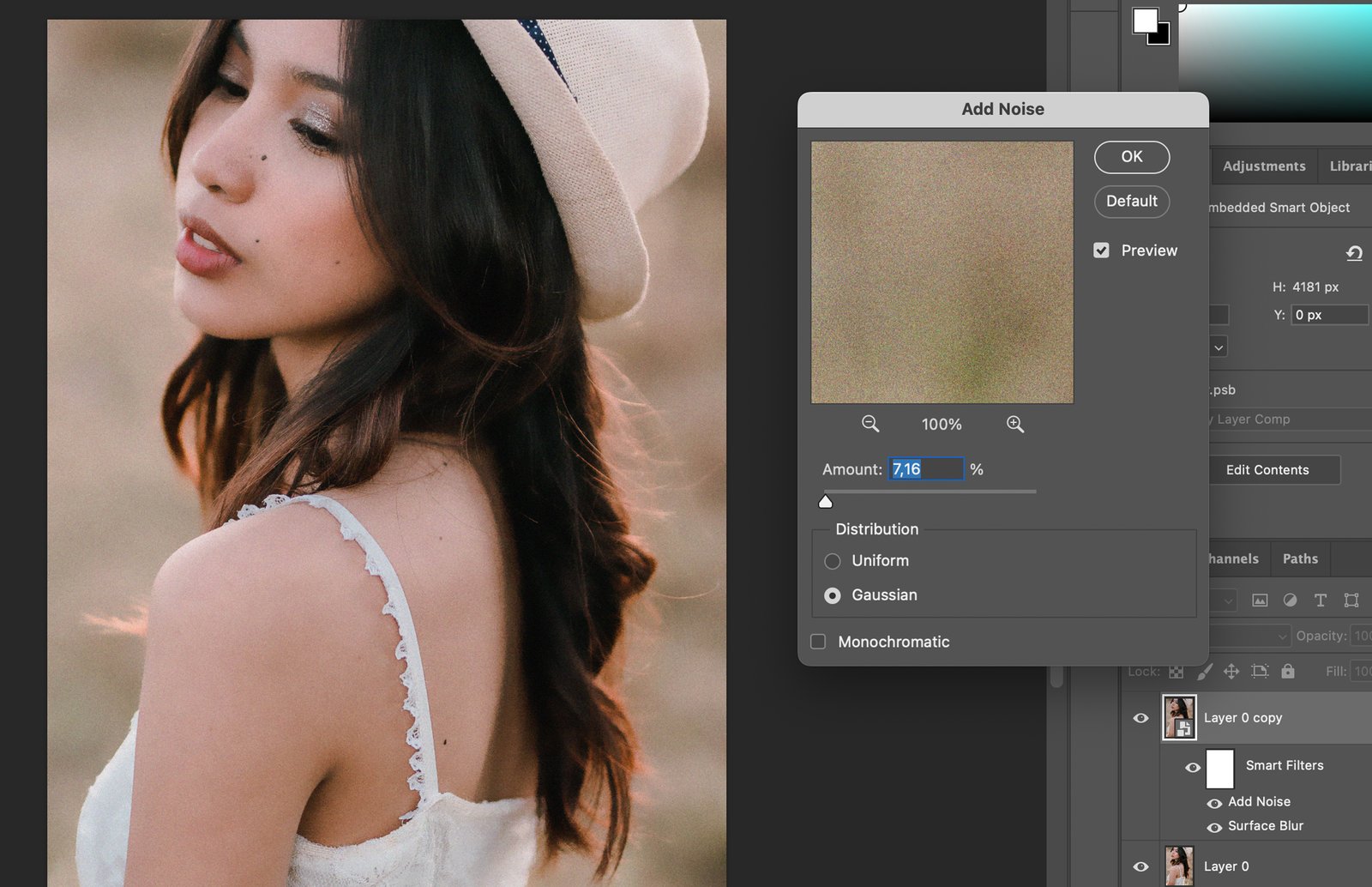
The older screenshot shows the Gaussian option. Adobe describes Gaussian noise as a speckled distribution and Uniform noise as a subtler distribution. Monochromatic adds tonal noise without changing colors. None of these options makes added noise a required part of noise removal. See Adobe's filter reference for these controls.
6. Blend and Compare the Result
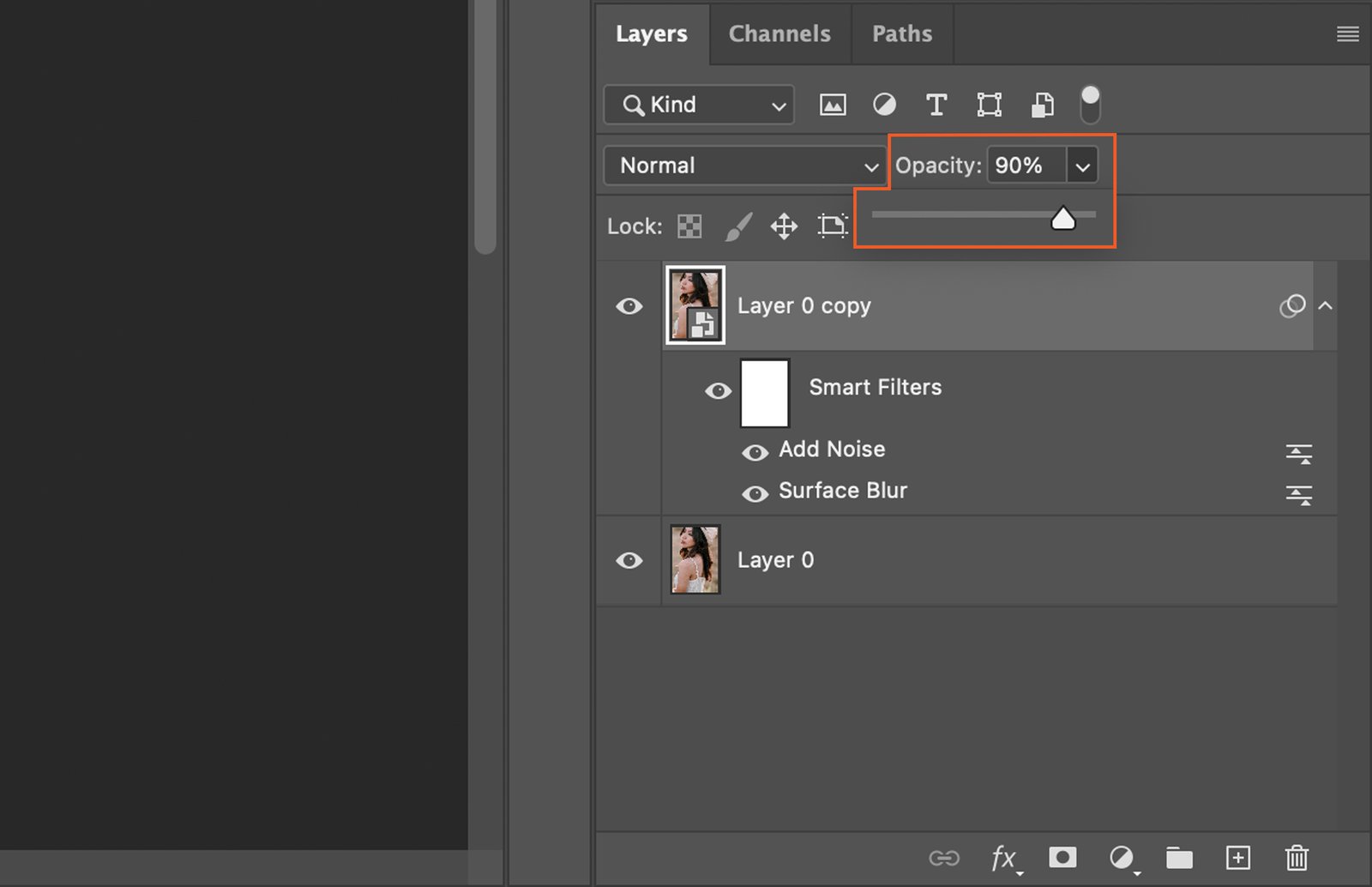
Lower the edited layer's opacity if you need to mix some original texture back in. This also brings some original noise back, so compare the result instead of assuming lower opacity is always better. Use the mask for local control where the background and subject need different treatment.
The existing comparison below belongs to this older example. Its “Original” and “Edited” views are not evidence of an AI Denoise result.
Check Detail Before You Save
Inspect the face or main subject at 100%, then check the photo at its intended display or print size. Compare small features, smooth gradients, and dark areas. If the result looks waxy, reduce the noise reduction or mask it away from important texture.
Keep an editable master with its layers and Smart Filters, and save an export for sharing. Reopen that export to check that compression or resizing has not introduced a new problem.
Choose the least smoothing that makes the noise acceptable. A cleaner background is useful; a featureless subject is not.