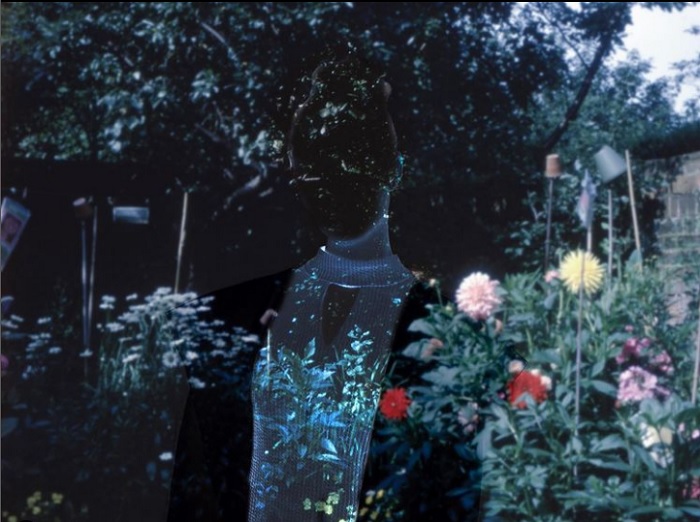
Fantasy photographers turn imagined scenes into pictures: a forest becomes a fairy-tale kingdom, a person floats above the ground, or an ordinary landscape bends in an impossible way. Costumes, sets, lighting and photo editing all have a part to play.
Start with Kirsty Mitchell for handmade fantasy worlds, Erik Johansson for surreal photographic composites, or Nicolas Bruno for darker, dream-inspired scenes. The 26 photographers and visual artists below show how varied the genre can be. Some work with staged photographs; others extend fantasy into illustration and digital art.
What Is Fantasy Photography?
Fantasy photography uses photographs to tell stories that reach beyond everyday reality. It often draws on surrealism, but it can also take the form of a carefully staged portrait with no impossible event in the frame.
Much of the imagery comes from folklore and fairy tales. Costumes, props and locations can suggest a character or an imagined world. Other images use photo manipulation techniques to combine photographs, change scale or make familiar objects behave in unexpected ways.
The genre overlaps with fine art, portraits and self-portraits. There is no single look: a bright woodland scene and an unsettling dream can both belong here.

© Alice Alinari
26 Fantasy Photographers and Visual Artists
Use this selection to find an approach you want to explore, from fairy-tale portraits to surreal landscapes and science-fiction art. Each profile points to an artist’s portfolio or social account so you can explore beyond the examples shown here.
Platon Yurich | @platon_yurich

© Platon Yurich
Platon Yurich is a photographer and mixed media artist that has strong fantasy elements within his work. He has a cinematic style of photography. And he also works in film and other forms of visual art.
His fantasy work is surreal. But it also has a gritty realism. The shots have a dream-like quality. But the dream isn’t too far from reality. And you’re not sure if it’s a good dream or a bad dream.
Erik Johansson | @erik.joh

© Erik Johansson
Erik Johansson is a Swedish photographer and visual artist based in Prague. He combines his own photographs to make impossible scenes look believable. Landscapes and rural settings become places where familiar rules no longer apply.
His photo manipulation starts with planning the photographs, props, lighting and perspective. The editing brings those pieces together. His website’s behind-the-scenes videos show how much of the illusion begins in front of the camera.
Nicolas Bruno | @nicolasbruno

© Nicolas Bruno
Nicolas Bruno takes fantasy photography in a darker direction. His dream journals and experiences of sleep paralysis inform scenes that feel like nightmares made visible.
He creates the work through photography, self-portraiture, sculpture and costume design. Fire, water and obscured figures give the images an uneasy atmosphere. Look at how a pose or a hidden face can suggest a story without explaining it.
Jovana Rikalo | @jovanarikalo

© Jovana Rikalo
Jovana transports us to a magical world. She uses bold and intricate costumes and props. Her images are powerful and well-crafted. There’s magic and mystery, like we’re in a fairytale. But the images are also grounded and real. We’re not looking at another world. The magic has broken through into our world.
Fantasy portraits make up most of her work. And her subjects are young women wearing beautiful dresses. We think of princesses and fairies. It’s all intensely feminine. But there’s a rough edge to the frills and flowers. She also produces stunning self-portraits.
Jovana shares her magical secrets in her brilliant Fairytale Portraits course. We’re proud to say it was a collaboration between Jovana Rikalo and Expert Photography. You have to see it to believe it.
Rosie Hardy | @georgiarosehardy

© Rosie Hardy
Rosie Hardy combines self-portraits, handmade props and image editing to turn an idea into a scene. Her fantasy work can be romantic or playful, with ordinary objects becoming something much larger than life.
In her account of making Searching for Validation, she describes using a mirror as a stand-in for a giant phone. It gave her something to pose with before she changed the image in editing. It’s a practical example of planning a composite while shooting.
Natacha Einat | @skip_closer

© Natacha Einat
Natacha Einat is a fantasy image maker and visual artist. She uses clever photography tricks and post-processing techniques to change reality.
Animals and nature play a strong role in her fantasy work. When you look at her work as a whole, you can see a sense of spirituality. She implies that all life on earth is intertwined.
The night sky also features heavily. The stars and the planets often take center stage. It gives you the impression she wants to go beyond our terrestrial reality.
Bella Kotak | @bellakotak

© Bella Kotak
Bella Kotak is a fine art photographer that has a big fantasy influence. Her shots are incredibly detailed and considered. The costumes she uses are elaborate and exquisite.
Her scenes are natural, with intense floral designs. And her portraits feel enchanted and magical. The models appear to be royalty of the forest. Or they are the human embodiment of the forest itself.
Her images are rich in color and lush in texture. There’s a blend of modern fashion photography and classical paintings. And her work is reminiscent of John Everett Millais’s Ophelia.
Joel Robison | @joelrobison

© Joel Robison
Joel Robison is a Canadian artist who brings a sense of fun into his fantasy photography. He has a wonderful imagination. And he’s a superb technical artist.
Miniature self-portraits are a common feature in his collection. Using his post-production skills, he shrinks himself to the size of a mouse. It allows us to imagine life from the perspective of the very small.
His fantasy photographs are whimsical and lighthearted. There’s a sense of magic. And a sense of humour. Looking through his gallery is like reading a children’s story.
We’ve been lucky enough to collaborate with Joel on his incredible Fantastic Photo Adventures course. It gives you all the insider information you need to create your own fantasy photography.
Luisa Azevedo | @hey.luisa

© Luisa Azevedo
Luisa Azevedo is an illustrator and fantasy photographer. She’s a lover of magic. And that is clear in her style of photography.
Luisa loves nature and the natural world. Animals feature prominently throughout her collection. And they’re often fused and blended with the natural landscape.
She uses a soft color palette. And her work has a soft and gentle sentimentality, which matches her vision of the world. It’s a world at peace, where nature flourishes and magic abounds.
Herri Susanto | @nak_bali_

© Herri Susanto
Herri Susanto is a Photoshop fantasy artist with a tremendous set of photo manipulation skills.
Herri sticks to the real world. He doesn’t ask us to go to Narnia or The Shire. He uses his Photoshop skills to change the world we already know. He manipulates and cracks our standard reality into something new.
He has a cinematic style of photography. He nods to themes from disaster movies we’re familiar with. And some of his work has an implied message, such as pollution or global warming.
Julian Majin | @julianmajin

© Julian Majin
Julian Majin’s science-fiction imagery takes fantasy into space. Pale colors, darkness and cinematic compositions give the scenes a sense of distance and foreboding.
His work offers a different starting point from the forests and fairy-tale costumes elsewhere on this list. Look at how scale and empty space can make a scene feel unfamiliar before you add more elements.
Katerina Plotnikova | @_katerinaplotnikova_

© Katerina Plotnikova
Katerina Plotnikova is a fantasy photographer with a love for fairytales. And she uses her photography to create her own mystical tales.
Her images use classic fantasy imagery and themes. Much of her work is portraits of women dressed in fairy-like costumes. And the subject is also interacting with an animal. Animals hold a special place in works of fantasy. And Katerina’s photography is no different.
She shoots in fabulous locations. And they provide a soft and natural color scheme for her images. Meadows and woodland bring their own sense of wonder and mystery, which she uses in her fantasy photography.
Fabiola | @glindaizabel

© Fabiola
Fabiola is a visual artist with a passion for old stories and romantic tales. Books are a common feature in her work.
There are hints of traditional fantasy imagery. But her style of fantasy photography is very modern. Her photos are bright and colorful. And the settings are often sweetened real-life locations.
She expresses herself through self-portraits. She uses multiple Photoshop techniques. And she shrinks herself down for miniature self-portraits. There’s a lot of joy in her work. And the joy is infectious.
Adam Martinakis | @adammartinakis

© Adam Martinakis
Adam Martinakis is a digital artist working with 3D and other computer-generated visual media. His work belongs to the wider world of fantasy and surreal art, rather than being an example of camera-based fantasy photography.
Abstract human forms and strained connections between figures give his images an unsettling mood. For a photographer, the inspiration is in the gesture, shape and space between subjects. His inclusion here shows a related visual language, not the same method of making an image.
Anya Anti | @anya_anti

© Anya Anti
Anya Anti is a Ukrainian photographer based in the United States. She’s a fantasy photographer that uses self-portraits to express herself. She becomes the character in a story all her own.
She uses a cold color palette, with a lot of blues and whites. And you’ll also find a lot of ice and snow in her work. It creates a feeling of fragility in her photos. And there’s a sense of loneliness in there too.
Her photography skills are excellent in the studio and on location. And she’s also created cinemagraphs. The movement of a cinemagraph adds to the sense of magic in her photography.
It was our pleasure to help Anya Anti produce her incredible Creative Portrait Concepts ebook. It gives you never-seen-before insight into her work. And it’ll help you create stunning fantasy portraits like hers.
Kirsty Mitchell | @kirstymitchellphotography

© Kirsty Mitchell
Kirsty Mitchell is a British fine art photographer whose fantasy worlds draw on her background in fashion design and costume making. Her Wonderland series combines woodland settings with elaborate handmade costumes, props and sets.
For inspiration, study how the costume and setting belong to the same world. Her website’s Wonderland material and behind-the-scenes photographs show the physical work behind the finished images.
Stanislav Istratov | @flexdreamscom

© Stanislav Istratov
Stanislav Istratov is a Ukrainian photographer with a bold style that incorporates fantasy imagery and ideas.
His work is mainly portraits and fashion photography. His sets and costumes are highly stylised. And his images are full of fantasy and science-fiction motifs. There’s a hint of erotica in there too.
The imagery is set in fantasy. But the photographs have the glossy finish of modern fashion photography. He combines imagery and style to create a unique blend that wouldn’t look out of place in a fashion editorial.
Alice Alinari | @alice_alinari

© Alice Alinari
Alice Alinari creates fantasy portraits. She brings classic symbols and themes from fantasy into her portrait photography.
Her sets and costumes are detailed and decorative. And her photographs embrace the splendour and elegance of stories of princesses and queens. Her subjects become the female protagonists of fairy tales and myths.
There is a hint of fashion photography in her style of shooting. And every shoot has a clear vision. The sets and costumes all have a clear color scheme that sends a message.
Maia Flore | @maiaflore

© Maia Flore
Maia Flore brings a sense of play to the relationship between a body and its surroundings. Her own biography describes movement, humor and reality as central to her images.
Her Sleep Elevations series shows women suspended in dreamlike scenes, drawing on childhood memories and imagined weightlessness. It’s a starting point for thinking about pose and composition: how can the position of a body make an everyday setting feel strange?
Laurent Chéhère | @laurentchehere

© Laurent Chehere
Laurent Chéhère is a French photographer living and working in Paris. He’s an accomplished street and documentary photographer. But his series on flying houses is most definitely a work of fantasy.
The houses, isolated and floating in the sky, suggest escape from everyday life. It’s a feeling we’ve all experienced in our lives. The desire to fly away and find somewhere new.
Anil Saxena | @anildigitalartist

© Anil Saxena
Anil Saxena is a visual artist with a playful sense of humour. He pulls and twists and bends reality with his surreal digital art. He has excellent Photoshop skills. And he’s able to express a unique vision of the world.
Many of his images center around the theme of creation. His fantasy work explores how our world is created. Or he changes the fabric of reality. He creates a surreal landscape where people can manipulate their environment.
He combines photography and digital art. And this blend of media blurs the line between reality and fantasy. We’re not sure where one begins and the other ends.
Tommy Ingberg | @tommyingberg

© Tommy Ingberg
Tommy Ingberg is a Swedish photographer and visual artist. His photography style isn’t strictly fantasy. But his images are surreal, and his photographs warp reality.
There’s a clear Dada influence in Tommy’s work. He uses black and white, which aligns his work with traditional surrealism. And the influence from surrealist painting can’t go unnoticed either. You get visual echoes of Dali and Magritte.
We can also see elements of fantasy in his images. He often uses balloons and birds. And faces are obscured or removed. These are common tropes in a lot of fantasy art.
Kylli Sparre | @kylli_sparre

© Kylli Sparre
Kylli Sparre is a visual artist based in Tallinn, Estonia. Her background in dance informs the movements and poses in her images, where a figure and its surroundings can seem to become one.
Her work can be surreal, dreamlike or symbolic. Look at the position of the body within the frame and the space around it. Those relationships can carry a fantasy scene without an elaborate costume or a crowded set.
Gabe Tomoiaga | @gabetomoiaga

© Gabe Tomoiaga
Gabe Tomoiaga is a Romanian-born visual artist based in Seattle. His fantasy portraits of his sons turn childhood adventures into storybook scenes, with animals, oversized plants and imagined journeys.
In an interview about that work, he described his sons’ curiosity as a source of ideas. The pictures suggest a world seen through a child’s imagination. Look at how that point of view changes the scale and feeling of a scene.
Jairo Alvarez | @jairoalvarezphoto

© Jairo Alvarez
Jairo Alvarez is an Argentinian photographer and mixed media artist. His process includes drawing, planning and constructing scenes before photographing them. He also works by hand on printed photographs, turning images into physical objects.
His work makes familiar things feel uncertain. It’s a reminder that fantasy can begin with an altered object or a constructed scene, as well as with digital editing. Look at how the thing being photographed can carry the idea.
Logan Zillmer | @loganzillmerphoto

© Logan Zillmer
Logan Zillmer is a professional photographer from the United States. His work varies in styles and disciplines, ranging from product to fashion photography. And, of course, fantasy.
His fantasy images are fun. They are humorous with a sense of social commentary. And he’s able to add elements of surrealism into his more serious work. He takes standard advertisement shots and injects a bit of fantasy.
His Instagram account is excellent for behind-the-scenes content. He gives you a look at how studio photography operates.
Conclusion
Fantasy photography can begin with a costume, an unusual prop or a change in perspective. The artists above show different ways to give those choices a story, from Kirsty Mitchell’s constructed worlds to Erik Johansson’s photographic composites.
Pick one image you admire and study a single decision: the pose, the color palette, the scale or the relationship between the subject and setting. Then use that idea to plan a different scene of your own. A specific starting point gives your imagination something to build on.