

You don’t need to print model releases or carry paper around for your models to sign. Your phone does the job, and the signature is legally the same one.
This list used to run to seven apps. It runs to four now, because five of the originals have been pulled from the app stores. That story is at the bottom if you came here from an older bookmark.
If you only want the answer: Easy Release for commercial work, SnapSign if you need models to sign after they have left. Those two are also the only release apps Getty Images approves, and it approves them narrowly.
What is a Model Release App?
If you want to get into commercial photography, you’ll be hearing ‘model release’ a lot. But what is it exactly and why do you need it?
A model release is proof that a person gave you permission to sell the images you produce. It protects you from legal problems when the photos are used commercially.
There are a few types. The general model release covers anyone 18 or older. The photo release form for minors covers anyone younger, and needs a parent or guardian. The property release form covers buildings and privately owned places.
You might be wondering why you need proof at all. Isn’t it enough that your model turned up and posed willingly?
People change their minds. Someone can decide a year later that they never agreed to the shoot, and without documentation it is your word against theirs. That is the whole reason the form exists, and it matters most when you plan to make money from the pictures. Most microstock agencies will not accept a submission with people in it unless a release comes with it.
Get the signature before the shoot starts, not after. And bring a witness if you can, because a witness signature makes the document much harder to challenge.
4. Adobe Scan
Adobe Scan is not a release app. It is here because it solves the specific problem of a release you cannot edit.
Some agencies and clients hand you their own form and will not accept a substitute. Adobe Scan turns a photo of that paper into a clean, straightened PDF, which you can then sign in Acrobat Reader. It handles the awkward cases the purpose-built apps refuse to touch.
It is free, and it is on both platforms.
What it will not do is produce the release itself. There is no template, no model database and no signature field. Adobe Scan makes the PDF; something else has to fill it in.
3. Adobe Acrobat Reader
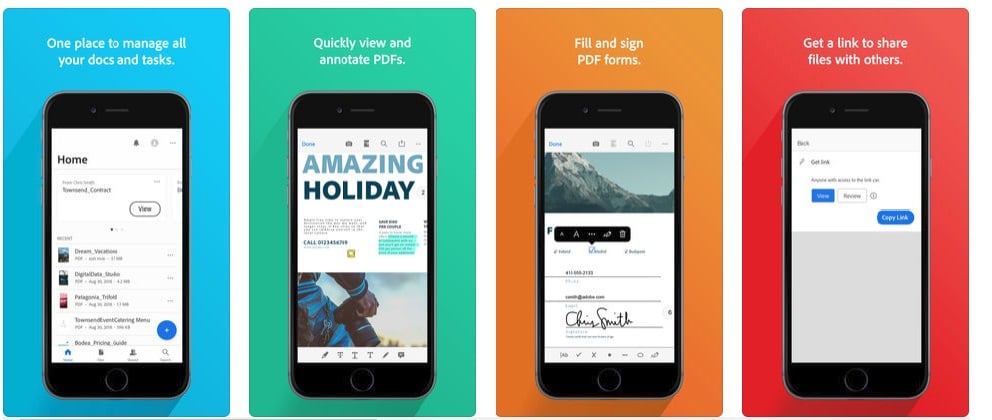
Adobe Fill & Sign no longer exists as a separate download. Adobe folded it into Acrobat Reader, which now carries the same form-filling and signing tools for free. If you went looking for Fill & Sign and could not find it, this is where it went.
What you get is a way to fill in and sign any PDF on your phone. Take your release, drop it in, tap the fields, sign with a finger. It is not built for photography and has no model database, no agency templates and no reminders.
What it does have is universality. Every client, agency and lawyer can open the file it produces, and you already need it to read PDFs anyway. Treat it as the thing you keep alongside a proper release app, not instead of one.
2. SnapSign
SnapSign is the newest of the group and the one that filled the gap when the older apps disappeared.
It is built around remote signing, which is the part most of the old apps got wrong. You send the release to the model’s phone and they sign it wherever they are. That covers the shoots where the paperwork gets forgotten in the rush and you are chasing a signature two days later.
It carries agency templates in nine languages, and it is one of only two apps whose releases Getty Images accepts. Read the small print though: Getty approves the ‘Getty Images Release’ template bought through a SnapSign subscription, and says outright that SnapSign’s other release forms are not approved. Pick the wrong template and the approval does you no good.
It is free to install, with in-app purchases. It is also the youngest and smallest app here, at a few thousand installs against Easy Release’s decade of use. If you want a long track record behind the document you are asking someone to sign, buy Easy Release instead.
1. Easy Release
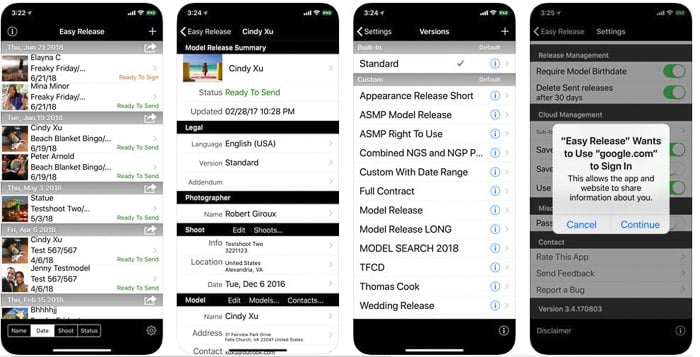
Easy Release has been the standard for years and it is still the most complete option.
The feature that keeps it ahead is multi-page releases. On a big commercial shoot with several pages of legalese, everything else on this list makes you compromise. You can customise the wording, which matters when a client’s legal team has opinions about it.
Auto-save is the other reason to pick it. Releases go to the cloud as you create them, so losing your phone does not mean losing the paperwork. Keep that in mind alongside your usual backup routine.
The download is free, but saving releases needs the yearly subscription. For anyone shooting commercially it pays for itself the first time a client asks for documentation.
Two things to know before you buy. The app is now called Easy Release Pro. Getty Images approves it only with a subscription and the in-app ‘Enhanced Model Release Template’. The standard forms do not count.
What Happened to the Old Favourites
If you have used this article before, five apps you remember are missing and a sixth has moved. They were removed from the app stores, not from our list:
- Releases by 500px and Releases by Snapwire are both gone from the App Store. Neither was ever on Android.
- Model Releaser has gone from both stores.
- Model Release Pro and Model Release X have gone from Google Play. Neither had an iOS version.
- Adobe Fill & Sign is no longer a separate app. The feature moved into Acrobat Reader, which is why Acrobat Reader is on the list now.
If one of these is still sitting on an old phone, it will keep working until the next OS update breaks it. Export anything you need before that happens, because you will not be able to reinstall it.
One more option worth knowing: if you shoot for a single agency, check whether their contributor app already has a release tool built in. Getty’s contributor documentation covers their requirements, and using an agency’s own form removes any argument about whether the wording is acceptable.
Frequently Asked Questions
Do Stock Agencies Accept a Release Signed on a Phone?
Getty Images does, and it names the apps. Its contributor guidance lists SnapSign on iOS and Android, using the ‘Getty Images Release’ template with a subscription, and Easy Release on iOS and Android, also with a subscription and the in-app ‘Enhanced Model Release Template’. Anything else you sign in those apps is a normal release, not a Getty-approved one. Check your own agency’s contributor pages before a big shoot, because each one publishes its own list.
Which Model Release App Is Free?
SnapSign is free to install, and you only pay when you buy a template or a subscription. Adobe Scan and Adobe Acrobat Reader are both free for scanning, filling and signing. Easy Release is free to download as well, but you need its subscription to save releases.
Do I Need a Release for Every Photo?
Only when a person or a private property is recognisable and the picture will be used commercially. Getty’s own wording covers people and property in the background as well as the main subject, so a bystander in shot can be enough to need one. Editorial and personal work is a different question, and the agency you submit to sets the rule.
What Is the Difference Between a Model Release and a Property Release?
A model release is signed by the person in the photo. A property release is signed by whoever owns a recognisable building, interior or privately owned place in the frame. A shoot in someone’s home with a model in it needs both, and each one goes to a different signatory. Getty publishes the two as separate templates, so check you have grabbed the right one before anybody signs.
Conclusion
Most of these apps do the same job, so the choice comes down to how you shoot.
Easy Release if you shoot commercially and need customisable, multi-page forms. SnapSign if you need models to sign after they have gone home. Acrobat Reader and Adobe Scan for the client who insists on their own paperwork.
Whatever you pick, the important habit is not the app. It is getting the signature before the shoot rather than after, and keeping the file somewhere you can find it years later.