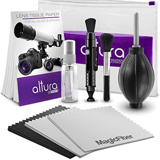
The Altura Photo Professional Cleaning Kit is the best camera cleaning kit for most photographers. It covers the cleaning you do most often, which is dust and fingerprints on lenses, filters and viewfinders. It puts an air blower, brush, lens pen, alcohol-free spray and three microfiber cloths in one hard case.
The rest of the list covers more specific jobs. Some readers need wet swabs to clean a full-frame or APS-C sensor. Others want one small tool that lives in a camera bag, or a supply of disposable wipes for marks a cloth cannot shift. Our guide to cleaning your lenses covers the method step by step.
The Best Camera and Lens Cleaning Kits
Start with the part you need to clean. A lens kit handles the glass you touch every day, and a sensor kit handles the dust spots that show in your photos at narrow apertures. Most photographers need one of each, so the badges in the table show which picks are for lenses, which are for sensors and which only move loose dust.
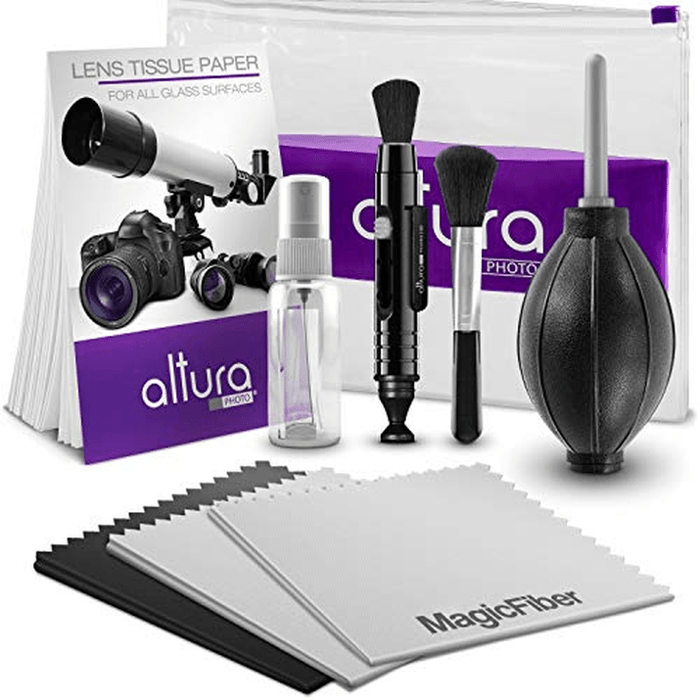
The Altura Photo Professional Cleaning Kit earns the top spot because it does the everyday lens job from start to finish with no extra purchase. You blow off loose grit, sweep away what is left with the brush, then lift fingerprints with the lens pen. If a smear remains, the alcohol-free and ammonia-free spray goes on one of the MagicFiber cloths, not on the glass.
That order matters, because wiping a dusty lens drags grit across the coating. Some kits leave out the spray or the brush, so you buy those separately. This one also adds 50 lens tissues and a hard case that keeps the tools clean between uses.
The limit is the sensor. Nothing in the case is made for sensor cleaning, apart from the blower. If spots show in your skies at f/11 and smaller, add the UES APS-C kit or the Photographic Solutions kit. If you only want something for your jacket pocket, the LensPen NLP-1 does the fingerprint part of this kit at a fraction of the size.
2. Photographic Solutions Digital Survival Kit
| Cleans |
Cleans
Full-frame sensors, lenses and filters
|
| Method |
Method
Wet swab and fluid
|
| In the Box |
In the Box
4 Type-3 (24mm) swabs, 1/2 oz Aeroclipse, 10 PEC-PADs, 1 E-Wipe, pouch
|
| Consumables |
Consumables
Swabs, PEC-PADs and fluid
|
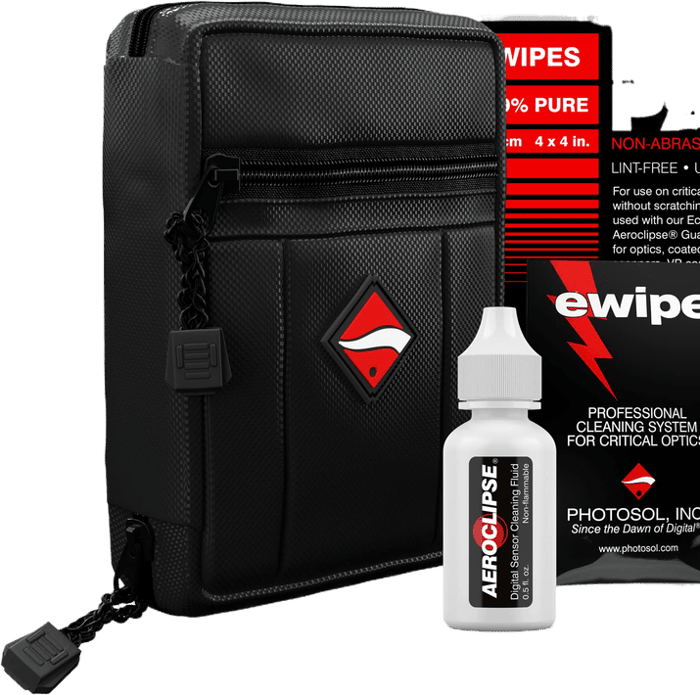
The Photographic Solutions Digital Survival Kit is the sensor kit to buy if you shoot full frame. Its Type-3 Sensor Swabs are 24mm wide, which is the full height of a full-frame sensor. One swab can wipe the whole surface in a single pass, so you are not overlapping strokes and pushing dirt from one strip into the next.
The fluid is Aeroclipse, the non-flammable version of the company's Eclipse cleaner. It dries fast and leaves no streaks, and the dropper tip lets you wet the swab without flooding it. The 10 PEC-PAD wipes and one E-Wipe let you use the same fluid on lenses and filters, and everything packs into a zippered pouch.
The catch is quantity. You get four swabs, which suits an occasional clean but not a camera you swap lenses on every day in dusty places. APS-C shooters should not buy this version, because a 24mm swab is wider than their sensor. The UES kit has 14 swabs at the right 16mm width, and Photographic Solutions also sells Type-2 17mm swabs.
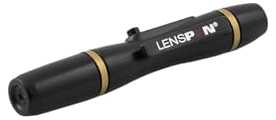
The LensPen NLP-1 is the smallest tool here that still removes a fingerprint properly. One end has a retractable natural brush for loose dust. The other has a 12mm round tip coated in LensPen's carbon compound, which absorbs skin oil instead of smearing it around.
There is no liquid to spill or dry out, so it can stay in a camera bag until you need it. The twist cap renews the carbon on the tip each time you put it back. At 4.3 in long, it fits a pocket as easily as a pen.
It is not a full kit, though. A heavy layer of grime or dried salt spray still needs fluid and a cloth, and the NLP-1 is made for lens glass, not sensors. Buy it as a carry tool alongside the Altura kit at home. For a sensor, the LensPen SensorKlear applies the same carbon idea.
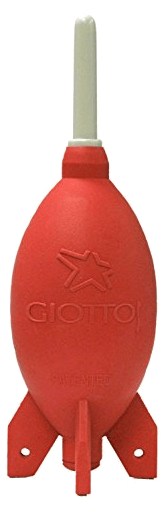
The Giottos Rocket Air Blaster is the first tool to reach for before anything touches your glass. It moves loose dust without contact, so there is nothing to scratch the coating. The large silicone bulb gives a strong burst, and it refills fast so you can keep squeezing.
A one-way valve brings in clean air, so the blower does not suck dust in through the nozzle and fire it back out at the lens or sensor. It also stands upright on its base, which keeps the nozzle off a dusty table.
At 7.5 in long, it is a home or studio tool more than a pocket one. It also has no intake filter, so it relies on the valve alone to keep the air clean. If you blow your sensor often, the JJC blower adds a filter and a soft tip. Choose the Rocket for raw air power on lenses, bodies and bags.
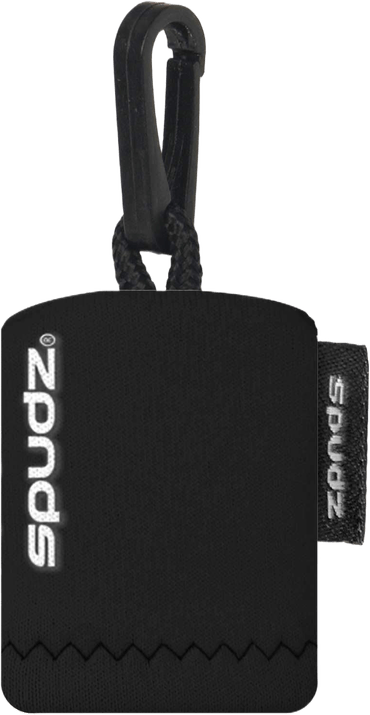
The SPUDZ Classic is a microfiber cloth that never gets lost or dirty in a pocket. The cloth is attached to a stretchy neoprene pouch with a clip, so you pull it out, wipe the lens and tuck it back in. The pouch keeps sand and lint off the cloth, and grit trapped in a cloth is what scratches a front element.
Clip one to a camera strap or bag and it is always ready for fog, spray or a fingerprint. This listing is a two-pack of 6 x 6 in cloths, so one can stay on your bag while the other goes in the wash. The cloths are machine washable.
A dry cloth has limits. It lifts light smudges well but can spread heavier grease rather than remove it. Pair it with the Zeiss wipes for stubborn marks, or with the Altura kit's spray. If you want only one small tool for fingerprints, the LensPen NLP-1 handles oil without any fluid.
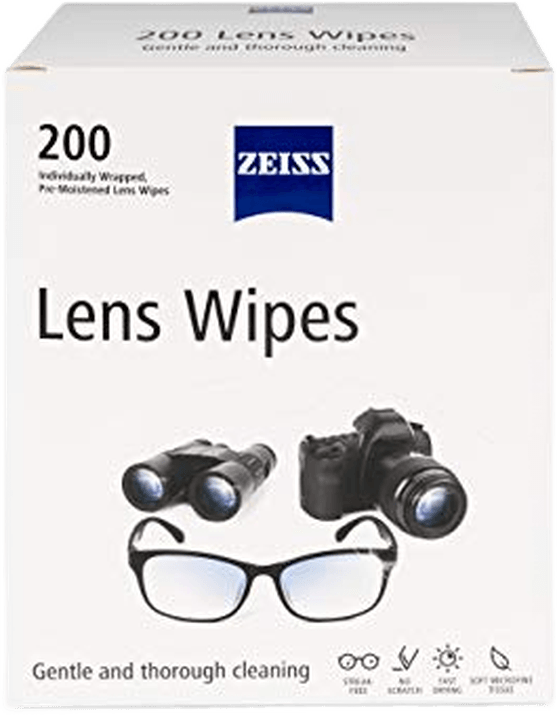
The Zeiss Pre-Moistened Lens Cleaning Wipes solve the marks a dry cloth cannot. Grease from fingertips, salt spray and dried rain all smear rather than lift when you rub them dry. A wet wipe dissolves them in one pass instead of pushing them around the front element.
Each 6 x 5 in wipe is sealed in its own packet, so it is clean every time you open one. A cloth carried in a pocket picks up grit over time, and a fresh wipe has none. Zeiss makes these wipes for coated eyeglass lenses, and they work the same way on filters and camera glass. The box holds 200, so you can leave a few in every bag.
They are disposable, so the box runs out and the wrappers pile up. If you clean every day, a washable cloth and a bottle of spray work out cheaper over time. Keep these for the marks a cloth cannot shift, and never use them on a sensor.
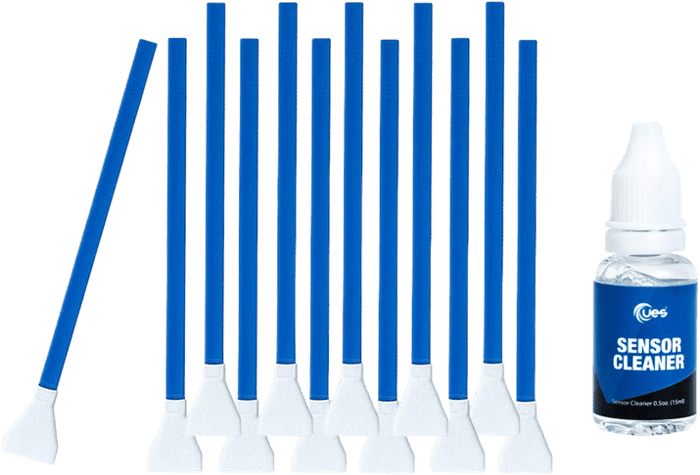
The UES APS-C Camera Sensor Cleaning Kit is the sensor kit for crop-sensor cameras. That includes Sony a6000-series bodies, Nikon DX, Canon EF-S and RF-S bodies, and Fujifilm X cameras. The swabs are 16mm wide, which matches the height of an APS-C sensor, so a single stroke covers it edge to edge.
You get 14 swabs, each vacuum-sealed after manufacture in a cleanroom, and a 0.5 fl oz bottle of alcohol-free fluid. Put a few drops of fluid on a swab and draw it across the sensor in one motion, then repeat with a fresh swab if spots remain. Because every swab is sealed, there is no dust on it when you start.
Fourteen swabs is more than three times what the Photographic Solutions kit holds, so the UES box lasts through many more cleans. The trade-off is the size, because these swabs are too narrow for a full-frame sensor. Full-frame shooters should buy the Photographic Solutions kit instead.
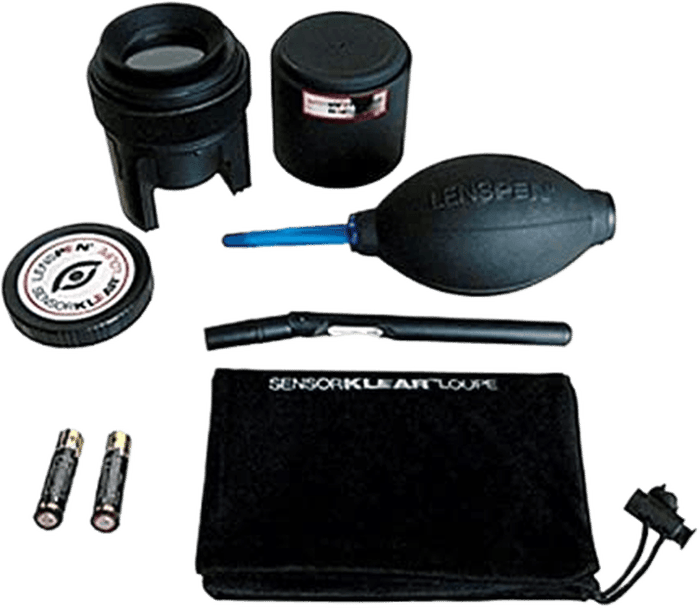
The LensPen SensorKlear handles the one job a blower cannot do, which is a stuck spot on the sensor. It uses a dry carbon compound like the LensPen NLP-1, on a flexible shaped tip that reaches down into the camera mount. You touch the spot, lift it and check again, with no fluid to dry and no streaks to chase.
It works well for a single oily mark or a speck that stayed put after a few bursts from the blower. Dry brushing alone would just spread that oil across the sensor. Because nothing spills or dries out, it can live in your bag next to the blower for cleaning in the field.
A pen is a spot cleaner, not a wet clean. A sensor covered in smears or many stuck particles still needs swabs and fluid, from the UES kit or the Photographic Solutions kit. Choose the SensorKlear as a dry first step before you go wet.
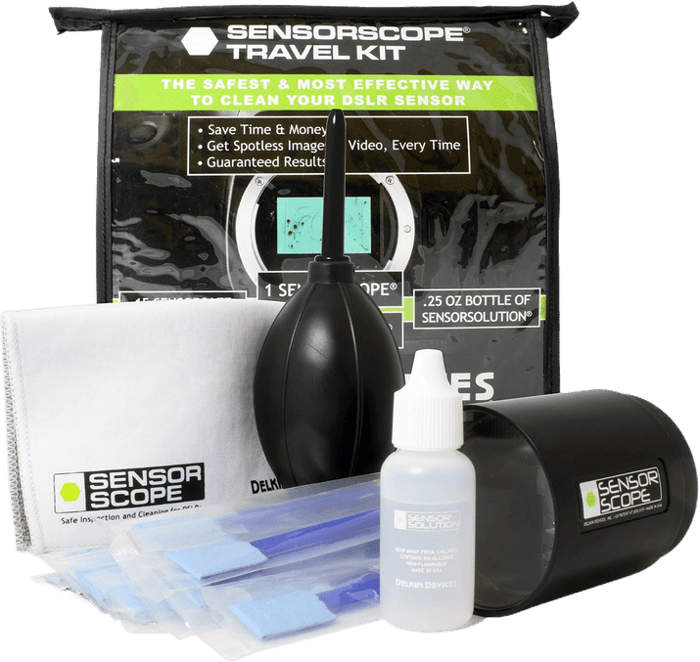
The Delkin SensorScope Travel Kit is the sensor kit for photographers who want to see the dust before they touch anything. The Sensor Scope inspection loupe shows you where each spot sits. You clean that patch only, rather than swabbing the whole sensor and hoping.
The bag holds everything for a full sensor clean. There is a SensorBulb blower, 15 Sensor Safe Wands, a 0.25 oz bottle of Sensor Solution, a cleaning cloth and a guide. Delkin designs the system for wet and dry debris on DSLR and mirrorless sensors, so it covers the stubborn marks a pen cannot lift.
The wands are 16mm wide, so a full-frame sensor needs overlapping passes. That is easier with the scope to check your work, but it is slower than a 24mm swab. If you already know where the dust is and only need swabs and fluid, the UES kit or the Photographic Solutions kit is the simpler buy.
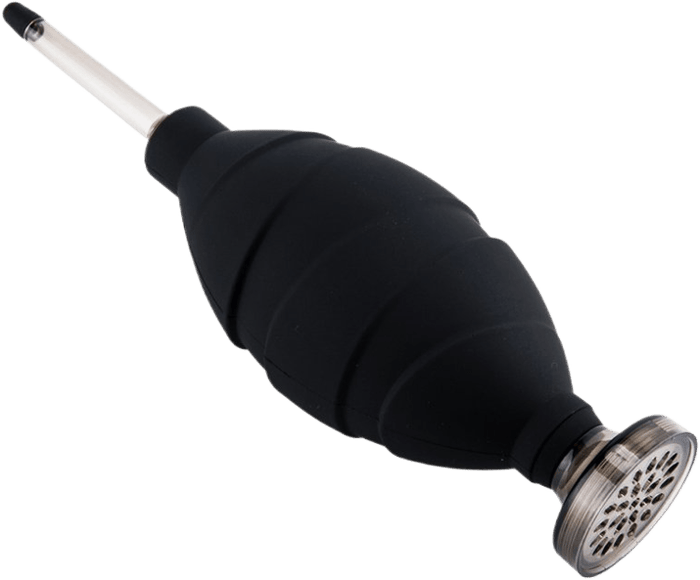
The JJC Dust-Free Air Blower is the blower to use near a sensor. A filter at the intake stops dust, sand and quartz particles larger than 21 microns from entering the bulb. That way, you blow clean air at the sensor rather than whatever was on your desk. That matters most on mirrorless cameras, where the sensor sits right behind the mount with no mirror in front of it whenever the lens is off.
One-way valves at both the intake and the nozzle stop backflow. The soft silicone tip also reduces the risk if you bump the sensor or a lens element. The box includes three replacement filters and a small spanner for changing them.
Its burst is smaller than the Giottos Rocket's, so it is slower for clearing a bag or a camera body. Treat it as the specialist blower for sensors and rear elements. If you want one blower for everything else, the Rocket moves more air.
How to Choose a Camera Cleaning Kit
Most photographers end up with one lens kit and one sensor tool. These checks decide which sensor tool fits your camera and which cleaners to avoid.
Match the Swab Width to Your Sensor
A wet swab should be as wide as your sensor is tall, so one stroke covers it. Full-frame sensors are 24mm tall and need 24mm swabs, such as the Photographic Solutions Type-3 swabs in the Survival Kit. APS-C sensors are about 15 to 16mm tall and suit 16mm or 17mm swabs, such as the UES kit. Look up your camera's sensor format in its specifications before you buy. A full-frame swab will not fit an APS-C camera, and a narrow swab on full frame leaves a band you have to clean with a second swab.
Blow Before You Wipe
Dust and sand act as abrasives. If you wipe a dusty lens, you rub that grit across the coating. Always start with a blower, then use a brush or lens pen, and only then use fluid. Work from the center of the glass outward and wipe no more than you need to.
Skip Canned Air
Compressed-gas dusters are sold for keyboards and office equipment. Tilt or shake the can and it can spit cold liquid propellant, which can mark the glass and is far too forceful for a sensor. A rubber bulb blower such as the Giottos Rocket or the JJC blower moves enough air for camera work without that risk.
Know When to Send the Sensor Away
Most sensor dust comes off with a blower or a carbon pen. Go to swabs only when spots stay after that. If you see scratches, a large smear or debris that keeps coming back after a wet clean, take the camera to the maker's service center or a camera shop. A mistake on the sensor costs far more than a professional clean. If you are new to photography, keep to lens cleaning until you are comfortable working inside the mount.
Prevention saves most of this work. Change lenses with the camera body facing down and keep it brief. Fit the new lens before you cap the old one, because dust is easier to remove from a lens than from a sensor. If your mirrorless camera can close its shutter when you change lenses, turn that setting on.
Conclusion
The Altura Photo Professional Cleaning Kit is the best camera cleaning kit for most photographers. It covers every step of lens, filter and viewfinder cleaning in one case. For sensor dust on a full-frame camera, add the Photographic Solutions Digital Survival Kit. If you want a single tool that lives in your bag, the LensPen NLP-1 handles fingerprints with no liquid at all.