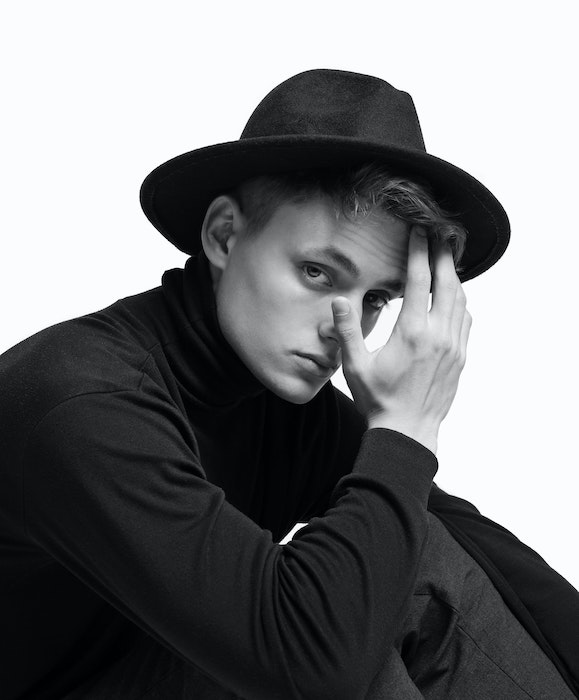
Male boudoir photography, sometimes called “dudeoir,” is intimate portraiture that puts your subject’s personality and chosen style first. Boudoir photography can be playful, quiet, romantic, or dramatic. Your model can stay fully clothed, and he doesn’t need a muscular build to take part.
Start with a private setting, an outfit he likes, and one simple pose. These ten ideas cover planning, lighting, and directing a male boudoir photoshoot so you can build a set of portraits around the person you’re photographing.
10 Male Boudoir Photoshoot Ideas and Tips
1. Do a Short Brief Before the Session
Chat with your model before you pick up the camera. Is he making a gift for his partner, celebrating a fitness goal, or trying something for himself? Ask what he wants the pictures to show. Don’t assume that a boudoir session must focus on muscles.
Choose a few reference photos together. Discuss clothing, poses, and how much skin he wants to show. Agree on who will be in the room and choose a space where he can change in private. Ask separately about permission to share pictures in your portfolio or on social media.
Start with the most covered outfit he has chosen. Tell him he can skip a pose or stop for a break at any point. Keep checking in as the session moves on.

2. Give Your Model Ideas on the Outfit
Help your model choose clothing that fits the mood of the shoot and feels comfortable to wear. An open shirt, a singlet with jeans, or underwear can each be a starting point. Nudity is optional, not the next step every session has to reach.
You can also get creative with a towel, bed sheets, or a kitchen apron. Ask him to hold or arrange the fabric himself so he controls the coverage.
For a playful theme, look at outfits in male calendars. A firefighter or policeman costume is an option if that is the look he wants. It doesn’t have to set the tone for the whole shoot.
Try a small action with each outfit. He could roll a sleeve, adjust a collar, or hold the edge of a shirt. This gives his hands something to do without needing a new pose.

3. Make Your Model Feel Comfortable
The communication skills that help make women comfortable in front of the camera matter when photographing men, too. Ask how your model feels about the session and listen to his concerns without making jokes about his body.
Give one direction at a time, and demonstrate it yourself when words aren’t enough. Ask him to adjust his own clothing or position. Get permission before making a hands-on adjustment.
Keep feedback specific. “That turn brings your face toward the light” tells him what is working. Show him a frame he likes and ask what he would change. Background music or conversation can help set the mood, but let him choose what feels comfortable.

4. Play With the Light
Try various lighting settings to match the mood you agreed on. A softly lit portrait and a picture with deep shadows can both belong in a male boudoir session.
With natural light, start beside a window. Turn your model a little toward it, then away from it, and compare where the shadows fall across his face and body. Turn off overhead room lights for this test so you can see what the window light is doing.
If muscle definition is part of the brief, try light coming from the side. If he prefers a softer mood, turn him more toward the window. You can also work with a flash or continuous light; daylight isn’t the only option. Check the result on the camera before changing the pose.

5. Inspire Your Model with Posing Tips
Give your subject a position to start from instead of asking him to “look confident.” Choose a pose he can hold without strain, then change one thing at a time.
Try these three starting points:
- Standing: Have him lean lightly against a wall with one knee relaxed. Give one hand a place on a pocket or shirt, then try looking toward the window and toward the camera.
- Seated: Ask him to sit on the edge of a bed or chair. Let him rest his forearms on his thighs, then adjust his shoulders and gaze.
- Reclining: Have him lie on his side with his upper body supported by a forearm. Adjust the position until he feels comfortable, then try a wider frame and a closer portrait.
Check the hands and shoulders between frames. If a pose looks tense or feels awkward, reset it. A quiet expression or a smile can suit the session just as well as a serious look. For more starting positions, read our article about posing men.

6. Use Minimal Props
You don’t need to fill the room with props. Start with one object that gives your subject a reason to move or a place to put his hands.
A book could lead to a seated portrait. A mug could fit a quiet morning scene. Bedsheets, towels, or curtains can add texture or let him choose how much of his body is visible.
Check the edges of the frame for clutter. Keep a prop when it contributes to the picture, and remove it when it pulls attention away from his face or gesture.

7. Photograph Silhouettes for a Dramatic Effect
Use silhouettes when you want to concentrate on the outline of the body. For an indoor setup, position your model in front of a window and photograph him against the brighter background.
Expose for the bright background so the model falls into shadow. Focus on him, even though you are setting the exposure for the window. If autofocus struggles, try the edge of his outline or focus manually.
Turn him into profile and leave a little space between an arm and his torso so the shapes don’t merge. Check the camera screen and adjust the exposure until you have the outline you want.

8. Give Your Boudoir Photos Character
Ask your model which side of his personality he wants to show. Does he want a thoughtful portrait, a playful picture, or a more dramatic look? Let that answer guide his expression and posture.
You can photograph the same person standing tall in one frame and sitting with relaxed shoulders in the next. Don’t force a “macho” pose if it doesn’t fit him.
Make room for a closer portrait, too. A glance toward the light or a hand resting beside his face gives you another way to show him without making every picture about his physique.

9. Tell a Story With Your Boudoir Photography
Build a short sequence around something your model might do at home. He could read by a window, put on a shirt, or sit on the edge of the bed before getting ready.
Plan a wide picture that shows the setting, a closer portrait, and a detail such as a hand on a cuff. Keep the outfit and light consistent so the pictures belong together.
If he prefers humor, agree on a playful scene. If he wants a quieter set, give him a small action and time to settle into it. The story should fit him, not require him to act out a cliché.

10. Involve His Partner in the Photoshoot
Ask whether your model wants his partner there. If both want to take part, you can turn the session into a couple’s boudoir shoot. Agree with each person on clothing, contact, and which pictures they want to make.
Start with something simple, such as sitting close together or holding hands. Give them time to talk between frames and photograph the expressions that follow.
A partner can also stay outside the frame if your model wants company. Keep the choice with him; some people would rather have a private session with only the photographer.

Conclusion: Male Boudoir (Dudeoir) Photoshoot Ideas
Start with the person, then choose the outfit, light, and poses to suit him. One window, a simple setting, and a few small changes in position give you a place to begin. Check the pictures together and build on the ones he likes. The session can stay fully clothed or explore more revealing portraits within the boundaries you agreed on.
Are you looking for tips to start a portrait photography business? Why not check out our eBook, Profit from Portraits, next?