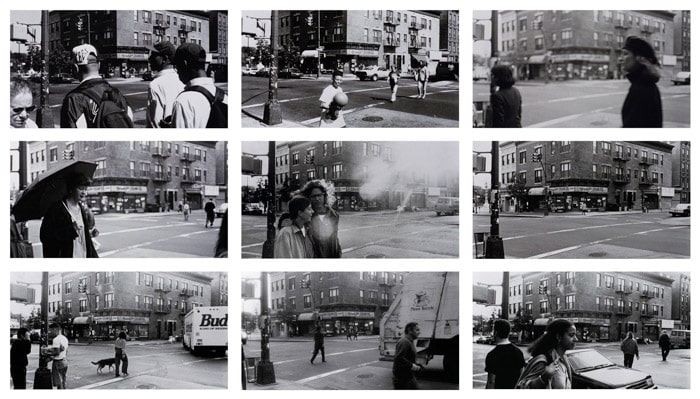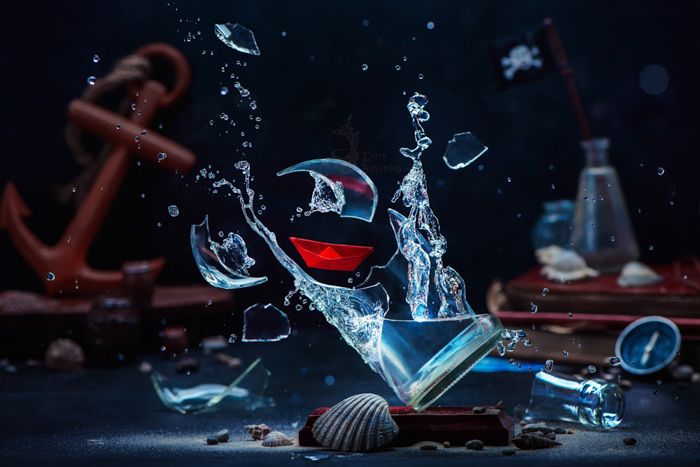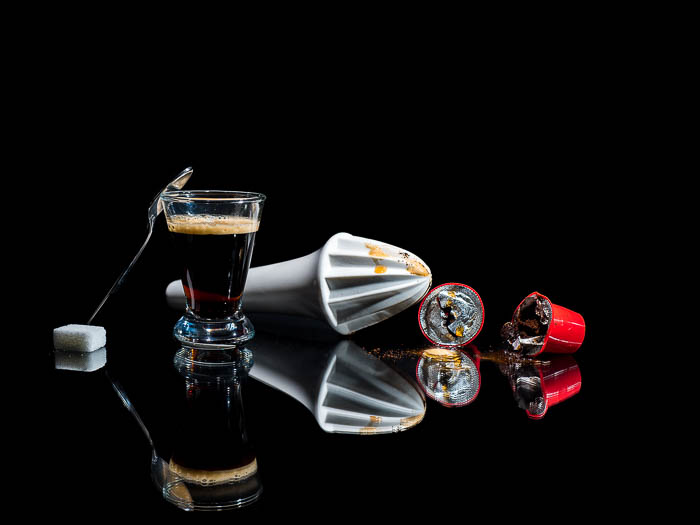
Still life photographers can show you new ways to see ordinary objects. Jonathan Knowles offers graphic commercial imagery, Paulette Tavormina and Jeroen Luijt draw on the Old Masters, and Olivia Parker makes small natural forms worth a closer look. The 12 photographers and artists below give you different approaches to study through 36 images.
This is a selection for inspiration, not a ranking or a complete list of today's most influential photographers. It includes work made across several decades and artists whose practice extends beyond still life. Some shown scenes include people or animals; those are examples of wider staged photography rather than strictly inanimate subjects.
If you are new to the genre, start with our still life photography guide. Then compare how these photographers use light, color, shape and the space around their subjects.
12 Still Life Photographers and Artists
Choose a gallery that interests you and ask what makes the arrangement work. Is it the crop, a repeated shape, a strong shadow or an unexpected pairing? Their portfolios can help you develop your own still life photography ideas.
Jonathan Knowles
Jonathan Knowles is an advertising photographer whose own portfolio emphasizes still life, drinks and liquids. His work is a useful starting point for studying how an object can become a clear, graphic image.
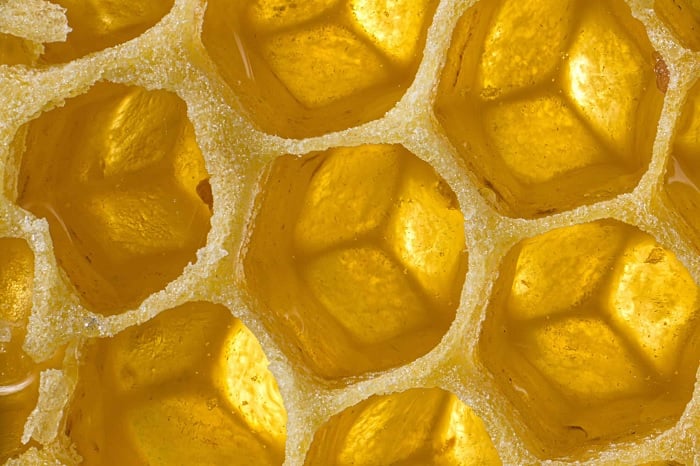
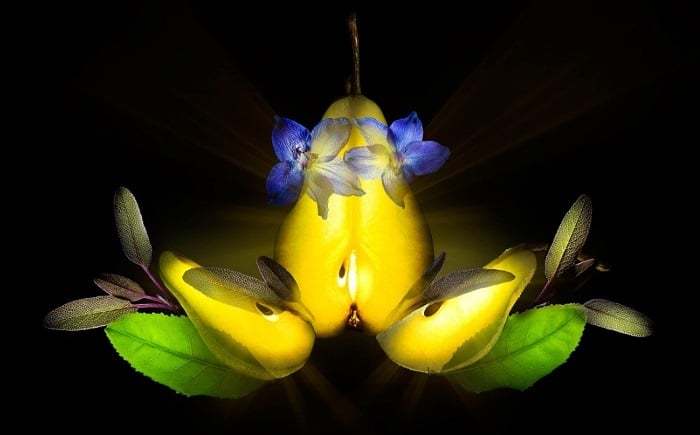
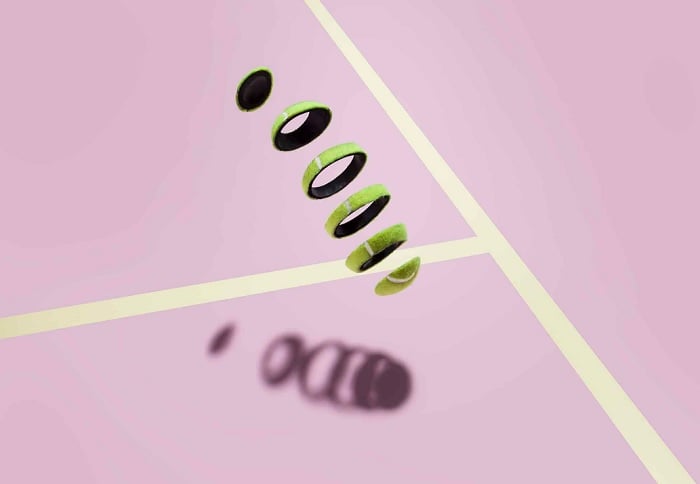
Look at the honeycomb photograph below: its repeated cells fill the frame, while the translucent golden centers contrast with the pale walls. The symmetrical fruit arrangement uses a black background to make its colors stand out. In the tennis-ball image, separated sections and their shadows create a sense of movement against the court's straight lines. Study the crop, background and shadow placement when you plan an arrangement of your own.
Jonathan Knowles: Website | Instagram
Jenny Van Sommers
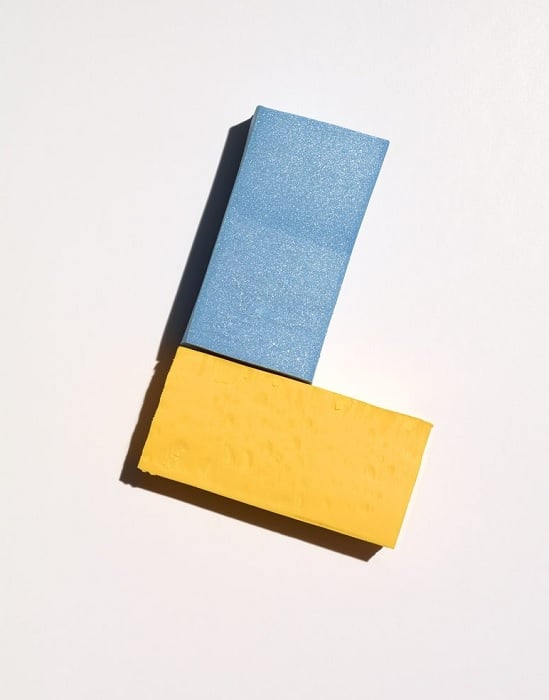
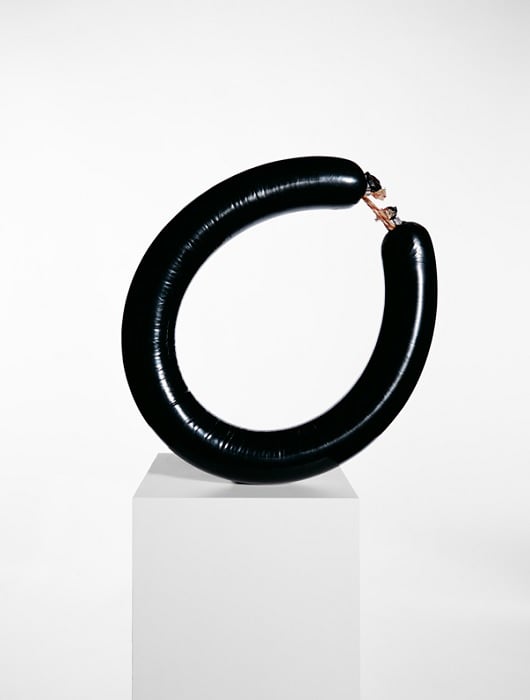
Jenny Van Sommers makes still-life photographs with a strong sense of shape and humor. In a 2014 NOWNESS interview, she described her interest in geometry and three-dimensional objects, including simple blocks.
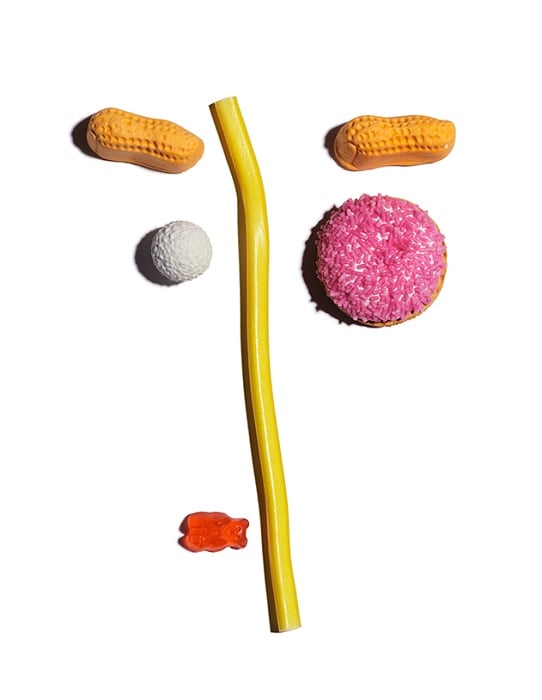
The sweets arranged as a face show how a few ordinary objects can suggest a character. The blue and yellow blocks make a different lesson: two colors, a clean background and a strong shadow can carry the composition. The curved black object on a white plinth turns attention to its outline and shine. Compare how each photograph uses empty space to give its subject room to be noticed.
Jenny Van Sommers: Website | Instagram
Mat Collishaw
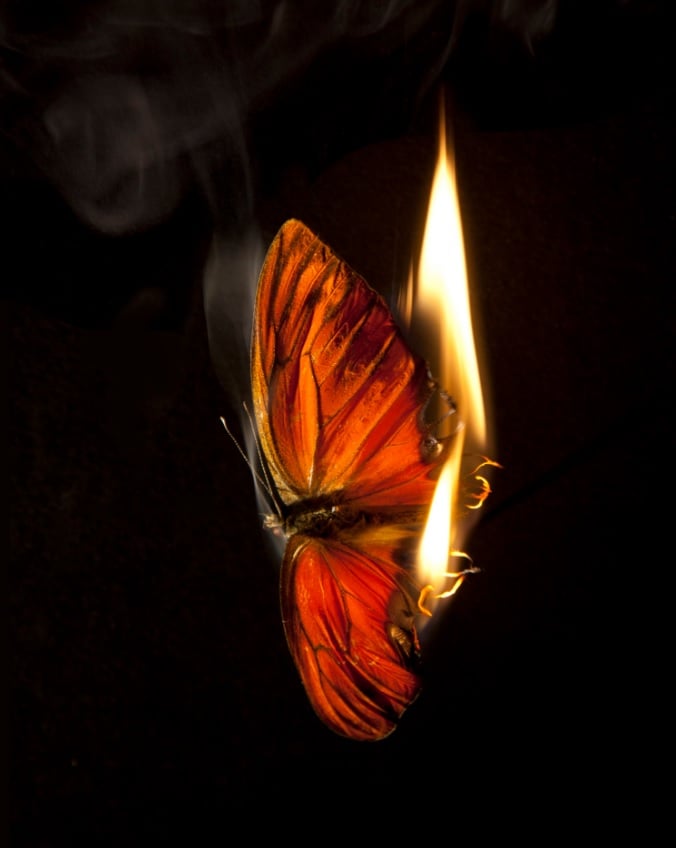
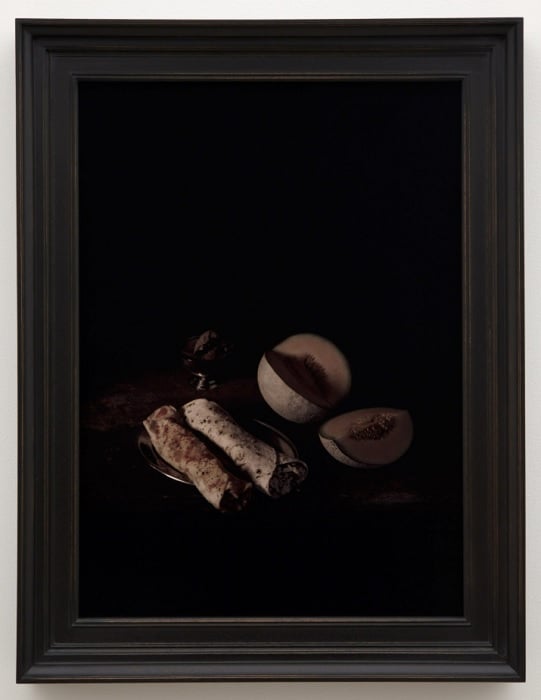
Mat Collishaw is a British artist whose practice includes photography as well as other media. His website dates the photographic series Last Meal on Death Row, Texas to 2011. That historical project is one route into his still-life work.
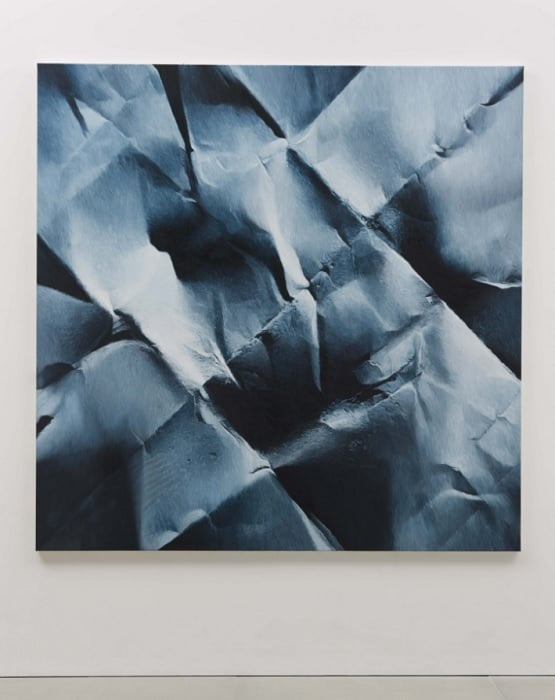
In the gallery below, the burning butterfly sets a bright flame against darkness. The framed food arrangement also draws the eye through a small area of light. The crumpled surface takes a less familiar subject and makes its folds and shadows the focus. These images invite you to study how presentation changes your response to an object: beautiful light can make an unsettling subject harder to look away from.
Mat Collishaw: Website | Instagram
Henry Hargreaves
Henry Hargreaves grew up in Christchurch, New Zealand. In the interview-style information page on his website, he explains his interest in the connections between food, character and personality. His projects also often involve collaborators.
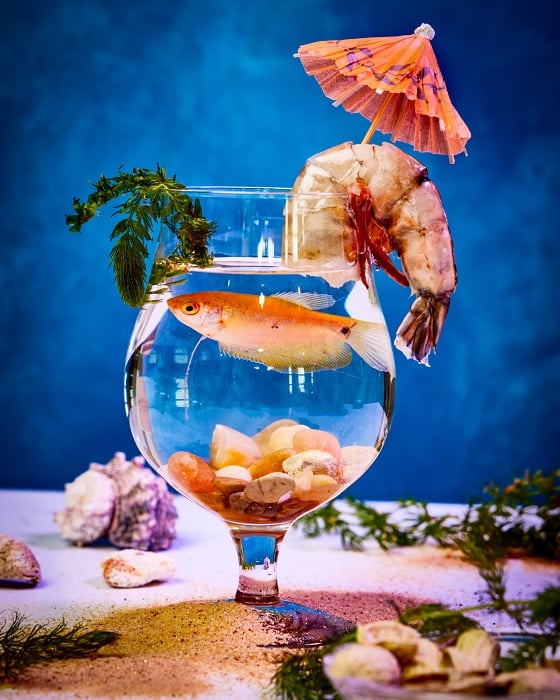
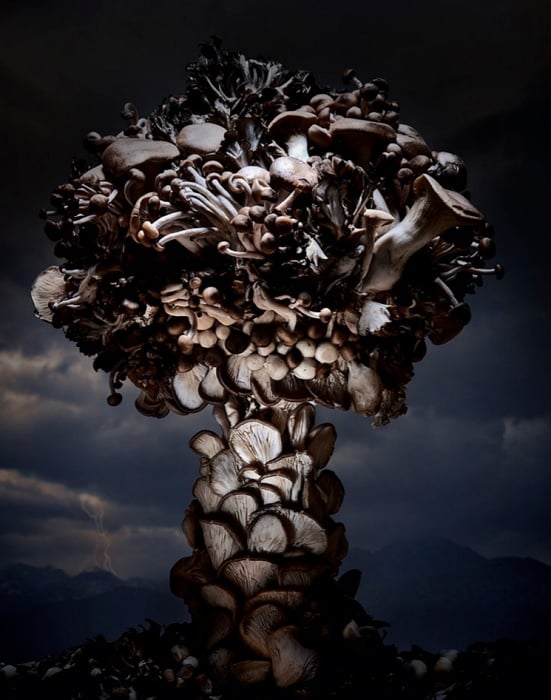
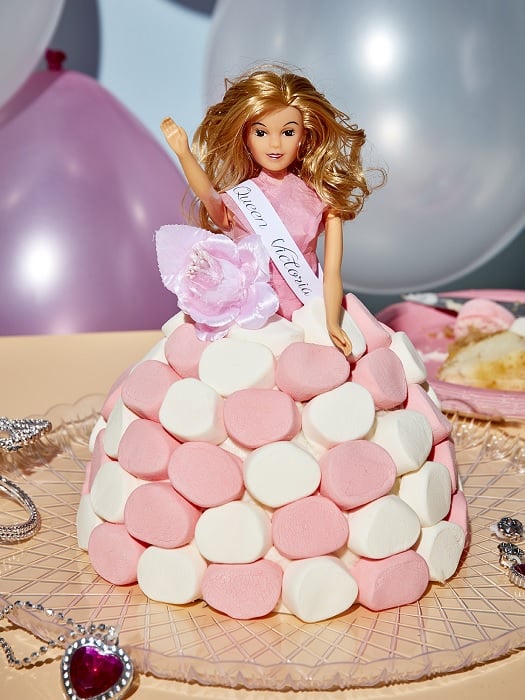
The fish in a cocktail glass, mushroom-shaped cloud made from mushrooms, and doll with a marshmallow dress all change the usual role of their subjects. The visual joke depends on recognizing both the object and what it resembles. Notice the saturated color in the glass scene, the dramatic dark background around the mushrooms, and the repeated shapes in the dress. For your own food photography, start with an idea or association before you arrange the ingredients.
Henry Hargreaves: Website | Instagram
Evelyn Bencicova
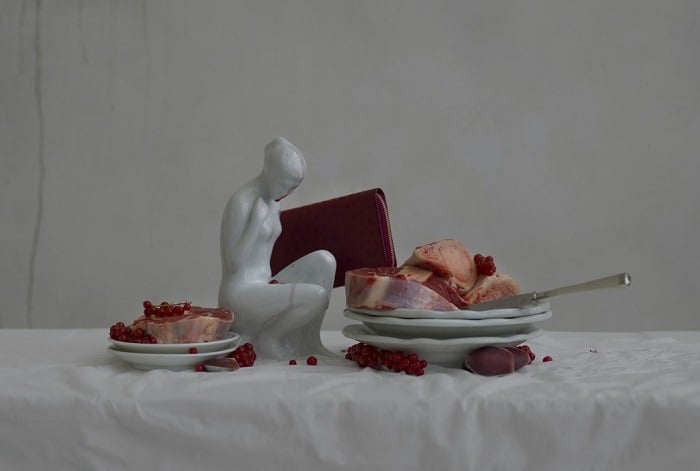
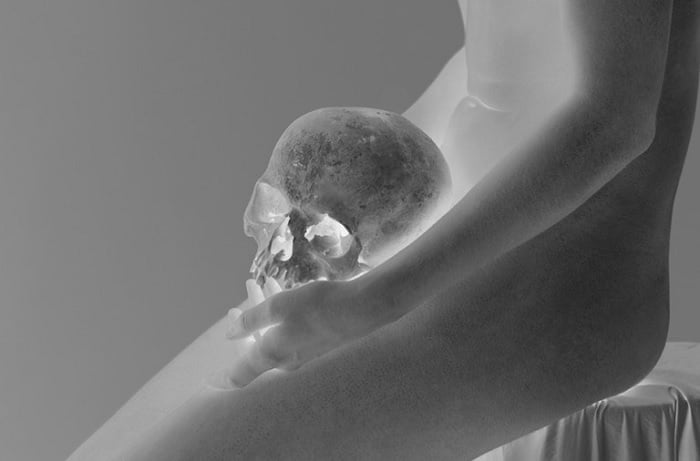
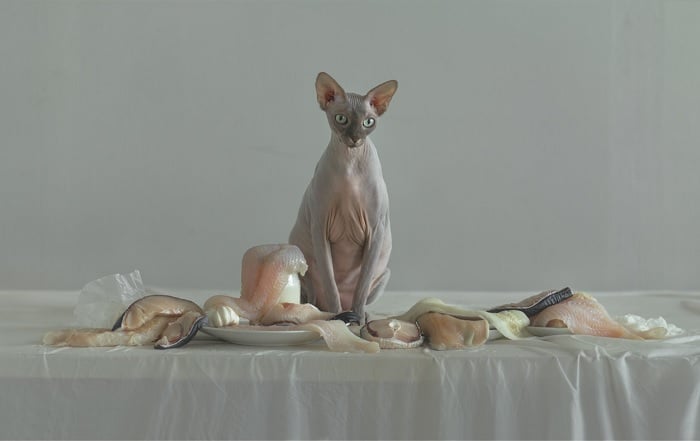
Evelyn Bencicova was born in Bratislava and studied at the University of Applied Arts Vienna. Her current artist biography describes a practice spanning photography, worldbuilding and performance, with symbolic narratives at its center. Her work extends beyond still life.
That distinction matters in the images below: the staged table of objects sits alongside a human figure holding a skull and a cat among food. The latter two are not conventional studies of inanimate objects. Across all three, look at the restrained colors, pale surfaces and unusual combinations. They show how visual language can create a mood without spelling out a single interpretation. The object relationships leave room for more than one reading.
Evelyn Bencicova: Website | Instagram
Paulette Tavormina
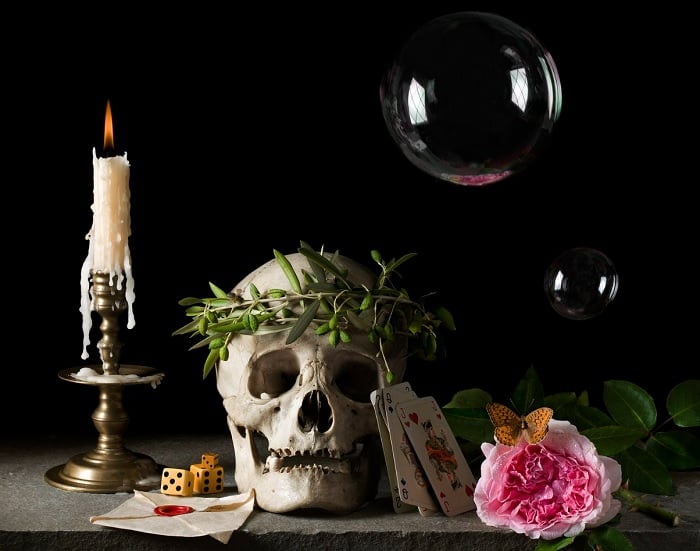
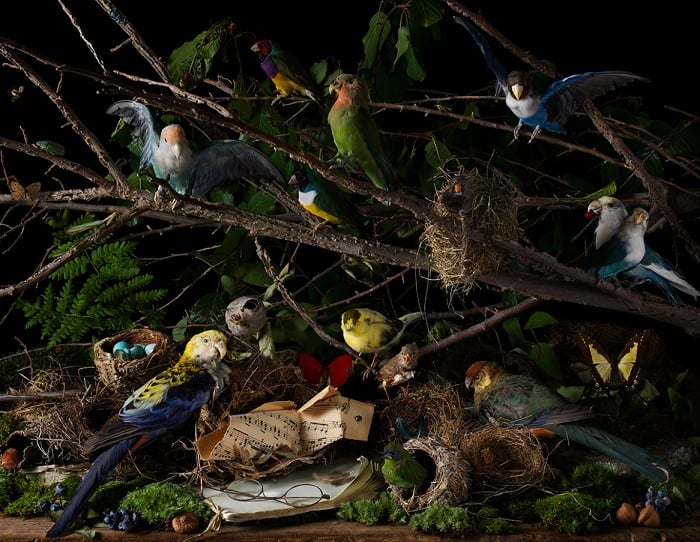
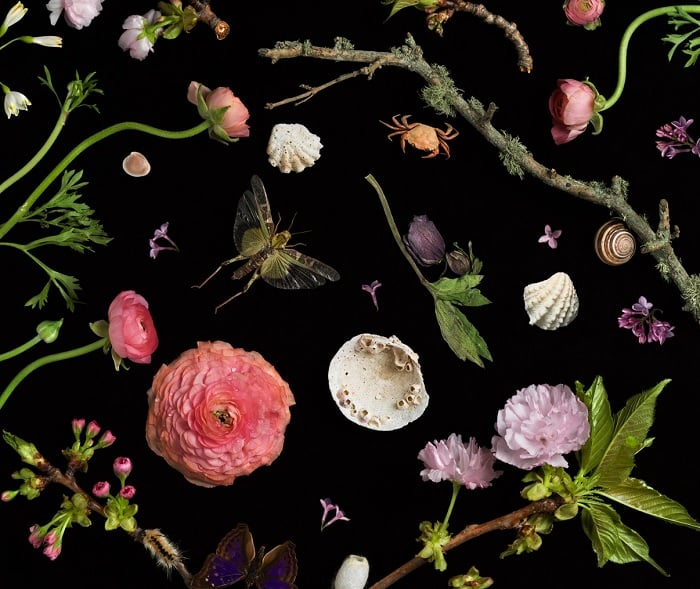
Paulette Tavormina's photographs draw on seventeenth-century Old Master still-life painting. Her biography also records her earlier work as a prop and food stylist in Hollywood. Her carefully arranged scenes reward attention to small details.
The skull, candle, flowers and bubbles bring several contrasting shapes into one dark scene. In the bird arrangement, branches guide your eye between subjects at different heights. The flowers, insects and stems in the third image are spread across the frame, with dark gaps separating their forms. Compare the spacing in these busy compositions: abundance can remain readable when each important object has a clear outline.
Paulette Tavormina: Website | Instagram
Tatyana Skorokhod
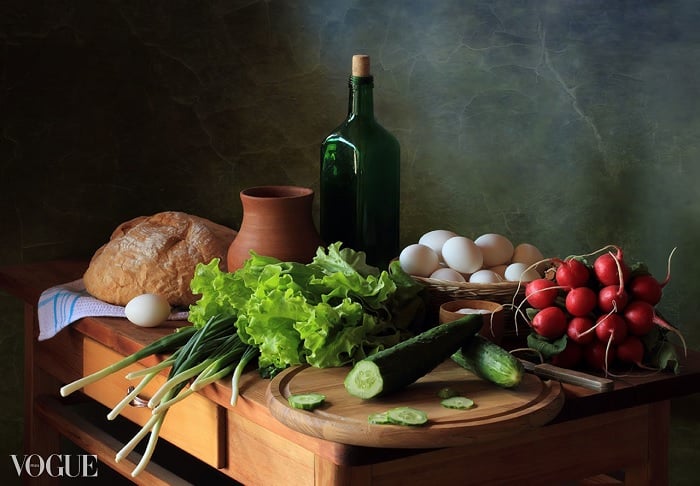
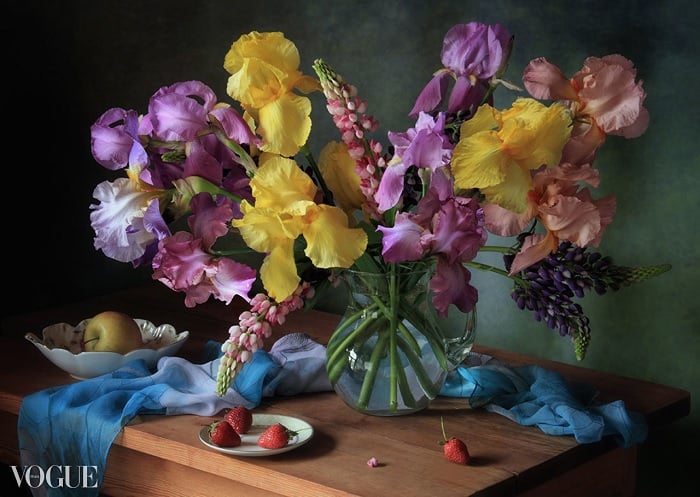
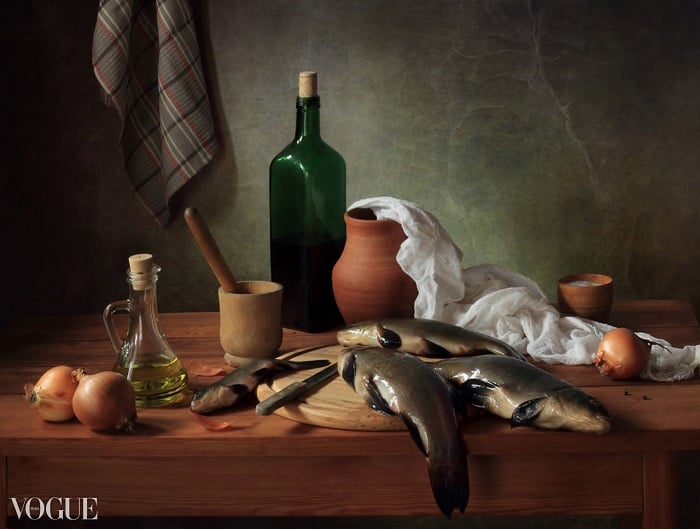
Tatyana Skorokhod's PhotoVogue profile identifies her with Kyiv, Ukraine, and lists still life among her genres. Its portfolio includes dated flower and food photographs from 2020.
The vegetable arrangement below combines long stems, rounded produce and upright vessels. The flowers form a colorful cluster above a glass vase, while the fish scene brings reflective surfaces into a quieter palette. Look at how the tabletop anchors each composition and how bright objects separate from darker backgrounds. These are useful references for arranging everyday subjects without making every item compete for attention.
Tatyana Skorokhod: Website
Shihya Kowatari
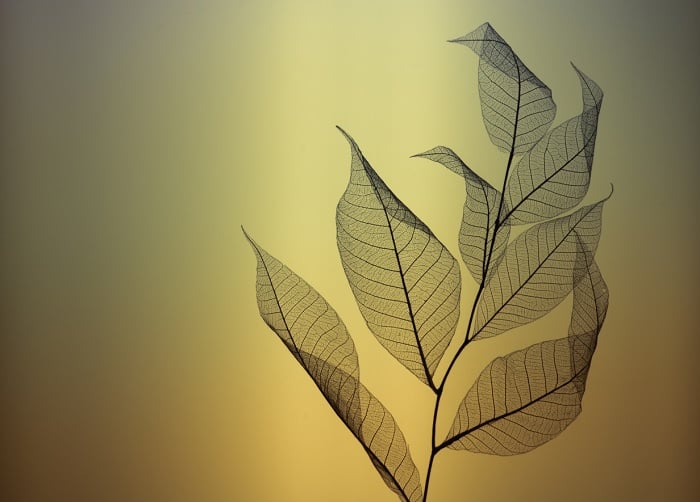
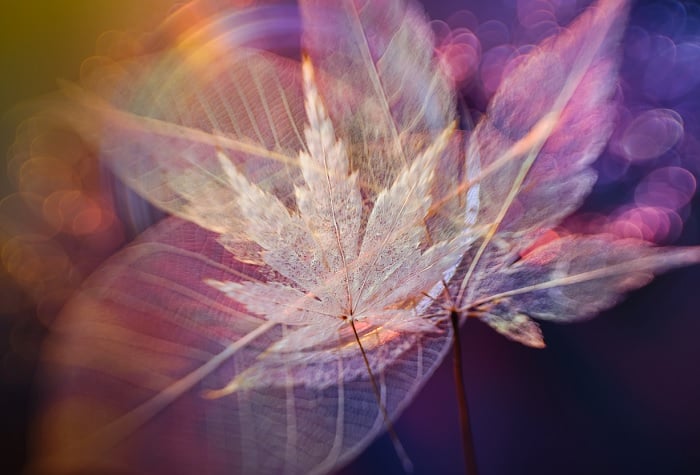
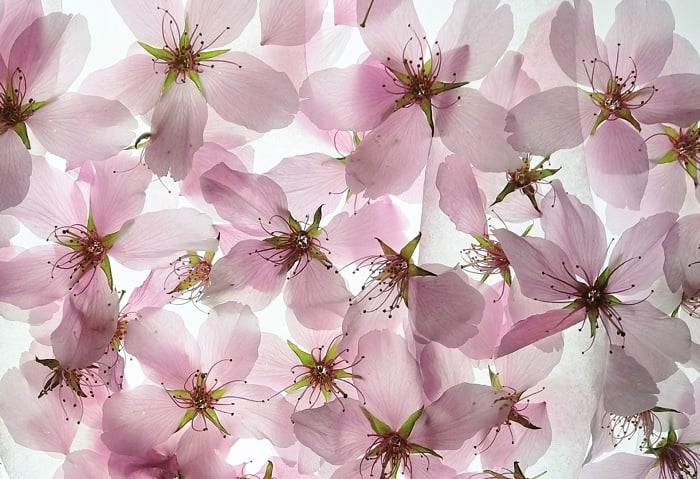
Shihya Kowatari's work often centers on delicate natural subjects. In a 2023 interview with 1x, Kowatari described an interest in dried plants and seeds, soft colors, transparency and bokeh.
The leaf skeleton below makes its veins and outline the subject. In the second photograph, the leaf overlaps a colorful, blurred background; in the third, pale petals fill the frame in a repeating pattern. Compare the balance of fine detail and softness. If you want to explore bokeh or silhouettes, use these images to think about subject separation.
Shihya Kowatari: Website | Instagram
Robert Sulkin
Robert Sulkin is known for constructed photographs that explore the boundary between fact and fiction. His biography records that he taught photography at Hollins University from 1980 to 2019, and identifies him as a professor emeritus.
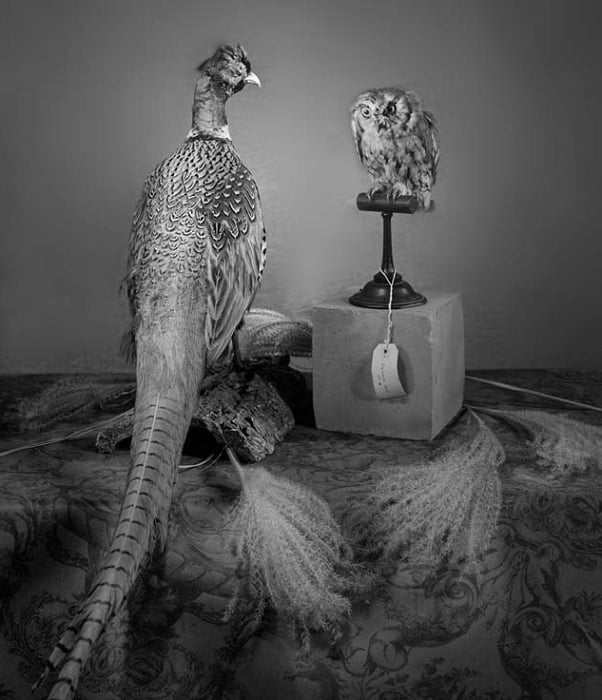
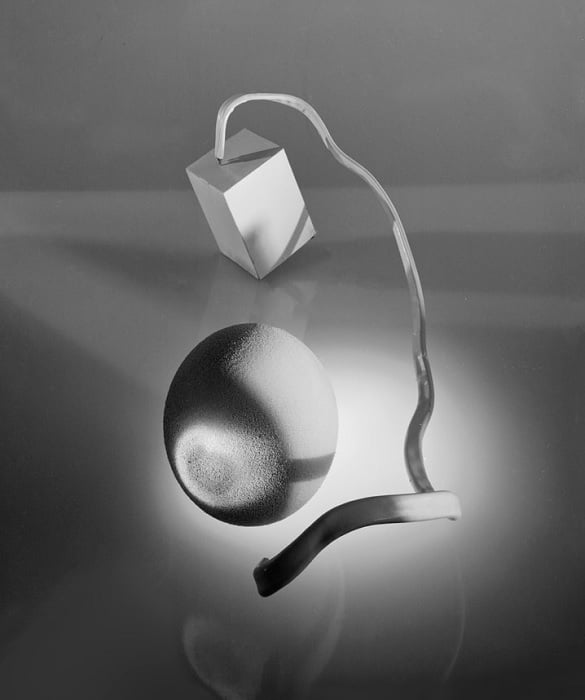
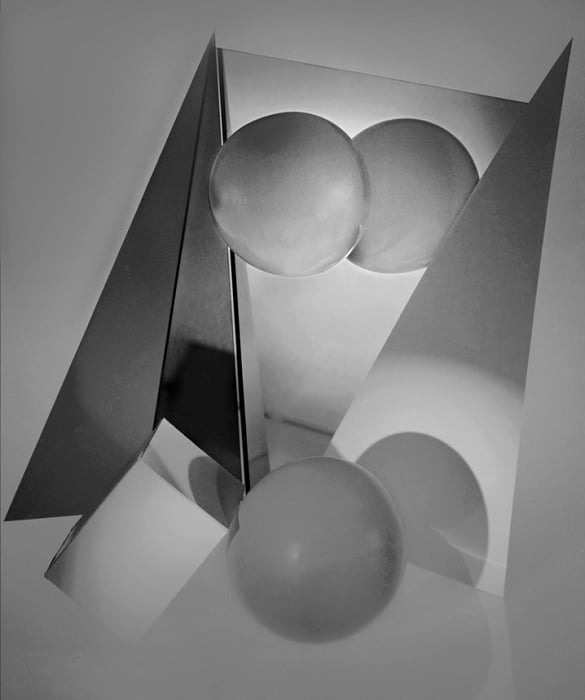
The monochrome images below put unusual objects and arrangements at the center. Compare the textured bird scene with the smoother geometric forms in the other two photographs. Without color, edges, reflections and differences between light and dark become especially prominent. The lesson is not simply to convert a photograph to black and white: choose objects whose shapes and surfaces make an interesting relationship before you take the picture.
Robert Sulkin: Website | Instagram
Krista van der Niet
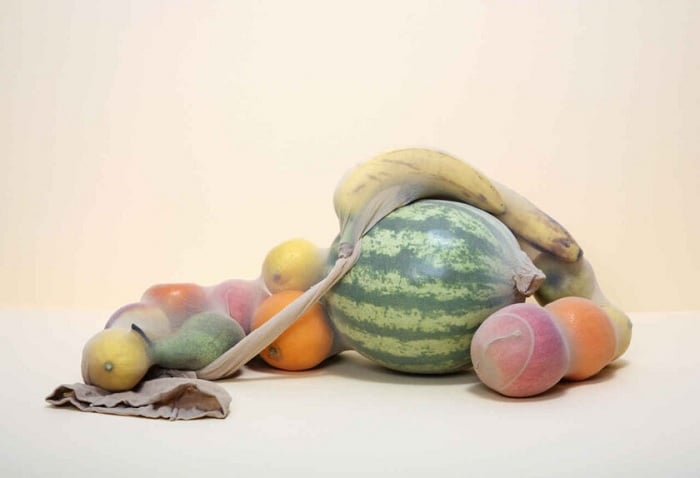
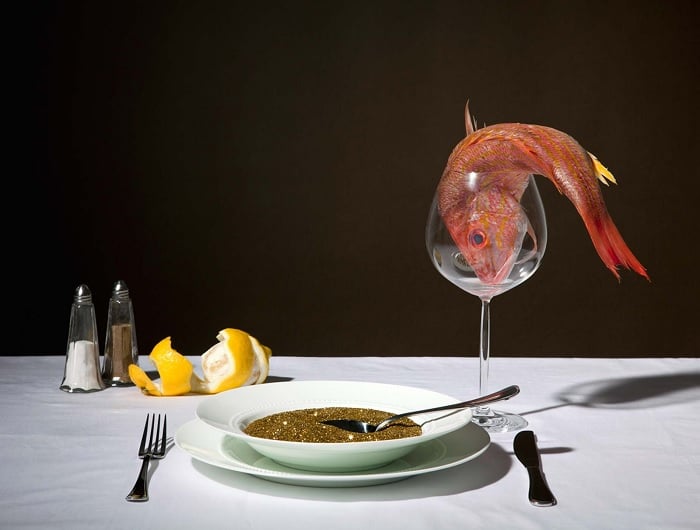
Krista van der Niet is a photographer from the Netherlands who studied at the Gerrit Rietveld Academy in Amsterdam. Her portfolio includes both personal work and commissions. The arrangements below show how familiar food can become visually unexpected.
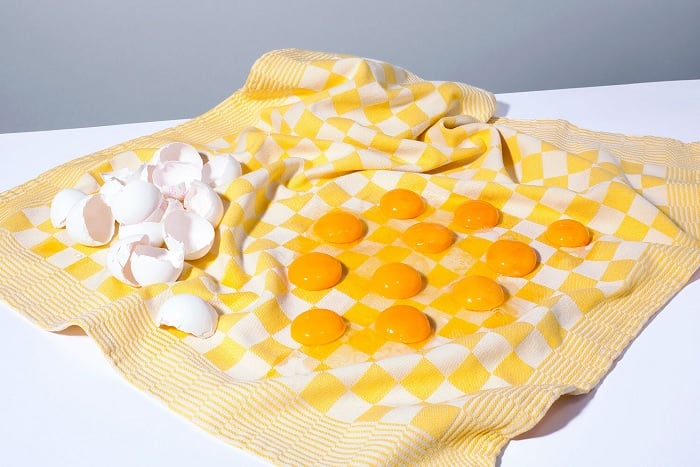
Egg yolks repeat across a yellow-and-white cloth, while empty shells form a separate cluster. In the fruit image, fruits and vegetables meet a piece of clothing, changing the texture and outline of the arrangement. The table setting uses a raised glass and seafood to give an ordinary meal a surprising focal point. Study the relationships between the props rather than treating each item as a subject on its own.
Krista Van Der Niet: Website | Instagram
Olivia Parker
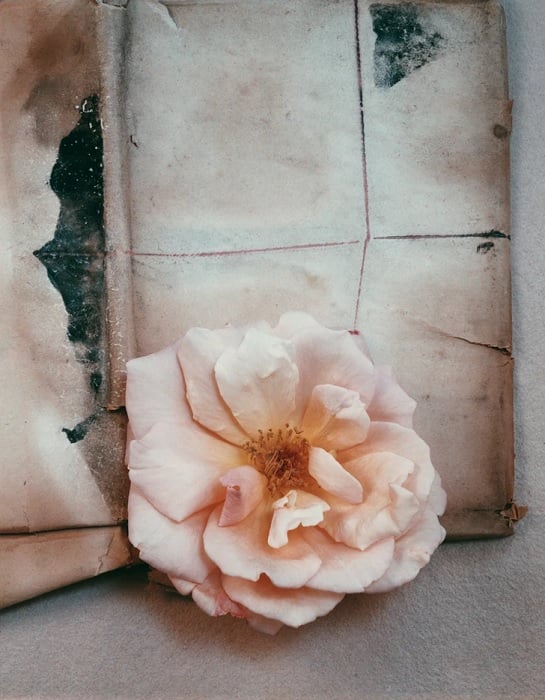
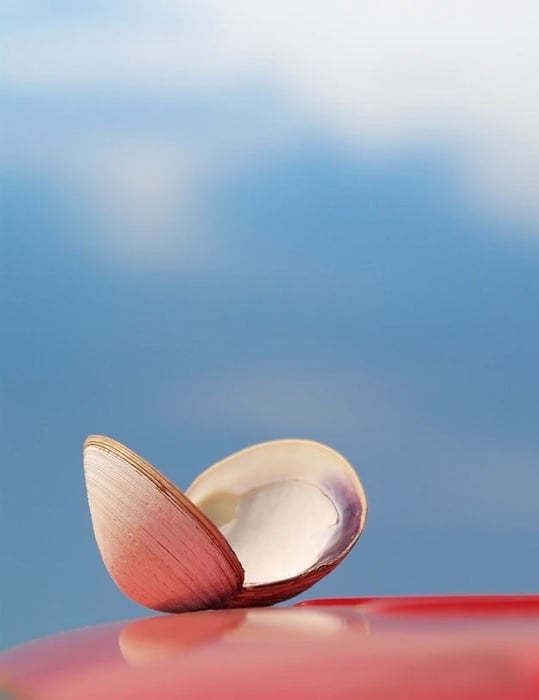
Olivia Parker began making and photographing temporary constructions in 1973. Her biography explains that a skiing injury in 1995 led her to experiment with computers and digital software. Her online portfolio lets you explore work made across several decades.
The rose against worn paper pairs a soft organic form with a damaged surface. The open shell sits low in the frame, leaving a large area of blue above it. The shell fragments become pale shapes against black. These examples make negative space, texture and the edges of an object worth studying. A small subject can hold attention without filling the whole frame.
Olivia Parker: Website
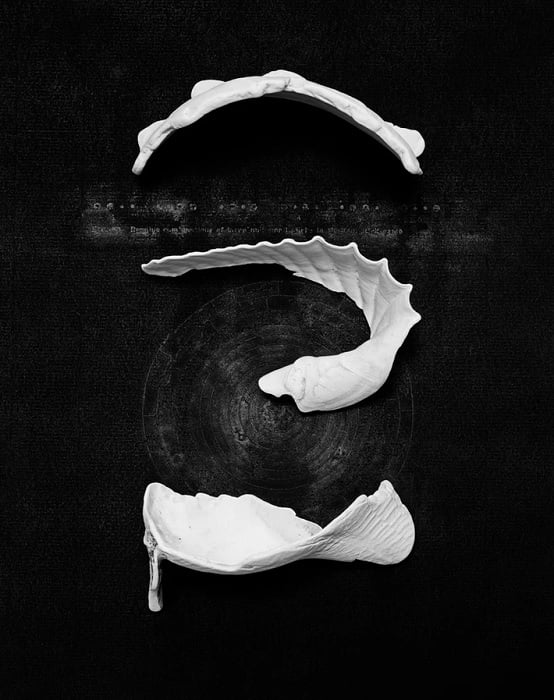
Jeroen Luijt
Jeroen Luijt describes his practice as fine-art still-life photography in the tradition of the Old Dutch Masters. His portfolio offers a contrast between sparse arrangements and more elaborate tabletop scenes.
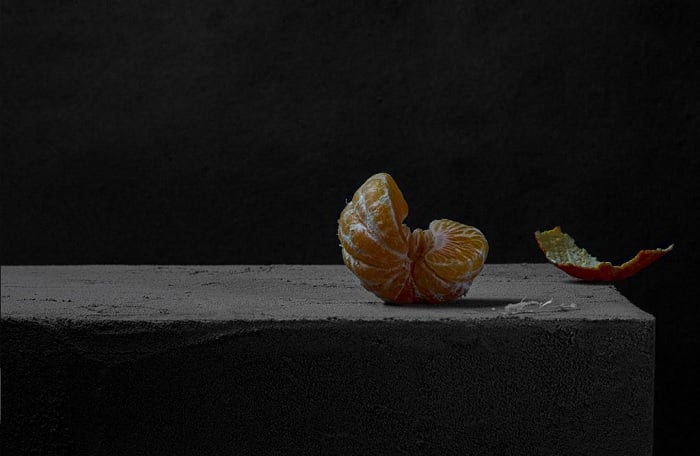
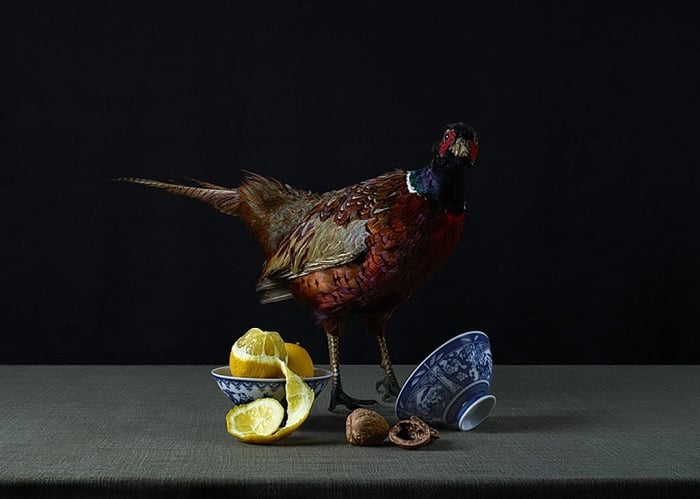
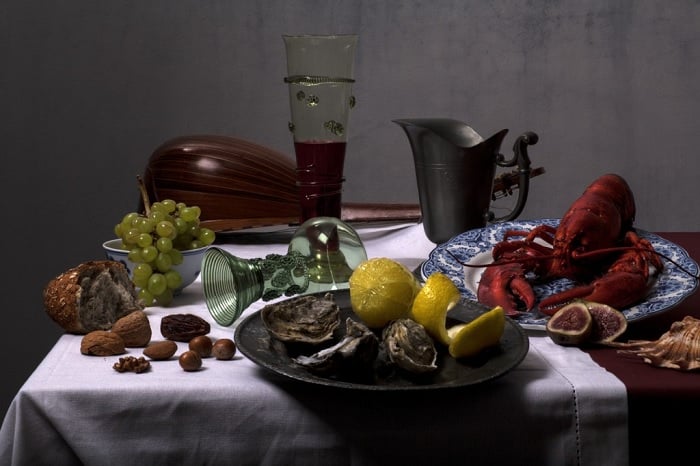
The partly peeled citrus fruit uses a few bright details against a broad dark background. The pheasant arrangement combines feathers, curled peel and patterned crockery, while the fuller table scene adds reflective glass and metal. Compare how the amount of detail changes between the three images. Notice how the smaller compositions hold attention with fewer objects, while the larger scene lets the eye travel between details.
Jeroen Luijt: Website
How to Learn from These Still Life Photographers
Pick one image and one feature to explore. With a few objects of your own, try a tight crop like the honeycomb, a simple arrangement of colored shapes, or a small subject surrounded by empty space. Make several versions while changing one thing at a time: move an object, shift the light or choose another background.
Compare the results. Which version has the clearest focal point? Are the shadows helping the composition? If you are drawn to the darker scenes, our low-key lighting guide can help you explore that approach. These are exercises inspired by what you can see, rather than reconstructions of the artists' working methods.
Conclusion: Contemporary Still Life Photographers
A useful reference gives you more than a subject to copy. Study how each photographer makes shapes, textures and colors work together, then use those observations to develop an arrangement of your own.
Find inspiration from other still life photographers and share your work to inspire your fellow artists. And if you want to become an expert in creative still life photography? Why not check out our eBook, The Magical Photography Spellbook, next?