The Nomatic Luma 9L Sling is the best camera sling bag for most photographers. It carries a camera with one or two lenses and weighs about 1.3 lb. Its magnetic top lid lets you reach the camera without fighting a zipper, and Nomatic covers it with a lifetime warranty. It also costs much less than the premium slings on this list.
The other slings solve different problems. Some carry a laptop or a tablet next to the camera. One takes three f/2.8 zooms and a rain cover for a day on the trail. And one covers the basics for very little money.
The Best Camera Sling Bags for Mirrorless and DSLR Kits
Start with the kit you carry most days, not the most you could ever pack. A sling puts all the weight on one shoulder, so you feel every extra lens. Then decide what else rides with the camera. Only some slings take a laptop or a tablet, and some have nowhere for a tripod. The table shows each bag's main strengths. The reviews below explain who each one suits and what it cannot do.
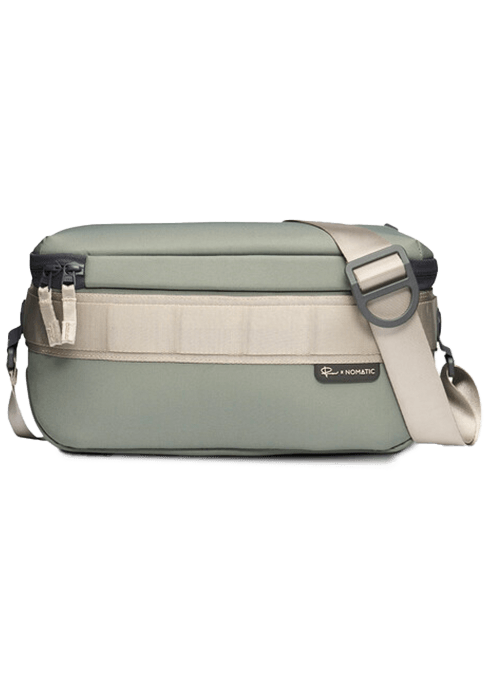
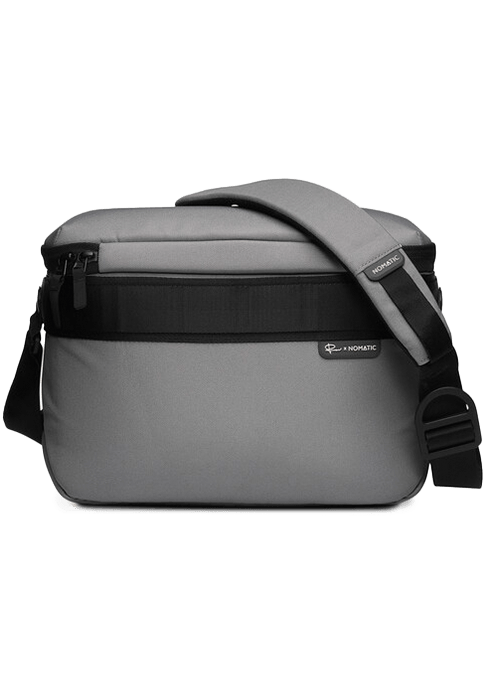
The Nomatic Luma 9L Sling is the bag to buy if you carry one camera and one or two lenses and want to get at them fast. Nomatic designed it with Peter McKinnon for its 2024 Luma collection. At about 1.3 lb, it is the lightest bag on this list.
Access is what sets it apart. The main compartment opens through a top lid held shut by magnets, so you lift the lid and pull the camera out in one move. Pivot rivets let the strap turn a full circle. You can spin the bag from your back to your chest and back again without taking it off.
The shell is 900D poly oxford with YKK zips. Two dividers come in the box. A quick-access pocket on the lid holds a phone or spare batteries. The grab handle doubles as a luggage pass-through, so the bag rides on a rolling suitcase between flights. Nomatic backs it with a lifetime warranty and repair.
There is no laptop or tablet sleeve and no way to strap on a tripod. The strap is not padded either, which matters more as the load grows. If you need a laptop as well, the Peak Design Everyday Sling 10L below is the better choice. If you need room for a third lens, look at the Luma 12L.
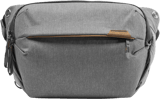
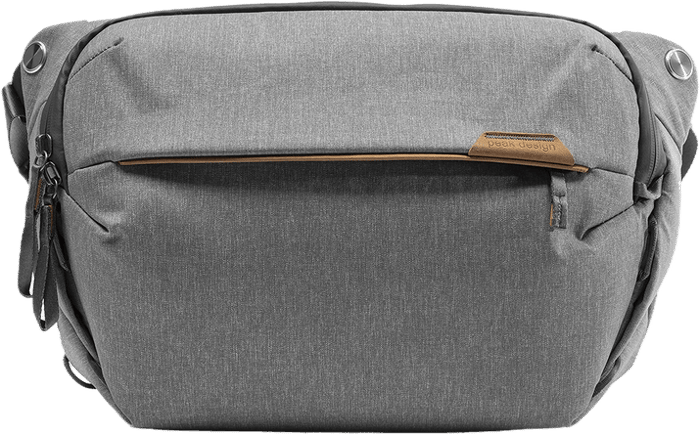
The Peak Design Everyday Sling 10L is the best choice if your camera bag also has to be your work bag. Its sleeve takes a laptop up to a 14-inch MacBook Pro, and no other bag here carries a laptop inside the main body. It costs more than the Nomatic, but Peak Design build quality is hard to beat.
The two FlexFold dividers fold into shelves, so a second lens can sit above the camera instead of under it. Take the dividers out and the whole interior opens up. That is how I fit my 200-600mm lens. Stretchy internal pockets hold batteries, cards, a charger or sunglasses. A slim front pocket with a hidden zip keeps a phone and wallet out of sight, although that makes it a little slower to get into.
The shell is weatherproof 400D recycled nylon canvas with a DWR coating, over a 900D waterproof base. The weatherproofing is in the fabric, so it will not wear off. Two short external carry straps come in the box for a small tripod or a jacket. The padded strap has a quick adjuster. Loosen it to swing the bag round, and tighten it again when you walk. Peak Design backs it with a lifetime warranty.
I am a bit of a Peak Design fangirl. I own both versions of the Everyday Sling, and I have banged them around the world. They still look ready for the next trip. I prefer the look of the first version, which had a built-in tripod strap. But the newer one spreads the weight better.
It is heavier than the Nomatic at about 1.9 lb with both dividers, and it has no rain cover. Peak Design also makes the sling in 3L and 6L sizes. The 6L holds an 11-inch iPad Pro instead of a laptop. The 3L has no device sleeve and one divider, so choose it only for a single small body and lens.
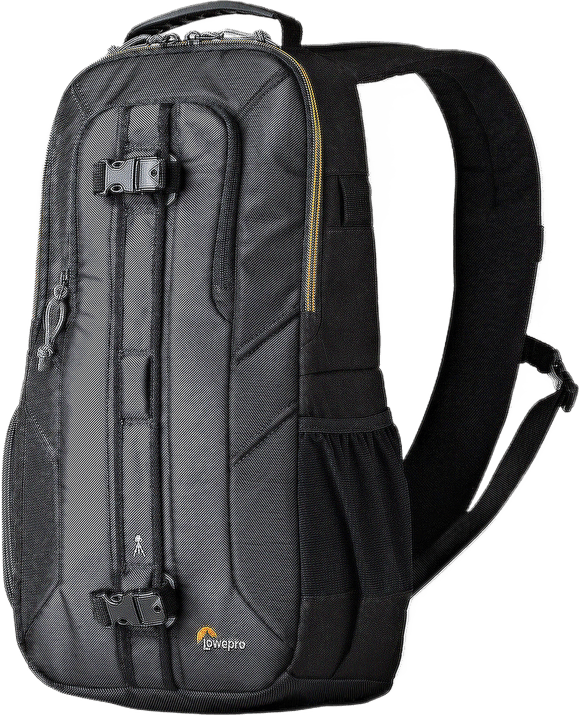
The Lowepro Slingshot Edge 250 AW is the sling for city travel days when you want a tablet, a small tripod and rain protection in one bag. It holds a compact DSLR or a mirrorless body with a zoom attached, plus an extra lens and a flash.
You swing the bag round to your front and open the main compartment through a side zipper. That gets you to the camera without exposing the whole bag. A separate top compartment takes another lens or your accessories. The padded CradleFit pocket keeps an iPad-size tablet away from the camera gear. A quick-access pocket holds your phone and wallet.
Two removable straps with quick-release buckles hold a compact tripod on the front, and the built-in All Weather AW Cover pulls over the bag when it rains. The strap and back panel are padded.
The Slingshot Edge is an older design, and it shows in the sizing. Lowepro sizes it for a compact DSLR, so a large full-frame body with a big zoom will be tight. It has no laptop sleeve. At 9.5 liters it holds about as much as the Nomatic 9L, but in a taller, slimmer shape. The Nomatic gives faster top access and weighs less. The Lowepro wins if you want the tablet pocket, tripod straps and rain cover.
The Nomatic Luma 12L Sling is the 9L's bigger sibling. Buy it when you regularly carry a body with two or three lenses. It keeps the same magnetic top lid, pivoting strap and lifetime warranty.
The extra height is what you pay for. A shelf divider splits the space, so a second body or a long lens sits above the rest of your kit instead of on top of it. An internal metal frame stops the bag slumping when it is half full. Unlike the 9L, it has a padded strap and external attachment points for a small tripod or a jacket. It weighs about 1.6 lb.
In our Nomatic Luma review, the 12L went out on a shoot with a camera, two lenses and spare batteries. That test found one drawback in the pivoting strap. When you bend down for a low angle, the bag can flip over on your back instead of lying flat.
It still has no laptop or tablet sleeve. If all you carry is a body and one lens, the Luma 9L Sling above is lighter and smaller. If you need a laptop as well as three lenses, look at the WANDRD ROGUE 9L V2 next.
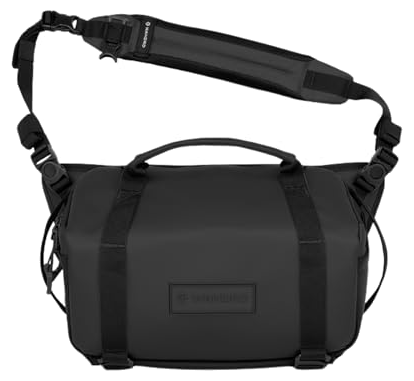
The WANDRD ROGUE 9L V2 is the sling to choose if you travel with a bigger laptop. Its patented laptop carry takes up to a 16-inch MacBook Pro, which is more than the Peak Design can hold.
The laptop rides on the outside of the bag in one of WANDRD's own laptop cases, which WANDRD sells separately. WANDRD says not to carry a laptop there without the case. The 9-liter camera compartment fits a full-frame mirrorless body with three or four medium lenses, or a mid-size drone with its controller. Two removable dividers set up the space. Mesh pockets, three SD card slots and a pen loop keep small items in order.
An expandable side pocket takes a water bottle or a travel tripod. A hidden pocket fits an AirTag. The padded strap adjusts from 22.25 to 52.5 inches, and three grab handles let you carry the bag by hand. It weighs about 1.7 lb.
It is wider than the Nomatic 9L at 14.5 inches, so it sits bigger on your back. And the laptop carry only works with the extra case. If you never carry a laptop, the Nomatic Luma 12L holds a similar kit in a neater shape.
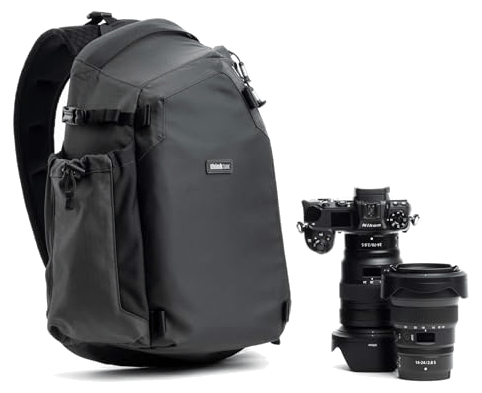
The MindShift PhotoCross 14L is the sling for hiking and bad weather. It is the largest bag here, at 14.5 liters in total, and it carries a camera body with 24-70mm, 14-24mm and 70-200mm f/2.8 zooms. No other sling on this list takes that much glass.
It is built for long days outside. The shell is Cordura and ripstop nylon with weather-resistant YKK AquaGuard zips. A seam-sealed rain cover comes in the box. The wide, ventilated strap works with a waist wing and a tuck-away stabilizer strap, to keep the bag steady while you move. A side panel opens when you rotate the bag to your front, so you can reach the camera without setting it down.
A tall stretch pocket takes a water bottle or a compact travel tripod. Two straps on the front panel hold a tripod or a jacket. The front compartment adds 2 liters for personal gear. Think Tank also makes the PhotoCross in an 11L size for a smaller kit.
It weighs 2.4 lb with its dividers, straps and rain cover, which makes it the heaviest bag on this list. It has no laptop or tablet sleeve. A full kit of three f/2.8 zooms is also a lot of weight for one shoulder. If you carry that much all day, a camera backpack will spread the load better. The Nomatic Luma 12L is the lighter choice for two or three smaller lenses.
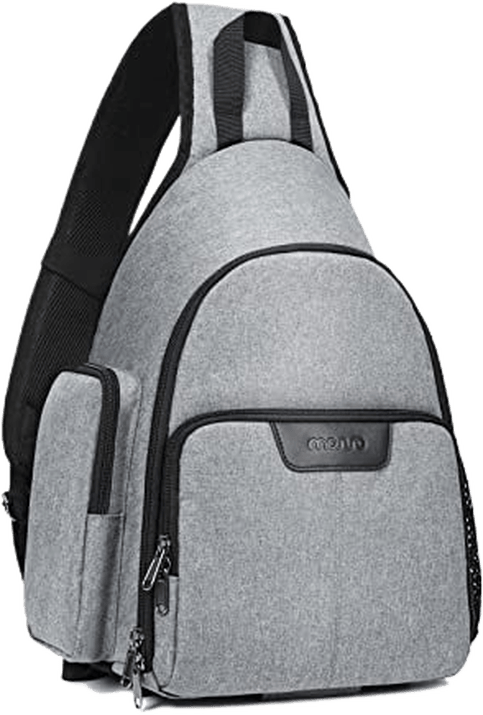
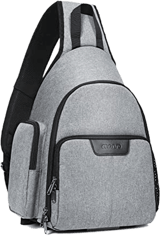
The MOSISO Camera Sling Bag is the one to buy if you want a padded sling for as little money as possible. It costs a fraction of the other bags here and still has a padded interior, a tablet pocket and a rain cover.
The main compartment fits a standard-size DSLR such as a Canon Rebel T6i or a Nikon D5600, or a mirrorless body, with removable inserts for lenses and a flash. Two more compartments on the front take cables, keys, a phone and cards. The back pocket holds most 8- to 10-inch tablets. A hidden anti-theft pocket on the back keeps your passport and wallet away from the camera. A mesh side pocket with a strap holds a tripod or a water bottle, and a rain cover comes in the box.
You also get a choice of colors. The gray version is shown here, and Mosiso sells the same bag in black.
The trade-offs come from the price. The fabric is water-repellent, not waterproof, so use the rain cover in a real downpour. It carries no laptop, and it is bulkier than the Nomatic 9L for the same small kit. If you want a lighter bag with faster access, the Nomatic is worth the extra money. If you need a laptop in your sling, step up to the Peak Design 10L or the WANDRD ROGUE 9L V2.
Camera Sling Bag Buying Guide
When a Sling Beats a Backpack
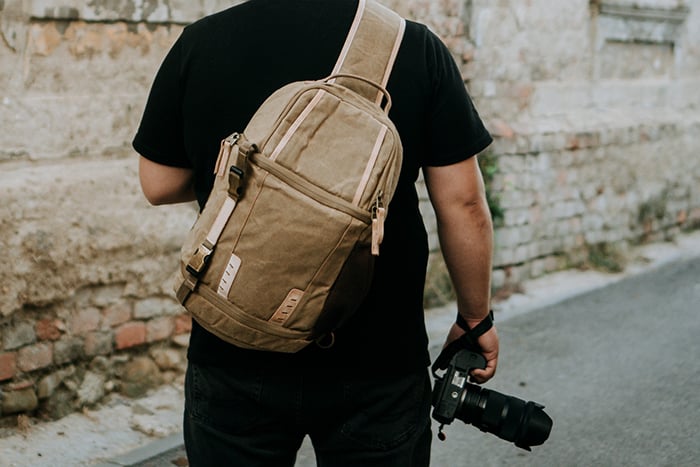
I often travel with a big backpack that holds all my camera gear. A sling makes sense on the days you can leave most of that kit behind. It has a single strap worn diagonally across your body. It rides on your back like a backpack, then slides round to your front when you need a lens. You change lenses without taking the bag off or setting it on the ground. It also stays on your shoulder better than a messenger bag when you walk.
(DepositPhotos)
The cost is comfort under load. All the weight sits on one shoulder, so a sling suits travel, street and day-trip kits of one body and two or three lenses. If you carry a second body, a long telephoto and a laptop every day, a camera backpack will be kinder to your back.
Check Your Longest Lens Against the Interior
The lens that decides the bag size is the longest one you carry mounted on the camera. Makers list what fits, usually as an example kit. Compare your own body and longest lens with that example, or with the interior measurements, before you buy. A bag that "fits a mirrorless camera with two lenses" may mean short primes, not a 70-200mm. The PhotoCross 14L names its f/2.8 zooms. The Slingshot Edge is sized around a compact DSLR with an 18-200mm.
Laptop, Tablet or Neither
Check the maker's maximum device size, not the bag's liter figure. The Peak Design 10L lists its sleeve at 12 x 8.4 x 0.6 inches, which fits a 14-inch MacBook Pro but not a 16-inch model. The WANDRD ROGUE carries a 16-inch laptop, but only in WANDRD's own case. The Lowepro and Mosiso take a tablet only, and the Nomatic slings take neither. If you are also buying a photo editing laptop, check its size against these limits. And if you carry a laptop only on travel days, a sling without a sleeve is lighter for everyday shooting.
Rain Cover or Weatherproof Fabric
Weather protection comes in two forms. The Lowepro, MindShift and Mosiso bags include a rain cover that you pull over the whole bag in heavy rain. The Peak Design has no cover. It relies on a coated, weatherproof shell and a waterproof base instead. If you shoot outdoors in all weather, choose a bag with a cover in the box.
Conclusion
The Nomatic Luma 9L Sling is the best camera sling bag for most photographers. It is light, its magnetic top lid gets you to the camera in one move, and it carries a lifetime warranty. Choose the Peak Design Everyday Sling 10L instead if you need a laptop in the same bag, and the MOSISO Camera Sling Bag if you want to spend as little as possible.