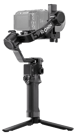
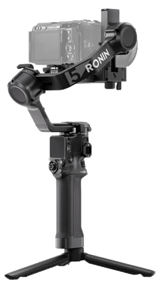
The DJI RS 5 is the best camera stabilizer for most people shooting video on a mirrorless camera. It is a motorized 3-axis gimbal with a tested payload of 6.6 lb. That covers a full-frame body with a standard zoom and a microphone. The motors cancel the bounce of each footstep for you, so you get smooth walking shots without the weeks of practice a counterweight sled needs.
A motorized gimbal is not the only way to steady a camera. This list also includes a smaller gimbal for light travel kits and counterweight stabilizers that need no battery and carry heavier cameras. You will also find a shoulder rig for long takes, a camera cage for event work and a simple handle grip for low-angle shots.
[Note: readers support ExpertPhotography. Product links on ExpertPhotography are referral links. If you use one of these and buy something, we make little money. Need more info? See how it all works here.]
The Best Camera Stabilizers for Smooth Video
The main choice is between motors and counterweights. A motorized gimbal keeps the camera level with three small motors, and it is the quickest way to get smooth footage. A counterweight stabilizer, often called a Steadicam-style sled, balances the camera against weights below the handle. It needs no power and handles heavier rigs, but it takes practice to fly well. Shoulder rigs, cages and grips do a different job. They brace the camera against your body or both hands, which steadies a static or slow shot but does not hide footsteps. Start with the type, then check that the maximum payload is higher than your camera, lens and accessories together.
Camera Stabilizer Reviews
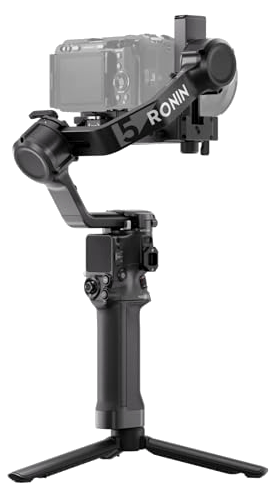
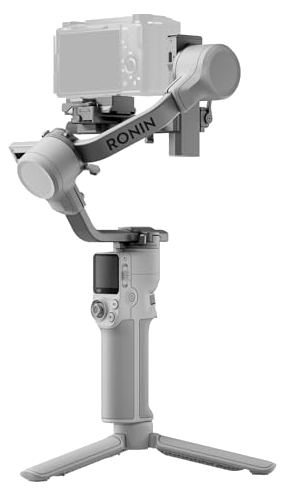
The DJI RS 5 is the stabilizer most mirrorless and DSLR video shooters should buy. Its 6.6 lb tested payload leaves room for a full-frame body, a 24-70mm f/2.8 zoom and a top microphone. Lighter gimbals run out of capacity with that kind of kit.
DJI has made balancing faster than on older gimbals. Fine-tuning knobs let you make small balance adjustments. The second-generation automated axis locks hold the arms in place when you power down, so the camera does not swing as you pack it away. Good balance puts less strain on the motors and gives steadier footage.
DJI also launched a new tracking module with the RS 5. You choose a subject on the touchscreen, and the gimbal turns to keep that person in frame as they move. DJI quotes a tracking range of up to 33 ft for people. This helps when you film yourself or follow one subject on your own.
The main drawback is weight. The gimbal alone weighs about 2.6 lb, so with a full-frame camera you hold well over 5 lb at arm's length. Long handheld takes get tiring. If your camera and lens weigh less than 4.4 lb, the DJI RS 4 Mini does the same job with less weight to carry.
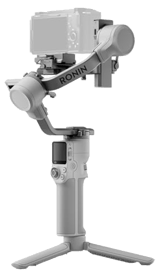
The DJI RS 4 Mini is the gimbal to choose for a lighter camera. It weighs about 2 lb and carries a tested payload of 0.9 to 4.4 lb. That suits an APS-C or compact full-frame body with a small prime or kit zoom.
It shares many of the RS 5's conveniences in a smaller size. It has second-generation automated axis locks, and the camera switches to vertical shooting without a separate bracket. That makes it a practical choice for creators who post vertical video. DJI rates the battery for 13 hours of stationary use, which covers a full day of shooting.
The lower payload is the limit to check. A heavy f/2.8 zoom or a cage and monitor can push your rig over 4.4 lb. Front-heavy lenses can also be hard to balance before you reach that number. If your kit is close to the limit, choose the DJI RS 5 instead. If you want to compare more gimbals, see our guide to the best camera gimbals.
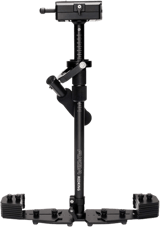
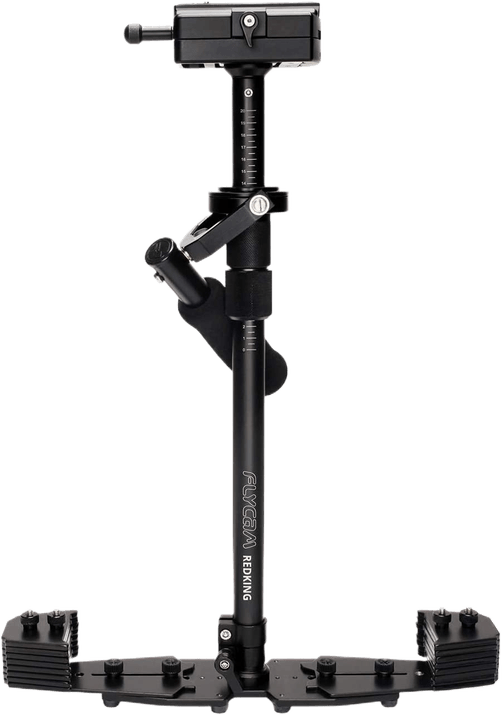
The FLYCAM Redking is the best mechanical stabilizer here and the one to choose for heavy cameras. It carries up to 15.4 lb, more than any gimbal on this list. That covers a cinema-style body, a heavy lens and accessories that would overload a one-handed gimbal.
It uses no motors. The camera sits on top of a telescopic post, with weight discs at the bottom and a bearing gimbal under the handle. When the top and bottom are in balance, the camera floats and the gimbal absorbs your steps. There is no battery to charge and no firmware to update. The CNC aluminum build and dovetail quick-release plate let you mount the camera and fine-tune its balance quickly.
The trade-off is skill and stamina. A counterweight sled needs careful balancing for each camera setup. You also need practice to walk smoothly and to stop the frame drifting on turns. The sled adds its own weight to the camera, so long shots with a big camera are much easier with an arm and vest. If you want smooth footage on day one, the DJI RS 5 is the easier choice.
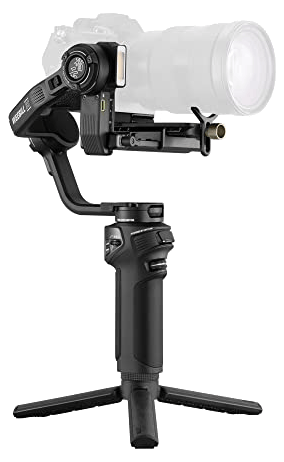
The Zhiyun Weebill 3S is a motorized gimbal with two features the DJI models do not have. It has a built-in fill light, and its sling grip lets you hold the camera low in front of you. Like the RS 5, it carries up to 6.6 lb.
The fill light puts out 1,000 lux, and you can set its color from 2600K to 5500K. That is not a replacement for proper lighting. But it lifts a face in shade or at an indoor event without another light on your camera. The sling grip suits low, forward-held shots.
Two built-in batteries run for up to 11.5 hours, and the main unit weighs about 2.3 lb. If you want automated axis locks and DJI's tracking module, the DJI RS 5 is the better buy.
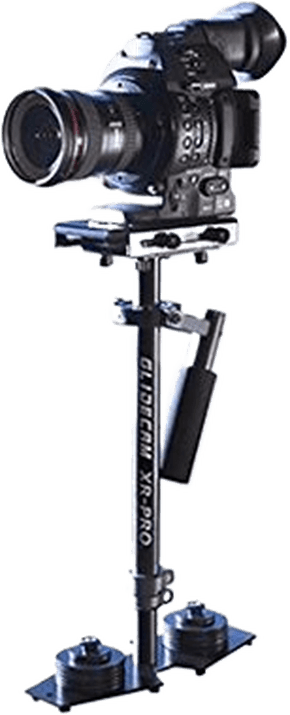
The Glidecam XR-PRO is a counterweight stabilizer for cameras up to 10 lb. That puts it between the smaller HD-3000 and the Redking. It suits a mirrorless or DSLR video rig with a cage, microphone and small monitor.
The sled itself is light for its capacity. It weighs 2 lb 1.6 oz without the counterweight discs. The post telescopes from 14 to 25 in, which gives you room to balance longer or heavier cameras. Glidecam includes 14 large and four small counterweight discs, plus four camera platform weight plates. That lets you tune the balance in small steps. The three-axis gimbal also has adjustable convergence for fine adjustment.
Like every sled, the XR-PRO needs balancing and practice before your footage looks smooth. Heavy loads tire your arm quickly without a support vest. If your camera weighs more than 10 lb, step up to the FLYCAM Redking. If you want to try sled work first, the FLYCAM HD-3000 below is a lighter starting point.
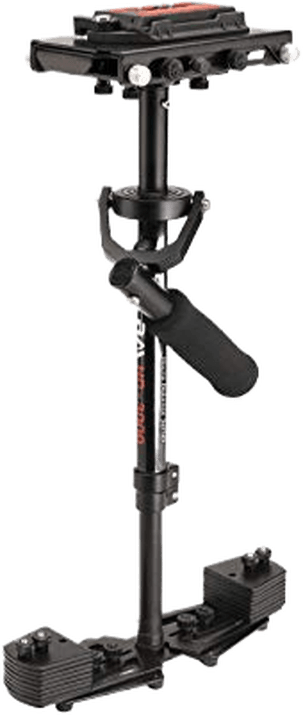
The FLYCAM HD-3000 is the counterweight stabilizer to choose if you want to learn sled work without a big outlay. It carries cameras up to 7.7 lb, which suits most mirrorless bodies and lighter DSLRs.
It has the parts that make balancing easier. The adjustable platform lets you move the camera in small steps. The ball-bearing gimbal isolates your hand movement, and the telescopic center post adjusts without tools. These are the same basic controls as on the larger sleds, so the skills you learn carry over if you upgrade.
Its lower capacity is the main limit. A cinema camera or a heavy zoom with a monitor can go over 7.7 lb. Choose the Glidecam XR-PRO for a 10 lb rig or the FLYCAM Redking for anything heavier. If you only want smooth footage and not a new skill, a motorized gimbal is the faster route.
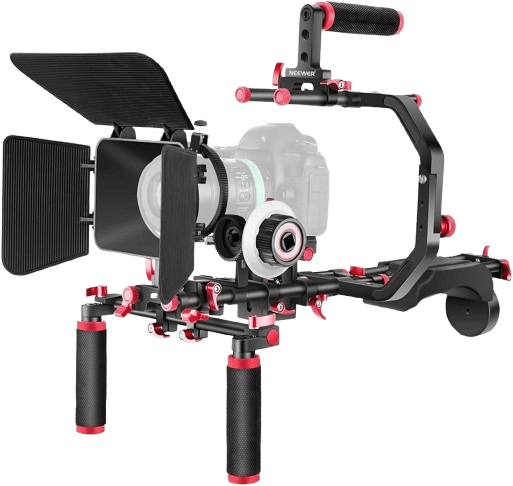
The Neewer SR004 Shoulder Rig is the choice for long takes where you stay mostly in one place. Interviews, talks and event coverage are good examples. The padded shoulder support takes much of the camera's weight, and both hands hold the front grips.
The rig is built from aluminum 15mm rods and carries up to 11 lb. It has two 16-in rods and a 12-in crossbar. The baseplate takes 1/4-in and 3/8-in screws, so it fits most cameras and camcorders. The 15mm rods also take standard follow focus, lens support and matte box accessories.
A shoulder rig steadies the camera against your body. It does not isolate it from your steps. Walking shots still show some bounce, so it suits slow moves and static framing better than tracking shots. For smooth walking footage, choose a gimbal such as the DJI RS 5 or a counterweight sled.
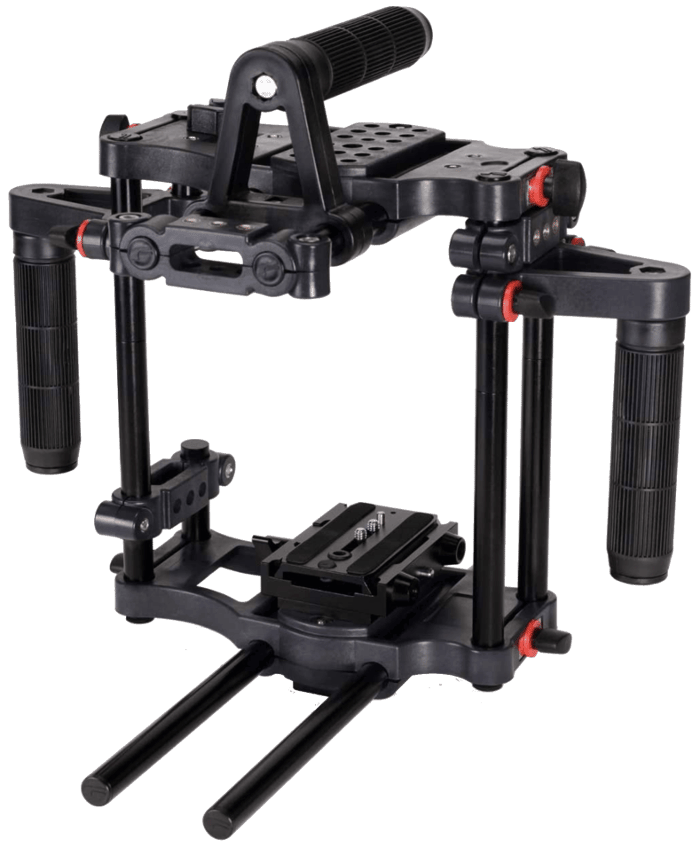
The Filmcity FC-CTH Power Camera Cage suits run-and-gun documentary and event work. It holds the camera inside a frame with a top handle and two side grips. You can start recording the moment something happens, because there is no balancing before each shot.
The cage holds cameras up to 6.9 by 6.5 in inside the frame, which covers most DSLR and mirrorless bodies. It has a quick-release baseplate with a cold shoe and 15mm rods. That gives you room to add a monitor, light or microphone without changing rigs. The top handle also makes low-angle shots more stable than holding the camera by its body.
Like the shoulder rig, the cage steadies your grip but does not hide footsteps. Filmcity does not publish a load rating, so check that the cage fits your camera body. Choose a gimbal or a counterweight sled if you need smooth tracking shots.
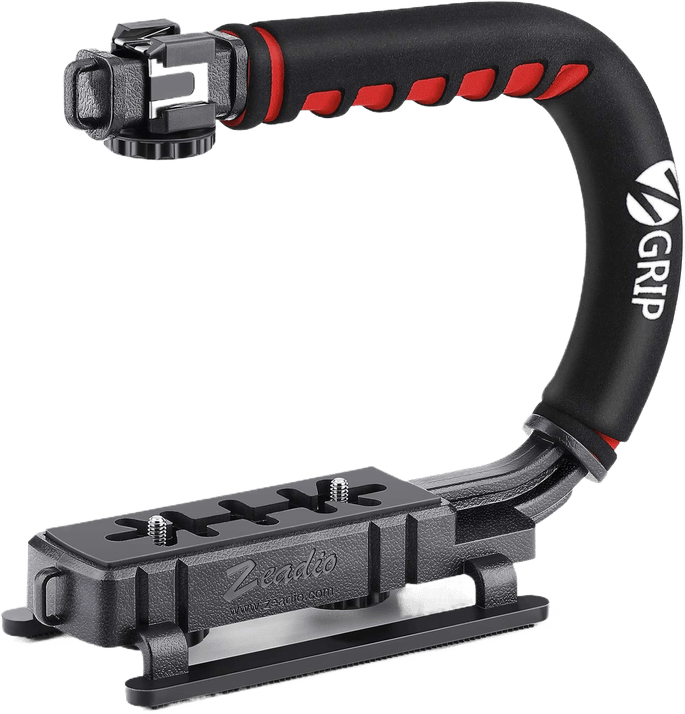
The Zeadio Handle Grip is the simplest stabilizer on this list. It is a padded handle that screws to the base of your camera. There is nothing to balance, and it adds little weight to your bag.
It is most useful for low-angle shots. You can hold the camera just above the ground while you skate, bike or ski. It also has a cold-shoe mount, the same slide fitting as a camera's hot shoe without the electrical contacts. You can mount a small light or microphone there.
A handle grip only reduces shake from an unsteady hand. It does not remove footsteps, and Zeadio does not publish a load rating. Use it with a light camera and lens. If you need smooth walking footage, the DJI RS 4 Mini is the lightest motorized step up.
How to Choose a Camera Stabilizer
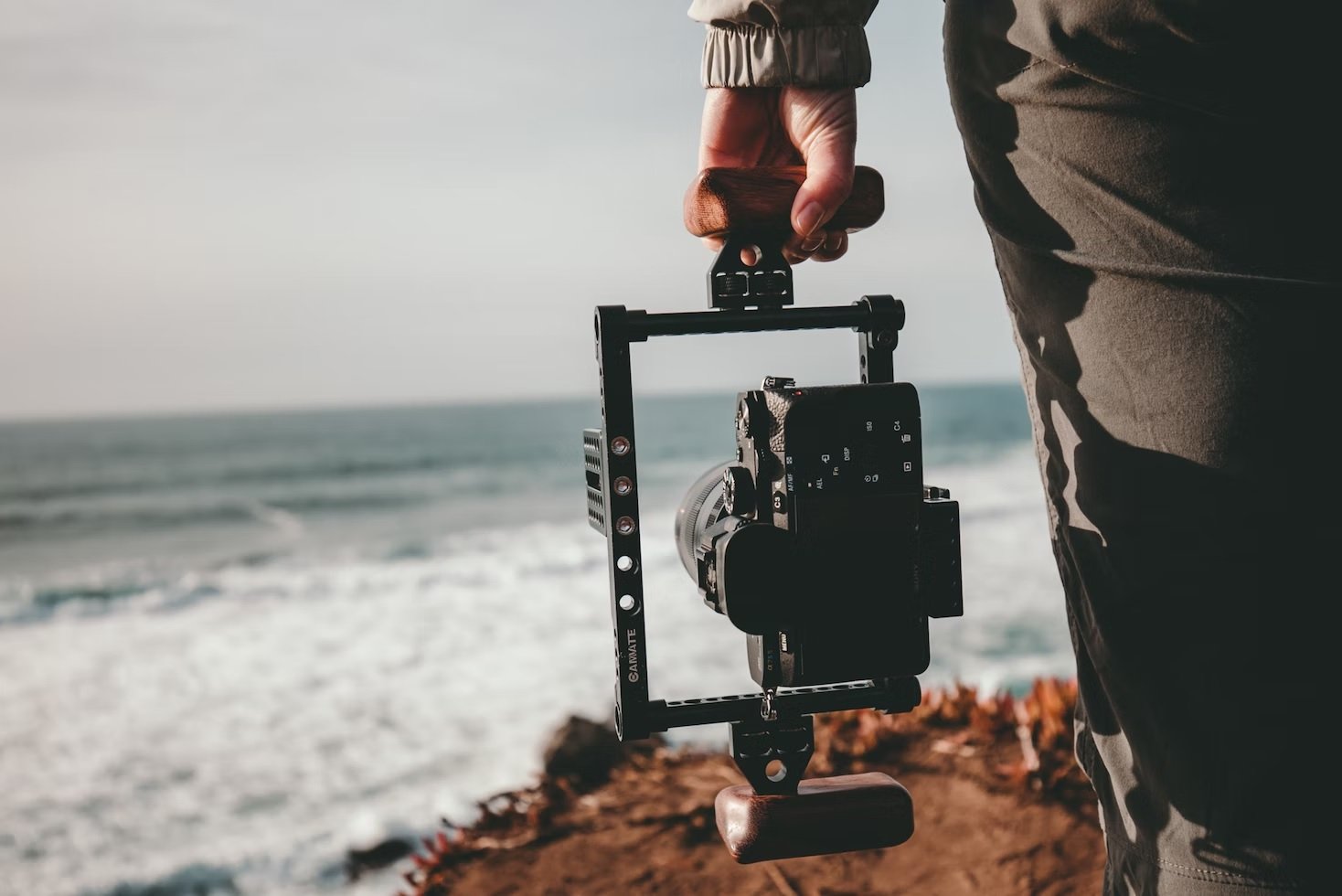
© Kal Visuals (Unsplash.com)
Gimbal or Counterweight Stabilizer?
A gimbal's motors react to movement for you. Once the camera is balanced, most people get usable walking footage on the first day. You can also control the camera from the handle and use automatic modes such as subject tracking. In exchange, you have batteries to charge and firmware to keep up to date.
A counterweight stabilizer relies on balance and your own technique. It has no battery or electronics, and the larger sleds carry heavier cameras than one-handed gimbals. But smooth movement takes practice. If you shoot video only now and then, choose a gimbal. If you want a stabilizer that keeps working all day without power, or you fly a heavy camera, choose a sled. Our camera gimbal guide covers more motorized options. If you film on a phone, a smaller phone gimbal does the same job.
Add Up the Weight of Your Whole Rig
Every stabilizer is rated for a maximum weight. Add the weight of your camera body with its battery and card, the lens, and anything you mount on top, such as a microphone, monitor or cage. Stay below the rating, and leave a margin on a gimbal. A long or front-heavy zoom can be hard to balance even when the total is under the limit. DJI and Zhiyun publish camera and lens compatibility lists on their websites. Check your exact combination there before you buy.
Counterweight stabilizers also need enough weight on top to balance. A very light camera on a large sled can feel unstable. Match the sled's range to your camera rather than buying the highest capacity.
Frequently Asked Questions
Do I Still Need a Stabilizer If My Camera Has In-Body Image Stabilization?
Yes, if you shoot handheld video while you move. In-body and lens stabilization correct small hand tremors. They cannot cancel the larger up-and-down movement from walking. A gimbal or counterweight stabilizer handles that bigger motion.
Which Camera Stabilizer Is Best for Beginners?
A motorized gimbal is the easiest way to get smooth video quickly. The DJI RS 4 Mini suits a light mirrorless kit, and the DJI RS 5 suits a heavier one. A counterweight sled such as the FLYCAM HD-3000 is a good way to learn traditional stabilizer technique, but it takes longer to get smooth results.
Conclusion
The DJI RS 5 is the best camera stabilizer for most video shooters. It carries a full-frame rig and balances quickly, and DJI's tracking module helps when you film yourself. If your camera and lens are light, the DJI RS 4 Mini does the same job for less weight. If you want a stabilizer that needs no battery and carries a heavy camera, choose the FLYCAM Redking.