Everyone from big studio film crews to independent filmmakers uses camera stabilizers to steady their shots. That’s because capturing steady, balanced, shake-free footage with a moving camera is one of the hardest parts of capturing quality video.
What Is the Best Camera Stabilizer?
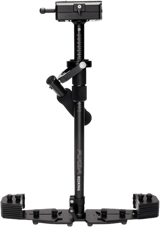
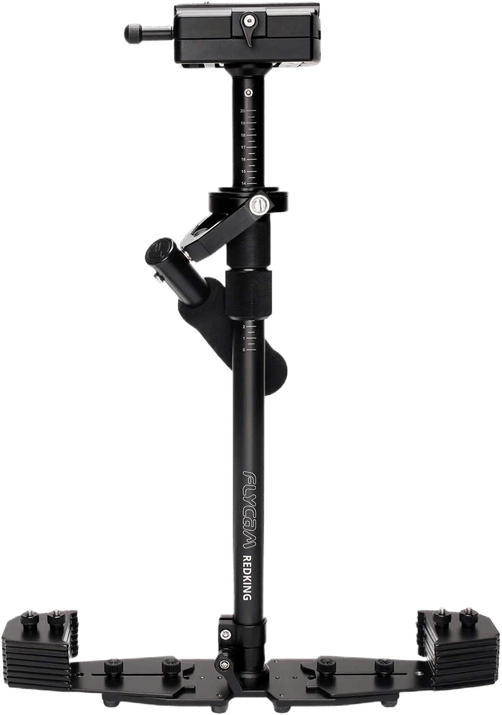
The best camera stabilizer overall is the FLYCAM Redking, thanks to its solid aluminum frame and quick-balance weights that get you to a steady shot fast.
The build quality is excellent, with a solid aluminum structure. And the quick-balance weights make it easy to find the perfect balance, giving you smoother shots in no time.
[Note: readers support ExpertPhotography. Product links on ExpertPhotography are referral links. If you use one of these and buy something, we make little money. Need more info? See how it all works here.]
The Best Camera Stabilizers
Here’s a quick look at our list of the best camera stabilizers. We’ll look at each stabilizer in more detail in the section after. And finally, we’ll look at the difference between camera stabilizers and gimbals (scroll to the end).
- Locks your camera into a cage instead of balancing it on weights, so there's no setup routine before each shot
- Built around 15mm LWS rods with room to add a monitor, light, or mic
- The cheapest stabilizer on this list at around $118
Best Camera Stabilizers in Detail
Before you buy anything, think about the equipment you already have. Are you using a mirrorless or DSLR camera? What is the weight of your camera? And what is your budget? We cover all the bases in this list. So here are our top picks for the best camera stabilizers in a bit more detail.
Match the pick to your camera's weight, not the price tag. Up to 2.2 kg (most mirrorless bodies with a single lens), the Zeadio Handle Grip, YELANGU S60T, or CAMVATE cage are light enough to run one-handed all day. Up to 3 kg (DSLRs and mirrorless bodies with a longer lens), look at the FLYCAM HD-3000, Neewer Camera Cage, or Neewer Shoulder Rig. The Glidecam XR-PRO takes up to 4.5 kg, and only the Flycam Redking is rated for a heavier body and lens up to 7 kg. And if you'd rather brace the camera against your body than balance it on a counterweighted arm, the Filmcity, Neewer, and CAMVATE cages do that job instead.
The FLYCAM Redking stabilizer is a solid piece of equipment. And it has some excellent features that make it one of the best stabilizers you can buy. It isn’t the cheapest, but it offers good value.
It’s a handheld stabilizer with an aluminum frame. There are X-Y adjustments for horizontal balancing. And there’s a dovetail quick-release plate for rapid mounting and dismounting your camera.
The telescopic central shaft makes vertical balancing faster and easier. You get the weight disks at the bottom for precise counterbalancing. And the head has a 3-axis gimbal for 360-degree panning.
It’s a sturdy handheld stabilizer, holding a camera up to 7 kg in weight. That’s easily enough for professional-level DSLR cameras and smaller video cameras.
The main problem is the weight. The unit weighs 3.9 kg (8.5 lb) without a camera. So when you mount up your shooter, single-handed operations are practically impossible.
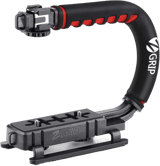
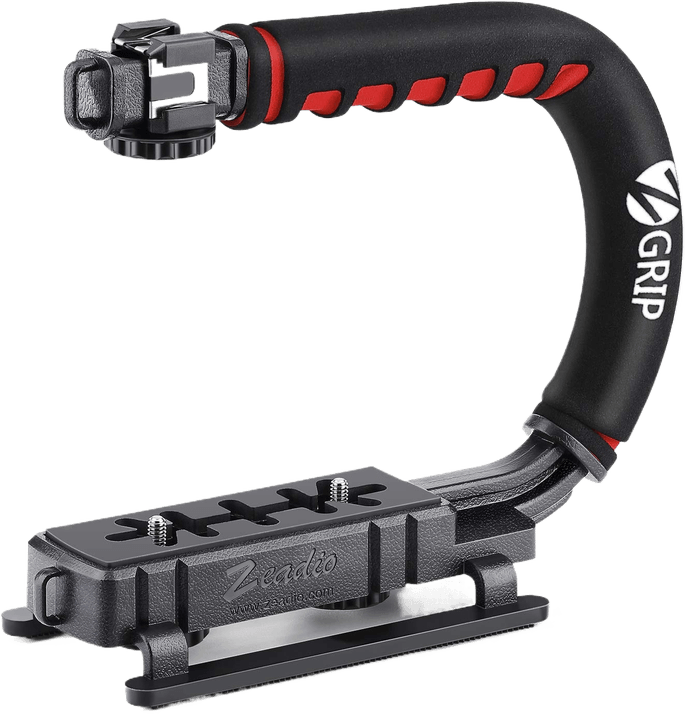
The Zeadio Handle Grip gives you a sense of control and smooth footage. And it’s excellent value too. It’s a simple stabilization solution. And it gives you surprisingly good results.
You can use the handle with Mirrorless or DSLRs. You can also attach flashes and monitors using the hotshoe connector. And the cushioned grip also means it’s comfortable to hold, allowing you to shoot for long periods.
The handle is lightweight, weighing only 344 g. And it gives you great mobility for low-angle shots. So it’s perfect for action or sports photography, especially skateboarding, biking, and skiing.
The handle is the only thing between you and your camera. So the handle grip doesn’t remove all unwanted movements. But it does effectively reduce camera shake when you’re filming. Overall, it’s a simple solution for amateur shoots and won’t cost you much.
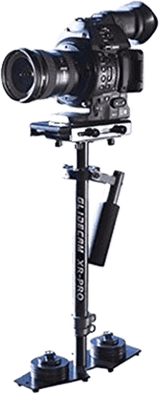
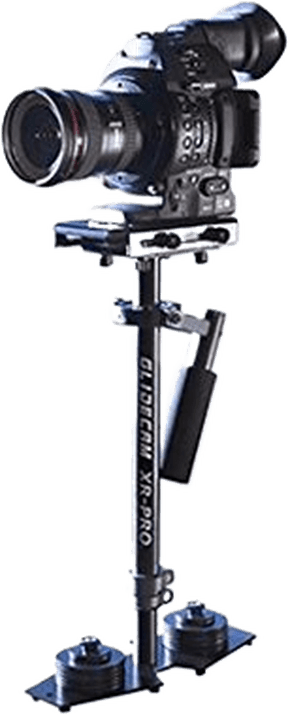
The Glidecam XR-PRO, much like the discontinued HD-PRO, is a serious piece of camera equipment. They both have a strong frame and sturdy composition. But the XR-Pro is more geared towards larger video cameras.
The foam handle is comfortable and gives you a good range of motion. And the head has a 3-axis gimbal, giving you smoother footage than most other handheld stabilizers.
The central post is telescopic, ranging from 35 to 63.5 cm. This variation in length is excellent for finding the precise balance. And you get 16 weights for the base plate to counteract the weight of your camera.
Like the HD-Pro, the Glidecam XR-PRO is heavy. It weighs 3.5 kg without a camera attached. So if you’re shooting for long periods, your arms will feel it.
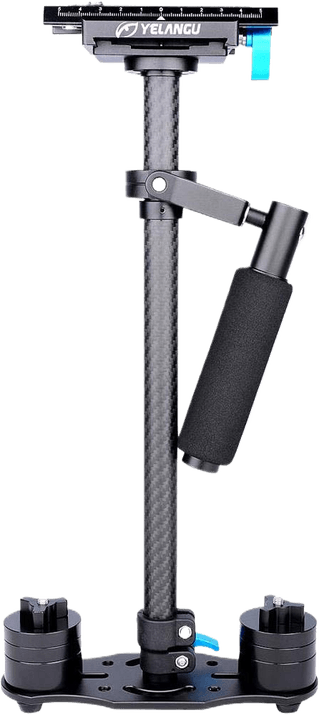
The YELANGU S60T is a simple yet highly effective camera stabilizer. It has an uncomplicated design. And it achieves a level of stability not found in some more complex models.
The body is made of carbon fiber. It weighs 800g without the balancing weights. And it can support a DSLR camera weighing up to 2.5 kg. Plus, the central bar is telescopic. So you can easily adjust the length for comfort and balance.
It’s comprised of two connection arms and one arm for shock absorption. You can attach it to a stabilization vest if you have one. But it produces good results when used on its own.
The YELANGU S60T keeps your camera steady for a reasonable price. It’s simple, effective, and excellent value for your money. It tops out at a 2.5 kg load, so it isn’t built for a heavier DSLR with a long lens attached. Check your gear’s weight before you buy.
5. Filmcity FC-CTH Power Camera Cage
| Brand |
Brand
Filmcity
|
| Build Material |
Build Material
Aluminum rods with high-grade plastic cage
|
| Dimensions |
Dimensions
33 x 25.4 x 10.2 cm / 13 x 10 x 4 inch
|
| Stabilizer Weight |
Stabilizer Weight
3 kg
|
| Rod Support |
Rod Support
15mm LWS, 60mm spacing
|
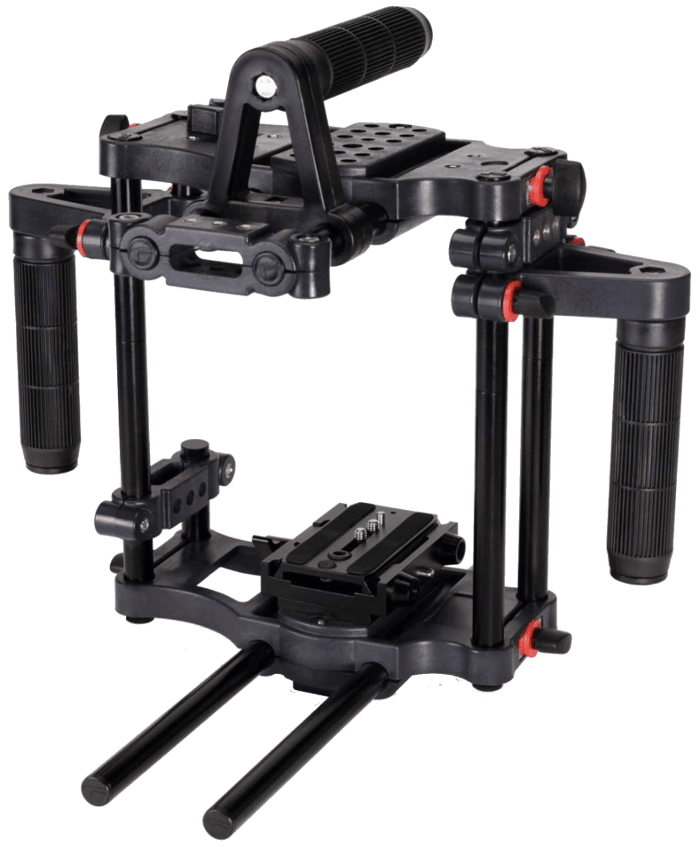
The Filmcity FC-CTH Power Camera Cage takes a different approach to steadying your shots. Instead of a counterbalanced arm, it locks your camera inside an aluminum-and-plastic cage with a top handle and two side handgrips, so you brace the camera with your body instead of balancing it against weights.
That makes it a good pick for run-and-gun documentary work, interviews, and event coverage, where you need to start shooting the second something happens. There’s no balancing routine before every shot, unlike the counterweight stabilizers elsewhere on this list.
It’s built around 15mm LWS rods with 60mm spacing, weighs 3 kg, and mounts to any DSLR or mirrorless body via 1/4″-20 and 3/8″-16 threads or a cold shoe. The rod system also leaves room to add a monitor, light, or mic without swapping rigs.
But it isn’t a substitute for a counterweight rig. It steadies your grip on handheld shots. It won’t cancel out footsteps on a walking or tracking shot the way the Flycam Redking above does. If you need that kind of glide, look higher up this list.
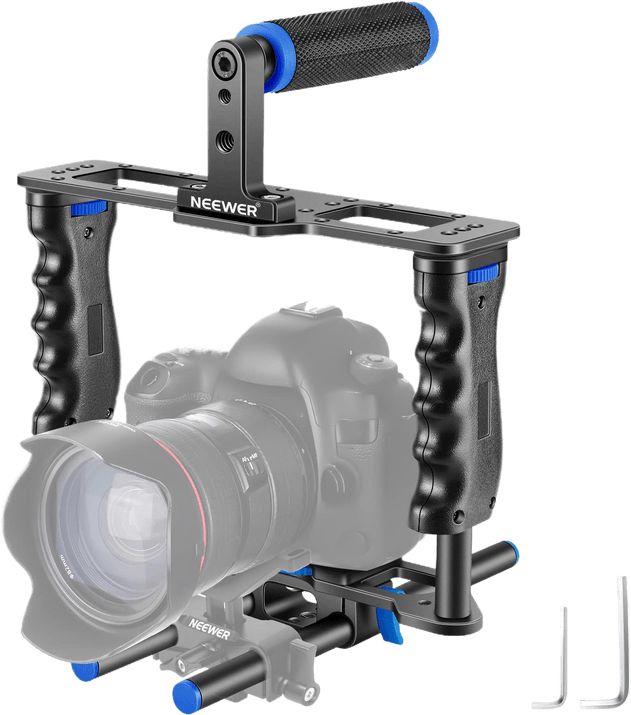
The Neewer camera cage is a fantastic rig for shooting video with a DSLR or mirrorless camera. It’s strong, stable, and has excellent build quality. But the aluminum alloy construction is lightweight. So you can shoot for hours without fatigue.
The camera cage has two handles, one on either side. The dual-hand grips give you stability when shooting at chest or eye height. And the top handle also lets you shoot lower angles with greater stability. This is popular with skateboard videographers.
You can easily attach your camera to the cage using the built-in screws. You don’t need any extra tools. And the padded mount protects your camera and keeps it in position.
Attaching extra equipment like microphones, lights, and monitors is easy. So you can transform the basic camera cage into a complete videography setup.
The Neewer camera cage is an affordable starting point for your video production setup. But on its own, a cage steadies your grip rather than eliminating camera shake outright. It won’t smooth out a walking or tracking shot the way a counterweight rig does. If you need that, the Flycam Redking or Glidecam XR-PRO above are the better picks.
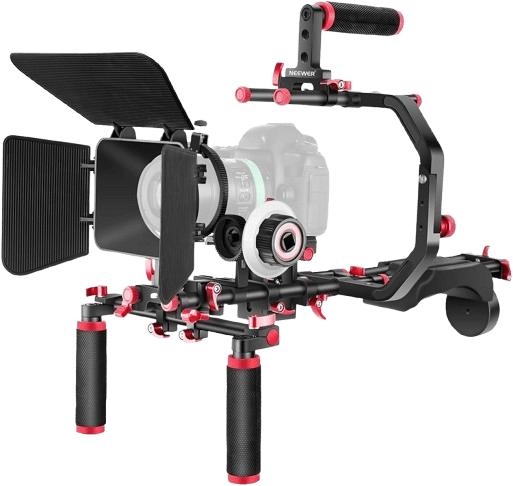
The Neewer Camera Shoulder Rig is a great stabilization option for heavier camera setups and longer shoots.
The rear pad rests on your shoulder, taking a large portion of the rig weight. You then use both hands to support the front end and direct the camera. The result is shake-free footage and a comfortable arrangement that allows you to shoot for hours.
You also have a handle on top of the rig, allowing you to shoot low-angle shots with stabilization. When mounted, the camera can slide forward and back on the rails, which helps you shoot the dolly zoom effect from Vertigo or Jaws. The rig is also tripod mountable.
Mirrorless cameras, DSLRs, and camcorders are all compatible thanks to the universal baseplate. Its 1/4″ and 3/8″ mounting threads fit with most modern cameras.
It’s a well-constructed piece of equipment. The main poles are aluminum. And they are both strong and lightweight. So it can hold a heavy DSLR or mirrorless camera. And it’s strong enough to support extra filming equipment. You can add lights, microphones, and monitors to the rig without issue. At 80 cm long and 2 kg unloaded, it’s bulkier than a handheld grip or cage. It’s built for longer shoots where you can rest the weight on your shoulder, not for quick, mobile setups.
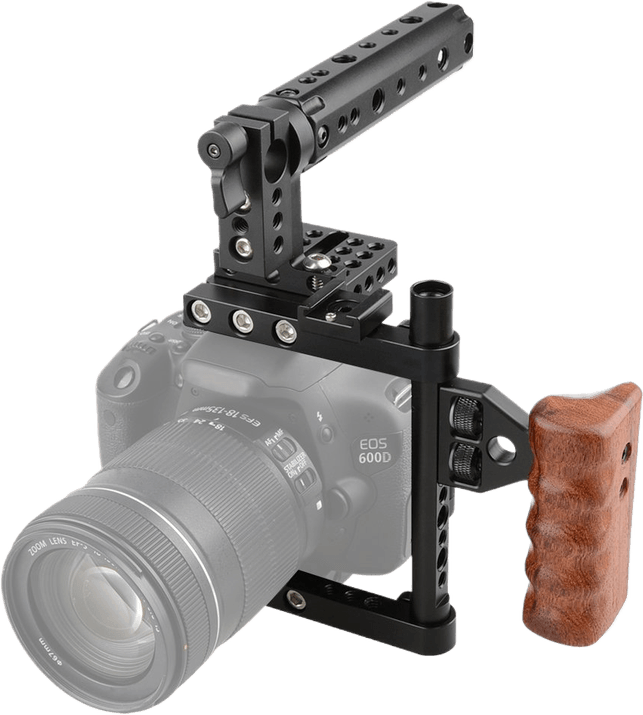
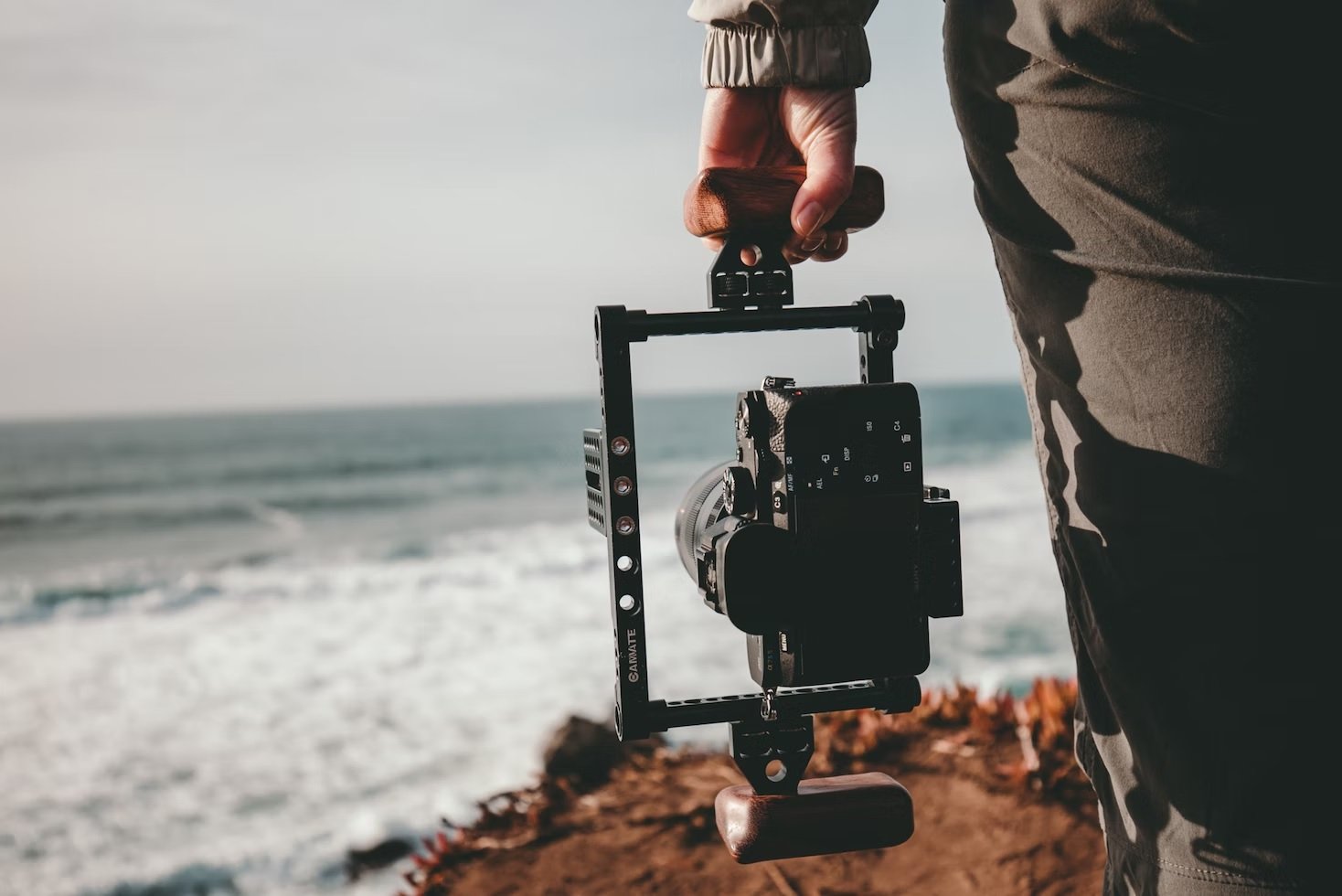
The CAMVATE camera cage is another way to support cameras when shooting video. Unlike many stabilizers, the CAMVATE Camera Cage doesn’t use a counterbalance to stabilize. But the dual-handle system does provide excellent stability when you’re filming.
You get a frame that you can screw your camera into. It’s compatible with the main models from Nikon and Canon. And it works with select Sony Alpha Series cameras, Panasonic G Series cameras, and the Samsung NX1. (Make sure yours fits.)
The frame securely holds the camera in place. And you have a handle above to hold and control the unit. Plus, there’s a wooden handle on the side for extra control.
Unloaded, the cage only weighs 370g. That’s lightweight, even when your camera is mounted. So you can shoot for hours. And the cage segments are aluminum, so it’s a solid rig.
This kind of stabilization system is more sensitive to bigger jolts and shakes. It won’t get rid of them completely. But it vastly improves your footage if you’re going from purely handheld shots.
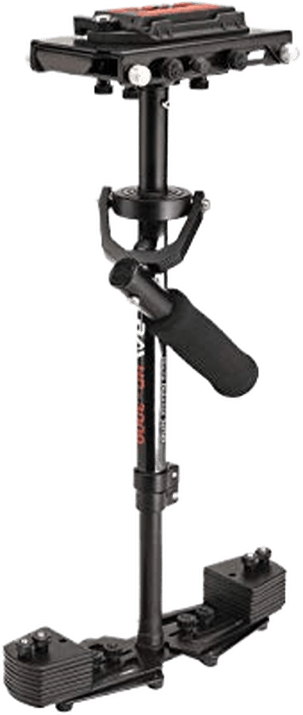
The FLYCAM HD-3000 is another superb counterweight camera stabilizer. It’s strong and steady with aluminum construction. And it can take heavier loads than many other handheld stabilizers.
It’s compatible with all major camera brands of DSLR and mirrorless cameras. And with a max load capacity of 3.5 kg, it can handle a professional body with a mid-size lens. The quick-release plate also saves you time when attaching and removing the camera.
The removable weights make it easy to find the perfect balance for smooth shooting. And there’s a 3-axis gimbal joint that reduces shake even more. So it’s easy to achieve cinema-smooth video production. It’s a lighter, cheaper alternative to the Redking above, but the trade-off is a lower 3.5 kg load capacity. It won’t balance a heavier cinema rig, so check your gear’s weight first.
© Kal Visuals (Unsplash.com)
What is a Camera Stabilizer?
A camera stabilizer is a rig that you attach to your camera. It reduces and prevents unwanted movement, stabilizing your camera. It keeps any camera shake to a minimum, giving you smooth video footage.
Mirrorless and DSLR cameras are getting lighter as time passes, which is great for handheld photography. You can shoot all day without your arms falling off. But lighter cameras are more sensitive to movement when shooting video.
DSLR and mirrorless cameras have excellent video capabilities these days. But a lightweight mirrorless camera picks up the slightest jolt or shake while shooting handheld video.
These movements are even worse if you want to do walking or tracking shots. The camera is jerked and jolted with every footfall, making the footage unusable. That’s why a camera stabilizer is so important.
Camera stabilizers work by counteracting the camera’s weight. And every stabilizer is designed for cameras in specific weight categories. So it’s best to keep this in mind when purchasing a camera stabilizer.
Camera Stabilizer vs Gimbal
When talking about camera stabilizers and gimbals, things can get confusing. It’s easy to mix up one with the other. And sometimes, people use them as synonyms. But while there is some overlap, they are not the same thing!
A gimbal stabilizer is a camera mount that pivots, allowing the camera to rotate on three axes. The gimbal keeps the camera balanced and counteracts any unwanted camera movements. An example is the Zhiyun Smooth Q3. It’s a phone gimbal and you can read our full review of it here. And there are GoPro gimbals, too.
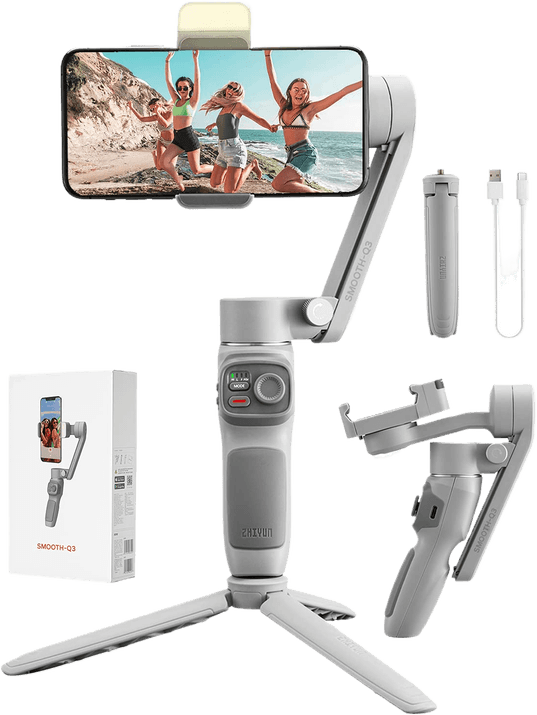
Gimbals use motors to counteract the movement of the camera. And the camera is often held in a floating position. But stabilizers are purely mechanical, meaning you don’t have to worry about battery life or charging.
To complicate matters, some camera stabilizers use 3-axis gimbal technology. So there’s no wonder why people get confused between the two.
Some of the stabilizers we’ve looked at have gimbal features. But we have stuck to mechanical stabilizers in our list. You can look at our list of the best camera gimbals.
Frequently Asked Questions
What’s the difference between a camera stabilizer and a gimbal?
A camera stabilizer counteracts your camera’s weight mechanically, using an arm and adjustable counterweights. A gimbal uses motors to do the same job electronically. Stabilizers need no battery or charging; gimbals do.
How much weight can a camera stabilizer hold?
It depends on the model. The lightest pick on this list, the Zeadio Handle Grip, tops out at 2.2 kg. The Flycam Redking, our overall pick, handles up to 7 kg. Check your camera and lens combo’s total weight against the stabilizer’s rated capacity before you buy.
Do I still need a stabilizer if my camera has in-body image stabilization?
Yes, if you’re shooting handheld video. In-body and lens stabilization correct small hand tremors, not the bigger movements from walking, panning, or footsteps. A mechanical stabilizer counteracts that larger motion instead.
Which camera stabilizer is best for beginners?
The Zeadio Handle Grip. It’s the simplest option on this list, with no balancing routine to learn, and it’s a solid way to find out whether you need a heavier counterweight rig before spending more.
Conclusion
Camera stabilizers are a vital part of filmmaking. If you’re working on a professional commission or making home movies, you want your footage to be smooth and shake-free. That’s why you need the best camera stabilizer.
The Flycam Redking is our favorite camera stabilizer. It’s strong, reliable, and gives you exceptionally smooth footage. You don’t need a body suit or extra gear to get the most out of it. Just attach your camera, get the balance right, and start shooting!