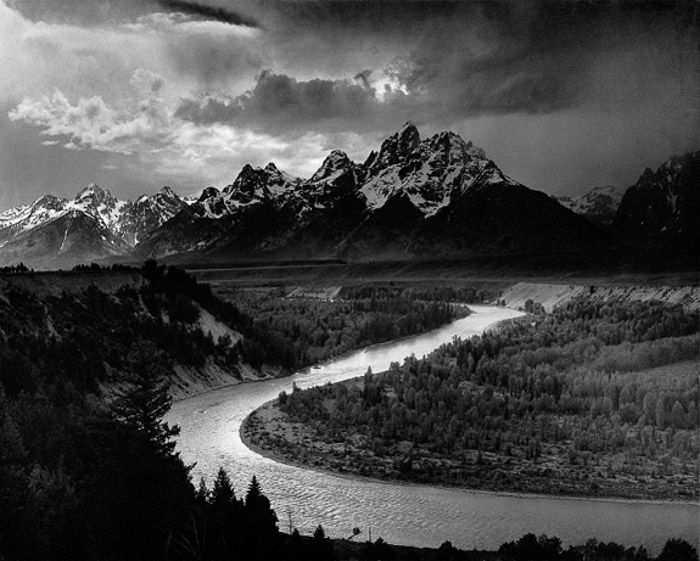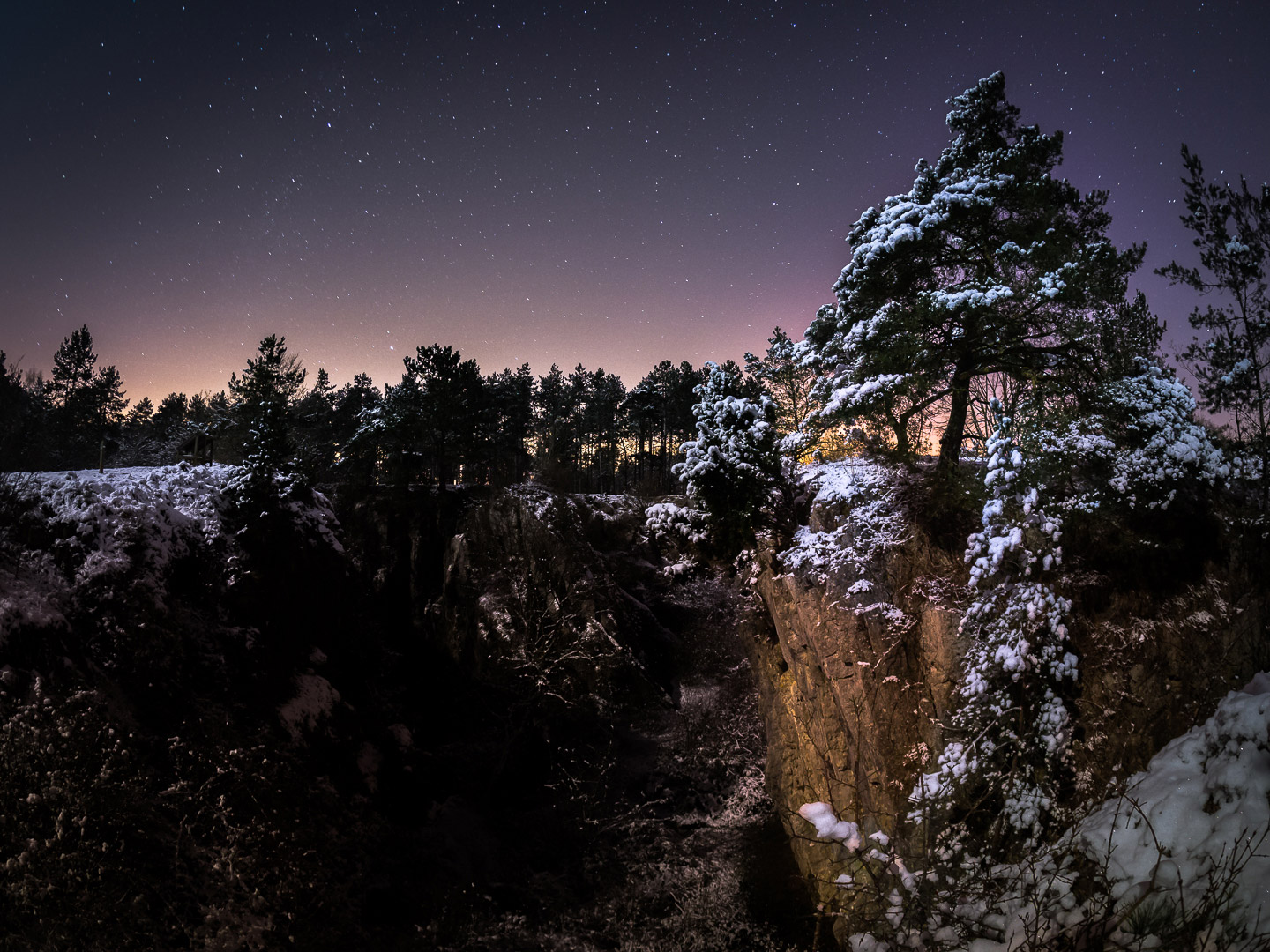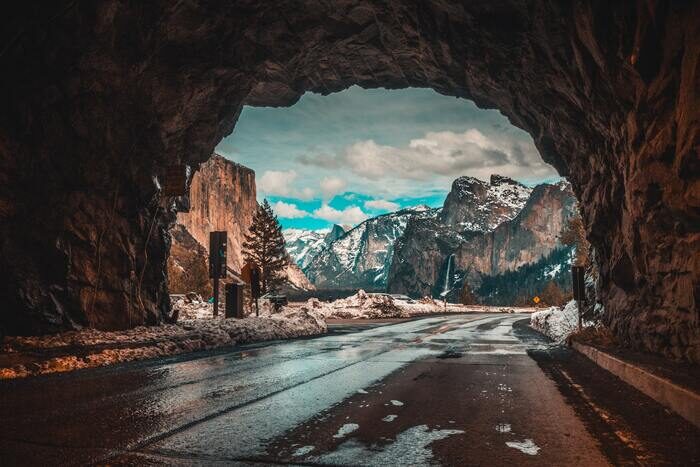
Famous landscape photographers can give you very different ideas for your next shoot. Look at Ansel Adams for black and white, Huibo Hou for quiet compositions, Zach Doehler for expressive color, and Edward Burtynsky for landscapes shaped by people.
Landscape photography includes coastlines, forests, mountains, and the places where people live and work. These 28 photographers show how much your choice of subject, light, and framing can change a picture.
28 Landscape Photographers and What to Study
This is an editorial selection of different approaches to the landscape. The numbers make the list easy to browse. It includes contemporary photographers and historic work: Ansel Adams lived from 1902 to 1984.
Pick a few names that match what you want to learn, then look through a sequence of their pictures. A whole portfolio tells you more about a photographer's choices than one striking image.
1. Justin Minns
Justin Minns specializes in atmospheric landscape photography of East Anglia. His work is a good starting point if you want to see what repeated visits to one region can produce.
Look at the balance between open sky, water, and small features along the horizon. His local landscapes invite you to watch how a familiar place changes with the seasons. You do not need a distant mountain range to find a subject worth returning to.

© Justin Minns
2. Zach Doehler
Zach Doehler, also known as Calibreus, is a landscape and nature photographer from Vancouver, British Columbia. His own description of his work puts colorful vision and post-processing at its center.
His landscapes are worth studying if you want color to carry the mood of a picture. Compare the warm and cool areas within each frame, then notice where the brightest tones draw your eye.
In fact, his editing style is so brilliant that we had to get him on board to teach his signature style. Check out our Epic Landscape Editing course!

© Zach Doehler
3. Mandy Lea
Mandy Lea is a travel photographer whose work connects landscape photography with life outdoors. She teaches landscape workshops and guides backpacking trips, while her blog records her travels.
Her work would be good to look at if you want to start a travel blog. Look at how a landscape can become part of a longer account of a journey. The route, weather, and time spent in a place can give the finished photographs more context.

© Mandy Lea
4. Tim Parkin
Tim Parkin is a landscape photographer and editor of On Landscape. He works with film and digital cameras, including large-format film.
His landscapes reward attention to smaller relationships within a scene. Look for the way branches, rocks, and moving water lead from one part of the frame to another. Studying those connections can help you organize a busy woodland or river scene without needing a spectacular sky.

© Tim Parkin
5. Trey Ratcliff
Trey Ratcliff is known for colorful travel photography and HDR, or high dynamic range imaging. His StuckInCustoms site is a place to explore that expressive approach.
Look at how he handles bright skies and darker foregrounds within the same image. His work offers a different direction from the restrained tones elsewhere on this list. It is a reference for photographers who want their processing choices to be a visible part of their style.

© Trey Ratcliffe
6. David Noton
David Noton's work brings together landscape and travel photography. His photographs are a reference for watching how light changes the shape and mood of a place.
Look at where illumination falls, which parts of the landscape remain in shade, and how those areas hold the composition together. When you study a picture, ask what would change if it had been taken an hour earlier. That is a more practical lesson than trying to copy a location.

© David Noton
7. Verity Milligan
Verity Milligan photographs both the natural landscape and urban places. Her own account of her work emphasizes light, composition, mood, and atmosphere.
Look at her work to see how photography can create a certain feel. The foggy woodland shown here is a starting point: notice how the trees separate from the background. When considering your own post-production, think about how you can support the mood you saw on location. A finished image alone does not reveal exactly how it was edited.

© Verity Milligan
8. Christian Hoiberg
Christian Hoiberg is a Norwegian landscape photographer based north of the Arctic Circle. He also guides workshops and writes photography tutorials through CaptureLandscapes.
His work ranges from quiet scenes to grand landscapes. In the winter river photograph below, follow the water through the frame and look at the relationship between dark shapes and snow. It is a way to study depth without relying on strong color.

© Christian Hoiberg
9. Jake Guzman
Jake Guzman is an outdoor adventure photographer and filmmaker based in Seattle. His work combines travel, landscape, and commercial subjects.
The mountain scene below shows how a small human detail can give a large landscape scale. Follow the road toward the van, then compare its size with the peaks around it. Look through his work for similar relationships between a route through a scene and the features that surround it.

© Jake Guzman
10. Philip Slotte
Philip Slotte's landscape portfolio covers destinations from Scandinavia to South America. His images offer a range of mountain, coastal, and outdoor scenes to compare.
Look at the contrast between illuminated areas and darker landforms. In the photograph below, the rock face gives the eye a large, definite shape to settle on. Across a portfolio, notice which shapes remain memorable after you stop looking at the pictures.

© Philip Slotte
11. Dustin LeFevre
Dustin LeFevre's landscape work includes the deserts, mountains, and other environments of the American West. His own artist profile describes a long-standing connection with Utah and the desire to convey how a place feels.
The photograph below is a starting point for studying texture. Look at the ridges and the way the light separates them. A landscape can become a study of repeated shapes as well as a record of a location.

© Dustin LeFerve
12. Suzanne Mathia
Suzanne Mathia photographs landscapes and nature, with a particular connection to the American Southwest. Her first-person account for the Epson International Pano Awards describes an interest in both broad desert views and small natural details.
That range gives you something specific to compare. Look at how an open scene and a tighter arrangement can come from the same region. In the canyon image below, the surrounding rock directs attention toward the light.

© Suzanne Mathia
13. Huibo Hou
Huibo Hou is a landscape photographer based in San Diego, California, with a particular passion for black and white. She describes photography as a way to express how she observes and connects with nature.
Her work is a reference for thinking in shapes and tones. Look at the areas between subjects as well as the subjects themselves. When color is absent, the placement of a dark form against a lighter background can carry the whole picture.

© Huibo Hou
14. Kilian Schönberger
Kilian Schönberger is a German photographer and geographer whose work includes forests, mountains, and rural landscapes. He describes concentrating on patterns when photographing woodland.
That makes his work a starting point for scenes that seem too tangled to photograph. Look for repeated trunks, gaps between branches, and the way mist separates one layer from another. You can use the same exercise in a small patch of local woodland.

© Kilian Schönberger
15. Thomas Heaton
Thomas Heaton's landscape work is closely connected with being outdoors and conveying the experience of a place. Alongside his photographs, he shares that process through videos and a photography blog.
Look at how much he leaves out of a composition. A simple arrangement can give one subject room to stand out. Watching a photographer work through those choices can be as instructive as looking at the finished print.

© Thomas Heaton
16. Simon Roberts
Simon Roberts uses the landscape to examine the relationship between people and place. His We English project, made in 2007 and 2008, shows people at leisure within broad English landscapes.
Look at the distance between the camera and the people in his pictures. Small figures can become part of a larger pattern of paths, fields, and shared spaces. His work is a reference for including people without turning every photograph into a portrait.

© Simon Roberts
17. Andy Farrer
Andy Farrer is a British landscape photographer known for his work in Dorset and along the Jurassic Coast. His portfolio also includes landscapes farther afield.
Look at how foreground shapes lead into the rest of a scene. His work can help you think about filling the frame: give each part a purpose, then inspect the edges for distractions. The aim is to connect foreground, middle distance, and background within one composition.

© Andy Farrer
18. Vanda Ralevska
Vanda Ralevska finds subjects in quiet places and ordinary scenes. On her website, she describes an interest in discovering beauty beyond the obvious.
The woodland photograph below is a starting point for looking at atmosphere and layers. Notice how the light directs attention through the trees. Her work can encourage you to stay with a modest subject and look for a small change in conditions that makes it worth photographing.

© Vanda Ralevska
19. Carla Regler
Carla Regler works across landscape, seascape, and aerial photography. Her own profile identifies the Porthleven storm images as an important part of her work.
Those photographs are worth studying for the relationship between moving water and fixed structures. The buildings give the waves a sense of scale. Look at where the action sits within the frame and how much surrounding space is needed to make its force readable.

© Carla Regler
20. Paul Sanders
Paul Sanders' Still work centers on a mindful approach to photography. His minimalist landscapes give a small number of elements room to hold your attention.
Look at the space around a lone tree, fence, or rock. Ask how the image would change if the subject were larger in the frame. His photographs offer a reason to slow down and consider what you can leave out.

© Paul Sanders
21. Lizzie Shepherd
Lizzie Shepherd is a landscape, nature, and travel photographer based in North Yorkshire. Her work is a reference for arranging the many small elements within an outdoor scene.
Look through several pictures and compare the role of light, texture, and repeated shapes. The aurora image below offers a different problem: balancing an active sky with the land beneath it. A strong sky still needs a foreground that gives the photograph a sense of place.

© Lizzie Shepherd
22. Charlie Waite
Charlie Waite's landscape photography emphasizes light, shade, and a sense of calm. He founded Light and Land and launched the UK Landscape Photographer of the Year competition in 2007.
His work is worth studying for the relationship between shapes within a frame. Look at how a foreground feature answers a shape farther away. In the photograph below, compare the upright plants with the mountain beyond them and consider how the two parts work together.

© Charlie Waite
23. Ted Gore
Ted Gore takes an openly interpretive approach to landscape photography. In his own account of his process, he describes using digital tools and blending techniques to express his experience of nature.
His work is a reference for expressive processing. Look at the path your eye takes through an image and the areas given emphasis by color and brightness. Treat the finished picture as a creative interpretation when studying how it works.

© Ted Gore
24. Stephen Shore
Stephen Shore shows how everyday surroundings can become the subject of a landscape photograph. His work includes streets, houses, businesses, and places changed by industry.
His Steel Town photographs were made in 1977 across New York state, Pennsylvania, and eastern Ohio. Look at the relationships between homes, roads, and industrial structures. The setting helps tell the story, so the background deserves as much attention as the most obvious subject.

© Stephen Shore
25. Edward Burtynsky
Edward Burtynsky photographs landscapes transformed by human industry. His artist statement names recycling yards, mine tailings, quarries, and refineries among the places he seeks out.
His pictures can be visually striking before you understand what they show. Look at the patterns, then read the location and subject information. The relationship between those two experiences is a reason to study his work if you want a landscape photograph to raise questions.

© Edward Burtynsky
26. Simon Norfolk
Simon Norfolk uses landscape photography to examine conflict, memory, and the traces of human activity. His own description of his work stretches the idea of a battlefield beyond the immediate scene of fighting.
Look at what structures and objects remain in the landscape, then read the project context. A quiet-looking place can carry a difficult history. His work shows why a caption or an accompanying text can be essential to understanding a photograph.

© Simon Norfolk
27. Ansel Adams
Ansel Adams (1902–1984) is a historic reference for black and white landscape photography, especially images of the American West and Yosemite.
Study how he separates dark and light areas while keeping detail across the scene. His work also invites you to consider the finished print as part of making the picture. The choice of tones affects how the viewer experiences the landscape as much as the framing does.

© Ansel Adams
28. Richard Misrach
Richard Misrach's color landscapes often connect beauty with social and environmental questions. His Desert Cantos work explores the relationship between people and the landscape over a sequence of photographs.
His series Border Cantos, made with composer Guillermo Galindo, examines the US–Mexico borderlands. Look at how traces of human activity change your reading of a landscape. Reading the project context will take you beyond treating each image as an isolated view.

© Richard Misrach
Learn From These Landscape Photographers
Choose two photographers whose work takes different directions. Compare a quiet black and white scene with an expressive color landscape, or an open natural view with a place shaped by people.
For each picture, ask where your eye goes first, what holds it there, and what the photographer has left outside the frame. Then take one of those ideas to a place you can revisit. Studying a portfolio becomes more useful when it changes a choice you make with your own camera.
Check out our Simply Stunning Landscapes course if you want to take your landscape photography to the next level!