Using the best free HDR software allows you to create stunning composite images without having to buy expensive software suites.
High Dynamic Range (HDR) photography is a brilliant technique for capturing landscapes with uneven lighting. Creating a HDR image is fairly simple, but you need the software to be able to do it properly. That’s why we’ve listed all the best free HDR software in this article.
We start the article by looking at the best free HDR software options. These are perfect if you’re just getting started with HDR photography. But free software is often limited, which is why we have some paid software recommendations in the second part of the article.
Whether you’re a beginner or more experienced, you’ll be able to find the best HDR software in this post.


What is the Best Free HDR Software?
The best free HDR software allows you to create fantastic high dynamic range images without spending money on software.
To create a HDR image, you need to combine several exposures of the same image. By taking two, three, or more images of the same scene with different exposure values, you can blend them together using software to create an image with a super-high dynamic range.
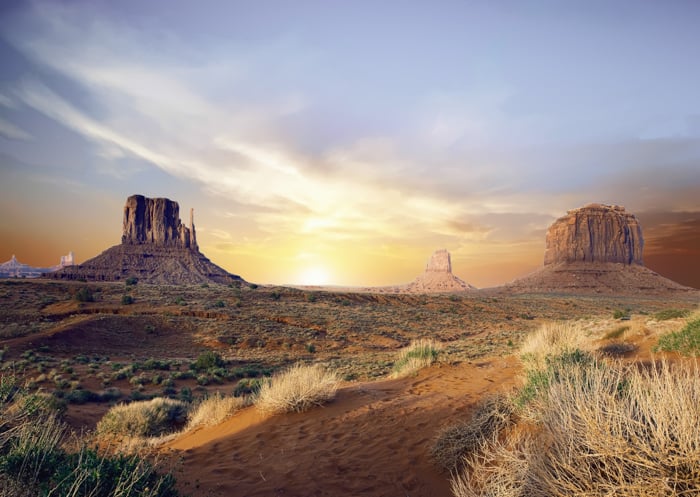
The HDR technique gives you incredible detail, bringing out every line and feature from areas that would otherwise be blown out or overexposed.
This might sound complicated, but it’s actually fairly simple once you have the right software. All the free HDR software we look at in this article are simple and easy to use.
However, the free software options are limited and the results can be mixed. That’s why we’ve included some of the best HDR software you can purchase.
Which one you should pick comes down to two questions. What do you shoot, and how often? If you merge a bracket now and then and don’t want to install anything, use the browser-based Fotor HDR Photo Editor. If you shoot RAW and want the merged file to stay inside a real editing workflow, use darktable. If you want to audition lots of different HDR looks from one merge, use Luminance HDR. And if you are merging brackets most weeks, a paid program like Lightroom or DxO Nik HDR Efex will save you more time than it costs you.
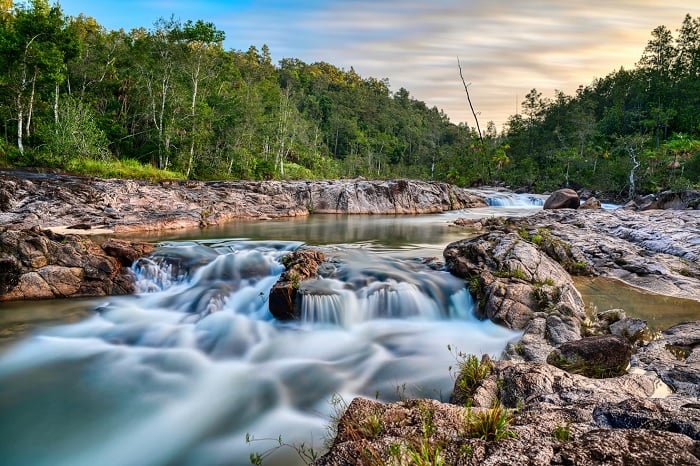
© Ronald Plett
5 Best Free HDR Software
The Fotor HDR Photo Editor is the best free software for creating high dynamic range images. You don’t even need to download or install the software. You can use it through your web browser, simply uploading images from your hard drive.
Uploading and merging your images couldn’t be easier. Once the HDR tool is open in your browser, upload three or more images into the image boxes in the interface. Then click “start” to merge the images together.
When you have your merged image, you can make minor edits to improve the final picture. You have structure, soft, and intense pre-set effects. These filters have been specifically designed for HDR images, giving you more intensity and detail.
The free program also has several adjustment tools, allowing you to change brightness, saturation, and sharpness.
Fotor has a free plan for its basic software package. It includes basic editing and design features, but other than that, it is fairly limited. If you need more from your editing software, you can upgrade to one of their fairly priced paid plans.
But if you only want to use the HDR feature, the Fotor HDR Editing Tool is your best option.
For a long time, Luminance HDR was the go-to program if you wanted a free HDR editor. It’s still a fantastic piece of single-purpose software, released under the GPL and free in every sense. It merges brackets and tone maps them, and it doesn’t ask you to learn an editing suite to do it.
Choice is what keeps it on this list. Luminance HDR gives you fifteen different tone mapping operators, and each one turns the same merged file into a visibly different picture. One leans natural, another goes hard into the crunchy, over-cooked HDR look. Most free tools give you one algorithm and a slider. Here you can try several and keep the one that suits the scene.
Once you’ve chosen an operator, Gamma and Saturation sliders finish the job. There’s also a color management workflow and a command line interface, so a folder of bracketed sets can be merged in one batch rather than one at a time.
Luminance HDR reads both JPEG and RAW files, and exports cleanly into other photo editing software such as GIMP (a free alternative to Photoshop). That hand-off is how most people finish a Luminance file.
The catch is the release history. Version 2.6.0 came out in June 2019 and nothing has shipped since, so the interface looks its age and the program has never been taught the RAW formats of cameras released after that date. The Mac build is Intel-only, too. It’s a fine choice on Windows or Linux with an older camera. On an Apple silicon Mac, or with a body you bought recently, start with darktable or Fotor instead.
darktable is the free pick for anyone who already shoots RAW. It’s an open-source RAW developer built along the same lines as Lightroom, with a library on one side and a stack of non-destructive modules on the other. Merging bracketed exposures is part of the program rather than a bolt-on.
Select your bracketed frames in the lighttable view and choose “create HDR”. darktable merges them and drops the result back into your library as a new DNG file, which you then develop with the same modules you would use on any other RAW file. Nothing is baked in and nothing leaves the program, so you can go back and redo the tone mapping months later without losing anything.
It runs on Windows, macOS and Linux, and version 5.6.0 is the current release. There is no paid tier, no watermark and no account to create. The Mac downloads are separate Apple silicon and Intel builds, and they need macOS 13.5 Ventura or newer.
Two limits are worth knowing before you download it. darktable will only build an HDR from RAW files, so a bracketed set of JPEGs is a non-starter. Use Fotor or easyHDR BASIC for those. And it does no alignment during the merge, so the frames have to line up already; shoot the bracket on a tripod or the DNG comes out soft. It is also a full RAW workflow rather than a one-click HDR button, so expect to spend an evening learning it.
4. FDRTools Basic
| Brand |
Brand
FDRTools
|
| Operating System |
Operating System
Windows (the Mac build is 32-bit and stopped at 2012)
|
| Completely Free |
Completely Free
Yes
|
| Key Features |
Key Features
same merge and tone mapping engine as the paid Advanced version, simple interface
|
FDRTools Basic is the free half of a pair. Andreas Schömann’s FDRTools comes in a free Basic version and a paid Advanced version, and the developer states that the range of functionality is identical between the two. You are not being handed a crippled demo. You are being handed the same program with the speed turned down.
That makes it an excellent first HDR program. There’s no library to set up, no layers and no wall of sliders, just the merge and the tone mapping.
A big difference between FDRTools and other HDR software is its goal to bridge the gap between merging and tone mapping. The FDRTools tone mapping algorithm is very advanced in comparison to other programs.
The user has full control over the merging process by looking at the tone mapped image. They can then edit the merging of source images in real-time. Users can choose to include or not include a particular source image or adjust the opacity of individual images.
The honest caveats are the age and the bitness. Basic is 32-bit only, which the developer says limits how large an image it can process and rules out the parallel processing that makes Advanced fast. The last release was 2.7.0 in August 2020 and it was Windows-only; the Mac build stopped at 2.6.2 in 2012 and is 32-bit, so it will not launch on any version of macOS since Catalina. Treat FDRTools Basic as a Windows program. If you’re on a Mac, use darktable or Fotor instead.
easyHDR is really two programs, and only one of them is free. easyHDR BASIC 2.13.3 is proper freeware, with no watermark, no expiry and no account, and it is the version this entry is about. easyHDR 3 is the paid product, and its demo watermarks every export and disables TIFF and JP2 saving, so don’t mistake that download for the free one.
BASIC still covers the whole core job. Drag in a set of bracketed JPEG or RAW frames, merge them, pick a preset to start from, then work the tone mapping sliders until the result looks the way you want. It also has HDR noise filtering and will process a single photo if you didn’t bracket the shot, and it uses every core in your processor while it works.
The format handling is where the free version shows its limits. JPEGs load at full size, but RAW files are loaded at half resolution. So if you shoot RAW and want the whole file, this isn’t your tool. It’s Windows-only, and the build dates from January 2012, which the interface makes no attempt to hide.
The features that make easyHDR 3 worth paying for are all absent from BASIC: no automatic alignment, no ghost removal, no batch processing, no layers, no color management, no lens or chromatic aberration corrections, no clone tool and no Lightroom plug-in. That leaves BASIC as a good free option for an occasional tripod-shot JPEG merge on a Windows machine. If you shoot handheld, or anything is moving in the frame, use Fotor instead. Its alignment and ghost reduction are the two things BASIC can’t do.
Best Paid HDR Software
These are our top recommendations for HDR software if you have the budget to pay for a more complete editing program.
The free software are great if you’re just getting started with HDR editing. But if you already have experience, or you want a more complete editing package, it’s worth investing in a paid editing software.
You’ll be able to do more advanced HDR editing, and you can do other types of image processing.
Adobe Lightroom tops most lists relating to photo editing software. Whether adjusting exposure or creating HDR images, it’s the best software in town. The problem is, software of this standard doesn’t come for free.
Despite the incredibly wide range of tools in Lightroom, creating HDR images is surprisingly simple. Upload your images into the program, highlight all of them, then right click. From the menu, select Merge, then HDR. That’s it.
Lightroom is one of the most complete software suites for photo editing. You can make minor adjustments to contrast, exposure, brightness, or pretty much any aspect of you image. But you can also make sweeping changes, adding presets or batch editing images.
Adobe has now introduced a number of AI tools to streamline the editing process. AI tools can add a bokeh effect or remove unwanted items within an image. Adobe is not alone in using AI to help photographers edit their photos, but these tools are state-of-the-art.
There is a 7-day free trial with a Lightroom, Photography, or Creative Cloud subscription. But once the seven days are up, you’ll have to pay monthly or yearly to keep the subscription.
Skylum’s Luminar Neo is one of the leading photo editing software when it comes to AI editing. It was one of the first to integrate AI into its tool set. Now, Neo has become one of the most popular programs for photographers.
Luminar Neo is also one of the best HDR merging and editing programs. The initial merge could not be easier, as you simply drag the images you want to merge into the HDR Merge command box on the right-hand side of the interface.
Once merged, you can edit and tweak your final HDR image to get it the way you want. The toolset isn’t quite as wide-ranging as that of Lightroom. But you still have plenty of creative control.
Neo also has a HDR effect. This helps you achieve the intense HDR look without having to merge several images with different exposures. The results are not quite as good as a true HDR merge, but it’s a great shortcut if you want the HDR look.
Other useful tools include the AI sky replacement and AI background removal features. Replacing a sky or removing a background used to be a painstaking process. But Luminar Neo has turned them into two-click operations.
Skylum sells Luminar Neo as a one-time purchase rather than a subscription, in tiers that differ by how many devices you can edit on, and backs the whole thing with a 30-day money-back guarantee. That guarantee is the safety net worth using. Merge a few of your own brackets in the first week and decide from your own files.
Read our full Luminar Neo review in this link.
Nik HDR Efex is the HDR module of Nik Collection 9, DxO’s suite of photo editing tools. Like Luminar Neo, it’s nowhere near as widely used as Lightroom. But if HDR is the thing you actually do, this is the most focused program in this article.
This software makes it easy to merge multiple images for the best HDR effect. You can combine as many exposures as you need, and the software does most of the heavy lifting for you.
Once merged, you have an excellent array of adjustment tools to help you achieve the perfect final image. DxO’s U Point technology lets you drop a control point onto one part of the frame and adjust exposure, contrast and saturation there alone, without masking anything by hand. Nik Collection 9 added AI Masks and Depth Masks on top of that, so you can also target an adjustment by subject or by how far it is from the camera.
This software also allows you to add the HDR effect to single images. That means you don’t need three or five images merged into one to create an image with a high dynamic range. Getting a true HDR effect with one image is quick and simple.
You no longer need a host program to run it. Nik Collection 9 works on its own on Windows and macOS, and it also plugs into Photoshop, Affinity Photo and DxO PhotoLab if you already own one of those. DxO offers a 30-day free trial with no restrictions and no card details, which is the cheapest way to find out whether a dedicated HDR program earns a place in your workflow. The one thing to weigh up first is that you are buying a whole suite for one module. If HDR is an occasional thing for you, Lightroom’s built-in merge is the better value.
Frequently Asked Questions
Is there any genuinely free HDR software, or is it all trials?
There is. Fotor’s HDR tool, Luminance HDR, darktable and FDRTools Basic are all free to use with no watermark and no expiry, and easyHDR BASIC 2.13.3 is freeware too. Be careful with the word “free” elsewhere, though. A watermarked demo is not free software. easyHDR 3 and FDRTools Advanced both work forever but stamp your exports, and Lightroom’s free week is a trial, not a free version.
How many photos do I need for an HDR merge?
Three is the usual starting point: one exposed for the highlights, one for the shadows and one in the middle. Fotor asks for three or more, and darktable and Luminance HDR will take as many as you give them. Nik HDR Efex and Luminar Neo will also fake the look from a single frame by tone mapping it, which is useful when you didn’t bracket, but it can only rescue detail your one file already recorded.
Do I need a tripod to shoot HDR?
For the free options, effectively yes. darktable, Luminance HDR and easyHDR BASIC do no automatic alignment on the merge, so handheld frames drift apart and the result comes out soft. Fotor is the exception among the free tools, because it aligns the frames and reduces ghosting for you. Every paid program here does the same.
Can I merge JPEGs, or do I have to shoot RAW?
Both work, but not in every program. darktable merges RAW files only. easyHDR BASIC takes JPEGs at full size but loads RAW at half resolution. Fotor, Luminance HDR and FDRTools Basic will handle either. RAW gives the merge more highlight and shadow information to work with, so use it if your camera writes it.
Is free HDR software good enough, or should I pay?
For learning the technique and for occasional landscape or property shots, free is genuinely good enough. Fotor and darktable will both produce a clean, natural merge. Paying buys you speed and finishing tools rather than a better merge: batch processing, alignment and ghost removal, local adjustments, and the ability to take the file to a finished edit without exporting it somewhere else.
Conclusion: Best Free HDR Software
Creating powerful HDR images isn’t difficult once you have the right software. And thanks to these free HDR options, you can learn the technique without spending a penny.
If you want to start in the next five minutes, open the Fotor HDR Photo Editor in your browser and drag in three bracketed frames. If you already shoot RAW and want the merge to live inside a proper workflow, download darktable instead and give yourself an evening with it. Windows users who want something small and simple should try FDRTools Basic.
Free software has real limits, and on this page they are specific ones: no alignment, no ghost removal, no batch processing, and in darktable’s case no JPEG merging at all. When those start costing you time every week, that is the moment to move to Lightroom, Luminar Neo or DxO Nik HDR Efex. Not before.