The earliest surviving camera photograph is a view from a window, and the famous 1861 color image was made from three separate photographs. Photography’s history is full of surprising stories.
These 25 photography facts cover early experiments, unusual cameras, famous images, and the science inside a photograph. Each fact has a source so you can explore its story further.

- Learn to effortlessly set up your camera for any situation.
- Master the art of selecting the perfect exposure every time.
- Discover 10 composition rules that elevate your photos instantly.
25 Photography Facts, From Early Images to Instant Film
1. The First Self-Contained Digital Camera Was Built in 1975
Kodak engineer Steven Sasson built the first self-contained digital camera in December 1975. It could capture an image, turn it into digital data, and store it without film.
The National Inventors Hall of Fame describes a prototype assembled from a movie-camera lens, batteries, an image sensor, and circuit boards. This experimental system marked a major step toward storing pictures electronically.
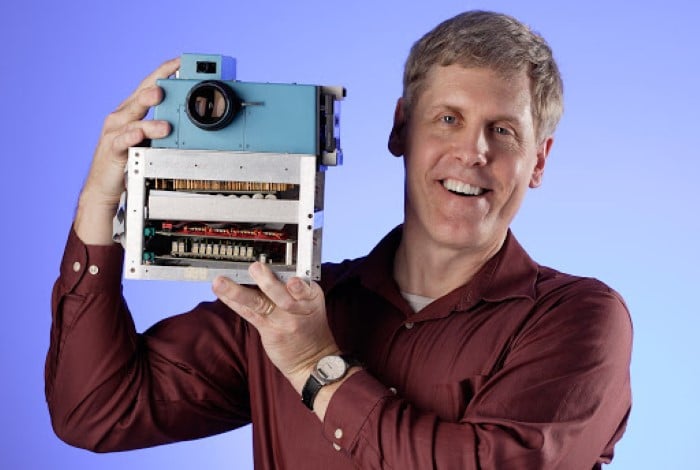
Source: http://www.internethistorypodcast.com/2016/07/inventor-of-the-first-digital-camera-steven-sasson/
2. That Digital Camera Weighed About Eight Pounds
Sasson’s prototype weighed about 8 pounds (3.6 kg). Its sensor recorded a black-and-white image just 100 pixels wide by 100 pixels high: 10,000 pixels, or 0.01 megapixels.
The picture was stored on cassette tape and viewed using a separate playback system connected to a television. IEEE’s account distinguishes the brief exposure from the 23 seconds needed to record the image to tape.
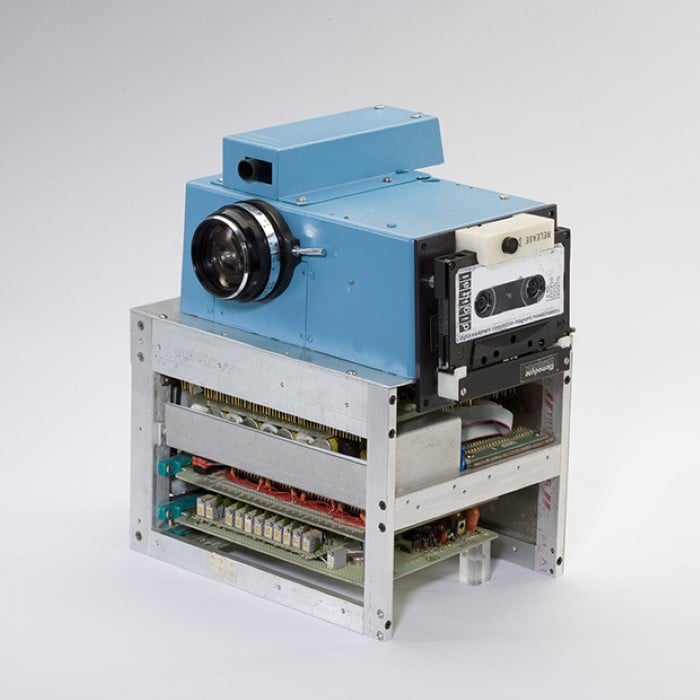
Source: https://petapixel.com/2010/08/05/the-worlds-first-digital-camera-by-kodak-and-steve-sasson/
3. A Camera Collection Can Contain Thousands of Models
As checked on 11 October 2026, Guinness World Records lists a collection of 5,707 still-photography cameras. Arcot Vasantha Rao Arun achieved the record in Chennai, India, on 6 April 2025.
The archive photograph below shows Mumbai collector Dilish Parekh with his own collection. Camera-collection records can change, so a total needs a named holder and verification date.
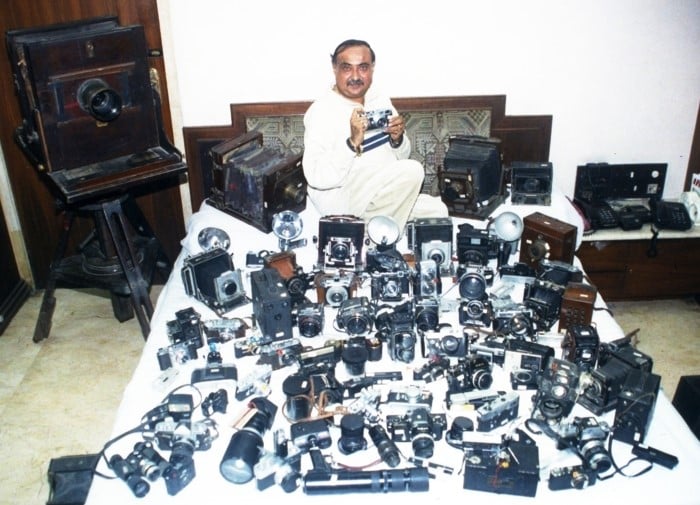
Source: https://www.theverge.com/2013/8/28/4667318/world-record-collection-4400-cameras
4. An Early Street Photo Captured People Who Stood Still
Louis Daguerre’s Boulevard du Temple dates to 1838, according to the National Galleries of Scotland. It is commonly credited as the earliest surviving photograph showing human figures.
Look near the lower-left part of the street: a customer having his shoes polished and the shoeshiner stayed still enough to register during the long exposure. Moving traffic did not leave the same clear impression. The long exposure left the busy street looking almost deserted.
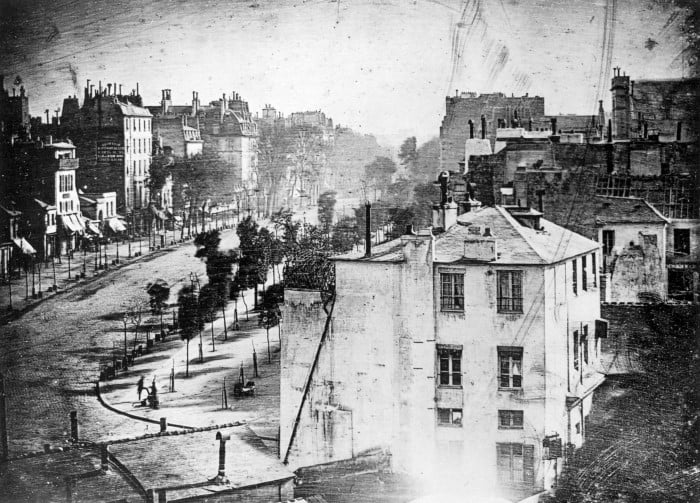
Source: https://en.wikipedia.org/wiki/File:Boulevard_du_Temple_by_Daguerre.jpg
5. The Famous 1861 Color Photograph Was a Three-Image Demonstration
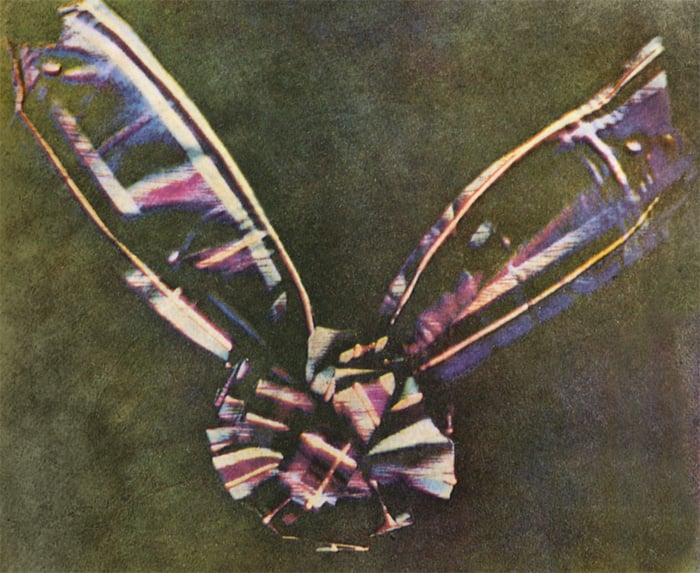
In 1861, physicist James Clerk Maxwell demonstrated a projected color image of a tartan ribbon. Photographer Thomas Sutton made the separate photographs using red, green, and blue filters, following Maxwell’s proposed method.
The black-and-white slides were projected through corresponding filters and combined on a screen. This landmark demonstrated how three-color photography could reproduce color. The James Clerk Maxwell Foundation preserves the original slides and explains that familiar full-color reproductions were made later.
6. A Camera Obscura Can Form an Image Without a Lens
Make a small hole in a darkened room, and light can project an upside-down image of the outside scene onto the opposite wall. Camera obscura means “dark room” in Latin.
The National Science and Media Museum traces knowledge of the principle to ancient China and describes later versions used by artists. The device projects an image; a light-sensitive surface is needed to record it as a photograph.
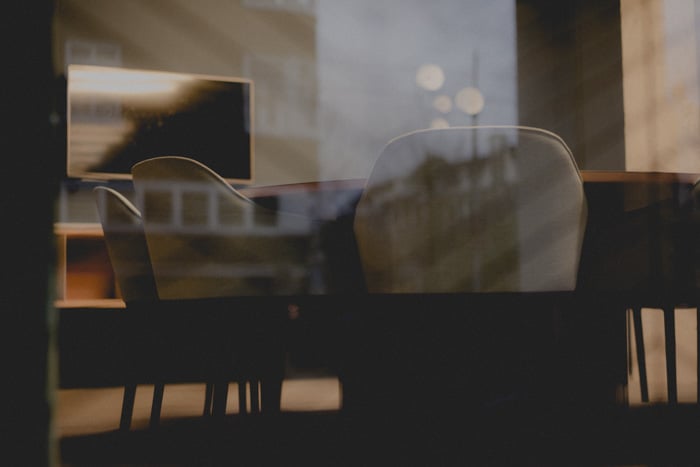
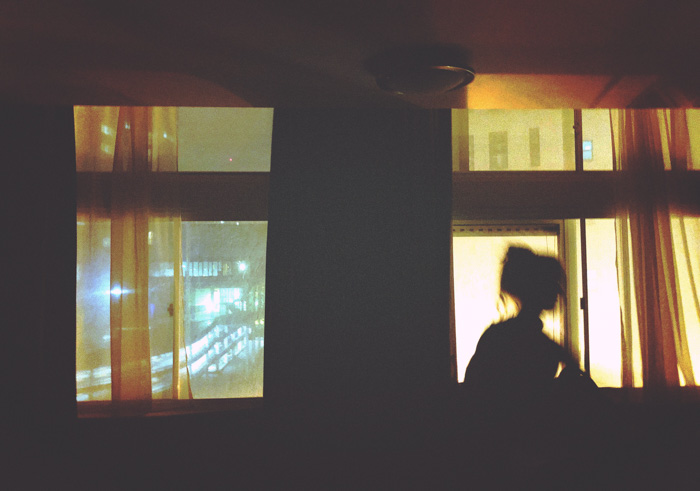
An image of an interior taken with a pinhole camera
7. Early Flash Photography Used Burning Powder
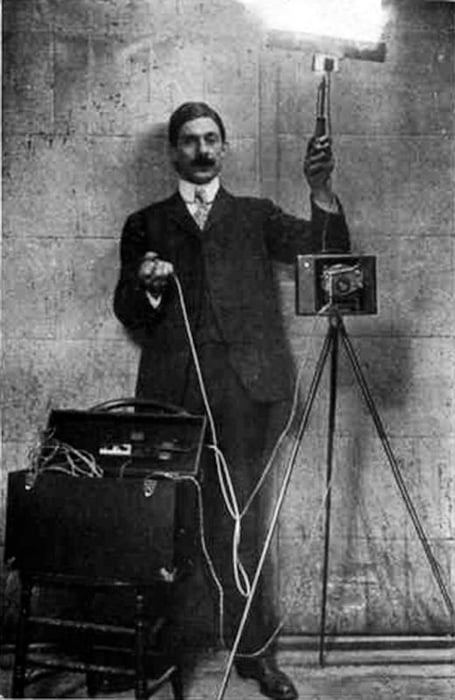
Before electronic flashes, photographers used flash powder to produce a brief, bright light. The Science Museum Group’s collection records magnesium flash powder and separate oxidizing powders used in historical flash outfits.
The powder burned to create the light. A modern Speedlite produces its flash electronically and can fire repeatedly.
8. A Man Ray Photograph Set an Auction Record in 2022
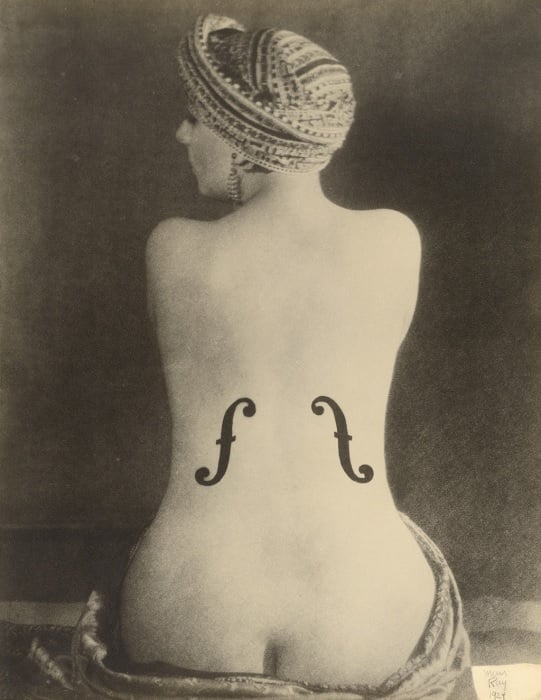
Man Ray made Le Violon d’Ingres in 1924. In May 2022, a print sold at Christie’s for about $12.4 million, setting an auction record for a photograph at that sale.
The work shows Kiki de Montparnasse with violin-like f-holes on her back. Christie’s catalogue identifies the image and its date; a later catalogue entry records the 2022 auction record. The date matters when comparing auction records, which can change with later sales. Our list of contenders for the most expensive photograph of all time puts the sale in context.
9. A Daguerreotype Recorded an Image on a Silvered Plate
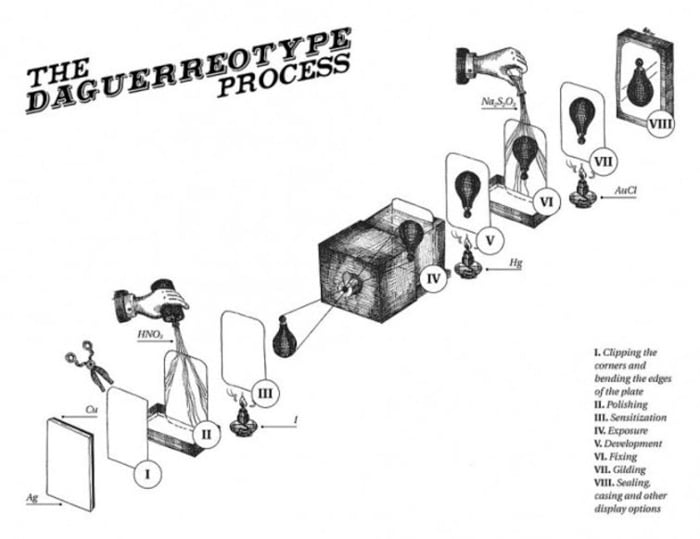
Louis Daguerre introduced the daguerreotype process in 1839, after Niépce had already made camera photographs. A daguerreotype records an image on a polished, silver-plated copper plate.
The Historic New Orleans Collection explains how the plate was sensitized, exposed, developed, and fixed. Each original was a unique image. The original plate itself held the picture.
10. Digital Photos Can Carry Their Camera Settings
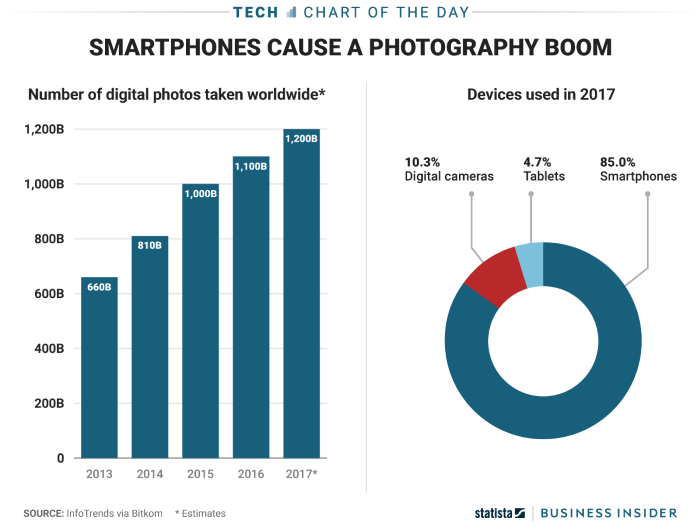
A digital photograph can contain more than the visible picture. Exif metadata can record the camera and lens, shutter speed, aperture, ISO, and capture date. GPS coordinates may also be included when location tagging is enabled.
Adobe’s metadata guide explains these technical fields. They can help you understand how a picture was made, although the available information depends on the file and device.
Source: https://www.businessinsider.in/tech/people-will-take-1-2-trillion-digital-photos-this-year-thanks-to-smartphones/articleshow/60316991.cms
11. George Eastman Invented the Word Kodak
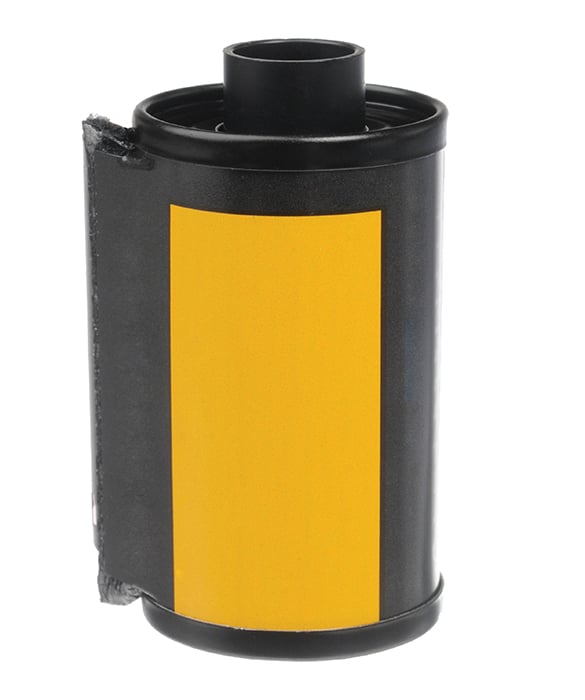
George Eastman devised the name “Kodak”. He liked the letter K and tried combinations that started and ended with it.
Kodak’s history of Eastman records his explanation and dates the trademark to 1888. The short, distinctive name became closely associated with photography.
12. Cat Photography Predates the Internet
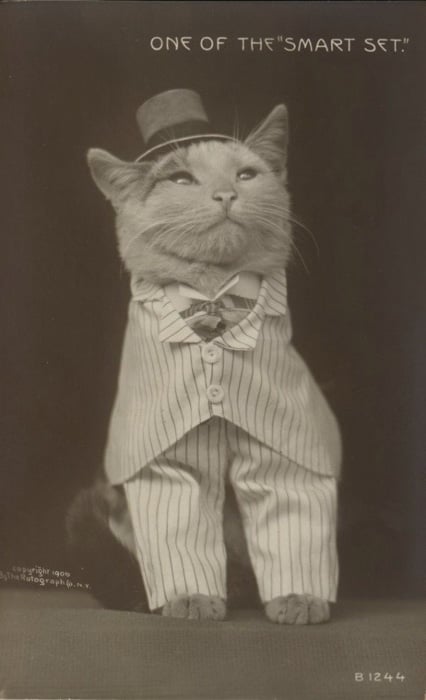
Funny cat photos have a much longer history than social media. Harry Pointer exhibited a series called The Brighton Cats and Dogs in 1881.
The Royal Photographic Society exhibition catalogue database, maintained by De Montfort University, records the exhibit. The record gives us a dated glimpse of cat photography long before online sharing.
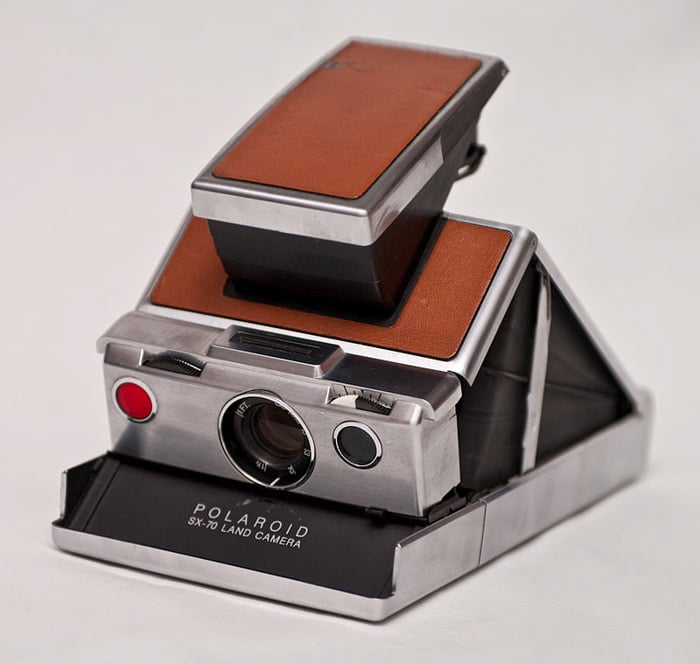
13. Polaroid Used Sound to Autofocus an SLR
The Polaroid SX-70 Sonar was an instant camera and an SLR with automatic focusing. It sent out sound waves beyond human hearing, then used the returning echo to set the lens.
Polaroid’s Sonar OneStep user guide describes the system and refers to August 1978. It also explains why shooting through glass could require manual focus: the sound could reflect off the glass before reaching the subject.
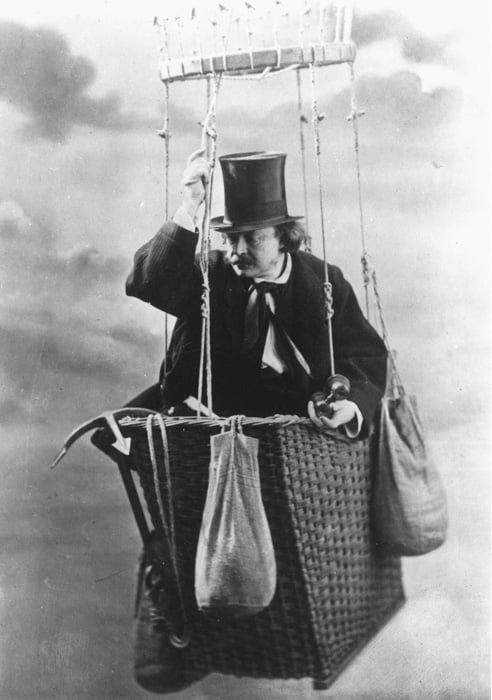
14. The First Aerial Photographs Have Not Survived
In 1858, Gaspard-Félix Tournachon, better known as Nadar, photographed Petit-Bicêtre near Paris from a tethered balloon. Those first aerial photographs have not survived.
The Smithsonian National Air and Space Museum tells the story of those balloon flights. Guinness World Records identifies James Wallace Black’s 1860 view of Boston as the oldest surviving aerial photograph.
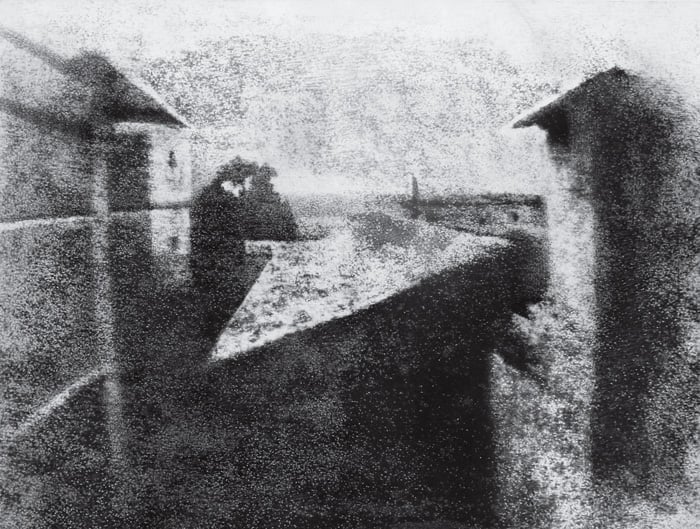
15. The Earliest Surviving Camera Photograph Is a View from a Window
Nicéphore Niépce’s view from the window, titled View from the Window at Le Gras, is the earliest known surviving photograph made with a camera obscura. The Harry Ransom Center, which holds the plate, dates it to 1827.
Niépce made it at Saint-Loup-de-Varennes in France, recording the courtyard and outbuildings on a bitumen-coated pewter plate. The Center describes an exposure lasting several days. Niépce had experimented with camera images years earlier, but this plate survives.
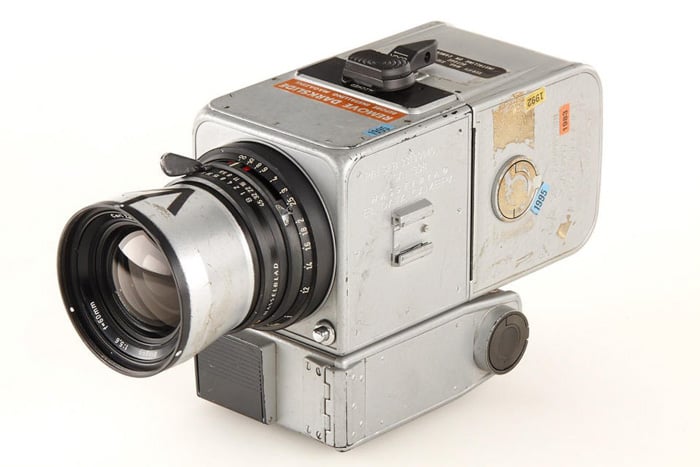
16. Apollo Crews Left Hasselblad Cameras on the Moon
Apollo astronauts returned with their film magazines while leaving camera bodies and lenses behind to meet the spacecraft’s weight limits. The familiar total of 12 cameras refers to the lunar landing missions collectively.
Hasselblad’s mission history describes two cameras taken down with Apollo 11 and the same practice on the five later landing missions. Those camera bodies remain on the moon.
17. Niépce’s Photograph Used a Light-Sensitive Bitumen Coating
Niépce’s heliograph used a thin coating of light-sensitive bitumen on a polished pewter plate. The metal supported the coating as light formed the image.
The Harry Ransom Center’s account describes dissolving the bitumen in lavender oil before coating the plate. This coating was a crucial part of his early photographic experiments.
18. Some Victorian Portraits Were Made as Memorials
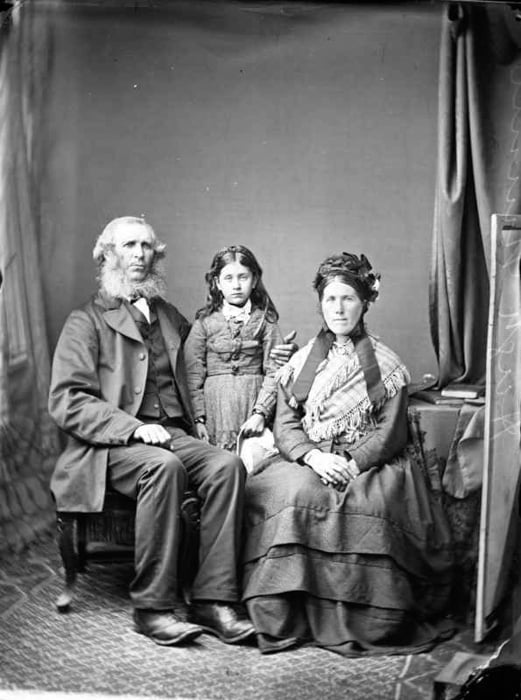
Families sometimes commissioned photographs after a loved one died, preserving a likeness they might otherwise never have had. These postmortem portraits served a memorial purpose.
The Metropolitan Museum of Art holds an example by Alphonse Le Blondel from around 1850. Its catalogue explains how a family could keep a likeness of a loved one through this kind of portrait.
19. Coffee Can Be Used to Develop Black-and-White Film
Coffee-based film development is real. In 1995, Scott Williams and his photographic chemistry students at Rochester Institute of Technology described using coffee to develop film and photographic paper.
The original work is recorded in RIT’s research archive. The American Chemical Society explains the coffee compounds and alkaline conditions involved. Coffee developers, often called Caffenol, offer another way to develop black and white negatives; coffee alone is not the complete process.
Image Credit: @LANCEPHOTO
20. The Windows XP Wallpaper Was a Photograph
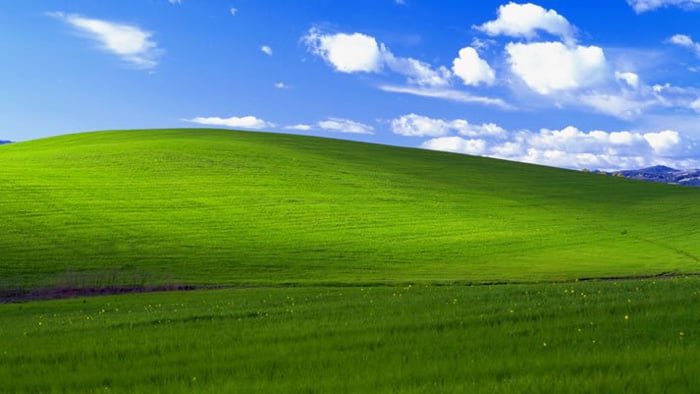
The green hill and blue sky of Bliss, the Windows XP desktop wallpaper, came from a photograph by Charles O’Rear. O’Rear captured the landscape on film.
O’Rear described making the picture in a television interview. Its use as a desktop background explains its familiarity. Its enormous audience is clear; an exact all-time view count is much harder to establish.
21. Instant Photos Develop After They Leave the Camera
An instant print is still developing when it comes out of the camera. Polaroid film contains the materials needed to produce the image, and rollers spread developer across the exposed film as it is ejected.
Polaroid explains the process for its black-and-white film. The chemistry continues inside the print while you watch the image emerge.
22. One Portrait Study Found a Preference for Left-Sided Faces
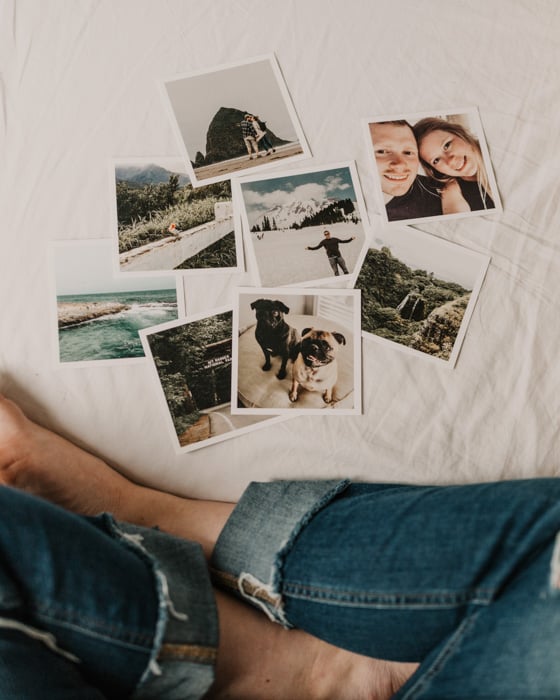
A 2012 study by Kelsey Blackburn and James Schirillo used portraits of 10 men and 10 women, photographed from both sides and also shown as mirror images. Observers rated the left-sided portraits more pleasantly, and their pupils dilated more.
The researchers linked this result to the expression and perception of emotion. The finding applies to that experiment and its portraits. For your own portrait, try both sides and compare.

23. Talbot’s Surviving Paper Negative Dates to 1835
William Henry Fox Talbot photographed a small window at Lacock Abbey in 1835. The National Trust’s Fox Talbot Museum identifies the image as the earliest surviving photographic negative.
The image was recorded on paper. Talbot later developed the calotype process, which he patented in 1841. The Metropolitan Museum of Art explains how developing a latent image reduced exposure time. A negative also allowed multiple positive prints to be made from one camera image.
24. Niépce Worked on an Engine as Well as Photography
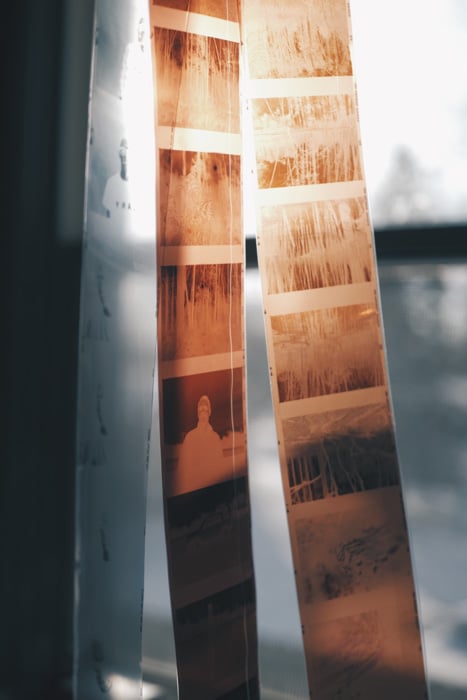
Nicéphore Niépce and his brother Claude also developed the Pyréolophore, an early internal combustion engine. They obtained a patent in 1807 and used the engine to propel a boat on the Saône.
The Musée des Arts et Métiers records the patent and boat application. His experiments extended from capturing light to powering a boat.
25. Serious Expressions in Old Photos Had More Than One Cause
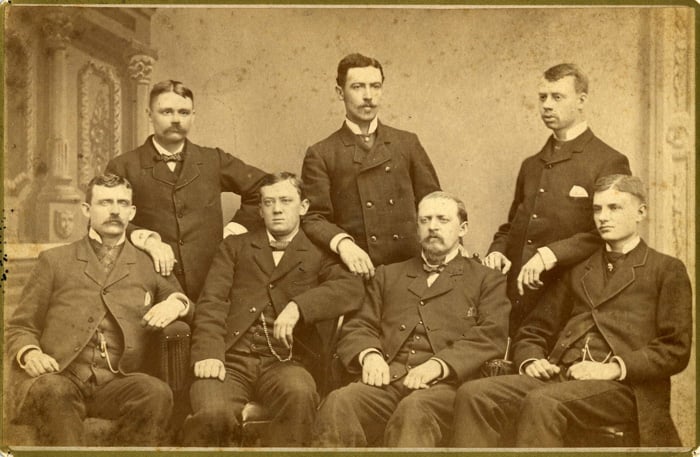
Early portrait photography required people to stay still, but a portrait sitting did not normally mean holding one expression for hours. The Historic New Orleans Collection gives early daguerreotype exposures as three to fifteen minutes, later reduced to about one minute.
Portrait conventions also mattered. The Library’s account of Arnold Genthe describes a tradition of stiff, stern poses continuing after cameras became more portable. The familiar serious look reflected both the equipment and expectations for portraits, which later made more room for smiling.
Conclusion
A photograph can preserve a fleeting scene, carry its camera settings, or reveal a chemical image as you watch. Its history is just as varied.
When you share a piece of photography trivia, keep the source and the qualification with it: the earliest surviving picture, a record achieved on a named date, or a result from one study. Those details make the story worth passing on.