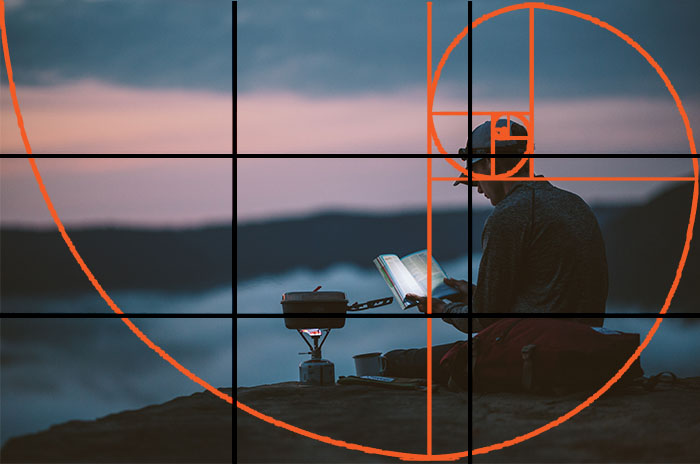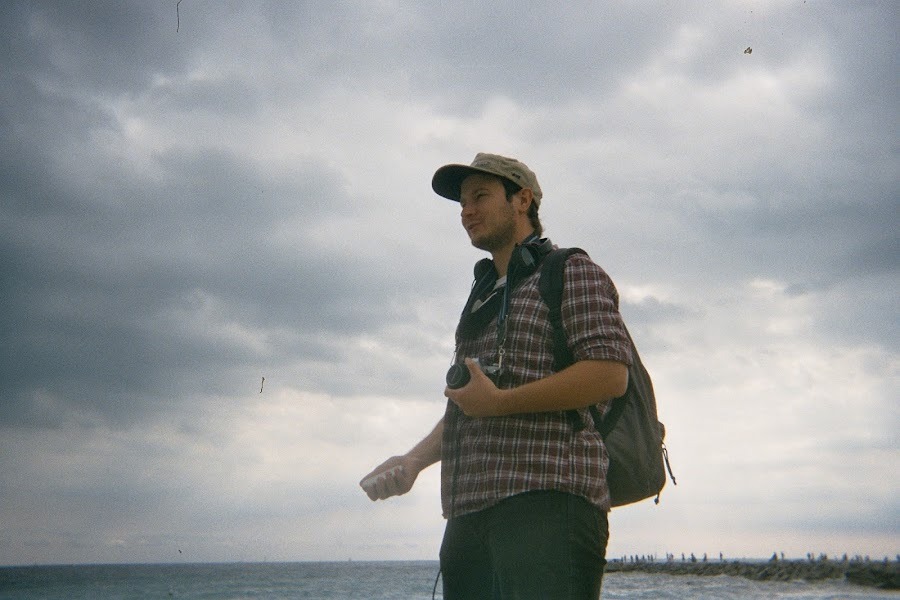
The seven principles of art and design covered here are balance, rhythm, pattern, emphasis, contrast, unity, and movement. In photography, they help you decide what to include in the frame, where to place it, and what you want the viewer to notice.
You don't need to use all seven in every photo. Start with one question: what is this picture about? Then use the principles below to make that answer clearer.
What Are the 7 Principles of Art and Design?
The principles describe how you arrange the visual parts of an image. Art guides group them in different ways. For example, the Getty's guide to design principles also includes proportion and variety. The seven in this article give you a useful starting point for photography, rather than a fixed checklist for every artwork.
Elements are what you work with; principles are how you arrange them. Elements include line, shape, and form, space, value (lightness or darkness), color, and texture. For example, the lines of a fence are elements. Repeating them creates a pattern, while placing them diagonally can guide the eye through the frame.
Use these ideas to develop your own visual style. The same scene can become a calm, balanced composition or a picture with deliberate tension, depending on how you frame it.
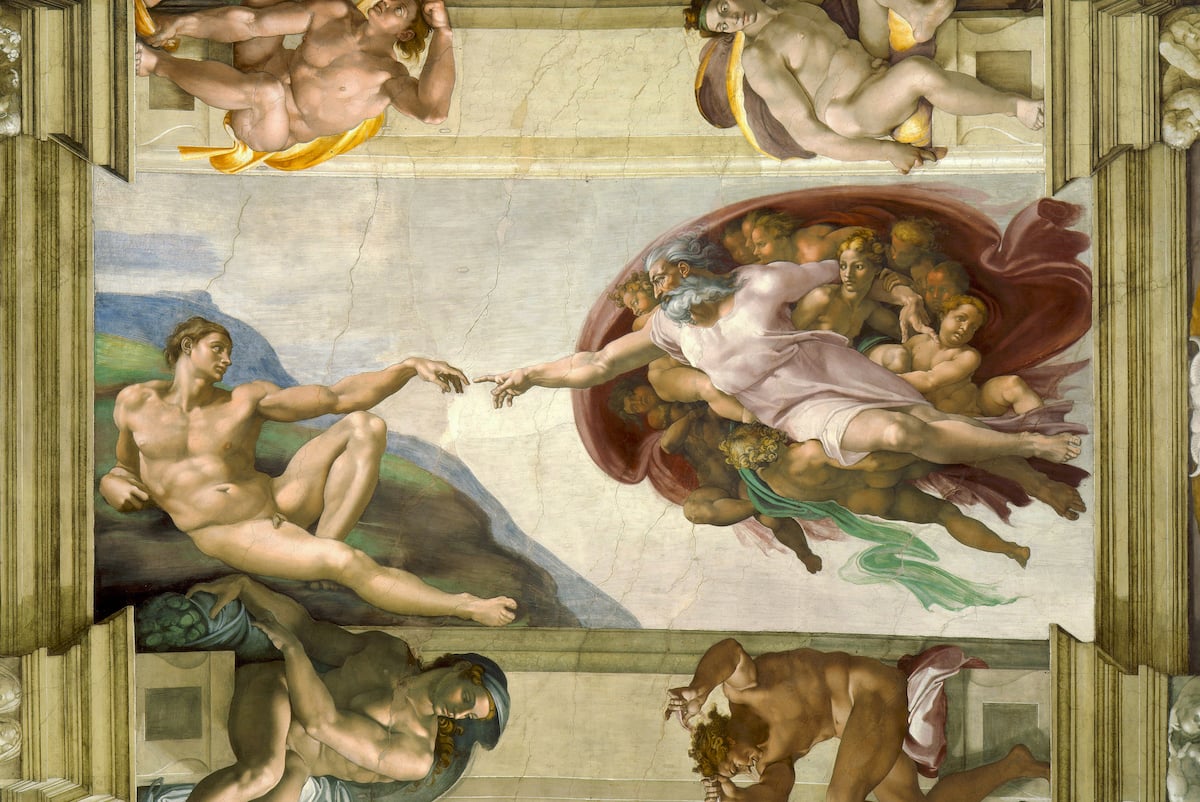
Michelangelo’s Creation of Adam demonstrates a keen understanding of the seven principles of art and design.
1. Balance
Balance concerns the distribution of visual weight across an image. It does not require identical objects on both sides.
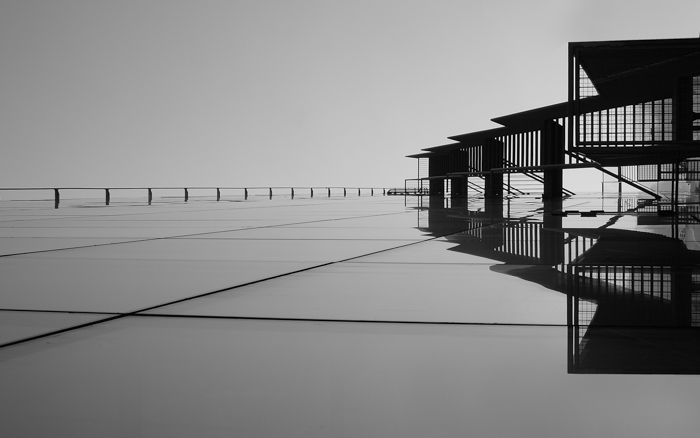
- Symmetrical balance: Similar forms appear on either side of an axis, as in the walkway below.
- Asymmetrical balance: Different elements offset one another. Try placing a large, subdued object on one side and a smaller, bright subject on the other.
- Radial balance: Elements extend or repeat around a central point, like the spokes of a bicycle wheel.
A balanced composition can feel stable. Uneven visual weight can also be useful when you want tension or a sense of space around a subject.
Try it: Photograph a doorway straight on, with its center aligned to the center of the frame. Then step to one side and include a second feature, such as a window. Compare where your attention goes in each picture. Experiment with your camera position before deciding which version works.

The symmetrical balance of this walkway creates depth and leads the viewer’s eye through the image. © Stephen Crane
2. Rhythm
Rhythm is the sense of visual flow created by recurring elements. Repeated shapes and the spaces between them can suggest a beat, much like notes and pauses in music.
Look for a row of trees, alternating light and shadow, or a series of utensils in a flat lay. The negative spaces between objects are part of the arrangement too.
Try it: Arrange three similar objects on a plain surface and photograph them from above. First space them evenly, then move one farther away. Compare the steady repetition with the interruption. This is an exercise in spacing, not a rule that one version must be better.

© Sergey Kotenev
3. Pattern
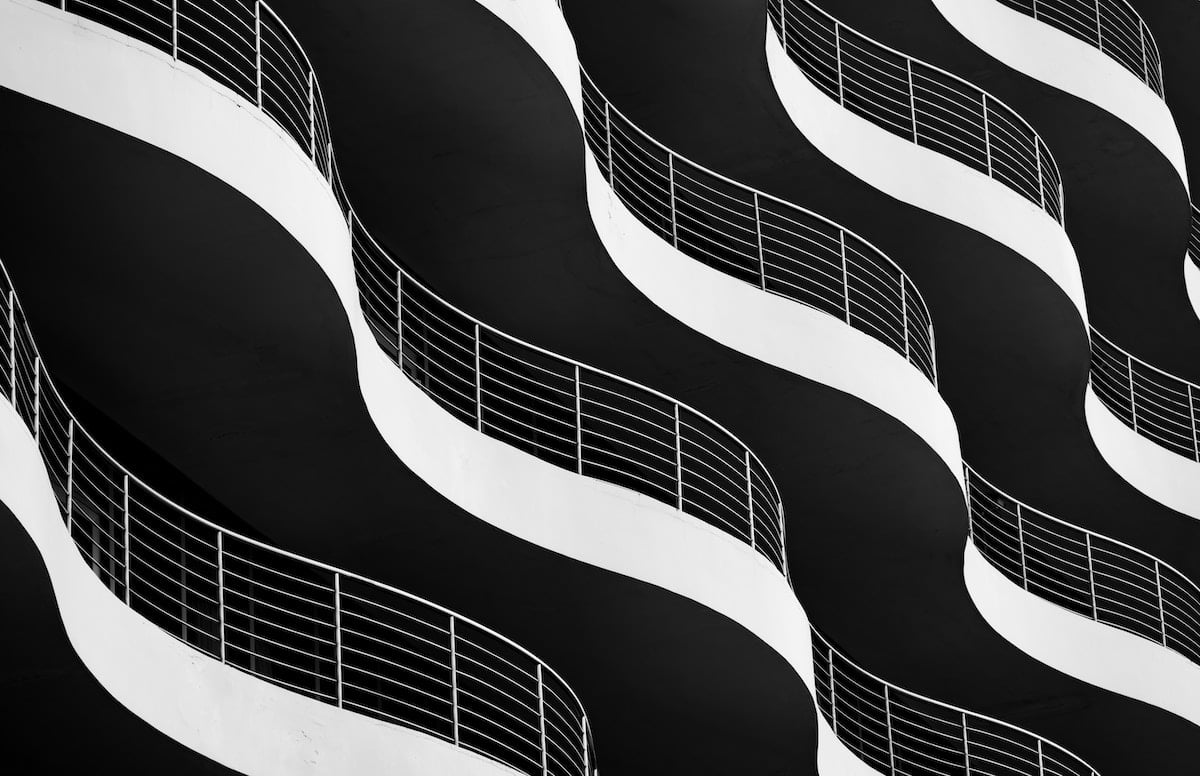
Patterns are repeated visual elements, such as shapes, colors, or lines. You can find them in tiled walls, window grids, leaves, and the balconies shown below.
Pattern and rhythm often overlap. Pattern describes what repeats; rhythm describes the visual flow that repetition and spacing can create.
Try it: Fill the frame with a repeated feature so the surrounding clutter does not compete with it. Then make a second picture with an interruption, such as one open window among closed windows. Compare the uninterrupted pattern with the new focal point.
Look for architectural details, urban features, and natural subjects. Exploring your surroundings is as useful here as practicing a specific photographic technique.
© Kim Chan
4. Emphasis
Emphasis makes one part of an image stand out. Before you take the photo, decide where you want the viewer's attention to go first.
You can emphasize a subject through its size, placement, brightness, color, or separation from its surroundings. A subject does not have to be large or centered to matter. In the photograph below, the pale swan stands out against the darker water.
Try it: Choose one subject, then check what sits behind it. Move sideways or lower the camera to find a simpler background. A doorway or another frame within the photograph can also help draw attention to it.
Changing your perspective lets you test different relationships between the subject and its surroundings. Review the frame edges for bright patches or partial objects that compete with your intended focal point.

© Artem Kniaz
5. Contrast
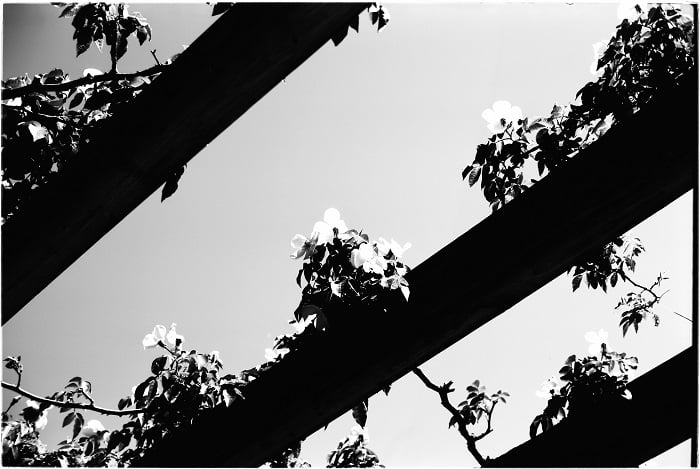
Contrast comes from differences within an image: light against dark, warm colors against cool colors, or a smooth surface beside a rough one.
A smooth water droplet on a fuzzy plant is one example of contrasting textures. You can also juxtapose curved and straight forms, old and new objects, or large and small subjects.
Contrast and emphasis are related, but they are not interchangeable. Contrast is the difference; emphasis is the attention you give to a particular part of the picture. A bright subject against a dark background can use contrast to create emphasis.
Try it: Look for a light subject against a shaded background. Change your position to include more or less of that background, then compare how clearly the subject stands out. You can explore contrast while shooting, without relying on an editing slider.
High contrast image on Adox CMS 20 © Kit Bryan-Smith
6. Unity
Unity is the sense that the parts of a photo belong together. Similar colors, repeated shapes, related subjects, or a clear theme can connect the composition.
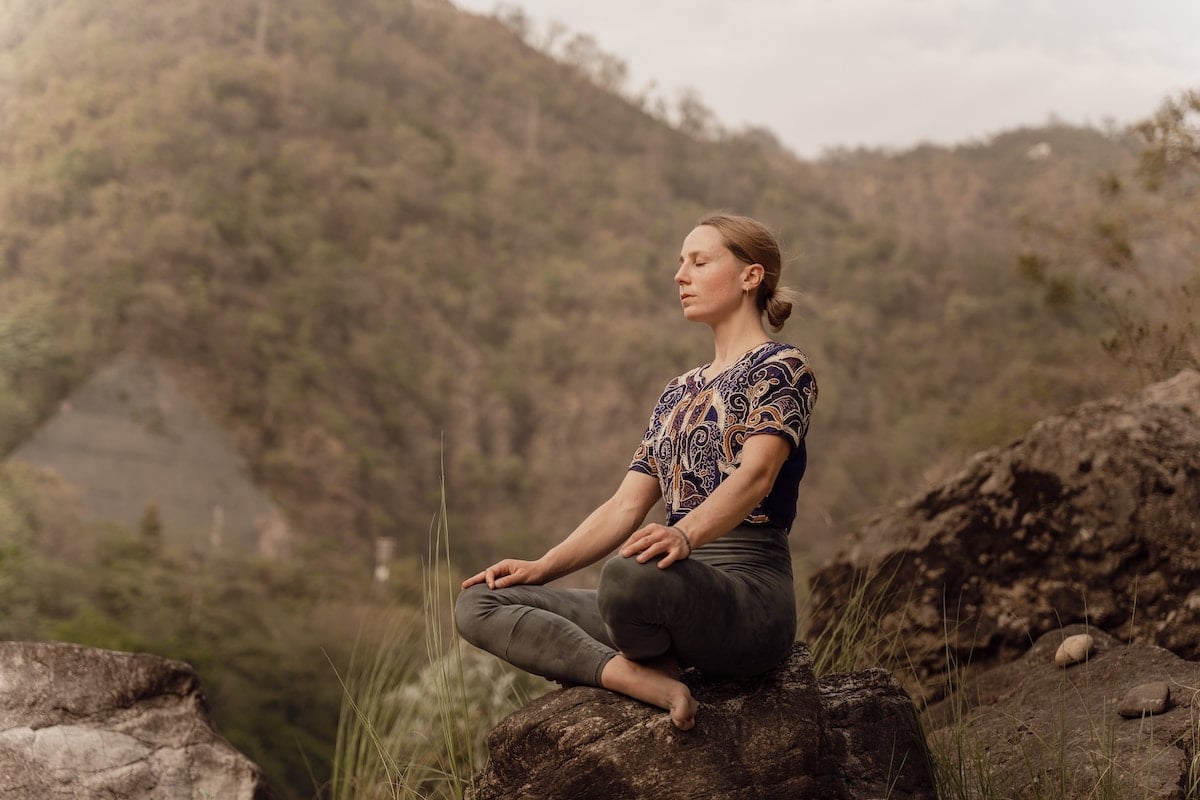
Unity does not mean that every part must look alike. The figure and landscape in the photograph below are different subjects, but you can consider how their placement and the surrounding space work together.
Try it: Before you shoot, describe your idea in a few words, such as “quiet morning by the water.” Check whether each major part of the frame supports that idea. Move the camera or consider cropping when an unrelated object distracts from it.
An unusual perspective or a deliberately light or dark exposure does not automatically break unity. Judge those choices by the picture you want to make. Correct unintended underexposure or overexposure when it hides details that matter to your composition.
© Jaspinder Singh
7. Movement
In art and design, movement means the path the viewer's eye takes through a picture. A photograph of a still subject can have visual movement. Leading lines, edges, and repeated shapes can suggest a route toward a focal point.
Try it: Find a path, railing, or curved shoreline. Frame it so it connects the foreground with your subject. Then shift the camera and check whether that line still leads somewhere useful, or takes attention out of the picture.
This differs from recording physical motion. Your shutter speed affects whether a moving subject appears sharp or blurred. With panning, you follow the subject during the exposure to try to keep it relatively sharp against a blurred background. Nikon's motion guide illustrates that distinction.
The station photograph below combines blurred people with visual flow through the frame. Motion blur can contribute to a composition, but you do not need blur to guide the viewer's eye.
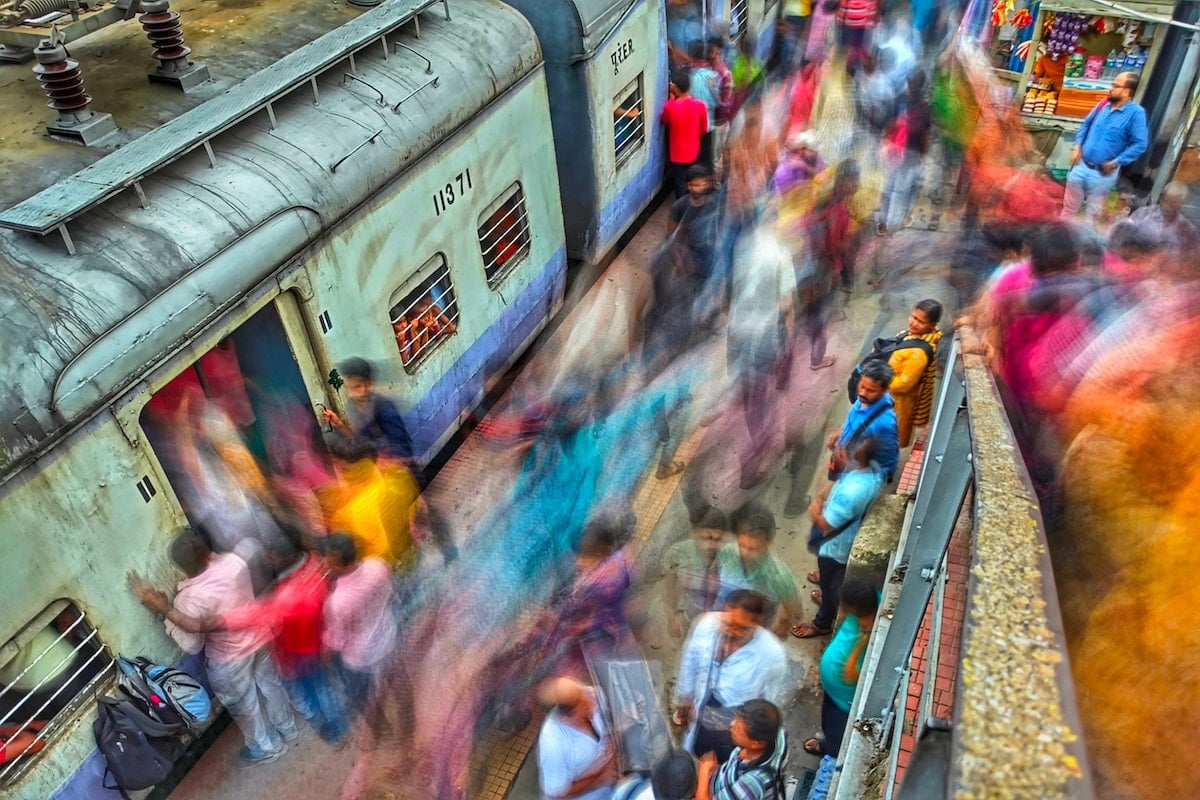
The blurred shapes move your eyes in an S-pattern around the image. Long exposure shot with a Xiaomi 13 Pro. © Dibakar Roy
Conclusion: Principles of Art and Design
Balance, rhythm, pattern, emphasis, contrast, unity, and movement give you seven ways to think about a photograph. They work together: a repeated shape can create a pattern, suggest rhythm, and help unify the frame.
For your next photo, choose one principle and make two versions of the same scene. Change only your framing, position, or arrangement of the subject. Compare the results and ask which version makes your idea clearer. That gives you a practical way to use the principles without trying to force all seven into every shot.