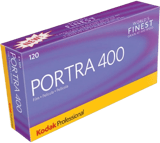
Kodak Portra 400 is the best medium format film for most photographers. It renders skin tones naturally, keeps its grain fine at 400 speed and copes with a wide range of light. That matters on 120, where a roll gives you between 8 and 16 frames and every miss costs more than it does on 35mm.
The other picks cover different needs. Some suit black and white work, landscapes or tight budgets. Others are for dim rooms and night streets, or for a distinctive cinematic or high-contrast look.
© Jose Luis Carracosa
The Best Medium Format Films for Every Kind of Shooting
Start with two choices: color or black and white, then the speed your light needs. A 400-speed film is the safe default for handheld medium format work, because standard lenses for these cameras usually open to only about f/2.8 to f/4. Slower films reward bright light or a tripod with finer grain. Faster films keep you shooting indoors and after dark. The table shows each film's role. The reviews below explain the trade-offs.
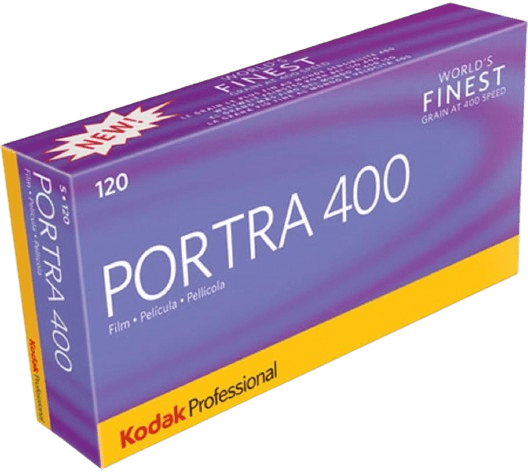
Portra 400 is the film to load when you want good color in almost any light. Kodak designed it for portraits, and its skin tones stay smooth and natural across a wide range of lighting. It also handles landscapes, travel and street work, so you rarely have to change rolls when the subject changes.
Kodak calls it the world's finest-grain high-speed color negative film. In practice, that means you get 400-speed flexibility without obvious grain in a 6x6 or 6x7 negative. That combination is why it beats the other color films here as an everyday choice. Ektar 100 is finer still, but needs far more light. Gold 200 costs less, but it has a warmer, less neutral palette.
Portra 400 also forgives exposure mistakes. Like most color negative films, it handles overexposure far better than underexposure, so give it extra light when you are unsure. That helps when your meter is an old hand-held unit or a phone app.
The drawback is cost. Portra 400 costs much more per roll than Gold 200. If you shoot mostly in daylight and like warmer color, Gold 200 is the cheaper way to fill a camera.
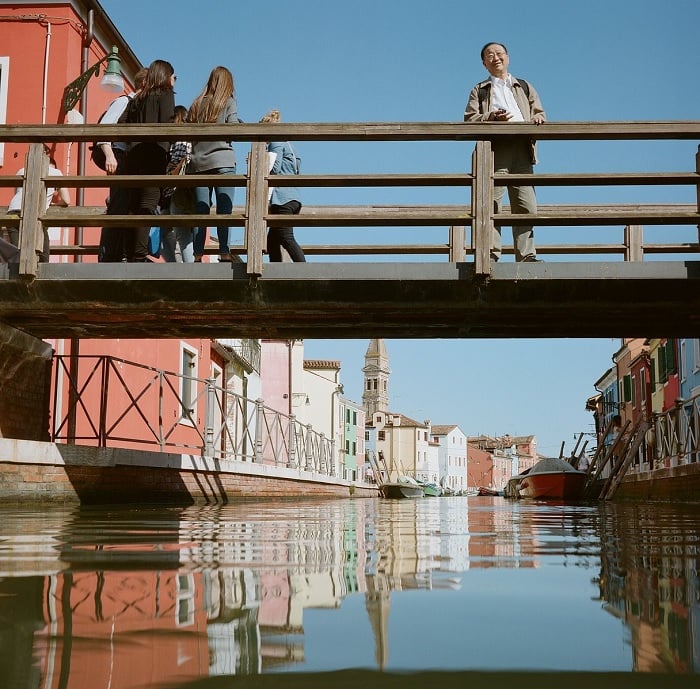
Shot on Kodak Portra 400 (120) © Evil Pete
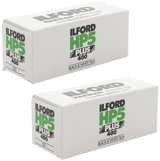
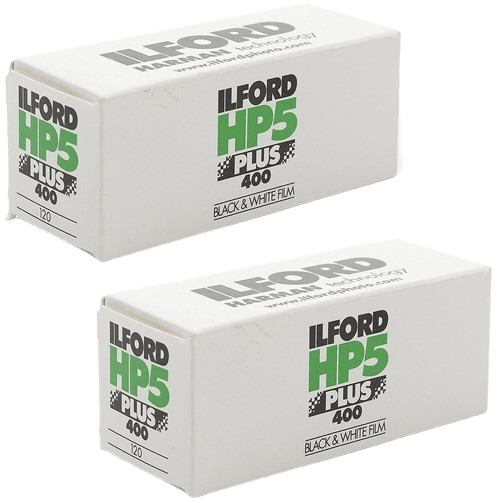
Ilford HP5 Plus is the best black and white film for most medium format photographers. It is a 400-speed film that Ilford makes for action, available light and general use. That breadth makes it the easiest black and white film to recommend for a first roll of 120.
Its biggest strength is flexibility. Ilford says HP5 Plus gives high-quality prints at meter settings up to EI 3200 with extended development. You can rate a whole roll at EI 1600 for a gig or an indoor event and ask the lab to push it. That same roll works fine at EI 400 on a sunny day.
HP5 Plus is also easy on the budget. It costs less per roll than Portra 400, and every lab that handles black and white film knows it well.
Grain is visible but even at box speed, and it grows when you push. If you want a finer look for landscapes, Fomapan 100 Classic or Rollei Retro 80S suit you better. If you prefer a grittier classic look with similar speed, choose Tri-X 400.
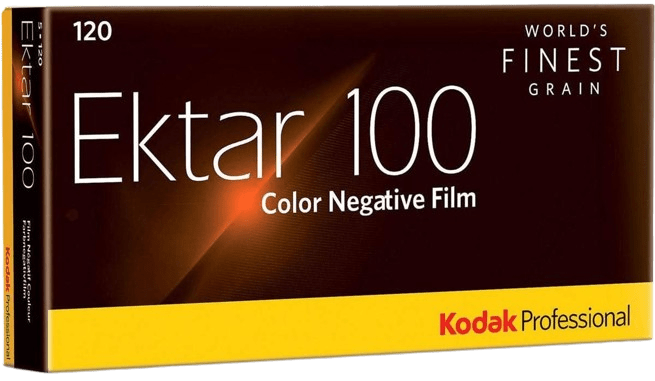
Kodak Ektar 100 is the color film for landscapes and other subjects that need maximum detail and strong color. Kodak describes it as the world's finest-grain color negative film, with ultra-vivid color and exceptional sharpness. On a medium format negative, that gives you files that hold up to very large prints.
The color is the point of this film. Blue skies, green foliage and saturated paint come out rich and punchy. That makes it a better landscape film than Portra 400, which renders the same scene in softer, more natural tones.
The trade-off is speed and skin. At ISO 100, Ektar needs bright light or a tripod, especially with the slower lenses common on medium format cameras. Its saturation can also push skin tones toward red, so it is a poor choice for portraits. Load Portra 400 for people and Ektar for places.
Ektar is also less forgiving than Portra when you underexpose. Meter for the shadows you care about, and give it a little extra light when in doubt.
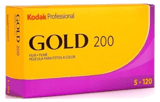
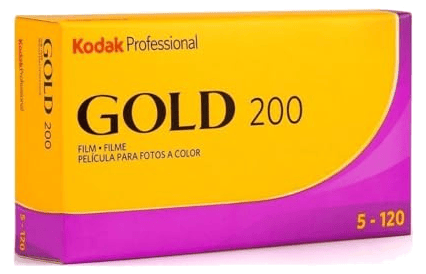
Kodak Gold 200 is the best value color film in 120. Kodak added Gold 200 to the 120 format as an affordable, entry-level color film. It gives warm, saturated color with fine grain and high sharpness, and it costs much less per roll than Portra 400.
Kodak designed Gold 200 for natural daylight and electronic flash. That makes it a strong choice for travel, family photos and summer landscapes, where its warm palette flatters skin and sunlight.
The limits come from its speed and its look. At ISO 200, it struggles in shade and indoors unless you use a tripod or flash. Its warmth is a style, not neutral color, so it can warm up scenes that you want to look cool. If you need accurate skin tones under mixed light, spend more on Portra 400.
For learning medium format, though, Gold 200 makes sense. You can shoot several rolls to learn your camera's meter and focus before you move to more expensive film.
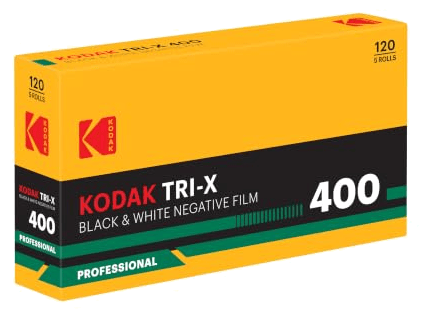
Kodak Tri-X 400 is the classic alternative to HP5 Plus. Kodak calls it the world's best-selling black and white film, and it lists a classic grain structure, fine grain, high sharpness and wide exposure latitude. In 120, that classic grain is less obvious than on 35mm, but the strong midtones and contrast remain.
Tri-X suits street, documentary and portrait work where you want punchy tones straight from the scan. Kodak publishes push times up to EI 3200, so it also works in dim light when you ask the lab for a push.
Choose between Tri-X and HP5 Plus by look. Tri-X usually gives more contrast and a grittier feel. HP5 Plus has gentler tones and comes in sheet film too. If you are new to black and white, start with HP5 Plus. If you already know you like the high-contrast reportage look, Tri-X is the better film.
Tri-X 400 comes in 35mm and 120. Kodak's sheet film version is a different emulsion, Tri-X 320.
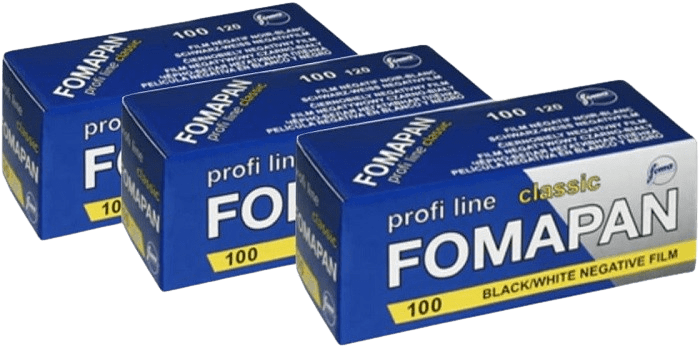
Fomapan 100 Classic is a low-cost way to shoot fine-grain black and white in medium format. Foma designs it for low granularity, high resolving power and a wide range of halftones. On a 120 negative, those qualities give clean, detailed landscape and portrait files. The wide tonal range keeps skin gradations smooth in portraits, and the fine grain holds texture in rock, bark and buildings.
Its exposure latitude is unusually wide for a slow film. Foma says you can rate it from ISO 50 to ISO 400 and get good results without changing the development. That helps when the light drops halfway through a roll.
The catch is the light it needs at box speed. At ISO 100 with a typical f/2.8 or f/4 medium format lens, you will want a tripod in shade and indoors.
Compared with Rollei Retro 80S, Fomapan 100 is more forgiving and gives softer contrast. Retro 80S gives more drama and sharpness, but it asks for more care with exposure.
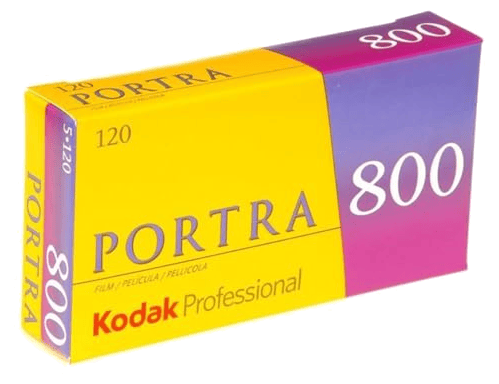
Kodak Portra 800 is the color film for low light. Kodak says it gives best-in-class underexposure latitude, and you can push it to EI 1600 when you need more speed. It keeps the Portra family's natural skin tones, with finer grain and higher sharpness than you might expect at 800.
That makes it the right film for weddings, indoor events, evening street work and portraits by window light. With the slow lenses that most medium format cameras use, an extra stop of film speed can be the difference between a sharp handheld shot and a blurred one.
Portra 800 costs more per roll than Portra 400. It also has more grain than Portra 400 in good light, so it is a poor choice for bright days. Use Portra 400 as your everyday film and keep a few rolls of Portra 800 for the shoots that run past sunset.
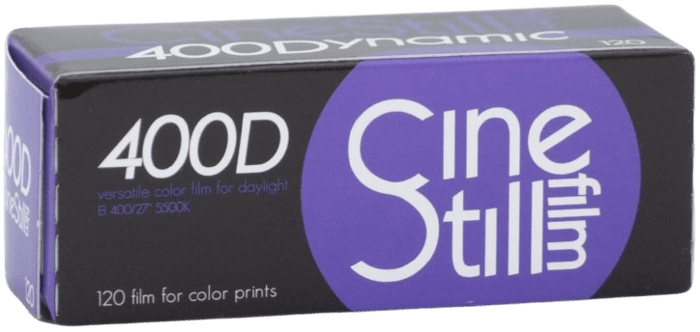
If you want a stylized look in low light rather than accurate color, CineStill 400D is the alternative.
CineStill 400D is the color film for a cinematic look. CineStill sells it as 400Dynamic, a versatile color negative film that you can rate anywhere from EI 200 to EI 800 without push processing. It develops in standard C-41 chemistry, so any color lab can handle it.
The look is the reason to buy it. Colors are saturated. Bright, in-focus highlights can show a halation glow. That effect gives night scenes and backlit portraits a movie-still feel. Some photographers love that glow. Others find it distracting on clean commercial or portrait work.
The wide rating range makes 400D an easy film to shoot. You can meter at EI 200 on a bright beach or EI 800 indoors on the same roll and still get usable negatives.
Choose Portra 400 if you want neutral color and the cleanest skin. Choose CineStill 400D if you want a mood that looks different from the standard Kodak palette.
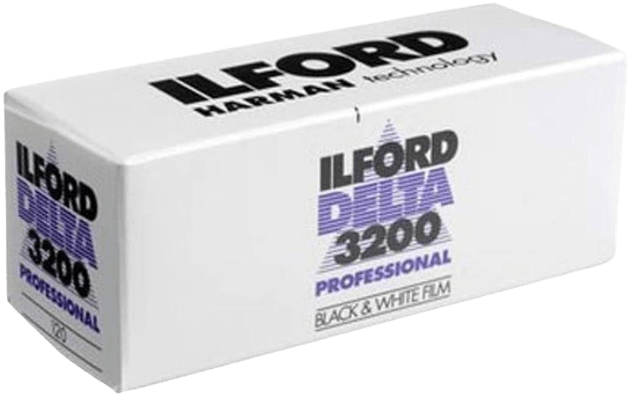
Ilford Delta 3200 Professional is the black and white film for the darkest situations. Ilford gives it an ISO speed of 1000, but designs it to be exposed at EI 3200 with extended development. It also recommends the range from EI 1600 to EI 6400 for the best results.
That speed is what sets it apart. Concerts, night streets, candlelit portraits and indoor sports all become possible handheld, even with an f/2.8 medium format lens.
Grain is the trade-off. At EI 3200, it is obvious, even on a 120 negative. Many photographers like that gritty after-hours look, but it does not suit fine landscape or studio work. In bright light, HP5 Plus at box speed gives cleaner results.
Delta 3200 also needs the right development. Tell your lab what EI you used, or follow Ilford's extended development times at home. If your lab only offers standard black and white processing, HP5 Plus pushed to EI 1600 is the safer choice.
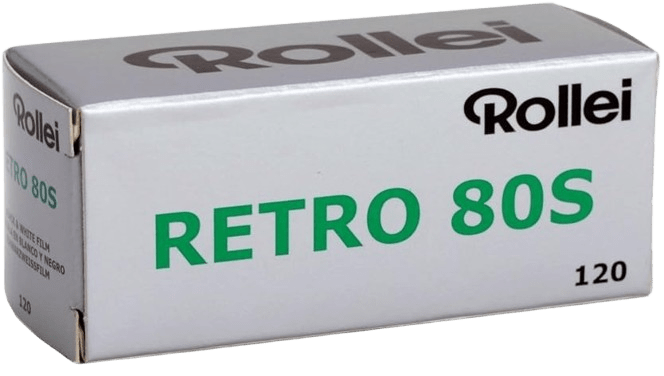
Rollei Retro 80S is the black and white film for maximum sharpness and dramatic skies. Rollei describes it as extremely sharp, fine-grained and superpanchromatic, with very high resolving power. Its clear polyester base also lets you reversal-process it into black and white slides. If you develop at home, that means one roll can give you black and white transparencies for a light box or projector.
Superpanchromatic means the film reaches further into red light than ordinary black and white films. With a red filter, blue skies turn very dark and clouds stand out strongly, which gives landscapes and architecture a bold, graphic look.
Its demands are high, though. At ISO 80, you need bright light, a tripod or a fast lens. Treat Retro 80S as a film for careful, planned shots rather than casual handheld work. If you want an easier slow film with gentler contrast, Fomapan 100 Classic tolerates a much wider range of meter settings.
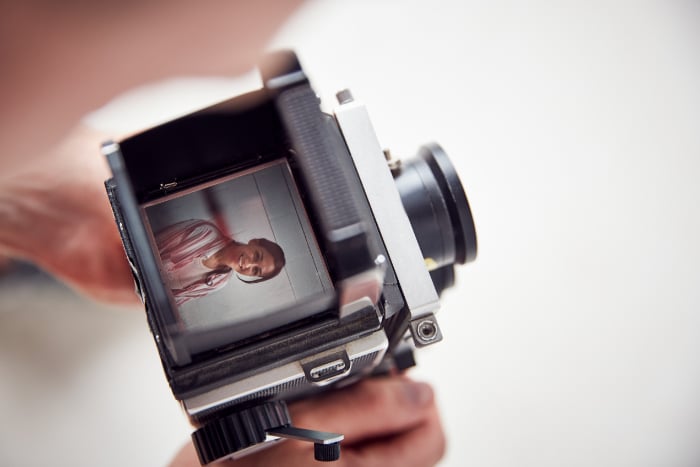
© Monkey Business Images
How to Choose Medium Format Film
Count Your Frames Before You Buy
The number of frames per roll depends on your camera, not on the film. A 120 roll gives about 15 or 16 frames in a 645 camera, 12 in a 6x6 body such as a Hasselblad or Rolleiflex, 10 in a 6x7 like the Pentax 67 and 8 in a 6x9. Work out how many frames a shoot needs and buy rolls to match. A five-roll pack gives a 6x7 shooter 50 frames, while a 645 shooter gets about 75.
Match the Film to Your Lab
Every color film on this list develops in C-41 chemistry, which most photo labs run. Black and white film needs a lab that offers black and white processing, or you can develop it at home. If you plan to push HP5 Plus, Tri-X 400 or Delta 3200, check that your lab offers push processing before you shoot. Fomapan 100 Classic and CineStill 400D tolerate different meter settings without any change in development, so they are easier choices if your lab offers only standard processing.
Check the Listing Title on Amazon
Amazon listings for film mix formats and pack sizes. Before you buy, read the title for "120" and the number of rolls, and make sure it does not say 35mm, 135 or expired. A five-roll pro pack usually costs less per roll than single rolls. Store unused film in the refrigerator and let it warm to room temperature before you load it.
Frequently Asked Questions
Is 120 Film the Same as 120mm Film?
Yes. 120 is a Kodak roll film number that dates back to 1901, not a measurement. The film itself is about 61mm wide, and many retailers call it "120mm" anyway. What matters is that 120 film does not fit a 35mm camera. 220, the double-length version, has been out of general production for years.
Can You Shoot Slide Film in Medium Format?
Yes. Kodak Ektachrome E100 comes in 120. We kept this list to negative film because slide film has very little exposure latitude. You need to meter within about half a stop. Shoot negative film until your metering is reliable, then try slide film on a bright, evenly lit day.
Conclusion
Kodak Portra 400 is the best medium format film for most photographers. It gives natural color in a wide range of light and forgives small exposure errors. Choose Ilford HP5 Plus for black and white, and Kodak Gold 200 if you want good daylight color for less money.
Buy two or three of these films and shoot them through the same camera in the same week. That is the fastest way to see what each one does with your light. Our guide to film photography covers the basics of shooting and developing film. For more black and white options in 35mm and 120, see our guide to the best black and white film. When your negatives come back, a good film scanner helps you get the most from them.