A monopod for cameras supports your kit while you follow the action or change position. It takes less space than a tripod, but you still need to steady it. Choose one by your complete kit weight, working height and the movement you need for photos or video.
Our list starts with the Altura Photo Camera Monopod. For heavier equipment, compare the 3 Legged Thing Trent 2.0 and Benro MSD46C. For video, pay particular attention to the difference between a fluid head and a fluid base. They control different movements, and a base does not mean a head is included.
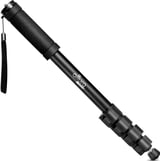
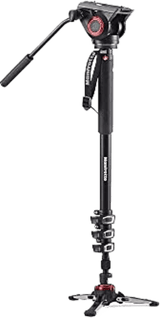
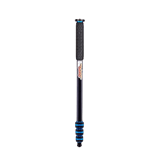
What Is the Best Monopod for Cameras?
The best monopod is one you can carry, extend to a comfortable height and use with your camera and lens. A small travel kit and a long telephoto lens put very different demands on the support.
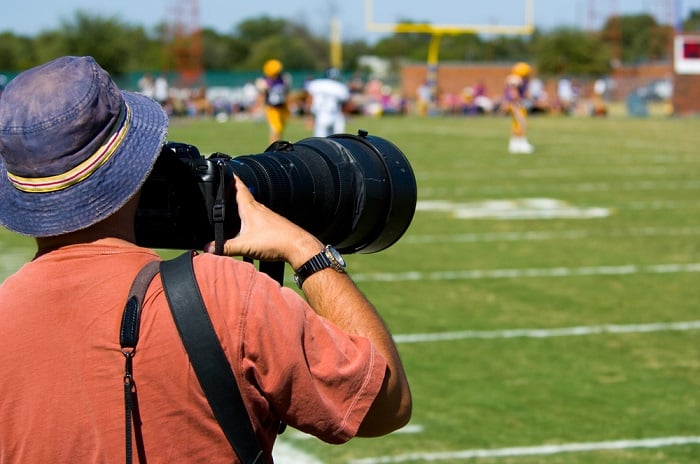
Monopods appeal to sports photographers because they support heavy equipment without spreading three legs across a crowded sideline. They also let you follow a subject and move between shooting positions. Wildlife and event photographers can benefit for the same reasons.
A monopod can reduce camera movement, but it cannot stop a moving subject from blurring. Keep a shutter speed suited to the action. And keep a hand on the camera, even when the monopod has small support feet.
The table gives an overview of all nine picks. The individual entries explain their differences, followed by buying advice and answers to common questions.
- Supports up to 35 lbs (16 kg) of gear
- Fluid base with three fold-out feet for smooth panning
- Four leg sections with sealed twist locks
- Rubber handle and wrist strap for security
- Folds to 19.9 inches (50.5 cm), extends to 50.4 inches (128 cm)
- Lightweight and easy to carry at 1.3 lbs (0.6 kg)
- Adjustable from 20.5 to 66 inches (0.52 to 1.68 m)
- Detachable three-foot stand base with 15 degrees of tilt
- Universal 1/4" screw for most DSLR and mirrorless cameras
- Five aluminum leg sections with twist locks

- Weighs 1.3 lbs (590 g) and rated to 88 lbs (40 kg)
- Six carbon fiber sections fold to 17.9 inches (45.5 cm)
- Extends to 72 inches (183 cm)
- Sealed twist locks plus a machined flip lever on the top section
- Rotating ball-bearing foot, with a spiked foot in the box

9 Best Monopods for Cameras
These nine monopods cover simple camera supports, compact travel models and video designs. Product weights and load limits refer to the stated configuration. Add the weight of any separate head to your carrying load and check its own payload limit.
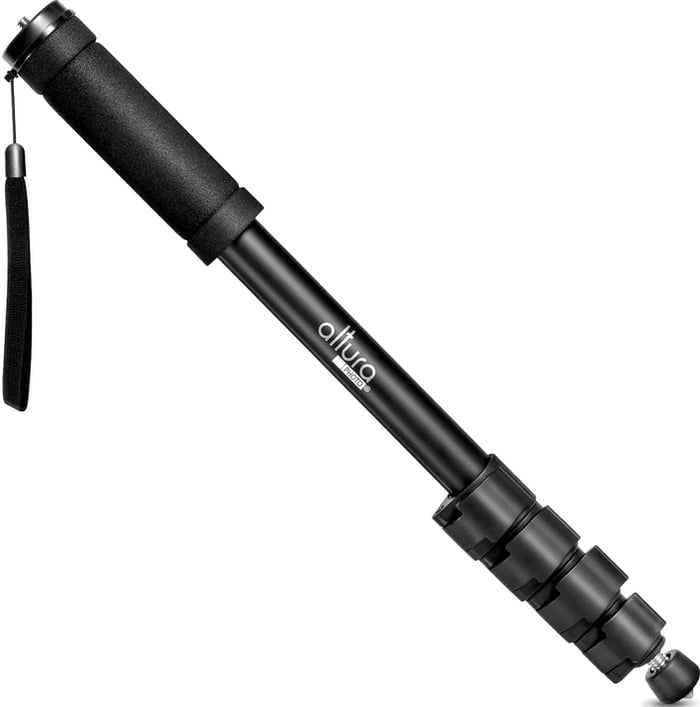
1. Altura Photo Camera Monopod
| Brand |
Brand
Altura Photo
|
| Build Material |
Build Material
Aluminum
|
| Item Weight |
Item Weight
0.6 lb / 270 g
|
| Retracted Height |
Retracted Height
16.7 inch / 42.5 cm
|
| Max Extended Height |
Max Extended Height
62 inch / 1.57 m
|
| Max Load Capacity |
Max Load Capacity
5 lb / 2.3 kg
|
| Other Key Features |
Other Key Features
4 leg sections, flip locks, spiked foot
|
| Best For |
Best For
Beginner to enthusiast photographers
|
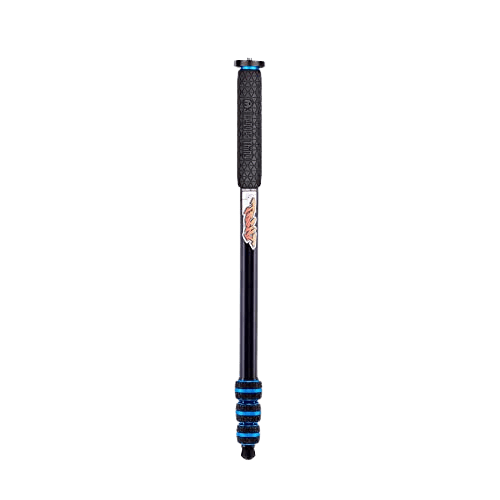
The Altura Photo Camera Monopod is our starting point for a simple camera support. Choose it for a setup that fits its load limit, rather than assuming every DSLR or mirrorless camera will work with it.
It measures only 16.7 inches (42.5 cm) when it’s folded down. And it weighs nothing more than 0.6 lb (270 g). It easily fits in your camera backpack. And it won’t weigh you down when traveling from shoot to shoot.
Weigh the body, lens and any head together before choosing a monopod. A compact camera with a small lens makes a different load from the same body with a long telephoto. If you use heavy equipment, compare the Trent 2.0 and Benro entries below.
2. Manfrotto XPRO+ Monopod with Fluid Head
| Brand |
Brand
Manfrotto
|
| Build Material |
Build Material
Aluminum
|
| Item Weight |
Item Weight
4.3 lbs / 1.95 kg
|
| Retracted Height |
Retracted Height
30.7 inches / 78 cm
|
| Max Extended Height |
Max Extended Height
79.9 inches / 2.03 m
|
| Manufacturer Safety Payload |
Manufacturer Safety Payload
17.6 lbs / 8 kg (UNI/PdR 105:2021)
|
| Other Key Features |
Other Key Features
Fluid head, quick-release plate, fluid base with 3 retractable feet
|
| Best For |
Best For
Professional photography and videography
|
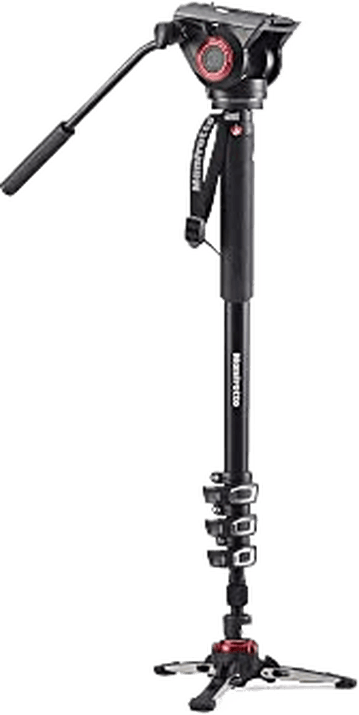
The Manfrotto XPRO+ with fluid head is the video-focused kit in this list. Its included head controls tilt, while the FLUIDTECH base provides movement at ground level. That combination matters more to a videographer than a large load figure alone.
The four-section aluminum leg uses Quick Power Lock levers. Its 79.9-inch (203 cm) maximum height gives room for a high camera position, while the 30.7-inch (78 cm) closed length makes this a much longer item to pack than the compact travel models.
Three folding feet help support the base while you operate the camera. Keep control of the rig rather than treating those feet as a tripod. If you want to film while walking, compare it with a dedicated camera stabilizer; shortening a monopod does not give it the movement control of a gimbal.
Choose this kit when you need a video head and controlled camera movements. For stills with a long lens, a simpler monopod may be easier to carry.
3. 3 Legged Thing Trent 2.0 Monopod
| Brand |
Brand
3 Legged Thing
|
| Build Material |
Build Material
Magnesium Alloy
|
| Item Weight |
Item Weight
1.6 lbs / 728 g
|
| Retracted Height |
Retracted Height
23.8 inches / 60.4 cm
|
| Max Extended Height |
Max Extended Height
79.5 inches / 2.02 m
|
| Max Load Capacity |
Max Load Capacity
66 lbs / 30 kg
|
| Other Key Features |
Other Key Features
Rubber boot, twist leg locks, rubber grip
|
| Best For |
Best For
Full frame cameras and heavy gear
|
The 3 Legged Thing Trent 2.0 suits photographers who need height and support for heavy equipment. The maker's monopod-only specifications list a 30 kg (66 lb) capacity and a weight of 728 g (1.6 lb). That load figure is a manufacturer rating, not a result of our own testing.
Its four magnesium-alloy sections extend to 202 cm (79.5 inches) and close to 60.4 cm (23.8 inches). Twist locks adjust the length. The long reach is a reason to consider it for a tall shooting position, though its folded length needs more bag space than the compact six-section models.
The top has a combined 1/4-inch and 3/8-inch mounting screw. The foot also accepts compatible accessories, including the maker's Docz support. Buy the configuration you need; the monopod-only version and a kit with a base have different dimensions and weights.
It’s a durable monopod for sports and wildlife photographers with heavy gear. And if you love animal photography, our Wonderful Wildlife ebook is a must-read.
4. Manfrotto Element MII Video Monopod
| Brand |
Brand
Manfrotto
|
| Build Material |
Build Material
Aluminum
|
| Item Weight |
Item Weight
1.5 lbs / 670 g
|
| Retracted Height |
Retracted Height
19.9 inches / 50.5 cm
|
| Max Extended Height |
Max Extended Height
50.4 inches / 1.28 m
|
| Max Load Capacity |
Max Load Capacity
35 lbs / 16 kg
|
| Other Key Features |
Other Key Features
Fluid base with 3 feet, 4 leg sections, twist locks
|
| Best For |
Best For
Video and cinematography
|
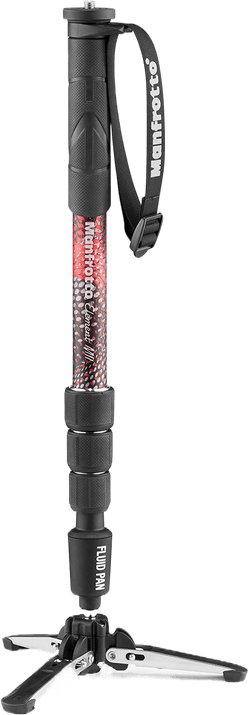
The Manfrotto Element MII Video Monopod is a lighter approach to video support. It has a fluid cartridge in the base for panning and three folding feet. It does not include the separate video head found in the XPRO+ kit.
Manfrotto specifies an aluminum body weighing 670 g (1.48 lb), with four sections and twist locks. It closes to 50.5 cm (19.9 inches) and has a stated 16 kg safety payload. A head fitted above it must also be suitable for the camera load.
Check the height before buying. The listed maximum is 128 cm (50.4 inches), before any separate head and camera. Measure the viewfinder height you need rather than assuming it will suit standing eye-level shooting.
Choose it for its compact video base and lower carrying weight. Videographers working from a fixed position should also read our guide to the best video tripods.
5. Neewer Extendable Camera Monopod
| Brand |
Brand
Neewer
|
| Build Material |
Build Material
Aluminum Alloy
|
| Item Weight |
Item Weight
1.3 lbs / 600 g
|
| Retracted Height |
Retracted Height
20.5 inches / 52 cm
|
| Max Extended Height |
Max Extended Height
66 inches / 1.68 m
|
| Max Load Capacity |
Max Load Capacity
11 lbs / 5 kg
|
| Other Key Features |
Other Key Features
Detachable 3-foot stand base, 5 leg sections, 15-degree tilt in foot joint
|
| Best For |
Best For
Photographers on a budget
|
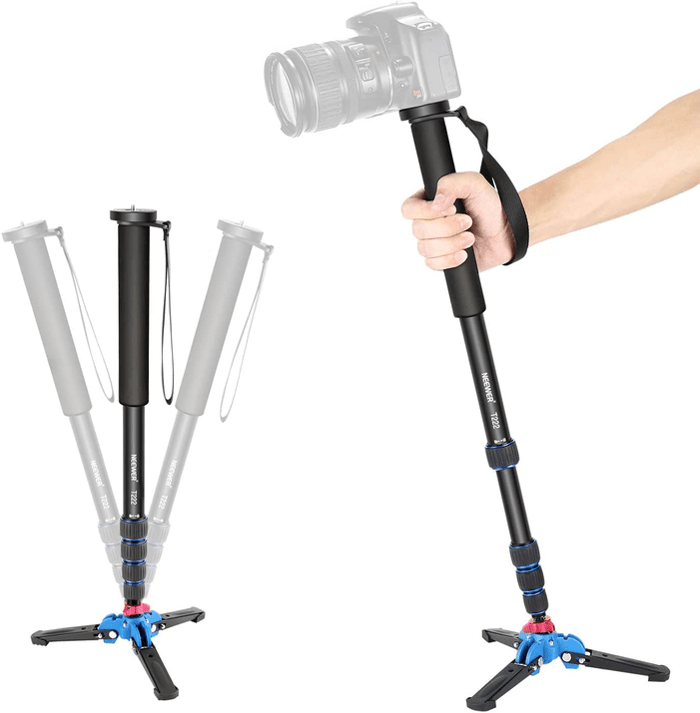
The Neewer T222 combines an aluminum monopod with a detachable three-foot stand base. It gives you a choice between carrying the base for extra support and removing it for a simpler setup.
Neewer's specifications list five sections, a 168 cm (66-inch) maximum height and a 52 cm (20.5-inch) minimum height. The stated weight is 600 g (1.3 lb), and the load capacity is 5 kg (11 lb).
The stand joint allows 15 degrees of tilt. There is a 1/4-inch camera screw at the top and a 3/8-inch connection at the bottom. The listed package contains the monopod and T222 base, so allow for a separate head if you need one.
The base is the main reason to consider this model. It adds support while you hold and move the camera. It does not turn the monopod into a substitute for a tripod you can leave unattended.
6. Benro MSD46C SupaDupa Monopod
| Build Material |
Build Material
Carbon Fiber
|
| Item Weight |
Item Weight
1.3 lbs / 590 g
|
| Retracted Height |
Retracted Height
17.9 inches / 45.5 cm
|
| Max Extended Height |
Max Extended Height
72 inches / 1.83 m
|
| Max Load Capacity |
Max Load Capacity
88 lbs / 40 kg
|
| Other Key Features |
Other Key Features
6 leg sections, twist and flip locks, rotating ball-bearing foot, spiked foot included
|
| Best For |
Best For
Heavy telephoto lenses on a light monopod
|
The Benro MSD46C SupaDupa combines a short packed length with a high stated load capacity. Benro lists a weight of 590 g (1.3 lb), a 40 kg (88 lb) capacity and a height range from 45.5 to 183 cm (17.9 to 72 inches).
Its six carbon-fiber sections use both twist locks and a fast-action flip lock. You can use the flip lock to fine-tune the working height after extending the other sections.
The rotating foot has a bearing that lets it turn without dragging the rubber pad across the ground. Benro also supplies a spiked foot. These features make it a candidate for following a subject with a long lens.
This is the MSD46C, not the separate MSDPL46C model with a leveling pan head. Choose a compatible head if you need more control over camera angle. The high load rating does not describe how comfortable your particular camera and lens will be to balance.
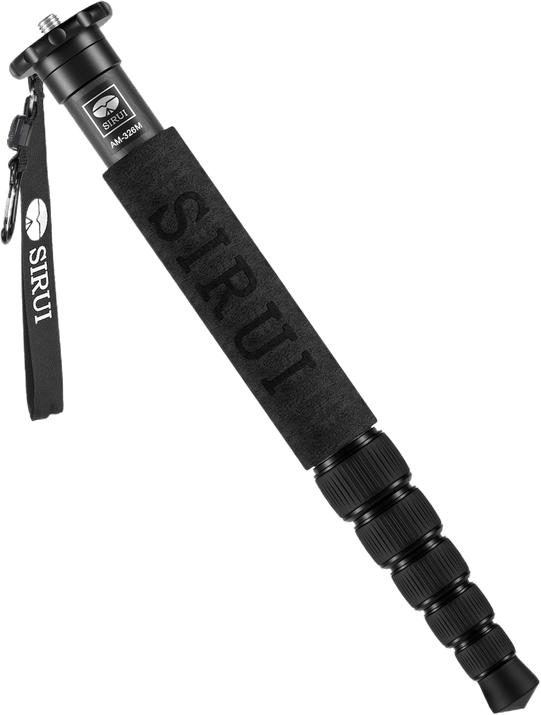
7. SIRUI AM-326M Carbon Fiber Monopod
| Brand |
Brand
Sirui
|
| Build Material |
Build Material
Carbon fiber
|
| Item Weight |
Item Weight
1 lb / 450 g
|
| Retracted Height |
Retracted Height
15.4 inches / 39.2 cm
|
| Max Extended Height |
Max Extended Height
61.4 inches / 1.56 m
|
| Max Load Capacity |
Max Load Capacity
22 lbs / 10 kg
|
| Other Key Features |
Other Key Features
Wrist strap, 6 leg sections, rubber foot with retractable metal spike
|
| Best For |
Best For
Travel photography
|
The SIRUI AM-326M is worth considering when packed length matters. It takes less space in a travel camera bag than the longer four-section designs, though you should measure your bag before buying.
SIRUI lists six carbon-fiber sections, a 10 kg (22 lb) capacity and a maximum height of 156 cm (61.4 inches). It packs down to roughly 39 cm. That makes it compact, but the maximum height still needs to suit your viewfinder position.
The sealed twist locks adjust the sections. A foam grip and wrist strap help with handling, and the rubber foot contains a retractable metal spike. The reversible top screw accepts 1/4-inch or 3/8-inch sockets.
Six sections give you five extension joints to adjust. If you often move between very different shooting heights, consider that extra handling as well as the shorter packed length.
8. Manfrotto 290 Carbon Fiber 4-Section Monopod
| Brand |
Brand
Manfrotto
|
| Build Material |
Build Material
Carbon Fiber
|
| Item Weight |
Item Weight
1.1 lbs / 500 g
|
| Retracted Height |
Retracted Height
19.3 inches / 49 cm
|
| Max Extended Height |
Max Extended Height
59.4 inches / 1.51 m
|
| Max Load Capacity |
Max Load Capacity
22 lbs / 10 kg
|
| Other Key Features |
Other Key Features
Magnesium flip locks, rubber leg warmer, wrist strap
|
| Best For |
Best For
Photographers wanting a carbon fiber monopod
|
The Manfrotto 290 Carbon Fiber Monopod offers a four-section design with flip locks. It is a candidate for photographers who prefer lever adjustments and do not need a folding video base.
Manfrotto's specifications give a 500 g (1.1 lb) weight, 49 cm (19.3-inch) closed length and 151 cm (59.4-inch) maximum height. The stated safety payload is 10 kg (22 lb). Its top mounting disc accepts either a camera or a separate head.
The tension-adjustable leg locks let you adjust their grip as the monopod wears. There is a rubber grip and a wrist strap for handling. Its height is the main point to check: add your head and camera height, then compare the resulting viewfinder position with your eye level.
Choose it for the simple four-section layout rather than maximum reach. If you like the Manfrotto 290 monopod, you should also see our list of the best tripods.
9. Koolehaoda 6-Section Compact Monopod
| Brand |
Brand
koolehaoda
|
| Build Material |
Build Material
Aluminum
|
| Item Weight |
Item Weight
0.94 lbs / 430 g
|
| Retracted Height |
Retracted Height
15 inches / 38 cm
|
| Max Extended Height |
Max Extended Height
61.4 inches / 1.56 m
|
| Max Load Capacity |
Max Load Capacity
22 lbs / 10 kg
|
| Other Key Features |
Other Key Features
Carry case included, removable foot spike, wrist strap
|
| Best For |
Best For
Easy transportation
|
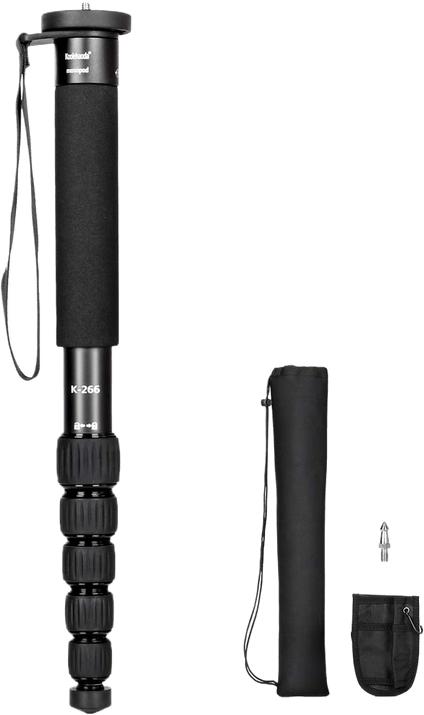
The Koolehaoda 6-Section Compact Monopod is another option when a short packed length matters. Its compact design is the reason to compare it with the SIRUI, rather than assuming that every aluminum monopod is large or heavy.
The maker's K-266 specifications list an aluminum body weighing 430 g (0.95 lb). It extends from 38 to 156 cm (15 to 61.4 inches), with a stated 10 kg (22 lb) capacity.
The monopod has six sections and a foam handle. The package includes a carrying bag. It also has a 3/8-inch connection at the bottom for a compatible small base.
Do not choose it on load capacity alone. Check the working height and how you will mount and balance your camera. A high stated rating does not establish that it handles or resists movement better than another model.
© Teo Lazarev (Depositphotos.com)
Buyer’s Guide for Best Monopod for Cameras
Start with three measurements: the complete camera setup's weight, the viewfinder height you need and the space available in your bag. Then decide whether you need to control video movements with a head or fluid base.
Monopod For Camera vs. Tripod
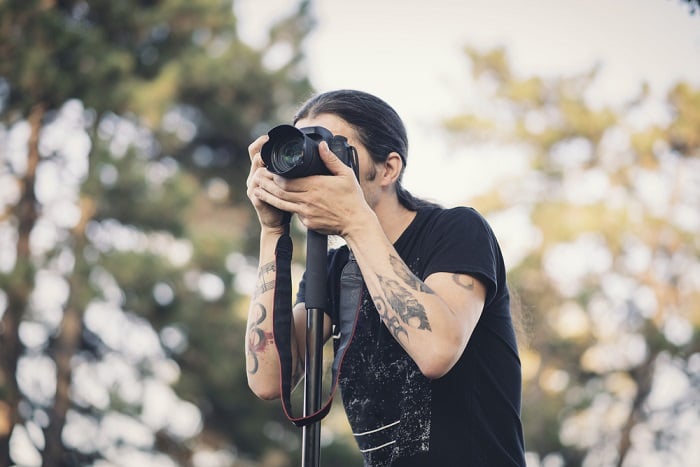
Monopods and tripods both support a camera, but they suit different tasks. A tripod can hold a composition while you step away. A monopod needs you to steady it, but its single leg takes little floor space and is easy to reposition.
For sports or wildlife, the main benefit is taking the weight of a long lens while following the subject. Camera support reduces your movement; shutter speed still controls how the subject's movement appears. Use a fast enough shutter speed to freeze action, or choose a slower speed deliberately for a panning effect.
A tripod is the better choice for a long exposure or a frame that must stay fixed. Small feet on a monopod help with support while shooting. Keep a hand on the camera rather than using them as permission to walk away.
© Miflippo (Depositphotos.com)
Which of These Monopods Should You Buy?
For heavy equipment: Compare the Trent 2.0 and Benro MSD46C. Choose between the taller four-section design and the shorter folded six-section design. Check the head's capacity as well as the monopod's.
For video: The XPRO+ kit includes a fluid head and FLUIDTECH base. The Element MII supplies fluid movement at the base, so plan for a separate head if you need controlled tilt at the camera. A fluid base and an included head are separate features.
For travel: Compare packed length against your bag's inside dimensions. The Koolehaoda and SIRUI pack particularly short, and the Benro also combines a compact folded length with a taller working height. A monopod that is shorter than your bag can still be awkward once a head is attached.
For small support feet: Compare the XPRO+, Element MII and Neewer T222. Pick them for support during operation, rather than for leaving the camera standing alone.
What to Look For in a Monopod
Load capacity. Include the body, lens, head, plate and any attached accessories. Check the limit of each component. There is no single capacity that suits every full frame camera, and a large prime lens does not automatically require a 30 kg monopod.
Working height. Compare your eye level with the height of the entire assembly. The head and camera add height above the monopod. Uneven ground can put the foot below your standing position, so some extra reach can help.
Packed size and weight. Include the head and base when planning what you will carry. More sections can make a monopod shorter in a bag, but they also give you more joints to extend and secure.
Locks and grip. Try the controls you will use most. Check that you can adjust them comfortably, including with gloves if needed. Secure every lock before loading the camera and use the wrist strap as directed.
Head and foot. A tilt head changes camera angle without leaning the entire monopod. A fluid video head controls camera movement, while a fluid base operates at ground level. Rubber feet suit hard surfaces; a compatible spike can be an option for suitable ground. Check which parts are included in the exact kit.
Frequently Asked Questions
Can a Monopod Replace a Tripod?
It can replace one for some mobile shooting, but it cannot hold a fixed frame while you let go. Choose a tripod for long exposures or a camera position that must stay still. There is no fixed number of slower shutter-speed stops that every monopod will give every photographer.
What Load Capacity Do I Actually Need?
Weigh your complete camera, lens and accessories, then check the stated limits of the monopod, head and plate. Allow room for equipment you plan to add. A load rating describes the weight a maker says the support can carry. It is not a measurement of how steady your pictures will be.
Do I Need a Head on a Monopod?
A camera or compatible lens collar can attach directly to a suitable monopod screw. A head adds control over angle and orientation. A tilt head or a small ball head can make composition easier without leaning the whole support. For controlled video movement, consider a fluid head. Of the two Manfrotto video options here, the XPRO+ kit includes a head; the Element MII does not.
Are Carbon Fiber Monopods Worth the Extra Money?
Compare the actual models' weight, packed length, height and controls. Carbon fiber alone does not settle the choice: an aluminum model may fit your bag or shooting position better. Spend more when the measured difference solves a carrying or handling problem you have, rather than assuming the material guarantees sharper pictures.
Conclusion: The Best Monopod For Cameras
Choose a monopod for the setup you will carry and the way you need to move. Check the load limit, working height and packed dimensions first. Then decide whether you need a separate head or a video base.
The Altura Photo Camera Monopod remains the starting pick in this list. Compare the Trent 2.0 or Benro for heavy equipment, and the XPRO+ kit for a video setup with an included head.
Before ordering, weigh your kit and measure your viewfinder height. Check the exact package contents as well. Keep control of the camera while using a monopod, including models with folding feet.