Sports photographers such as Atiba Jefferson, Claudio Villa, Brad Mangin, and Michael Willson offer different ways to see a game. This selection brings together 25 photographers and artists whose work spans live competition, athlete portraits, outdoor adventure, and staged images.
It is a curated reading list, not a measured ranking of influence. You’ll find active portfolios alongside Lucas Murnaghan’s archive. Use the images and links to choose work to study, whether you want better sports photography or a new photographer to follow.
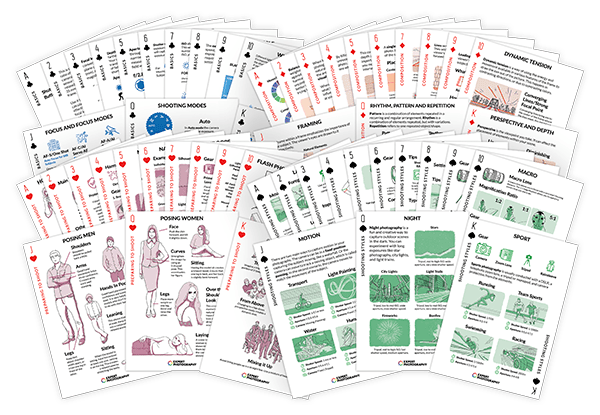
- Efficiently covers 52 topics for quick learning and mastery.
- Designed for clarity with beautiful illustrations and layouts.
- Accessible anytime, anywhere—downloadable or printable for convenience.
What Makes a Great Sports Photographer?
Timing, viewpoint, and an understanding of the sport all matter. Knowing what may happen next helps you prepare the frame. A fast burst can give you several moments to choose from, but the position of the camera and the background still shape the picture.
Your photo equipment should fit the access you have. A telephoto or super-telephoto lens can help from a distant sideline; a close skateboarding session or a planned athlete portrait calls for a different approach. Follow the venue’s access and safety rules.
Start with the kind of work you want to make. For football, study Claudio Villa’s team coverage. For baseball, look at Brad Mangin. For athlete portraits, try Philip Edsel or Will Fox. Maria Svarbova and Pelle Cass offer a different starting point: staged and composite art with sporting subjects.
25 Sports Photographers and Artists to Study
The numbers below help you navigate the selection. They do not indicate rank. Each profile points to a sport, a body of work, or an approach you can examine.
1. Zak Noyle

Zak Noyle photographs surfing and ocean scenes. His print collection includes Dropping In, a view inside a wave at Pipeline on Oahu’s North Shore. It’s a useful starting point for studying how the water can become part of the composition.
Noyle’s work offers more than a distant view of a rider. The surrounding wave gives the action its scale and shape. Compare his images with other surf photographers, and look at where each photographer places the horizon, the surfer, and the breaking water.
2. Atiba Jefferson

Atiba Jefferson is known for skateboarding photography, but his background also includes basketball. Canon’s biography documents his work for skateboard publications and his earlier role photographing the LA Lakers during the Shaquille O’Neal and Kobe Bryant years.
His photographs show how sport and culture meet. Study the skateboarding arena in his work: the rider’s position matters, but so do the spot, the spectators, and the people around the session. Those details give an action image a sense of place.
3. Maria Svarbova

Maria Svarbova is a Slovak artist whose books include Swimming Pool (2017). Her carefully arranged figures and geometric settings belong to fine art photography, rather than race coverage.
Pool lanes, tiles, and repeated poses become parts of the design. Look at the space around the figures as well as the figures themselves. She is a fine art photographer to study when you want ideas for staged portraits in a sporting setting.
4. Cameron Look

© Cameron Look: Website | Instagram
Cameron Look publishes his work under the name Koolmac. His basketball photographs bring you close to the players and the atmosphere inside the arena.
The image above is a useful court-side view of basketball: the raised arms and approaching ball lead your eye toward the basket. When studying this kind of work, compare the peak of the play with the quieter frames around it. A player’s expression or interaction can tell a different part of the same story.
5. Lucas Murnaghan

Lucas Murnaghan was a Canadian artist who worked with water, surfing, and adventure. He died in March 2021. His website remains an archive of his work, with posthumous releases managed by his partner Antonio Lennert.
His Beneath the Surface collection explored male vulnerability and confidence through underwater photography. Study the light, suspended poses, and space around his subjects. These are constructed portraits, rather than records of a swimming race.
6. Claudio Villa

Claudio Villa’s football photography includes work for Italy’s national team. The Italian football federation’s account of its Euro 2020 media team, published in June 2021, identifies Villa as the photographer producing official pictures through Getty Images.
His images are useful for studying football on and around the pitch. Follow the training, portraits, and interactions alongside the match action. Together, those frames show the people behind a team’s tournament campaign.
7. Grant Brittain

Grant Brittain began photographing skateboarding at Del Mar Skate Ranch in 1979. His archive lets you study the sport across decades, rather than through one event or season.
Look at how he fits the rider and the skate spot into the frame. When planning your own shots, compare the fish-eye effect with the look of a standard wide-angle lens: lens choice changes how large the obstacle and the surrounding space appear. Timing still determines the rider’s position within that composition.
8. Brad Mangin

Brad Mangin photographs baseball. His book 28: A Photographic Tribute to Buster Posey follows Posey’s career with the San Francisco Giants from 2009 to 2021.
Mangin’s work is useful for studying action on the diamond alongside a longer story. A single play can make a strong photograph, but a collection can also show the rituals, relationships, and changing fortunes of a team. Look at how the close views and wider scenes work together.
9. Russell Ord

Russell Ord is an Australian photographer whose work explores people and the ocean. His biography describes photographing from within the water, including his work at the Western Australian break known as The Right, featured in the documentary One Shot.
Study how his surf images give the waves physical weight. The photographer’s viewpoint can make the rider look small within the water or bring the viewer close to the action. His ocean studies also show why the moments between waves can deserve a photograph.
10. Patrick Koenig

Patrick Koenig is a golfer and photographer whose portfolio centers on golf courses. His website organizes course galleries by location and architect, making it easy to compare different landscapes.
His work is a useful bridge between sport and landscape photography. Look for the fairway’s direction, the position of the green, and the light across the terrain. The setting can explain how a sport feels even when no player fills the frame.
11. Kirill Umrikhin

Kirill Umrikhin works across commercial, expedition, and sports photography. His biography describes photographing in mountains and oceans, as well as leading expeditions to the polar regions.
For Umrikhin, adventure photography and sport share a setting. Study the relationship between a person and the wider environment. A distant figure can establish scale, while a close view can show effort. Those choices give an outdoor sports story more variety than action frames alone.
12. Brian Bielmann
Brian Bielmann is a surf photographer whose work covers life above and below the water. His biography documents a long association with surf publishing, including his earlier work for TransWorld Surf.
His surf photography is a starting point for studying wave shape, water-level viewpoints, and the wider surfing scene. Look at how the ocean occupies the frame alongside the rider. The sport’s setting can carry as much visual weight as the maneuver.
13. Savannah Cummins

Savannah Cummins is an adventure photographer, cinematographer, and director. Her portfolio includes climbing and expedition projects, with work from places such as Great Trango Tower and Queen Maud Land.
Her photographs connect the athlete’s effort with the landscapes and mountains around them. Study where a climber sits within the frame, then compare that wider view with the closer portraits and details. A climbing story can show both the scale of the route and the person attempting it.
14. Philip Edsel

Philip Edsel works in fitness, fashion, and portraiture. His portfolio includes a Simone Biles project for Mondelez and an Adidas Ultraboost campaign. This is a useful direction for readers interested in athlete portraits and commissioned imagery.
Edsel’s work brings fashion photography into sporting subjects. Study the pose, the light, and the background as parts of one design. His commercial photography offers ideas for showing an athlete’s movement and personality outside a live competition.
15. Donald Miralle

Donald Miralle works across sports, adventure, and portraiture. His portfolio includes swimming, triathlon, golf, and Olympic subjects, giving you several ways to compare his approach.
Study his composition, especially the relationship between an athlete and the space around them. An unusual viewpoint can change a familiar sporting scene. Look at which details he includes to establish the setting and which distractions he leaves outside the frame.
16. Pelle Cass

Pelle Cass uses sport in his fine art series Crowded Fields. He combines photographs made over time into a single still image, filling courts, fields, and pools with overlapping action.
These are composites, rather than records of one instant. His artist’s statement explains how the method changes the viewer’s experience of time. Study the repeated gestures and the paths through the picture. The result asks you to explore the whole scene instead of following one athlete.
17. Patrick Smith

Patrick Smith has photographed sport for Getty Images. World Athletics documents how he captured Karsten Warholm’s surprised expression after winning the 400m hurdles at the 2017 World Championships, with Kerron Clement’s reaction beside him.
That frame is a useful lesson in capturing the action of the day and staying ready for what follows. The finish matters, but so does the reaction. Watch how expressions and the relationship between athletes can explain the result without a scoreboard.
18. Tom Pennington

© Tom Pennington: Instagram
Tom Pennington discussed photographing swimming for Getty Images at the Tokyo Games in a 2021 interview. He described working from different positions around the pool and using an underwater robotic camera for a view of Katie Ledecky’s race.
His work is useful for studying swimming pictures from more than one angle. Look at the race, the swimmer’s face, and the moments after a competitor leaves the water. A detail such as flying droplets can make a quieter frame stand out.
19. Michael Willson

Michael Willson is Chief Photographer of the Australian Football League. His portfolio groups images into action, emotion, portraits, moments, documentary, and alternative views.
Those categories are useful prompts for building your own event coverage. Start with the play, then look for reactions and the scene around it. His work shows how one sport can produce several kinds of photographs, from a close contest for the ball to a player’s expression after the final whistle.
20. Tristan Shu

Tristan Shu is a French adventure sports photographer. In an Elinchrom interview about his 2015 The Crevasse shoot, he explains photographing skiers from inside a crevasse with a planned lighting setup and a team of skiers and guides.
His work combines travel, outdoor action, and prepared shoots. Study the background, the light on the athlete, and the viewpoint. These images are useful examples of planning with a team; dangerous locations need qualified support and permission.
21. Sterling Lorence

Sterling Lorence is a commercial action and lifestyle photographer based in Vancouver. His portfolio includes freeride, trail riding, North Shore riding, road cycling, and landscapes.
His mountain-bike photographs are useful for studying a rider within a wooded or mountainous setting. Look at the direction of the trail and how the available light separates the rider from the background. A wider frame can show the route as well as the action.
22. Teddy Morellec

Teddy Morellec is a photographer whose work spans sports, events, and music. His biography traces his interest to skateboarding and describes working on Red Bull sports events from 2010.
His portfolio includes skateboarding alongside portraits and wider event coverage. Study the mix of riders, spectators, and interactions. Those frames can give a sporting event a social atmosphere, with room for both the trick and the people watching it.
23. David Bergman

David Bergman has photographed sport for Sports Illustrated. In a 2011 account, he explains how his image of Tom Brady losing the ball during a Jets–Patriots playoff game appeared on a regional cover.
His sports archive is worth studying alongside his concert photography. In both settings, the photographer has to anticipate a brief moment and work within the available access. Look at how the subject’s expression and the surrounding action help you read the frame.
24. Wilson Fox

Wilson Fox, also known as Will Fox, presents the project We Are All Fighters on The Fox Identity website. His work looks at fighters and the world around combat sport.
Study the training, portraits, and quieter moments alongside the fight itself. These pictures can give a subject context beyond a single result. For athlete portrait photography, the gym, the equipment, and the time between exercises can all help show what preparation involves.
25. Al Bello

Al Bello is a New York-based photographer whose portfolio spans sporting events, portraits, picture stories, and multimedia. His website includes underwater work, Olympic sports, boxing, and projects about individual athletes.
Use those collections to compare competition coverage with a longer picture story. A race or bout provides action, while training and portraits show another part of an athlete’s life. Look at how his different viewpoints make a familiar sporting subject feel new.
Conclusion: Choose a Portfolio to Study
Choose one sport and compare two or three photographers. Look at their camera positions, backgrounds, timing, and use of portraits or wider scenes. Then try one idea at an event where you have permission to photograph.
A useful sports story can include peak action, reactions, and the setting around the athletes. You can learn from an archive as well as a current assignment. Check out our Quick Capture Cheat Sheets if you need help capturing action shots!
- Efficiently covers 52 topics for quick learning and mastery.
- Designed for clarity with beautiful illustrations and layouts.
- Accessible anytime, anywhere—downloadable or printable for convenience.