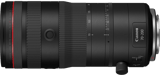
The Canon RF 70-200mm f/2.8 Z is our top lens for sports photography. Its constant f/2.8 aperture gives you fast shutter speeds in gyms and under floodlights. The zoom covers most sideline work, and Canon's RF extenders take it to 400mm when the action moves away. Nikon and Sony make lenses in the same class, and both are on this list.
Sports also differ in where you stand. A basketball court or a hockey rink suits a bright 70-200mm zoom. A soccer or football sideline in daylight rewards 400mm to 600mm of reach. The list below also covers a light, low-cost long zoom for parents and lenses for Fujifilm, Micro Four Thirds and Sony APS-C cameras.
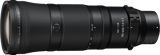
The Best Lenses for Sports Photography
Start with your camera mount, because a sports lens has to fit the camera you already own. Then choose between light and reach. The 70-200mm f/2.8 zooms suit indoor and night sports. The 400mm and 600mm zooms suit daylight field sports, where you need to fill the frame from far away. The table shows the mount and the main strength of each lens.
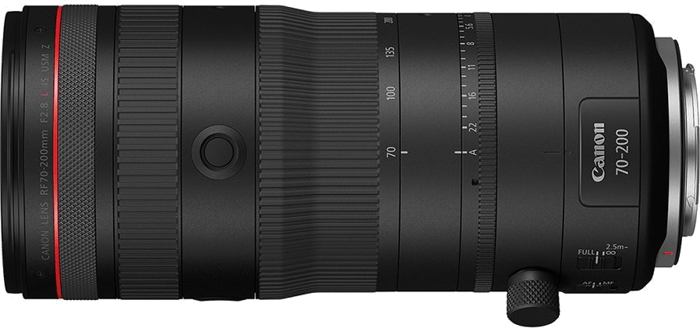
The RF 70-200mm f/2.8 Z is the lens to buy if you shoot sport on a Canon EOS R camera. The f/2.8 aperture stays the same from 70mm to 200mm. That gives you two stops more light than an f/5.6 zoom. In a school gym, that is the difference between ISO 3200 and ISO 12800 at the same shutter speed.
The Z version zooms internally, so the lens does not get longer as you zoom. Its balance stays the same while you follow a player across the court. Canon's first RF 70-200mm f/2.8 is shorter when stored, but its barrel extends and it does not take Canon's extenders. The Z does. With the RF 1.4x extender it becomes a 98-280mm f/4 lens, and with the RF 2x it reaches 140-400mm at f/5.6. One lens can cover a night game indoors and a daylight game from the far sideline.
Image stabilization is rated at 5.5 stops, which helps with slower shutter speeds when the players are still. The lens is weather sealed, and a fluorine coating makes rain and dirt easier to wipe off the front element.
It is slightly heavier than the first version, at 2.4 lb (1,110 g). It has no zoom lock, and it takes 82mm filters. If you shoot only outdoor field sports in good light, the Canon RF 100-400mm below gives you twice the reach for far less weight. You can see more Canon sports lenses in our full Canon guide.
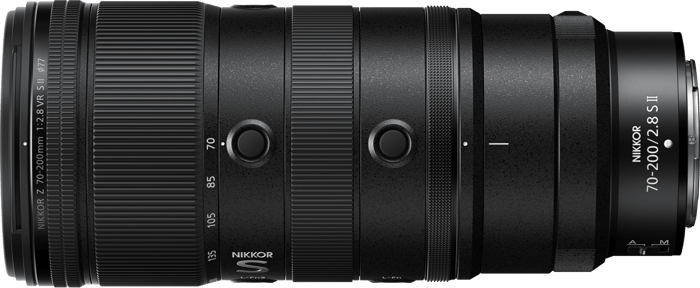
The Nikon Z 70-200mm VR S II is the best sports lens for Nikon Z cameras. It keeps f/2.8 at every focal length, so it gives you the same low-light advantage as the Canon above. Autofocus is the big upgrade. Nikon rates its autofocus at about 3.5 times faster than the first Z 70-200mm. Tracking while you zoom is about 40% better, which matters when a player runs straight at you.
At 2.2 lb (998 g) without the tripod collar, it is the lightest full-frame 70-200mm f/2.8 on this list. It is 26% lighter than the first version, and you feel the difference over a full game held by hand. The zoom is internal, so the length and balance stay fixed. Vibration reduction is rated at 5.5 stops, or 6 stops with Synchro VR on compatible bodies. The lens is weather sealed and has a fluorine-coated front element.
It works with Nikon's Z TC-1.4x and TC-2.0x teleconverters. With the 2x converter it becomes a 140-400mm f/5.6 lens. That is enough for occasional daylight field sports. If most of your games are outdoors and far away, the NIKKOR Z 180-600mm below is the better choice.
The first-generation Z 70-200mm VR S is still a strong lens, but it is heavier and slower to focus. See more Nikon lenses for sports in our Nikon guide, or our best Nikon S lenses for Z cameras.
3. Sony FE 70-200mm f/2.8 GM OSS II
| Mount |
Mount
Sony E (full frame)
|
| Focal Length |
Focal Length
70-200mm
|
| Maximum Aperture |
Maximum Aperture
f/2.8 (constant)
|
| Weight |
Weight
2.3 lb (1,045 g)
|
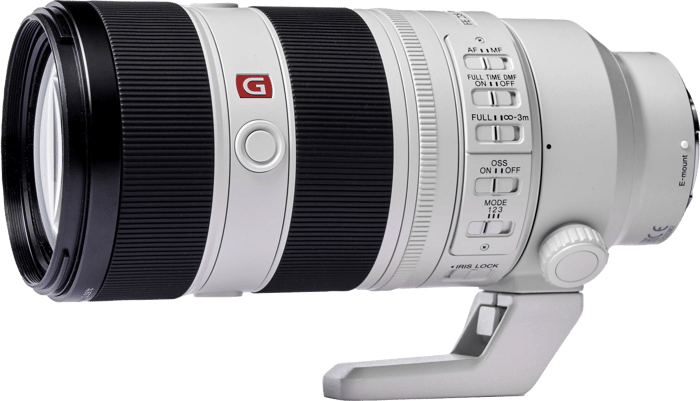
The Sony FE 70-200mm GM II is the f/2.8 sports zoom for Sony full-frame cameras. It does the same job as the Canon and Nikon above. You get a constant f/2.8 aperture for gyms and floodlit games, and enough range for a whole court or the near half of a field.
Focus is driven by four XD linear motors, which move the focus quickly and quietly for moving subjects. The zoom is internal, and the lens is sealed against dust and moisture. A fluorine coating protects the front element.
At 2.3 lb (1,045 g), it sits between the Nikon and the Canon in weight. It takes Sony's 1.4x and 2x teleconverters. With the 2x it reaches 140-400mm at f/5.6, which covers a daylight game from the sideline. It has no zoom lock, and it uses 77mm filters.
If you shoot mainly outdoor field sports, the Sony FE 100-400mm GM below gives you twice the reach at the cost of light. If you use an APS-C Sony such as the Sony a6700, this lens still fits. It acts like a 105-300mm lens on that sensor.
4. Canon RF 100-400mm f/5.6-8 IS USM
| Mount |
Mount
Canon RF
|
| Focal Length |
Focal Length
100-400mm
|
| Maximum Aperture |
Maximum Aperture
f/5.6-8
|
| Weight |
Weight
1.4 lb (635 g)
|
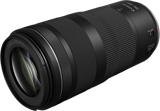
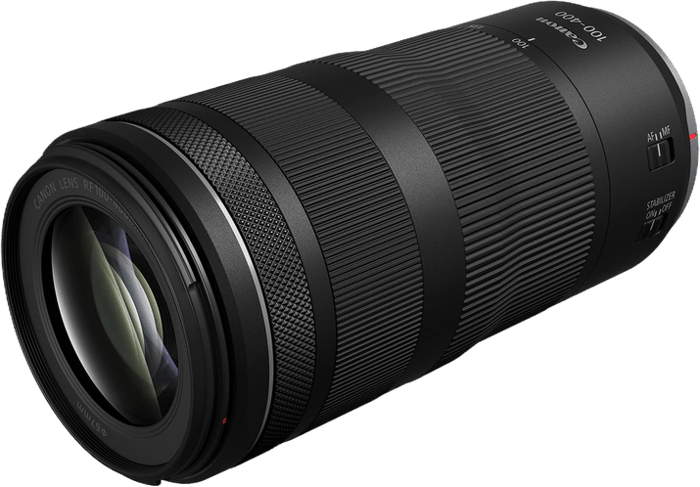
The Canon RF 100-400mm is the best value sports lens on this list. It gives Canon EOS R owners 400mm of reach in a lens that weighs just 1.4 lb (635 g). Parents at weekend games and club photographers get the reach of a long zoom without the weight or cost of a pro lens.
The trade-off is light. The aperture narrows to f/8 at 400mm, which is three stops darker than f/2.8. In daylight, that does not matter. Under floodlights or indoors, you will need a much higher ISO to keep a fast shutter speed. For indoor sports, the RF 70-200mm f/2.8 Z is the better lens.
Canon's Nano USM motor focuses quickly and quietly. Image stabilization is rated at 5.5 stops. A zoom lock keeps the barrel retracted when the lens hangs from your shoulder. It takes Canon's RF extenders too, though at f/11 or slower they suit only bright light.
The lens is not weather sealed. Cover it in rain, or choose the weather-sealed RF 100-500mm from our Canon sports lenses guide if you shoot in all conditions.
5. Nikon NIKKOR Z 180-600mm f/5.6-6.3 VR
| Mount |
Mount
Nikon Z
|
| Focal Length |
Focal Length
180-600mm
|
| Maximum Aperture |
Maximum Aperture
f/5.6-6.3
|
| Weight |
Weight
4.3 lb (1,955 g)
|
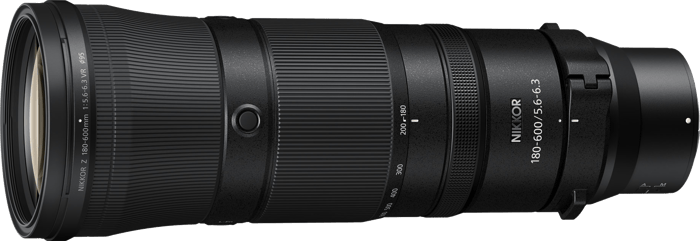
The NIKKOR Z 180-600mm is the lens for Nikon Z shooters who need serious reach. At 600mm, you can fill the frame with a player on the far side of a soccer field or a runner on the back straight of a track. No other lens here gets that close for the money.
The zoom is internal, so the lens stays the same length from 180mm to 600mm. That keeps the balance steady as you zoom with the play. Vibration reduction is rated at 5.5 stops. The barrel is weather sealed, and the front element has a fluorine coating. It also works with Nikon's Z teleconverters. The TC-1.4x takes it to 840mm, and the TC-2.0x takes it to 1200mm.
The cost of that reach is weight and light. At 4.3 lb (1,955 g), it is heavy for a full game held by hand, and a monopod helps. The f/6.3 aperture at 600mm needs good light or a high ISO for fast shutter speeds. It has no zoom lock, and it takes 95mm filters. The 180mm short end is also too long for close action at a courtside seat.
Choose the NIKKOR Z 70-200mm f/2.8 VR S II above for indoor sports. Choose this lens for outdoor field sports in daylight.
6. Sony FE 100-400mm f/4.5-5.6 GM OSS
| Mount |
Mount
Sony E (full frame)
|
| Focal Length |
Focal Length
100-400mm
|
| Maximum Aperture |
Maximum Aperture
f/4.5-5.6
|
| Weight |
Weight
3.1 lb (1,395 g)
|
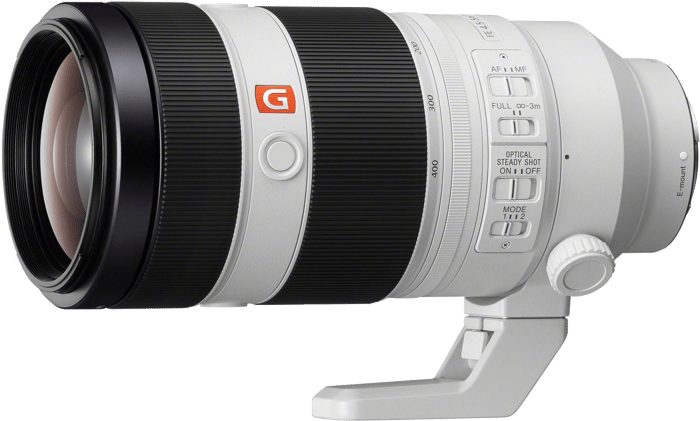
The Sony FE 100-400mm GM is the field-sports lens for Sony full-frame cameras. It reaches 400mm at f/5.6. That is a stop brighter than the Canon RF 100-400mm at f/8, so you can use a lower ISO as the light fades in a late-afternoon game.
Sony pairs a Direct Drive SSM motor with a double linear motor for quick, quiet focus. A ring lets you set how stiff the zoom feels, from smooth for quick zooming to tight so the barrel does not slide. Focus hold buttons on the barrel can be set to other functions.
Extra-low dispersion and Super ED elements reduce color fringing around bright edges. The lens is weather sealed, and the front element has a fluorine coating. It also takes Sony's 1.4x and 2x teleconverters, which take it to 560mm or 800mm in bright light.
At 3.1 lb (1,395 g), it is much heavier than the Canon RF 100-400mm, and the barrel extends as you zoom. If you need 600mm for a large stadium, the Sigma 150-600mm below goes further. If you shoot indoors, the Sony 70-200mm f/2.8 GM II is the better lens.
7. Sigma 150-600mm f/5-6.3 DG DN OS | Sports
| Mount |
Mount
Sony E (full frame)
|
| Focal Length |
Focal Length
150-600mm
|
| Maximum Aperture |
Maximum Aperture
f/5-6.3
|
| Weight |
Weight
4.6 lb (2,100 g)
|
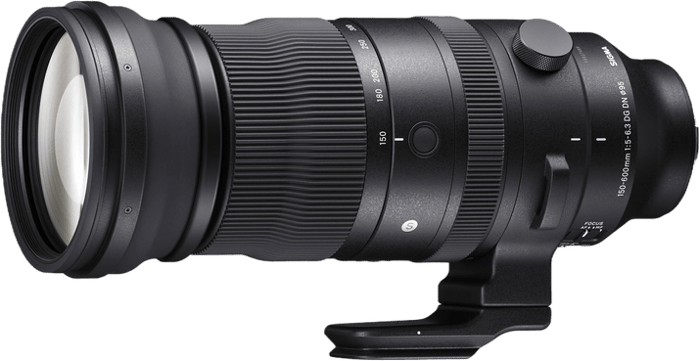
The Sigma 150-600mm Sports gives Sony E-mount and L-Mount shooters 600mm of reach. Sigma designed it for mirrorless cameras. It is the lens for large stadiums, wide fields and seats far from the action, where 400mm is not enough.
Sports is Sigma's toughest lens line. The barrel is sealed against dust and splashes, and the front element has a fluorine coating. A zoom lock stops the barrel extending when you carry it. Optical stabilization helps you frame a distant subject at 600mm.
Weight is the main drawback. At 4.6 lb (2,100 g), it is the heaviest lens here, and a monopod helps over a long game. The f/6.3 aperture at 600mm also needs good light. It takes 95mm filters, and the barrel extends as you zoom.
Match the lens to your camera before you buy. The listing we link is the Sony E version. Sigma also makes an L-Mount version for Panasonic, Sigma and Leica cameras. Sigma's own teleconverters work only with the L-Mount version. If you shoot Canon or Nikon, the RF 100-400mm and NIKKOR Z 180-600mm above are the better fit. You can also see our guide to the best Sigma lenses.
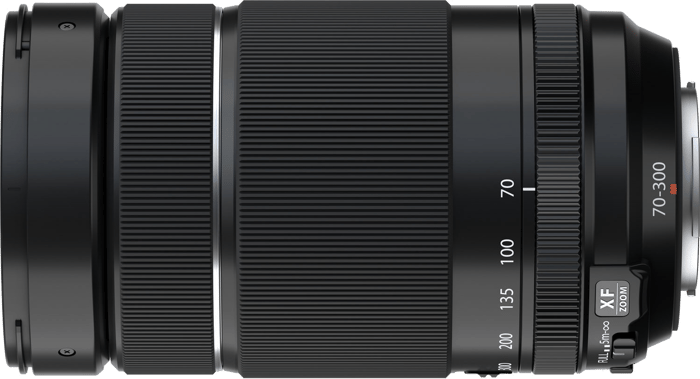
8. Fujifilm XF 70-300mm f/4-5.6 R LM OIS WR
| Mount |
Mount
Fujifilm X (APS-C)
|
| Focal Length |
Focal Length
70-300mm (107-457mm equivalent)
|
| Maximum Aperture |
Maximum Aperture
f/4-5.6
|
| Weight |
Weight
1.3 lb (580 g)
|
The Fujifilm XF 70-300mm is the best sports lens for most Fujifilm X cameras. On Fujifilm's APS-C sensor, it gives the same view as a 107-457mm lens on full frame. That is enough to fill the frame with a player on a soccer field from the sideline.
It weighs only 1.3 lb (580 g), so it is easy to carry and hold for a whole game. The linear motor focuses quickly and quietly. Optical image stabilization is rated at 5.5 stops. The lens is weather resistant and rated to work at 14°F (-10°C), which suits winter sports and cold evening games. A zoom lock keeps the barrel retracted when you carry it.
The f/5.6 aperture at the long end is its limit. Indoors or under weak floodlights, you will need a high ISO. Fujifilm's f/2.8 XF 50-140mm suits indoor sport better, but it gives up a lot of reach. The 70-300mm also takes Fujifilm's 1.4x and 2x teleconverters, though they cost one and two stops of light.
See more of the best Fujifilm XF lenses in our Fujifilm guide.
9. OM System M.Zuiko Digital ED 40-150mm f/2.8 PRO
| Mount |
Mount
Micro Four Thirds
|
| Focal Length |
Focal Length
40-150mm (80-300mm equivalent)
|
| Maximum Aperture |
Maximum Aperture
f/2.8 (constant)
|
| Weight |
Weight
1.7 lb (760 g)
|
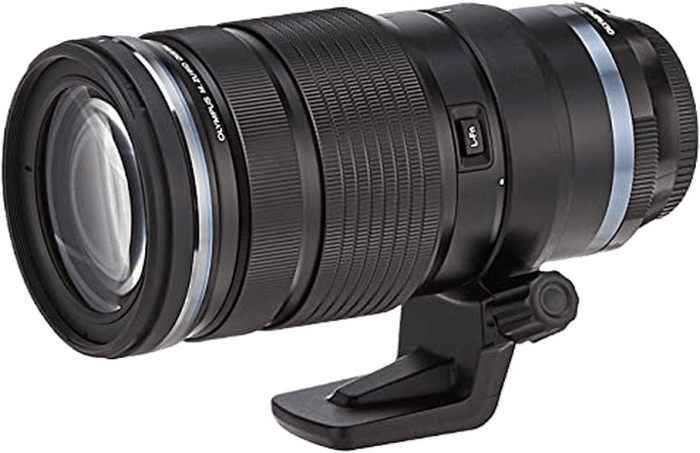
The OM System 40-150mm f/2.8 PRO is the best sports lens for Micro Four Thirds cameras. On the smaller sensor, it gives the same view as an 80-300mm lens on full frame. It keeps a constant f/2.8 aperture through that range. That makes it the lightest way on this list to get f/2.8 at a 300mm-equivalent view.
It is a good lens for indoor sports and night games on OM System and Panasonic cameras. The build suits outdoor sport too. It is dustproof, splashproof and freezeproof. A sliding lens hood is built into the barrel. It works with OM System's MC-14 and MC-20 teleconverters. With the MC-14 it becomes a 56-210mm f/4 lens, which is 112-420mm equivalent.
The lens has no image stabilization. It relies on the stabilization in your camera body, such as the in-body system in the OM System OM-5. Stabilization does not freeze a moving player, so this matters less for action than for still subjects. At 1.7 lb (760 g), it is heavier than the Fujifilm XF 70-300mm, and it takes 72mm filters.
Its reach is shorter than the long zooms on this list, so it suits indoor and mixed sports more than distant field sports. For those, it needs a teleconverter and good light.
10. Sony E 70-350mm f/4.5-6.3 G OSS
| Mount |
Mount
Sony E (APS-C)
|
| Focal Length |
Focal Length
70-350mm (105-525mm equivalent)
|
| Maximum Aperture |
Maximum Aperture
f/4.5-6.3
|
| Weight |
Weight
1.4 lb (625 g)
|
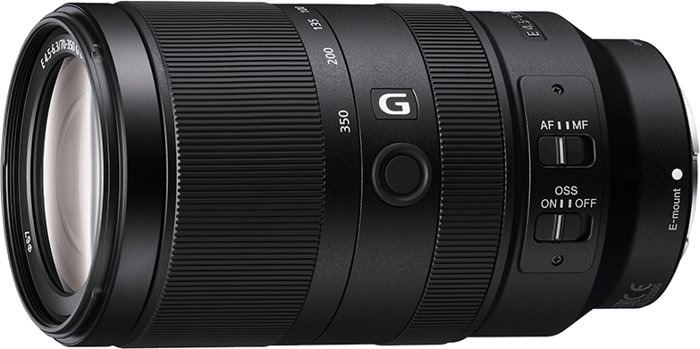
The Sony E 70-350mm G is the sports lens for Sony APS-C cameras such as the a6700. On that sensor, it gives the same view as a 105-525mm lens on full frame. That is more reach than the Sony FE 100-400mm GM gives on a full-frame body, in a lens less than half the weight.
It weighs 1.4 lb (625 g), and a zoom lock keeps the barrel retracted when you carry it. The XD linear motor focuses quickly and quietly. Optical SteadyShot helps with handheld shots at the long end. The design is dust and moisture resistant.
The trade-off is a slow aperture. At f/6.3 on the long end, this lens suits daylight sports. Indoors, you will need a very high ISO. The lens is made for APS-C sensors, so it is not a good choice if you plan to move to a full-frame Sony like the Sony a7 IV. It also does not take Sony's teleconverters.
For indoor sports on an APS-C Sony, the Sony FE 70-200mm f/2.8 GM II above fits and gives you the extra light.
How to Choose a Lens for Sports Photography
The reviews above cover what each lens does well. These points help you choose between them before you buy. For more on shooting technique, see our complete sports photography guide and our sports photography settings. To see what these lenses can do in skilled hands, study the work of these sports photographers.
Choose Between Light and Reach
A sports lens has two jobs. It has to make a distant player large in the frame, and it has to let you use a shutter speed fast enough to freeze them. Fast action often needs 1/1000 second or faster. The telephoto zooms on this list do one of those jobs better than the other.
Each full stop of aperture doubles the light. An f/2.8 lens lets you use an ISO two stops lower than an f/5.6 lens, and three stops lower than an f/8 lens. Indoors, that is often the difference between a usable photo and a noisy one. Outdoors in daylight, there is plenty of light, and reach matters more. If you shoot both, start with a 70-200mm f/2.8. Add a long zoom later if the field sports need it.
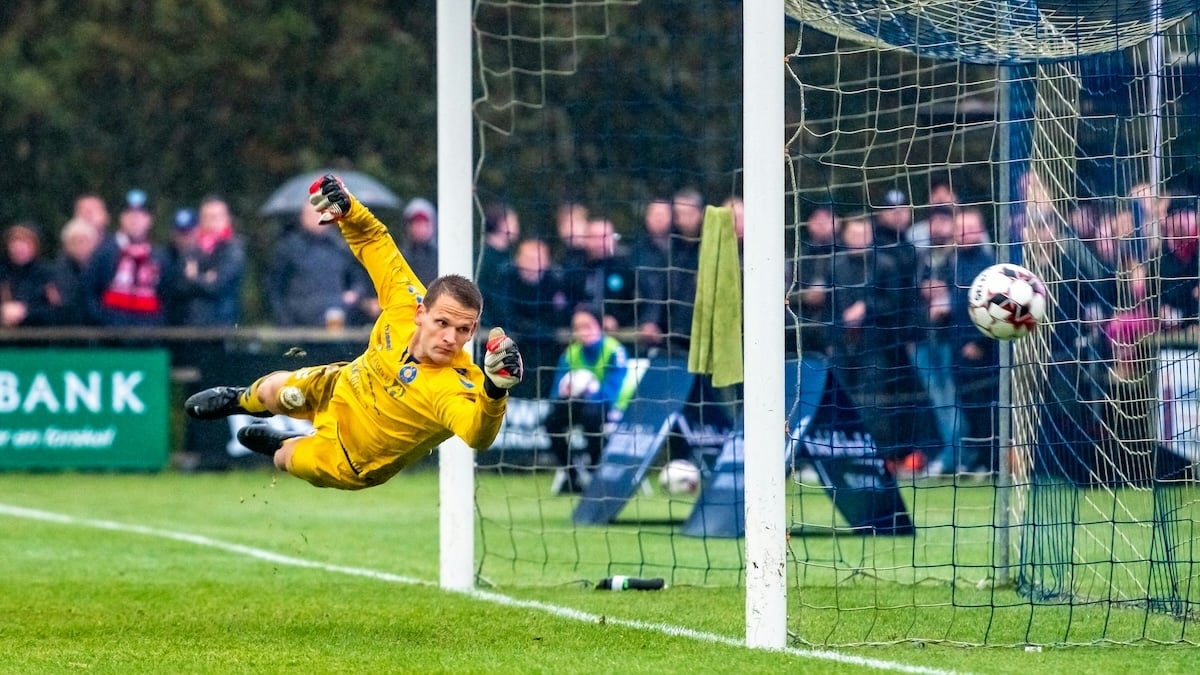
Shot with a Nikon D500. 185mm, f/2.8, 1/1,250, ISO 2,000. © Lars Bo Nielsen
Check Teleconverter Support Before You Count on It
A teleconverter fits between the lens and the camera and multiplies the focal length. A 1.4x converter costs one stop of light, and a 2x converter costs two stops. On a 70-200mm f/2.8 lens, a 2x gives you 400mm at f/5.6, which is a useful second lens for daylight games. On a lens that is already f/6.3 or f/8, a converter leaves you at f/11 or slower, which suits only bright light.
Support is not universal. The Canon RF 70-200mm f/2.8 Z takes Canon's extenders, but the first RF 70-200mm does not. The Sigma 150-600mm takes Sigma's converters only in its L-Mount version. The Sony E 70-350mm takes none. Check the converter maker's list of compatible lenses for the exact lens model before you plan on extra reach.
Understand Crop Sensors and Equivalent Focal Length
APS-C and Micro Four Thirds cameras use smaller sensors than full frame. A smaller sensor crops the view, so the same lens looks longer. Multiply by about 1.5x for Sony, Nikon and Fujifilm APS-C cameras, 1.6x for Canon APS-C, and 2x for Micro Four Thirds. That is why the 150mm end of the OM System 40-150mm f/2.8 PRO gives the same view as 300mm on full frame.
The crop changes the view, not the light. An f/2.8 lens on a small sensor still gives you f/2.8 exposure. Smaller sensors usually show more noise at high ISO, though, so a bright lens helps them indoors.
Stabilization Steadies the Camera, Not the Player
An image stabilization system reduces blur from your own hand movement. It helps with long lenses and with slow shutter speeds when the subject is still, such as a player waiting at the free-throw line. It cannot freeze a running player. For that, you need a fast shutter speed, and the light to support it.
This is why a bright aperture matters more than stabilization for night sports. Many mirrorless cameras also stabilize the sensor, so a lens without stabilization, such as the OM System 40-150mm f/2.8 PRO, can still give sharp handheld shots of still subjects.
Conclusion: The Best Lens for Sports Photography
For most Canon mirrorless shooters, the Canon RF 70-200mm f/2.8 Z is the best lens for sports photography. Its f/2.8 aperture handles indoor and night games, and Canon's extenders give it reach for daylight field sports. Nikon and Sony shooters get the same balance from the Nikon Z 70-200mm S II and the Sony 70-200mm GM II.
If you shoot mostly outdoor sports and want to spend less, the Canon RF 100-400mm gives you 400mm in a light lens. If you need the most reach, the NIKKOR Z 180-600mm fills the frame from the far side of the field.