A telephoto lens redefines the limitations of photography. They get you up close and personal with your subject even when they’re far away. Not every photographer needs one. But for certain photographers, a telephoto lens makes all the difference. They’re a game-changer and can elevate your photography to another level.
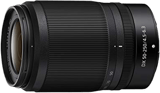
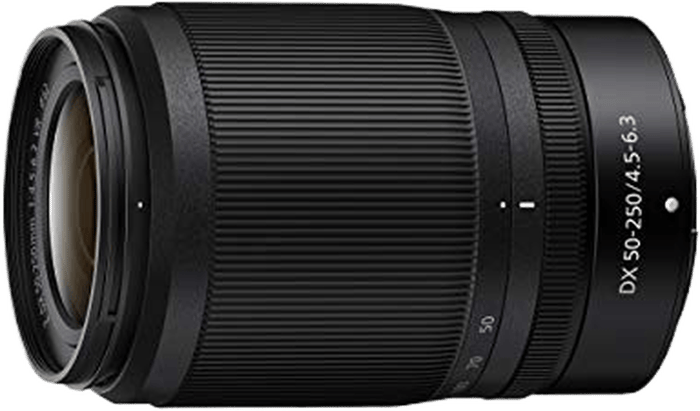
The Nikon Z DX 50-250mm f/4.5-6.3 VR is our choice as the best telephoto lens. This Z-mount zoom is a versatile, affordable option for Nikon's current mirrorless APS-C cameras. It has the quality for portrait and product photography. And it has the magnification for sports and wildlife photographers.
Our list includes telephoto lenses for Nikon, Canon, and Sony cameras. And there’s a section for other camera brands too. Every photographer can find the telephoto lens they need.
Finding the Right Telephoto Lens For You
Before you buy any lens, you need to know it’s compatible with your camera. We’ve separated our list into sections that include lenses of a certain camera brand. If you’re a Nikon user, skip to the Nikon lens section. If you have a Sony camera, skip to the Sony section.
Best Telephoto Lenses for Nikon Cameras
These are the best telephoto lenses for Nikon cameras. The roundup table gives you a quick look at our Nikon lens choices. Then we’ll go into detail on each one below. You’ll have all the info you need to make an educated decision.
1. Nikon Z DX 50-250mm f/4.5-6.3
| Brand |
Brand
Nikon
|
| Maximum Aperture |
Maximum Aperture
f/4.5-6.3
|
| Focal Range |
Focal Range
50-250mm
|
| Image Stabilization |
Image Stabilization
Yes
|
| Lens Weight |
Lens Weight
0.89 lb / 405 g
|
| Top Selling Points |
Top Selling Points
Current Z-mount lens for Nikon's active mirrorless system, with built-in VR stabilization.
|
The Nikon Z DX 50-250mm f/4.5-6.3 VR is the best telephoto lens for Nikon users. This zoom lens is compact, affordable, and built for Nikon's current Z-mount mirrorless system. It's the perfect partner for a Nikon Z APS-C camera like the Z50 II or Zfc.
It has a focal length range from 50 to 250mm, equivalent to roughly 75-375mm on a full-frame camera. That gives you solid reach for wildlife photography and sports from the sidelines, and the 50mm end is comfortable for tightly framed portraits.
As a native Z-mount lens, it pairs with the same fast, silent stepping-motor autofocus you get across Nikon's Z lineup. There's no adapter needed and no compatibility gaps with older bodies to worry about.
The lens doesn’t have the fastest max aperture, with only f/6.3 at full reach. But Nikon’s built-in VR stabilization helps offset that, giving you more flexibility with shutter speed in lower light. At 405g (0.89 lb), it's light enough to carry all day without a second thought.
2. Nikon AF-S FX 200-500mm f/5.6
| Brand |
Brand
Nikon
|
| Maximum Aperture |
Maximum Aperture
f/5.6
|
| Focal Range |
Focal Range
200-500mm
|
| Image Stabilization |
Image Stabilization
Yes
|
| Lens Weight |
Lens Weight
5.07 lb / 2.3 kg
|
| Top Selling Points |
Top Selling Points
Incredible magnification and optical quality. Built-in vibration reduction for sharper images and improved low-light performance.
|
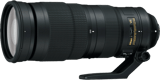
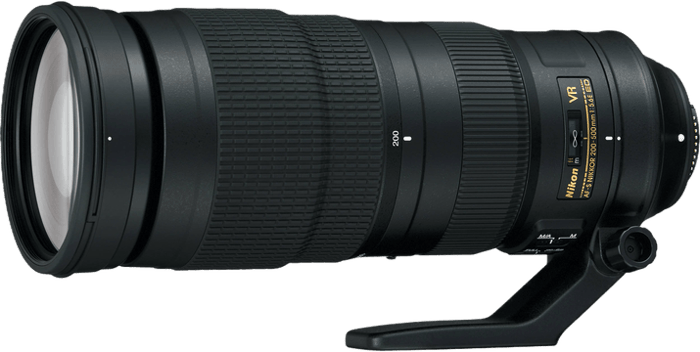
The Nikon AF-S FX 200-500mm f/5.6 is the best telephoto for Nikon full-frame cameras. You can use it with their APS-C DSLRs. But you’ll experience some cropping. The optical quality is fantastic. And you get incredible magnification.
With a 500mm maximum focal length, the lens gives you excellent reach. It’s perfect for sports photography, getting you to the heart of the action from the stands. And you can capture stunning wildlife photos without having to leave your hide.
The f/5.6 max aperture isn’t terribly fast. But it is constant throughout the zoom range. And it still gives you a lovely shallow depth of field. It’s easy to achieve a soft bokeh effect in your background.
The vibration reduction system gives you more exposure control. It allows you to shoot with a slower shutter speed. And you get sharper images even in low-light conditions. That’s ideal for dawn and dusk nature shoots. And it’ll improve your results at the next nighttime sporting event.
3. Sigma 70-200mm f/2.8
| Brand |
Brand
Sigma
|
| Maximum Aperture |
Maximum Aperture
f/2.8
|
| Focal Range |
Focal Range
70-200mm
|
| Image Stabilization |
Image Stabilization
Yes
|
| Lens Weight |
Lens Weight
3.08 lb / 1.4 kg
|
| Top Selling Points |
Top Selling Points
Superb optical quality with optical stabilization and a fast aperture.
|
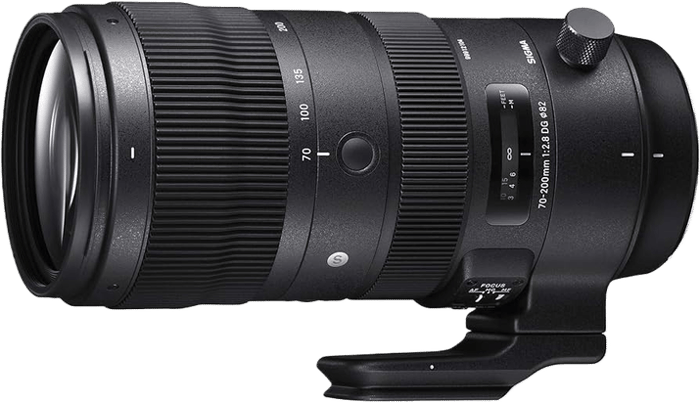
The Sigma 70-200mm f/2.8 doesn’t have the magnification of the Nikon lenses. But this lens has other things going for it. The optical quality is superb, with very little chromatic aberration throughout its range. And it has features many photographers will appreciate.
The fast f/2.8 max aperture is one of the main attractions of this Sigma lens. It’s constant throughout the zoom range. It gives you fabulous shallow depth-of-field options. And it performs well in low-light situations.
The built-in optical stabilizer also aids sharpness and exposure. It reduces the effect of camera shake, giving you sharper images. And it allows you to shoot at slower shutter speeds.
The autofocus system is fast and accurate. And the focus limiter helps you focus even quicker. That can be a lifesaver if you’re shooting fast animals or rapid sporting action.
The Sigma 70-200mm f/2.8 is also available for Canon cameras.
Best Telephoto Lenses for Canon Cameras
Now we’ll look at the best telephoto lenses for Canon cameras. Check out the quick preview, then dive into the detailed reviews below.
1. Canon RF-S 55-210mm f/5-7.1
| Brand |
Brand
Canon
|
| Maximum Aperture |
Maximum Aperture
f/5-7.1
|
| Focal Range |
Focal Range
55-210mm
|
| Image Stabilization |
Image Stabilization
Yes
|
| Lens Weight |
Lens Weight
0.6 lb / 270 g
|
| Top Selling Points |
Top Selling Points
Ultra-compact RF-mount telephoto built for Canon's current mirrorless APS-C cameras, with 4.5-stop stabilization.
|
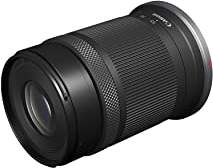
The Canon RF-S 55-210mm f/5-7.1 IS STM is a versatile, budget-friendly telephoto for Canon's mirrorless APS-C cameras, like the EOS R10 and R50. It's a native RF-mount lens, so there's no adapter needed and no compatibility gaps to worry about.
It has a focal length range from 55 to 210mm, equivalent to roughly 88-336mm on a full-frame camera. That's enough reach for casual sports, wildlife, and travel shots.
The STM autofocus motor is smooth and quiet, which matters as much for video as it does for stills. The lens also has built-in image stabilization, rated at 4.5 stops, which helps given how slow the aperture gets at the long end. And at just 270g (0.6 lb), it's one of the lightest telephoto zooms on this list, easy to keep in a bag as a second lens.
The tradeoff is aperture: f/5-7.1 is slow, especially at the long end, so you'll want good light or a higher ISO to avoid camera shake and motion blur on handheld shots. The 210mm reach won't satisfy serious wildlife shooters either. But it's affordable, currently in production, and easy to find in stock. That makes it a solid entry point for Canon APS-C shooters who want reach without the bulk.
2. Canon RF 100-400mm f/5.6-8
| Brand |
Brand
Canon
|
| Maximum Aperture |
Maximum Aperture
f/5.6-8
|
| Focal Range |
Focal Range
100-400mm
|
| Image Stabilization |
Image Stabilization
Yes
|
| Lens Weight |
Lens Weight
1.8 lb / 816 g
|
| Top Selling Points |
Top Selling Points
Wide zoom range for shot versatility and excellent magnification. Reliable AF and image stabilization systems.
|
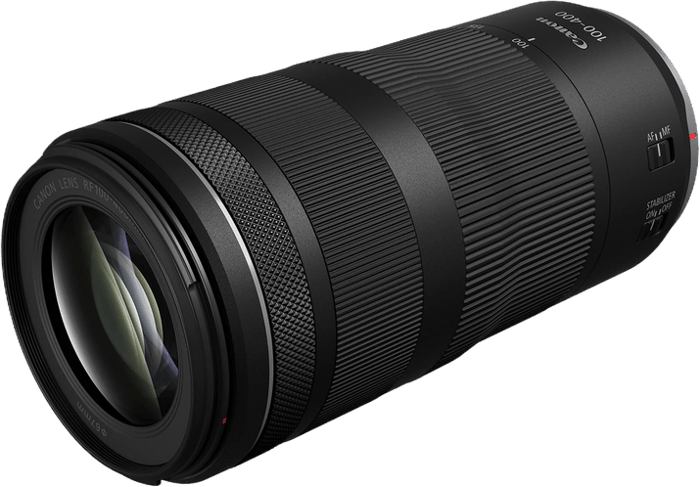
The Canon RF 100-400mm f/5.6-8 is one of the best telephoto lenses for Canon’s mirrorless camera range. The wide focal length range gives you excellent shot options. It’s ideal for sports, wildlife, and bird photography. It’s lightweight and affordable for a telephoto lens, making it perfect for any camera bag.
This lens doesn’t have the fastest max aperture, especially at the larger focal length. The built-in image stabilization system helps compensate for this. By reducing the effect of camera shake, you can use slower shutter speeds without the risk of image blur.
Canon’s USM autofocus motor is ideal for sports and wildlife. It’s quiet in operation. And it’s fast and accurate too. You’ll get the shot you need no matter how fast the action is.
3. Canon EF 70-200mm f/2.8L
| Brand |
Brand
Canon
|
| Maximum Aperture |
Maximum Aperture
f/2.8
|
| Focal Range |
Focal Range
70-200mm
|
| Image Stabilization |
Image Stabilization
Yes
|
| Lens Weight |
Lens Weight
3.17 lb / 1.44 kg
|
| Top Selling Points |
Top Selling Points
Outstanding optical quality with a super-fast max aperture. Reliable image stabilization for better low-light performance.
|
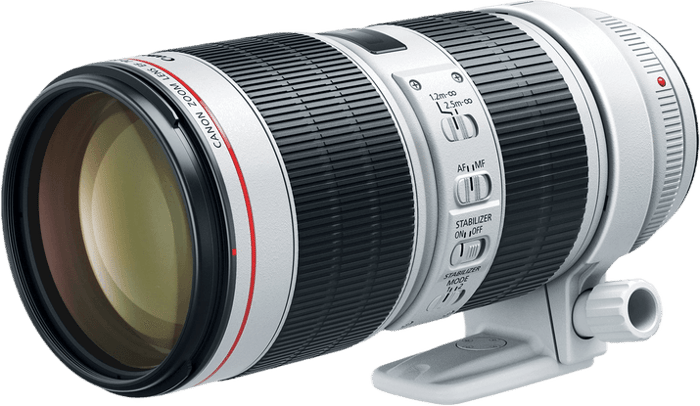
The Canon EF 70-200mm f/2.8L doesn’t have the reach of longer telephoto lenses. The 200mm focal length might be too short for some photographers. But it’s unrivaled in image quality. And features give it a broad appeal with professional photographers.
The fast f/2.8 aperture is a major selling point. You don’t often see telephoto lenses with an f/2.8 aperture. It gives you incredible low-light performance. You get fantastic exposure control. And it gives you wonderful bokeh for portrait, product, and food photography.
The image stabilization gives you 3.5 stops of shake reduction. You’ll have crisp images with pinpoint sharpness. And the USM autofocus system can handle even the fastest sporting action.
It’s a durable telephoto lens. It’s dust-resistant and weather-sealed, protected for photography in all conditions. It’s ideal for wildlife expeditions and outdoor sporting events.
Best Telephoto Lenses for Sony Cameras
Here’s the section of our list for Sony camera users.
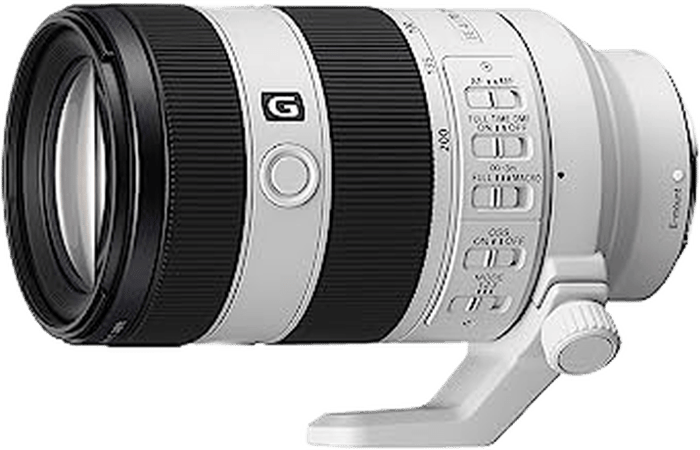
1. Sony E 70-350mm f/4 G
| Brand |
Brand
Sony
|
| Maximum Aperture |
Maximum Aperture
f/4.5-6.3
|
| Focal Range |
Focal Range
70-350mm
|
| Image Stabilization |
Image Stabilization
Yes
|
| Lens Weight |
Lens Weight
1.37 lb / 625 g
|
| Top Selling Points |
Top Selling Points
Wide zoom range with excellent quality throughout. Special glass reduces glare and flare. Excellent optical image stabilization system.
|
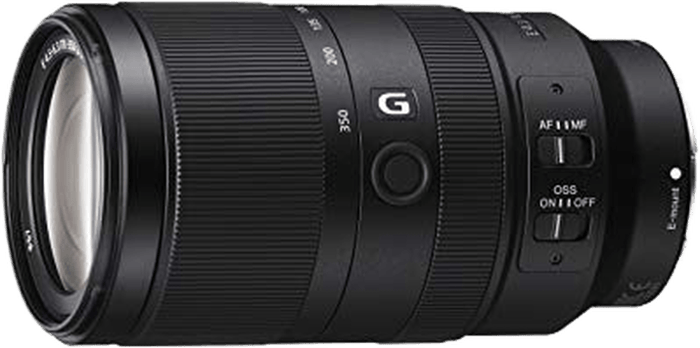
The Sony E 70-350mm f/4 G is the best telephoto lens if you have a Sony APS-C mirrorless camera. The wide zoom range gives you plenty of shot options. And the 350mm max focal length gives you enough magnification for sports and wildlife photography.
This lens gives you excellent image quality with minimal ghosting and flare. The three extra-low dispersion glass elements suppress aberration. And you can achieve a lovely bokeh effect with a shallow depth of field.
The autofocus stepping motor is fast and efficient. Tracking moving subjects is no issue. And the 3-stop optical image stabilization gives you sharper images. It also improves performance in low-light situations.
It’s weather-sealed and robust, excellent for outdoor shooting. You won’t find a better telephoto lens for your Sony APS-C mirrorless camera.
2. Sony FE 70-200mm f/4 Macro G OSS II
| Brand |
Brand
Sony
|
| Maximum Aperture |
Maximum Aperture
f/4
|
| Focal Range |
Focal Range
70-200mm
|
| Image Stabilization |
Image Stabilization
Yes
|
| Lens Weight |
Lens Weight
1.75 lb / 794 g
|
| Top Selling Points |
Top Selling Points
Constant f/4 aperture with 0.5x macro magnification throughout the zoom range.
|
The Sony FE 70-200mm f/4 Macro G OSS II is the best telephoto lens for anyone with a Sony full-frame camera. It's compact, versatile, and one of the sharpest lenses in Sony's G lineup.
An f/4 maximum aperture isn't the fastest, but it's constant throughout the zoom range, and it keeps the lens small and light at 794g (1.75 lb), easy to carry all day.
This lens has a genuine trick up its sleeve: 0.5x macro magnification at every focal length, not just at the long end. That's unusual for a zoom this size, and it opens up close-up work most 70-200mm lenses can't touch.
The autofocus is fast and near-silent, which is great for video and wildlife alike. At around $1,700, it's a premium price for a 70-200mm f/4. But the added sharpness and true macro capability make it one of the most versatile lenses in Sony's telephoto lineup.
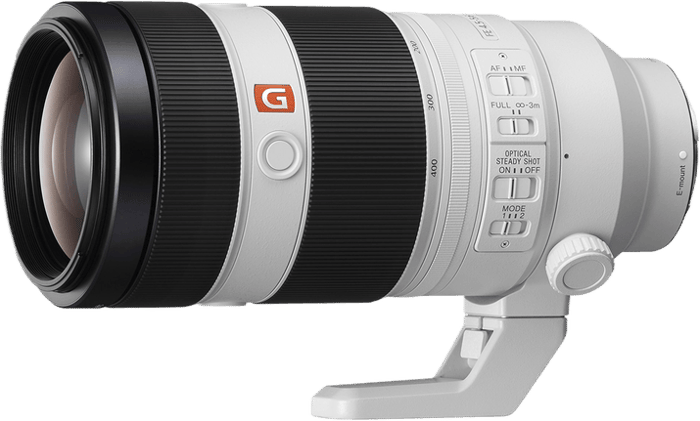
3. Sony FE 100-400mm f/4.5-5.6 G
| Brand |
Brand
Sony
|
| Maximum Aperture |
Maximum Aperture
f/4.5-5.6
|
| Focal Range |
Focal Range
100-400mm
|
| Image Stabilization |
Image Stabilization
Yes
|
| Lens Weight |
Lens Weight
3.07 lb / 1.4 kg
|
| Top Selling Points |
Top Selling Points
Powerful telephoto with excellent optical quality. Built-in stabilization and dual-motor AF.
|
The Sony FE 100-400mm f/4.5-5.6 G is the best super-telephoto lens for Sony users. It delivers professional quality in every aspect. It has top-class glass engineering. There’s minimal distortion of any kind. It has powerful magnification for sports, wildlife, and bird photography. And it has fantastic image stabilization and AF.
The lens uses Sony’s Optical SteadyShot (OSS) stabilization system. It gives you more exposure options by reducing camera shake. And it improves low-light photography.
The double linear motor DDSSM AF gives you super-quick autofocus. It’s responsive and reliable, giving you sharp images even with fast-moving subjects.
The 9-blade aperture diaphragm gives you a lovely bokeh. And it’s dust and moisture-resistant. It’s up to the challenge of the most testing sport and wildlife photoshoots.
Best Telephoto Lenses for Other Brands
This section looks at telephoto lenses for other camera brands. We have the best telephoto lens for Fujifilm, Olympus, and Pentax cameras.
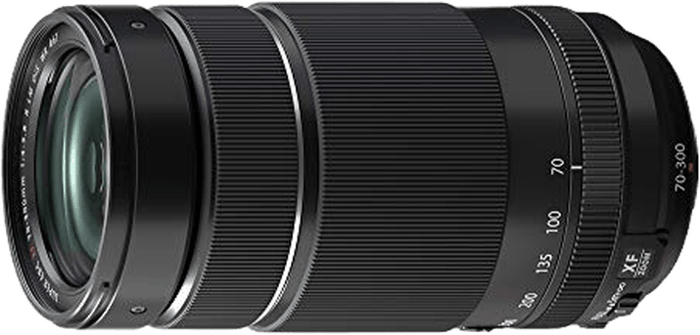
1. Fujifilm XF 70-300mm f/4-5.6
| Brand |
Brand
Fujifilm
|
| Maximum Aperture |
Maximum Aperture
f/4-5.6
|
| Focal Range |
Focal Range
70-300mm
|
| Image Stabilization |
Image Stabilization
Yes
|
| Lens Weight |
Lens Weight
1.75 lb / 795 g
|
| Top Selling Points |
Top Selling Points
Excellent build quality with powerful magnification and image stabilization.
|
The Fujifilm XF 70-300mm f/4-5.6 is a must-have telephoto lens if you’re a Fujifilm user. The wide zoom range gives you excellent versatility. And the image quality is fantastic throughout the focal length range.
Many photographers will appreciate the optical image stabilization system. It gives you five stops of shake reduction. That keeps your images crisp and clear. And it gives you more options in low-light situations.
It has a close focusing distance of 32.7 inches (83 cm) throughout the zoom range. This allows you to create tele-macro images. It’s another way to get creative with this telephoto lens.
This lens loves a challenge. It’s dust and moisture-resistant for outdoor photography. And it can operate in temperatures down to 14 °F (-10 °C). It’s ready for any photography expedition.
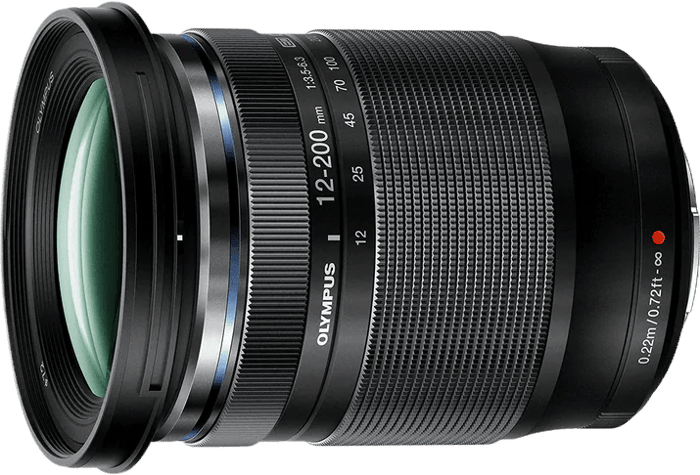
2. Olympus ED 12-200mm f/3.5-6.3
| Brand |
Brand
OM System
|
| Maximum Aperture |
Maximum Aperture
f/3.5-6.3
|
| Focal Range |
Focal Range
12-200mm
|
| Image Stabilization |
Image Stabilization
No
|
| Lens Weight |
Lens Weight
1 lb / 455 g
|
| Top Selling Points |
Top Selling Points
A versatile lens with a wide zoom range. Excellent optics and a durable design.
|
The Olympus ED 12-200mm f/3.5-6.3 is the best telephoto lens if you have an Olympus (now sold as OM System) Micro Four Thirds (MFT) camera.
A 200mm max focal length might not sound like much. But due to the smaller sensor of an MFT camera, it’s actually equivalent to 400mm on a full-frame camera. That’s incredible magnification.
There’s no built-in stabilization. But thankfully, most Olympus MFT cameras have an image stabilization system. The lens does have a reliable AF motor. And it’s weather-sealed for outdoor photography.
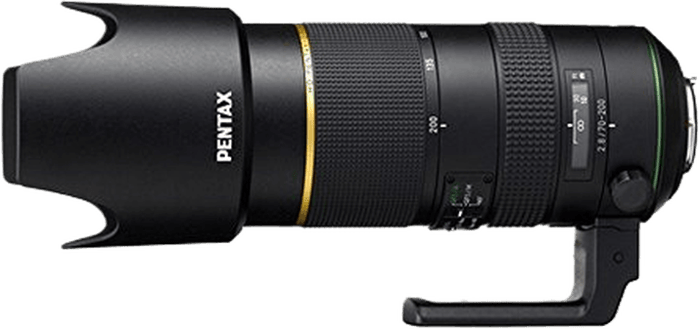
3. Pentax D FA 70-200mm f/2.8
| Brand |
Brand
Pentax
|
| Maximum Aperture |
Maximum Aperture
f/2.8
|
| Focal Range |
Focal Range
70-200mm
|
| Image Stabilization |
Image Stabilization
No
|
| Lens Weight |
Lens Weight
4.45 lb / 2 kg
|
| Top Selling Points |
Top Selling Points
Robust lens with stunning image quality. Fast max aperture for outstanding low-light performance.
|
The Pentax D FA 70-200mm f/2.8 is the best telephoto lens for Pentax photographers. The build quality is second to none. The image results will knock your socks off. And it has all the features pro photographers need to succeed.
A max f/2.8 aperture is excellent for a telephoto. It gives you fantastic low-light performance with more exposure control. And with the 9-blade aperture, you get a lovely bokeh effect.
The lens is equipped with Pentax’s shake-reduction system. It allows you to shoot at slower shutter speeds without the risk of blur. That gives you even better results in low light.
The AF motor is fast and accurate. And there’s a quick shift focus system that allows you to switch effortlessly between auto and manual focus. It’s also dustproof and weather-sealed for photography in all conditions.
© Zdenek Machacek
What is a Telephoto Lens?
A common misunderstanding is that a telephoto lens is just another name for a zoom lens. But this is not the case. A telephoto lens can have zoom capabilities, but not always.
Telephoto lenses come in zoom and prime lens form. It allows you to be more selective when deciding which lens to choose. You can consider your needs as a photographer, as well as size and cost.
A telephoto lens has a long reach. For a lens to be considered telephoto, it needs a focal length of at least 60mm. You will also find medium and super-telephoto, which will have a focal length of over 300mm.
The extended focal length brings you closer to your subject when you’re far away. This allows you to capture anything small or far away in superb detail. The telephoto lens allows you to get the composition you’re after, no matter what the distance.
A good telephoto lens will also help control your depth of field. You can increase the blurriness of your background, emphasizing your subject. It’s perfect for photographing animals in the wild or for adding power to your portraits.
© Nima Sarram
Things to Look For in a Telephoto Lens
Good telephoto lenses can be expensive. That’s why you need to think about what you need before you buy one. You don’t want to waste your money on a lens that’s ineffective in your field of photography.
Is Your Camera Compatible With the Telephoto Lens?
The first thing to consider is the camera you have. You will need a lens that is compatible with the brand and camera model. Do you have a camera with an APS-C or full-frame sensor?
There are lenses designed specifically for full-frame cameras. But generally, you can also use full-frame lenses with crop sensor cameras. This can boost the effective focal length of the lens, increasing zoom capabilities.
Using a full-frame lens with an APS-C camera will crop your final images. But the image quality is at its best in the center of the frame, so the tighter composition can be beneficial. You won’t experience any vignetting towards the edges.
There are also lenses for APS-C cameras. They tend to be smaller and lighter than the full-frame options. But you can’t use an APS-C lens with a full-frame camera.
Check if Your Camera has Image Stabilization
Lenses can be heavy and hard to handle. If you’re not using a tripod, keeping everything steady can be difficult. At that magnitude, the slightest movement can affect the final image.
That’s why built-in image stabilization systems can be so important. They will counteract any vibration or shake, solving the problem “in-camera.” This can save you a lot of work in post-processing.
Some full-frame cameras have stabilization systems. If so, having one in the lens is less important. But if you do have both, you can be assured of a sharp and precise final image.
Look for a Telephoto Lens With Autofocus
All modern digital cameras have top-quality autofocus systems. But focusing is more complicated when a telephoto lens is involved. That’s why it’s good to look for a lens with a built-in autofocus feature.
In-lens autofocus features run on either a supersonic or ultrasonic motor. They will assist you in getting a fast and sharp focus on your subject. And most modern systems are entirely silent. This is a benefit if shooting sport or wildlife photography.
Some include a focus limiter. This feature allows you to tell the camera to only focus within a certain range of distance. The lens won’t have to search the entire frame for the subject, which saves time.

© Jonathan Mabey
Conclusion: The Best Telephoto Lens
A telephoto lens changes the possibilities of your photography. It redefines the limitations. You can capture sporting action on the pitch from the sidelines. And you can capture incredible wildlife photography without leaving your hide.
The Nikon Z DX 50-250mm f/4.5-6.3 is our top telephoto lens. It’s the perfect combo of quality and value. The Canon RF-S 55-210mm f/5-7.1 is our favorite Canon choice. And Sony users need the E 70-350mm f/4 G. We’ve also included options for Fujifilm, Olympus, and Pentax.