Assembling the best sports photography equipment kit can be challenging when shooting sports photos. This is because there are so many different environments to deal with.
Gear is not usually a one-size-fits-all scenario. A lens that may be ideal for one situation won’t be the best choice for sports. A tripod is best for product photography but would be cumbersome for event photography. So, what about sports photography?
We cover the basic gear you need and the best sports photography accessories. Read on to find out more!
Our Top Choices for a Versatile Sports Photography Camera Kit
Best Sports Photography Equipment
Capturing dynamic sports photos demands top-notch sports photography equipment. We list cameras with excellent autofocus, precision-engineered lenses, and the best accessories. Here’s a guide to assembling the ultimate toolkit for beginners, enthusiasts, and professionals:
- Best cameras
- Best lenses
- Essential accessories
(Stock)
Best Sports Photography Cameras
Nikon and Canon used to be the top choice in cameras for sports photography. Their flagship full-frame cameras were popular for a reason. They had the fastest auto-tracking and continuous shooting features available on the market.
But this has changed with some of the best mirrorless and Micro Four Thirds cameras that have come out. DSLRs used to dominate the world of sports, but that is no longer the case.
No matter the brand, sports camera bodies need certain features. These include high-ISO performance, autofocus tracking, and continuous shooting. The bigger decision is whether you want a cropped or full-frame sensor.
APS-C cameras with cropped sensors are less expensive. This is because they’re cheaper for camera manufacturers to make. If you’re starting, this is likely a better choice for your budget.
Another advantage of this sensor size is that the crop factor makes the lens “longer” than on a full-frame camera body. This gives you extra “reach” or a wider field of view. But remember that full-frame cameras are more robust and give you better performance.
Check out our full article on the best cameras for sports photography. Otherwise, here are our top three choices for sports photography cameras.


Our Top 3 Sports Photography Cameras
The OM System OM-1 Mark II has a Micro Four Thirds stacked sensor that delivers 20.4 MP resolution, and the stacked readout supports 120fps RAW bursts with a 213-frame buffer, so a long celebration doesn’t fill the buffer mid-play.
In-body stabilization is rated at 8.5 stops, and its AI subject detection tracks birds, vehicles, and people even when they’re moving straight at the camera. That kind of tracking matters more on a sideline than a spec-sheet resolution bump.
Its IP53-rated weather sealing handles rain delays and dusty infields without a cover. At 20.4 MP, it won’t out-resolve a full-frame body for huge prints, but for stopping fast action in a compact, weather-sealed body, it’s our top choice for sports photography.
The Nikon Z50 II is an ideal choice for beginner sports photographers. Its compact design and lightweight build make it travel-friendly, and it borrows its autofocus from Nikon’s flagship Z9/Z8 line: 209 points with subject detection across nine categories, including people, animals, and vehicles.
Continuous shooting holds at 11 fps, with a 30 fps pre-release capture mode for JPEGs that grabs frames from just before you press the shutter. The EXPEED 7 processor also brings 4K/60p 10-bit video at a price well below the flagship bodies it borrows autofocus from.
Battery life is the real trade-off: about 230 shots per charge, so carry a spare for a full day of games. It has no in-body stabilization either, relying on lens-based VR instead. For a first sports camera on a budget, it’s still the easiest way in.
| Brand |
Brand
Canon
|
| Megapixels |
Megapixels
33 MP
|
| Fps |
Fps
15 fps
|
| Autofocus Points |
Autofocus Points
651
|
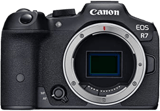
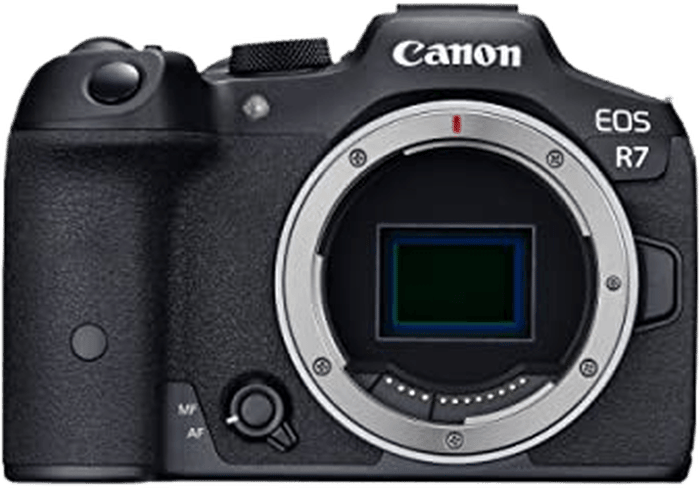
The Canon EOS R7 has a 32.5 MP APS-C sensor (not full-frame, but the crop factor gives you extra reach with the same lens), which is a real advantage when you can’t get close to the field. The Dual-Pixel CMOS AF system with 651 focus points effortlessly tracks fast-moving subjects. It’s aided by head, face, and eye detection, plus animal eye-detect AF if you shoot pets or wildlife between games.
No moment is missed with a mechanical shutter providing a 15 fps burst rate and an electronic shutter offering 30 fps. Video capabilities include 4K resolution at 60 fps, with five-axis image stabilization. This ensures smooth footage, even handheld, with this Canon camera.
Best Sports Photography Lenses
Lenses should take up most of your budget no matter what photography genre you shoot. Sports photography requires high-quality, fast glass. The challenge is deciding whether to go with a zoom or prime lens.
A prime lens is undoubtedly your best option for getting tack-sharp pictures. This is especially important when shooting sports. You’ll often be far from your subjects, which will be moving. You don’t get a second chance to re-shoot a blurry photo!
You might want to carry a prime and a zoom lens to games. Many pro sports photographers shoot with two cameras because there’s no time to switch lenses.
If you’re starting with sports photography, you might have only one camera and one lens. In that case, you must decide which is best for the sports you will likely shoot.
Prime lenses are sharper than zoom lenses. They don’t have moving parts that contribute to lens diffraction. The aperture is also fixed, so shoot sharp action images in less-than-ideal lighting conditions.
The drawback is that prime lenses are not as flexible. They can hamper your ability to get the shot if you are too close or far from the action. Even if you move around, the action might be much wider and faster than you manage to capture.
Zoom lenses let you get closer or wider, making your job much easier. But this feature may cause you to lose sharpness.
That being said, some zoom lenses are pretty sharp, regardless. For example, I find the Canon EF 24-70mm f/2.8 quite sharp. If you have a cropped sensor, this would be a good option for indoor sports where you can get close to the action.
You can read our full article on the best lenses for sports photography. Otherwise, we cover our top three choices below.
Top 3 Sports Photography Lenses
| Brand |
Brand
Canon
|
| Focal Range |
Focal Range
70-200
|
| Max Aperture Wide |
Max Aperture Wide
2.8
|
| Lens Mount |
Lens Mount
Canon RF
|
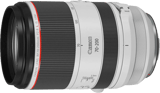
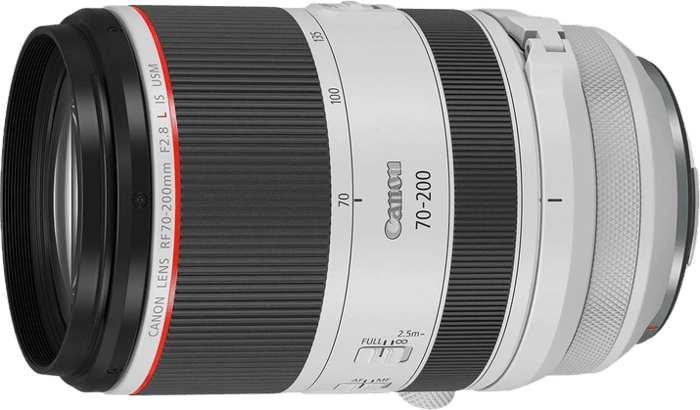
The Canon RF 70-200mm f/2.8L IS USM is our top pick for the R7 and every current Canon mirrorless body, all of which use the RF mount. It has the same f/2.8 aperture and 70-200mm range as the older EF version, but it mounts natively, with no adapter and no adapter tax on autofocus speed.
Exceptional build quality includes weather sealing and fluorine coating on the front element. Optical image stabilization is rated at 5.0 stops, and the Ultrasonic Motor keeps autofocus quick and quiet, useful when you don’t want to be heard on the sideline.
If you’re still shooting Canon EF glass on a DSLR, the older EF 70-200mm f/2.8L IS III remains a fine lens. But for a mirrorless kit built around the R7 or another RF body, this is the version to buy: it captures wide environmental shots at 70mm and close-up action at 200mm without an adapter in the way.
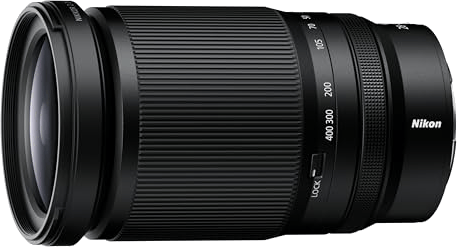
The Nikon Z 28-400mm f/4-8 VR is Nikon’s one-lens answer for sports on any Z-mount body, including the Z50 II above. No adapter needed. Its 14.3x zoom runs from wide 28mm environmental shots to a 400mm reach that picks out faces across the field. On the Z50 II’s APS-C sensor, it frames like a 42-600mm lens.
Built-in Vibration Reduction rated at 5 stops keeps handheld shots sharp at the long end. And at 725 g (1.6 lb), it’s remarkably light for this much reach. The trade-off is the aperture: it narrows to f/8 from 190mm onward, so floodlit night games will push your ISO up. For daytime sports, it’s no problem at all.
Still shooting a Nikon DSLR like the D500 or D7500? The AF-S DX 18-300mm f/3.5-6.3 VR remains the classic one-lens choice for F-mount APS-C bodies.
| Brand |
Brand
OM System
|
| Focal Range |
Focal Range
12-200
|
| Max Aperture Wide |
Max Aperture Wide
3.5
|
| Lens Mount |
Lens Mount
Micro Four Thirds
|
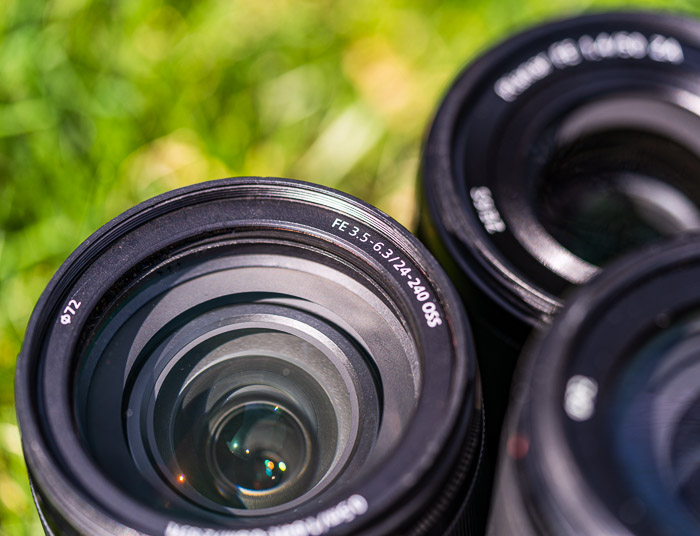
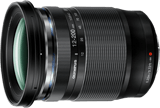
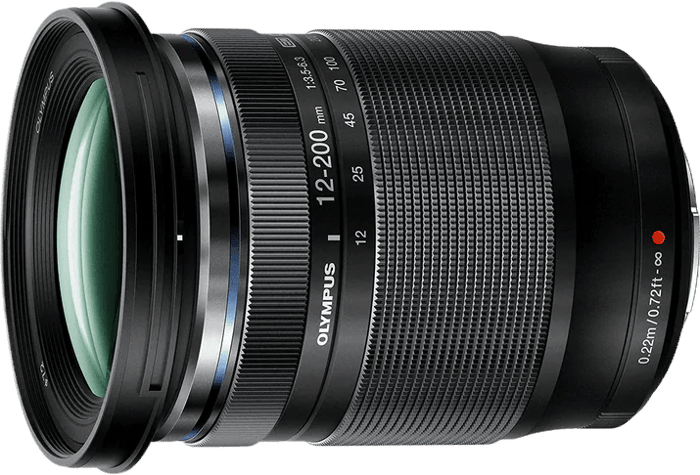
The Olympus ED 12-200mm f/3.5-6.3 lens is perfect for sports photography with Micro Four Thirds (MFT) cameras. Its versatile focal length range is equal to 400mm on full-frame, providing even greater magnification.
With a wide 12mm angle, it’s also great for portraits. While image stabilization is lacking in the lens itself, MFT cameras like the OM System OM-1 Mark II compensate for this with in-body stabilization.
Best Sports Photography Accessories
Some accessories are necessary when shooting sports photography. These include having several memory cards and a lens cleaning kit. Others will make your shooting sports photography easier.
Rain Covers
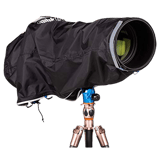
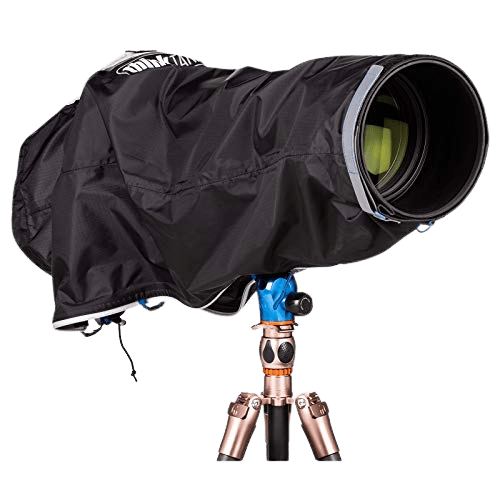
You often can’t avoid being in the rain for outdoor sporting events, so make sure you’re prepared. Cover yourself and your camera well. Check out the rain covers from Think Tank, such as the Emergency Rain Cover. Another great option is a rain cover from LensCoat.
Camera Backpack
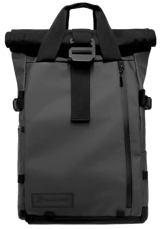
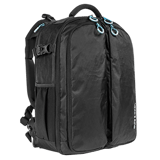
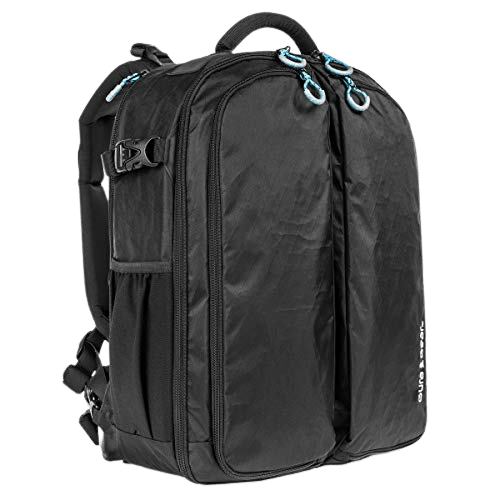
A good-quality backpack is worth its weight in gold. Check out the water-resistant Gura Gear Kiboko V2.0 that can house large cameras and lenses. You can also consider the Wandrd Prvke line of 21, 31, and 41L options and the Think Tank Airport Essentials Backpack.
Monopod or Tripod
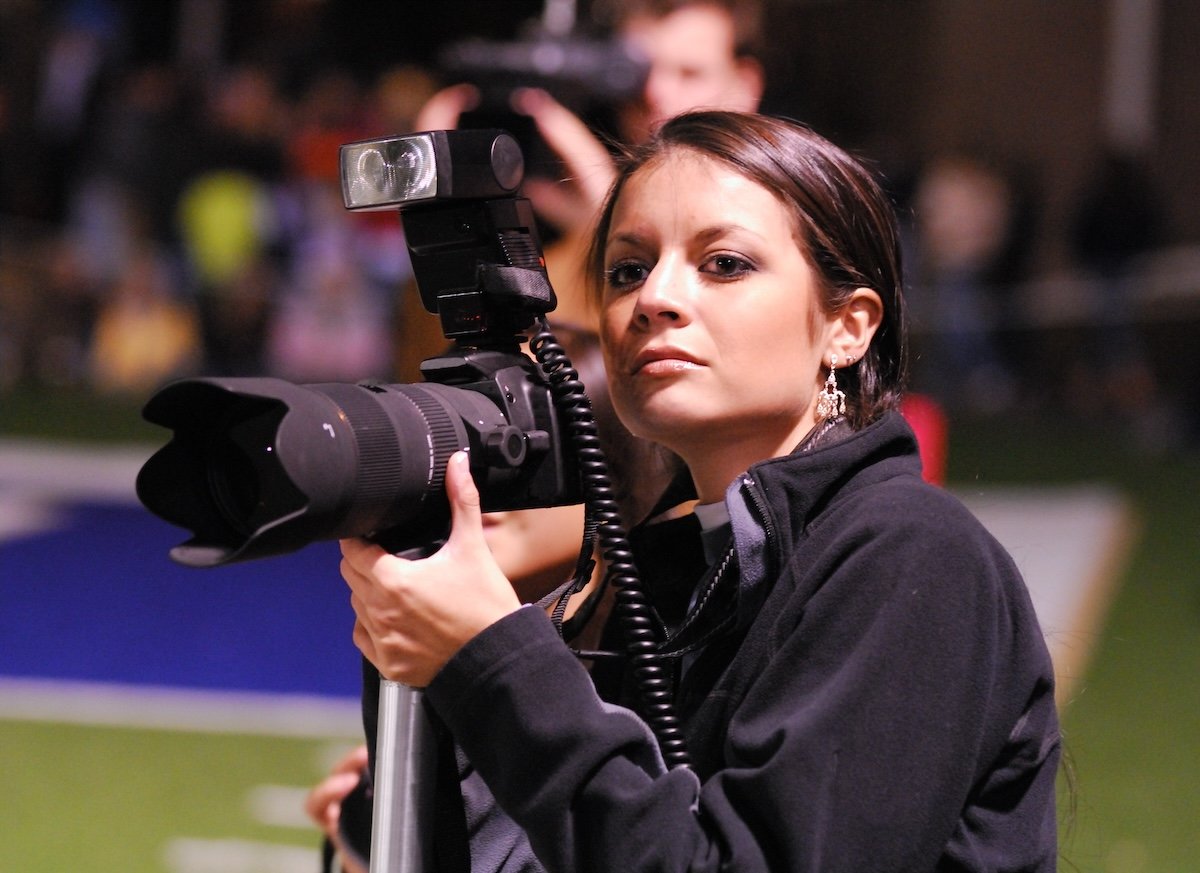
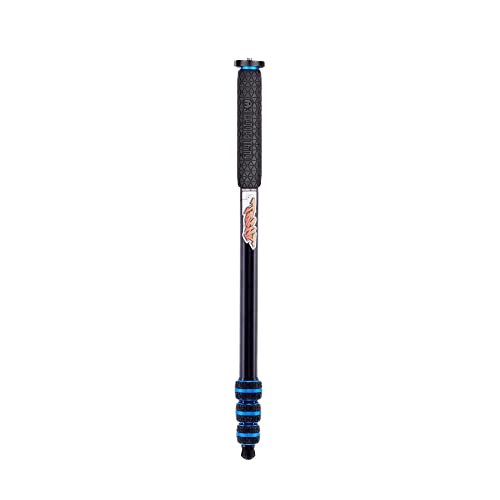
A tripod can be awkward and is often prohibited in many sporting venues. A monopod can give you a third point of stabilization. It helps you hit those slower shutter speeds without being cumbersome.
3 Legged Thing is a brand that delivers high quality for a relatively affordable price. Check out the 3 Legged Thing Trent 2.0 Monopod. It’s a bargain and hard to beat. If you’d rather have a carbon-fiber monopod, 3 Legged Thing’s Legends Alana is a similarly compact travel monopod for a bit more money.
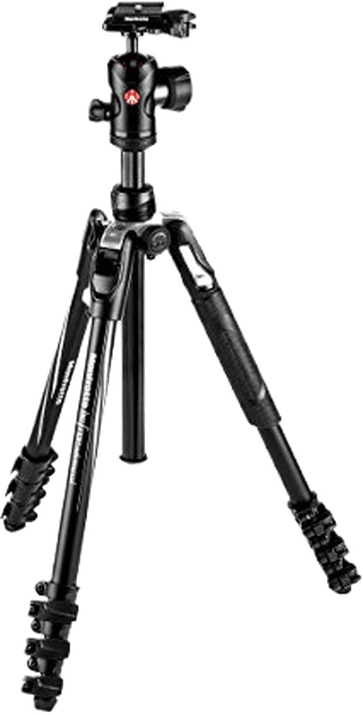
We recommend the Manfrotto Befree Advanced if you’re considering buying a tripod. For more options, read our full article on the best tripods for photographers.
The Best Sports Photography Accessories
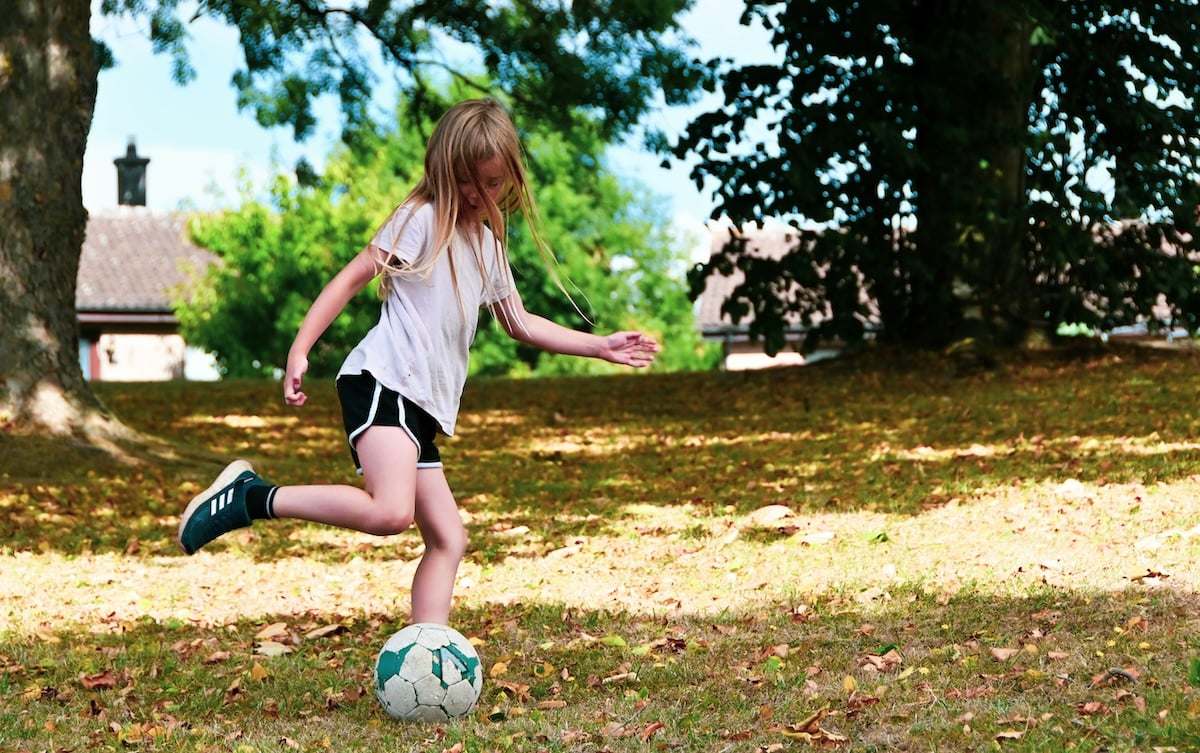
Shot with a Nikon Z50. 90mm, f/6.3, 1/2,500 s, ISO 630. Nik (Unsplash)
Conclusion: Best Sports Photography Equipment
No matter your budget, many sports photography camera bodies, lenses, and accessories options exist. The best sports photography equipment can help you get great images.
But it’s more about understanding the sport you’re shooting and your camera settings for sports photography. Know how to get the most out of your sports photography accessories in various circumstances.