

The Leica 0-series No. 105 is the camera behind Leica's documented 2022 world auction record. It belonged to Oskar Barnack, the designer of the Leica. The No. 122 pictured below held an earlier record, set in 2018.
That is a collector's story. When you choose a mirrorless camera for photography, you are comparing equipment built for a job. At auction, buyers can also be paying for rarity, original condition and a particular camera's history.
This collection brings together early cameras, unusual luxury objects and high-end digital equipment. The numbered entries are a tour of those different categories, rather than a current price ranking. The digital models are historical examples; their inclusion does not establish current production or availability.
1. Leica 0-Series No. 105
The Leica 0-series No. 105 belonged to Oskar Barnack, who designed the Leica. His name is engraved on top of its viewfinder. Leica's auction announcement records its sale at the 40th Leitz Photographica Auction in Wetzlar on 11 June 2022.
That sale set a world record at the time. Barnack used the camera to photograph his family and used that experience to develop later models. Its connection to the camera's designer is part of its historical value.
2. Leica 0-Series No. 122
The Leica 0-series No. 122 is a 1923 prototype with an important place in camera-auction history. Its sale at the 32nd WestLicht auction in 2018 set a world record at the time. Leica's 2022 auction announcement documents how No. 105 later surpassed it.
The auction catalogue for No. 122 describes original paintwork, a matching lens cover and an original folding finder. Its rarity and condition explain the collector interest. The catalogue's reference to roughly three surviving examples concerns cameras with the original folding viewfinder; it does not mean that only three 0-series cameras survived.
The number matters here. No. 122 and No. 105 are different physical cameras from the same prototype series.

3. Giroux Daguerreotype
The wooden camera pictured here is a Giroux daguerreotype camera. The Giroux auction catalogue dates its manufacture to 1839 and records its sale at the 17th WestLicht auction.
Its identifying feature is the oval label with Daguerre's signature and the Giroux seal. The catalogue describes a cedar-wood body with a walnut section around the lens.
Its value comes from its place in the first generation of commercially produced cameras. The signed label and maker's seal help establish which workshop made this particular example.

4. Gold-Plated Leica Luxus II
The Leica Luxus II shows how craftsmanship and rarity can turn a working camera into a collector's piece. Bonhams' record for the 1932 example identifies it as serial No. 88840 and records its Hong Kong sale on 22 November 2013.
Bonhams cites factory records for four Luxus Leica II cameras. Its lot description lists a faux-lizard body covering and a crocodile camera case. The body covering and carrying case are different materials.
It is the combination of the specific model, original details and documented rarity that makes this camera interesting. A gold finish alone does not establish comparable collector value.

5. Hasselblad Space Camera
A camera's history can matter more than its specifications. Hasselblad's connection with space photography began with Walter “Wally” Schirra and the Mercury program in 1962.
Schirra was an amateur photographer who owned a Hasselblad 500C. For the mission, the camera was modified to reduce weight and reflections.
RR Auction's lot record identifies a flown 500C body by serial number TV 45279 and explains the evidence connecting it to Mercury-Atlas 8. It also identifies the Zeiss lens and a magazine associated with Mercury-Atlas 9. That documented flight history is what separates this assemblage from an ordinary Hasselblad 500C.

6. Hasselblad H6D-400c MS
Hasselblad is one of the famous camera manufacturers associated with medium format photography.
The Hasselblad H6D-400c MS belongs to a different category: a digital medium format camera designed for highly detailed work. Its 400MP output comes from a sequence of exposures, rather than a 400MP sensor.
Hasselblad's Multi-Shot explanation describes six captures with precise sensor movements. The images are combined in Phocus to produce the 400MP result. Single-shot and four-shot modes produce 100MP images.
Multi-Shot requires a static subject, a controlled environment and a connection to a computer. Those conditions suit art reproduction and other carefully controlled studio work; they limit its usefulness for moving subjects.

7. Diamond Canon IXUS
The Diamond Canon IXUS is a luxury special edition of a compact digital camera. Its appeal lies in the jewellery added to the camera, rather than a leap in photographic performance.
Canon's September 2006 announcement described a Super Diamond IXUS decorated with 380 diamonds and nine additional diamond IXUS cameras. The collection marked ten years of the IXUS range, which began with an APS film camera in 1996. The planned charity auctions were to benefit the Red Cross.
The announcement describes an estimated value and an auction plan. Those are different from a confirmed sale result, so they cannot establish a record for the most expensive Canon camera ever sold.

8. Phase One XF IQ3 Digital Back
The IQ3 is a digital back used within Phase One's modular XF camera system. A back holds the imaging sensor; it is one component of the system, alongside the body, viewfinder and lens.
Phase One's 2015 launch announcement introduced 80MP, 60MP and 50MP IQ3 backs. It described the 80MP version as capable of a still exposure lasting up to 60 minutes. That is a long-exposure specification, not a continuous-video recording limit.
When comparing high-end systems, keep the configuration clear. A digital back and a complete camera kit contain different equipment. Resolution and dynamic range also describe different aspects of image quality.

9. Mamiya Leaf Credo 80 Digital Back
Mamiya is known for its medium format cameras. The Credo 80 illustrates the digital-back approach to this format.
The manufacturer's Credo brochure specifies an 80MP CCD sensor measuring 53.7 × 40.3 mm. The back records the image, while a compatible camera body and lens complete the system.
Its high resolution can be useful for work that needs fine detail. Before using an older digital back, establish the exact mount and the software needed to process its files. A shared model name does not mean every version fits the same camera.

10. Leica S (Typ 007)
The Leica S (Typ 007) is a medium format DSLR. Leica's technical sheet specifies a 30 × 45 mm CMOS sensor with 37.5MP resolution and no low-pass filter.
That camera sensor size is larger than 35mm full frame. Calling the S a full-frame DSLR would place it in the wrong category.
The model combines an SLR design with Leica's S-system lenses. It is a historical example of a high-end digital camera. Its sensor format and lens system are the useful distinctions when comparing it with other DSLRs.

11. Doryu 2-16
The Doryu 2-16 is one of the strangest cameras in this collection. Its pistol-shaped design makes it a distinctive collectible even without a world-record auction claim.
The Leitz auction catalogue dates its example to around 1955. It describes 16mm film, 10 × 10 mm exposures and a bullet-shaped flash cartridge.
The small exposure area and unusual flash system make it an interesting piece of camera design. For collectors, the particular example's condition is part of the appeal.

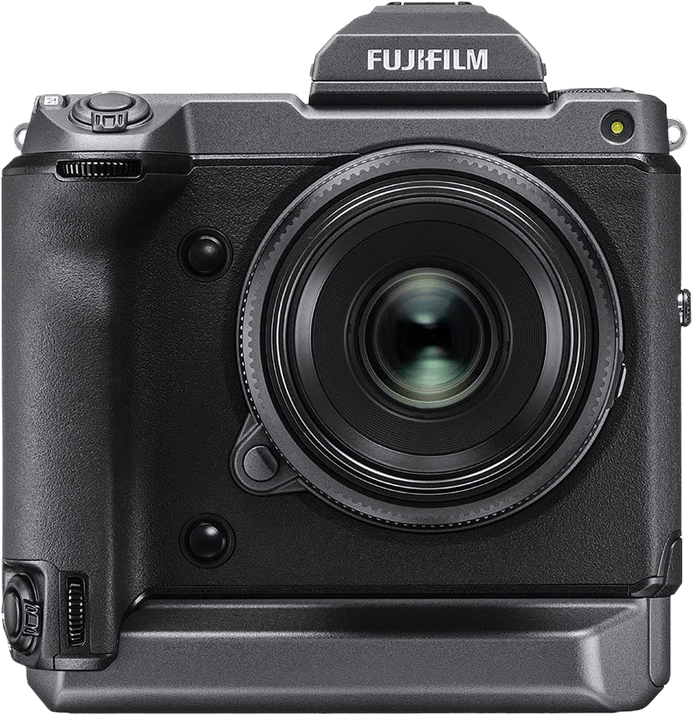
12. Fujifilm GFX 100
The Fujifilm GFX 100 is a commercially manufactured digital camera, rather than a unique auction collectible. Fujifilm introduced this original model in 2019.
Its official specifications list approximately 102 million effective pixels and a 43.8 × 32.9 mm sensor. It is a mirrorless camera with a Fujifilm G lens mount.
For a commercial photographer, that resolution can serve a specific production need. It does not make the GFX 100 the world's most expensive camera. This original model also should not be confused with the separately named GFX100 II or GFX100S II.

Conclusion
The most expensive cameras tell two different stories. A rare prototype or a space-flown camera can attract collectors because of its history. A high-end digital camera is a tool whose value comes from what it helps a photographer produce.
Choose equipment around the pictures you need to make. Creating works of art does not require an auction record. For a practical comparison of the format used by several digital models here, see our guide to medium format and full-frame cameras.
Want to find out how you can make money from photography? Why not check out our ebook Profit from Portraits next!
Looking for more ideas on what the best cameras are? Check out our post on The Best Compact Cameras next!