Street fashion photographers show how clothes look in motion, on real streets and on the people who wear them. Their work ranges from candid outfits outside fashion shows to planned portraits that use the city as a backdrop.
These 12 photographers offer different ways to approach the genre. Browse their portfolios for streetwear, fashion-week moments and location ideas, then study the archives of Bill Cunningham and Frank Horvat to see how earlier photographers used the street. The selection covers different approaches to making fashion pictures in public places.
You can also see our article on the Best Fashion Photographers for a broader look at fashion imagery.

© Joshua Woods
What Is Street Fashion Photography?
Street fashion photography puts clothing and personal style in an everyday setting. It brings the styling of fashion photography together with the places, movement and chance encounters of street photography.
There are two overlapping approaches. A photographer might spot an outfit and make a candid or briefly posed portrait. Or they might plan a fashion shoot with models, clothes and a location chosen in advance. A street setting does not automatically make a picture candid.
Street style is also broader than streetwear. A photograph of a tailored suit outside a fashion show can be street style, just as a portrait built around trainers and a tracksuit can be. The clothes do not have to carry a luxury label.
As you browse the examples, look beyond the outfit. Notice how the photographer uses the background, catches a gesture or gives the subject room to move. Those choices turn a record of clothes into a photograph with character.
© Phil Oh
12 Street Fashion Photographers to Follow and Study
This selection includes fashion-week observers, photographers who make planned location shoots and two historical figures whose archives are still worth studying. The approaches overlap, so use the pictures to find the kind of street fashion photography you want to make.
Joshua Woods
Harlem-born Joshua Woods brings people and place into his fashion work. His own biography describes a practice rooted in Black life, culture and memory, with a long-term project in Harlem. That connection to New York gives you more to explore than an outfit alone.
Woods has made work for Gucci, Chanel and Wales Bonner, alongside personal projects. His work as a film photographer includes the Dakar series, photographed with a Pentax 6×7.
When you browse his portraits, look at the relationship between the person, their clothes and their surroundings. The clothes become part of a portrait of someone's life and community.
Joshua Woods: Website | Instagram


Cass Bird
Cass Bird brings humour and spontaneity to fashion photography. Her agency lists clients including Chanel, Dior and Kith, but the appeal of her pictures is how much personality comes through. A smile, an awkward pose or an unexpected location can carry the image.
Locations help her build memorable editorials and campaigns. Her work is also a good place to study the environmental portrait: the setting contributes to the picture instead of serving as an empty backdrop.
For a more personal side of her work, look at her book Rewilding, made with women at a Tennessee artists' colony. Carry that attention to relationships and gesture into your own planned portraits.
Cass Bird: Website | Instagram


Bill Cunningham
Bill Cunningham documented street fashion for The New York Times over decades. He died in 2016; explore his archive for a long view of street style.
His photographs connect clothes with the people and culture around them. The collection Bill Cunningham: On the Street brings together work from the 1970s through 2016, showing how everyday style changed over time.
Look through a sequence of his pictures rather than stopping at one outfit. Compare repeated colours, shapes or accessories. It is a way to train your eye to notice patterns in what people wear.
Bill Cunningham: Website | Instagram


Yvan Rodic
Yvan Rodic is the photographer behind Facehunter. His publisher dates the blog's launch to 2006, after he began photographing people who caught his eye at parties in Paris.
Facehunter is a starting point for exploring street style across places and cultures. The interest lies in the person wearing the clothes as much as the clothes themselves.
Compare how different subjects put an outfit together, then look at their expression and posture. For your own portraits, try to show what makes that person's style individual instead of treating them as a stand-in for a trend.
Yvan Rodic: Instagram


Frank Horvat
Frank Horvat was making fashion photographs outside the studio in the 1950s. His archive connects fashion with the observational approach of reportage, bringing models into public places and everyday situations.
Horvat died in 2020. His photographs remain worth studying for the way a controlled fashion image can still have the energy of a street scene.
Look at where the model sits within the whole frame. Ask how the clothes relate to nearby people, architecture and light. For a planned location shoot, that is a more productive question than simply finding an attractive wall.
Frank Horvat: Website | Instagram


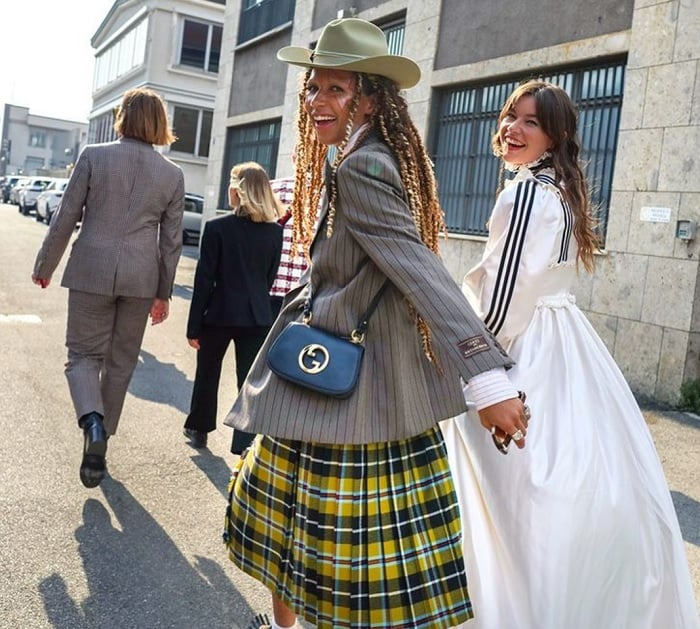
Phil Oh
Phil Oh, known as Mr Street Peeper, photographs street style for Vogue. His published galleries follow the people and outfits around fashion shows.
The appeal is the sense of being there: an expression, a conversation or a passing moment can matter as much as a carefully arranged pose.
When studying his coverage, compare pictures of a single person with images that include companions or the surrounding crowd. Think about what each frame tells you about the scene, as well as the outfit.


Isha Shah
Isha Shah's portfolio spans music, portraits and brand work. Her background as a music photographer sits alongside projects for Adidas, Nike, Puma and Converse.
Her Adidas London work connects sportswear with London settings. The city can help tell a fashion story through its everyday spaces, not only its famous landmarks.
For a streetwear portrait, consider how the subject's pose and the space around them work together, then choose a setting that suits the clothes and the person.
Isha Shah: Website | Instagram


Caroline Blomst
Caroline Blomst is associated with Caroline's Mode and Stockholm Streetstyle, which she ran with Daniel Troyse. Her fashion publishing brings outfit inspiration and street style together.
For photographers, this is a place to think about how to make a complete outfit easy to read. Look at the balance between the clothes, the person's stance and the amount of background in the frame.
You do not need to chase the busiest location. A simple street portrait can give the viewer room to notice a coat's shape, a colour combination or the way someone wears an accessory.
Caroline Blomst: Website | Instagram


Adam Katz Sinding
Adam Katz Sinding's work goes beyond a catalogue of outfits. His portfolio includes street style, backstage photography, campaigns and editorials, while his Context project pairs portraits with written stories.
Study the surrounding activity with the curiosity of a photojournalist. What is happening between the posed moments? What does an expression or an interaction tell you about the person?
His first book, This Is Not A F*cking Street Style Book, was published in 2018. The title is a useful prompt to look beyond labels and notice what else a fashion photograph can communicate.
Adam Katz Sinding: Website | Instagram


Tim Regas
Tim Regas has photographed street style as well as runway shows. California Apparel News credits him with coverage from Paris couture week, including photographs made outside the shows.
Look through those street photographs alongside his runway work. Consider how moving outside changes the space around an outfit and the choices a photographer has to make.
For your own pictures, watch the edges of the frame as carefully as the clothes. A slight change in where you stand can keep a sign, post or passing person from distracting from your subject.
Tim Regas: Instagram


Tommy Ton
Tommy Ton is known for photographing fashion away from the runway. In a Style.com behind-the-scenes film, he describes moving away from trying to stop everyone for head-to-toe pictures and developing a more documentary approach.
That makes his work worth studying for timing. People are moving between places, and the photograph can come from noticing a gesture or an interaction as it happens.
As you browse, compare the effect of a full outfit with a closer view. Decide what drew you to the subject before choosing your framing. Sometimes the detail that caught your eye deserves the most space in the picture.
Tommy Ton: Instagram


Scott Schuman
Scott Schuman launched The Sartorialist in 2005 to photograph personal style on the street. His work connects fashion with everyday life, giving individual people and the way they wear clothes a central role.
His books offer another way to explore the photographs, including The Sartorialist, The Sartorialist: Closer and The Sartorialist: X. Viewing pictures in a sequence can reveal relationships that are easy to miss in a social feed.
For a direct street portrait, notice posture, proportions and the relationship between the outfit and its surroundings. Think about how much a person can communicate through the way they stand and wear their clothes.
Scott Schuman: Instagram


Conclusion
These street fashion photographers show several ways to use the city: as a backdrop for a planned shoot, a place to meet people or a scene full of passing moments. Start with the work that matches the photographs you want to make, then compare it with an approach that feels different.
Some fashion photographers put their models in urban environments, while others find their subjects on the street. If you are planning your own shoot, study how the location, pose and clothes work together. If you are making spontaneous portraits, practise noticing an outfit and finding a frame before the moment passes.
Pick one thing to practise on your next outing: a simpler background, a stronger gesture or a closer view of a detail. You will learn more from making that choice than from trying to copy an entire portfolio.