Photographers never want to miss a moment. We want to capture everything we can. But sometimes, it can feel like you’re carrying a whole photography studio around with you.
Sometimes you just want to have fun without having a heavy camera around your neck. You want something compact and easy to carry. That used to mean having to compromise. But not anymore.
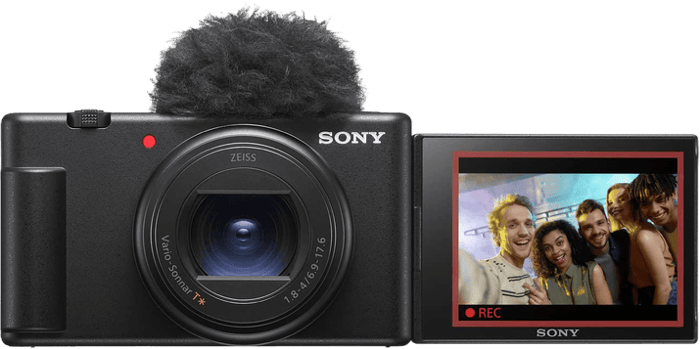
There are some excellent pocket-sized cameras on the market right now. Our top pick is the Sony ZV-1 Mark II. It’s everything you expect from a compact camera and more. It captures beautiful still images, but it’s also the perfect vlogging camera with 4K video recording.
What Is the Best Compact Camera?
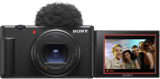
The best compact camera overall is the Sony ZV-1 Mark II. It pairs a 1-inch sensor and Zeiss lens with 4K video, a flip screen, and pocket-sized handling. That makes it the strongest all-rounder on this list for stills and vlogging alike.
Beyond that top pick, the right compact comes down to which compromise you are happy to make. Sensor size buys image quality but costs you bulk. The APS-C Fujifilm X100VI and Ricoh GR IV give you the cleanest files, while the 1-inch Sony bodies and the smaller-sensor Panasonic and Kodak stay cheaper and lighter.
Zoom range works the other way around. The Panasonic Lumix FZ80D reaches an equivalent 1200mm but weighs 616 g, and the Ricoh GR IV has no zoom at all and vanishes into a pocket at 262 g. And if you point the camera at yourself more often than away from it, the Canon PowerShot V1 and the two Sony ZV bodies are built for that job. The Fujifilm and the Ricoh are not.
All the cameras on this list show why point-and-shoot cameras are still better than smartphones. As you’ll see, they have better specs for both photography and videography. Even social media content creators are better off with a good compact camera.
They also make simple and easy-to-use alternatives to DSLR and mirrorless cameras. They’re cheaper, more compact, and you can start taking pictures straight away. You don’t need to spend hours reading the manual or watching tutorials.
We’ll explain in more detail why we’ve chosen each compact camera. But first, here is a summary of all our picks.

7 Best Compact Cameras
Now we look at the best compact cameras in more detail. We’ve included a wide range of cameras, so everyone can find exactly what they’re looking for.
1. Sony ZV-1 Mark II
| Brand |
Brand
Sony
|
| Sensor Format |
Sensor Format
1"
|
| Megapixels |
Megapixels
20 MP
|
| In Body Stabilisation |
In Body Stabilisation
No
|
| Autofocus Points |
Autofocus Points
315
|
| Miniso |
Miniso
ISO 125
|
| Maxiso |
Maxiso
ISO 12800
|
| Fps |
Fps
24 fps
|
| Video |
Video
Yes
|
| Screen Size |
Screen Size
3 in
|
| Weight |
Weight
292 g
|
| Size |
Size
106 x 60 x 47 mm
|
| Best For |
Best For
Anyone looking for a high-quality yet simple compact camera
|
If you want a compact camera that does pretty much everything, and does it pretty darn well, then you need to look at the Sony ZV-1 II.
It’s the perfect example of good things coming in small packages, being small enough to carry in your pocket. But despite the compact size, the ZV-1 II delivers on all metrics.
A 1-inch sensor produces stunning 20 MP images. That’s far better than most smartphone cameras, with vibrant colors and sharp details.
It also has a fixed Zeiss lens with fabulous optical quality. The zoom has an 18-50mm focal length range, so it starts far wider than most compacts. That extra width is what makes it comfortable at arm’s length, and it still pulls in enough for a head-and-shoulders portrait at the long end.
While the photography specs are excellent, the ZV-1 II’s popularity is in large part down to the video specs. After all, not many pocket-sized cameras give you high-res 4K video recording.
A rotating LCD screen, built-in microphone, and front record light make it a vlogger’s dream camera. The eye-lock autofocus also ensures you’re always in perfect focus, even if you’re moving around.
There is no viewfinder and no in-body image stabilization, so you frame on the rear screen and lean on the lens and a steady grip for handheld video. And a 1-inch sensor cannot match the APS-C cameras below in low light. If image quality matters more to you than the flip screen, buy the Fujifilm or the Ricoh instead.
2. Fujifilm X100VI
| Brand |
Brand
Fujifilm
|
| Sensor Format |
Sensor Format
APS-C
|
| Megapixels |
Megapixels
40.2 MP
|
| In Body Stabilisation |
In Body Stabilisation
Yes
|
| Autofocus Points |
Autofocus Points
425
|
| Miniso |
Miniso
ISO 125
|
| Maxiso |
Maxiso
ISO 12800
|
| Fps |
Fps
20 fps
|
| Video |
Video
Yes
|
| Screen Size |
Screen Size
3 in
|
| Weight |
Weight
521 g
|
| Size |
Size
128 x 74.8 x 55.3 mm
|
| Best For |
Best For
Photographers who want the best image quality in a camera they will actually carry
|
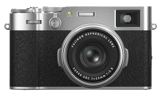
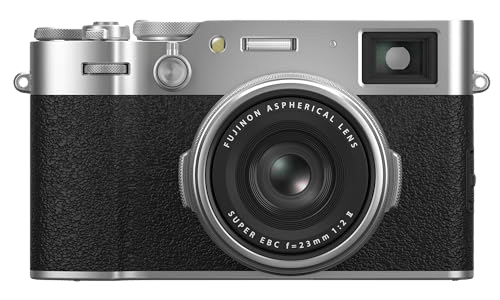
The Fujifilm X100VI is the camera that made compacts desirable again. It puts a 40.2 MP APS-C sensor, the same size you find in enthusiast mirrorless bodies, behind a fixed 23mm f/2 lens that gives the classic 35mm equivalent view.
It weighs 521 g and measures 128 x 74.8 x 55.3 mm, so it travels in a jacket pocket or the top of a day bag. Its hybrid viewfinder switches between an optical window and an electronic display, so you can shoot at eye level in bright sun instead of squinting at a rear screen.
Five-axis in-body stabilization is rated at up to 6 stops, which buys you sharp handheld frames at slow shutter speeds. Native ISO runs from 125 to 12800, burst shooting reaches 20 fps with the electronic shutter, and a built-in 4-stop ND filter lets you shoot wide open at f/2 in daylight. Fujifilm’s film simulations also mean the JPEGs look finished straight out of the camera.
It is by far the most expensive camera here, and demand has run ahead of supply since launch, so listings often sit above Fujifilm’s own recommended price. The 23mm lens does not zoom, so framing tighter means walking closer. Skip it if you want reach, or if you want a camera you can replace cheaply after a drop.
3. Ricoh GR IV
| Brand |
Brand
Ricoh
|
| Sensor Format |
Sensor Format
APS-C
|
| Megapixels |
Megapixels
25.7 MP
|
| In Body Stabilisation |
In Body Stabilisation
Yes
|
| Miniso |
Miniso
ISO 100
|
| Maxiso |
Maxiso
ISO 204800
|
| Video |
Video
Yes
|
| Screen Size |
Screen Size
3 in
|
| Weight |
Weight
262 g
|
| Size |
Size
109.4 x 61.1 x 32.7 mm
|
| Best For |
Best For
Street and everyday photographers who want an APS-C sensor in a jacket pocket
|
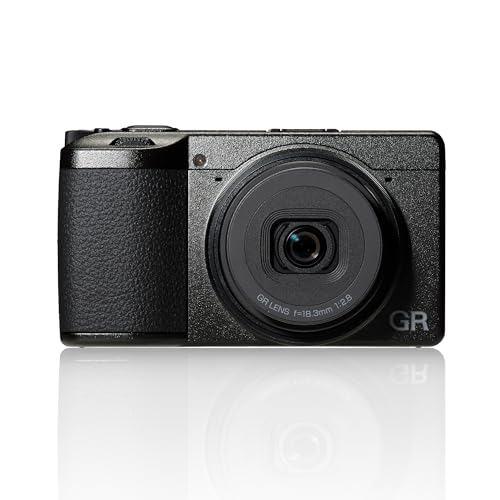
The Ricoh GR IV is the street photographer’s compact. It hides a 25.7 MP APS-C sensor and a fixed 18.3mm f/2.8 lens, a 28mm equivalent, in a body of 262 g measuring 109.4 x 61.1 x 32.7 mm. That is thin enough for a trouser pocket, which is the whole point.
Ricoh designed it to be worked one-handed. Snap Focus fixes the focus distance in advance so the camera fires the instant you press the shutter, and the controls fall under a thumb, so you can shoot without breaking stride. If you have been getting started with street photography on a phone, this is the natural step up.
Five-axis sensor-shift stabilization and a hybrid autofocus system that combines phase detection and contrast detection make it far quicker to lock on than earlier GR models. The ISO range runs from 100 to 204800 for dim interiors and night streets. And 53 GB of internal storage means you can shoot a full day even if you left the memory card at home.
Video is where it gives up ground. It is Full HD only and capped at roughly 25 minutes a clip, so it is not a vlogging camera. There is no weather sealing despite the price, it takes microSD rather than full-size SD cards, and the 28mm lens never zooms. If you want video or reach, buy the Canon or the Panasonic instead.
4. Canon PowerShot V1
| Brand |
Brand
Canon
|
| Sensor Format |
Sensor Format
1.4"
|
| Megapixels |
Megapixels
22.3 MP
|
| In Body Stabilisation |
In Body Stabilisation
No
|
| Miniso |
Miniso
ISO 100
|
| Maxiso |
Maxiso
ISO 32000
|
| Video |
Video
Yes
|
| Screen Size |
Screen Size
3 in
|
| Weight |
Weight
426 g
|
| Size |
Size
118.3 x 68 x 52.5 mm
|
| Best For |
Best For
Creators who film as much as they shoot
|
The Canon PowerShot V1 is built for people who film as much as they shoot. A 1.4-type sensor, physically larger than the 1-inch chips in the Sony ZV bodies, sits behind a fixed 16-50mm equivalent f/2.8-4.5 zoom.
That ultra-wide-angle 16mm end is what a vlogger actually needs at arm’s length, and it doubles as a good landscape and interior lens. Canon also built in a cooling fan, so the camera keeps recording 4K instead of shutting down partway through a take.
Stills come in at 22.3 MP, the ISO range runs from 100 to 32000, and Dual Pixel CMOS AF tracks eyes and faces for both people and animals. The screen fully articulates so you can frame yourself from any angle, and 5 stops of optical stabilization with subject tracking keep handheld walking shots watchable.
There is no viewfinder and no weather sealing, and the lens shows noticeable vignetting wide open that you will want to correct in editing software. The controls are laid out for video rather than dials-and-rings photography. At 426 g and 52.5 mm deep it is bag-sized rather than pocket-sized, so buy the Ricoh or the Kodak if pocketability is the point.
5. Sony ZV-1F
| Brand |
Brand
Sony
|
| Sensor Format |
Sensor Format
1"
|
| Megapixels |
Megapixels
20 MP
|
| In Body Stabilisation |
In Body Stabilisation
No
|
| Autofocus Points |
Autofocus Points
425
|
| Miniso |
Miniso
ISO 80
|
| Maxiso |
Maxiso
ISO 12800
|
| Fps |
Fps
16 fps
|
| Video |
Video
Yes
|
| Screen Size |
Screen Size
3 in
|
| Weight |
Weight
256 g
|
| Size |
Size
106 x 60 x 46 mm
|
| Best For |
Best For
Vloggers on a budget
|
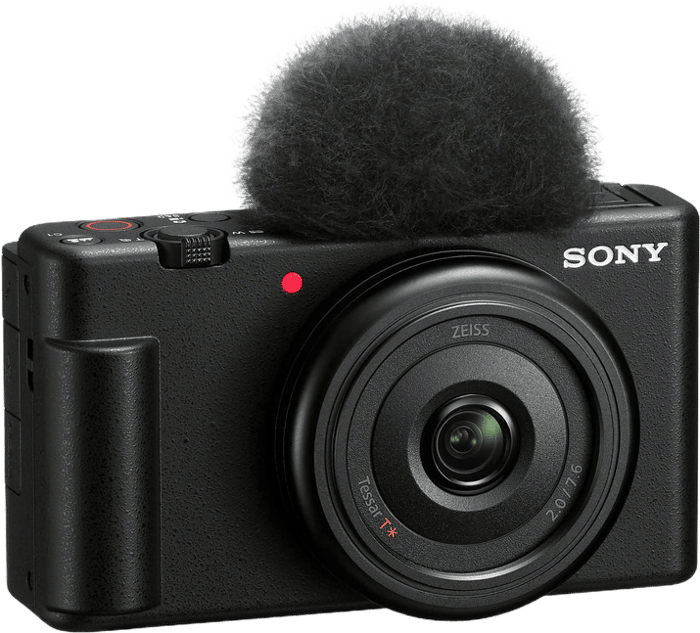
The Sony ZV-1F is a stripped-down version of the ZV-1. It lacks a few of the more advanced features of the ZV-1, but the video features and affordable price make it the perfect budget vlogging camera.
The 4K video is sharp, smooth, and accurate, perfectly rendering human skin tones. It also has a special portrait mode that gives you lovely background bokeh for stills and video.
A fixed 20mm lens gives you a beautifully wide-angle view. There’s no zoom function, which is a downside. But the field of view is perfect for vlogs.
Face-detection autofocus is ideal for vlogging, as it tracks you and keeps you in focus as you move around the frame.
A fully rotating touchscreen and front record light make it easy to film yourself. The camera also has a built-in 3-capsule microphone for high-quality audio recording. It even comes with a removable muffler.
Content creators of all kinds will appreciate the 20 MP still photos. The native minimum ISO is 125, but you can expand this to 80 ISO to maximize picture quality.
The Sony ZV-1F also has a rapid 16 fps burst mode. This is perfect for action and sports photography, adding to this camera’s versatility and value. Just remember the lens is fixed at one wide focal length, so it is a poor choice if you shoot anything at a distance.
6. Panasonic Lumix FZ80D
| Brand |
Brand
Panasonic
|
| Sensor Format |
Sensor Format
1/2.3"
|
| Megapixels |
Megapixels
18 MP
|
| In Body Stabilisation |
In Body Stabilisation
Yes
|
| Autofocus Points |
Autofocus Points
49
|
| Miniso |
Miniso
ISO 80
|
| Maxiso |
Maxiso
ISO 3200
|
| Fps |
Fps
10 fps
|
| Video |
Video
Yes
|
| Screen Size |
Screen Size
3 in
|
| Weight |
Weight
616 g
|
| Size |
Size
130 x 94 x 119 mm
|
| Best For |
Best For
People who want the features of a DSLR but the ease of use of a compact
|
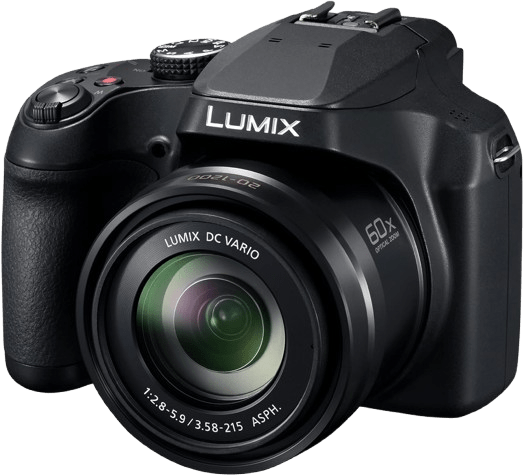
The Panasonic Lumix FZ80D is a versatile bridge camera. It has the features of a DSLR camera, but it works just like a point-and-shoot camera. The lens is also fixed, so you don’t need to worry about buying lenses.
The 18.1 MP MOS sensor produces good detail in daylight, and burst shooting runs at 10 fps. Its 4K Photo mode fires at 30 fps and lets you pull an 8 MP still out of the sequence afterwards, which is a useful trick for sports and wildlife.
This Panasonic camera has a fixed 20-1200mm (60x) optical zoom lens. So you can get close or shoot far away. And the optical image stabilization will keep your images sharp.
A function you might not expect at this price is its Post Focus. It lets you set your focus after you’ve taken the photo. And you can even stack focus points to give yourself creative freedom.
The FZ80D has an ergonomic, deeply gripped design and an electronic viewfinder, so it handles like a small DSLR. But be honest with yourself about the size. At 616 g and 130 x 94 x 119 mm, this is a camera for a bag, not a pocket, and its small sensor gets noisy indoors. Buy it for the reach and the price, not for image quality or portability.
7. Kodak PIXPRO FZ55
| Brand |
Brand
Kodak
|
| Sensor Format |
Sensor Format
1/2.3"
|
| Megapixels |
Megapixels
16 MP
|
| Miniso |
Miniso
ISO 100
|
| Maxiso |
Maxiso
ISO 3200
|
| Fps |
Fps
6 fps
|
| Video |
Video
Yes
|
| Screen Size |
Screen Size
2.7 in
|
| Weight |
Weight
106 g
|
| Size |
Size
91.5 x 56.5 x 22.9 mm
|
| Best For |
Best For
Someone looking for an affordable and functional compact camera
|
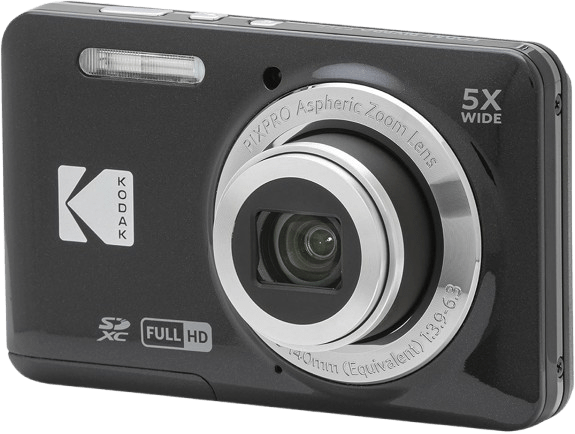
Kodak is better known as a 35mm film manufacturer, but they make cameras, too. The Kodak PIXPRO FZ55 is the perfect casual point-and-shoot. It isn’t the most high-tech compact, but it is affordable and fun.
Measuring only 91.5 x 56.5 x 22.9 mm, it fits nicely in your pocket so you can take it anywhere. It’s also feather-light at 106 g.
The 1/2.3-inch sensor has a modest 16 MP resolution. That’s a long way behind the APS-C cameras above, and it shows in low light. But in good daylight the results are natural and perfectly printable at everyday sizes.
The optical quality of the fixed lens is very good. You have a lovely wide-angle view at 28mm, but you also have a 5x zoom. This gives you excellent flexibility, and it’s an optical zoom so you don’t lose any quality.
Face, smile, and blink detection make the autofocus perfect for shooting portraits or group photos.
Pro vloggers should look elsewhere, because video tops out at Full HD rather than 4K and the 2.7-inch screen does not flip. But it is the cheapest camera here by a wide margin, which makes it the one to buy for a child, a holiday, or a night out you’d rather not risk an expensive camera on.
Is It Worth Buying a Compact Camera?
Yes, compact cameras are serious options. They’re powerful and robust. And they take outstanding photos. They pack a punch, but they’re still small and compact.
In the past, compact digital cameras had a bad name. They were seen as a bit amateur and dull. They were for holiday snaps and family vacations. But things have changed.
Sony, Canon, Fujifilm, and Ricoh all put a lot of effort into developing their compact cameras. And the effort is paying off. As a result, they all have excellent compact camera options on the market.
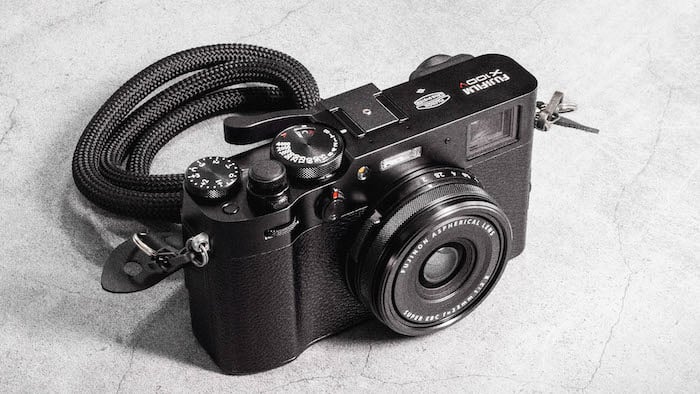
A good compact camera makes it easy to shoot high-quality photos and videos wherever you go. Photo by Arthur Edelmans (Unsplash)
Frequently Asked Questions
Are compact cameras still worth buying in 2026?
Yes. Smartphones have closed some of the gap, but a compact camera still wins on optical zoom range, sensor size, and dedicated video features like a flip screen and built-in microphone. That gap is widest for vlogging and travel.
What is the best compact camera for vlogging?
The Sony ZV-1 Mark II is the strongest all-round vlogging compact, with a flip screen, front record light, eye-lock autofocus, and 4K video. The Canon PowerShot V1 is the better pick if you record long takes, because its cooling fan keeps it running. The Sony ZV-1F is the cheapest way in.
Should I buy the Ricoh GR III or the GR IV?
Buy the GR IV. Ricoh now lists the GR III on its own discontinued products page, so new stock is finite and prices on what remains are unpredictable. The GR IV keeps the pocketable body and the 28mm f/2.8 lens, and adds a 25.7 MP sensor, hybrid autofocus, and 53 GB of internal storage.
Why is the Fujifilm X100VI so expensive?
Demand has outstripped supply since it launched, so sellers routinely list it well above Fujifilm’s recommended price. Check Fujifilm’s own stockists before paying a marketplace premium. The Ricoh GR IV gives you a similar APS-C sensor in an even smaller body for less.
Conclusion: Best Compact Cameras
The compact camera market is really under pressure from ever-improving smartphone cameras. For the consumer, that’s good news. It means manufacturers have to make their compact options even better!
As you can see from our list, there are some outstanding compact cameras. All of them are excellent in one or many ways.
But our top pick is the Sony ZV-1 Mark II. It easily takes the top spot with its high-resolution photo and video, practical features, and audio recording. It’s also pocket-sized, as all good point-and-shoot cameras should be.
So work out which compromise you can live with. If image quality wins, start with the Fujifilm X100VI or the Ricoh GR IV. If you need reach, the Panasonic Lumix FZ80D. If you are filming yourself, the Canon PowerShot V1 or the Sony ZV-1F. Then check the current stock on your shortlist, because the best compacts sell out faster than anything else in photography.