Photo stitching software is essential for landscape and panorama photographers. Instead of stitching photos together yourself, there is a wide range of digital editing software to help us. With the continued advancements of digital editing software, photo stitching could not be easier.
Below are the ten programs worth your time in 2026, from a one-click merge inside a catalog you already pay for to dedicated stitchers with editable control points. Adobe Lightroom takes our top spot for most photographers. PTGui is what you buy when the panorama has to work every time, and Hugin does the same job for nothing if you can live with its learning curve.





What is Photo Stitching?
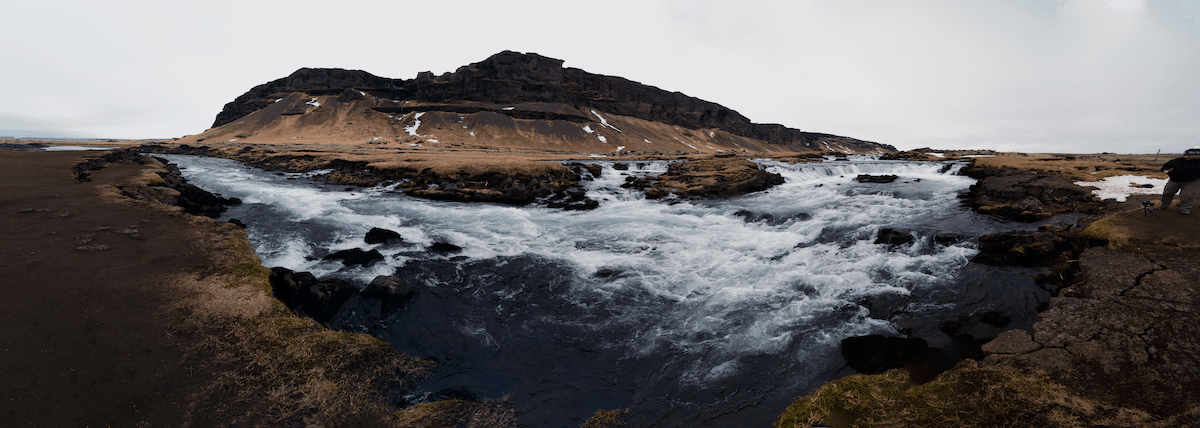
Photo stitching is a method for extending an image beyond the constraint of a single image. This means we can use photo stitching software to create an image that a camera cannot capture.
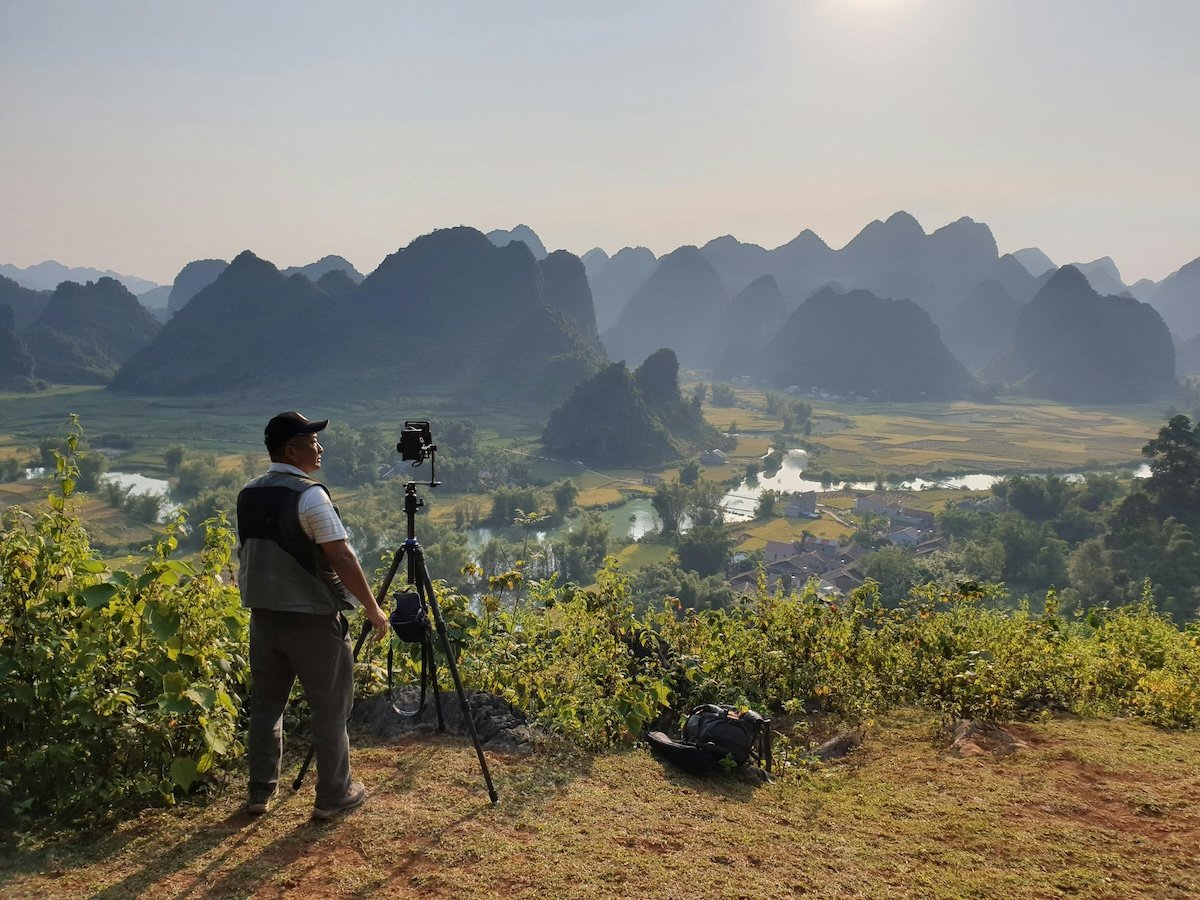
To create a photo stitch, we must take various photos while out on location. It helps if these photos are taken on a tripod, but most photo stitching software is good enough that we don’t have to.
The most common use for photo stitching software is to create a panorama. Panoramas are a brilliant way to show off a dramatic landscape without using a super wide-angle lens. You will take multiple images as you rotate around a landscape. You can even make a 360-degree panorama.
Once you have your images, you will want to upload them to the computer and use one of the photo stitching software we mention below. Read through each option to see what best suits your workflow. There are options for high levels of control and options for a quick and easy approach.
© Quang Nguyen Vinh
Best Photo Stitching Software
Adobe Lightroom is the best photo stitching software. This is not just because of its great results but also because of its speed, customization, and exporting abilities.
Adobe Lightroom comes in two versions: Lightroom and Lightroom Classic. Both give you the same amount of control over the merge. The main advantage is that your frames are already in Lightroom for cataloging, so stitching them there saves you exporting a folder of TIFFs into a second program.
Adobe Lightroom’s photo stitching is found in its Photo Merge section. To use it, select your photos to be stitched together and right-click to select Photo Merge. This section has Panorama, HDR, and HDR Panorama abilities.
Lightroom lets you pick the projection before it merges. Spherical suits very wide or multi-row sets, Cylindrical keeps vertical lines straight, and Perspective keeps every straight line straight, which is what you want for architecture. Boundary Warp is then a 0-100 slider that warps the stitch outward to fill the frame, so you keep the detail a crop would have thrown away. Fill Edges mops up whatever transparency is left using Content-Aware Fill rather than generative AI, so it copes with sky and grass and struggles with a large missing corner. For gaps that big, extend the background in Photoshop instead.
Adobe Lightroom offers plenty of customization. You can even export the panorama by stacking all the photos you used. This is helpful for clearing up your workspace and ensuring you don’t use the same images for another panorama.
What you don’t get is control points. If Lightroom lines a frame up wrongly there is no way to nudge it by hand, so a handheld sequence with thin overlap or a featureless sky is a job for PTGui or Hugin. Lightroom is also subscription only, so it is the wrong pick if you want to pay once and stop.
PTGui is the best photo stitching software for professionals. It is a photo editing software dedicated to creating panoramas. Therefore, there is a huge range of professional options through which to edit your panoramas.
I can’t even list all the projection options as it would take up so much space. You have 16 different projections to choose from. These projections dramatically change how you view your panorama. Some of these options drop you directly into the landscape, whereas others project the panorama onto a flat surface.
There is a learning curve to overcome in this software. As you are performing expert controls, it will take some time to work out how to get the best results. Luckily, PTGui provides videos that go over every step, from taking the best photos to editing your panoramas.
PTGui allows you to customize every part of your panorama. You can edit the panorama as a whole and the individual images. This is perfect for those who need expert-level control over their scenes.
Overall, PTGui is the software you should use if you want to take panoramas seriously. If you are happy with normal results and don’t need to fine-tune everything, then other photo stitching software will be fine.
3. Luminar Neo
| Brand |
Brand
Skylum
|
| Price |
Price
Subscription or One-time Purchase
|
| Edit Control Points? |
Edit Control Points?
No
|
| Projection Options |
Projection Options
Cylindrical, Spherical, Mercator, Plane, Fisheye
|
| Best For |
Best For
Easy photo stitching with great customization options
|
Luminar Neo is an excellent photo stitching software because it offers some excellent customization options. It does this in an approachable way and lets you fine-tune your panorama’s appearance to a good degree.
Luminar Neo is Skylum software that provides a wide range of cutting-edge controls. It has embraced the use of AI adjustments in photography and continues to experiment with technological advancements.
Luminar Neo provides both panorama and HDR photo stitching tools. All you have to do is drag your images into the relevant section. Within a few seconds, you will see a new interface that shows your panorama inside a space divided into four sections.
The panorama editing process is very hands-on. It allows you to edit your panorama to a fine degree, moving it around the projection it has stitched in. You can swap between Cylindrical, Spherical, Mercator, Plane, and Fisheye projections.
Each of these projections will give you vastly different panorama results. That means you can stitch panoramas for a number of different outputs, not just a flat surface. Skylum will even build a panorama out of a video clip where you panned across a scene. This makes Luminar Neo a great option for photo stitching software.
There are no control points here either, so Luminar Neo will not rescue a sequence it fails to align on its own. It is also a whole editing suite rather than a panorama program, so it is poor value if you already edit elsewhere and only want the stitching.
Hugin is a free, dedicated photo stitching software for panoramas. Thanks to its attention to detail and fine-tuning abilities, experienced panorama photographers highly recommend it.
Hugin does take a while to get familiar with. It is not easy software for photographers who are not computer literate to pick up. So, if you want to avoid learning a new process, I suggest other options.
For photographers who are looking for extra control, this may be the program for you. If you have previous experience with photo editing software, it may take you only a little while to pick up these new skills. It is ideal for photographers frustrated with the lack of control in other photo stitching software.
The program does take some time to generate results. It may be the slowest photo stitching software on this list. But this is the price we have to pay for extra care and control. Again, if you want easy and quick photo stitching software, look at the options that aren’t dedicated photo stitching programs.
PanoramaStudio is another dedicated photo stitching software for panoramas. It provides a professional workspace to fine-tune your panoramas. One license covers both Windows and Mac, and version 4 runs natively on Apple Silicon as well as Intel. It comes in a Standard or a Pro version.
PanoramaStudio automatically stitches images together in its positioning and regarding exposure mismatches, brightness, and vignetting. It also offers expert levels of control, allowing you to choose and edit the control points for each panorama. This means that you can choose how the images overlap.
PanoramaStudio can automatically correct lens distortion before stitching, thanks to its Exif data recognition. This allows for a smoother panorama that will give natural results. You will also find normal adjustment tools like exposure adjustment and the ability to insert graphics such as watermarks.
If you are looking for dedicated photo stitching software that isn’t overly complicated, PanoramaStudio is worth a try. Both versions come with a 30-day trial, and the license is a one-time purchase from $59 that stays valid for every 4.x update. There is no subscription.
What you get for that depends on the tier. Standard covers spherical, cylindrical, Mercator, and Little Planets projections. The full set of 15 projections, HDR panoramas, and fisheye lens support are all Pro only, so anyone bracketing exposures for a high dynamic range panorama has to buy the more expensive edition or look elsewhere.
Adobe Photoshop is another photo stitching software you can use to automatically create panoramas. This process does feel dated nowadays, especially when there are so many great options like the software above.
After finding Photomerge under File in Photoshop, you must select your images through this interface. This interface doesn’t give you a preview of what your output could be. So it is hard to grasp the output of the Auto, Perspective, Cylindrical, Spherical, Collage, and Reposition options.
In addition, Photoshop takes a bit longer than other programs to perform the stitching. This isn’t a huge issue, but if you want to try out all the projection options, then this may take some time.
The biggest advantage of using Photoshop is that it creates a layer for each section of the panorama. Each layer also comes with a layer mask. That means that editing the image in different sections or collectively is extremely easy.
Adobe Photoshop is for those who want to do extensive editing on their panoramas. If you want an easy and quick construction, I suggest trying different programs.
Capture One is digital editing software used by professionals. It organizes photos and has incredible tethering and color editing abilities. You can also perform photo stitching inside this program, but it is fairly basic.
Select your photos and right-click to find Panorama Stitch. You will then see a new interface that allows you to customize your panorama. You can choose between the Spherical, Cylindrical, Perspective, and Panini projections.
There aren’t any other ways to edit your panorama besides these customizations. You do get an option to adjust the output size, but this doesn’t affect your aesthetic.
The photo stitching results are good and don’t take too long. This option is best for those who use Capture One to edit their photos normally. It will save you from downloading another program. But if you want more control, you should look at other options.
PhotoDirector 365 is a digital editing software packed with features. These range from basic edits to AI generation and shaping tools. So, of course, this software can create a panorama for us.
There are so many features, so finding the photo stitch section can be tricky. Upon finding the panorama section, the process is very straightforward. You upload your images, it stitches them in a single, customizable way, and then you can choose crop options.
The results were good for such a simple process, but photographers who take panoramas seriously will want more control. But if you want to experiment with everything related to photo editing, then PhotoDirector 365 is worth a look.
Affinity is free, which is what sets it against Adobe Photoshop’s ongoing subscription. Canva bought Serif and made the whole thing free in October 2025, folding Photo, Designer, and Publisher into a single app for Mac and Windows. You sign in with a free Canva account, and the Canva AI tools built into it need a paid Canva plan, but every stitching, pixel, and layout tool is free with no export limits. Outside of that it is a genuine Photoshop alternative, with many of the same controls and adjustments.
If we look at its photo stitching abilities, we can see they are fairly basic. There is no option to choose between different perspective projections. It uses a Spherical projection, and that is it. But this is the option you will likely use for photographic panoramas anyway, so it’s not a huge issue.
After creating the panorama, you can see it stitched together in front of you. It does a good job of stitching the image together and produces a good result. However, the lack of customization means that it places low down on this list.
ON1 Photo RAW is another photo organization software that also includes photo stitching abilities. It doesn’t try to do basic adjustments better than the top software. Rather, it aims to usher in new processes that allow you to easily perform complex edits.
There are a few options to customize your panorama. For the photo stitching, you can select Auto, Spherical, or Collage. You can also edit how the image is cropped between None, Crop, and Warp To Fill.
The result could have been better. It didn’t stitch the panorama as accurately as other photo stitching software, and it also took a while to process. So, with these elements put together, I would suggest looking at other photo stitching software. However, this could be a good option if you like ON1 Photo RAW’s other features.
Frequently Asked Questions
What Is the Best Free Photo Stitching Software?
Hugin is the strongest free option. It is open source, still updated (the last release landed in December 2025), and it gives you editable control points that most of the programs here don’t have. The trade-off is a steep learning curve and slow processing. If you want free and easy instead of free and powerful, Affinity stitches a panorama in a couple of clicks, though it only offers one projection.
Is Microsoft Image Composite Editor Still Available?
No. Microsoft Research retired Image Composite Editor in 2021 and pulled the download, and the last release was version 2.0.3 from 2015. Copies float around on archive sites, but nothing has been patched in over a decade. Hugin is the closest free replacement, and PTGui is the closest paid one.
What Happened to Autopano and Kolor?
GoPro shut Kolor down in 2018, and Autopano Giga and Autopano Pro went with it. Kolor’s own site now says the products are closed and will not be updated. PTGui is the nearest active equivalent if you were a paying Autopano user, and Hugin is the free one.
Do I Need a Tripod to Stitch a Panorama?
Not usually. Most of the programs here align handheld frames well enough for a normal landscape sequence. A tripod helps most in two cases: multi-row and 360-degree panoramas, where a leveled panoramic head keeps the nodal point steady, and low-contrast scenes like open sky or fog, where the software has few details to match on. Overlap each frame by about a third and lock your exposure, focus, and white balance, and handheld is fine.
Can Lightroom and Photoshop Stitch Panoramas Without Extra Software?
Yes. Both do it natively, and neither needs a plugin. Lightroom merges under Photo > Photo Merge > Panorama, and Photoshop under File > Automate > Photomerge. Lightroom is faster and gives you a preview before it commits. Photoshop is slower but hands back a layered file with a mask per frame, which is the better starting point if you plan to retouch the result heavily.
Conclusion: Best Photo Stitching Software
Ten options is a lot, so narrow it by what you already own and how hard your panoramas are. If you edit in Lightroom, Photoshop, Capture One, or PhotoDirector, stitch there first. The tool is already paid for and the results are good. If those fail on a sequence, or you shoot multi-row and 360-degree work, move up to a dedicated stitcher with control points: PTGui if you can spend, PanoramaStudio if you want something simpler for less, Hugin if the budget is zero. Luminar Neo and Affinity sit in between as quick, low-fuss merges.
Sacrificing control doesn’t mean you will get bad results. Many hands-off photo stitching programs produce incredible results, and most of them still let you choose a projection. This is why Adobe Lightroom takes our top spot as the best photo stitching software.
Whichever you pick, almost every program here has a free trial, so shoot one test sequence, around a third overlap with exposure and focus locked, and run it through two of them before you spend anything. That one comparison will tell you more than any spec table.