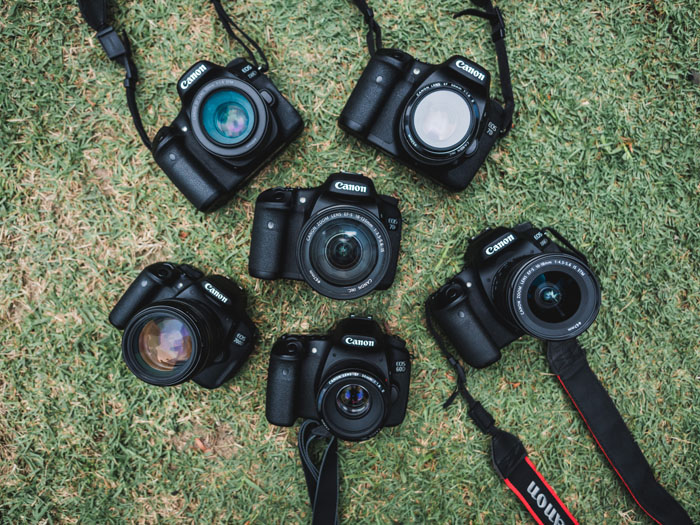
Zoom lenses are essential for photographers who need versatility without changing their lens frequently. They offer a range of focal lengths, making them perfect for capturing everything from wide landscapes to detailed portraits. Our guide to the 18 best zoom lenses covers top picks for various needs and budgets, ensuring you find the right lens for your photography style.
Our top choices include the Canon RF 24-70mm f/2.8L IS USM for its blend of image quality, stabilization and reach, and the Fujifilm XF 8-16mm f/2.8 R LM WR for its wide-angle capabilities. With 16 other lenses divided between Canon and Nikon in part one, and Fujifilm, Sony, and Sigma options in part two, there’s a zoom lens for every photographer.
What Is the Best Zoom Lens for Canon and Nikon?
Selecting the best zoom lens involves considering versatility, image quality, and build. Our list features Canon and Nikon lenses, chosen for their exceptional performance across various photography styles. Factors like aperture, focal range, and image stabilization were key in their ranking, ensuring each lens is very useful for professional photography. Every Canon lens below is an RF-mount lens for the EOS R system, and every Nikon lens is a Z-mount lens, because that is where both makers put their current standard, wide and telephoto zooms.
Our Favorite Zoom Lenses for Canon and Nikon
Let’s take a closer look at our favorite zoom lenses. From wide angles capturing vast landscapes to telephoto lenses zooming in on distant subjects, there’s a lens here for every scenario. Explore these options to find the perfect addition to your camera bag.
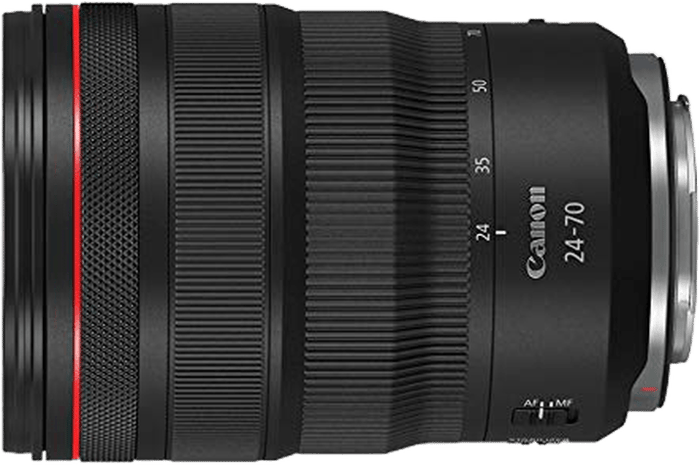
1. Canon RF 24-70mm f/2.8L IS USM
| Brand |
Brand
Canon
|
| Lens Weight |
Lens Weight
900 g
|
| Maximum Aperture |
Maximum Aperture
f/2.8
|
| Focal Range |
Focal Range
24-70mm
|
| Image Stabilization |
Image Stabilization
Yes
|
Built to last, this lens combines high-quality materials with Canon’s renowned L series standards, ensuring it can handle the demands of professional use. It’s weather-sealed too, offering peace of mind when shooting in less-than-ideal conditions. The inclusion of image stabilization is a significant advantage, allowing for sharper images in challenging light without the need for a tripod. Its older EF cousin never had that, which is the single biggest reason to buy this version instead.
The Canon RF 24-70mm f/2.8L IS USM is a very useful tool for photographers who need flexibility without compromising on image quality. Its sharpness, fast autofocus, and robust build make it a reliable choice for both professional and enthusiast photographers alike. Whether it’s capturing fast-paced action or serene landscapes, this lens delivers consistently high-quality results.
It is not a light lens at 900 g, and it only fits Canon’s RF mount, so it is no use to you on an EF-mount DSLR. If you shoot mostly in good light and want to carry less, the RF 24-105mm f/4L below covers more range for 200 g less.
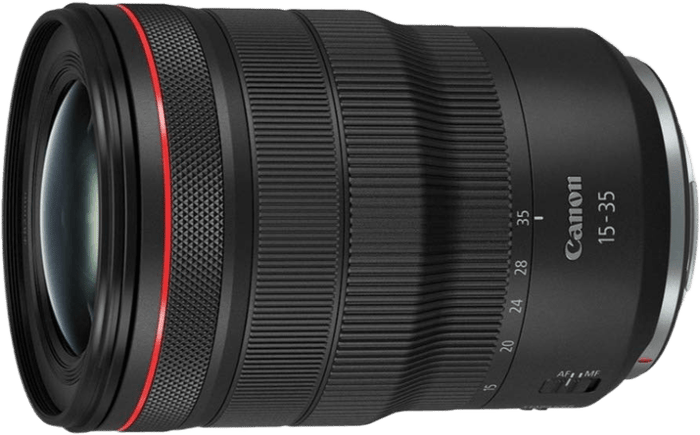
2. Canon RF 15-35mm f/2.8L IS USM
| Brand |
Brand
Canon
|
| Lens Weight |
Lens Weight
840 g
|
| Maximum Aperture |
Maximum Aperture
f/2.8
|
| Focal Range |
Focal Range
15-35mm
|
| Image Stabilization |
Image Stabilization
Yes
|
The headline feature is five stops of optical image stabilization, which no Canon EF-mount 16-35mm f/2.8 ever had. On a wide lens that buys you handheld shots at shutter speeds down around a quarter of a second, which is the difference between carrying a tripod into a cathedral and not. Autofocus is Nano USM, so it is quick and near silent for video.
Optically it is an L-series lens through and through: 16 elements in 12 groups, a 9-blade diaphragm for tidy sunstars, weather sealing at every seam and a fluorine coating on the front element that makes sea spray wipe off. It focuses down to 28cm, close enough for exaggerated foreground-heavy compositions.
The honest drawbacks are size and cost. At 840 g it is the heaviest wide zoom on this list, and it takes 82mm filters, so a decent circular polarizer or ND is an expensive extra purchase. If you shoot landscapes on a tripod at f/8 and never need f/2.8, you are paying for stops you will not use.
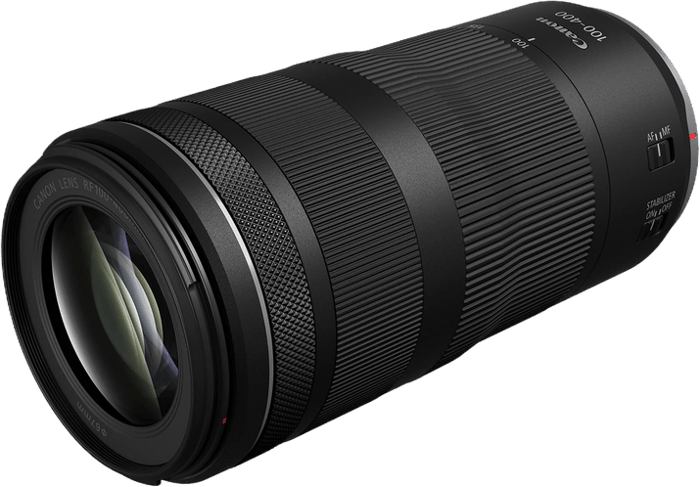
3. Canon RF 100-400mm f/5.6-8 IS USM
| Brand |
Brand
Canon
|
| Lens Weight |
Lens Weight
635 g
|
| Maximum Aperture |
Maximum Aperture
f/5.6-8
|
| Focal Range |
Focal Range
100-400mm
|
| Image Stabilization |
Image Stabilization
Yes
|
This lens is light for its type, weighing 1.4 lbs (635 g), which makes it easy to carry around. It doesn’t have the weather sealing found in more expensive lenses, so it’s best used in good weather conditions. The optical image stabilization is a big plus, helping to keep shots steady and sharp at long focal lengths.
For the money, the Canon RF 100-400mm f/5.6-8 IS USM offers good value. It delivers sharp images and has quick autofocus. While it may not be the top choice for low light, its portability and stabilization make it very useful for daytime outdoor photography.
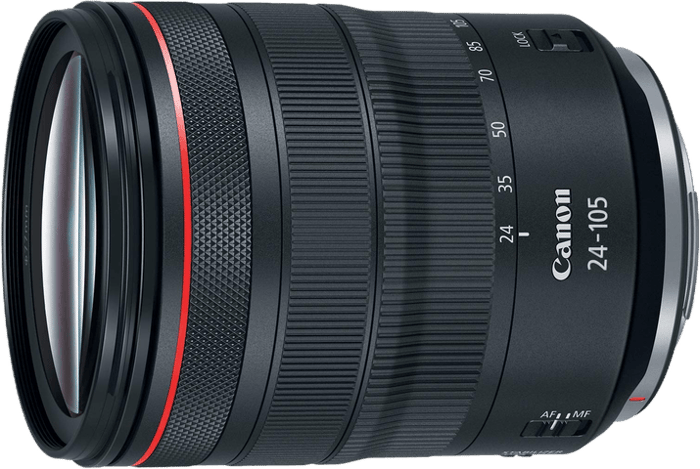
4. Canon RF 24-105mm f/4L IS USM
| Brand |
Brand
Canon
|
| Lens Weight |
Lens Weight
700 g
|
| Maximum Aperture |
Maximum Aperture
f/4
|
| Focal Range |
Focal Range
24-105mm
|
| Image Stabilization |
Image Stabilization
Yes
|
It earns its place here on weight as much as range. At 700 g it is the lightest L-series zoom on this list, 200 g less than the RF 24-70mm f/2.8L, and it takes cheap, common 77mm filters. Five stops of optical image stabilization make up a good deal of the light you give away by shooting at f/4 instead of f/2.8.
Build quality is full L-series: weather sealing, a fluorine-coated front element, 18 elements in 14 groups and Canon’s customizable control ring. Autofocus is Nano USM, fast and quiet enough for video, and it focuses to 45cm for tight detail shots.
The compromises are real. A constant f/4 gives noticeably less background blur than f/2.8 at the same framing, and it struggles indoors at dusk in a way the f/2.8 lenses do not. It also relies on heavy in-camera correction for barrel distortion at 24mm, and there is visible chromatic aberration at the edges wide open. If your work is weddings or events in dim rooms, buy the RF 24-70mm f/2.8L instead.
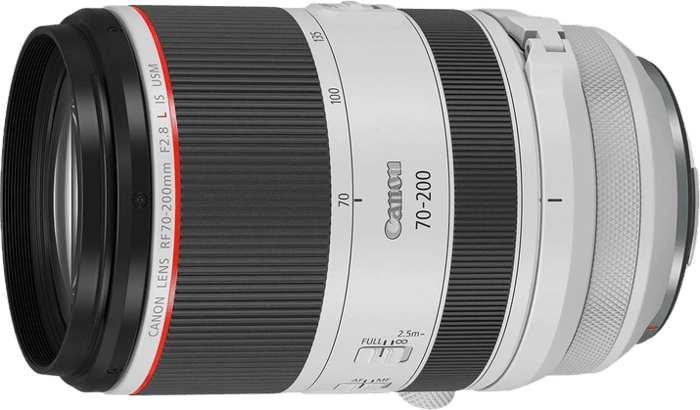
5. Canon RF 70-200mm f/2.8L IS USM
| Brand |
Brand
Canon
|
| Lens Weight |
Lens Weight
1070 g
|
| Maximum Aperture |
Maximum Aperture
f/2.8
|
| Focal Range |
Focal Range
70-200mm
|
| Image Stabilization |
Image Stabilization
Yes
|
Built to last, it combines rugged durability with a lightweight design, making it easy to carry all day. The image stabilization is a big improvement, allowing for up to 5 stops of shake correction. This is especially helpful in low light or when capturing video. Quick and silent autofocus means you never miss a moment, whether shooting wildlife or a wedding ceremony.
The Canon RF 70-200mm f/2.8L IS USM is very useful for a wide range of photography styles, and is equally at home at the soccer match as the wedding. Its sharpness, fast autofocus, and robust build make it a reliable choice for capturing high-quality images. Whether you’re shooting a portrait session or tracking fast-moving subjects, this lens delivers consistently impressive results.
One design choice divides people: the barrel extends as you zoom, unlike the internal-zoom EF version, so it is short and light at 1,070 g but grows towards 200mm. If you shoot in dust or rain a lot, that moving barrel is the part to keep an eye on.
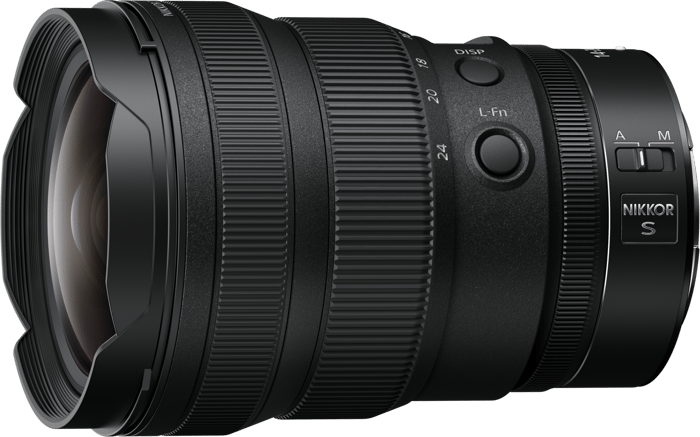
6. Nikon Z 14-24mm f/2.8 S
| Brand |
Brand
Nikon
|
| Lens Weight |
Lens Weight
650 g
|
| Maximum Aperture |
Maximum Aperture
f/2.8
|
| Focal Range |
Focal Range
14-24mm
|
| Image Stabilization |
Image Stabilization
No
|
The number that matters most here is 650 g. Nikon’s F-mount 14-24mm weighed 970 g, so this is a third lighter while covering the same range, and the zoom is internal, so the barrel never changes length. That keeps the balance identical at 14mm and 24mm, which matters on a gimbal and on a tripod head you have already levelled.
Optically it is an S-Line lens: 16 elements in 11 groups with ED and aspherical glass, a 9-blade diaphragm, weather sealing and a fluorine-coated front element. It focuses to 28cm, close enough to push a foreground rock or flower right up against a wide horizon.
The drawbacks are worth knowing before you buy. There is no optical stabilization at all, so you are relying on your body’s IBIS. And the bulbous front element takes 112mm filters through the supplied hood, which is a genuinely expensive filter size. If you shoot landscapes with a polarizer or heavy NDs, budget for that on top of the lens.
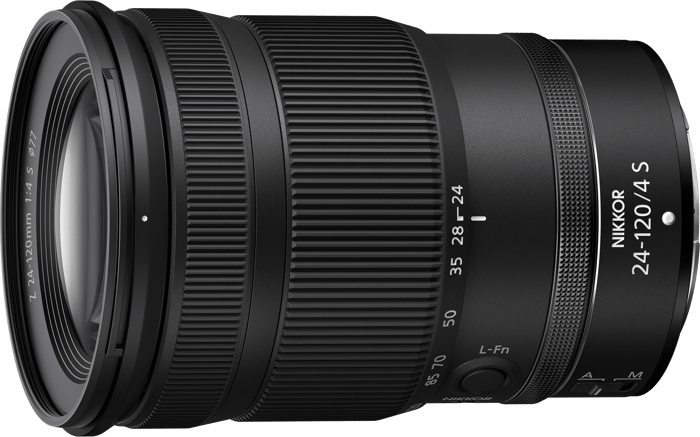
7. Nikon Z 24-120mm f/4 S
| Brand |
Brand
Nikon
|
| Lens Weight |
Lens Weight
630 g
|
| Maximum Aperture |
Maximum Aperture
f/4
|
| Focal Range |
Focal Range
24-120mm
|
| Image Stabilization |
Image Stabilization
No
|
It is remarkably compact for what it does: 630 g and standard 77mm filters, which is 175 g lighter than the Z 24-70mm f/2.8 S while reaching almost twice as far. That combination is why it has become the default travel lens for the Z system.
Nikon built it to S-Line standards rather than kit-lens standards, with weather sealing, a fluorine-coated front element and 16 elements in 13 groups. It focuses to 35cm and gets to roughly 0.39x magnification, which is close enough for flowers, food and product detail without a dedicated macro lens.
The trade is light. At f/4 you are a stop behind the f/2.8 zooms for both subject separation and low-light shutter speed, and the lens has no optical stabilization of its own, so a body with IBIS is effectively required. If you shoot indoor events or want the strongest possible background blur, take the Z 24-70mm f/2.8 S instead.
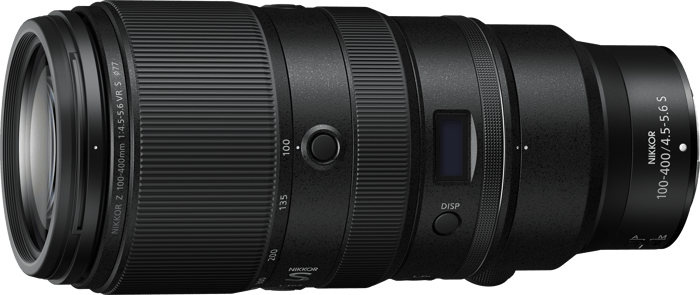
8. Nikon Z 100-400mm f/4.5-5.6 VR S
| Brand |
Brand
Nikon
|
| Lens Weight |
Lens Weight
1355 g
|
| Maximum Aperture |
Maximum Aperture
f/4.5-5.6
|
| Focal Range |
Focal Range
100-400mm
|
| Image Stabilization |
Image Stabilization
Yes
|
Optically, this lens impresses with its sharpness and minimal chromatic aberration, thanks to the use of ED and Super ED glass elements. The autofocus is quick and reliable, ensuring that subjects are captured with clarity and precision. While the variable aperture might not be ideal for all lighting conditions, the lens’s performance in well-lit environments and its ability to produce pleasing bokeh make it a valuable addition to a photographer’s bag.
The Nikon Z 100-400mm f/4.5-5.6 VR S stands out as a good option for those who prioritize flexibility and image quality. Its build quality, combined with effective image stabilization and autofocus, makes it a reliable choice for capturing detailed shots from afar. Whether you’re photographing wildlife in their natural habitat or athletes in motion, this lens delivers consistently high-quality results.
Be realistic about carrying it, though. At 1,355 g it is a serious lens to walk with all day, and it costs well over three times what the Canon RF 100-400mm does. If your wildlife shooting is occasional and daylight only, that is a lot of money and weight for the extra stop of light.
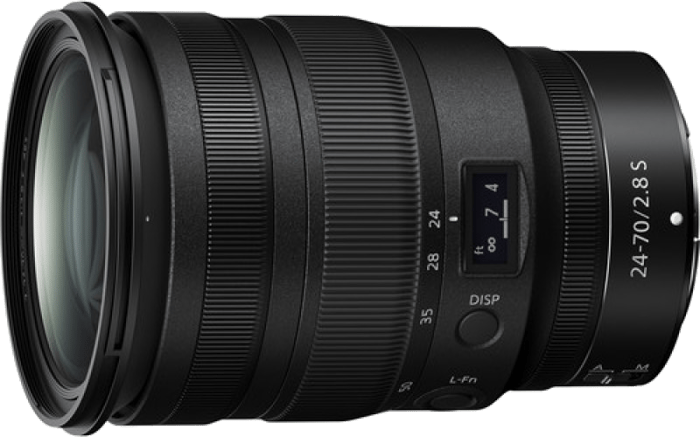
9. Nikon Z 24-70mm f/2.8 S
| Brand |
Brand
Nikon
|
| Lens Weight |
Lens Weight
805 g
|
| Maximum Aperture |
Maximum Aperture
f/2.8
|
| Focal Range |
Focal Range
24-70mm
|
| Image Stabilization |
Image Stabilization
No
|
Built to Nikon’s high standards, the Z 24-70mm f/2.8 S combines superior optics with robust construction, ensuring it can withstand the rigors of daily use. Its optical design, featuring aspherical and ED elements, minimizes aberrations and maximizes sharpness across the frame. The autofocus is both fast and silent, crucial for capturing fleeting moments in clarity.
The Nikon Z 24-70mm f/2.8 S is very useful for a wide range of photographic applications. Its blend of versatility, image quality, and durability makes it a valuable tool for professionals and serious enthusiasts alike. It doesn’t matter if you’re shooting a fast-paced wedding or a serene landscape, this lens delivers consistently impressive results.
Two things to weigh before buying. It has no optical stabilization of its own, so you depend on the body’s IBIS, and at 805 g with 82mm filters it is a committing lens to carry. The Z 24-120mm f/4 S above is lighter, reaches further and costs about half as much if you can live at f/4.
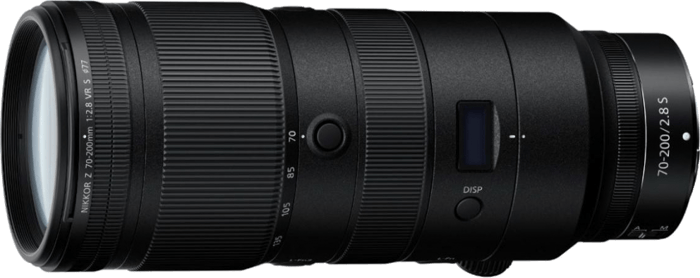
10. Nikon Z 70-200mm f/2.8 VR S
| Brand |
Brand
Nikon
|
| Lens Weight |
Lens Weight
1360 g
|
| Maximum Aperture |
Maximum Aperture
f/2.8
|
| Focal Range |
Focal Range
70-200mm
|
| Image Stabilization |
Image Stabilization
Yes
|
This is a well-built lens and it combines advanced optics with robust construction, ensuring it can withstand the demands of professional use. Its optical design, featuring extra-low dispersion elements, minimizes aberrations and maximizes sharpness across the frame. The autofocus is both fast and silent, crucial for capturing fleeting moments in clarity.
The Nikon Z 70-200mm f/2.8 VR S is very useful for a wide range of photographic applications. Its blend of versatility, image quality, and durability makes it a valuable tool for professionals and serious enthusiasts alike. You will find it is equally at home shooting a fast-paced wedding or a serene landscape, delivering consistently impressive results.
The catch is bulk and price. At 1,360 g it is the heaviest zoom in this section, and it is the most expensive Nikon lens here. For portrait work alone, an 85mm prime does the same job for a fraction of the weight, so buy this one for the zoom range, not for the aperture.
What is the Best Zoom Lens from Fujifilm, Sony, & Sigma?
Three other big hitters in the lens world are Sony, Fujifilm, and Sigma. In this section, we’re going to look at some of their zoom lenses. Bear in mind that mounts do not cross over here: the Fujifilm lenses are X-mount only, the Sony lenses are E-mount only, and both Sigma lenses come in Sony E and L-Mount rather than a Canon or Nikon fit. All these lenses stand out for their ability to capture sharp, clear images across a variety of settings, from wide landscapes to distant wildlife, making them indispensable tools for photographers aiming to elevate their work.
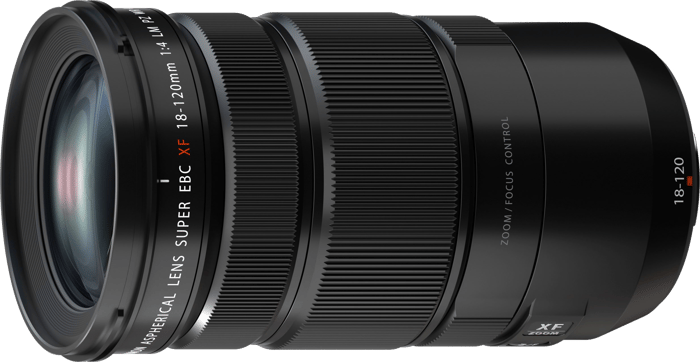
- Versatile 18-120mm zoom for diverse shooting scenarios
- Constant f/4 aperture across entire zoom range
- Power zoom feature ideal for smooth video recording
- Weather-resistant build for reliable outdoor use
- Fast, silent autofocus with manual override option
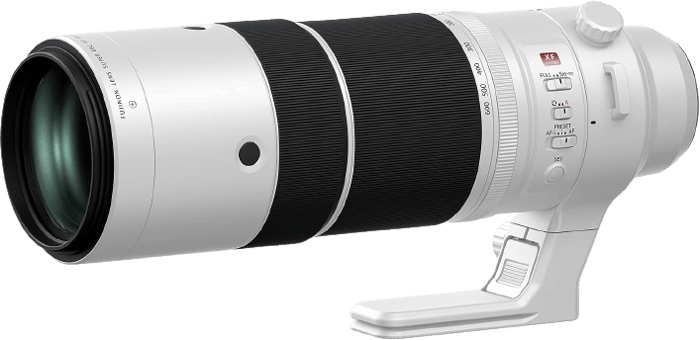
- Super-telephoto reach for wildlife and sports photography
- Built-in image stabilization for sharp handheld shots
- Weather-resistant construction for challenging environments
- Fast, accurate autofocus with quiet operation
- Exceptional optical quality across the zoom range
- Extensive 70-350mm zoom for wildlife and sports
- Optical SteadyShot stabilization for sharp handheld images
- Lightweight, durable design for easy portability
- Fast, precise autofocus system for dynamic subjects
- Exceptional image quality across the entire zoom range
- Bright f/2.8 aperture for low-light performance
- Ultra-wide to wide-angle versatility in one lens
- Compact, lightweight design for travel and adventure
- High-resolution optics for sharp, detailed images
- Fast, silent autofocus ideal for both photos and videos
Our Favorite Zoom Lens from Fujifilm, Sony, & Sigma
Let’s take a closer look at our favorite zoom lenses from these three brands. From wide-angle marvels perfect for capturing vast landscapes to telephoto giants that bring distant subjects into clear view, there’s a lens here for every scenario. Whether you’re shooting fast-paced sports, serene nature scenes, or detailed architectural designs, these lenses provide the versatility and quality required for professional photography. Explore our curated selection to find the lens that not only fits your camera but also enhances your photographic skills.
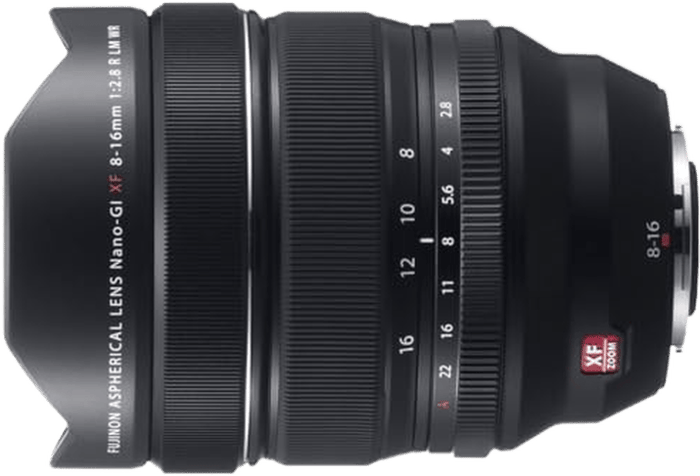
1. Fujifilm XF 8-16mm f/2.8 R LM WR
| Brand |
Brand
Fujifilm
|
| Lens Weight |
Lens Weight
805 g
|
| Maximum Aperture |
Maximum Aperture
f/2.8
|
| Focal Range |
Focal Range
8-16mm
|
| Image Stabilization |
Image Stabilization
No
|
Optically, the lens impresses with minimal distortion and excellent sharpness, even at its widest aperture. It uses low-dispersion elements to improve image clarity and reduce chromatic aberrations. Yet, at the extreme corners, sharpness can drop slightly, a common trait in wide-angle lenses. The lens’s build quality is also noteworthy, being both durable and weather-sealed, making it reliable for outdoor use.
Autofocus is quick and accurate, ensuring sharp images in dynamic settings. The lens’s minimum focusing distance adds versatility, allowing for close-up shots with a dramatic perspective. However, for photographers prioritizing portability, its weight of 1.77 lbs (805 g) might be a consideration. The bulbous front element also rules out screw-in filters entirely, so a polarizer means an expensive slot-filter holder. Despite this, its performance and construction make it a good option for those needing a wide-angle zoom lens.
2. Fujifilm XF 18-120mm f/4 LM PZ WR
| Brand |
Brand
Fujifilm
|
| Lens Weight |
Lens Weight
460 g
|
| Maximum Aperture |
Maximum Aperture
f/4
|
| Focal Range |
Focal Range
18-120mm
|
| Image Stabilization |
Image Stabilization
No
|
Optically, this lens is designed to give clear and sharp images. Its 15 elements in 12 groups include three aspherical and three ED elements to cut down on distortion and color fringing. While it’s sharp across most of the frame, the edges might be a bit softer at the widest settings. Autofocus is quick, making it easy to capture clear shots in fast-moving situations.
It doesn’t have built-in stabilization, so it’s best used with cameras that stabilize the image themselves. Its 7-blade diaphragm and f/4 maximum aperture also mean out-of-focus backgrounds are tidier than they are creamy, so this is not the lens for shallow-depth portraits. This lens is a good fit for photographers and videographers looking for versatility without the bulk of multiple lenses. Its power zoom feature is especially useful for smooth video shots, making it a solid all-in-one lens choice.
3. Fujifilm XF 150-600mm f/5.6-8 R LM OIS WR
| Brand |
Brand
Fujifilm
|
| Lens Weight |
Lens Weight
1605 g
|
| Maximum Aperture |
Maximum Aperture
f/5.6-8
|
| Focal Range |
Focal Range
150-600mm
|
| Image Stabilization |
Image Stabilization
Yes
|
Constructed to endure outdoor conditions, this lens is both durable and weather-sealed. It weighs 3.54 lbs (1.6 kg), manageable for its size and power. The optical design includes elements that reduce distortion and chromatic aberrations, ensuring clear images across its zoom range. Autofocus is quick and quiet, essential for not startling wildlife.
This lens is a solid choice for photographers who need to shoot from a distance without sacrificing image quality. Its performance in well-lit conditions, combined with effective stabilization, makes it a reliable tool for capturing dynamic scenes in nature or sports. The zoom range is most impressive, and it delivers well. Just be honest with yourself about the f/8 end: under a forest canopy or at dusk it pushes you to ISO levels an APS-C sensor does not love.
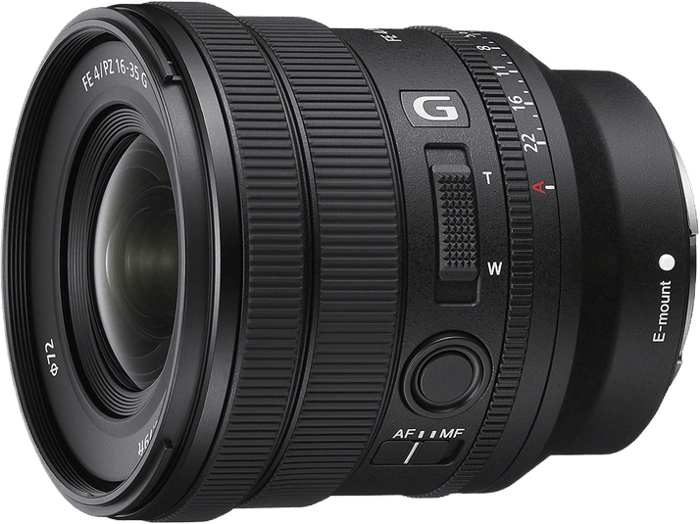
4. Sony FE 16-35mm f/4 G PZ
| Brand |
Brand
Sony
|
| Lens Weight |
Lens Weight
353 g
|
| Maximum Aperture |
Maximum Aperture
f/4
|
| Focal Range |
Focal Range
16-35mm
|
| Image Stabilization |
Image Stabilization
No
|
Weighing just about 0.78 lb (353 g), this lens is impressively light and compact, making it an ideal travel companion. It’s built to last, with weather sealing that protects it in tough conditions. The power zoom feature is a standout, offering smooth zooming that’s especially useful for video work.
Sharpness is top-notch across the zoom range, ensuring your images are crisp from edge to edge. Autofocus is quick and reliable, capturing moments as they happen without fuss. While it lacks built-in stabilization, pairing it with a camera that has IBIS solves this minor setback. This is a solid choice for anyone looking to capture wide-angle shots without compromising on quality or versatility. If you want f/2.8 for astro work, look at the Sigma 16-28mm below instead.
5. Sony FE 20-70mm f/4 G
| Brand |
Brand
Sony
|
| Lens Weight |
Lens Weight
488 g
|
| Maximum Aperture |
Maximum Aperture
f/4
|
| Focal Range |
Focal Range
20-70mm
|
| Image Stabilization |
Image Stabilization
No
|
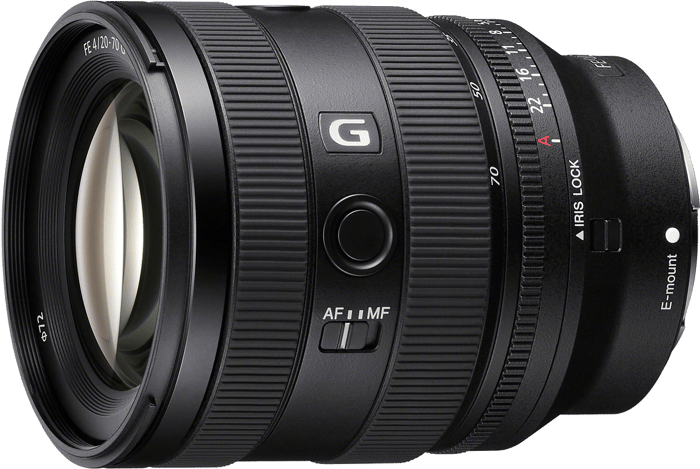
Weighing 1.08 lbs (488 g), this lens is both light and compact, making it an excellent travel companion. It’s built to last, with weather sealing that ensures it can handle a variety of outdoor conditions. The optical performance is impressive, with sharp images across the zoom range and minimal chromatic aberration, thanks to its advanced glass elements.
Autofocus is quick and reliable, capturing moments with precision. While the lens lacks built-in stabilization, pairing it with a camera that has in-body IS compensates for this, ensuring sharp images even in less-than-ideal lighting conditions. The Sony FE 20-70mm f/4 G is a great option for those seeking a versatile, high-quality lens for everyday shooting. What it is not is a portrait lens: at 70mm and f/4 the background separation is modest, and the wider 20mm end distorts faces badly if you get close.
6. Sony E 70-350mm f/4.5-6.3 G OSS
| Brand |
Brand
Sony
|
| Lens Weight |
Lens Weight
625 g
|
| Maximum Aperture |
Maximum Aperture
f/4.5-6.3
|
| Focal Range |
Focal Range
70-350mm
|
| Image Stabilization |
Image Stabilization
Yes
|
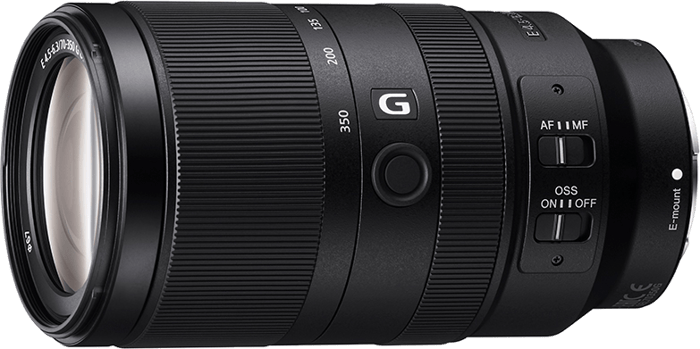
Weighing just over 1.3 lbs (625 g), it’s surprisingly light for its capabilities. The build quality is solid, offering weather sealing for those unexpected weather changes. Optically, it impresses with sharp images across the zoom range and minimal chromatic aberration, thanks to its specialized glass elements.
Autofocus is both quick and quiet, ensuring you never miss a shot. While it may not be the first pick for low-light photography, its performance in well-lit scenarios is exceptional. The Sony E 70-350mm f/4.5-6.3 G OSS is a valuable tool for photographers looking to bring distant scenes closer without compromising on image quality. Two things to note before you buy: mounted on a full-frame Sony body the camera falls back to its APS-C crop area, so you throw away more than half your pixels, and new stock is thin enough that most Amazon sellers now list it used.
7. Sigma 16-28mm f/2.8 DG DN | C for Sony E
| Brand |
Brand
Sigma
|
| Lens Weight |
Lens Weight
450 g
|
| Maximum Aperture |
Maximum Aperture
f/2.8
|
| Focal Range |
Focal Range
16-28mm
|
| Image Stabilization |
Image Stabilization
No
|
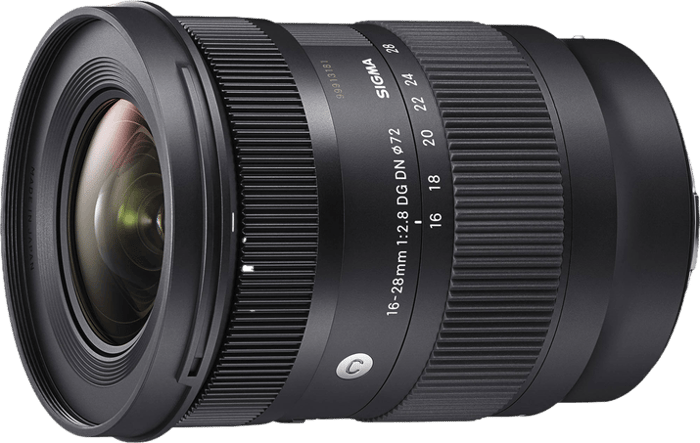
Weighing around 1 lb (450 g), it’s relatively light for its class, making it an excellent choice for travel photography. Sigma builds the barrel from Thermally Stable Composite, and the zoom is internal, so the lens keeps the same length and balance point at 16mm and at 28mm. That makes it a genuinely good gimbal lens. Optically, it delivers sharp images with minimal distortion, and the autofocus is both quick and silent, ensuring you never miss a moment.
It lacks image stabilization, though wide angles are generally more forgiving of camera shake. It is also sold only in Sony E and L-Mount, so there is no Canon or Nikon version, and Sigma does not claim a full dust-and-splash-resistant structure for it the way it does for the Art line. Within those limits it is a valuable addition to any photographer’s bag, offering flexibility and high-quality performance in a compact package that takes ordinary 72mm filters.
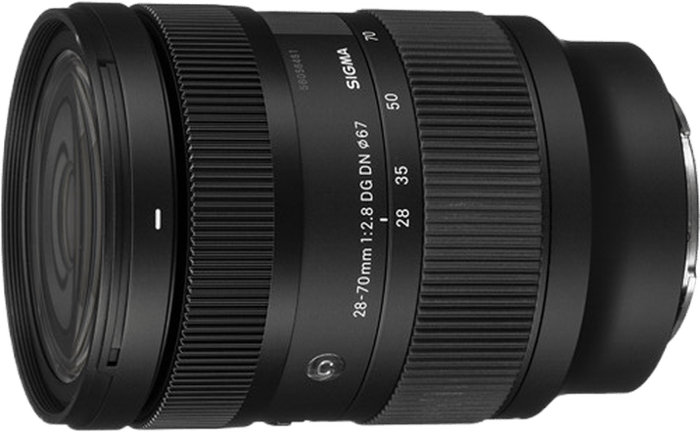
8. Sigma 28-70mm f/2.8 DG DN | C for Sony E
| Brand |
Brand
Sigma
|
| Lens Weight |
Lens Weight
470 g
|
| Maximum Aperture |
Maximum Aperture
f/2.8
|
| Focal Range |
Focal Range
28-70mm
|
| Image Stabilization |
Image Stabilization
No
|
The reason to choose it over a bigger Art-line lens is size. At 470 g it weighs roughly half what most f/2.8 standard zooms do, and it takes 67mm filters rather than the usual 77mm or 82mm, which makes a polarizer and an ND set noticeably cheaper. It is small enough that an a7-series body with this lens attached still fits in a normal bag.
Sigma packed 16 elements into 12 groups here, with FLD, SLD and aspherical glass keeping chromatic aberration in check, and a 9-blade rounded diaphragm for tidy out-of-focus highlights. It focuses to 19cm at the wide end, close enough for detail and food shots without a macro lens.
The compromises are honest ones. It starts at 28mm rather than 24mm, and that missing 4mm is real when you are shooting interiors or a group in a small room. There is no optical stabilization, so a body with IBIS is effectively required, and the dust-and-splash-resistant structure covers the mount only rather than the whole barrel. It also comes in Sony E and L-Mount only, so Canon RF and Nikon Z shooters cannot use it.
How to Choose a Zoom Lens
Start with your mount, because it removes most of this list immediately. Canon RF bodies can only use the five Canon lenses in part one, Nikon Z bodies only the five Nikon lenses, Fujifilm X bodies only the three Fujifilm lenses, and Sony E bodies the Sony and Sigma lenses in part two.
Then pick your range. If you want one lens on the camera most of the time, the Canon RF 24-105mm f/4L IS USM, the Nikon Z 24-120mm f/4 S and the Fujifilm XF 18-120mm f/4 LM PZ WR are the three lenses built for exactly that. If you shoot indoors, at events or after dark, take a constant f/2.8 instead: the Canon RF 24-70mm f/2.8L IS USM, the Nikon Z 24-70mm f/2.8 S or the Sigma 28-70mm f/2.8 DG DN | C on Sony.
Finally, check the filter thread and the stabilization before you commit. The Nikon Z 14-24mm f/2.8 S needs 112mm filters and the Fujifilm XF 8-16mm takes none at all, which adds real cost to landscape work. And several of the mirrorless lenses here, including both Nikon f/2.8 S zooms and both Sigmas, have no stabilization of their own, so they need a body with in-body stabilization to hand-hold at slow shutter speeds. For more on matching glass to a job, see our guide to different types of lenses.
Frequently Asked Questions
What is the best all-round zoom lens?
For most photographers it is a 24-70mm f/2.8. The Canon RF 24-70mm f/2.8L IS USM is our top pick because it adds five stops of image stabilization to that classic range. If you would rather have more reach than more light, a 24-105mm or 24-120mm f/4 covers more ground for less weight and less money.
Is a zoom lens as sharp as a prime lens?
At these prices, yes, near enough. Every lens on this list is sharp enough that your technique and your shutter speed will limit the picture long before the glass does. Primes still win on maximum aperture, so a 50mm f/1.4 gathers about three stops more light than an f/4 zoom and blurs backgrounds far more strongly.
Do I need image stabilization in the lens?
Only if your camera does not have it in the body. Modern Canon RF, Nikon Z, Fujifilm X and Sony E bodies mostly have in-body stabilization, and the two systems combine when the lens has it too. The Nikon Z 14-24mm f/2.8 S, the Nikon Z 24-70mm f/2.8 S and both Sigma lenses have none of their own, so pair them with a stabilized body.
Can I use a Sigma zoom on a Canon or Nikon mirrorless camera?
Not the two on this list. Sigma’s DG DN lenses are designed for mirrorless mounts and are sold in Sony E and L-Mount only. Canon and Nikon do not license their RF and Z mounts to Sigma for full-frame autofocus zooms, so buy the first-party lenses in part one instead.
What do the letters after a lens name mean?
They are the maker’s feature codes. Canon’s L means its professional line and IS means image stabilization. Nikon’s S marks its higher-grade Z lenses and VR means vibration reduction. Fujifilm’s WR means weather resistant, LM means linear motor and PZ means power zoom. Sigma’s DG DN means full-frame mirrorless, with C for Contemporary and A for Art.
Conclusion: The Best Zoom Lenses
Zoom lenses offer photographers the flexibility to capture a wide range of subjects without changing lenses. They are very useful for both professional and hobbyist photographers. The article reviewed 18 of the best zoom lenses, highlighting their key features, strengths, and areas where they could be improved.
The top two choices, the Canon RF 24-70mm f/2.8L IS USM for its stabilized f/2.8 versatility, and the Fujifilm XF 8-16mm f/2.8 R LM WR for its wide-angle capabilities, stand out for specific reasons. There are 16 other lenses to explore, divided into two sections: Canon and Nikon lenses, and Fujifilm, Sony, and Sigma lenses. Each offers unique benefits to photographers, depending on their specific needs and camera systems.
If you are still deciding, do it in this order: confirm your mount, choose f/2.8 or f/4 based on the light you actually shoot in, then check the filter size against the filters you already own. Buy one lens that covers most of your work before you buy a second that covers the edges.