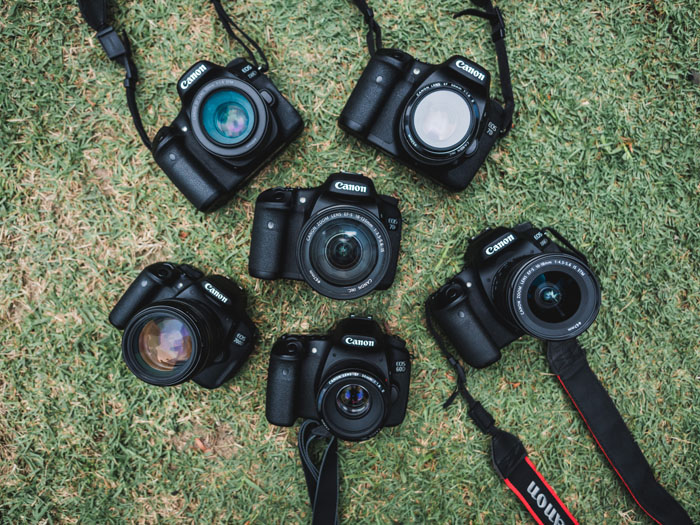
There are plenty of image hosting sites available. They all offer different features, so it can be hard to choose the right image hosting site for you.
Here is a rundown of the 12 best free image hosting sites. Compare what they offer and decide on the best one to suit your needs.
What Is the Best Free Image Hosting Site?
For a genuinely free tier, Flickr is the best all-round pick, storing 1,000 photos at no cost. Want unlimited storage with portfolio and selling tools instead? SmugMug (below) is our top pick, after a 14-day free trial.

Why You Need to Consider Free Image Hosting Sites
Image hosting is vital for all photographers. Whether you’re a professional photographer or an enthusiastic hobbyist.
There’s a saying that it’s not a matter if your hard drive will fail but when. Data loss because of a hardware malfunction is painful and frustrating.
The solution to this is image hosting. Having your photos stored in a cloud service will give you that extra assurance. If something happens to your computer, you won’t lose your photographs.
Uploading your images to the cloud allows you to free up space on your computer, allowing it to work faster.
Finally, your images will be available across devices. You can share them with family and friends and access them anywhere, at any time.
500px
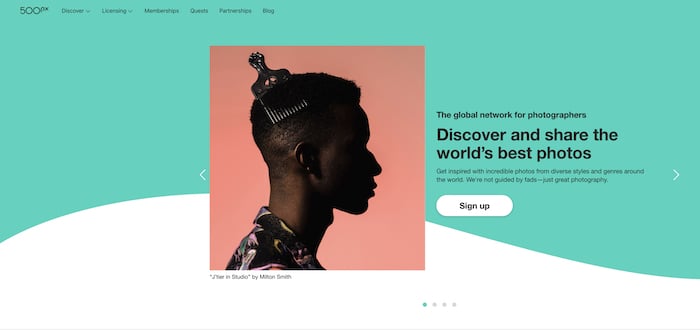
Created with pro photographers in mind, 500px is a showcase platform first. Its free tier is called Explorer, and it allows 60 high-resolution uploads a month. That is enough to keep a portfolio ticking over and nowhere near enough to park a wedding gallery.
The two paid tiers, Plus and Pro, lift that to unlimited uploads with uncompressed storage and remove the ads. A portfolio website on your own domain and priority support are Pro only, so don’t upgrade to Plus expecting either.
Do not come here for embed codes. Nothing in the free tier is aimed at dropping an image into a forum post or a marketplace listing, so use ImgBB or PostImages below when that is the job. What 500px gives you instead is an audience.
The most significant benefits are display and networking. You can share your pictures and make comments on other photos. You can also follow your favourite photographers.
You can build a profile on 500px, and license your photos as stock photography. 500px now advertises up to 100% royalties on exclusive work sold through its partners, Getty Images among them.
Flickr
Do you remember Flickr? A lot of photographers have forgotten about Flickr, but it’s still trendy. Flickr has been around a long time.
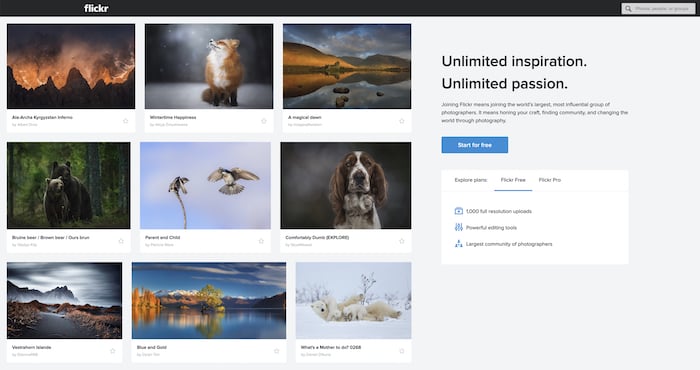
One of the main draws of Flickr is social networking. You can share your photos with the community and join groups for genres of photography.
Photographers can mark their favourite images and also leave comments. However, you can edit your privacy settings to control who sees your photos.
Flickr offers free image hosting. You can organize your images into albums or even edit them from within the app.
Flickr offers a large amount of storage and a simple interface. You can upload up to 1,000 high-resolution images on the free plan, at 200 MB per photo and 1 GB per video. Free accounts are also held to Safe-rated content and to 50 non-public items, and they can no longer download the original or large-size file. Full-size downloads of your own work are a Pro feature now, so treat a free Flickr account as a share layer rather than your only copy.
If you upgrade to the Pro plan ($11/month, or $82/year), you get unlimited storage, ad-free browsing for you and your visitors, full-size downloads, advanced stats and partner discounts, currently Adobe, Blurb, KEH, Priime and SmugMug. Those partner perks are annual-plan only. Flickr excludes them from monthly and gifted subscriptions.
Google Photos
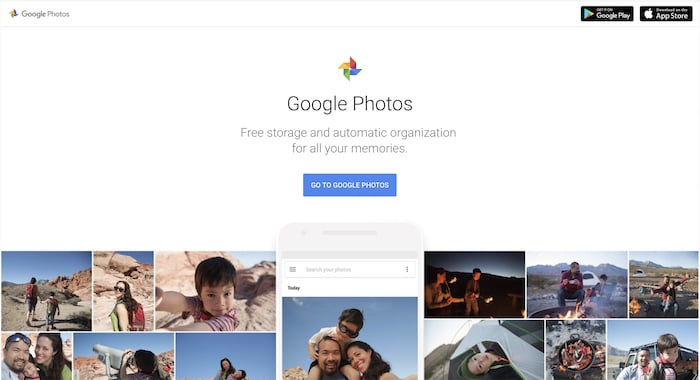
Google Photos is an excellent service for uploading high-quality images, and it syncs automatically across every device signed into your Google account.
Google ended unlimited free photo storage back in June 2021. Every photo and video you upload now counts against the same 15 GB of storage your Google account shares across Gmail, Drive and Photos. There is no separate, unlimited free tier anymore, no matter what resolution you upload at.
Once you fill the free 15 GB, you need a paid Google One subscription; plans start at 100 GB and scale up from there. A Google Workspace plan can raise the allowance, but the free tier itself stays at 15 GB.
There is a trap in the small print worth knowing about. Google’s own support pages say that if you don’t use Google Photos for two years or more, or if you run out of storage, your photos and videos may be deleted. Free hosting is not the same thing as archiving.
The platform still offers automatic backup and photo/video sync from a smartphone or a point-and-shoot camera. To get started, download the Google Photos app or go to photos.google.com.
For photos from a DSLR camera, you can use your storage space from your Google account. Note that you can upload PNGs, JPGs, and GIF images, as well as some other file formats.
ImageShack
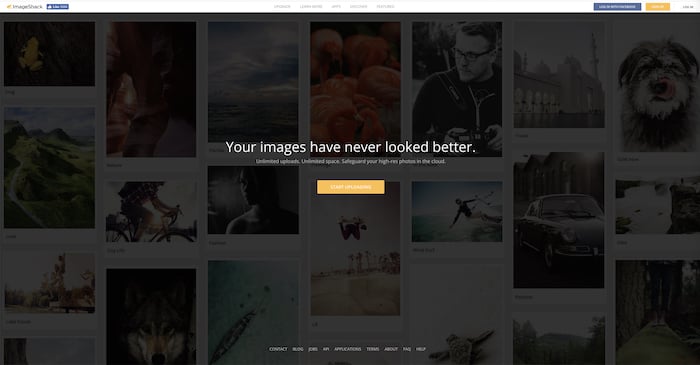
ImageShack gives you an attractive way to lay out your best photos. Every new account starts on a 30-day free trial that unlocks the paid features: direct linking, image stats and watermarking. When the trial ends your account drops to the free tier, which allows 10 GB of bandwidth a month and caps every image at 25 MB.
Read that free tier carefully before you build anything on it. ImageShack’s own FAQ says direct linking is for paid subscribers and trial users only, so a free account can store and share images but cannot hotlink them into a forum post or a web page. The same FAQ says images in free accounts may be removed to free up resources. Neither is a dealbreaker for casual sharing, and both rule it out as your only copy.
Signing up means you can organize and tag your photos. Other users can discover your work, or you may choose to keep your images private or limit who you share them with.
You might still want to upgrade to a paid plan for more monthly bandwidth (BASIC, PRO and PREMIUM tiers run from 100 GB to 4,000 GB/month).
ImageShack provides a large selection of mobile and web apps. Uploading and sharing your pictures is a simple process.
The ImageShack Resize application allows you to edit your images, as well as crop and resize them.
Imgur
With Imgur, your photos won’t expire, as long as they’re tied to a registered account. Since May 2023, Imgur has deleted images that were uploaded without an account, so “free” now means free-with-sign-up rather than the fully anonymous hosting it used to offer.
A free account also gets you extras like adding captions to your photos or uploading your images through email.
Unlike some of the other image hosting options, Imgur allows direct linking. Each image can have a link that can be posted in forums or embedded in HTML.
You can upload many different file formats to Imgur besides the standard JPG. Its current list is PNG, GIF, APNG and TIFF, plus video in MP4, MPEG, AVI, WEBM and MOV. Non-animated files up to 50 MB are supported, animated files and video up to 200 MB, and uploads are capped at 50 images an hour with no lifetime limit on an account.
One detail matters for image quality. Imgur compresses non-animated images over 1 MB on anonymous uploads, but only over 5 MB when you are signed in, and PNGs over 5 MB are converted to JPEG either way. If you care about the file that comes back out, upload from an account.
You can share your images on most social networking sites, and it’s still commonly used for uploads to Reddit. One caveat for a UK audience: since 30 September 2025, Imgur has blocked visitors connecting from UK IP addresses (a response to Online Safety Act/ICO scrutiny), so an Imgur link shared with UK readers may just show “content not available in your region.”
Freeimage.host
Freeimage.host gets a file off your desktop and into a link faster than anything else here. Drag an image onto the homepage and it hands you a direct image link, an HTML thumbnail and BBCode in one step, with no sign-up screen in the way.
The free upload cap is 64 MB per image. That is double what ImgBB and PostImages allow, and the most generous free limit on this list. The site has been running since 2018, and it offers the ShareX integration and browser plugins that matter if you upload constantly rather than occasionally.
An account is optional, and it only buys you organisation. With one you get albums, a profile, and the ability to go back and edit or delete an upload later. Albums can be public, unlisted behind a link, or password-protected. Upload anonymously and there is no dashboard at all, so save the delete link the site gives you or the image is out of your hands.
The honest limit is the one the site states itself. Its terms of service say Freeimage.host “should not, in any case, be considered as a main backup service.” Take that at face value. Use it for a forum post, a marketplace listing or a quick share with a client. Keep the shoot itself somewhere you pay for.
ImgBB
ImgBB takes about ten seconds to learn. Plain, fast, ad-supported, and good at exactly one job.
You don’t need an account to upload. Drag and drop straight onto the homepage. Images are capped at 32 MB on the free tier (64 MB if you upgrade), and ImgBB lists unlimited space as a Pro feature.
An account is only required if you want to save uploads to an album or edit them later. You also get to choose an auto-delete window per image, from 5 minutes to 6 months, or “don’t auto-delete” to keep it indefinitely, which is the default.
ImgBB gives you quick access to viewer links and ready-made HTML/BBCode embed codes, which makes it a solid drop-in for forums and marketplace listings.
It is plumbing, though. There is no community to speak of, nothing built for client delivery, and no real way to present a body of work. If you want somewhere to show photographs rather than link to them, read the Flickr and SmugMug entries instead.
PostImages
PostImages has been doing the same job the same way for years. Paste an image in, get a permanent link out, with the fewest possible steps between the two.
You can upload a variety of image file types via the main page, either from your computer or by pasting a remote URL. No account is required to upload, though registering lets you manage and re-visit your images later. Each image is capped at 32 MB on the free plan, and the API is throttled to 1,000 units a month.
Before you upload, PostImages lets you resize the image and set an expiry date, or choose no expiration to keep it up permanently. There are no restrictions on the number of images you can upload.
Two limits on the free plan are easy to miss, and both change what it is good for. Hotlinked images are served at up to 1280px wide on the free tier, with the original resolution reserved for Premium. And free hosting is ad-supported, for you and for anyone you send a link to. Premium lifts the per-image cap to 96 MB, serves originals and drops the ads.
Dropbox
Dropbox is a simple and efficient way to store your photos. The best way to understand this platform as a virtual box where you can “drop” your photos. They’re saved in the Cloud, available for you to access at any time.
You can also upload images from your computer to Dropbox as you would with any other files, or with its Android and iOS apps.
You can also sync your photos to a folder on your desktop. Once photos are in the Cloud, you can share the files directly with other Dropbox users. It also backs up automatically, so you don’t have to worry about losing data.
You can organize your folders and sub-galleries and share links to individual files or folders.
To share a photo, right-click on the images and then copy and paste the link to your desired sharing location. You can also share this link via email.
Your contacts or visitors can also download your photos if you provide them with access.
Dropbox doesn’t provide specialized tools for photographers. However, it’s an excellent option for storing original or edited versions of your photos for different purposes.
Dropbox Basic is free for up to 2 GB of storage, per Dropbox’s own Help Center. That is the whole free allowance, and it has not moved in years, so a single RAW-heavy shoot will fill it.
pCloud
pCloud is here for a different reason from everything above it. It is Swiss cloud storage rather than a link-and-embed image host, and the free plan needs no credit card. If the rest of this list is somewhere to park a file for other people, pCloud is somewhere to park it for yourself.
What earns it a place is the pricing model. Every other paid tier on this page is a subscription you keep paying forever. pCloud also sells lifetime plans, one payment for storage that does not renew, which is the only option here that ever stops costing money.
For photographers it does the useful things. Automatic phone backup, a desktop drive that streams files instead of eating local disk space, shared folders with password protection and expiry dates, and a choice of data centre between Europe and the USA.
Two caveats, and both matter. pCloud advertises the free plan as “up to 10 GB” rather than a flat 10 GB at sign-up, so check what you actually land on before you plan around the number. And what it hands you is a share link, not a clean hotlinkable image URL, so treat it as backup and delivery and keep ImgBB or PostImages for anything you need to embed.
Amazon Photos
Amazon Photos, still widely called Prime Photos, is Amazon’s photo-storage service for Prime members. You can store and share unlimited full-resolution photos on your desktop, smartphone or tablet. 5 GB of storage for video is included on top.
The service also lets you order photo prints, cards, custom wall decor and other products. It includes free shipping.
With Prime membership, you can invite up to 5 people to receive unlimited photo storage. With “Groups”, you can share images with anyone, even if they’re not a Prime member.
Use iOS or Android mobile apps to auto-save your photos. Then safely delete them from your phone to free up space on your device.
The catch is that none of this is really free, and Amazon says so plainly. The unlimited photo storage is a Prime perk, so it lasts exactly as long as your membership does. Amazon’s own FAQ states that if you cancel Prime or let it expire, you drop to the 5 GB of combined photo and video storage every Amazon customer gets. If your library is bigger than that, budget for Prime indefinitely or plan how you would get it all back out.
SmugMug
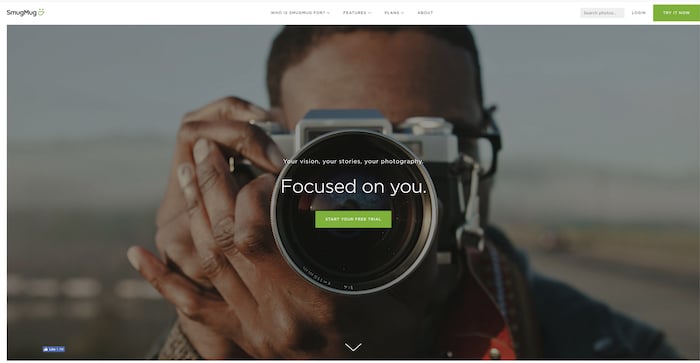
SmugMug is free for a 14-day trial. It’s one of the most popular platforms for photographers.
It doesn’t have a completely free option beyond this period. It’s worth mentioning here because it’s a great site to not only display your photography but also sell prints and other products.
No one who takes photographs is left behind. There are features meant for everyone, whether you are a pro, an “enthusiast” or “memory maker”.
SmugMug dropped its old cheap “Basic” plan, and there is nothing free underneath the trial. It is a subscription, in three tiers: Direct, Portfolio and Pro, each cheapest billed annually and dearer month to month. There is also a custom-priced Enterprise tier for studios and teams.
Every plan includes unlimited full-resolution JPEG storage, 24/7 support from real people, and a customizable portfolio site on your own domain with editing tools to tweak the templates. RAW storage is not bundled into any tier. It is a paid add-on you buy by the terabyte on top of whichever plan you pick.
One bonus of SmugMug is that you can set up an e-commerce store to sell prints or photos.
Sharing to social media is also an option.
Frequently Asked Questions
Is Google Photos still free and unlimited?
No. Google ended unlimited free Google Photos storage in June 2021. Every upload now counts against the 15 GB your Google account shares across Gmail, Drive and Photos. After that, you need a paid Google One plan.
Which site on this list has no storage cap on the free plan?
Freeimage.host, PostImages and Imgur all offer unlimited storage for free, with per-image file-size limits instead of a total cap. Amazon Photos also offers unlimited photo storage, but only while you keep an active Prime membership.
Do free image hosting sites delete inactive photos?
Some do, and two of the biggest say so in writing. Google will delete your photos and videos if you don’t use Google Photos for two years or more, or if you run out of storage. ImageShack’s FAQ says images in free accounts can be removed to free up resources. Free hosts also close down altogether. Check the host’s own retention policy before you treat any free tier as permanent storage, and keep a local backup regardless.
Conclusion
These image hosting websites are free and offer some great features. The file size and type of files that you can upload will determine the level of ease you’ll experience.
There is no one-size-fits-all solution that is perfect for everyone. You may need to use a couple of services that complement each other to meet all your image-hosting needs. You can also try paid sites such as ShootProof.
If you’re looking for more options for free image hosting, why not check out our ImgBB review, too!
Ever wondered where to showcase your astrophotography images at full resolution? Check our review on AstroBin!