If you’re struggling to turn your vision into a reality, a mood board app can help. The creative process isn’t always as straightforward as we’d hope.
Creating a mood board not only helps with organizing your thoughts but can inspire you to get creative in photography.
Ten apps make the list below. If you want one that covers the whole job on its own, start with Milanote. It is free to begin, it ships a photography mood board template, and a finished board opens from a link without your client signing up for anything.
What Is a Mood Board App and Why Should You Use One?
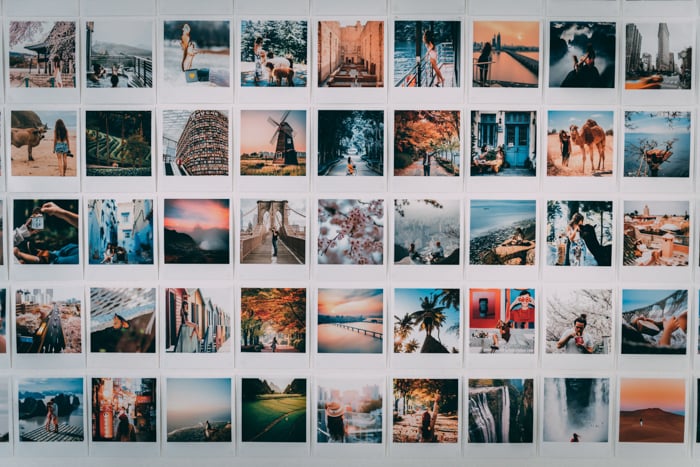
When executing a project, it is always good to collect your ideas. A mood board is a visual tool to gather ideas of the same style or concept. You can also use it for conveying a particular feeling or atmosphere.
It is usually executed in a collage form and is mostly done online. But it is up to you if you want to print the pictures out and create a physical mood board.
In photography, you can use one to plan a shoot’s lighting, styling, posing and location, as well as sharing your ideas with the client. I recommend that you both look at the mood board before the photo session. This can ensure that you are on the same page with your client when it comes to style and ideas.
Taryn Elliott- Pexels
How to Choose Images for a Mood Board
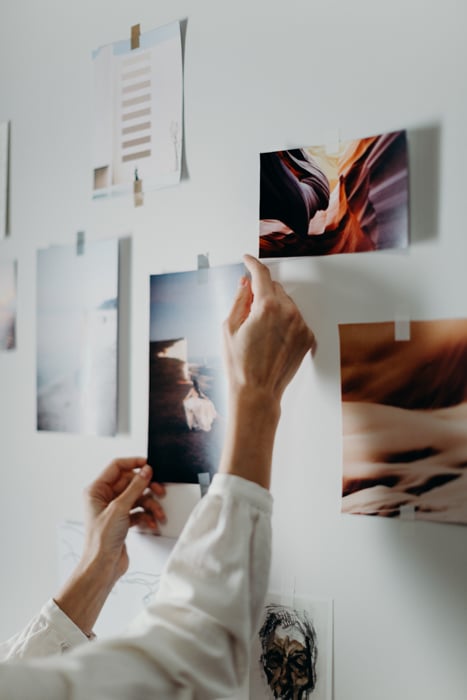
A mood board’s primary goal is to inspire you before your photoshoot. For this reason, it is important to choose pictures that represent what you want to achieve with your photographs.
It can be a specific atmosphere, a way of lighting, or any creative element that you want to include.
Once you have the pictures that you would like to use for your mood board, you can add it to a collage. This is easiest to do using a mood board application.
How to Pick the Right Mood Board App
Ten apps is a lot of choice, so start from the job rather than the feature list.
If you are still gathering, Pinterest is the fastest way to fill a folder with other people’s work. If the board is for one shoot and a client has to understand it, Milanote and StudioBinder are the two built for that. If the board is a pitch or a brand deck and has to look finished, use Canva or Adobe Firefly Boards.
If other people are working on it with you, Miro, FigJam and Mural are whiteboards first, so several of you can move images at once. If you want the references on screen while you edit rather than before the shoot, PureRef floats over Lightroom and nothing else here does. And if the words matter as much as the pictures, Evernote keeps a paragraph of location notes next to the frames.
Best Mood Board Apps in 2026
1. Pinterest
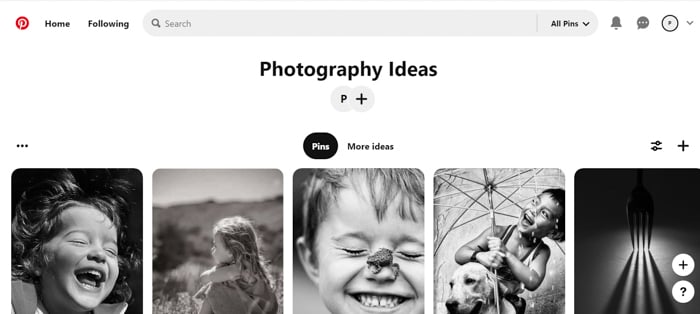
Pinterest is certainly the most popular and easy-to-use free mood board application. It is the app that introduced mood boards to the public and quickly won everyone’s heart.
There are millions of pictures available, so you can always find exactly what you are looking for. Every image (or so-called “pin”) is linked to a website. You can also download, share, and upload Pinterest images.
By pinning the photos to your boards, you can easily collect the ideas that appeal to you. Whether it is lifestyle, recipes, or photography, Pinterest has something to offer to everyone.
Pinterest is free, and that is the whole model. What it is not is a place to build a tidy board for a client. The feed keeps suggesting more, boards are public unless you set them to secret, and there is no layout control beyond the order of the pins. Use it to gather, then move the twenty images that survive into one of the apps below.
2. Canva
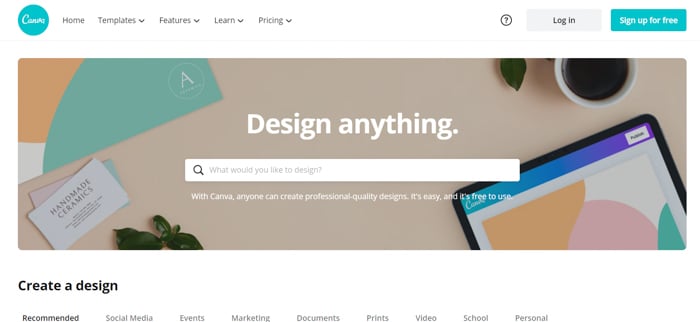
Created to be a designing app, Canva offers plenty of mood board maker templates. You can choose from hundreds of layouts, and even create your own design.
It is based on drag-and-drop tools and professional, customizable templates. Canva is available both on desktop and mobile devices.
Signing up is free. A Canva Pro subscription unlocks the premium photo and font library and the brand tools, and Business and Enterprise tiers sit above it.
It is the ultimate tool for people who would like to create a mood board for their brand or commercial use.
Canva is a design tool first, so a board is a document you lay out rather than a canvas you scatter on. Dragging forty references in and sorting them later is a fight. Pick it when the board has to look finished, and pick something looser when you are still deciding.
3. Mural
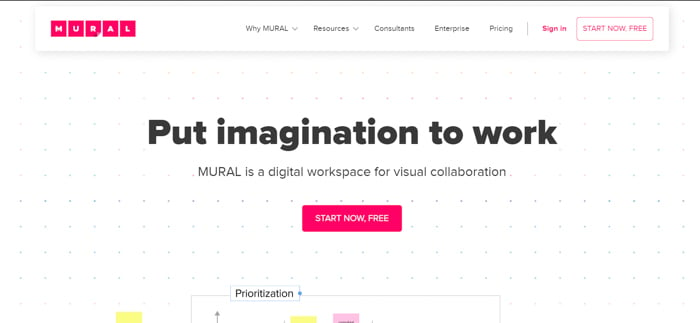
Mural, as described on their main page, is a digital workspace for visual collaboration. It is made to be a tool for teams who want to work on their creative process together.
It allows teams to imagine and discuss their design ideas. You can drag images, create diagrams, and design mood boards. It is even possible to start polls during the brainstorming session.
There is a free plan that keeps three murals editable with unlimited members, and the Team+, Business and Enterprise tiers are subscriptions above it.
Mural is built for workshops, not for photographers. The polls, timers and voting exist because Mural sells to product teams, and none of them help you settle on a lighting setup. Take it if your work already runs through a team that uses it, and skip it if you are planning one shoot on your own.
4. Miro
Miro is an infinite whiteboard, and a mood board is one of the simplest things you can build on one.
You drop images anywhere on the canvas, scale them, group them and write on top. There is no grid to fight, so a board can start as a loose pile of references and end up as a shot-by-shot layout without you changing tool halfway. Comments sit on the canvas itself, so a client can point at one frame and ask for that light rather than trying to describe it.
Miro runs in a browser, as a desktop app and as a phone app. The free plan lets you create and share as many boards as you like, but only the three most recent stay editable. The Starter, Business and Enterprise plans are subscriptions that lift the cap and open the template library.
The three-board rule is the thing to watch. If you shoot every week and want a live board per client, the free plan keeps locking last month’s work and you will be on a subscription inside a month. If you build a board every few months, free is plenty.
5. Adobe Firefly Boards
Adobe’s mood board tool is called Firefly Boards, and it works on an infinite canvas like Miro’s.
The difference is that you are not limited to images you already have. You can upload your own reference shots, pull frames from Adobe Stock, or generate new ones from a text prompt when nothing you own shows the look you are chasing. Style references let you push the feel of one image onto another, which is a quick way to test a colour palette before you book a location.
Boards links out to Adobe Express and Photoshop, so a frame you like can go straight into a layout or an edit, and anything you save stays in the same Adobe account as the rest of your work. Firefly is free to start, with generation limits that reset every day. The paid Firefly plans are monthly subscriptions and include unlimited access to Boards.
There are two reasons to skip it. The free tier’s daily limits are easy to hit if you generate rather than upload, and the whole tool is built around generative AI. If you only want to arrange twenty photographs you already shot, this is far more machinery than the job needs.
6. PureRef
PureRef is the odd one out here. It is a small desktop program rather than a website, and it does one thing: hold your reference images on screen while you work.
Drag images in from a browser, a folder or the clipboard and they land on a canvas you arrange however you like. Set the window to stay on top and it floats over Lightroom or Photoshop at whatever size you want, down to a thin strip along one edge. That makes it the mood board you actually look at during the edit, rather than the one you built and closed.
It runs on Windows, macOS and Linux. Personal use is free with an optional donation, a small-business licence is a one-time payment, and there is a per-seat subscription for bigger teams.
It is not a client tool. There is no share link, no comments and no phone app, so showing a board to somebody means a screenshot or sending them the file. Use PureRef for your own eyes and use something else for the client conversation.
7. StudioBinder
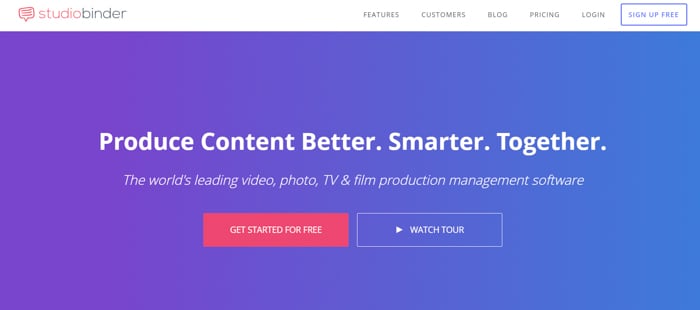
StudioBinder is production software, and its mood board creator is the part worth your time.
You build a board from one to four columns, set the background colour, and edit images without leaving the page. The built-in editor crops, adjusts exposure, applies 13 preset filters and takes annotations, so a reference can be marked up rather than just pinned. You can also create shot lists and storyboards alongside it, which keeps the look and the plan in one place.
Sharing is the strong part. Invite collaborators to comment or edit, let them favourite the frames that land, and send a presentation link to the client. Finished boards export as print-ready PDFs with your own headers, footers and notes, which is the closest thing here to handing over a proper lookbook. Signing up is free, and the paid plans are subscriptions.
The catch is everything else in the app. Call sheets, shooting schedules, script breakdowns and production contacts are built for film and TV crews, and none of it helps on a solo portrait session. If your shoots involve one client and no crew, most of what you are logging into is dead weight.
8. Evernote
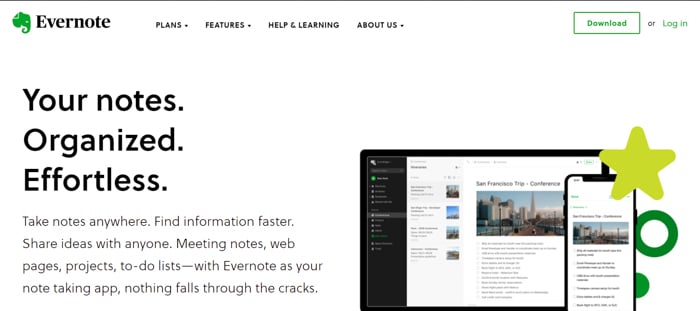
Evernote is a popular note-taking app, but you can also use it to design mood boards. By opening a new note, you can drag photos into it alongside writing notes.
Each project is stored as a notebook that you can add your content to. It is often used for gathering links, audio files, and images.
It is also possible to sync the notes between devices. This way they’re available on desktop, tablet, and mobile.
The free plan is much tighter than it used to be. It caps you at 50 notes, one notebook and one synced device, so the notebook-per-project workflow above needs the Starter or Advanced subscription now.
Evernote is a note app with pictures in it, not a canvas. You cannot lay images side by side or size them against each other, so reach for it when the words carry as much as the frames, such as a location note with three photos and a paragraph about the light, and reach for something visual when they do not.
9. FigJam
FigJam is Figma’s whiteboard, and it is free to start.
Drop images onto an endless canvas, arrange them, and add sticky notes for the parts of a look you cannot show with a picture. Anyone holding the link can leave a comment without paying for a seat, which is the useful bit on a shoot: your stylist, your client and your second shooter can all mark up the same board.
Figma’s Starter plan is the free one. Professional, Organization and Enterprise are per-seat subscriptions above it, and FigJam is included in all of them rather than sold separately, so you are not buying a second tool.
There are no photography templates, so every board starts from an empty canvas. If you want one that already knows what a shot list or a lookbook page should look like, Milanote and StudioBinder will get you there in half the time.
10. Milanote
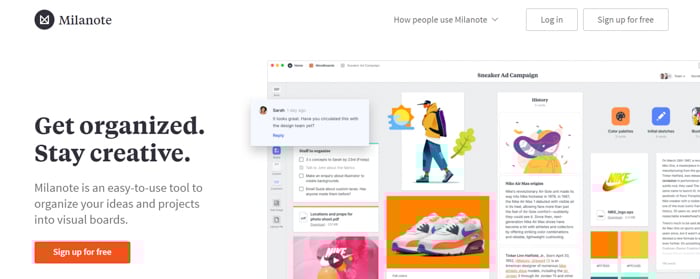
Unlike most of the mood board design apps mentioned above, Milanote offers a special photography mood board template. You can arrange images, videos, and links to find the style you’re aiming for.
Milanote provides tools from note-taking to project management and even mind-mapping. The interface can be set up as private or as a collaborative tool for a company.
It is especially impressive when it comes to executing projects and creative processes. This is why it can be a perfect alternative for making a photography mood board.
The free plan has no time limit and covers 100 notes, images or links, 10 file uploads and unlimited shared boards. A per-person subscription removes the caps, and a team plan covers larger groups. There are apps for iPhone, iPad, Android, Mac and Windows, plus a web clipper that pulls a picture off any page into a board.
Watch the 100-item cap. It counts across your whole account rather than per board, so three or four dense shoot boards will use it up and you will be choosing between deleting old work and subscribing. That is the honest ceiling on the free plan, and it is still the most generous free tier here for the way photographers actually work.
Frequently Asked Questions
Do I Need to Pay for a Mood Board App?
No. Pinterest is free outright, and Milanote, Miro, FigJam, Mural, Canva, StudioBinder, Adobe Firefly Boards and Evernote all have a free plan you can build a real board on. PureRef is free for personal use. You start paying when you run into a cap, and the caps differ a lot: Milanote counts items across your account, Miro and Mural count editable boards, and Evernote counts notes and devices.
What Should Go on a Photography Mood Board?
Aim for the decisions you have to make on the day. Lighting direction and quality, colour palette, styling and wardrobe, posing, location, any typography if the board is heading into a layout, and two or three frames that show the crop and the mood you are after. Twenty strong images beat a hundred loose ones, because the board exists to settle arguments before the shoot, not to collect inspiration forever.
How Do I Share a Mood Board With a Client?
Send a link rather than a file. Milanote, Miro, Mural, FigJam and StudioBinder all publish a board to a URL that opens in a browser without an account. StudioBinder also exports a print-ready PDF, which is the better file type when a client wants something to keep or print.
Can I Make a Mood Board on My Phone?
Yes, on most of them. Pinterest, Canva, Milanote, Miro, Mural and Evernote all have iOS and Android apps, and Adobe Firefly runs on mobile too. PureRef is desktop only, and StudioBinder and FigJam are best on a big screen because you are dragging images around a canvas.
Conclusion
Making mood boards is a simple yet effective method for organizing your ideas.
Photographers can greatly benefit from mood board applications. They are useful tools for arranging projects and getting inspiration for future work.
We hope that the apps we collected will help you with creating your own mood boards!
Pick one and build a board for the next shoot you already have booked, not a hypothetical one. Milanote is the place to start if you want a single tool that carries a shoot from reference to client link. Spend twenty minutes pulling images into it, cut them down to the ten that actually describe the look, then send the link before your next pre-shoot call and see how much shorter that conversation gets.
You can also share your images on social media platforms. To learn more about social media for photographers, don’t miss out on our ebook – Social Success Strategies!