The Nikon Z 180-600mm f/5.6-6.3 VR is our choice as the best telephoto lens. It reaches 600mm for birds and distant wildlife. It starts at 180mm, so it can also frame a whole animal or a player on the field. The zoom is internal, so the lens keeps the same length and balance as you zoom. Its 5.5-stop VR helps with handheld shots.
Not every photographer needs 600mm. Some readers need a fast f/2.8 zoom for indoor sports and portraits. Others want a light lens for travel or a first step past the kit zoom. The list covers Nikon Z, Sony E, Canon RF, Fujifilm X and Micro Four Thirds cameras.
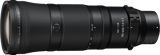
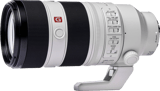
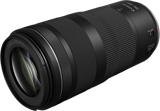
The Best Telephoto Lenses for Wildlife, Sports and Travel
A telephoto lens must fit your camera's mount, so start with the Mount row in each review. Nikon Z owners can choose ranks 1, 6 and 10. Sony E owners have ranks 2, 4, 7 and 9, plus a Sony version of rank 6. Canon RF owners have ranks 3 and 5. Fujifilm X and Micro Four Thirds each have one pick. After the mount, the main choice is reach against weight and light. A 600mm zoom brings distant birds closer but weighs over 4 lb. A 70-200mm f/2.8 gives faster shutter speeds in dim light but less reach. The table shows each lens's best use.
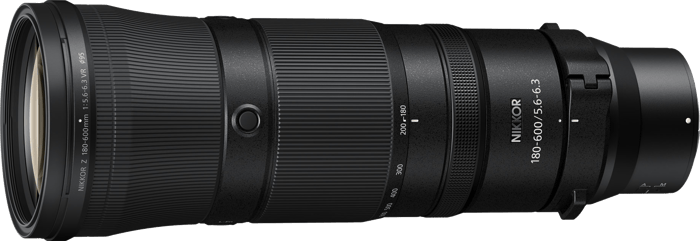
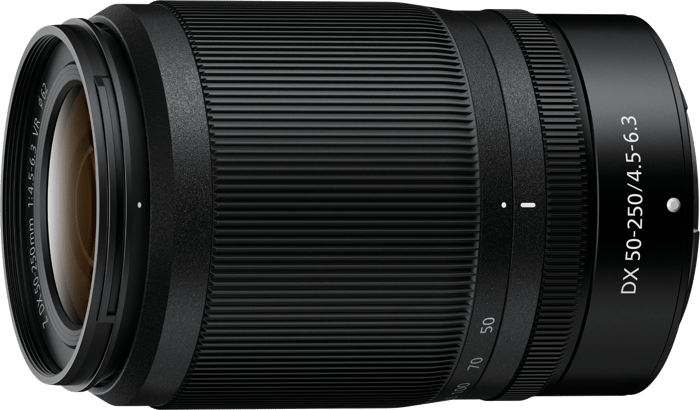
1. Nikon Z 180-600mm f/5.6-6.3 VR
| Mount |
Mount
Nikon Z (full frame)
|
| Focal Length |
Focal Length
180-600mm
|
| Max Aperture |
Max Aperture
f/5.6-6.3
|
| Weight |
Weight
4 lb 5 oz (1,955 g)
|
The Nikon Z 180-600mm f/5.6-6.3 VR is the best telephoto lens for most wildlife and outdoor sports shooters on a Nikon Z camera. It gives 600mm of reach. The zoom range starts at 180mm, which is wider than most lenses of this type. You can frame a deer in its habitat, then zoom in for a head shot without changing lenses.
The internal zoom is the feature that sets it apart. The barrel stays the same length from 180mm to 600mm, so the balance does not shift as you track a bird. The zoom ring turns only 70 degrees, which makes fast changes of framing easier. VR gives 5.5 stops of stabilization, and the lens takes Nikon's 1.4x and 2x teleconverters.
It also focuses close. At 180mm the minimum focus distance is 4.27 ft, with a maximum magnification of 0.25x. That is useful for dragonflies, flowers and small subjects you cannot approach.
The drawback is size. It weighs 4 lb 5 oz without the tripod collar and takes 95mm filters. The f/6.3 aperture at 600mm also needs a higher ISO at dawn and dusk. If you shoot Sony, the Sony FE 200-600mm is the closest match. If you need a lighter lens for long walks, look at the Tamron 50-400mm.
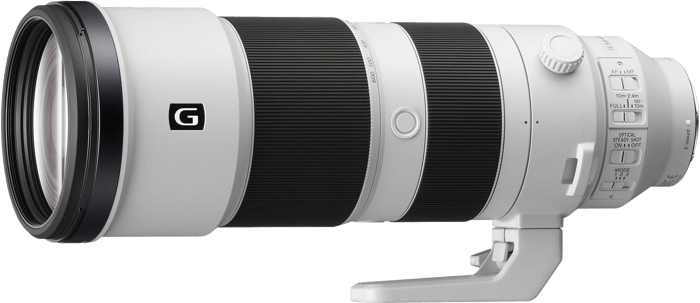
2. Sony FE 200-600mm f/5.6-6.3 G OSS
| Mount |
Mount
Sony E (full frame)
|
| Focal Length |
Focal Length
200-600mm
|
| Max Aperture |
Max Aperture
f/5.6-6.3
|
| Weight |
Weight
4 lb 10.7 oz (2,115 g)
|
The Sony FE 200-600mm f/5.6-6.3 G OSS is the wildlife zoom to buy if you shoot a Sony full-frame camera. Like the Nikon, it has an internal zoom. The lens length does not change as you zoom, so it stays balanced on a monopod or in your hands.
The 600mm long end is the reason to buy it. Birds, distant deer and surfers fill the frame without a teleconverter. If you need more reach, it works with Sony's 1.4x and 2x teleconverters. Optical SteadyShot steadies handheld shots, and the dust- and moisture-resistant design suits rain and dusty trails.
Against the Nikon Z 180-600mm, it starts at 200mm instead of 180mm. It focuses only to 7.88 ft, against 4.27 ft for the Nikon, and its maximum magnification is 0.2x. That makes the Sony less useful for close insects and flowers. It is also slightly heavier at 4 lb 10.7 oz.
If you need 600mm on a Sony E camera, this is the lens. If you want fast f/2.8 for indoor sports instead, choose the Sony FE 70-200mm f/2.8 GM OSS II.
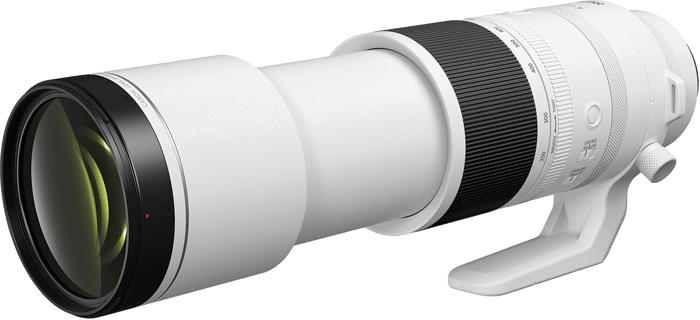
The Canon RF 200-800mm f/6.3-9 IS USM gives Canon RF shooters the longest reach on this list. At 800mm, small birds and distant animals fill much more of the frame than they do at 600mm. You get that reach without a teleconverter.
Its 5.5-stop optical image stabilization makes handheld shots at 800mm practical. Canon's design keeps the center of balance steady as the lens extends. The lens also focuses to 2.62 ft at 200mm, with 0.25x magnification. It works with Canon's RF 1.4x and 2x extenders for more reach.
The main cost is light. The aperture drops to f/9 at 800mm. In shade or at dusk, you will need high ISO settings to keep shutter speeds fast enough for moving animals. It weighs 4 lb 8.7 oz and takes 95mm filters. Unlike the Nikon and Sony 600mm zooms, it extends as you zoom.
Choose it if reach matters most. If you want a lighter Canon lens for hikes and travel, the Canon RF 100-400mm f/5.6-8 IS USM weighs about a third as much.
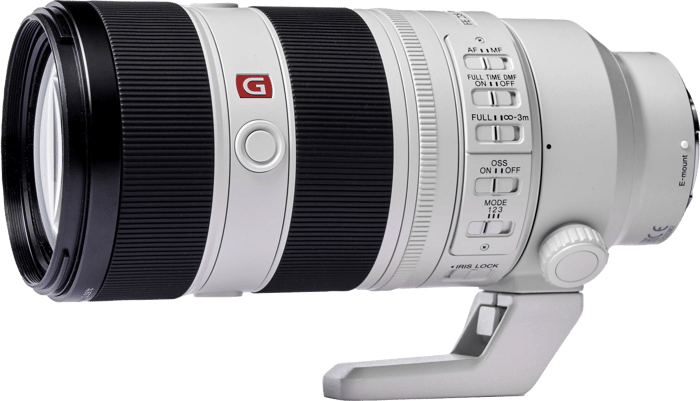
4. Sony FE 70-200mm f/2.8 GM OSS II
| Mount |
Mount
Sony E (full frame)
|
| Focal Length |
Focal Length
70-200mm
|
| Max Aperture |
Max Aperture
f/2.8
|
| Weight |
Weight
2 lb 4.9 oz (1,045 g)
|
The Sony FE 70-200mm f/2.8 GM OSS II is our pick for low light, indoor sports and portraits. Its f/2.8 aperture stays the same at every focal length. That lets you use shutter speeds about two stops faster than an f/5.6 zoom, which matters in gyms, arenas and evening events.
The f/2.8 aperture also gives a shallow depth of field. A runner or a portrait subject stands out against a soft background. The internal zoom keeps the length constant, and the lens has dust and moisture resistance. It focuses to 1.32 ft at 70mm, so it also works for details and close portraits.
It weighs 2 lb 4.9 oz without the tripod mount. That is about half the weight of the 600mm zooms above. If you need more reach later, it takes Sony's 1.4x and 2x teleconverters.
The limit is reach. At 200mm, it cannot frame a small bird like the Sony FE 200-600mm can. If you shoot mostly outdoors in good light, the Sony FE 70-200mm f/4 Macro G OSS II is lighter and focuses much closer. Nikon and Canon shooters should look for their own 70-200mm f/2.8 lenses, since this one fits Sony E only.
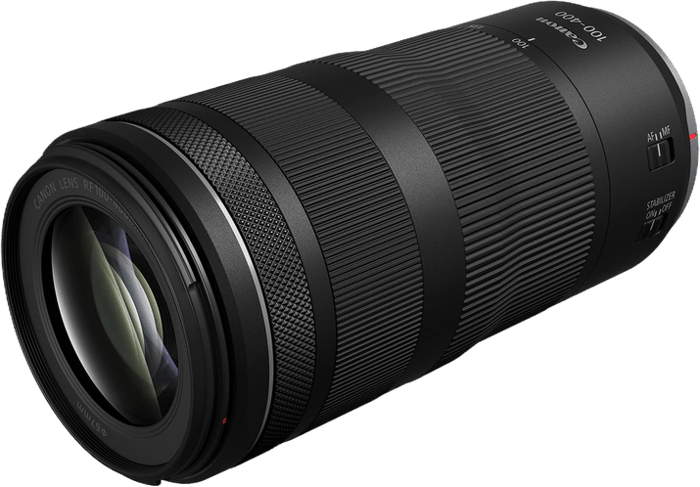
5. Canon RF 100-400mm f/5.6-8 IS USM
| Mount |
Mount
Canon RF (full frame)
|
| Focal Length |
Focal Length
100-400mm
|
| Max Aperture |
Max Aperture
f/5.6-8
|
| Weight |
Weight
1 lb 6.4 oz (635 g)
|
The Canon RF 100-400mm f/5.6-8 IS USM is the lightest way to get 400mm on a Canon RF camera. It weighs 1 lb 6.4 oz. That is light enough to keep in a daypack for a full day of hiking, kids' soccer or zoo visits.
On a full-frame Canon, 400mm is enough for most wildlife at a park or nature reserve. On an APS-C body like the EOS R10 or R50, the crop makes it act like a 640mm lens. Optical image stabilization gives 5.5 stops at 400mm. The Nano USM autofocus motor is fast and quiet. You can read more about Canon's motor types in our USM vs STM guide.
It is also good for close subjects. At 200mm it focuses to 2.89 ft, and maximum magnification is 0.41x at 400mm. That is enough for butterflies and flower details.
The trade-off is light. The aperture closes to f/8 at 400mm, and Canon makes no weather-resistance claim for this lens. If you need more reach and can carry the weight, the Canon RF 200-800mm f/6.3-9 IS USM goes twice as far.
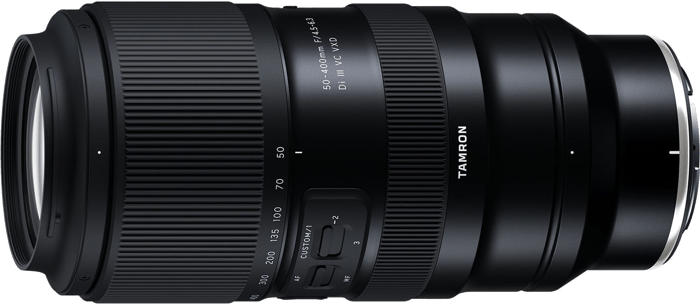
The Tamron 50-400mm f/4.5-6.3 Di III VC VXD covers the widest range of any full-frame lens here. It starts at 50mm, a normal view for people and scenes. It ends at 400mm, which is enough for most wildlife and field sports. If you want one lens for a safari, a zoo trip or a day at the coast, this range saves lens changes.
The 50mm end also makes it a strong close-up lens. It focuses to 9.8 in at 50mm and reaches 1:2 magnification. At 400mm the ratio is 1:4. Tamron's VC stabilization and moisture-resistant seals suit outdoor use. A zoom lock stops the barrel from extending when the lens hangs from your shoulder.
The linked version fits Nikon Z and weighs 2 lb 9.6 oz. Tamron also makes it for Sony E, where it weighs 2 lb 8.7 oz. That is a little over half the weight of the Nikon Z 180-600mm, but almost twice the Canon RF 100-400mm.
The limits are reach and teleconverters. It stops at 400mm and does not work with teleconverters. If birds are your main subject, the Nikon Z 180-600mm is the better buy.
7. Sony FE 70-200mm f/4 Macro G OSS II
| Mount |
Mount
Sony E (full frame)
|
| Focal Length |
Focal Length
70-200mm
|
| Max Aperture |
Max Aperture
f/4
|
| Weight |
Weight
1 lb 12.1 oz (794 g)
|
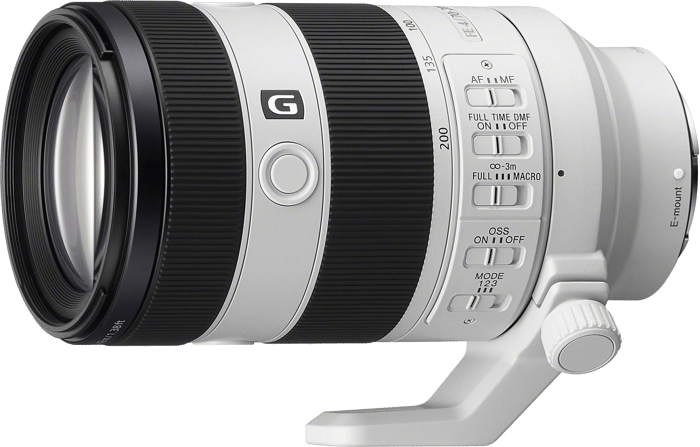
The Sony FE 70-200mm f/4 Macro G OSS II is a telephoto zoom that also takes close-up photos. It reaches 0.5x magnification at every focal length. Most 70-200mm lenses stop near 0.2x or 0.3x. You can shoot a landscape, a portrait and a bee on a flower with one lens.
The constant f/4 aperture is one stop slower than the GM II, but it keeps the lens small. It weighs 1 lb 12.1 oz, about 9 oz less than the f/2.8 GM II. Minimum focus distance is 0.86 ft at 70mm. It has Optical SteadyShot and a dust- and moisture-resistant design. It also takes Sony's 1.4x and 2x teleconverters, so 400mm is possible on a bright day.
The barrel extends as you zoom, unlike the internal zoom on the GM II. A zoom lock holds it in place when you carry it. It is also not the lens for gyms or night games, where f/2.8 helps more.
Choose it for travel, landscape and close-up work on a Sony full-frame camera. Choose the Sony FE 70-200mm f/2.8 GM OSS II if low light and background blur matter more.
8. Fujifilm XF 70-300mm f/4-5.6 R LM OIS WR
| Mount |
Mount
Fujifilm X (APS-C)
|
| Focal Length |
Focal Length
70-300mm (107-457mm equiv.)
|
| Max Aperture |
Max Aperture
f/4-5.6
|
| Weight |
Weight
1 lb 4.5 oz (580 g)
|
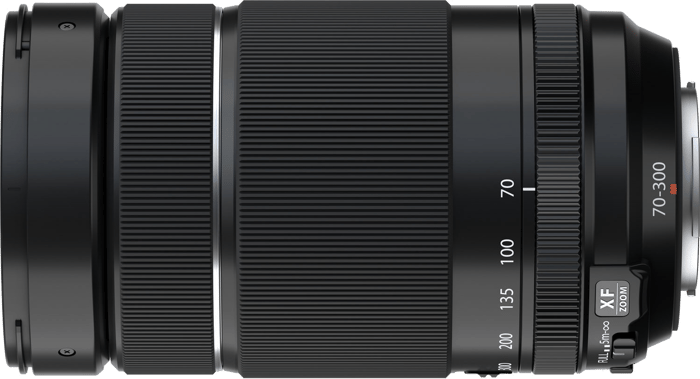
The Fujifilm XF 70-300mm f/4-5.6 R LM OIS WR is the telephoto zoom we recommend for Fujifilm X cameras. On an APS-C sensor it gives the view of a 107-457mm lens on full frame. That covers most wildlife, airshows and field sports.
It weighs 1 lb 4.5 oz. That is light enough for a travel bag and balances well on small X bodies. Its optical image stabilization gives up to 5.5 stops of correction. The lens is dust- and moisture-resistant and works down to 14°F, so it suits winter hikes and rainy days.
It also focuses to 2.7 ft, with 0.33x maximum magnification at 300mm. That helps with flowers and insects when you cannot get close. Fujifilm's 1.4x and 2x teleconverters fit it if you need more reach.
The aperture closes to f/5.6 at 300mm, so you will need higher ISO settings in poor light. Fujifilm also makes larger 100-400mm and 150-600mm zooms for more reach. For most Fujifilm owners, this lens balances reach and size better.
9. Sony E 70-350mm f/4.5-6.3 G OSS
| Mount |
Mount
Sony E (APS-C)
|
| Focal Length |
Focal Length
70-350mm (105-525mm equiv.)
|
| Max Aperture |
Max Aperture
f/4.5-6.3
|
| Weight |
Weight
1 lb 6.1 oz (625 g)
|
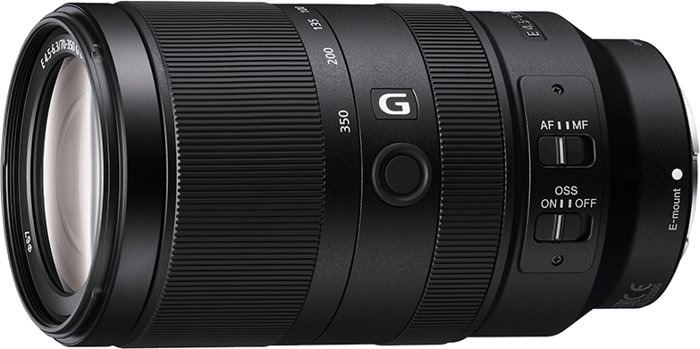
The Sony E 70-350mm f/4.5-6.3 G OSS is the best telephoto for Sony APS-C cameras like the a6400 and a6700. On those bodies it gives the view of a 105-525mm lens. That is close to the reach of the full-frame 200-600mm zoom at a fraction of the weight.
It weighs 1 lb 6.1 oz. Optical SteadyShot steadies handheld shots, and the dust- and moisture-resistant design suits outdoor use. A zoom lock keeps the barrel retracted in your bag.
The trade-offs are aperture and format. It closes to f/6.3 at 350mm, so dim forests and indoor sports push the ISO up. Minimum focus is 3.61 ft at 70mm, so it is not a close-up lens like the Sony FE 70-200mm f/4 Macro G OSS II.
It is designed for APS-C bodies. If you plan to move to a Sony full-frame camera, the Sony FE 200-600mm or the FE 70-200mm f/4 will move with you. If you stay with APS-C, it gives you long reach in a small lens.
10. Nikon Z DX 50-250mm f/4.5-6.3 VR
| Mount |
Mount
Nikon Z (APS-C)
|
| Focal Length |
Focal Length
50-250mm (75-375mm equiv.)
|
| Max Aperture |
Max Aperture
f/4.5-6.3
|
| Weight |
Weight
14.3 oz (405 g)
|
The Nikon Z DX 50-250mm f/4.5-6.3 VR is the lightest and most affordable lens on this list. It is a good first telephoto for a Nikon Z APS-C camera like the Z50 II or Zfc. On those bodies it gives the view of a 75-375mm lens.
That range covers kids' sports, pets in the park, zoo animals and portraits. The 50mm end is useful for tight head-and-shoulder portraits. The lens weighs 14.3 oz and retracts to a short length for storage, so it fits beside your kit lens in a small bag. VR gives 5 stops of stabilization.
It focuses to 1.64 ft at 50mm, with 0.23x magnification. That is enough for flowers and small objects, but not true close-up work.
The limits are reach, light and protection. The aperture is f/6.3 at 250mm, and Nikon makes no weather-sealing claim. For birds you will want more reach. The Nikon Z 180-600mm fits Z APS-C cameras too, where it acts like a 270-900mm lens. It is much heavier, though, so start with this lens if you are new to telephoto photography.
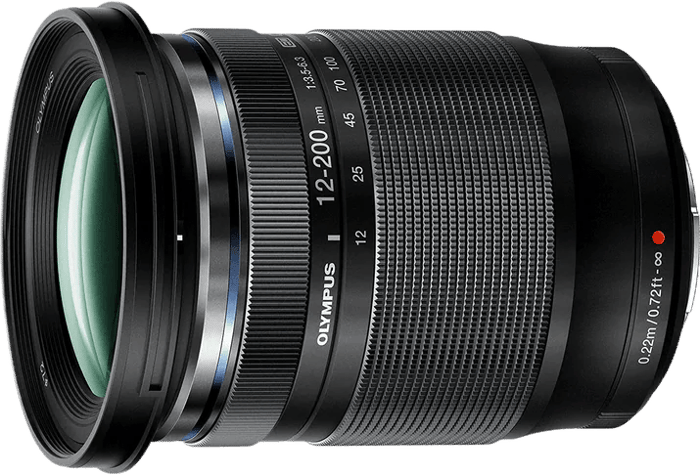
11. OM System M.Zuiko 12-200mm f/3.5-6.3
| Mount |
Mount
Micro Four Thirds
|
| Focal Length |
Focal Length
12-200mm (24-400mm equiv.)
|
| Max Aperture |
Max Aperture
f/3.5-6.3
|
| Weight |
Weight
1 lb (455 g)
|
The OM System M.Zuiko 12-200mm f/3.5-6.3 is our pick for Micro Four Thirds cameras. The 2x crop gives it the view of a 24-400mm lens. You get wide landscapes and distant wildlife without changing lenses.
That range makes it the best travel lens here. It weighs 1 lb and measures just under 4 in when collapsed. It focuses to 0.72 ft at the wide end. The lens is dustproof, splashproof and freezeproof, so it suits hiking and wet weather. It takes 72mm filters.
The lens has no built-in stabilization. That is less of a problem on OM System and Olympus bodies, since they have in-body stabilization. Check your camera if you use another Micro Four Thirds brand.
The aperture closes to f/6.3 at 200mm, and an all-in-one zoom cannot match the reach of a dedicated wildlife lens. If birds are your main subject, OM System also makes 100-400mm and 150-600mm zooms. For travel with one lens, the 12-200mm is the easier lens to carry.
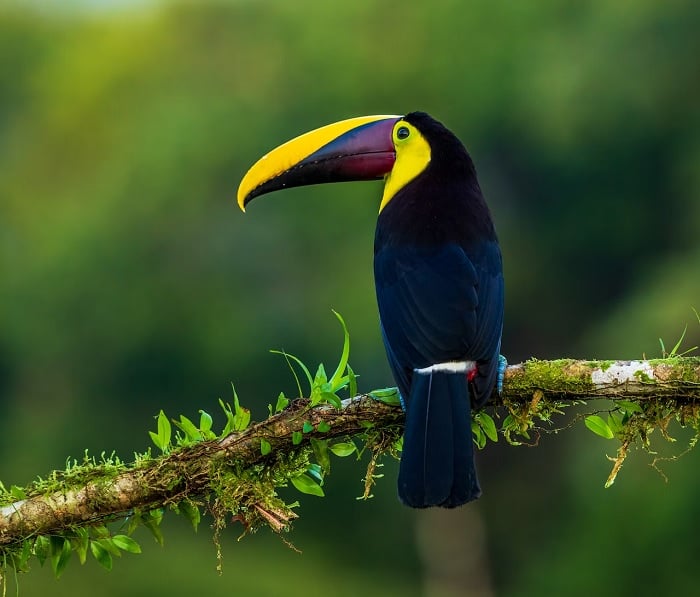
© Zdenek Machacek
Telephoto Lens Buying Guide
What Is a Telephoto Lens?
A telephoto lens has a long focal length, usually 70mm and longer on full frame. Lenses of 300mm and longer are often called super-telephoto. A telephoto lens is not the same as a zoom lens. Telephoto lenses come in both zoom and prime designs. Every pick on this list is a zoom, since zooms let you reframe a moving subject without changing position.
A long focal length makes a distant subject larger in the frame. It also compresses the scene and gives a shallower depth of field, so the background blurs more.
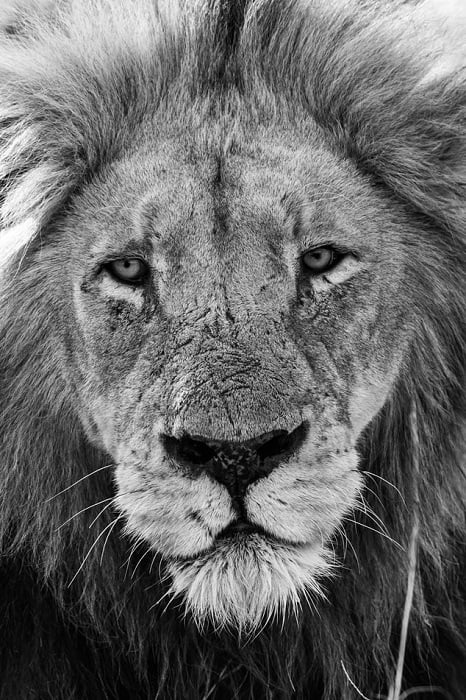
© Nima Sarram
Match the Lens to Your Sensor Size
A lens must fit your camera's mount. Sensor size changes how the focal length looks. On an APS-C camera, multiply the focal length by about 1.5 to get the full-frame view. On Micro Four Thirds, multiply by 2.
You can use a full-frame lens on an APS-C camera of the same mount. The view becomes narrower, which adds reach. The Nikon Z 180-600mm acts like a 270-900mm lens on a Nikon Z50 II, for example. The image also uses the center of the lens, so dark corners from vignetting are less visible.
An APS-C lens on a full-frame camera works differently. Most cameras crop the image, so you lose resolution. Buy an APS-C lens like the Sony E 70-350mm only if you plan to stay with APS-C.
Aperture, Stabilization and Shutter Speed
The maximum aperture controls how much light reaches the sensor. At f/2.8, you can use shutter speeds four times faster than at f/5.6 at the same ISO. That is the reason to buy a 70-200mm f/2.8 for indoor sports photography.
Image stabilization helps with camera shake, not subject movement. A 5.5-stop rating lets you hold a lens steady at slow shutter speeds. A running dog or a flying bird still needs a fast shutter speed. Some cameras combine in-body and in-lens stabilization for a stronger effect. Lenses without in-lens stabilization, like the OM System 12-200mm, rely on the camera.
Teleconverters and Close Focus
A teleconverter multiplies the focal length, usually by 1.4x or 2x. It also costs one or two stops of light. Many lenses here accept their maker's teleconverters, including the Nikon, Sony and Canon super-telephotos. The Tamron 50-400mm, Sony E 70-350mm, Nikon Z DX 50-250mm and OM System 12-200mm do not.
Close-focus distance matters more than many buyers expect. A lens that focuses to 4.27 ft can photograph a dragonfly on a reed. A lens that needs 7.88 ft cannot fill the frame with it. If you shoot insects and flowers, compare the minimum focus distance and the maximum magnification on the maker's spec page.
© Jonathan Mabey
Conclusion: The Best Telephoto Lens
The Nikon Z 180-600mm f/5.6-6.3 VR is the best telephoto lens for most people. It gives 600mm of reach, close focusing and an internal zoom with good stabilization. The Sony FE 70-200mm f/2.8 GM OSS II is the better choice for indoor sports, events and portraits in low light. If weight matters most, the Canon RF 100-400mm f/5.6-8 IS USM gives 400mm in a lens that fits a daypack.
For more lens choices by subject, see our guides to the best Nikon lenses for sports, the best Canon lenses for sports and our wildlife photography gear list.