Nude photography uses light, pose, and framing to explore the human form. You can make an artistic image with a single window, a simple background, and a pose you plan together. You don’t have to show the whole body.
Start with a consenting adult model and agree on what will be photographed, who will be present, and how the pictures may be used. Then build the shoot around a clear visual idea. These nine tips cover the preparation, lighting, and creative choices that help you put that idea into practice.
9 Tips for Artistic Nude Photography
Keep the model involved as you work. A reference image can explain a pose or lighting idea more clearly than a long description.
1. Develop Your Style with Nude Photography Art
Nude or semi-nude photography doesn’t have to look a specific way. You can make a full-length portrait, crop to a shoulder and back, or use close-ups to turn the body into an abstract shape.
Choose the mood before you choose the setup. You can use dramatic light to leave much of the body in shadow. Or use soft lighting for gradual transitions between light and shade. Soft light can still produce deep shadows; light quality and the amount of shadow are separate choices.
Develop your style by changing one thing at a time. Experiment with different lighting and boudoir posing techniques, then compare what each change does to the image.
Mirrors, double exposures, and lens filters can also work here. Start with a clear pose and background so the effect supports the picture instead of hiding it.
2. Make Sure the Location Is Warm and Private
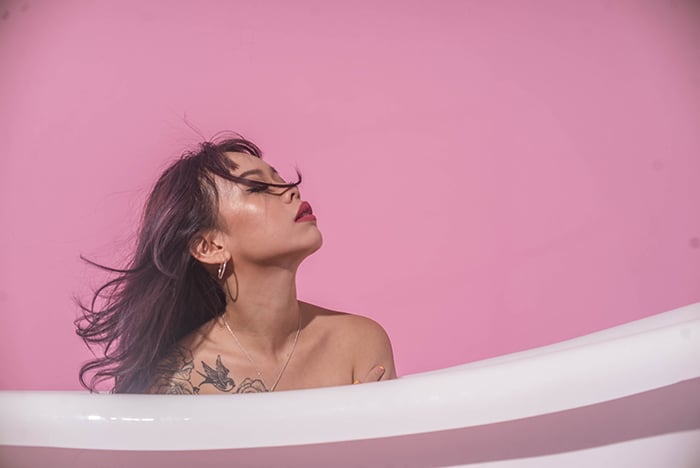
Prepare the room before your model changes. Ask what temperature feels comfortable, provide a private changing space, and keep a robe or blanket within reach. Build in breaks between poses and lighting changes.
If you’re shooting outside, plan for privacy as well as light. Arrange permission to use the location and check who can see or enter it. A quiet-looking spot is not a guarantee that no one will walk past. Have somewhere nearby to change and warm up, and stop if conditions become uncomfortable.
Set up the camera and test the lighting while the model is still dressed. This saves them from waiting uncovered while you adjust equipment.

3. Ask Your Model for Feedback and Respect Their Boundaries
To make your subject’s modeling experience easier, prioritize their comfort before the first photograph. Agree on the level of nudity, poses, identifying details, and people allowed on set. Make clear that they can decline a pose, take a break, or end the shoot.
Give one clear direction at a time. Demonstrate with your own body or ask the model to adjust their pose, hair, or clothing themselves. Keep feedback about the picture: “That turn brings the light onto your shoulder” is more useful than a comment about their body.
Show your nude photography models selected frames and ask what they think. Check again when you change the pose, viewpoint, or amount of coverage. A yes to one setup does not settle the next one.
Agree on image use in writing before the shoot, including any portfolio, social media, or print use you intend. Do not treat agreement to pose as permission to publish. Use private delivery for proofs and final files, and keep access limited to the people you agreed on.

4. Use Side Light to Shape Your Nude Portraits
Start with one window or a single light fitted with a softbox. Place it to one side of the model so light travels across the body and falls into shadow. Ask the model to turn a little toward or away from it, then compare the shape of the highlights.
For a darker, low-key image, keep light off the background and limit light coming from the camera’s direction. For a silhouette, put the brighter background behind the model and reduce the exposure until the outline is clear. Leave a small gap between an arm and the torso if you want both shapes to remain distinct.
Choose an aperture that keeps the intended parts of the pose sharp. With window light, watch the shutter speed as you adjust the aperture. If movement looks blurred, use a faster shutter speed and raise ISO or add light as needed. Enlarge a test frame to check focus and make sure bright skin highlights still show detail.
You can build on this setup with creative boudoir lighting techniques. Show the model the result rather than assuming that darker lighting will make them more comfortable. Shadow is a visual choice, not a substitute for consent or privacy.

5. Use Body Makeup as Part of the Concept
Body or face makeup can add color, texture, or a graphic pattern to a nude portrait. Choose a design that works with the pose and light: a line across a shoulder, for example, can continue the curve you are photographing.
You can hire a professional artist to plan and apply the design. Discuss the areas to be painted with the model first. Use products intended for skin and follow their directions, including restrictions around the eyes. The FDA’s face-paint guidance explains why paint suitable for one area may be unsuitable for another.
For portrait ideas, look at Andrea Hübner’s portrait work. Use reference images to discuss the mood, then develop your own design together.
You can also use makeup in conceptual nude photography. Match a painted pattern to the background, or use one contrasting color to draw attention to a chosen part of the frame.

6. Give Your Model Space by Using a Zoom Lens
Agree on a comfortable working distance. Explain when you need to change position, and use verbal directions rather than moving the model yourself.
You can start with a zoom lens. It lets you change the framing without stepping closer for every photograph. Choose a focal length that suits the available space and the crop you want; you still need enough room to communicate and move safely.
Camera distance affects perspective. From very close up, features nearer the camera can appear larger relative to those farther away. Step back and use a longer focal length to keep a similar framing with less of that exaggeration. A zoom lens alone does not remove distortion, and a prime lens can also work from a comfortable distance.
The lens examples below cover different camera systems. Match the lens mount to your camera before choosing one.
DSLR camera zoom Lenses:
- Tamron SP 70-200mm F/2.8 Di VC (Nikon and Canon)
- Canon EF 24-70mm f/2.8L II USM
- Nikon AF-S FX 70-200mm f/2.8 ED VR II
Mirrorless camera zoom lenses:

7. Use Props to Control What the Camera Shows
Fabric, a robe, flowers, or part of the setting can conceal areas the model does not want shown. Decide the coverage together, then check it through the camera. A pose that looks covered from one viewpoint may reveal more from another.
For soft foreground shapes, place a prop near the lens without touching its glass. Focus on the model and try a large aperture, such as f/2.8. An object well outside the plane of focus can become a blur. Move it slowly across the edge of the frame until it covers the intended area without hiding the subject by accident.
Keep a robe available between frames. Use props that the model can hold or pose beside comfortably, and avoid positions that require them to strain or balance on an unstable surface.

8. Photograph Several Models Only by Agreement
A second model can add a shared pose or a relationship between shapes. Discuss this before the shoot and get each person’s agreement to who will be present and what the pose involves. Do not introduce another nude participant as a surprise.
The design principle of proximity describes how elements placed close together can read as a group. You can use the space between two figures to suggest connection, or leave a larger gap to make them feel separate. They do not need to touch for the composition to work.
You can also emphasize similarities or differences in makeup, hairstyles, and face shape. Coordinate head angles and lighting so the comparison is deliberate. Check focus on both people, especially if one is closer to the camera, and check with each model before changing the arrangement.

9. Shoot in Black and White to Focus on Shapes and Light
Try black and white photography when color draws attention away from the lines and tones you want to show. Look for separation between the model and the background, a clear highlight, and shadows that support the pose.
Working in monochrome can help you study the human form as curves, texture, and negative space. Compare a wider frame with a tighter crop of the same pose. Keep the crop within the boundaries you agreed with the model.
Black and white does not automatically make a photograph artistic or remove distracting details. Compare color and monochrome versions, then choose the one that serves the idea. Agree on the level of retouching too, rather than assuming the model wants their body shape or skin texture changed.

Conclusion: Shooting Beautiful Nude Photography
Plan one visual idea, prepare a warm and private space, and begin with a simple pose and one light source. Check the frame with your model, then change the light, crop, or viewpoint one step at a time. You can build a varied set of photographs without making the setup complicated.
Keep the model’s boundaries and the agreed image use part of that process from preparation to delivery. The finished pictures should reflect the creative choices you made together.
Check out our Creative Portrait Concepts eBook for more artful and unique portrait ideas!