Using social media for photographers is a great way to boost your brand. You can share your work to gain exposure, attract new clients, and find other talented photographers for collaborations. They open up a new world of opportunity, and you can run your business from your smartphone.
This article looks at all the best social media for photographers, examining all the most popular apps to help you find the one that works best with your business strategies. Keep reading to find all the best social media apps for photographers.

- Gain in-depth knowledge of the top social media platforms
- Learn how to out-perform the competition on busy sites
- Discover free methods to attract and keep long-term clients








12 Best Social Media for Photographers
Here are the top 12 social media sites we recommend for photographers. You can showcase your talent, connect with like-minded individuals, and reach a wider audience.
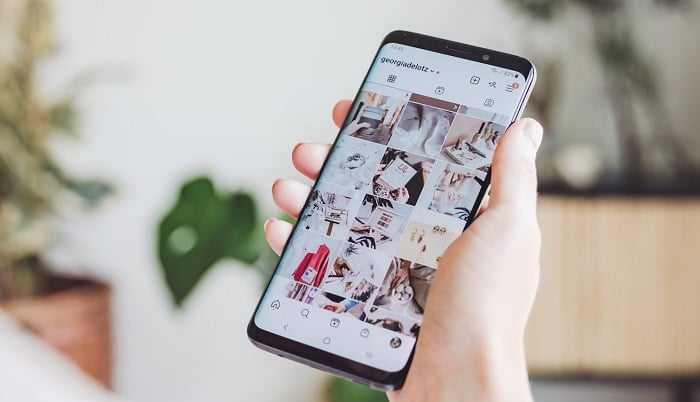
Instagram was among the first to allow photo-sharing exclusively on phones. And today, it remains among the most popular social media sites globally.
The sleek yet simple interface is one of the main reasons for its popularity. Everything is well presented, which makes people’s work look even better.
Instagram’s profile grid is no longer square. It went to 3:4 uprights in January 2025, which is good news if you shoot portrait and bad news if you shoot wide. A landscape frame gets cropped hard in the grid preview, so you either accept the crop or pad the shot onto a 3:4 canvas before you post.
Instagram is the best social media platform if you want exposure. It passed 3 billion monthly users in 2025, so there’s a lot of potential to generate a solid followership and find inspiration from other Instagram photographers.
Using hashtags (#) is a good way to get your work seen by the right people. All 3 billion of them won’t be interested in your work, so you need hashtags to put your images in front of like-minded people.
Another problem with the app having so many users is that there’s plenty of competition. There are a lot of photographers, and they all want more followers, more likes, and more eyes on their work. There’s no denying it’s becoming an over-saturated marketplace.
That’s not the only problem with Instagram. In an effort to compete with TikTok, Instagram now favors video content. Still images are getting less and less engagement, so users are having to do more stories and reels to maintain their viewership. That’s not ideal for photographers.
The app also has a serious bot problem. There are what-seems-like millions of fake accounts being created all the time. They try to entice you with saucy images of young women and comment irrelevant stuff on your posts. It’s a plague, and Instagram seems to be doing nothing about it.
Plates is a social media app specifically designed for photographers. Instagram is plagued with adverts, influencers, and unannounced algorithm changes. But Plates offers a new, clean space for photographers to display their work.
The Plates team has created a positive online environment where all photographers can share their work and look for new inspiration. You can categorize your work using labels and tags. And you can even create themed catalogs, displaying your best shots of different genres.
This labeling and categorization system makes finding fantastic photos from other photographers easy. You simply search for the types of photography you want to see, and the app shows you all the best examples.
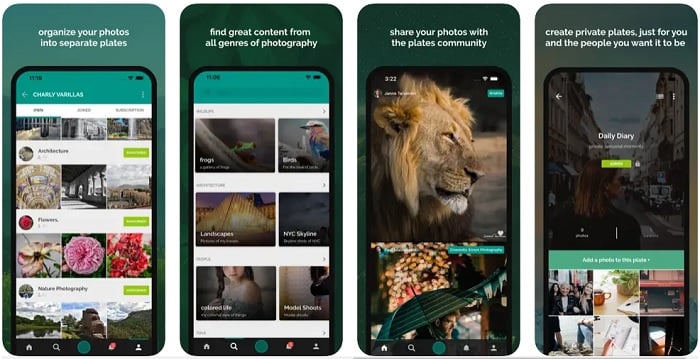
Customizing your feed allows you to control what you see. If you want more examples of wildlife photography, you can save that recommendation. If you don’t want landscapes in your feed, it’s another one-click operation.
It’s also a chronological feed. There’s no dodgy algorithm dictating what you see and suggesting off-topic accounts and products.
Being part of a healthy, positive, and enthusiastic community is an under-appreciated part of photographer development. And that’s exactly the community Plates has created.
You aren’t competing for attention in the same way as Instagram. And people who want to find your kind of photography will find it.
Of course, there are far fewer users on Plates compared to Instagram, so the potential for exposure isn’t the same. But Plates is becoming the hottest social media platform for photographers and photography fans.
This Adobe-owned platform is one of the best photography networking sites available today.
In essence, Behance is an online portfolio site and app that lets you post some of your best works. It isn’t a dedicated photography app. Instead, it hosts artists of every ilk.
What makes it different is that it also allows other users to share and interact with your content. After you post your work on your site, other users and potential clients can see and comment on it.
You can also use the work of other users for inspiration, building moodboards from your favorite picks. An internal private message system also allows you to connect with other creatives on the app.
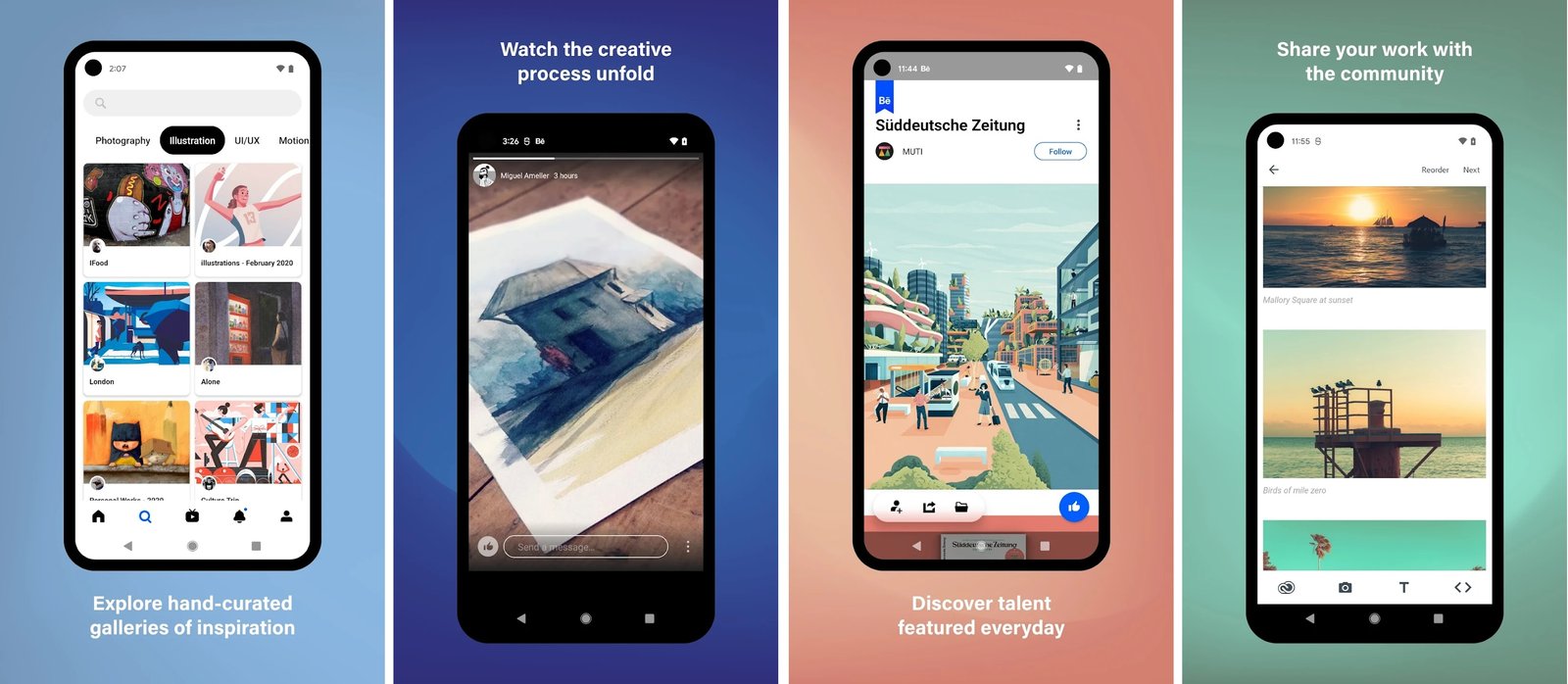
Behance functions like Linkedin for creatives. The only difference is that it focuses more on graphic design and photography.
Like other social media sites, Behance lets people like and comment on your work. But it mostly acts as a portfolio where you can show your work to your colleagues and the general public.
You not only get generic comments. You’ll also see a lot of technical critiques from professionals, which can help immensely in your growth. There is a free seven-day trial with Adobe’s Photography Plan.
Want a platform that lets you tell stories behind your photography? Exposure is one of the best platforms for photographers to mix photos with text.
Reading stories on Exposure almost feels like browsing through an online magazine. The pictures are big, and the fonts are easy on the eyes.
The layout doesn’t only look clean. It also appears professional. So if the amount of Instagram space for captions isn’t satisfying, get on Exposure to tell the longer version of your story.
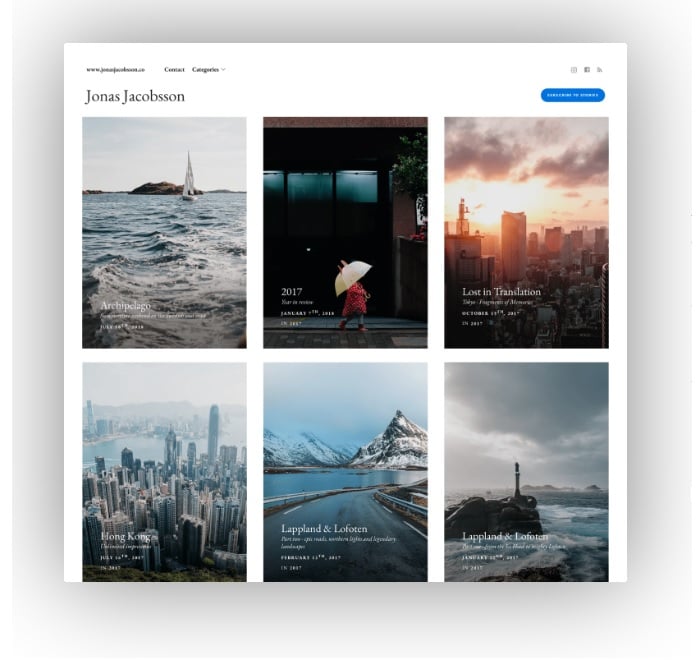
The free version of Exposure lets you post up to three stories. But to unlock the rest of the features, you must choose a monthly or yearly subscription. It also offers extra perks for businesses that include customizable templates and fonts.
Whether you’re a travel photographer or photojournalist, Exposure is the perfect social media for combing photography and the written word.
Flickr was already around before “social media” became a buzzword. You may think that Flickr is so 2004. But it’s still the best place to store all your photos online.
Sure, Instagram may get you all the fun social media interaction. But you can’t use it to keep your high-resolution files safe and, at the same time, let people enjoy your photos.
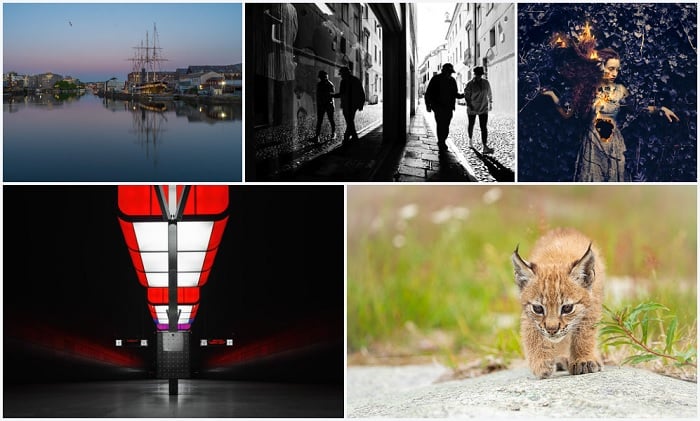
Flickr has changed a lot over the years. Its free version now has a limit of 1,000 photos. But you can still use all its features without signing up for a pro account.
Read the small print before you rely on the free tier, though. Since May 2025, free members can only download photos at medium size or smaller, your own shots included, unless you pull them out through the Data section in your settings. Flickr Pro is what buys the good stuff: unlimited storage, uploads of up to 200 MB per photo, a 6K display size, ad-free browsing and proper stats.
It won’t get you the same exposure as Instagram and it isn’t as slick and modern as Plates. But it’s still a great place to show off your work and find inspiration from other photographers.
6. 500px
| Brand |
Brand
Visual China Group
|
| Number of Users |
Number of Users
+17 Million
|
| Key Features |
Key Features
Licensing marketplace with royalties, Quests competitions, unlimited uploads and uncompressed storage on paid plans
|
| Best |
Best
Photographers who want their work licensed as well as seen
|
500px has been the serious photographer’s alternative to Instagram since 2009. It is a portfolio, a community and a stock library in one, with more than 17 million registered photographers from 195 countries.
The site is built around discovery rather than follower count. Its Inspiration feed surfaces work by how the community responds to it, so a new account can still be seen in its first week. And Quests are themed, judged competitions. They are the fastest way to put your name in front of the site’s editors.
The licensing side is what separates it from everything else on this list. You can flag your best frames for 500px Licensing and earn royalties when a brand buys one, and paid members keep 100% of net sales on exclusive images. An Awesome or Pro membership also adds unlimited uploads, uncompressed storage, ad-free browsing and detailed stats, and Pro throws in a personal photography website on your own domain. There is a 30-day free trial, so you can test the licensing side before you commit.
The drawbacks are real. Free accounts cap how many photos you can upload each week, so a working portfolio needs a paid plan. And 500px is owned by Visual China Group, one of the world’s biggest stock agencies, so the community feeds a licensing business. That is why it works if you want to sell your images, and why it is the wrong pick if all you want is a social feed. Choose Plates or Vero for that.
You may not associate this popular social media platform with photography. But having a professional Facebook page is still beneficial to building your business, especially if you want to connect with people over 35 years old.
Facebook was the hottest platform among teens and young people. But while the younger generations have moved to other platforms, older users still love Facebook.
One of the best things about older users is that they interact more with the things they like. They write comments and have conversations with other users about the things they like. This is a great way to get feedback on your work. And it improves the word-of-mouth promotion of your business.
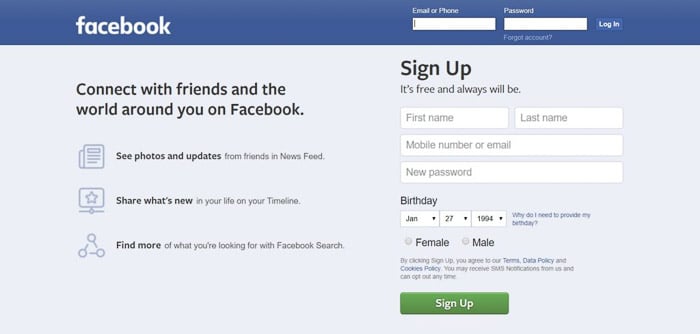
It also means interactions are more likely to lead to more work and paid gigs. If an older Facebook user is looking for a photographer in their area, they are probably looking with the intent of hiring someone.
Take the time to create your Facebook photography page and update it regularly. Facebook is one of the most accessible platforms, so you need to take advantage of it.
After all, promoting your photography through Facebook ads can be beneficial. Apart from its reach, it also lets you target specific demographics most likely to hire you.
If you want a social media platform with high-quality content, YouPic is perfect for you. But don’t just take our word for it.
This app’s tagline is “Find your home among the world’s best photographers.” And it has photography icons such as Joel Meyerowitz and Steve McCurry to back it up.
YouPic is not only a social media platform for photographers. It also has a lot of regular social media aspects to it. Other people can share and interact with your work, like you can with theirs.
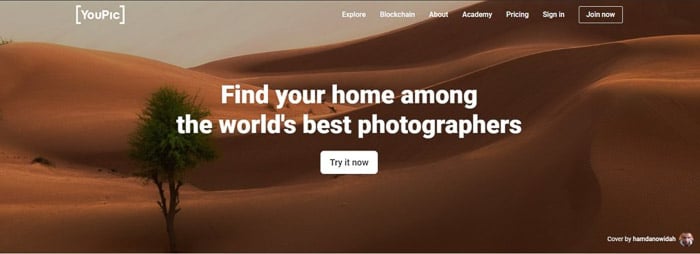
What distinguishes it from regular websites is that it caters more to professionals than to amateurs. It is a conduit for exchanging ideas with fellow photographers and future clients.
It’s full of nuggets. Even the photos themselves include technical information such as EXIF data and geotags.
There is a limited free version plus three paid plans. Access starts at $2.49 a month and lifts the upload and storage caps. Premium is $9.99 a month and adds unlimited uploads plus a promotion boost. Pro is $29.99 a month and hands you a personal photography website, an online shop, client booking and print fulfilment. The free tier is thin, so treat YouPic as a paid platform. If you aren’t going to subscribe, Behance gives you a portfolio for nothing.
Apart from sharing photos, it gives you access to tutorials from the best in the business. You can also earn from the app by selling your work or services by opening a shop.
Launched in 2015, this social media platform’s mission was to beat Facebook and Instagram at their own game. Vero may not be exclusive to photographers per se. But its user interface is quite refreshing.
But what makes Vero Social perfect for photographers? It displays your photos in HD (high definition). And it doesn’t compress photos like Instagram or Facebook. So people can see the real beauty of your work. It also has a clean feed that lets you look at full-screen images.
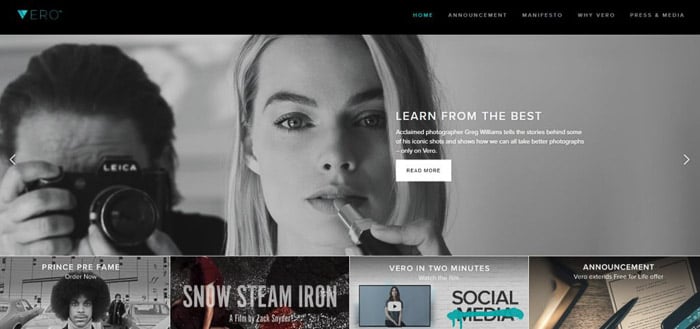
But the best reason to try Vero Social is that it’s for everyone. Vero Social not only caters to social media photographers. It also serves music lovers, movie lovers, or anyone tired of traditional social media platforms.
People with different interests will get to enjoy your work as well. And when non-photographers also get to see your work, there’s a chance some of them may hire you.
So as you get more exposure, your chances of succeeding in your business improve. After all, you won’t get any clients if you focus only on social media platforms exclusive to photographers.
Want to boost your photography business? Then sign up on Pinterest and start posting your work on this popular social media site. It may not look as exciting as other social media for photographers, but it serves a real purpose for professionals.
Unlike other social media sites, Pinterest doesn’t focus on how many likes you get. Instead, it showcases photographers to potential clients through backlinks.
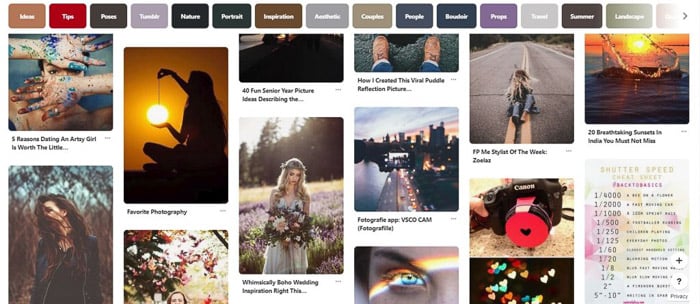
When you post your photos on the platform, you lead other users to your website and discover your services. And it’s also a great way to find inspiration and glimpse the newest trends in the industry.
Many people looking for wedding and event photographers use this site to look for the best services. With 640 million monthly users searching it like a visual search engine, that is a lot of intent to tap. So don’t miss out! Post work that will connect potential clients to you.
The catch is that Pinterest is a slow burn. Pins can take months to gain traction, and the traffic lands on your website rather than your profile. If you don’t have a site worth sending people to yet, build that first.
This microblogging site was the first to show the real power of photos in the age of social media. Tumblr lets photographers share content people can re-blog with a single click.
Tumblr photography feels much more youthful and experimental than the other social media sites for photographers. Because of this, it appeals to a lot of budding enthusiasts and young photographers trying to make a name for themselves.
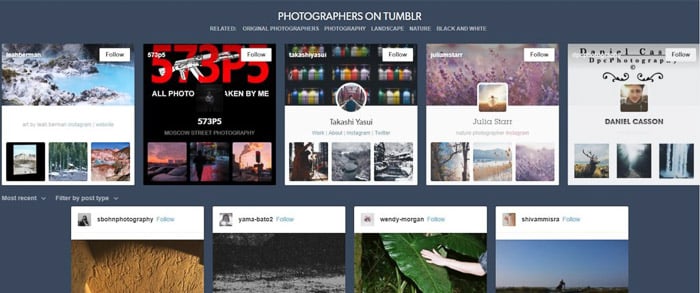
Not to mention that many people find out about your work through this platform. That’s why it has served as one of the best free social media sites for photographers for years.
Tumblr launched in 2007, so it is nearly 20 years old now. But it remains popular among younger demographics and older millennials, across more than 600 million blogs. To this day, it still features many fantastic photography gems you won’t find anywhere else. And Tumblr is one of the best platforms for creating your first free portfolio.

Lomography is a style of analog photography, a film brand, a magazine, and an online community of film photography lovers. And the Lomography Community is the best social media for film photographers.
It’s completely free to join the community. There are no ads or distracting suggested posts. You can browse the gallery at your leisure.
You can use tags to help attract viewers. And you can create albums based on themes, styles, or different films or cameras you use.
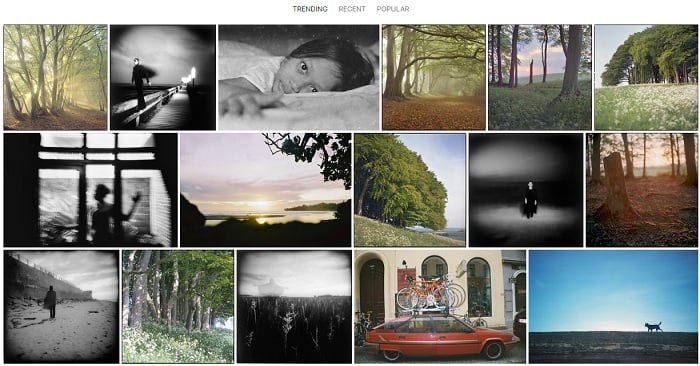
It’s a great resource if you’re curious about different film stocks. You can search by film stock and see dozens of fabulous examples of that film. And it’s not just Lomography rolls. You can search for any film stock, including out-of-issue films.
The community admins post a photo of the day. It’s a special feeling if your work gets selected, and it also brings more eyes to your photography, which is always a bonus.
It also shows the admins are engaged with their users, making you feel like you are part of an active, appreciative community. This social media for photographers isn’t a capitalist hellhole run by robots like Instagram.
Conclusion: Best Social Media for Photographers
Whether you like it or not, social media for photographers is crucial. But don’t limit yourself to only one platform. You’ll increase your reach if you sign up for a few more and showcase your work.
Each platform offers different services. So choose the best options that work for you. And don’t forget to update your content regularly. It may seem like a lot of work initially. But it will pay off in the long run.
If you want a starting pair, use Instagram for reach and one photography-first home for the work itself. Pick 500px if you want your images licensed, or Plates if you just want a clean feed and a community. Add Pinterest once you have a website worth sending traffic to. Post to both for 90 days before you judge either one.
Are you eager to learn how to take your social media to the next level? Why not check out our Social Success Strategies eBook?
Frequently Asked Questions
What is the best social media for photographers?
Instagram is still the best social media for photographers who want reach, because no other platform comes close to its 3 billion monthly users. But it is not the best place to show your work at full quality. Pair it with a photography-first platform. Choose 500px if you want to license your images, or Plates or Vero if you want an uncompressed, algorithm-free feed.
Which social media platform pays photographers?
500px is the only platform on this list that pays you directly for your photos. You submit images to 500px Licensing and earn royalties when a brand buys one, and paid members keep 100% of net sales on exclusive images. YouPic lets you sell prints and services through your own shop, and Facebook and Pinterest earn you money indirectly by sending clients to your business.
Do photographers still need Facebook?
Yes, if you shoot weddings, portraits, events or anything else sold locally. Facebook’s audience skews older than Instagram’s, and over-35s are the people most likely to hire a photographer rather than just like the picture. Local groups and a business page do more for bookings there than a follower count ever will.
Is Flickr still worth using in 2026?
Flickr is still the best place to display and archive full-resolution work, but the free tier is weaker than it was. Free accounts hold 1,000 photos and, since May 2025, can only download images at medium size or smaller. If Flickr is going to be your archive, budget for Pro. That is what unlocks unlimited storage, 200 MB uploads and 6K display.