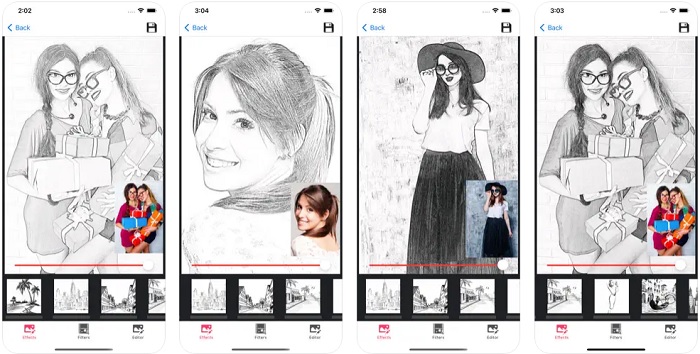
Modern Android smartphones are packed full of features. They’re pocket-sized computers that can do pretty much anything. But the one feature people are looking for more and more is a good camera app.
The native camera app on most Androids lets you switch to manual mode for more creative freedom. But despite all the time and effort developers put into them, many people want more. They want more features, more control, and more fun with their Android camera app.
If you’re looking for a new camera app for your Android smartphone, check out our list below. These are our picks for the best Android camera apps.
What Are the Best Camera Apps for Android?
The best camera app for Android overall is Adobe Lightroom Mobile. It pairs a solid manual camera with the full Lightroom editing toolkit, RAW support, and AI-assisted presets, all in one free app.
The best camera apps for Android offer intuitive controls and a wide range of features. Look for manual controls, HDR support, and advanced camera settings. Features like white balance and exposure compensation empower you to take the best photos with Android smartphones.
The best Android apps should also offer a good selection of extras, such as presets, filters, and advanced editing tools. They should also have options for sharing your best photos on social media sites.
Pick by what you shoot. Lightroom Mobile and Adobe Photoshop Express are the ones to install if editing matters most. ProShot, Open Camera, and ProCam X Lite hand you the exposure triangle. Blackmagic Camera is the one for video. And B612 is built for people posting straight to social media.
The camera has become an important part of any smartphone. Most big Android brands put lots of effort into their stock camera apps. Every new release improves the resolution, and some camera apps have fun functions and features. But many still lack what users are looking for; full creative control.
All Android apps below offer improved quality, better functionality, and more fun. Any one of them will help you take your smartphone photography to a new level.
9 Best Camera Apps for Android
If you’re a smartphone photographer with an Android phone, review our list of the best camera apps for Android. There’s something for everyone!
Technically, Adobe Lightroom isn’t a camera app. Lightroom Mobile is an editing app with a camera, and the camera is very good.
There are no flashy features with Lightroom Mobile, and you don’t get social media filters or add-ons. But you do get a reliable and solid camera app. It is Adobe, so you know you’re getting a quality product. And while basic, you still get creative options like burst and long-exposure modes.
The main appeal of using Lightroom Mobile with your Android phone is the possibilities in post-production. You take a photo, which loads straight into Lightroom, where you get all the Adobe tools. It also supports RAW files, giving you even greater image enhancement powers.
You can create HDR images without much fuss. Converting color images into black and white is a one-click process. And you can add a background blur to portraits thanks to AI-powered tools. Lightroom now edits video as well as stills, and the same presets and color tools apply to your clips.
Presets are one of the main selling points for the standard Lightroom program, and that’s no different for Lightroom mobile. They are a quick and easy way to enhance your smartphone images. And thanks to AI, the app helps you find presets that match your style.
Lightroom Mobile is a free download, and the camera, presets, and basic edits cost nothing. Cloud sync, healing, and masking sit behind a subscription. The Lightroom plan is $11.99 a month with 1 TB of storage. If you already own Photoshop, the $19.99 Photography plan covers both, and our Lightroom buying guide breaks the plans down.
If you want the best deal, you can also buy the Adobe photography bundle for Photoshop and Lightroom.
We’re used to a high standard when it comes to Adobe products, especially when we see the name Photoshop. And the Adobe Photoshop Express app doesn’t disappoint.
Adobe has produced a feature-packed camera app that’s perfect for content creators who love image editing and manipulation. Adobe also ships a separate, full Photoshop app for Android now. Express is the lighter one, and it is the one to start with if you want fast edits rather than layer-by-layer compositing.
Photoshop Express also builds in Adobe’s AI editing tools. Generative Fill can remove distractions or add new elements from a text prompt, and the built-in AI image generator can create custom stickers and backgrounds straight from a description. Both work inside the editor itself, on a photo you’ve already taken, rather than through a live camera preview.
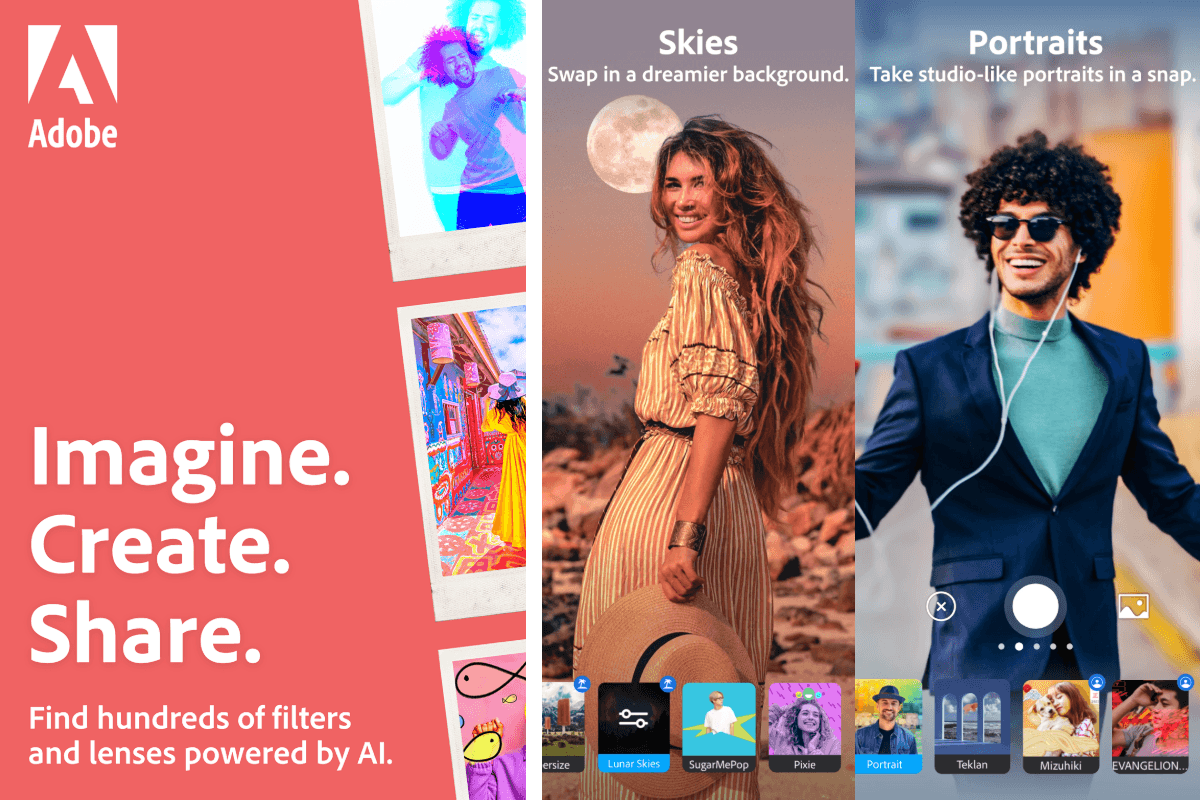
Adobe Photoshop Express is built for social media users and content creators of all kinds. Its features are ideal for boosting your online content, from hundreds of camera filters and retro effects to auto-tone and one-tap enhancements.
The portrait controls set Photoshop Express apart from other Android camera apps. With selfies or portraits, you get an excellent array of controls. You can try bokeh effects, and the face light tool removes unwanted shadows.
With Photoshop Express’s extensive toolbox, you can do more than just touch-ups and basic edits. You can make everything from composites to digital collages, remove and change backgrounds, as well as create original pieces of digital art.
If you’re a content creator with a passion for digital art, Adobe Photoshop Express could be the Android camera app you need. There’s nothing else on this list quite like it.
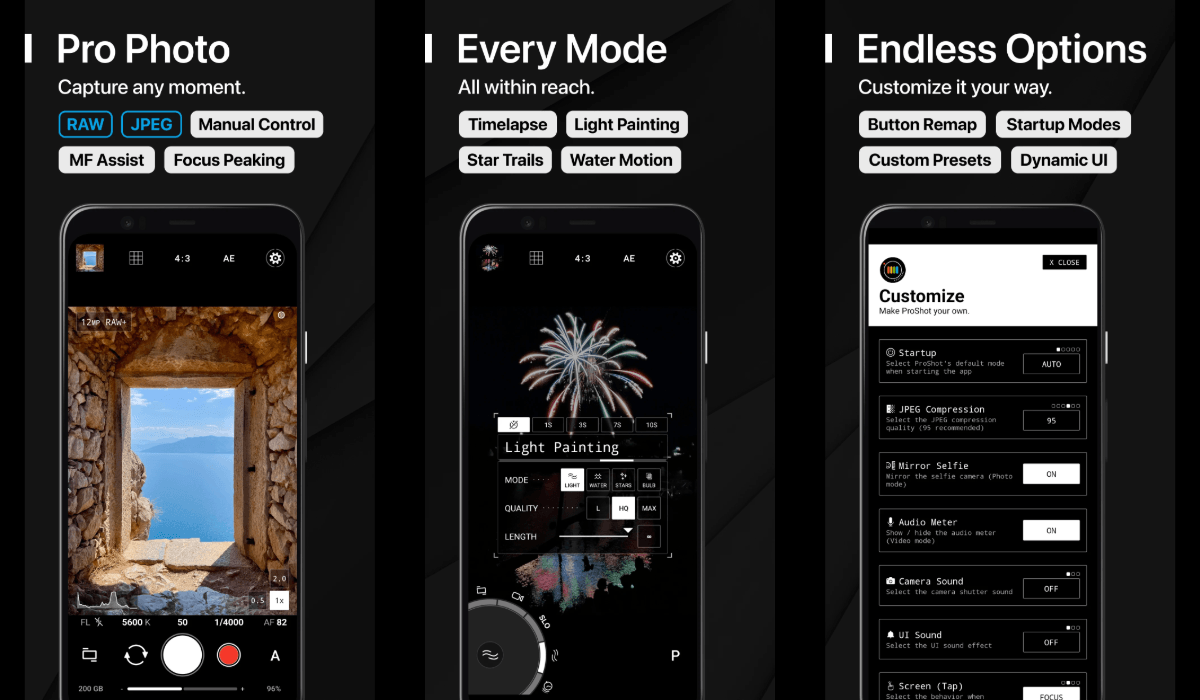
ProShot is one of the best camera apps for Android. Its high rating is due to its extensive feature set and intuitive user interface, similar to professional DSLR cameras.
It offers granular manual controls over exposure, focus, ISO, shutter speed, and white balance. These camera settings let photographers capture images with precision.
It also supports shooting in RAW format and bracketing exposures. It has advanced features like light painting, bulb mode, and time-lapse. The app’s unique dual-dial system and customizable interface make navigating through settings effortless.
ProShot also prioritizes user privacy by not collecting or transmitting personal data. It is the only paid app near the top of this list, at $7.99 on Google Play, with no subscription after that. Skip it if you only want filters and one-tap edits. ProShot is a capture tool, and you still need something like Lightroom for the editing.
Blackmagic Camera puts the interface from Blackmagic Design’s cinema cameras onto your Android phone. It is free, with no in-app purchases.
The controls are the ones a camera operator expects rather than the ones a phone usually gives you. Frame rate, shutter angle, white balance, and ISO each sit a single tap away. Blackmagic gives the app the same interface as its own cinema cameras, so if you have used a Pocket Cinema Camera you already know where everything is.
On supported phones it records up to 8K, and it can upload straight to Blackmagic Cloud so an editor can cut the footage in DaVinci Resolve while you are still shooting. That workflow is the reason to choose it over your phone’s stock video mode.
The honest limit is that this is a video app. Nothing in its feature set shoots stills, so it does not replace any other app on this list. Blackmagic also says outright that features are device dependent, so an older or mid-range handset will not expose the full set of frame rates and resolutions. Blackmagic Cloud is a separate Blackmagic service too, not part of the free app.
Open Camera is another Android camera app with excellent manual controls. If you want filters for social media, this isn’t the app for you. But if you want manual photography controls, it might be.
The auto mode produces high-quality images for point-and-shoot with great results. But you also get manual controls for ISO, shutter speed, and exposure compensation, among other things.
Open Camera has grid overlay options that help with composition. This feature is great for photographers wanting to improve their craft. And when things get dark, noise reduction and dynamic range features keep your images sharp.
Open Camera is an open-source product, which means it’s completely free! It carries no ads and no in-app purchases, and it is still actively maintained, with the last update in May 2026. The interface looks plain next to ProShot, and that is the trade you make.
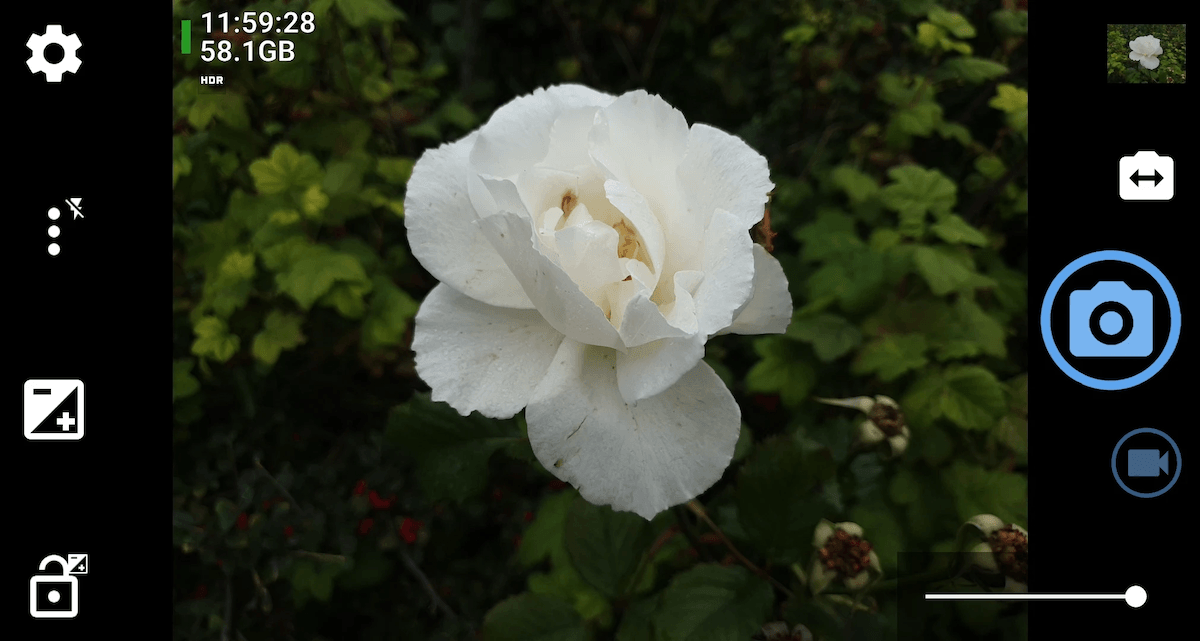
ProCam X is one of the best Android camera apps for people who like to take control. It has fewer social media accessories, like filters and stickers, and is aimed at creative photographers.
The manual controls include focus, ISO, and white balance. You can also select your shutter speed and shoot with the rapid burst mode. The level of control is a step up from most default camera apps.
One major plus of the ProCam X is the 4K video. You’ll need a fairly new Android model to run this feature. But it makes it one of the best camera apps for video.
The basic app is free, but you can upgrade to the premium service, which isn’t too expensive. The camera is the same for both versions, but the photo editor side sees an upgrade. Its 3.9-star average is the lowest of the manual camera apps here, so try the free version on your own handset before paying for the upgrade.
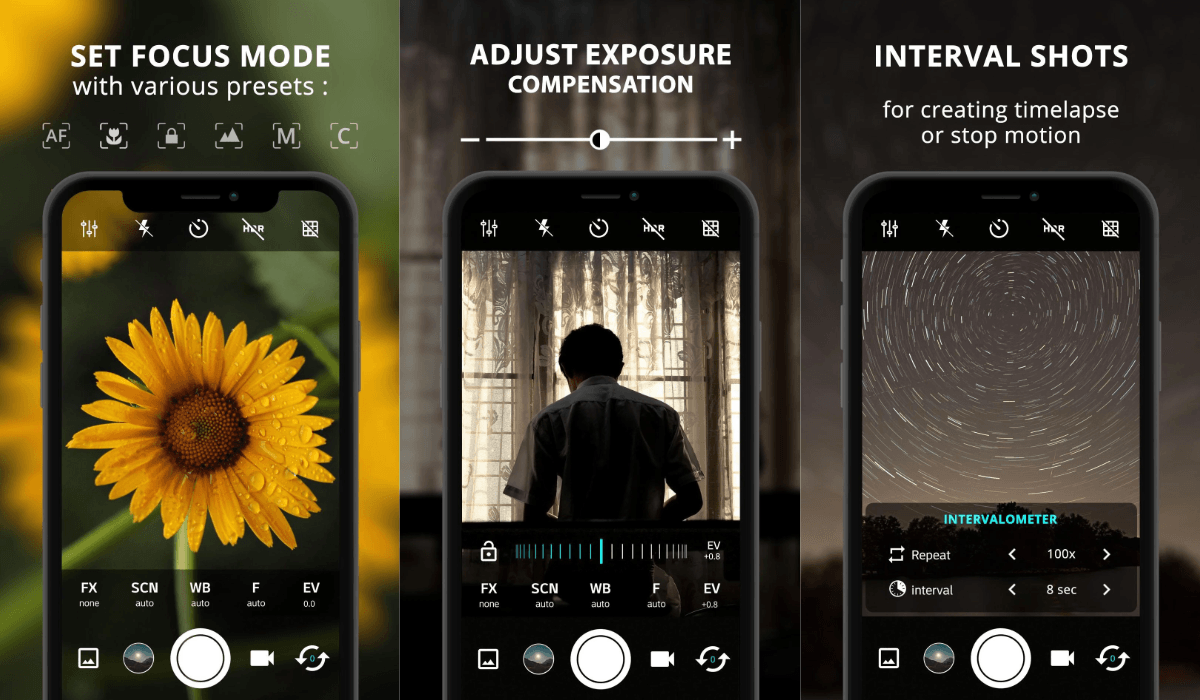
VSCO isn’t just a camera app. It’s a camera and photo editor combo with excellent post-production features.
On the camera side of things, it’s not the most powerful. The manual camera features are limited compared to other Android camera apps. It’s not much better than your stock camera app.
The real selling point of VSCO is its editing tools and features. You can edit contrast and saturation to make your photos stand out. You can also use the grade and fade tools to give your photos a retro film look.
The basic VSCO app is free. But many of the advanced features are only available to paying members. You get some great extra features, but our list has cheaper options.
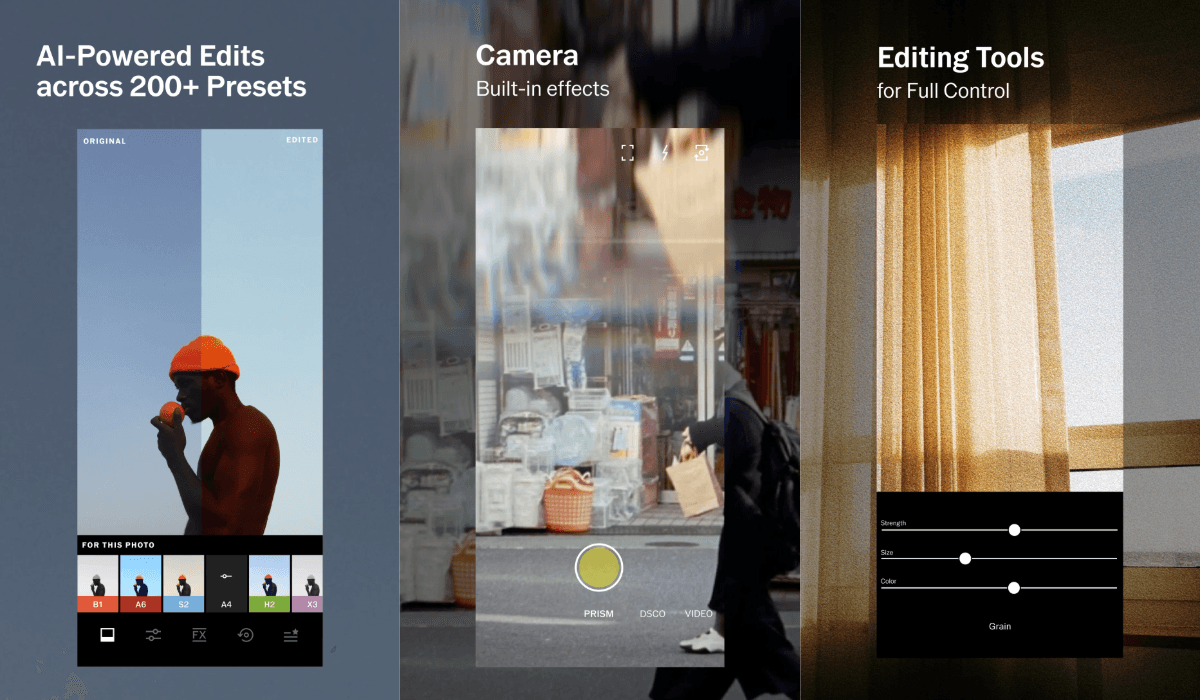
Camera Zoom FX Premium is one of the best Android camera apps for manual controls. It’s a real step up from your native phone camera app.
The camera interface is uncluttered and easy to navigate. Despite the selection of functions, you won’t get lost in a series of menus. Each feature and mode is easy to find. And switching between them is no problem at all.
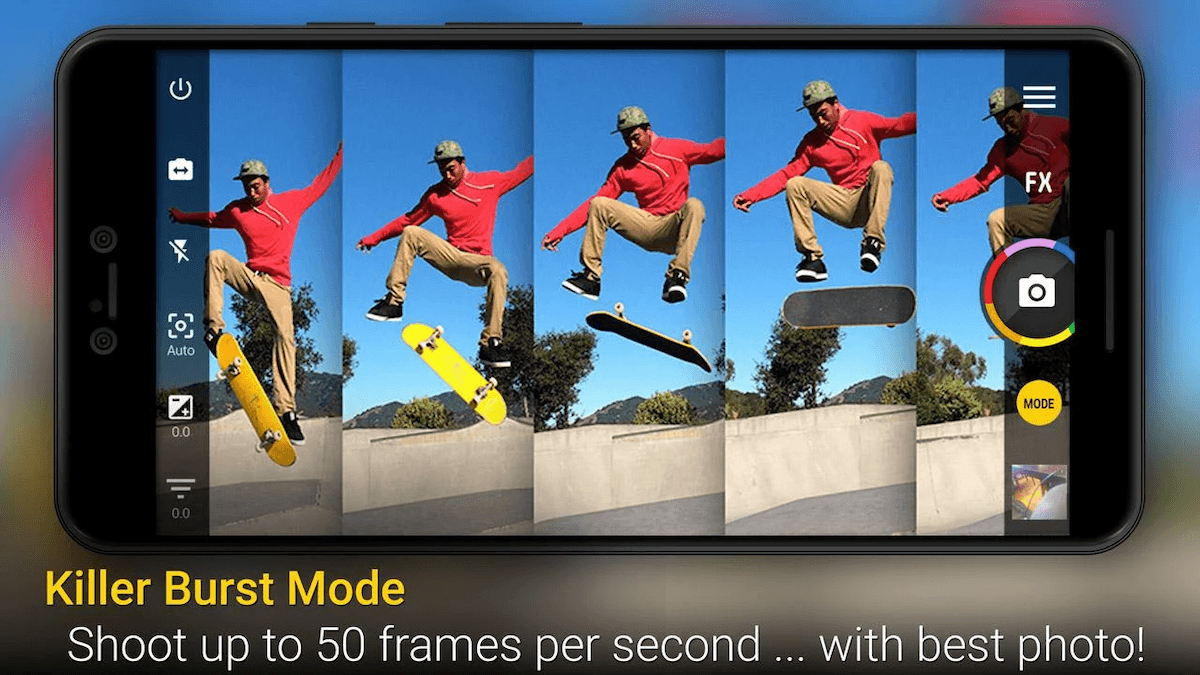
The manual focus is reliable and responsive. Burst mode can capture up to 50 fps (frames per second). The camera hardware also includes ISO, HDR, and white balance settings. The selection of composition overlays is cool, too.
Post-production fans will love the photo editor tool. It lets you add tilt-shift effects and color transformations. Many photographers will be pleased to know that Camera Zoom FX supports RAW file formats for extra editing options.
Camera Zoom FX Premium isn’t free, but at $4.99 it isn’t expensive, and it is included with Google Play Pass. It sits this far down the list for one reason: its last update landed in December 2024, making it the oldest app here. Everything still works, but give Open Camera’s free manual controls a look first if that bothers you.
B612 is the social camera on this list. It is free, and more than seven million ratings put it at 4.1 stars, which makes it by far the most-used app here.
The camera applies filters, beauty adjustments, and AR effects live, before you press the shutter, so the photo you see is the photo you get. Its developer, SNOW Corporation, adds new AR effects daily, and you can build your own filter in a few taps and share it with other users.
It also does more than stills. There is a night mode, a high-resolution mode, a GIF capture mode, and a video editor with a library of more than 500 music tracks. The editing side goes further than most beauty cameras, with curves, split toning, and HSL color controls.
What it does not give you is exposure control. Manual ISO, shutter speed, and RAW capture are all absent from its feature list, so a photographer who wants those should install ProShot or Open Camera instead and keep B612 for the selfies.
Conclusion: Best Camera Apps for Android
If you want to spice up your social media content, we’ve listed the best camera apps for Android available. The same goes for manual photography controls. Some apps also heavily lean towards editing.
The native camera app is pretty good on many of the latest Android phones. But if you are looking for something more from your camera app, plenty of options exist. If you only install one, make it Lightroom Mobile. It shoots, it edits, and it costs nothing to start. Add Open Camera when you want manual exposure for free, and Blackmagic Camera when you move to video.
Frequently Asked Questions
What Is the Best Free Camera App for Android?
Open Camera is the best fully free option. It is open source, it carries no ads or in-app purchases, and it gives you manual ISO, shutter speed, and exposure compensation. Lightroom Mobile is free to download too, and its camera is better looking, but the strongest editing tools there need a subscription.
Can I Use the Google Pixel Camera App on Any Android Phone?
No. Google publishes Pixel Camera on the Play Store, but it only installs on Pixel phones. The modified builds you see called GCam ports are unofficial APK files from third parties, not store apps, and we do not recommend installing them. On a non-Pixel handset, ProShot or Open Camera get you closer to that level of control.
Which Android Camera Apps Shoot RAW?
ProShot, Camera Zoom FX Premium, Lightroom Mobile, and Open Camera all capture DNG RAW files on handsets whose manufacturer exposes the Camera2 API. Your phone decides this, not the app, so check your handset before you buy a paid app for RAW alone.
What Is the Best Android App for Video?
Blackmagic Camera. It is free, it gives you shutter angle and frame rate control, and it records up to 8K on supported phones. ProCam X Lite is the simpler alternative if you only need 4K and want stills in the same app.