The Canon EOS R50 is the best Canon camera for most beginners. It pairs an electronic viewfinder with a vari-angle touchscreen. You can learn photography with the camera to your eye and still turn the screen around to film yourself. Its autofocus recognizes people, animals and vehicles, and its 4K video uses the full width of the sensor. No other beginner Canon covers photos and video this completely.
The other six picks suit different starting points. Some cost less or shoot faster. Two are built for filming yourself. One needs no extra lenses because its zoom reaches 40x, and one is a DSLR for anyone who wants an optical viewfinder.
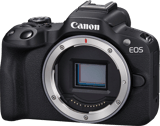
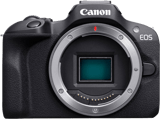
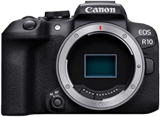
The Best Canon Cameras for Beginners
The first choice is between interchangeable lenses and a built-in zoom. The EOS models come with a kit lens, and you can add other lenses as your photography develops. The PowerShot models are complete when you buy them, but the lens you get is the lens you keep. The second choice is the viewfinder. A viewfinder helps you hold the camera steady and see the scene in bright sun. The cameras without one are built around a screen that faces you, which suits vlogging more than learning photography. Settle those two questions first, then use the table and reviews to compare cameras on the same side.
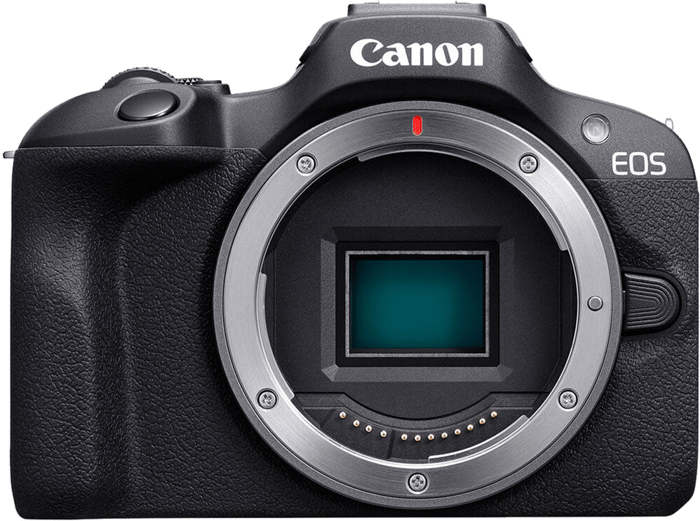
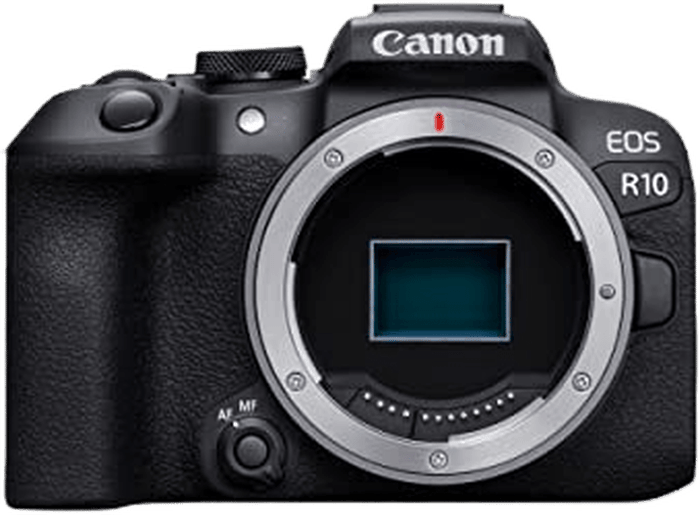
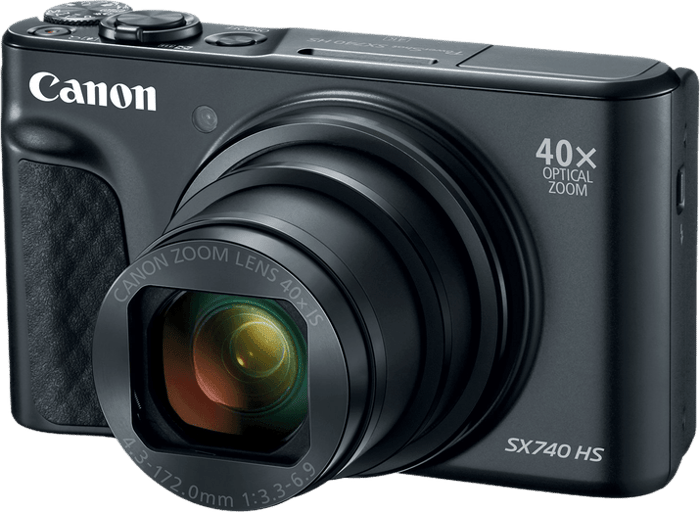
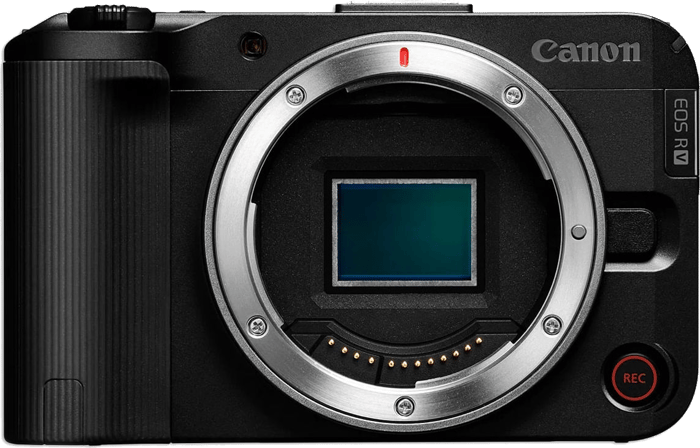
1. Canon EOS R50
| Sensor |
Sensor
APS-C, 24.2MP
|
| Lens |
Lens
Interchangeable (Canon RF mount)
|
| Viewfinder |
Viewfinder
2.36M-dot OLED
|
| Top 4K Frame Rate |
Top 4K Frame Rate
30p, oversampled from 6K
|
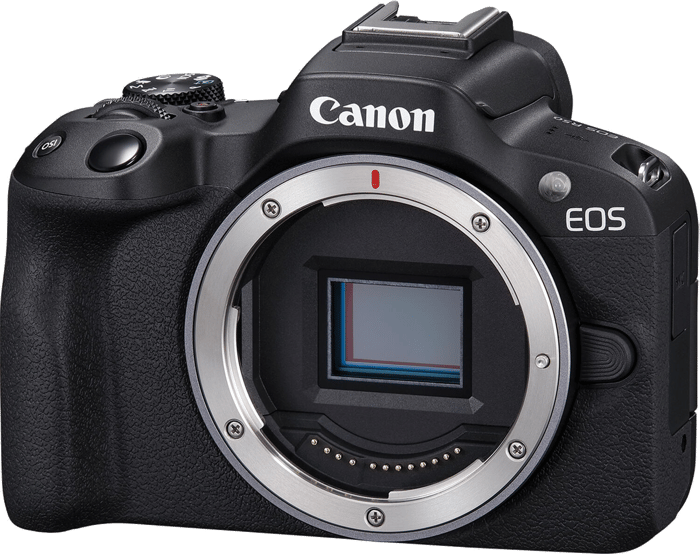
The Canon EOS R50 is the camera to choose if you want one body for learning photography that also films well. Nothing about it holds a beginner back.
Its Dual Pixel CMOS AF II system finds people, animals and vehicles in the frame and follows them. You can concentrate on timing and composition while the camera handles focus. Bursts reach 12 fps with the electronic first-curtain shutter and 15 fps with the fully electronic shutter. That is enough for family action and most weekend sports.
The fully articulating 3-inch touchscreen lets you tap to focus and shoot from low angles. Turn it forward and you can see yourself while you record. 4K video runs at up to 30p, oversampled from 6K across the full sensor width, so your framing matches what you see for photos. Full HD reaches 120p for slow motion. There is a microphone input for an external microphone, but no headphone jack.
The R50 uses Canon's compact RF-S lenses, designed for its APS-C sensor. Full-frame RF lenses fit too, and they can move with you to a bigger body later. It weighs 13.2 oz with battery and card.
The main gap is stabilization. The sensor does not move to counter shake, so choose a stabilized RF-S lens for handheld shots in dim light. It also has only one main control dial, which makes manual exposure slower. Choose the EOS R10 if you want two dials and faster bursts. Choose the EOS R100 if the R50 stretches your budget and you rarely shoot video.
2. Canon EOS R100
| Sensor |
Sensor
APS-C, 24.1MP
|
| Lens |
Lens
Interchangeable (Canon RF mount)
|
| Viewfinder |
Viewfinder
2.36M-dot OLED
|
| Top 4K Frame Rate |
Top 4K Frame Rate
24p (cropped)
|
The Canon EOS R100 is the lowest-cost way into Canon's RF lens system with a viewfinder. It suits someone who mainly wants to learn photography and does not plan to film themselves.
It has a 24.1MP APS-C sensor and the same 2.36-million-dot viewfinder as the R50. Eye detection helps with portraits. You can shoot JPEG or RAW, and the ISO range runs from 100 to 12,800. At 12.6 oz with battery and card, it fits easily in a small messenger bag.
Canon kept the cost down in three ways. The 3-inch screen is fixed and has no touch control, so you cannot tap to focus or turn it toward yourself. Tracking a moving subject slows bursts from 6.5 fps to 3.5 fps. 4K tops out at 24p with a cropped view, and it focuses by contrast detection, which is slower. Use Full HD for video on this camera, because it keeps Dual Pixel AF.
None of that matters much for landscapes, portraits, travel and everyday photos. The R100 takes the same RF-S and RF lenses as the R50, so the lenses you add stay useful if you upgrade the body. Pay more for the EOS R50 if you want a touchscreen and video you can rely on. Choose the R100 if every dollar matters and photos come first.
3. Canon EOS R10
| Sensor |
Sensor
APS-C, 24.2MP
|
| Lens |
Lens
Interchangeable (Canon RF mount)
|
| Viewfinder |
Viewfinder
2.36M-dot OLED
|
| Top 4K Frame Rate |
Top 4K Frame Rate
60p (cropped)
|
The Canon EOS R10 is the beginner Canon for fast subjects and for anyone who expects to learn quickly. It handles more like an enthusiast camera than the R50 or R100.
Speed is the main difference. The R10 reaches 15 fps with its mechanical shutter and 23 fps with the electronic shutter. The R50 needs its electronic shutter to reach 15 fps. Its autofocus tracks people, animals and vehicles across the frame. Together they make it the best camera here for sports photography, birds in flight and children's games.
It also gives you more direct control. Two control dials let you change aperture and shutter speed without opening a menu. The articulating touchscreen and 2.36-million-dot viewfinder match the R50's. For video, 4K at up to 30p is oversampled from 6K. A cropped 4K 60p mode gives smoother motion with a tighter view. There is a microphone input, and the battery charges over USB.
The R10 costs more than the R50 and weighs more, at 15.1 oz with battery and card. It still has no in-body stabilization or headphone jack. If your subjects mostly stand still, the EOS R50 gives you the same 24.2MP image quality for less. Choose the R10 when speed and handling are worth the extra outlay.
4. Canon PowerShot SX740 HS
| Sensor |
Sensor
1/2.3-inch, 20.3MP
|
| Lens |
Lens
Built-in 24-960mm equivalent (40x)
|
| Viewfinder |
Viewfinder
None
|
| Top 4K Frame Rate |
Top 4K Frame Rate
30p
|
The Canon PowerShot SX740 HS is the best compact Canon for beginners who want a long zoom without buying lenses. It suits vacations, family outings and distant subjects in daylight. Its fixed lens gives you a complete camera system in one small body.
The 40x optical zoom covers a 24–960mm equivalent range, from wide scenes to distant details. Optical image stabilization helps reduce camera shake at the long end. The camera weighs 10.5 oz with its battery and card, so it is easy to carry all day. The screen flips 180 degrees upward for selfies. Automatic mode lets you start shooting with little setup.
You can move on to manual and semi-auto shooting modes, including shutter priority. It records 4K video at up to 30p. Bursts reach 10 fps with One-Shot AF, or 7.4 fps with Servo AF. Our SX740 HS review covers its handling in more detail.
The small 1/2.3-inch sensor makes this a daylight travel camera, not our pick for dim interiors. The long end of the zoom has an f/6.9 maximum aperture, so good light matters there too. You frame on the rear screen because there is no viewfinder. There is no aperture-priority mode or RAW capture, and the battery is rated for 265 shots per charge. Choose the R100 or R50 if you want a larger sensor and room to add lenses as your photography develops.
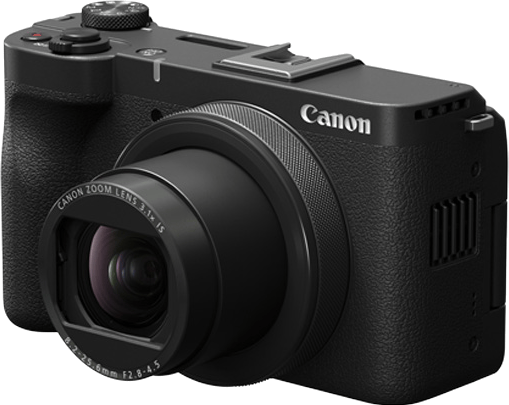
The Canon EOS R50 V is the Canon to choose if you mainly want to film yourself. It shares the R50's 24.2MP sensor, but Canon removed the viewfinder and built the body around video.
4K at up to 30p is oversampled from 6K, and a cropped 4K 60p mode gives smoother motion. Both record internally in 10-bit. Canon Log 3 keeps more highlight and shadow detail for color grading later. A headphone jack sits beside the microphone input, so you can check your sound while you record. The R50 and R10 have no headphone jack.
Small details help creators. A vertical tripod mount lets you record native vertical video for social media without cropping. Close-Up Demo mode shifts focus quickly between your face and a product you hold up to the lens. Canon sells it with the RF-S14-30mm F4-6.3 IS STM PZ, a wide power zoom with optical stabilization that suits filming at arm's length. The body weighs 13.1 oz with battery and card.
The lack of a viewfinder is the trade-off. You frame everything on the screen, which is harder in bright sun and less steady for stills. There is no in-body stabilization either. If you take photos at least as often as you film, the R50 is the better buy. Choose the PowerShot V1 if you never want to change lenses.
The Canon PowerShot V1 is a compact for beginners who want better video and low-light pictures than a phone, without a lens system to manage. Its 1.4-inch 22.3MP sensor is far larger than the SX740's 1/2.3-inch sensor. That gives cleaner pictures indoors and in the evening.
The built-in zoom runs from 16mm to 50mm equivalent. The 16mm wide end fits a whole room into the frame, and it keeps you and the background in shot when you film at arm's length. The aperture is f/2.8 at that wide end. A built-in 3-stop ND filter lets you keep a wide aperture or a slow shutter speed in bright light.
Video is the V1's strength. 4K at up to 30p is oversampled from 5.7K, and a 4K 60p mode crops the frame. Optical image stabilization works with Canon's digital movie stabilization. A built-in cooling fan helps during long recordings. Microphone and headphone jacks and a vari-angle touchscreen complete the setup.
There is no viewfinder, and the V1 weighs 15.0 oz with battery and card, more than the R50 V body. The 50mm long end is short. You cannot reach distant subjects the way the SX740 HS can, and you cannot add a longer lens later. Choose the EOS R50 V if you might want other lenses. Choose the SX740 HS for distant subjects in daylight.
7. Canon EOS Rebel T7
| Sensor |
Sensor
APS-C, 24.1MP
|
| Lens |
Lens
Interchangeable (Canon EF-S mount)
|
| Viewfinder |
Viewfinder
Optical (pentamirror)
|
| Top 4K Frame Rate |
Top 4K Frame Rate
None (Full HD 30p)
|
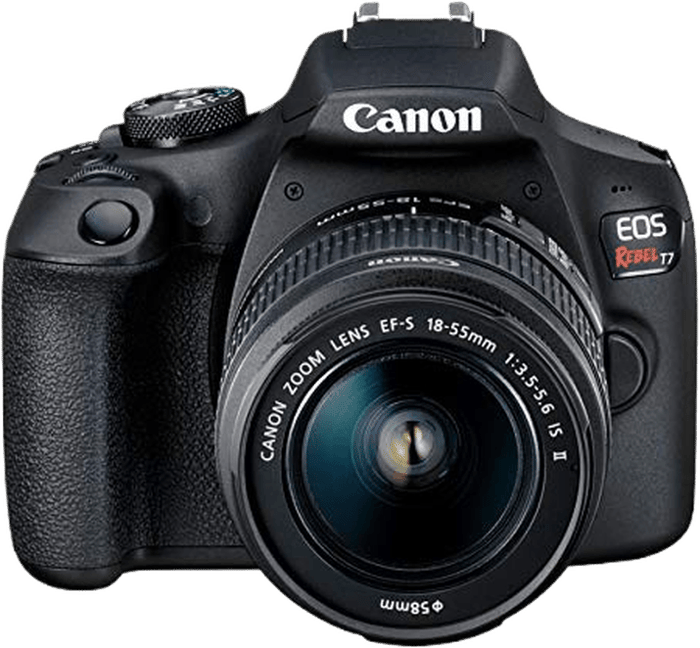
The Canon EOS Rebel T7 is the pick for beginners who want an optical viewfinder. It is the only DSLR here. You see the scene directly through the lens, with no screen lag. Its 24.1MP APS-C sensor still makes detailed prints.
The controls are simple. Scene modes on the top dial cover subjects such as portraits and landscapes. You can start there and move on to the shooting modes that give you more control. Wi-Fi sends pictures to your phone through the Canon Camera Connect app. With Canon's EOS Webcam Utility software, it also works as a webcam over USB. It takes EF-S and EF lenses, and many used EF lenses are available.
The age shows in the numbers. Autofocus uses 9 points, bursts reach 3 fps, and the standard ISO range stops at 6,400. Video tops out at Full HD 30p, with no 4K. The 3-inch screen is fixed and has no touch control. Canon's new lenses are RF designs that do not fit it, while EF lenses fit the RF bodies here with Canon's EF-EOS R adapter.
For most beginners, the EOS R100 is the better long-term buy. It adds eye-detection AF, 4K and the RF mount in a lighter body. Choose the T7 if an optical viewfinder matters more to you than those upgrades.
How to Choose a Canon Camera for Beginners
Start with the type of photography you want to do and whether you will film yourself. That decides the viewfinder question in the reviews. The sections below cover the decisions the reviews leave open.
Why Choose a Canon Camera?
Canon makes a camera at almost every level, from the R100 to professional bodies. The RF lenses you buy for a beginner body also fit Canon's full-frame cameras, so your lenses can stay with you as you learn photography and upgrade. Canon is also one of the biggest camera brands, so lenses, batteries and accessories are easy to find.

© Venrick Azcueta (Unsplash)
Nikon, Sony and Fujifilm also make strong beginner cameras. You can compare them in our guide to the best cameras for beginners.
Mirrorless or DSLR?
Choose mirrorless unless you specifically want an optical viewfinder. Canon's new lenses are designed for the RF mount, and the mirrorless bodies here show the exposure in the viewfinder before you press the shutter. A DSLR shows the scene as it is, so you learn exposure by checking each photo afterward. Our mirrorless vs DSLR guide explains the differences, and our overview of camera types covers the rest.
Look for "IS" in the Kit Lens Name
None of the EOS bodies here has in-body stabilization. That makes the kit lens matter. A lens with "IS" in its name has optical image stabilization, which helps you hand-hold slower shutter speeds indoors and at dusk. "STM" means a quiet focus motor that suits video, and "PZ" means a power zoom. Our list of Canon lens abbreviations decodes the rest. Check the exact kit lens in the listing before you compare bodies, because the same camera is often sold with different lenses.
Check Which 4K Mode You Will Use
A cropped 4K mode records only the middle of the sensor. Your lens then frames tighter than it does for photos. That matters most when you film yourself at arm's length. The R50 records full-width 4K at 30p. The R50 V, R10 and V1 crop only when you choose 4K 60p. The R100 crops all 4K. If you want 60p and a wide view of yourself, start with a wide lens such as the R50 V's 14–30mm kit zoom.
Do You Need a Full-Frame Camera?
Every interchangeable-lens camera here uses an APS-C sensor. APS-C keeps the bodies and lenses smaller and cheaper. A full-frame sensor gathers more light, so it shows less noise at a high ISO and blurs backgrounds more easily. More megapixels are not the reason to switch, because the full-frame bodies at this level use similar camera resolution. Our full frame vs APS-C guide explains the trade-off. If you already know you want full frame, see the cheapest full-frame cameras.
© Tim Mossholder (Unsplash)
Read the Listing Before You Buy
Check four things in the product title. "Body only" means no lens is included. "Renewed" or "used" means the camera is not new. Large bundles from third-party sellers can include a kit lens or extras that differ from Canon's own kit. Colors can also differ: some body-only listings are white rather than black. Check the seller and condition closely for the SX740 HS, because new stock often comes from third-party sellers.
Conclusion: The Best Canon Cameras for Beginners
The Canon EOS R50 is the best Canon camera for most beginners. It combines a viewfinder, a vari-angle touchscreen, subject-detection autofocus and full-width 4K in a small body. The EOS R100 is the main alternative if you want to spend less and mostly take photos. Choose the EOS R10 if you shoot sports or wildlife and want more speed and control.