The Canon RF 100mm f/2.8L Macro IS USM is the best macro lens for most photographers on a Canon EOS R camera. It goes past life size to 1.4x magnification, and its stabilization makes handheld close-ups far easier. Sony's FE 100mm F2.8 Macro GM OSS now matches that 1.4x reach on E-mount.
A macro lens has to fit your lens mount, so this list covers Canon, Sony, Nikon, Fujifilm, L-Mount and Micro Four Thirds. Inside each system, the choice comes down to how close you want to get, how much weight you will carry, and whether you want autofocus and stabilization or a cheaper manual lens that reaches 2x.
The Best Macro Lenses for Every Camera System
Start with your mount, then with magnification. A 1x (1:1) lens records a subject at life size on the sensor, which is enough for flowers, jewelry and most insects. The two 1.4x lenses and the two 2x lenses fill the frame with smaller subjects, such as an insect's eye. On Micro Four Thirds, a 1x lens already frames like a 2x lens on full frame, so those picks get closer than the number suggests.

f/8, 1/160 s, ISO 800
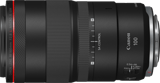
1. Canon RF 100mm f/2.8L Macro IS USM
| Made For |
Made For
Canon RF (full frame)
|
| Max Magnification |
Max Magnification
1.4x
|
| Stabilization |
Stabilization
In lens, 5 stops
|
| Weight |
Weight
1 lb 9.7 oz (730 g)
|
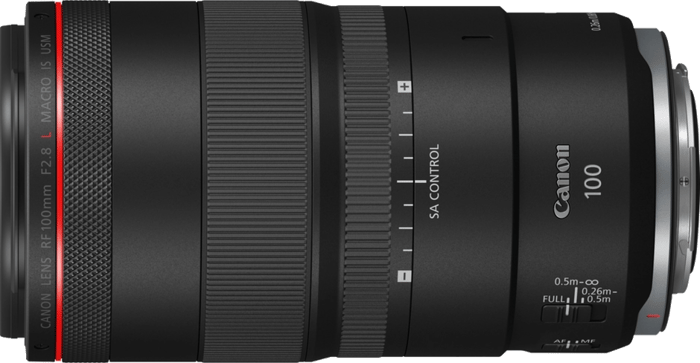
The Canon RF 100mm f/2.8L Macro IS USM is the strongest all-round macro lens on this list. It reaches 1.4x magnification at its 10.2-inch (0.26 m) closest focus. A subject the size of a small fly fills more of the frame than it would with any 1x lens here, without an extension tube or teleconverter.
Stabilization is the other reason it wins. Canon rates the Hybrid IS at up to 5 stops, or up to 8 stops with a stabilized EOS R body. Hybrid IS corrects shift as well as angle shake, which is the movement that blurs most handheld macro shots. Two Nano USM motors drive the autofocus quietly, so the lens also suits video and nervous insects.
The L-series build is dust- and weather-resistant, and the lens doubles as a 100mm portrait lens. Its unusual feature is the Spherical Aberration (SA) control ring, which makes out-of-focus areas softer or harder. Leave it off its zero position by mistake, though, and in-focus detail softens too. Check it before each shoot.
It is an RF-only lens, and the Sony FE 100mm GM below is the equal choice on Sony. On a tight budget, the Canon-specific macro guide covers cheaper RF and EF options.
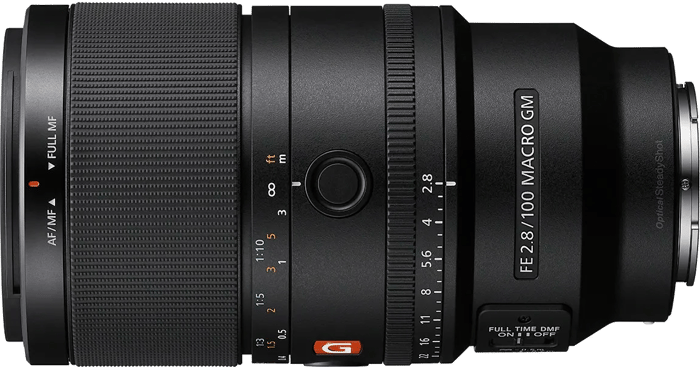
The Sony FE 100mm F2.8 Macro GM OSS is the best macro lens for Sony E-mount, and the closest rival to the Canon. It is Sony's first G Master macro lens and, like the Canon, reaches 1.4x magnification at a 10.2-inch (0.26 m) closest focus.
The Sony goes further with teleconverters. With Sony's 1.4x converter it reaches 2x, and with the 2x converter it reaches 2.8x. No other autofocus lens on this list goes that far. The trade-off is light: the 2x converter takes the lens to f/5.6, so the viewfinder darkens and you need slower shutter speeds or more flash.
Four XD linear motors give fast, quiet autofocus, and the optical stabilization is tuned for close-range shake. The barrel is designed to resist dust and moisture. At 1 lb 6.8 oz (646 g), it is lighter than both the Canon and the Sigma 105mm.
Choose the Sigma 105mm if you want a 1x lens for less money and your Sony body has in-body stabilization. Choose the Sony for the higher magnification and teleconverter route.
3. Nikon NIKKOR Z MC 105mm f/2.8 VR S
| Made For |
Made For
Nikon Z (full frame)
|
| Max Magnification |
Max Magnification
1x
|
| Stabilization |
Stabilization
In lens, 4.5 stops
|
| Weight |
Weight
1 lb 6.3 oz (630 g)
|
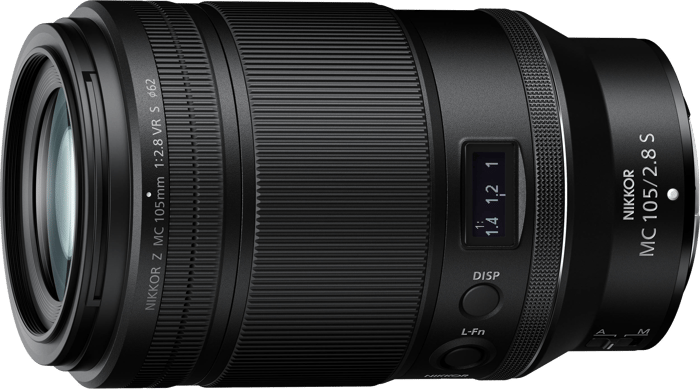
The Nikon NIKKOR Z MC 105mm f/2.8 VR S is the macro lens to buy for a full-frame Nikon Z camera. It reaches 1x at an 11.4-inch (0.29 m) closest focus and has 4.5 stops of optical VR, so handheld work is practical even on Z bodies without in-body stabilization.
It is an S-Line lens with dust- and drip-resistant sealing. Two controls make close work easier. The focus range limiter stops the autofocus from hunting through the far distances when you only shoot close up. The control ring can be set to aperture or exposure compensation, so you can adjust exposure without moving your hand to the camera.
At 105mm, it also works as a portrait lens on full frame. That makes it a sensible single purchase if you want a macro lens that does more than macro.
Its limit is magnification. It stops at 1x, while the Canon and Sony above reach 1.4x. Nikon Z owners who want 2x can buy the Z-mount version of the Laowa 90mm, but they give up autofocus and stabilization.
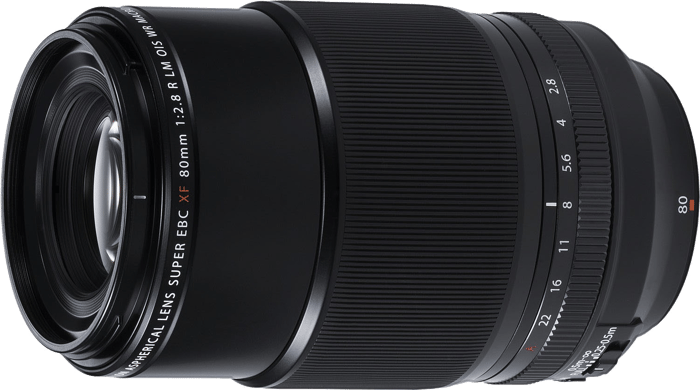
4. Fujifilm XF 80mm f/2.8 R LM OIS WR Macro
| Made For |
Made For
Fujifilm X (APS-C)
|
| Max Magnification |
Max Magnification
1x
|
| Stabilization |
Stabilization
In lens, 5 stops
|
| Weight |
Weight
1 lb 10.5 oz (750 g)
|
The Fujifilm XF 80mm f/2.8 R LM OIS WR Macro is the 1x macro lens for Fujifilm X-mount cameras. On an APS-C sensor, 80mm frames like a 120mm lens on full frame. That gives you a comfortable distance from skittish insects, with a 9.8-inch (25 cm) closest focus.
Fujifilm rates the optical stabilization at 5 stops, and linear motors move the focusing groups for quick autofocus. The lens is weather-resistant and works down to 14°F (-10°C), and a fluorine coating on the front element helps water and dirt wipe off. It also accepts Fujifilm's XF1.4X and XF2X teleconverters for more reach and magnification.
The main drawback is size. At 1 lb 10.5 oz (750 g), it is the heaviest lens here, heavier than the full-frame Canon. On a small X-series body, it makes a front-heavy kit.
Fujifilm owners who want a smaller, everyday macro lens can look at the Fujifilm XF 30mm f/2.8 R LM WR Macro. Its short focal length means you work much closer to the subject, though.
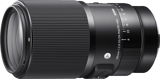
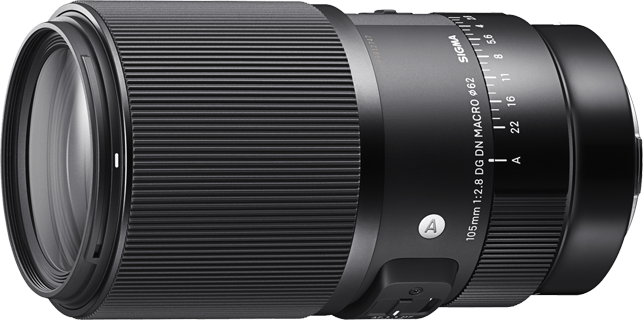
5. Sigma 105mm f/2.8 DG DN Macro Art
| Made For |
Made For
Sony E and L-Mount (full frame)
|
| Max Magnification |
Max Magnification
1x
|
| Stabilization |
Stabilization
None in lens
|
| Weight |
Weight
1 lb 9.0 oz (710 g, Sony E)
|
The Sigma 105mm f/2.8 DG DN Macro Art is the value choice for full-frame mirrorless shooters on Sony E-mount or L-Mount (Leica, Panasonic and Sigma bodies). It gives true 1x magnification at an 11.6-inch (29.5 cm) closest focus. It usually costs less than the Sony and Canon lenses above.
It is a well-equipped manual-control lens. The aperture ring has a click switch, so it can turn smoothly for video or click in steps for stills. A focus limiter speeds up autofocus at macro distances, and a customizable AFL button sits on the barrel. The body is dust- and splash-resistant.
The important difference is that the lens has no optical stabilization. On a Sony or L-Mount body with in-body stabilization, that matters less. On a body without it, handheld shots at 1x need a tripod, flash or fast shutter speeds.
Compared with the Sony FE 100mm GM, the Sigma is heavier at 1 lb 9.0 oz (710 g) and stops at 1x. If you shoot L-Mount, there is no native 1.4x alternative here, so the Sigma is the main autofocus pick.
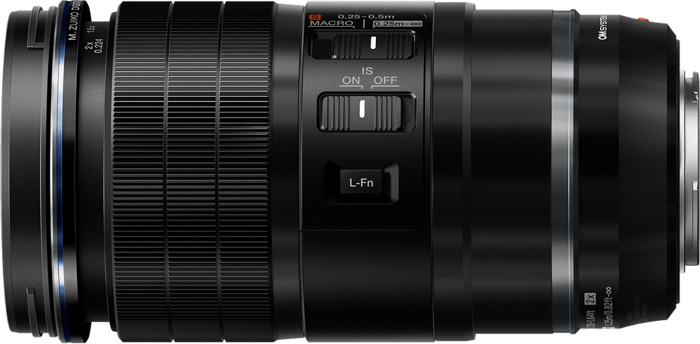
The OM System M.Zuiko Digital ED 90mm f/3.5 Macro IS PRO is the lens for Micro Four Thirds shooters who want to go well past life size with autofocus. It reaches 2x magnification on the sensor, which frames like 4x on full frame. That is the highest magnification on this list.
That matters because it keeps autofocus and stabilization, which the manual Laowa 90mm 2X does not. With an OM-1, OM System rates the combined Sync IS at up to 7 stops. The lens also works with OM System's MC-14 and MC-20 teleconverters for even more magnification, and it is IP53-rated against dust and splashes when used with a splashproof body.
It has a focus limit switch, which helps the autofocus at extreme magnification, where depth of field is very thin. At 16.0 oz (453 g), it is still lighter than the full-frame macro lenses above.
The f/3.5 aperture is slower than the f/2.8 lenses here, but at 2x you usually stop down well past f/3.5 anyway. If you only need life size, the OM System 60mm below is smaller and cheaper.
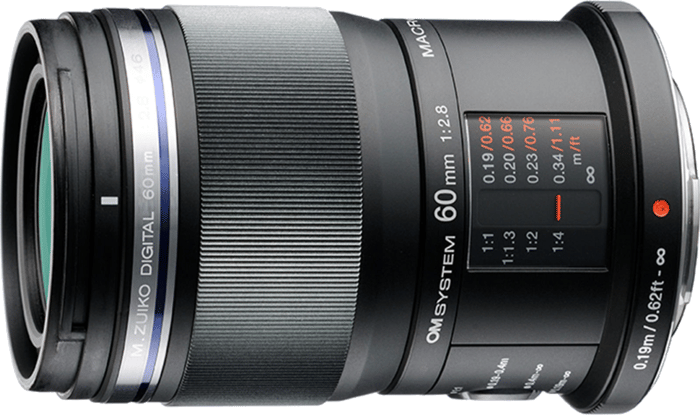
7. OM System M.Zuiko Digital ED 60mm f/2.8 Macro
| Made For |
Made For
Micro Four Thirds
|
| Max Magnification |
Max Magnification
1x (2x full-frame equivalent)
|
| Stabilization |
Stabilization
None in lens
|
| Weight |
Weight
6.5 oz (185 g)
|
The OM System M.Zuiko Digital ED 60mm f/2.8 Macro is the small, lower-cost 1x macro lens for Micro Four Thirds. It weighs only 6.5 oz (185 g), and its 1x magnification frames like 2x on full frame because of the smaller sensor.
The 60mm focal length frames like 120mm on full frame. With a 7.5-inch (19 cm) closest focus, you get more working distance than the Panasonic 30mm gives. That helps when you photograph insects or need room for light. A focus limit switch makes the autofocus quicker at close range. The lens is also dust-, splash- and freezeproof, unusual at this size.
It has no stabilization of its own, so it relies on in-body stabilization, which most OM System and Olympus cameras have.
The OM System 90mm above doubles the magnification and adds lens stabilization. Choose the 60mm if 1x is enough and you want a light kit for walks and travel.

f/8, 1/160 s, ISO 800
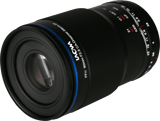
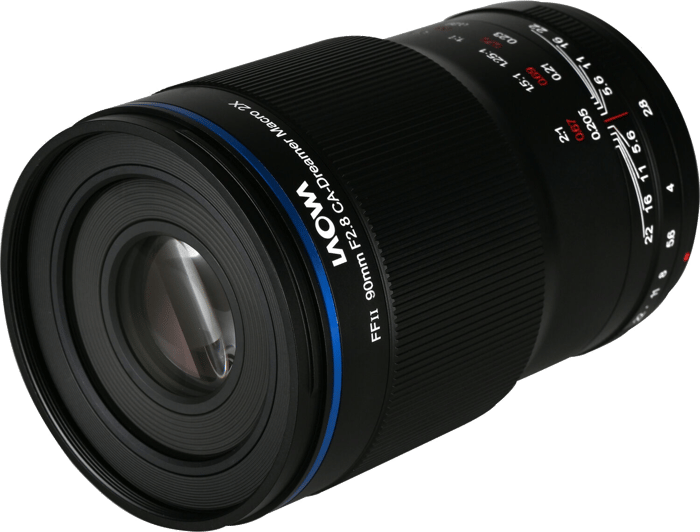
The Laowa 90mm f/2.8 2X Ultra Macro APO is the lower-cost route to 2x magnification on full-frame mirrorless cameras. It comes in Sony E, Canon RF, Nikon Z, L-Mount and Micro Four Thirds versions, so it covers almost every system on this list. Buy the Canon RF version if you shoot Canon.
At 2x, a subject half the width of the sensor fills the frame, double what the 1x lenses here can do. The lens also focuses all the way to infinity, so it works as a 90mm lens for general shots too. Its 13-blade aperture keeps out-of-focus highlights round when you stop down.
The cost is convenience. Focus is manual only, and there is no stabilization. At 2x, depth of field is very thin, so most photographers use a tripod, a focusing rail or flash. It also weighs 1 lb 5.8 oz (619 g).
If you shoot Micro Four Thirds and want autofocus at 2x, the OM System 90mm is the better choice. On Sony, the FE 100mm GM with a 1.4x teleconverter also reaches 2x and keeps autofocus.
9. Panasonic LUMIX G Macro 30mm f/2.8 ASPH. MEGA O.I.S.
| Made For |
Made For
Micro Four Thirds
|
| Max Magnification |
Max Magnification
1x (2x full-frame equivalent)
|
| Stabilization |
Stabilization
In lens (MEGA O.I.S.)
|
| Weight |
Weight
6.3 oz (180 g)
|
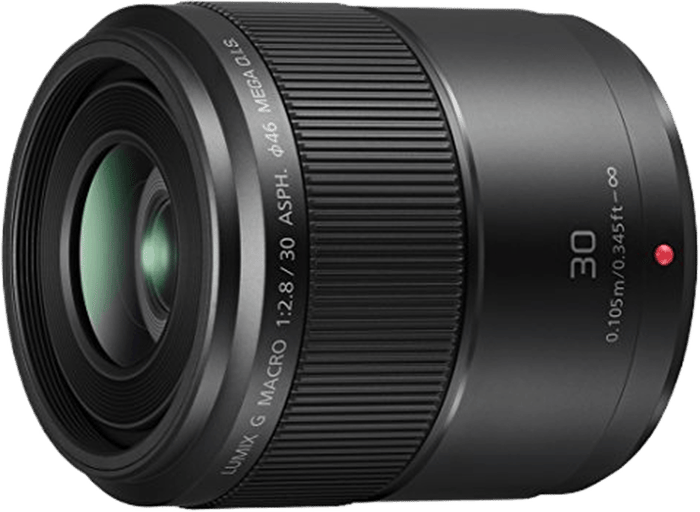
The Panasonic LUMIX G Macro 30mm f/2.8 ASPH. MEGA O.I.S. is the everyday macro lens for Micro Four Thirds. With a 60mm full-frame equivalent, it works as a normal lens for street, food and travel photos, and it focuses down to 1x for close-ups.
It is the smallest and lightest lens here, at 6.3 oz (180 g). Unlike the OM System 60mm, it has optical stabilization (MEGA O.I.S.), which helps on smaller or older bodies without in-body stabilization.
The drawback is working distance. The 4.1-inch (10.5 cm) closest focus is measured from the sensor, so at 1x the front of the lens is very close to the subject. That makes it harder to light the subject and easier to scare insects.
For flowers, food, coins and other still subjects, that is not a problem. For live insects, the OM System 60mm gives you more room at the same 1x magnification.
How to Choose a Macro Lens
Each review above covers the main choice: your mount, then magnification. These points help with the rest.
Focal Length Sets Your Working Distance
Closest focus distance is measured from the sensor, not the front of the lens. The working distance, the gap between the front of the lens and the subject, is much shorter. A 100mm lens at 1x leaves enough space for a small flash or reflector. A 30mm lens at 1x leaves very little. For insect photography, choose 80mm or longer. For still subjects in a studio, a shorter lens is fine and easier to carry.

f/6.3, 1/100 s, ISO 100
Start With 1x Before You Go Past Life Size
If you are new to macro photography, I recommend a regular 1:1 lens first. Above 1x, depth of field becomes so thin that small movements ruin focus, and you need more light. A 1x lens teaches those skills on easier subjects, and work by experienced macro photographers shows how much it can do. Read what a macro lens is for the difference between true macro and close-up lenses.
When to Turn Image Stabilization Off
Lens stabilization helps when you shoot handheld. On a tripod, turn it off unless the maker says the lens detects a tripod. The system can react to its own movement and add blur. Our guide to image stabilization explains the settings. For subjects that need more depth of field than one frame gives, focus stacking combines several shots.

f/9, 1/200 s, ISO 250
Conclusion
The Canon RF 100mm f/2.8L Macro IS USM is the best macro lens for most photographers. Its 1.4x magnification and strong stabilization make it the easiest lens here to use handheld. On Sony E-mount or L-Mount, the Sigma 105mm f/2.8 DG DN Macro Art gives true 1x for less money. To go past life size on almost any system, the Laowa 90mm f/2.8 2X Ultra Macro APO reaches 2x if you are happy to focus by hand. Start with the lens made for your mount, and you will not need an adapter.