Mixbook is our pick if you want to design your own photo book. Shutterfly is worth choosing if you want a designer to arrange the book for you. Both offer customizable books and lay-flat options. The better choice comes down to the design work you want to do, the paper and binding you want, and the finished order.
Our earlier review preferred Mixbook's editor. The comparison below keeps those original impressions and screenshots, then explains the current format and ordering choices. It does not treat either service as the cheapest option for every book or promise identical print results.

Mixbook vs Shutterfly: Which Should You Choose?
Choose Mixbook for a book you want to arrange yourself, especially when the layout matters as much as the photos. Choose Shutterfly when its Make My Book designer service will save you the work of making a first draft. You can review that draft and make changes before ordering.
| What matters to you? | Mixbook | Shutterfly |
|---|---|---|
| Designing the pages | Mixbook Studio for arranging and personalizing your book | Manual placement or Autofill in its photo-book editor |
| Help with a first draft | Story Mode generates a book that you can then edit in Studio | Make My Book has a designer arrange your selected photos |
| A photo across two pages | Layflat formats with seamless spreads | Standard Layflat is hinged; Deluxe Layflat is seamless |
| Book shape | Square, landscape and portrait options | Square, portrait and landscape sizes; cover and paper combinations vary |
| A long book | Standard books allow more pages than its thick layflat formats | Regular photo books and Flush Mount Albums have different limits |
| Best value | Compare the complete book and delivery total | Compare the complete book and delivery total |
These are different ways to build a book, rather than a single feature score. Mixbook's Story Mode book guidance says that books made through that route use square orientation. Choose a regular theme if you want to start with a different shape. Shutterfly explains the designer workflow in its Make My Book guide.
Photo Book Themes and Other Products
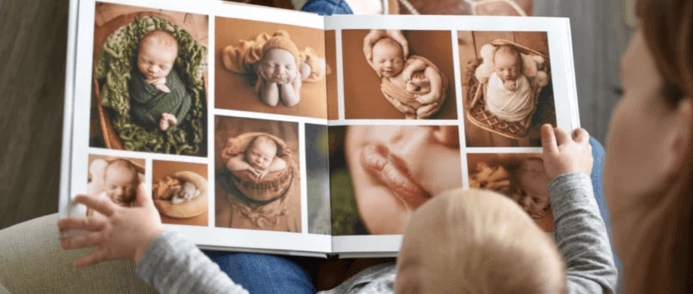
A photo book puts your selected pictures into a printed layout, with room for captions and a story. For help deciding what to include, our guide to making a photo book walks through the planning stage.
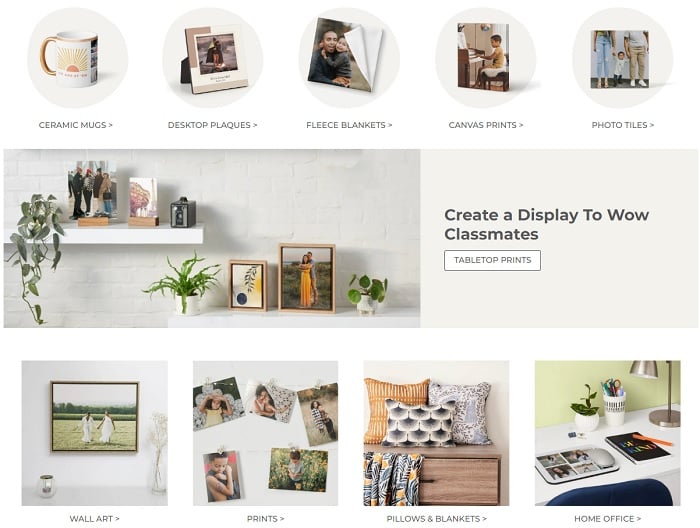
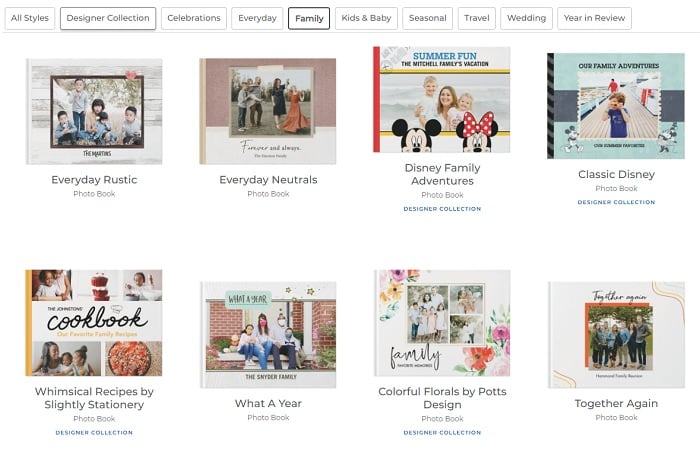
Both services offer themed books for Family, travel and wedding photos. A theme gives you a starting layout. You still need to choose pictures that work together and remove pages that do not fit your story.
Mixbook also lists cards, calendars and wall art, including canvas prints. Its current photo-book range includes softcover, hardcover, layflat and album formats. Pick the format you need before you spend time decorating pages.
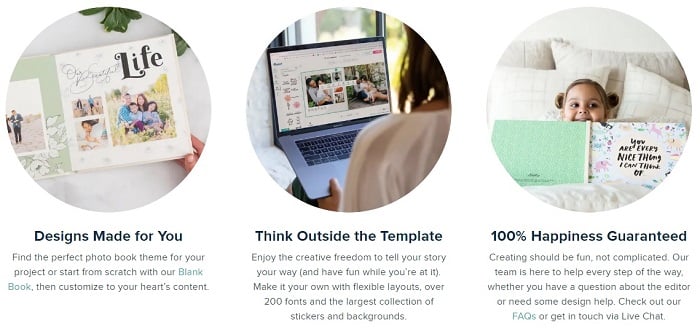
Shutterfly also sells cards, calendars and photo gifts. Those extra products are useful if you want matching gifts, but they do not settle which photo book to buy. Compare the book itself: shape, cover, paper, binding and the design workflow.
The screenshots in this article come from the original review. They show the earlier websites and editor, so use them to understand the examples rather than to find a current button or promotion.
Choosing a Template
Start with two or three themes that suit your photographs. A simple layout gives a landscape room to breathe. A page with several photo spaces works better for a sequence of family moments. Check that the theme has space for the captions you want to write.
Do not choose a service just because it lists more templates. The useful test is whether you can make the pages you need without fighting the design. Try a full-page picture, a page with several photos and a page with text before committing to a long book.
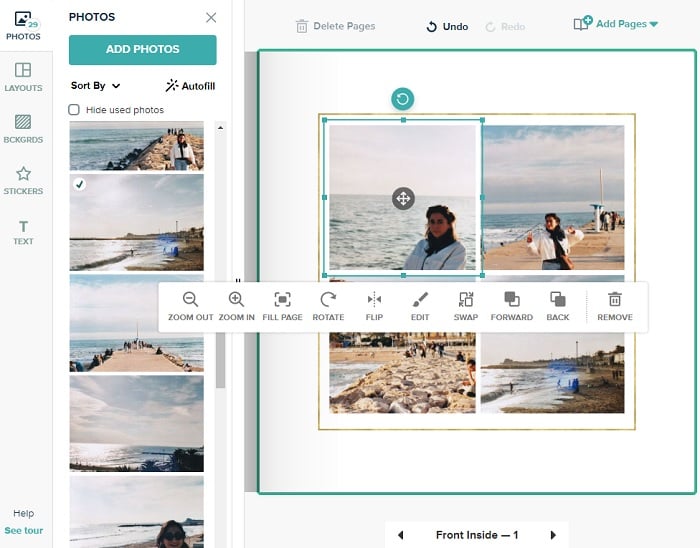
Shutterfly's photo-book editor guide explains manual placement, Autofill, backgrounds, stickers and text. Autofill makes a starting arrangement; review the result for photo order and cropping before you place an order.
Standard Shutterfly photo books
Design Tools and Ease of Use
In our original review, Mixbook's editor made the stronger impression. These comments describe that earlier experience, rather than a new test of the current websites:
The Mixbook interface is easy to follow and intuitive. It only takes a couple of seconds to understand the drag-and-drop system for adding photos to a page. And the adjustment tools are clearly labeled and easily accessible. It doesn’t take long to get everything sitting perfectly on the pages.
The Shutterfly book construction pages are also less colorful. That might seem like a purely cosmetic problem. But I found it affected my user experience. Tools and command buttons got lost in a sea of white and grey boxes.
For a current order, the bigger distinction is how much you want to do yourself. Shutterfly's Make My Book service provides a designer-made draft that you can inspect and edit. Mixbook's Story Mode provides an automatically generated starting book that remains editable in Studio. Neither starting draft replaces a page-by-page check.
Mixbook create mode
Personalizing and Editing Photos
Keep photo editing and page design as separate steps. Finish the important crop, exposure and color adjustments before uploading. If you are scanning older prints, start with our guide to digitizing photos.
Mixbook's photo-enhancement guidance documents brightness, contrast and saturation adjustments in Studio. It also recommends making your main edits before upload. Shutterfly lets you arrange photo spaces and text, choose backgrounds and add stickers in its editor.
The book editor is not a substitute for dedicated photo editing. It’s not exactly Adobe Photoshop. Use the book tools to place pictures and captions, then preview every page for cut-off faces, missing text and unwanted crops.
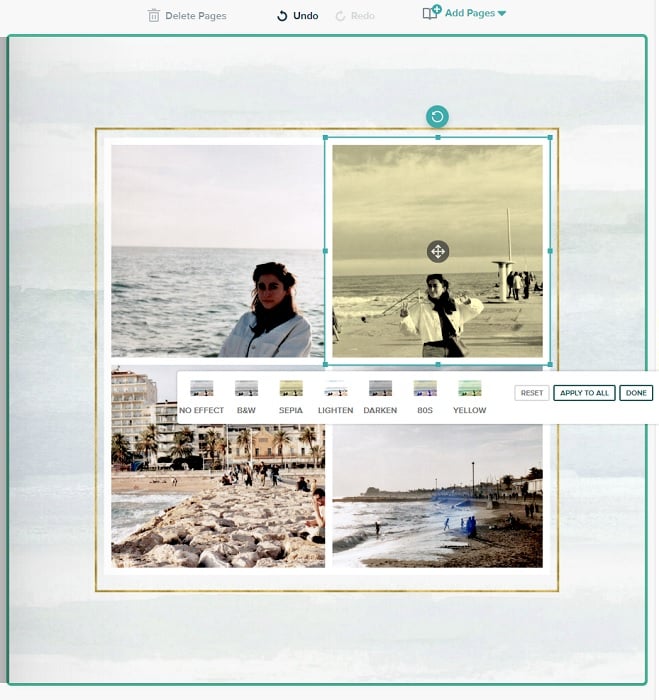
Mixbook edit screen
Sizes, Covers, Paper and Lay-Flat Binding
Mixbook offers square, landscape and portrait books, rather than just three square sizes. Its format-selection guide explains how shape, size and cover are selected. The app requires a copy of the project to change orientation, and that change can shift page elements. Decide on the shape early and recheck the layout after changing it.
Shutterfly lists softcover, glossy hardcover, matte hardcover and premium leather options in its book options guide. Cover and paper choices are not interchangeable across every size. For example, its softcover books use standard pages, while glossy and layflat upgrades are available on eligible hardcovers.
Lay-Flat Does Not Always Mean the Same Binding
Shutterfly distinguishes Standard Layflat, which uses a hinged binding, from Deluxe Layflat, which uses seamless pages with a lustre finish. If you want one photo to run across an open spread, that difference matters more than the word “layflat” alone.
Mixbook also offers seamless layflat formats. Its paper guide lists matte and lustre layflat options alongside standard papers. Compare the specific paper and binding you plan to order, rather than treating every premium book as the same product.
Our glossy vs matte photo guide explains how finish changes the way a print looks. Think about glare, whether you want to write in the book, and how stiff you want the pages to feel.
Page Count and Availability
Both services require at least 20 pages for regular photo books. Thick layflat books and albums have different limits from standard books. Mixbook's page-count guidance separates standard books from Signature and Premium layflat papers; Shutterfly also treats Flush Mount Albums separately from regular photo books.
Choose the exact format before building a large family history or travel book. Also select your delivery country before choosing a size. Mixbook's layflat help page notes that not every size is available in every country.
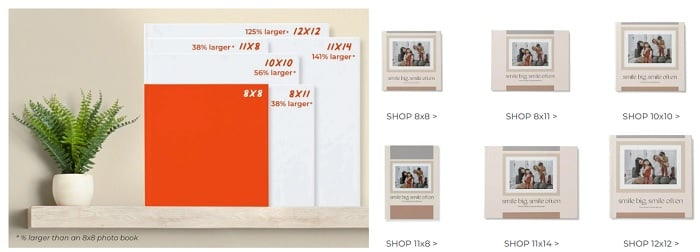
Shutterfly shop page
Print Quality: What Our Earlier Review Found
Our original review reported positive results from both services. These observations refer to those books, not to a new comparison of current orders:
The print quality is very good on the Mixbook photo book. The photos are bright and clear with accurate colors. And we’ve experienced no blotches or imperfections on the images. I also appreciate the cover and binding options. We have to say both companies have done an excellent job with the final product.
We’ve often found the photo quality on other items has been dark or saturated when ordered from Shutterfly. But we have no such complaints with the Shutterfly photo book. The image quality is excellent. And the books are bound well and look fantastic. Although, the premium leather book was out of our price range. We can’t comment on that one yet.
For your own book, use the original image files and fix low-resolution warnings. Shutterfly's editor guide recommends originals where possible and flags images that do not meet its resolution requirement. A good screen preview helps catch layout mistakes, but it cannot prove the color or feel of the printed book.
Shutterfly options
Comparing Value and Delivery
Compare like with like: the same book size, page count, cover and binding. Then compare the full order total after extra pages, optional upgrades, any applicable promotion, delivery and tax. A discounted standard book and a premium layflat album are different purchases.
Do not choose Mixbook or Shutterfly on the assumption that one is always cheaper. Decide which format meets your needs, then compare that order. For a large photo project, settling the page count first makes the comparison more useful.
If the book is a gift, leave time to finish and proofread the design before production starts. Shutterfly's domestic shipping guide says production and delivery times vary and directs customers to the cart for current estimates. Use the estimate for your exact product and destination; a general delivery claim is not a guarantee for your order.
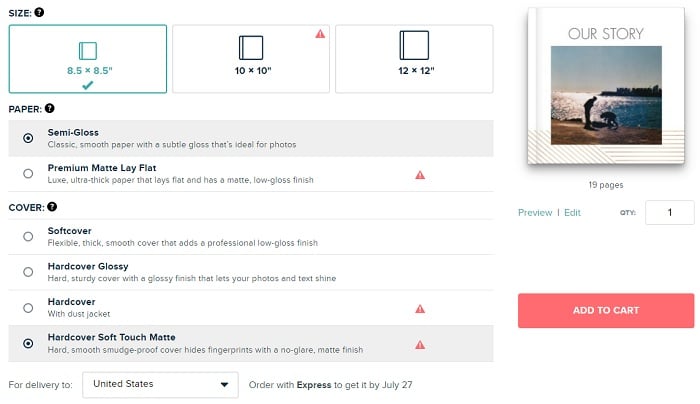
Mixbook
Shutterfly vs Mixbook: Our Verdict
Mixbook remains our starting recommendation for people who want to design their own book, based on the editor experience in our earlier review. Its format choices also give you room to plan around your photos. Choose the shape and paper before doing the detailed layout.
Shutterfly is a useful alternative if you want a designer to prepare the first draft through Make My Book. Its hinged and seamless layflat options also let you choose the binding that suits your spreads.
For either service, the final choice should be the book you actually want to order. Compare its format, check every page, and review the delivered total and estimated arrival date before paying.