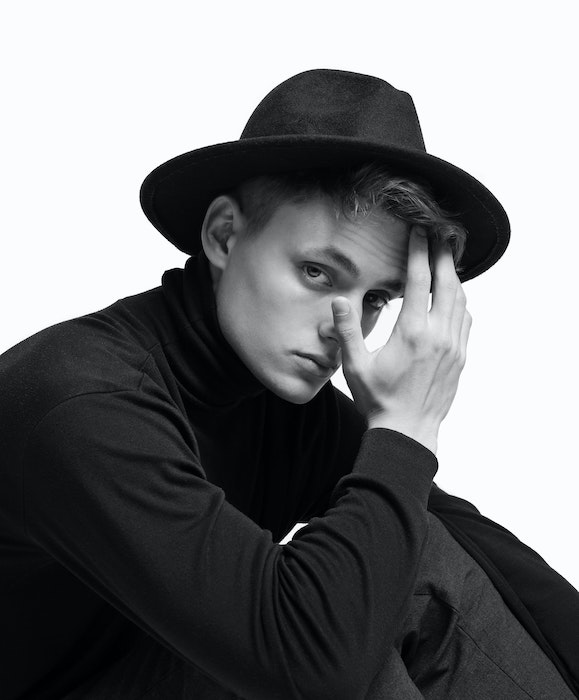
Start with a comfortable stance, give the hands something to do, and change one detail at a time. These 38 female poses for portrait photography show standing, sitting, and lying-down options, with photographs to help you direct each one.
Use the examples as starting points. Ask your subject which shapes, expressions, and levels of movement she wants to try. No single pose suits everyone.
What Are the Best Poses for Female Portraits?
For a simple standing portrait, try placing one foot slightly behind the other, shifting weight onto the back leg, and turning the shoulders a little. Keep the front knee relaxed. Let the hands rest in pockets or place one hand on the hip.
For a seated portrait, start with feet supported and hands resting on a knee or chair. Then adjust the gaze and head angle. A direct, square-on pose is also an option; choose the result together rather than treating one body shape as the goal.
Before you start:
- Show, then direct. Demonstrate a position, then give one instruction at a time. Ask before touching your subject or adjusting clothing, hair, or props.
- Check the hands. Relax the fingers and avoid pressing the palm hard into the face. Leave eyes and important details visible unless hiding them is part of the photograph.
- Choose the camera position. Begin near eye level for a head-and-shoulders portrait. Compare a slightly higher or lower viewpoint before changing the pose. Avoid crowding the face with the camera; step back and reframe if nearby features look too prominent.
- Check the light and focus. Look at the shadows on the face and focus on the visible eye. A bright window or open shade can be a starting point. Turning the face changes how the light falls; looking up does not guarantee even lighting.
- Keep the pose comfortable. Use a stable chair or clean surface. Let your subject choose her range of movement, and reset between photographs.
Our posing techniques and portrait photography guides cover direction and camera setup in more depth.

38 Best Female Poses for Portrait Photography
The list keeps the original 38 examples in three groups: standing, sitting, and lying down. Pick a few that match the session and vary the hands, gaze, or camera viewpoint before moving on.
For more ideas, see how to pose fashion models. If your subject wants those styles, our bikini poses and boudoir poses guides offer separate starting points.
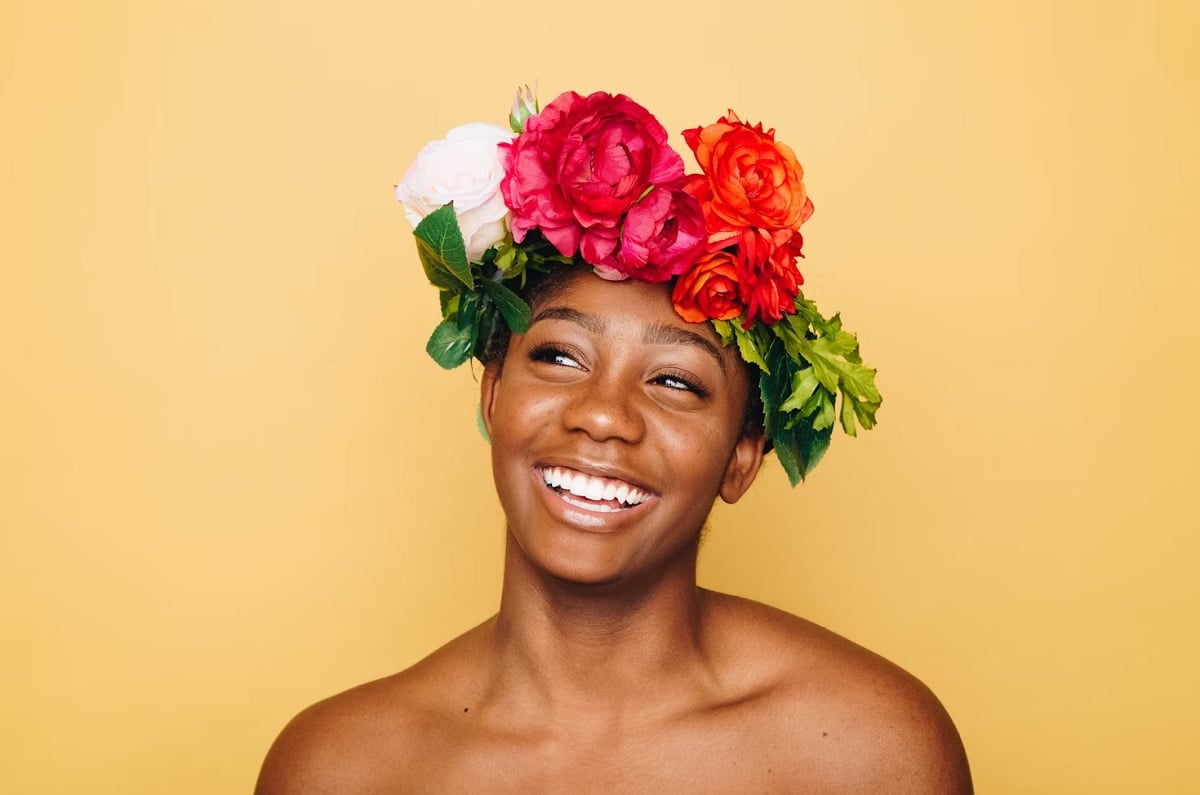
© Autumn Goodman
Standing Female Poses
Start with a stance your subject can hold without strain. Most of these standing poses need no prop. Keep the feet stable, then adjust the arms, shoulders, and gaze.
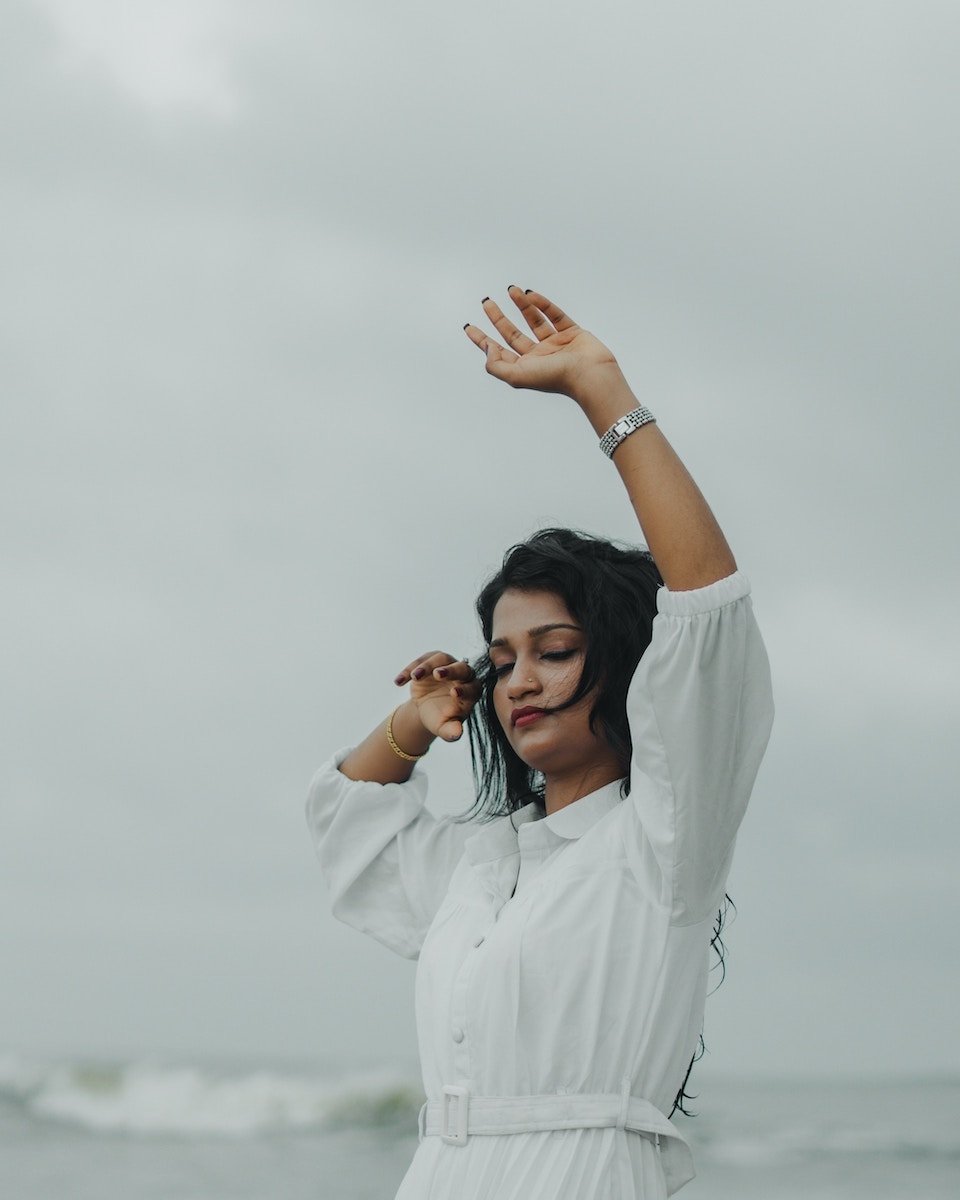
1. Hands in the Air
Ask your subject to raise one or both arms, leaving the elbows relaxed. She can hold one wrist lightly, look upward, or close her eyes.
Frame wide enough to keep the hands in the picture if they are part of the pose. Check that an arm does not hide the face. Try a small sway for movement, then let her lower her arms between photographs.
© Ananthu Ganesh
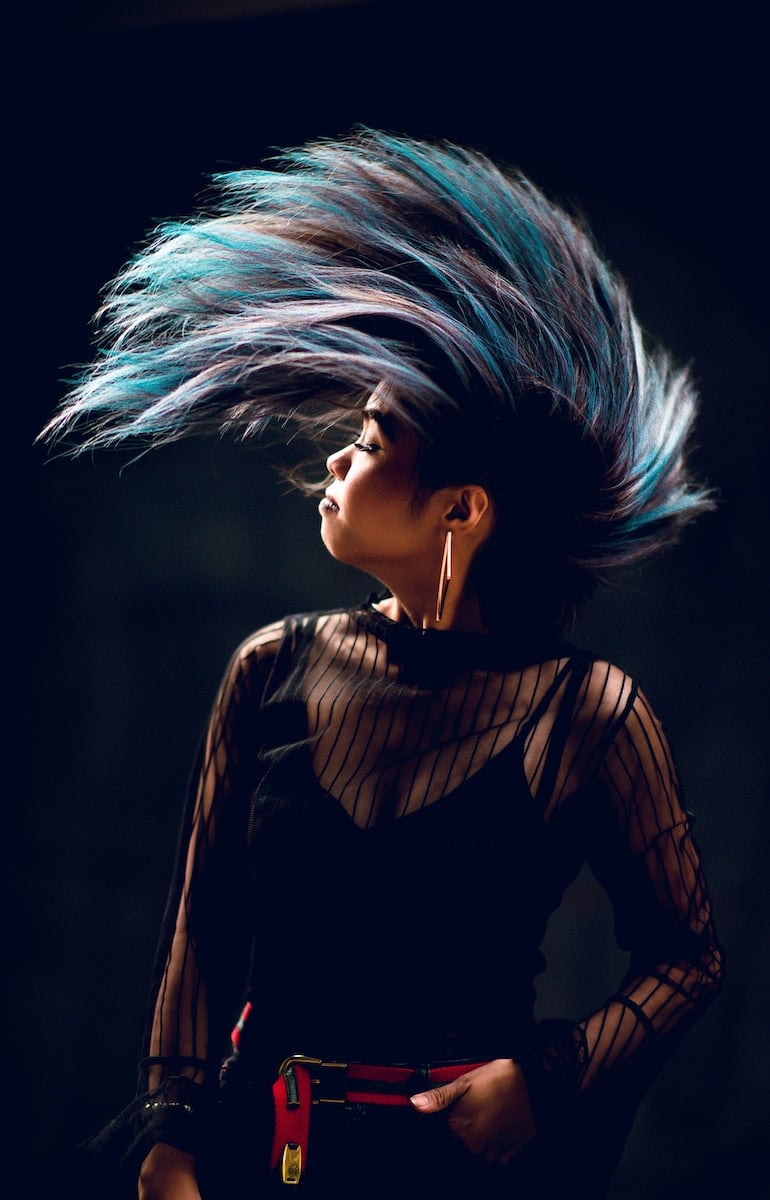
2. Flip Hair
If your subject wants to try a hair flip, agree on a gentle movement and take a practice frame first. Leave room around the head for the hair to move.
Use a fast shutter speed when you want to freeze movement. Try a slower shutter speed for deliberate blur. Check the result rather than assuming the first setting will work. Skip this pose if the movement is uncomfortable.
© Sheldon
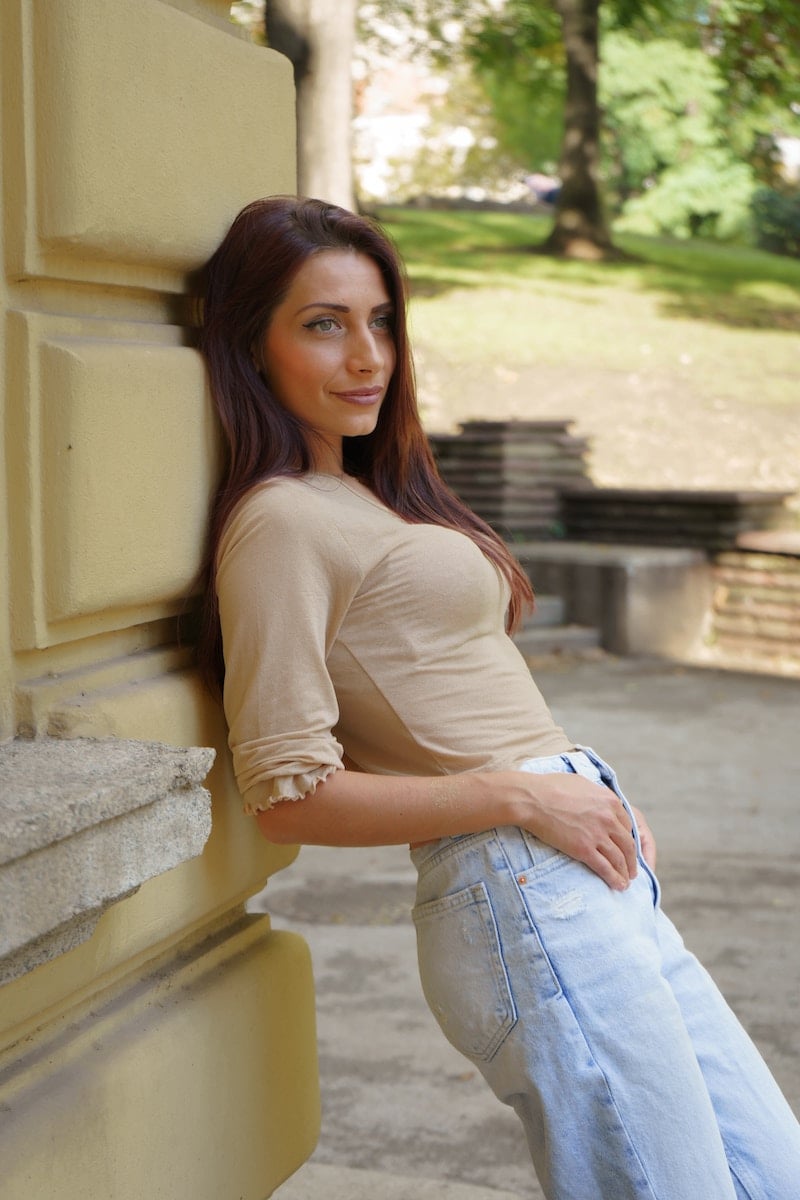
3. Lean on a Wall
Have your subject rest her back or one shoulder against a wall. Keep the feet in a position that supports her weight, with one knee relaxed if she prefers.
Try a front view, then move a little to the side to include the wall as a line through the frame. She can look at the camera or turn her face away. There is no need to press her head against the wall or force an arch.
© Aleksandrina Andreeva
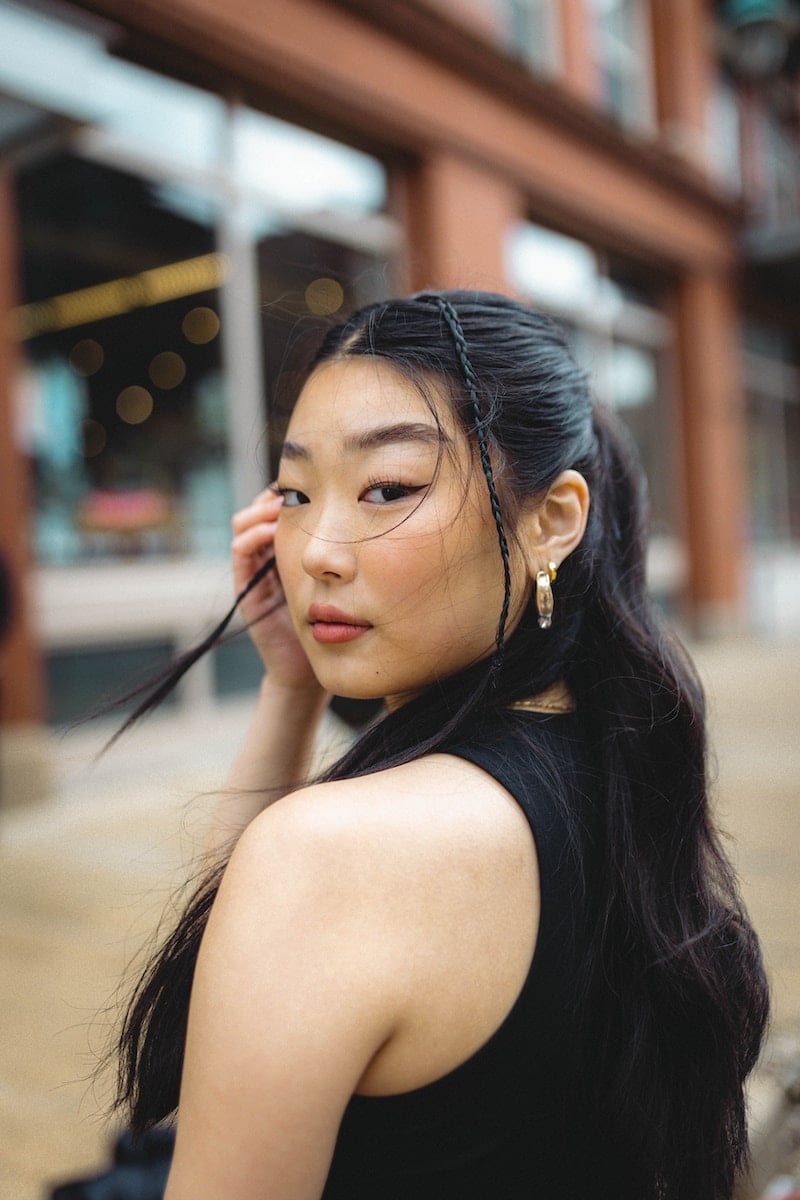
4. Look Over the Shoulder
Turn the body partly away from the camera, then ask your subject to look back over the nearer shoulder. Stop before the neck turn feels strained.
For portrait photography, keep the visible eye clear of hair and the raised shoulder. Move your camera to change how much of the face appears. Recheck the shadows when using different lighting setups.
© Grace Hilty
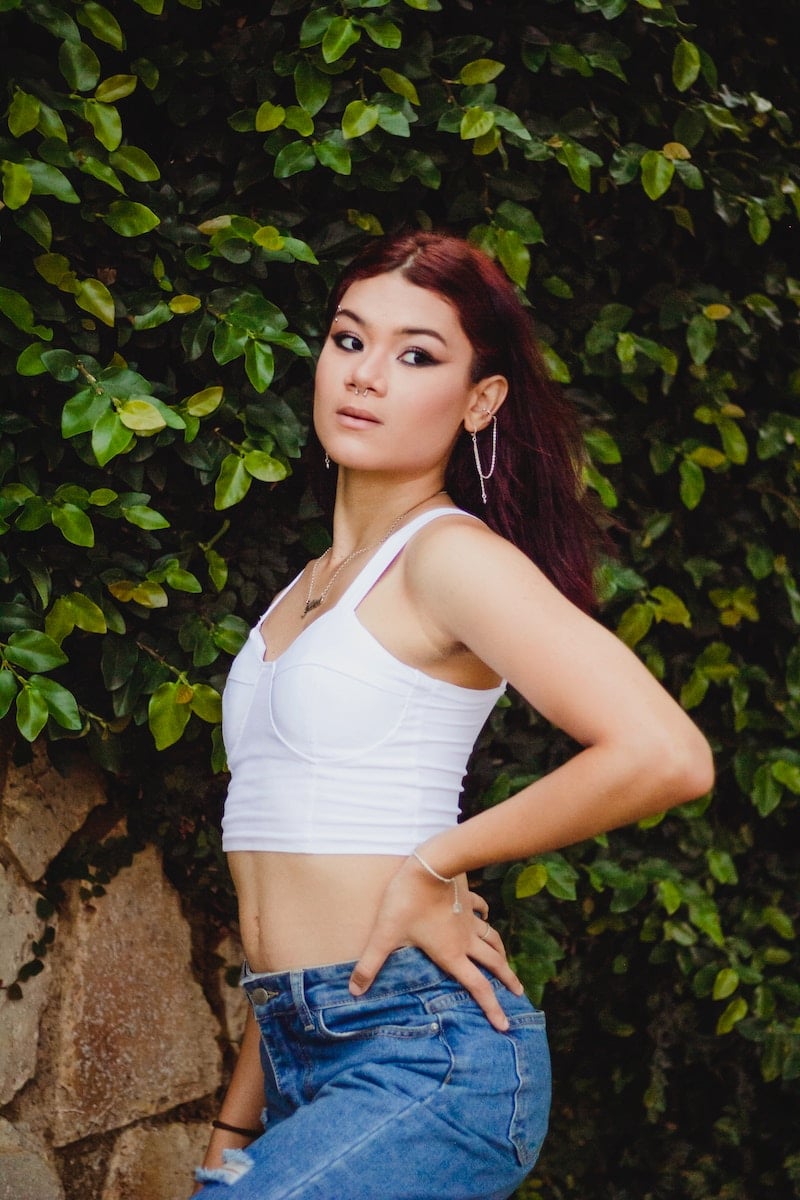
5. One Hand on Hip
Place one hand lightly on the hip, with the fingers relaxed and elbow away from the body. Let the other hand rest by the leg or hold an accessory.
Try the shoulders facing the camera, then a slight turn. Keep the wrist comfortable and check that the elbow stays inside the frame. Ask your subject which version feels right rather than promising that it will create confidence.
© Marlon Alves
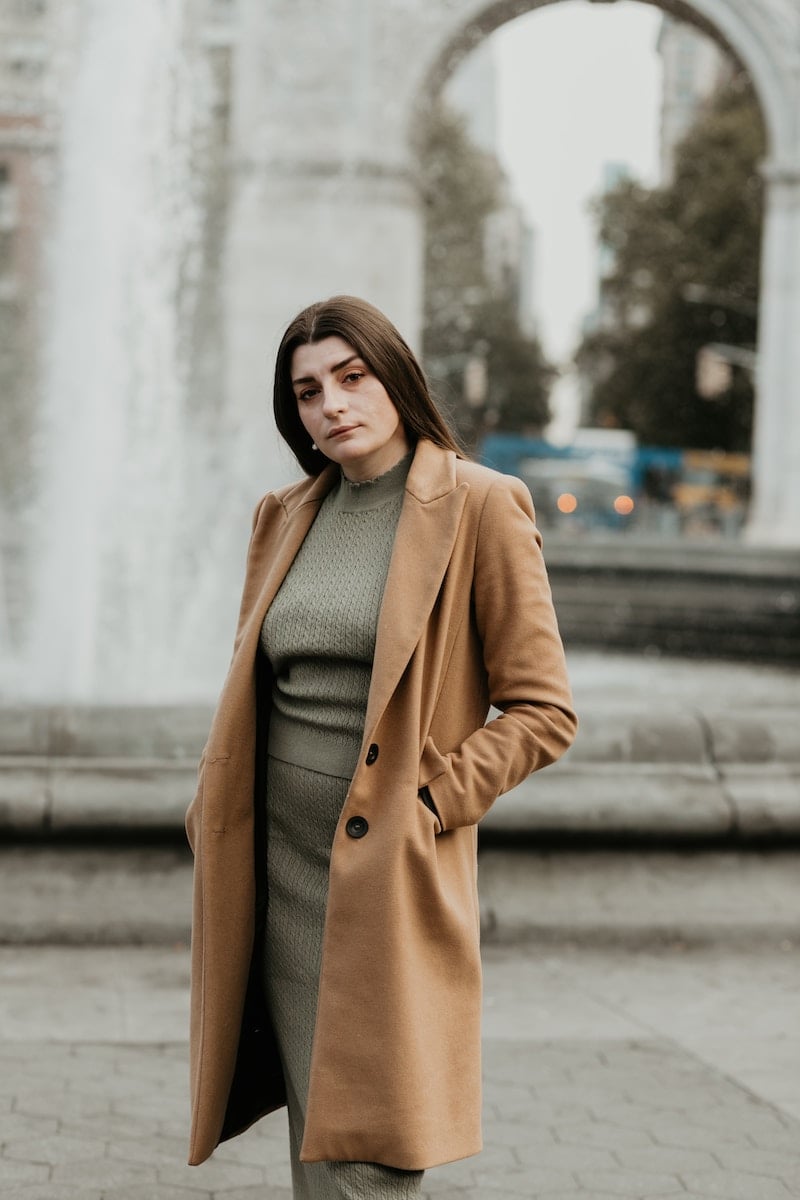
6. Hands in Pockets
Slip the hands partly into pockets, leaving the thumbs or a few fingers visible if that feels comfortable. Relax the shoulders and choose either an even stance or weight on one leg.
This gives the hands a clear place to rest for lifestyle photography. Check that the pockets do not pull the clothing out of shape. Shallow pockets may work better with just the thumbs tucked in.
© Anna Wojtowicz
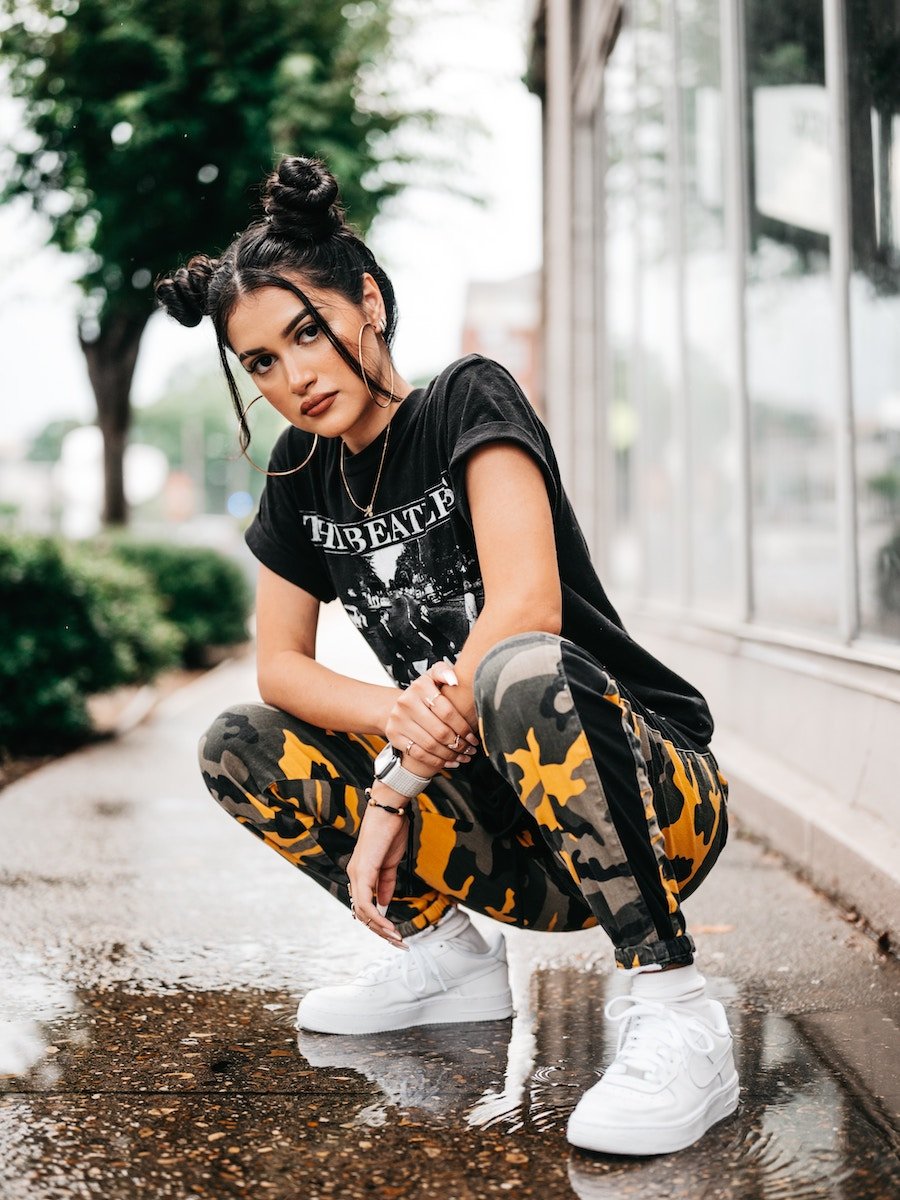
7. Squat Pose (Baddie Squat)
This low pose is one option for social media portraits. Ask your subject whether she wants to try a squat, and let her choose a depth she can hold comfortably.
She can keep both feet planted or extend one leg as in the example. Compare a camera position near her face with a wider view that includes the whole shape. Use a seated alternative if balance or clothing makes the squat awkward.
© Isaiah McCarty
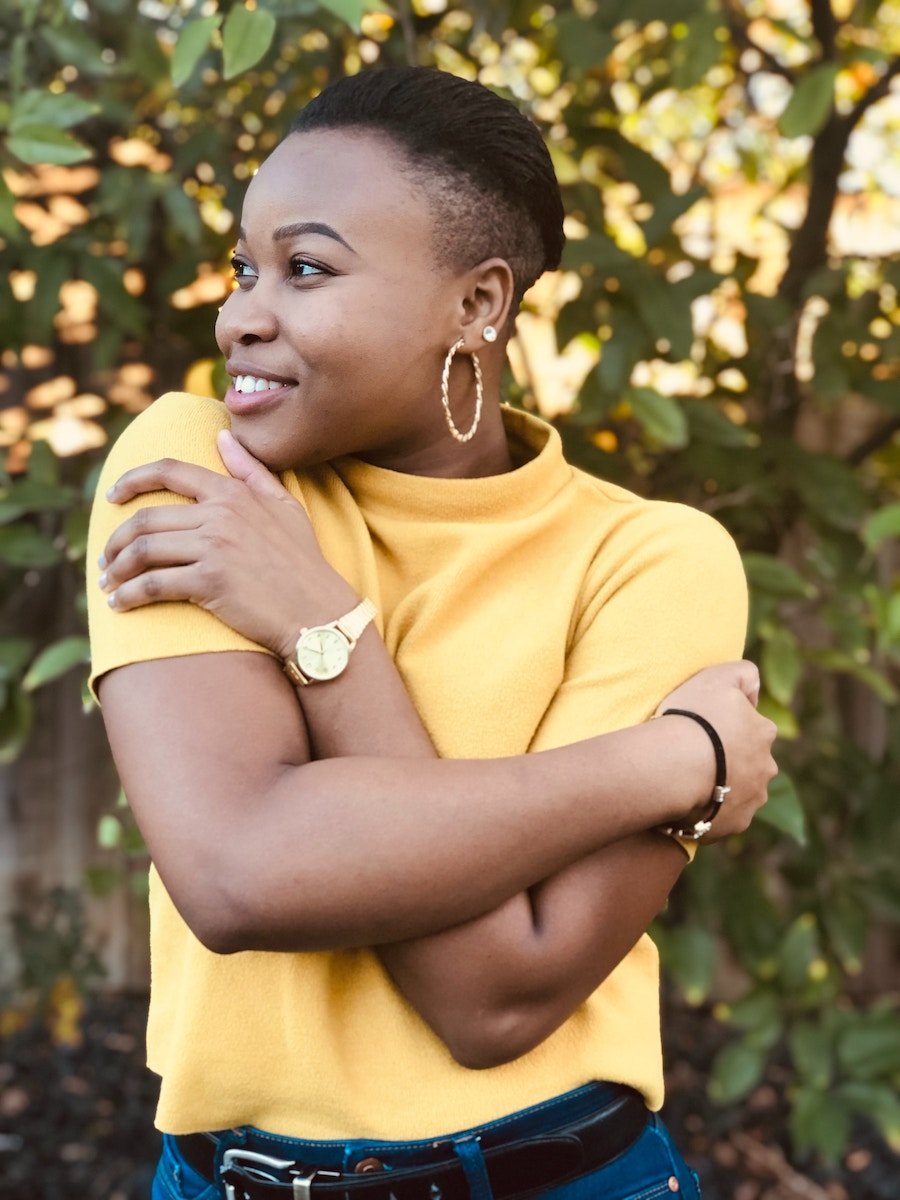
8. The Cosy Pose
Ask your subject to cross her arms loosely around herself, as if keeping warm. Keep the shoulders relaxed and the hands soft against the upper arms.
It fits autumn and winter sessions, but the gesture can work at other times too. Try eyes open and closed, or a small head turn. Check that the hands remain visible if they help explain the pose.
© Vanessa Kintaudi
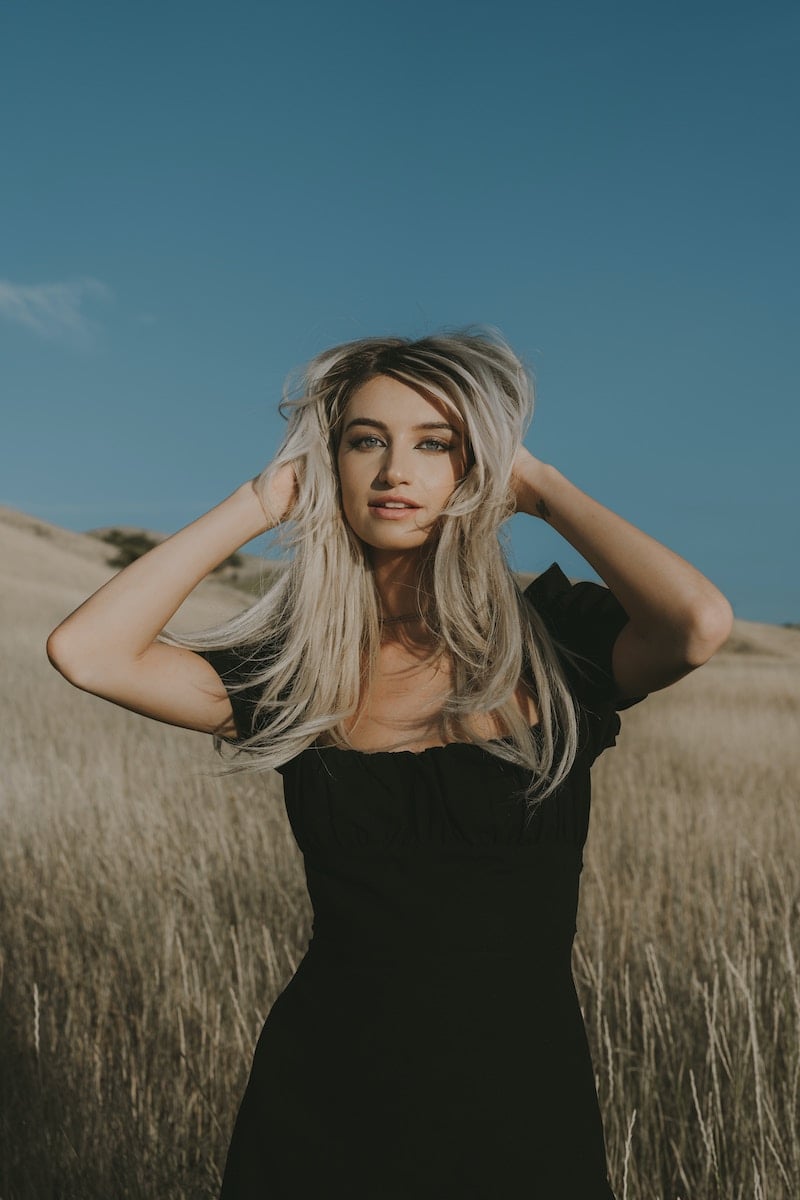
9. Hands in Hair
For a variation on fashion posing, place one or both hands lightly in the hair. Ask your subject to lift the elbows only as far as feels comfortable.
Keep the fingertips loose and check that the arms do not cover the eyes. Compare the chin level with a small lift. The effect depends on the person, framing, and expression; it does not automatically flatter every body type.
© Elise Wilcox
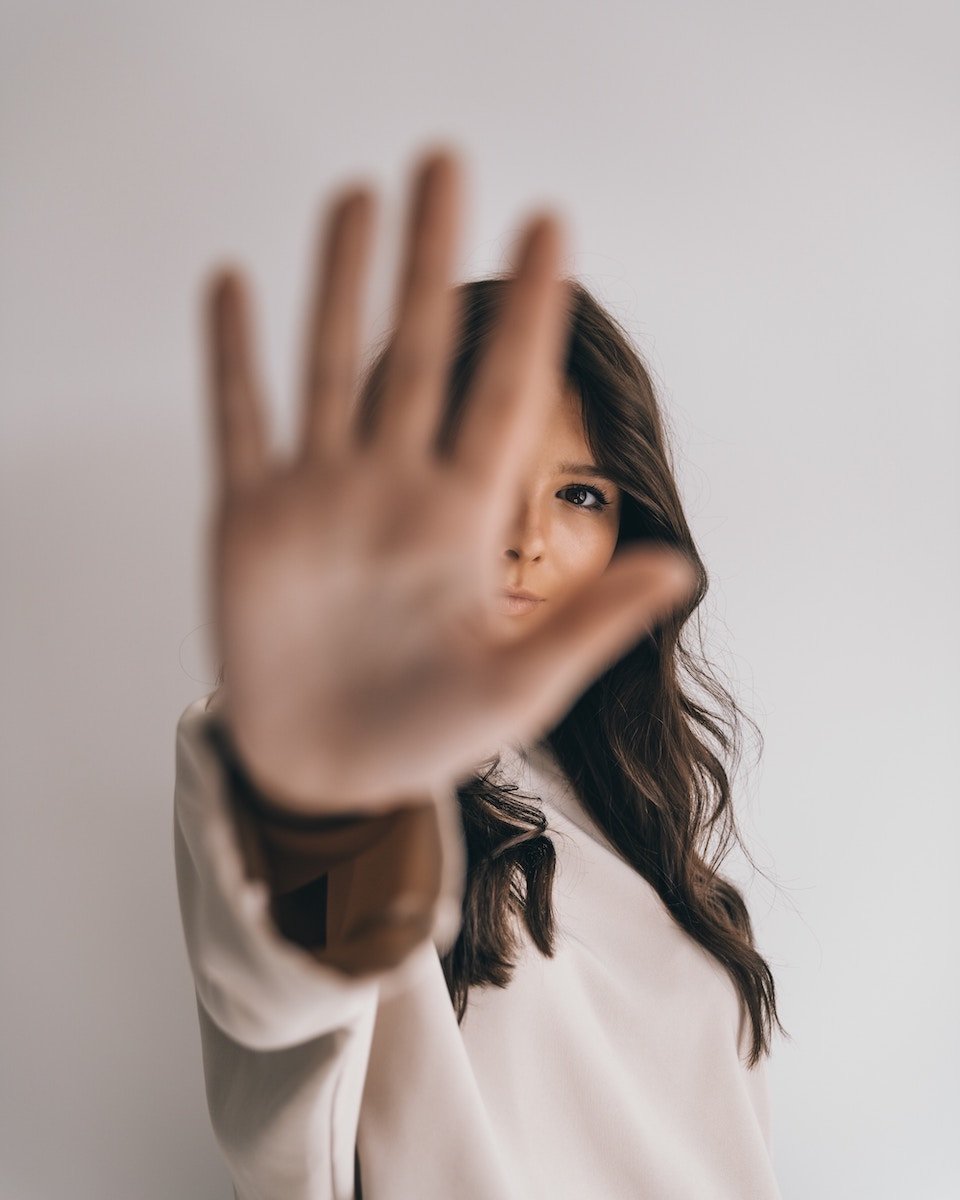
10. Stretch a Hand Out
For creative portrait photography, ask your subject to reach one hand toward the lens. She can show the palm, make a gesture, or hold a small prop. Keep the eyes visible unless you want a partly hidden face.
Focus on the visible eye. A wide aperture can blur a hand closer to the camera, but the amount depends on the distances and lens. Check focus and blur in the captured frame.
© Brad Starkey
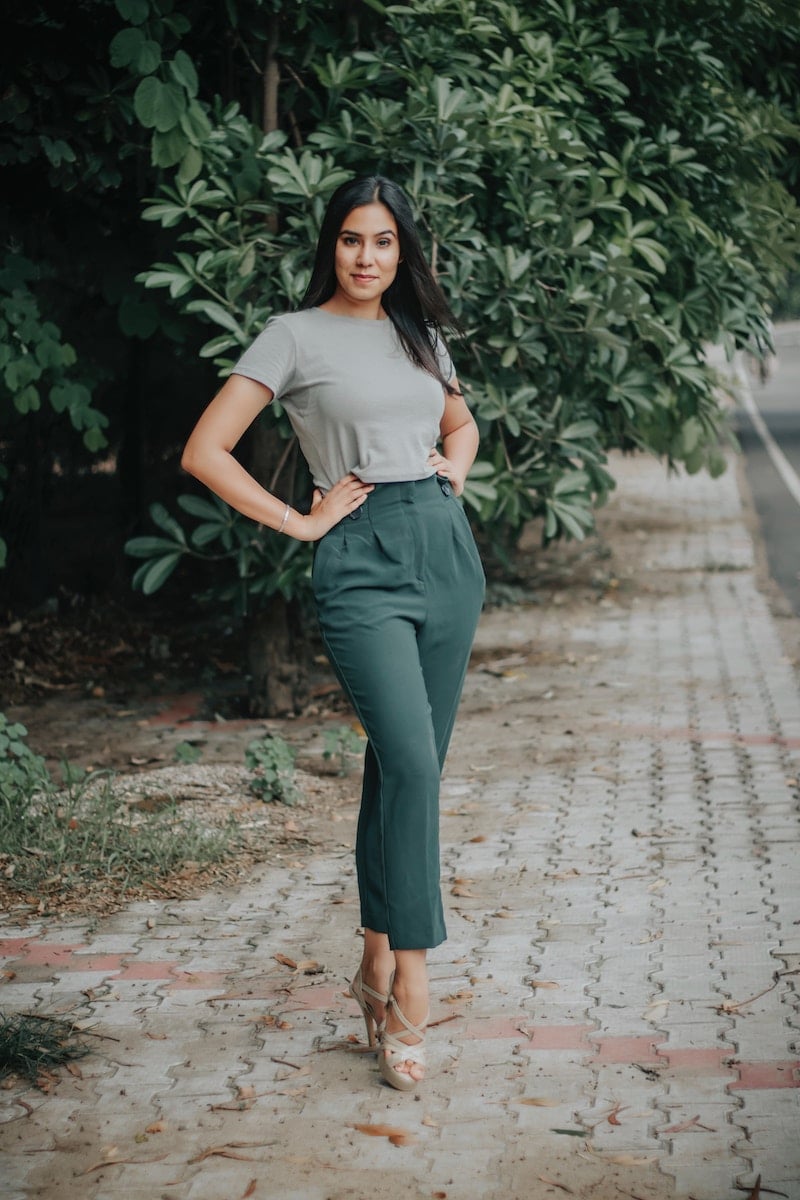
11. One Leg in Front of the Other
Ask your subject to put one foot slightly ahead of the other and rest more weight on the back leg. Keep both feet on the ground and soften the front knee.
Place the hands on the hips or let them hang naturally. Photograph the full stance, then try a closer crop. Keep the crossing small enough for her to stay balanced; lifting the front foot is optional.
© Dollar Gill
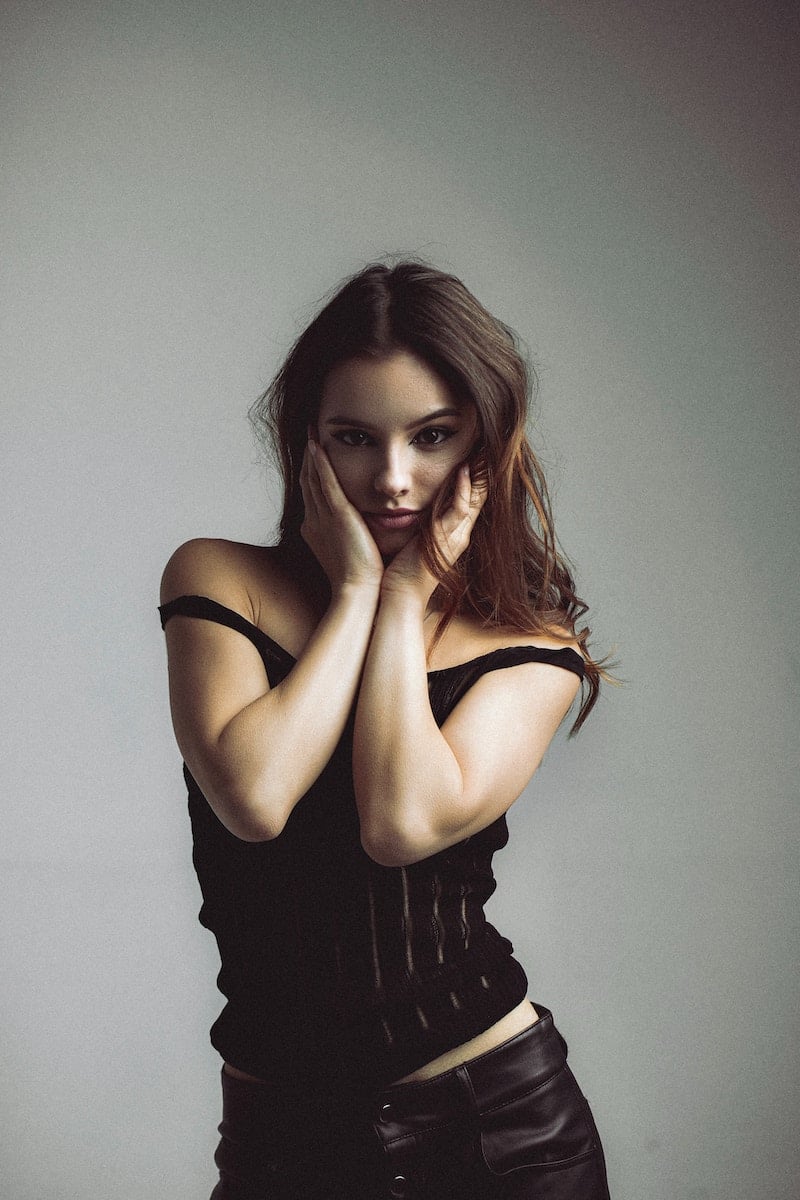
12. Hands on the Cheeks
For portrait close-ups, place the fingertips lightly beside the cheeks. Keep the palms from pressing into the skin and leave the eyes visible.
Two hands can create symmetry, or you can lower one for an uneven arrangement. Start near eye level and check the hand edges in the frame. A light touch gives your subject room to change expression.
© Dimitar Dimitrov
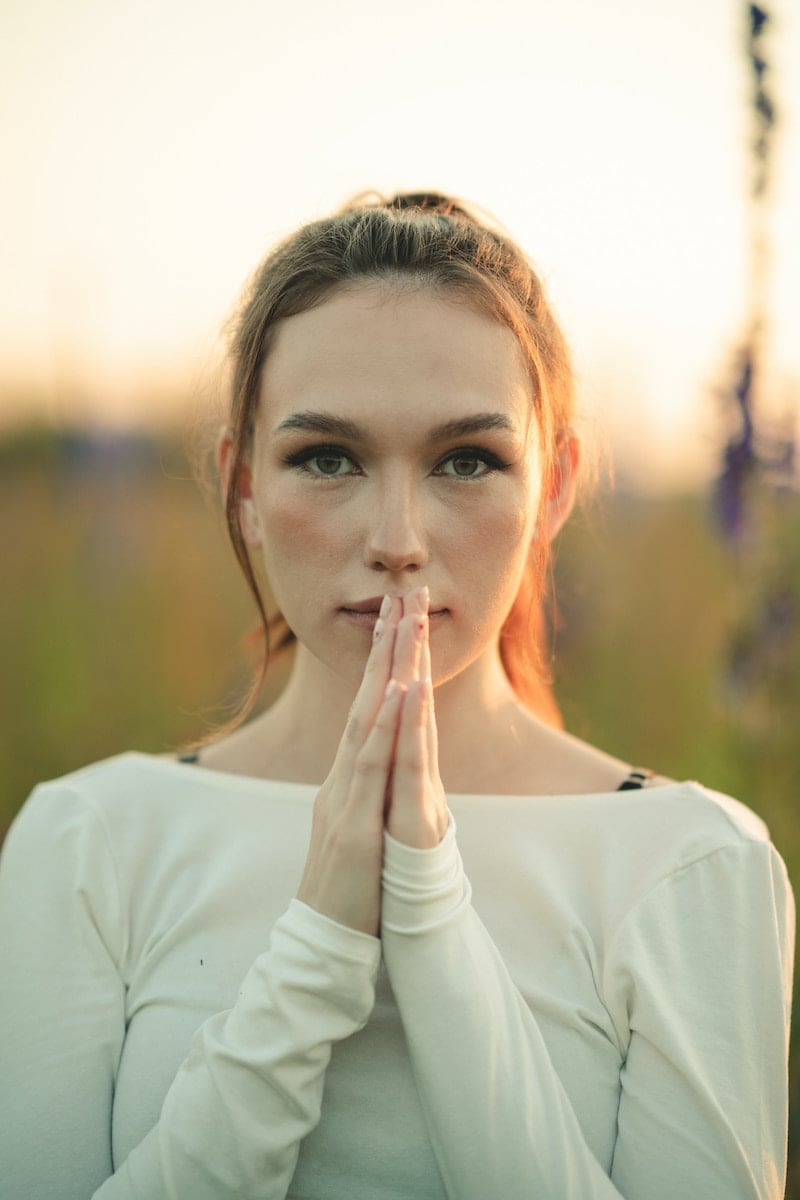
13. Hands By the Mouth
Move one hand near the chin or mouth for a variation on the cheek pose. Keep the fingers relaxed, with a little space between the hand and lips.
For a headshot, check that the hand does not hide the expression. Try a slight head turn or a different gaze before adding a second hand. Let your subject choose the gesture; nail-biting is not needed.
© Andrey K
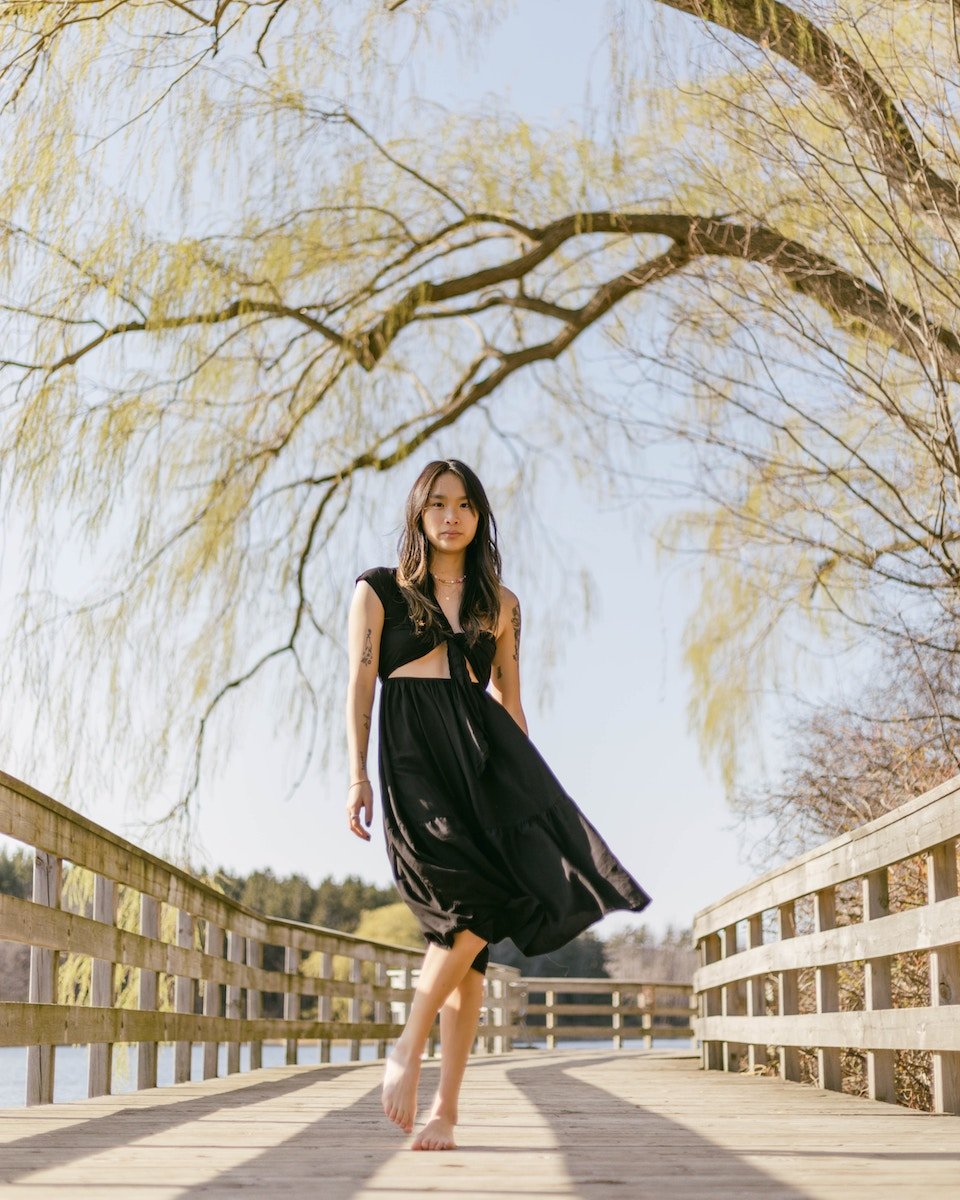
14. Take a Few Steps Forward
For lifestyle portrait photography, ask your subject to take a few slow steps toward the camera. Give her a clear stopping point and leave yourself room to work.
Use continuous autofocus to follow the changing distance, if your camera supports it, and keep the focus area on her face or eye. Use a shutter speed that freezes the movement you want sharp. Review a short sequence and adjust; locking focus at the starting position can leave later steps out of focus.
© Jasmin Chew
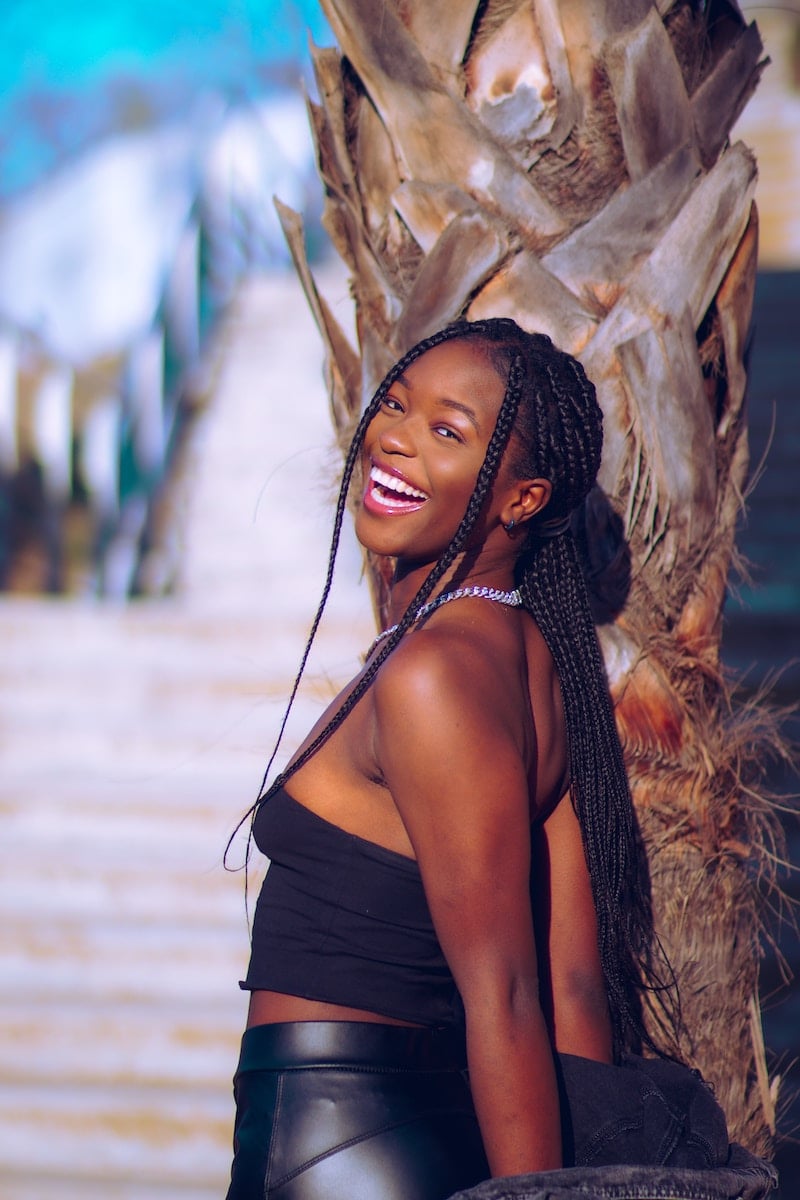
15. Lean Back
With the body turned partly sideways, ask your subject for a small backward lean. Keep the feet planted and the movement within a comfortable range.
Photograph from the side to show the line of the pose. Combine it with a hand on the hip or a relaxed arm. If she needs support, use a stable surface or choose the wall pose instead. A deep back bend is unnecessary.
© Ibrahima Toure
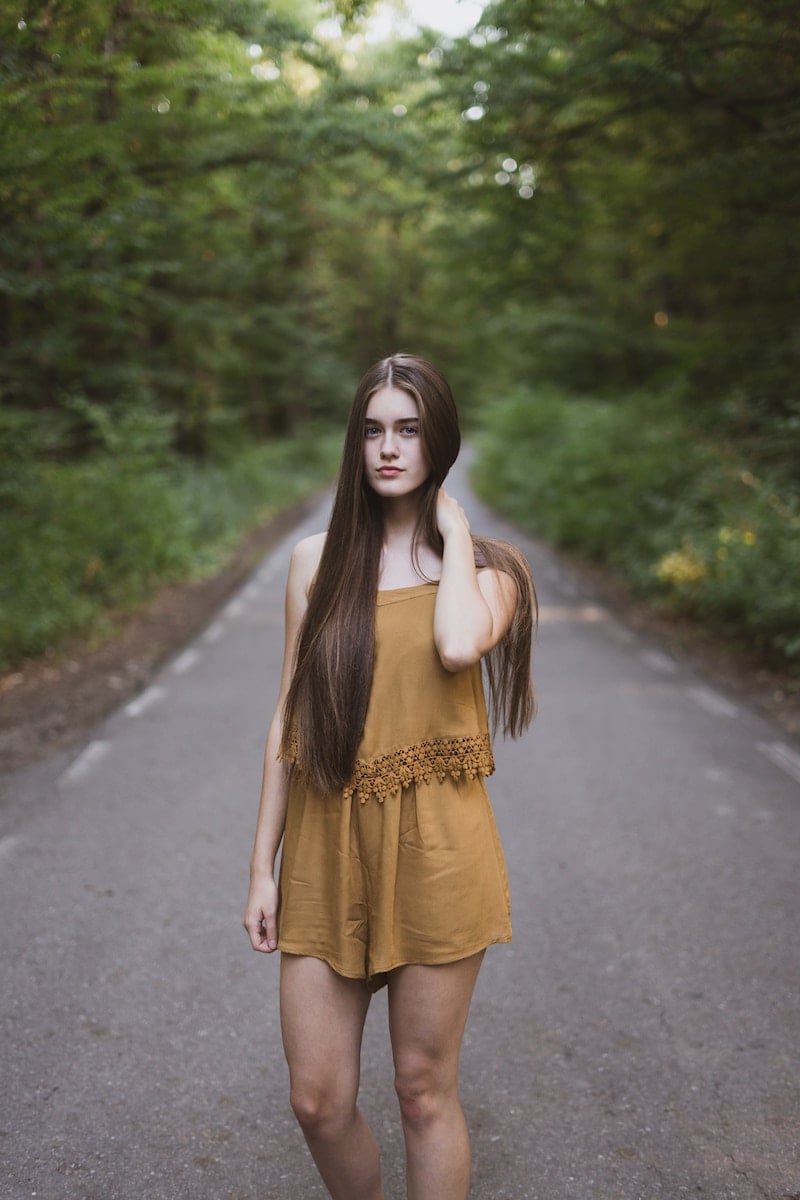
16. Hands Behind the Neck
Place one or both hands lightly behind the neck, without pulling the head or lifting the shoulders. Let the elbows settle where they feel comfortable.
Start at eye level for a close portrait, then compare another viewpoint. If nearby facial features look too large, step back and reframe. Camera distance and angle are separate choices; eye level alone does not prevent perspective exaggeration.
© Fineas Gavre
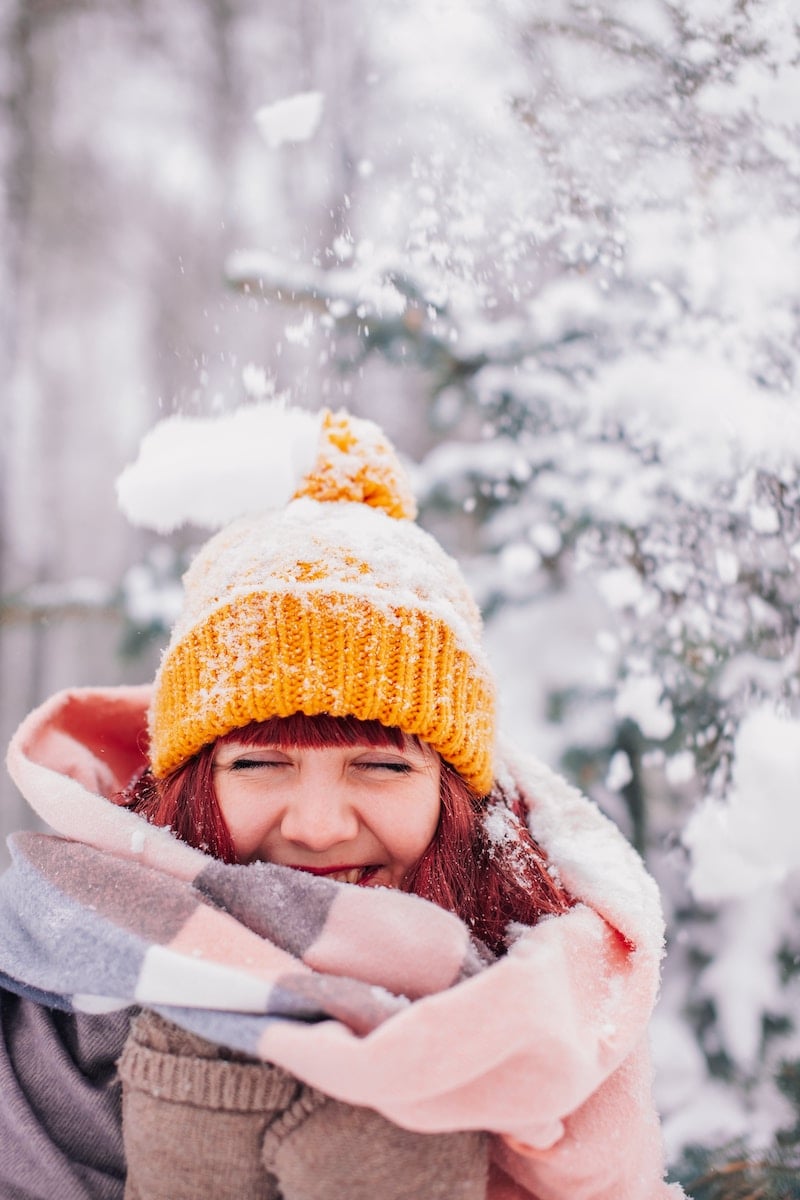
17. Hide Behind a Scarf
Hold a scarf or piece of fabric near the lower face, leaving the eyes visible. Your subject can hold it at the edges or lower it between photographs. Keep the fabric clear of her breathing.
A zoom can help you reframe while giving her space. Check that the scarf does not cast an unwanted shadow across the eyes. Match the colour to the look she wants, rather than assuming one colour suits her.
© Aleksandra Sapozhnikova
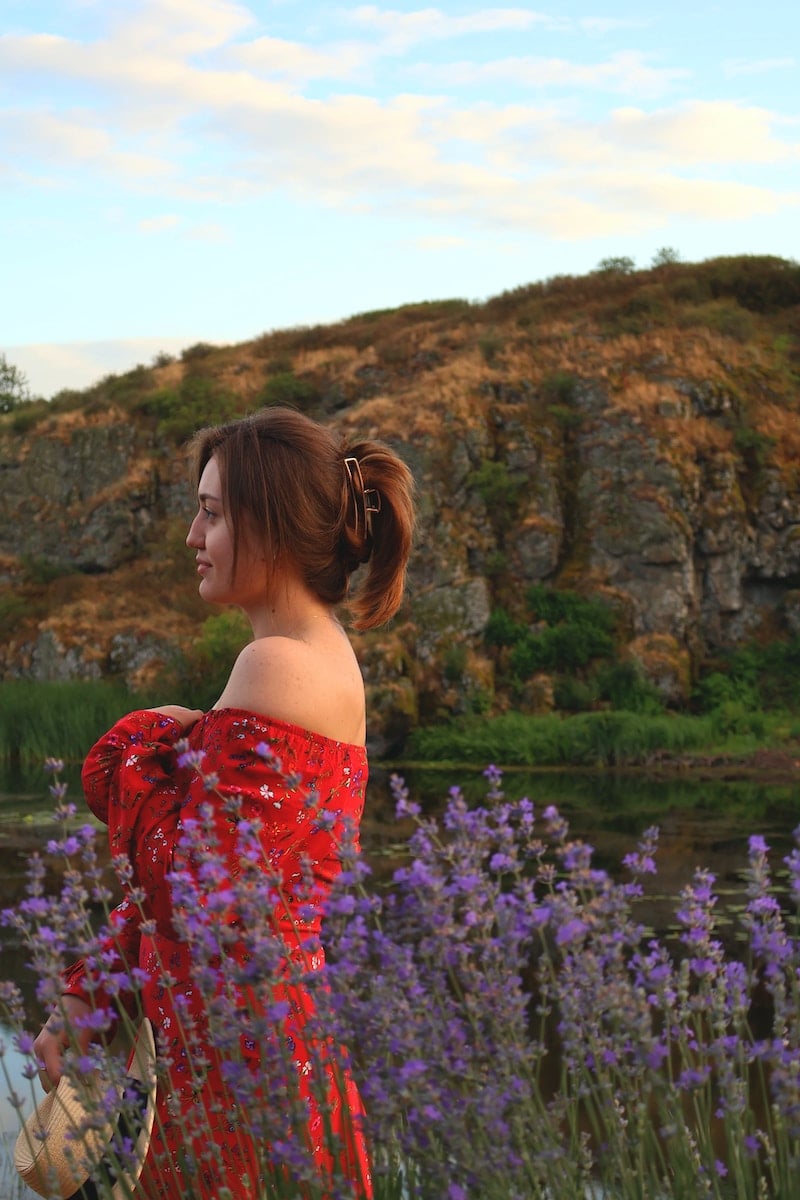
18. Sideways Profile
Turn your subject until you see her face in profile, then ask her to look straight ahead. Start near eye level and keep the silhouette clear of background distractions.
For environmental portraits, use a wider composition to show the location. Stepping back is one option; also check the framing and focal length. A small turn toward the camera creates a different version without changing the whole stance.
© Anna Keibalo
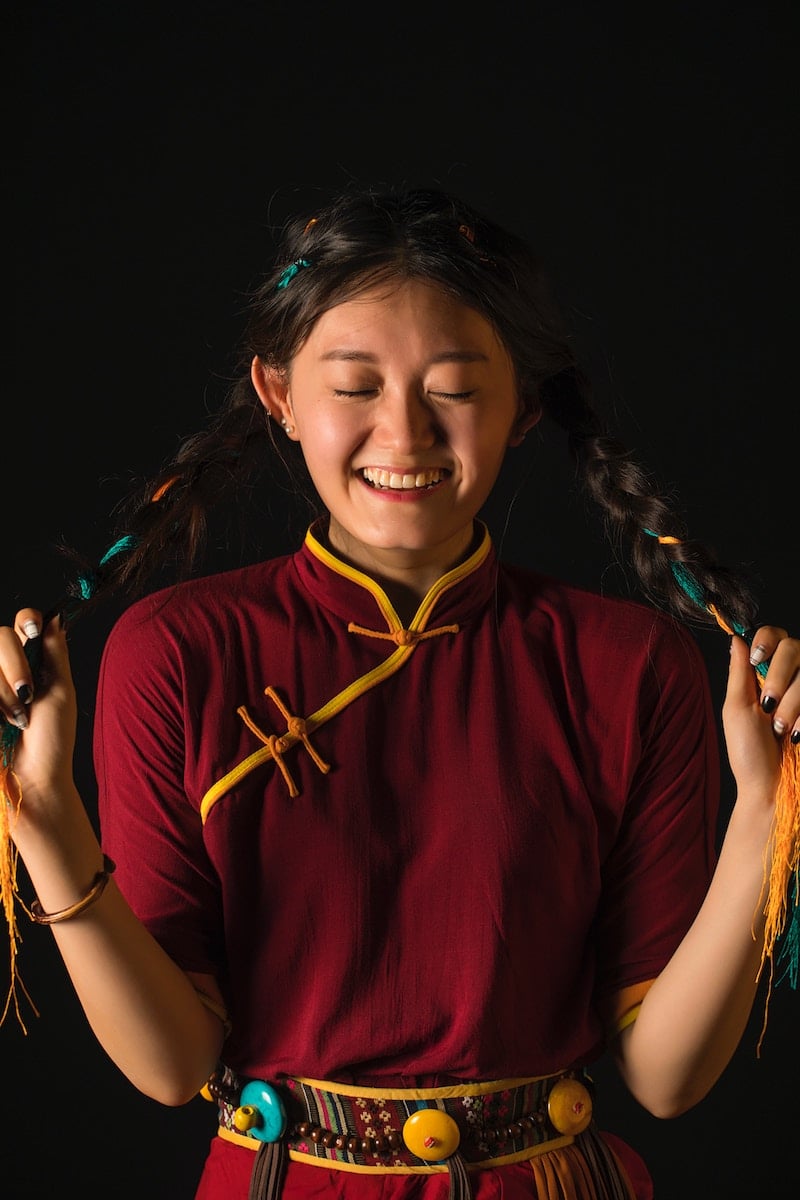
19. Pull Hair From Both Sides
If your subject has enough hair and wants to try this gesture, ask her to hold a section on each side and lift it gently away from the face. She should not pull at the roots.
Leave space for the hands and hair. Try both a direct gaze and a look away. Keep the shoulders relaxed and take the picture before the raised arms become tiring.
© Dynamic Wang
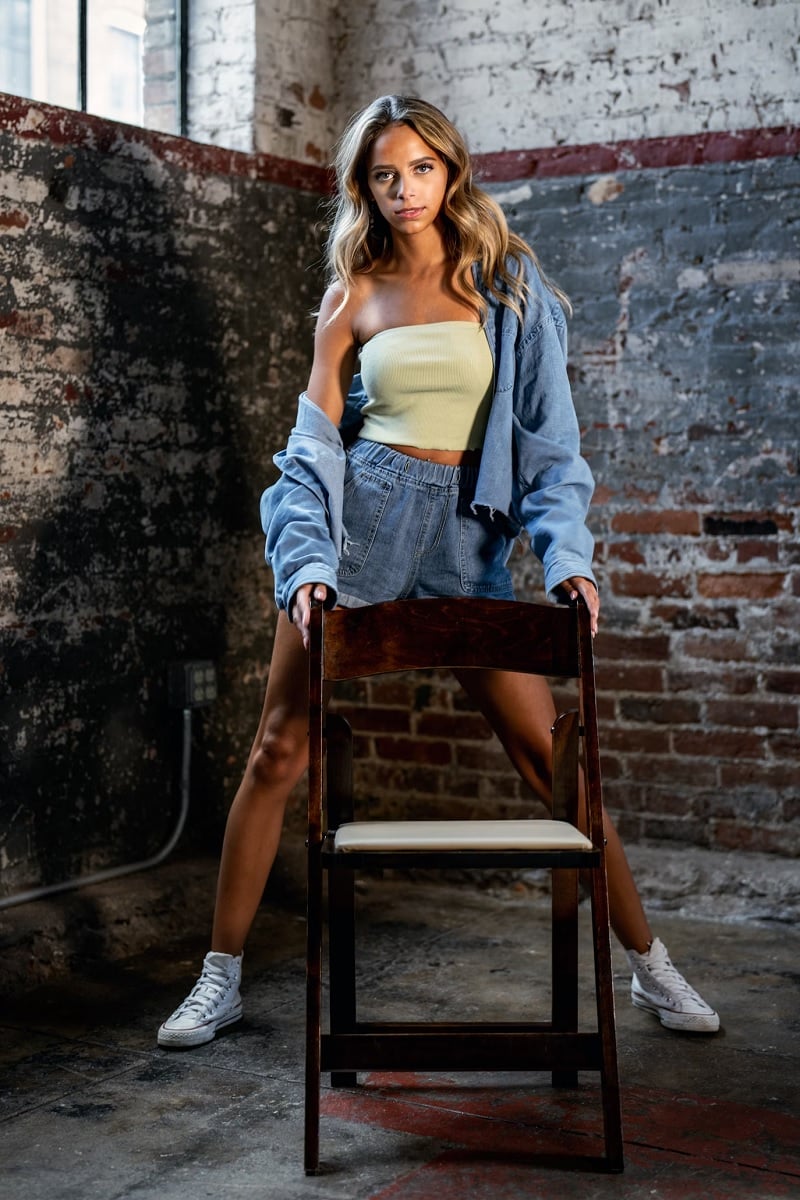
20. Legs Apart
Set the feet at a comfortable distance apart, with both knees relaxed. Your subject can face the camera directly or turn slightly.
Include the feet if the stance is the point of the portrait. Try hands on hips, in pockets, or resting by the sides. A lower camera position changes the viewpoint, so compare it with a level frame. Let the expression support the mood she wants.
© Brad Switzer
Sitting Female Poses
Use a stable chair, bench, or clean surface that your subject can reach easily. Start with feet supported and shoulders relaxed.
Some examples include reclining as well as sitting upright. Choose them according to the setting, clothing, and your subject’s comfort.
21. Hands On Cheek, Looking Up
For this photoshoot idea, support one elbow on a table or knee and rest the cheek lightly against the hand. Ask your subject to look a little above the camera.
A relaxed pose does not guarantee even lighting or a catchlight. Move the camera or light, or adjust the head turn, until the shadows and reflections in the eyes suit the photograph. Avoid asking her to look into the sun.
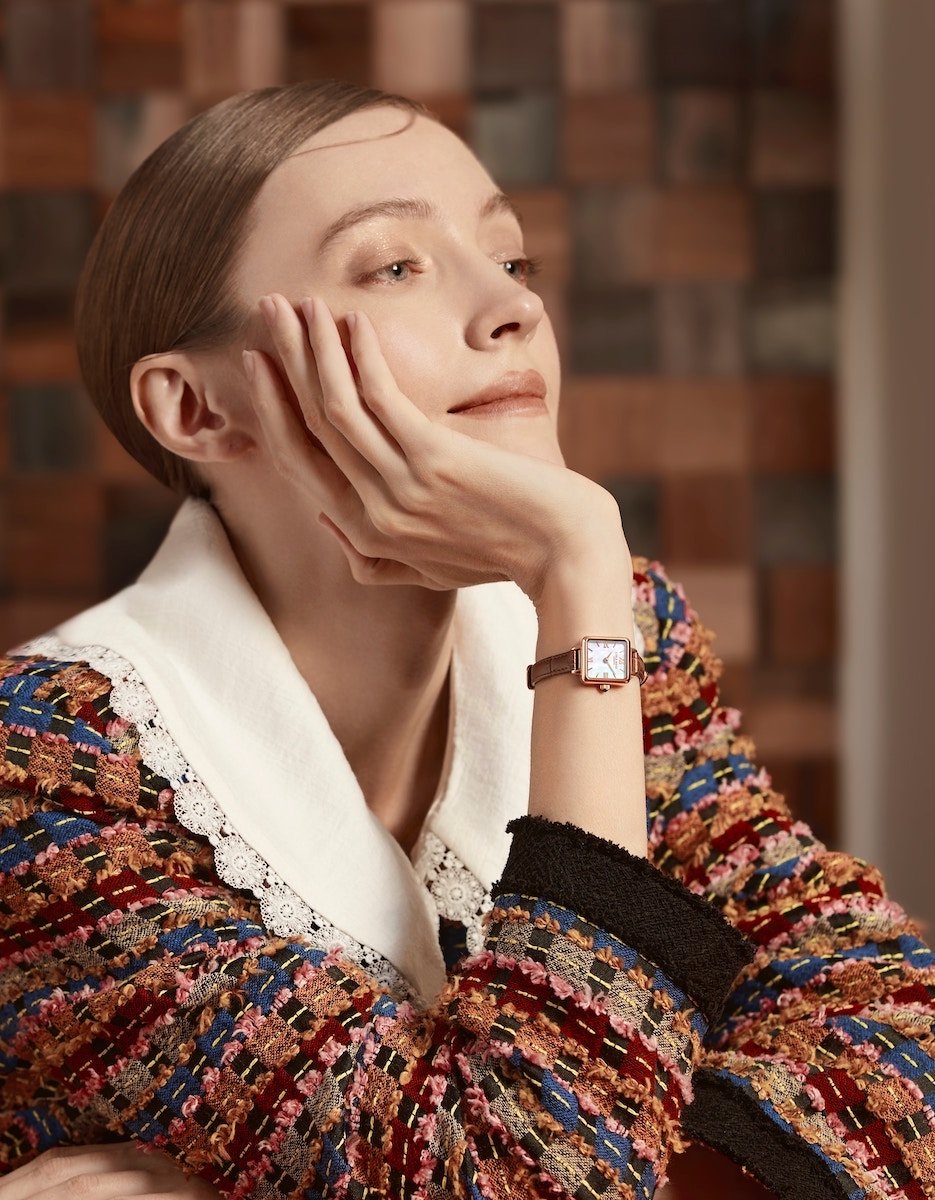
© Lola Rose
22. Head on a Soft Surface
Ask your subject to rest her head on a cushion, sofa arm, or another clean, comfortable surface. Keep the neck supported rather than hanging over an edge.
Try looking at the camera and looking away to suggest different emotions. Begin at eye level, then compare a higher angle. The viewpoint changes the picture; it does not impose a fixed emotion on every subject.
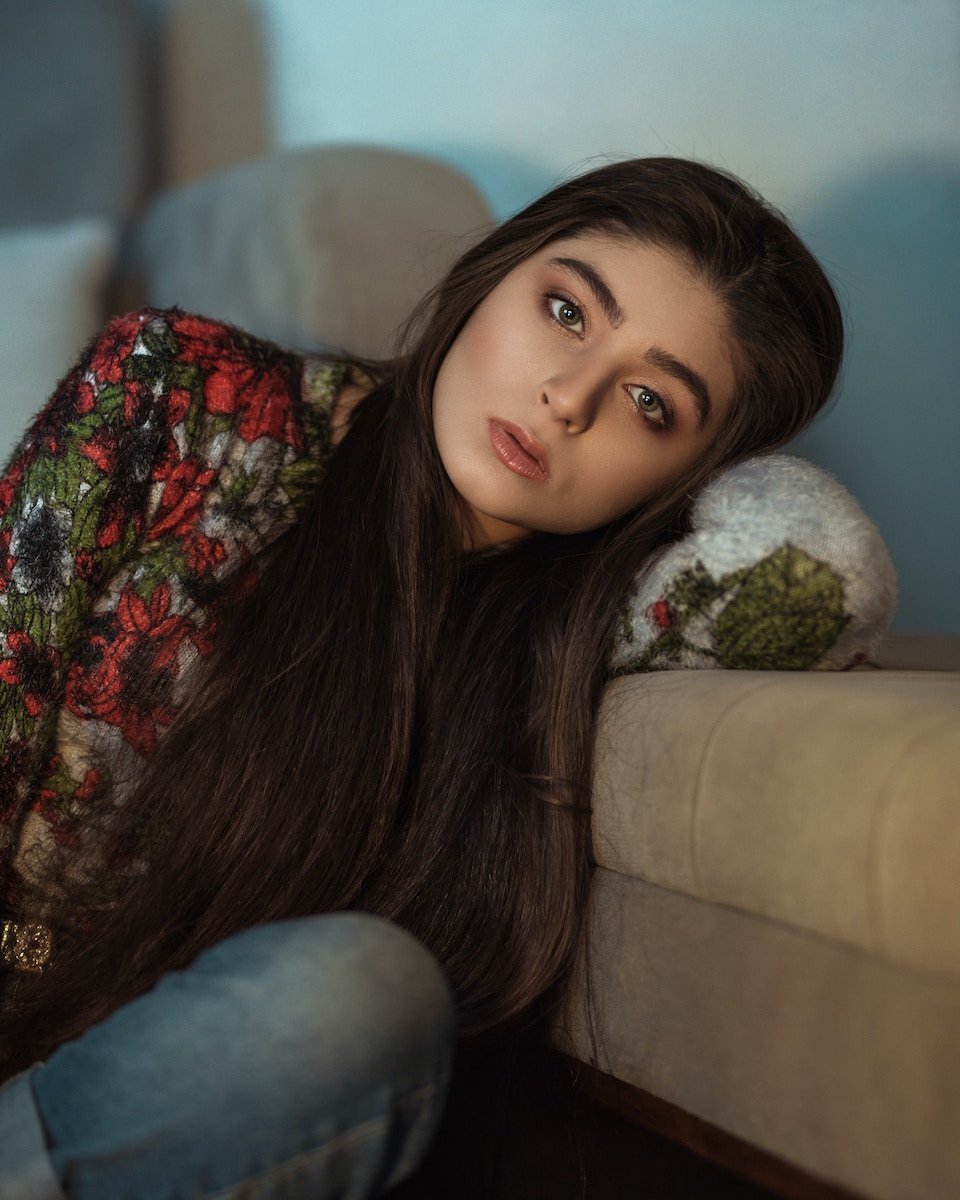
© Navid Artworks.
23. Legs Folded to the Body
For studio portrait photography, sit on a comfortable surface and bring the knees toward the body only as far as feels easy. Rest the arms around the knees or one hand beside the face.
Choose a front or side view to show the folded shape. This can also fit portraits of dancers or conceptual photography. Keep the position loose enough to breathe and reset without strain.
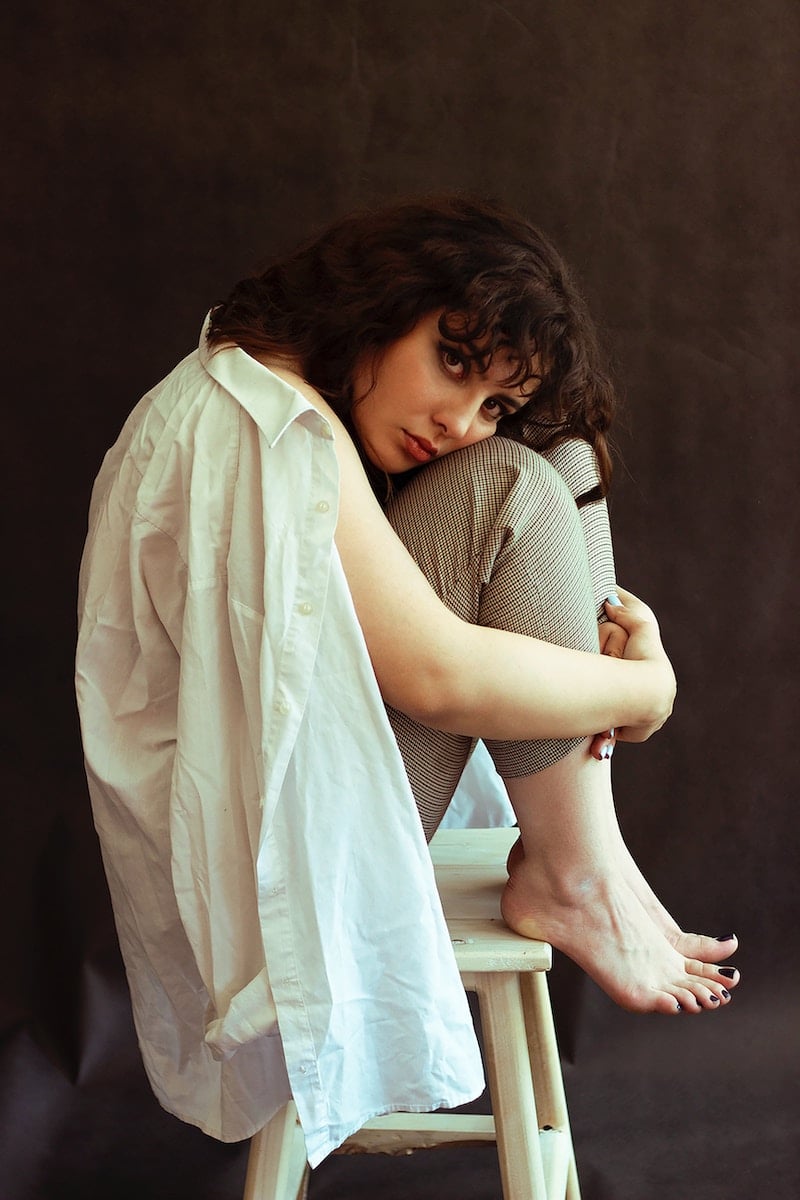
© Baran Lotfollahi
24. Elbows on a Table
For a minimalist portrait, rest one or both elbows on a table. Let the hands meet loosely or bring one hand toward the chin.
Start near the seated eye level and check the table edge in the frame. A cup, book, or piece of fruit can add to the narrative within the frame, but keep it from hiding the face. Use a surface at a comfortable height.
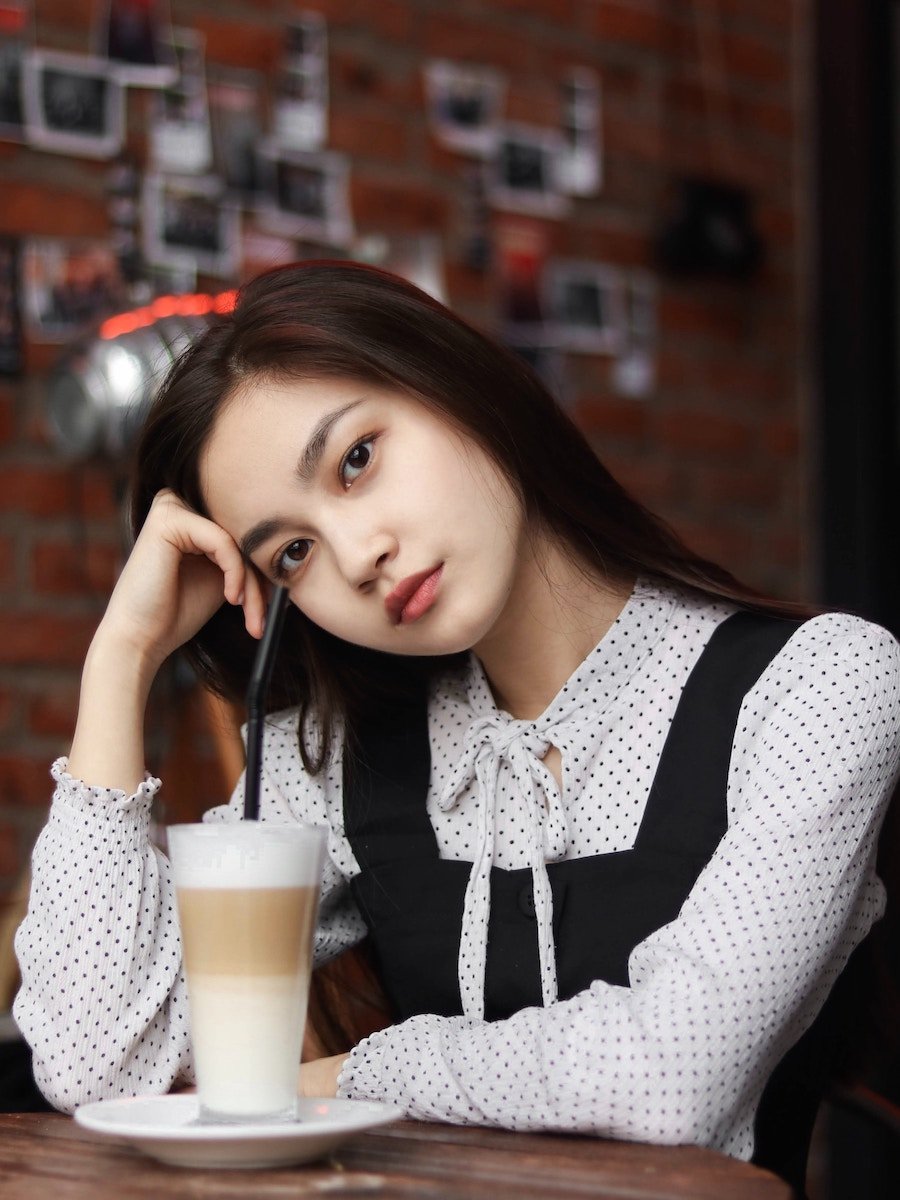
© Ilyas Bolatov
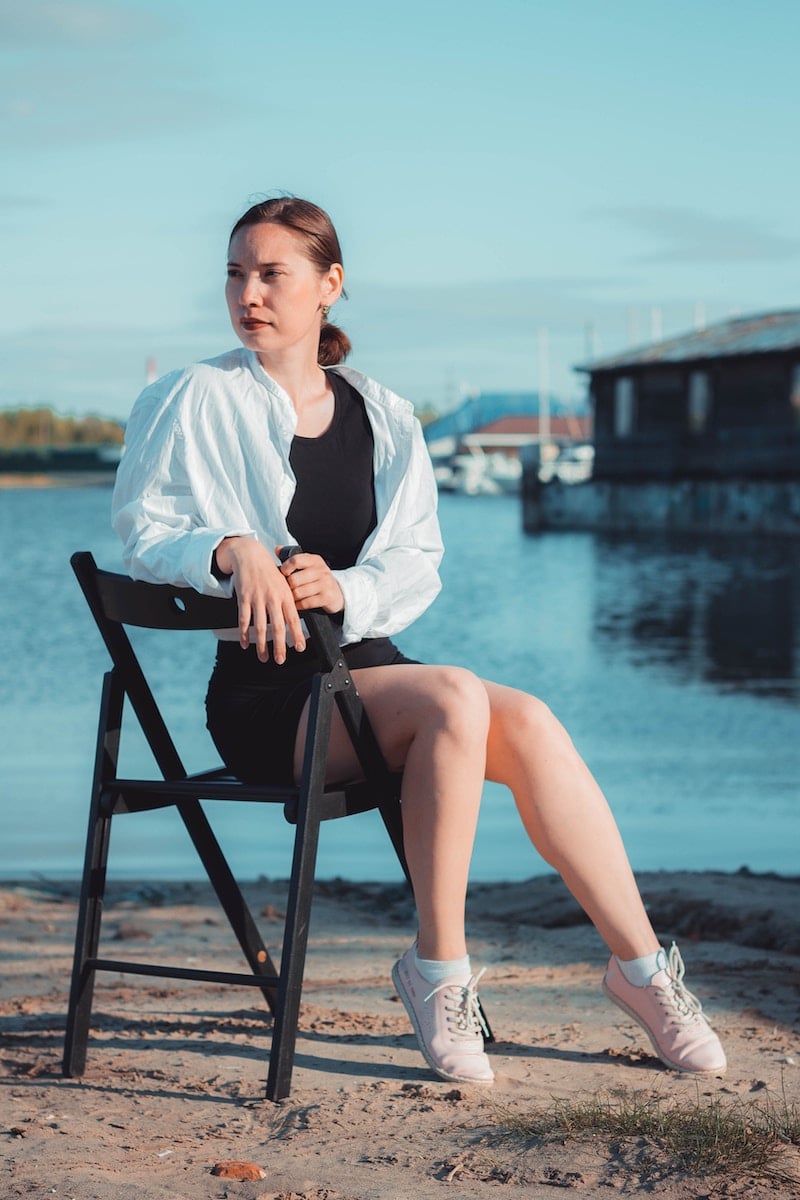
25. Sitting With Toes Pointed
Sit on a stable chair and extend one leg or angle both feet to the side. Point the toes gently if your subject wants that line.
For a full-length picture, leave room for the feet. Try the face toward the camera, then a look away. Do not ask her to balance on pointed toes; return the feet to a supported position between frames.
© Timur Romanov
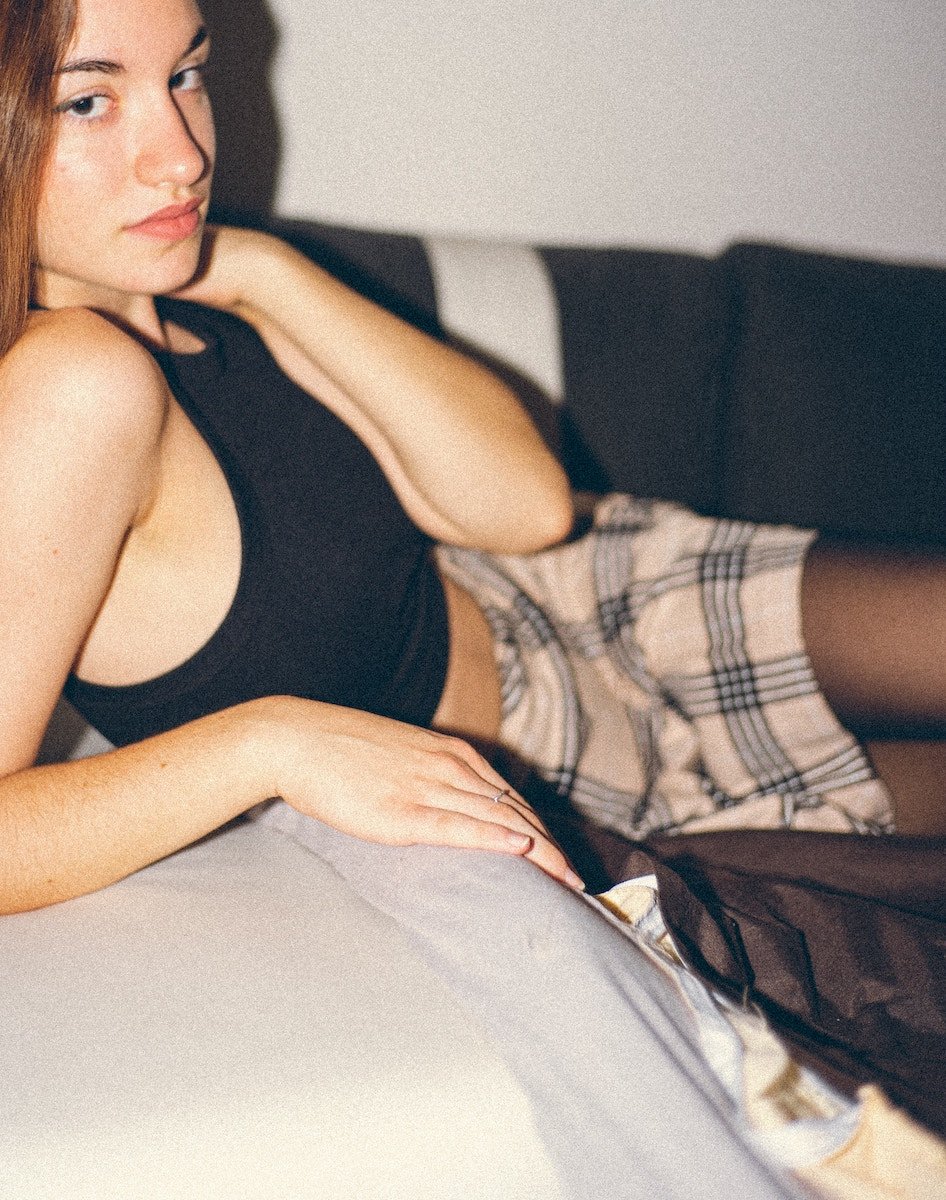
26. Side Resting Pose
For this reclining variation, lie on one side and support the head on an arm or cushion. Keep the shoulder and neck comfortable.
Photograph near the face level, then widen the frame to show the resting body. She can look at the lens or away. This is a directed pose, so it does not become a candid photograph simply because it looks relaxed.
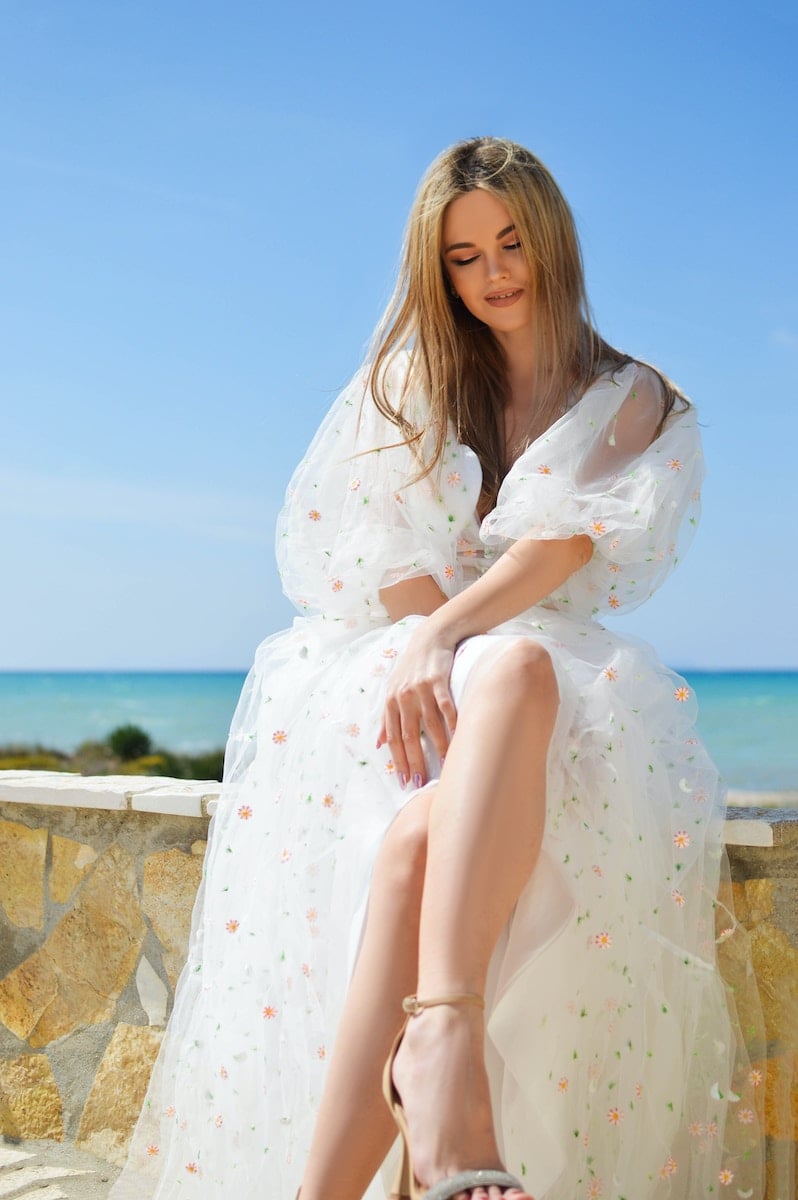
27. Crossed Legs While Sitting
Sit with one leg crossed over the other, if that feels comfortable. Rest the hands on the upper knee or place one elbow there with a light touch under the chin.
Turn the chair slightly to compare the shapes from the front and side. Keep the fingers relaxed and check that the raised knee does not hide the face. Uncross the legs between photographs if needed.
© Tamara Bellis
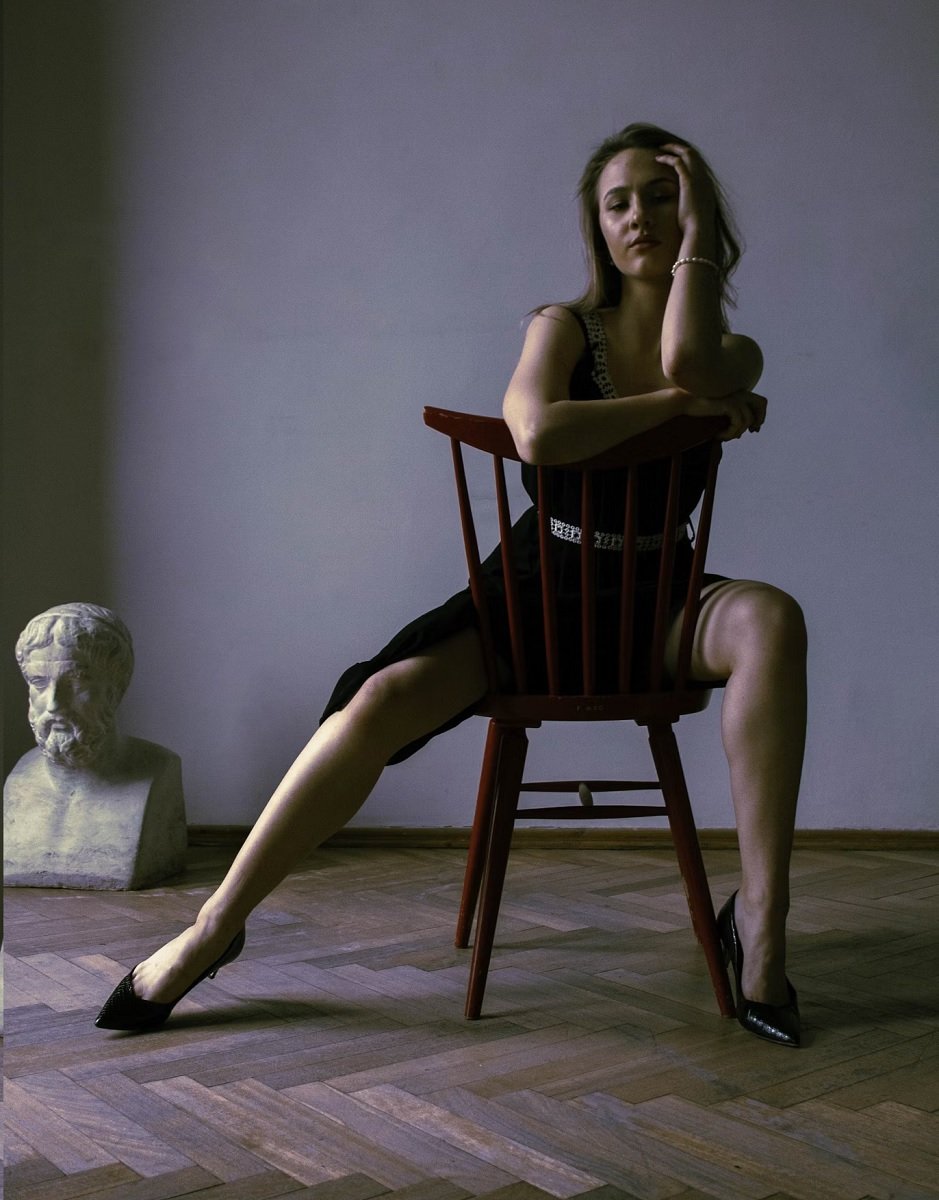
28. Reversed Chair
Choose a stable chair with a back your subject can sit around comfortably. Ask whether she wants to try facing the chair backwards, then rest the forearms lightly on its back.
She can bring a hand toward the face or sit more upright. Check clothing and framing together before shooting. The chair, expression, and camera angle determine the mood; this position is not automatically provocative.
© Anhelina Osaulenko
29. Legs Apart
Sit facing the camera with feet planted and knees apart by a comfortable amount. Keep the hands on the thighs, knees, or chair.
Ask your subject to approve the framing and how open the pose feels. Try a direct gaze or a small shoulder turn. Keep the seat stable and avoid asking for a wider stance than she wants.
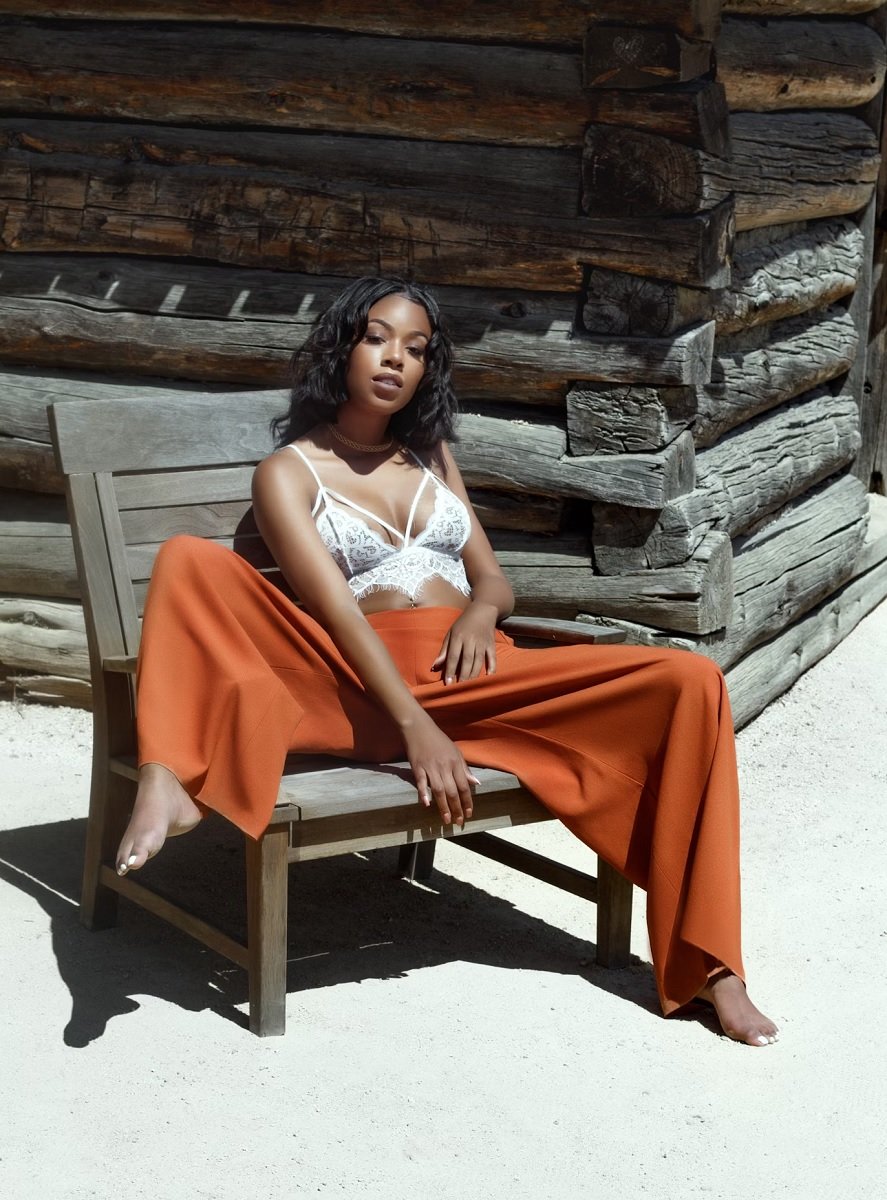
© Anthony Notes
30. Lean Forward
From a stable seated position, lean the torso slightly forward and rest the forearms on the thighs. Keep the back and neck comfortable.
The legs can be together or apart. Start at seated eye level and check that the hands do not crowd the face. A small lean is often enough to change the picture; it does not need to signal confidence or suggestiveness.
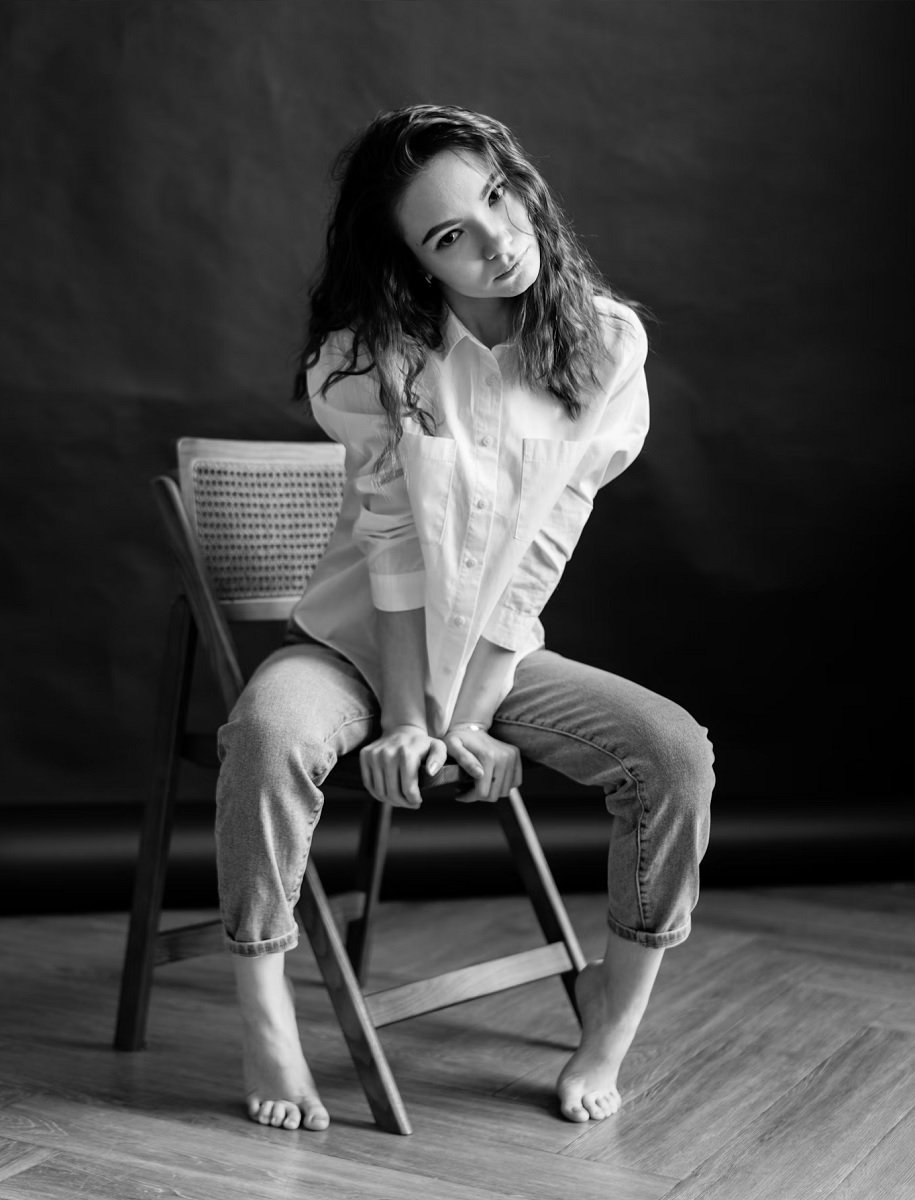
© Erinada Valpurgieva
31. Side to Front
Sit sideways on a chair, then turn the shoulders gently toward the camera. Keep the feet supported and stop before the twist strains the back.
Use the chair back as a place for one arm, or rest the hands on the lap. A slight head turn can finish the pose. Compare a wider frame with a close portrait rather than assigning a personality to the body position.
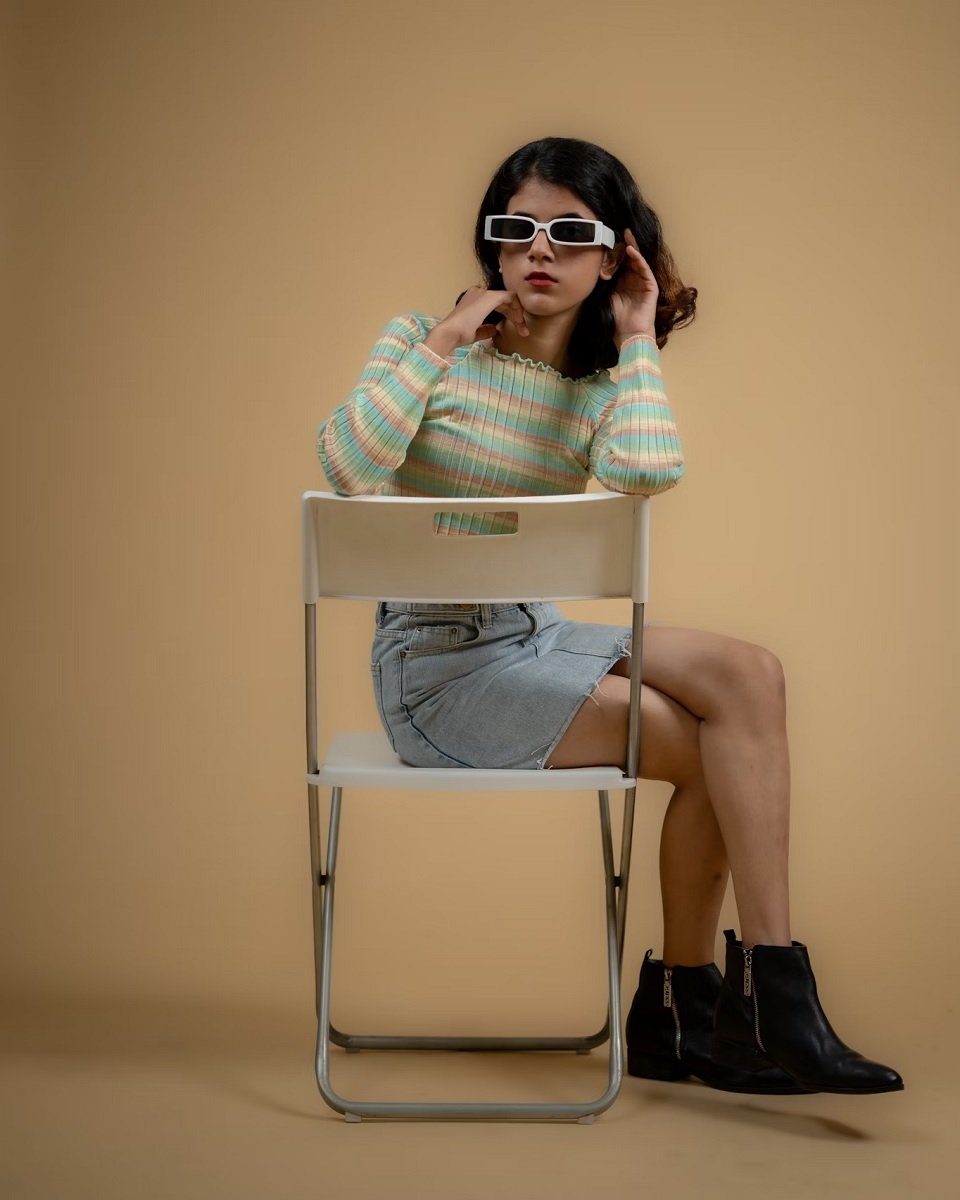
© Melbin Jacob
32. Arms to One Side
Angle the knees one way and rest the arms loosely to the other side. A chair back or sofa arm can provide support.
Keep the resting shoulder relaxed. Photograph from near the seated eye level, then shift sideways to see how the arms separate from the torso. Adjust the support height if it makes her shrug or reach.
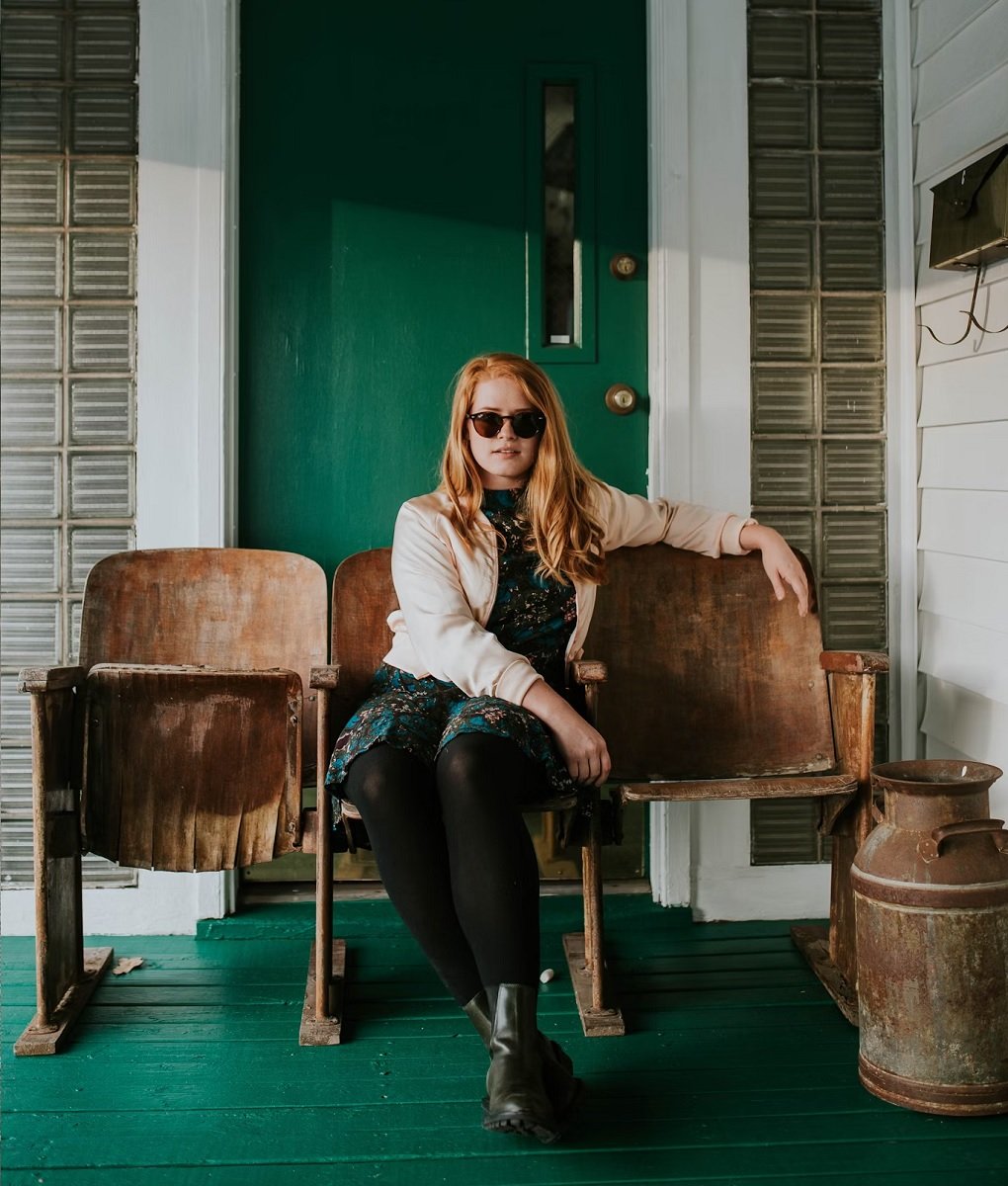
© Brooke Cagle
Lying Down Female Poses
Agree on the setting and framing before asking your subject to lie down. Use a clean, comfortable surface and give her space to change position.
Move the camera to compare side views and overhead compositions. Keep the support and camera position stable.
33. Lie on Stomach
For indoor portrait photography, lie on the stomach on a clean bed or padded surface. Rest on the forearms only if that is comfortable.
Try the camera near face level. Your subject can bend the knees and lift the feet as a variation, but keep the neck and lower back relaxed. Use a side-resting alternative if she prefers.
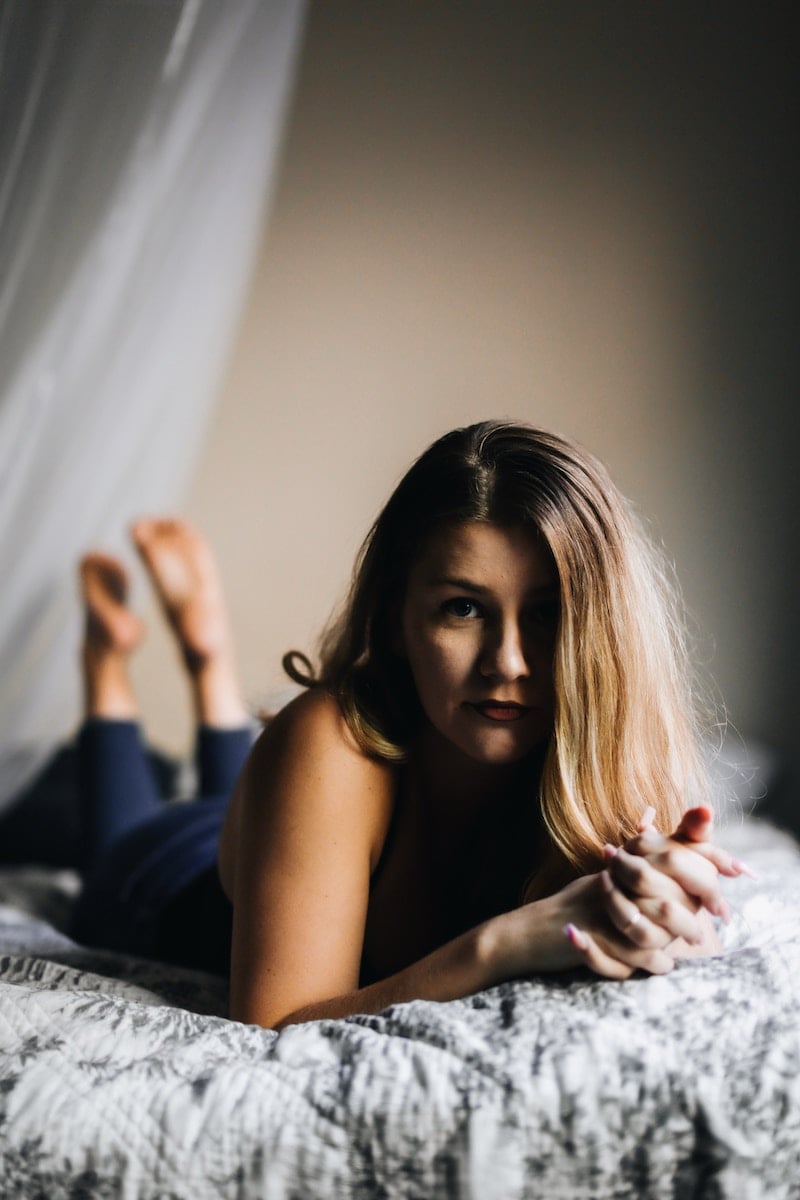
© Giorgio Trovato
34. Lie on the Edge of a Bed
Place the head close to the bed edge with the neck supported. If your subject has longer hair, let it fall over the edge without asking her to hang her head backward.
Frame from the side or above to include the hair and face. Keep the camera stable and let her return upright between photographs. Shorter hair can work too; choose the composition around what is there.
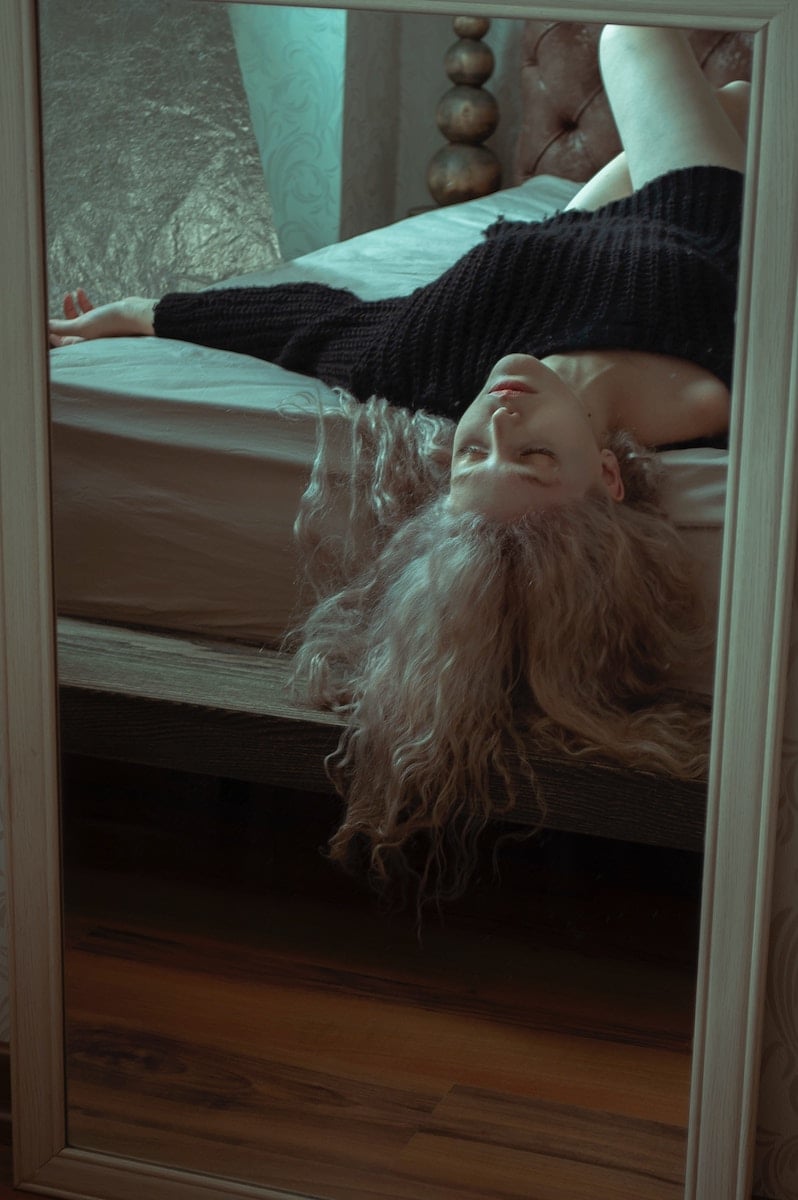
© Baran Lotfollahi
35. Lie with Arms Stretched Above Head
For a successful photoshoot, place comfort first: lie on a clean surface and extend one or both arms above the head only as far as feels easy.
Photograph from the side to show the arm and body lines, or from a stable overhead position. Keep the hands in the frame if they complete the shape. There is no need to force a stretch or hold the pose for long.
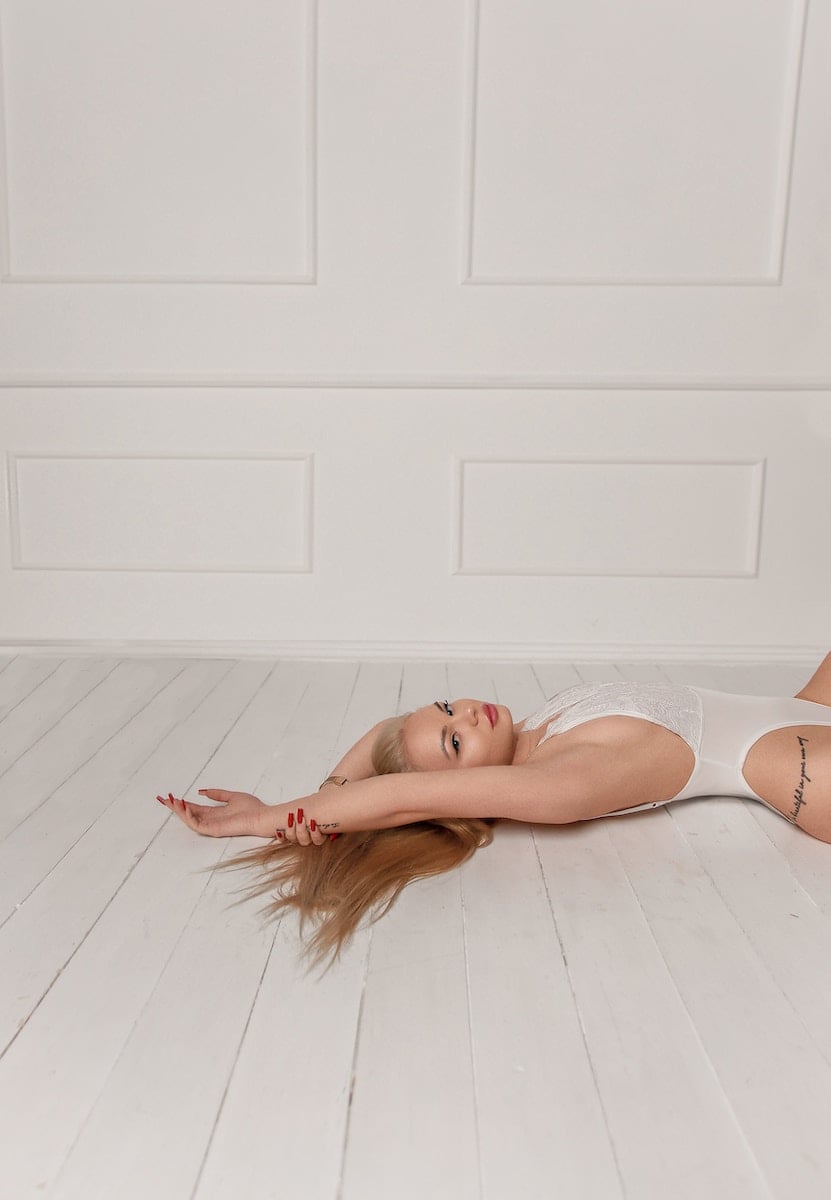
© Samantha Sokolva
36. Flat Back Knees Bent
Lie on the back with the feet resting on the surface and the knees bent. Let the shoulders settle naturally.
A side view shows the triangular shape formed by the legs. Place the hands by the body, on the stomach, or beside the head. Check where the knees sit in relation to the face before taking the photograph.
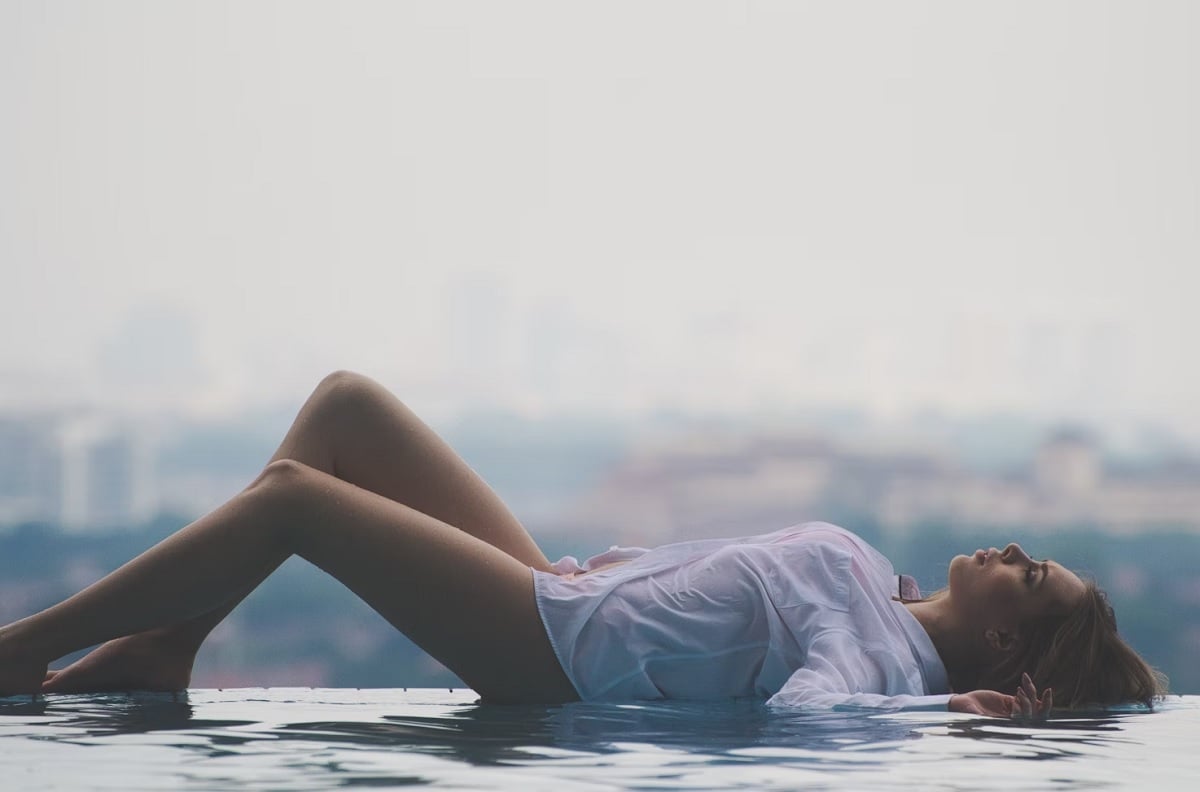
© Max
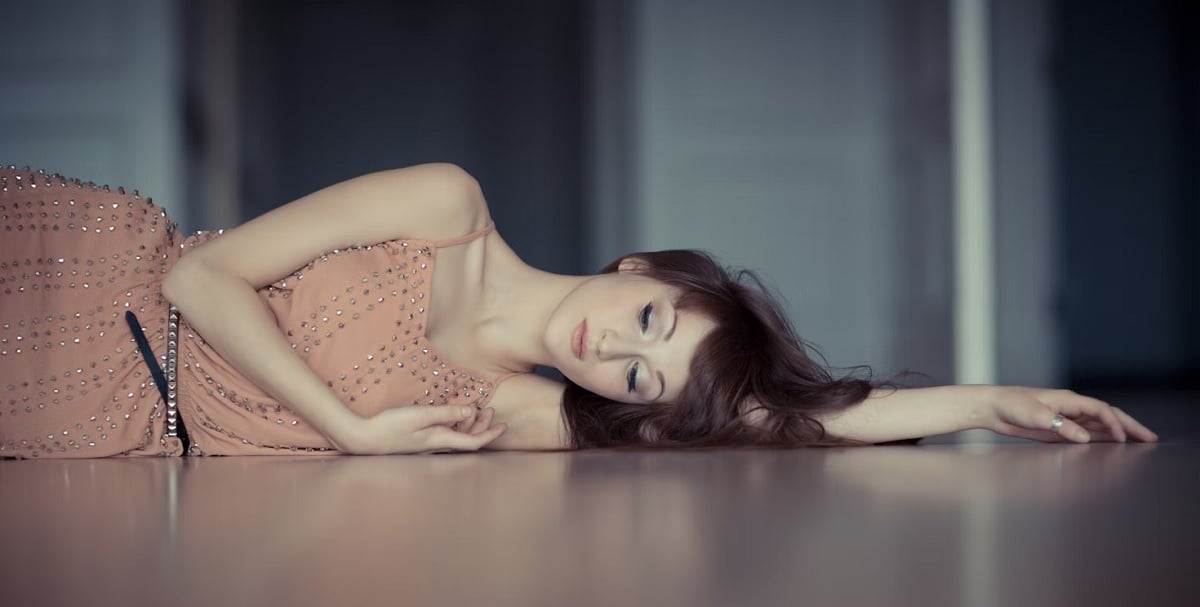
37. Lying on Side
Lie on one side with the lower arm extended or the head supported on a cushion. Choose the support that keeps the neck comfortable.
Try the legs straight, then slightly bent. A side view can show the full line of the body; a closer crop puts attention on the face. Do not assume one arm position will be comfortable for every person.
© James Forbes
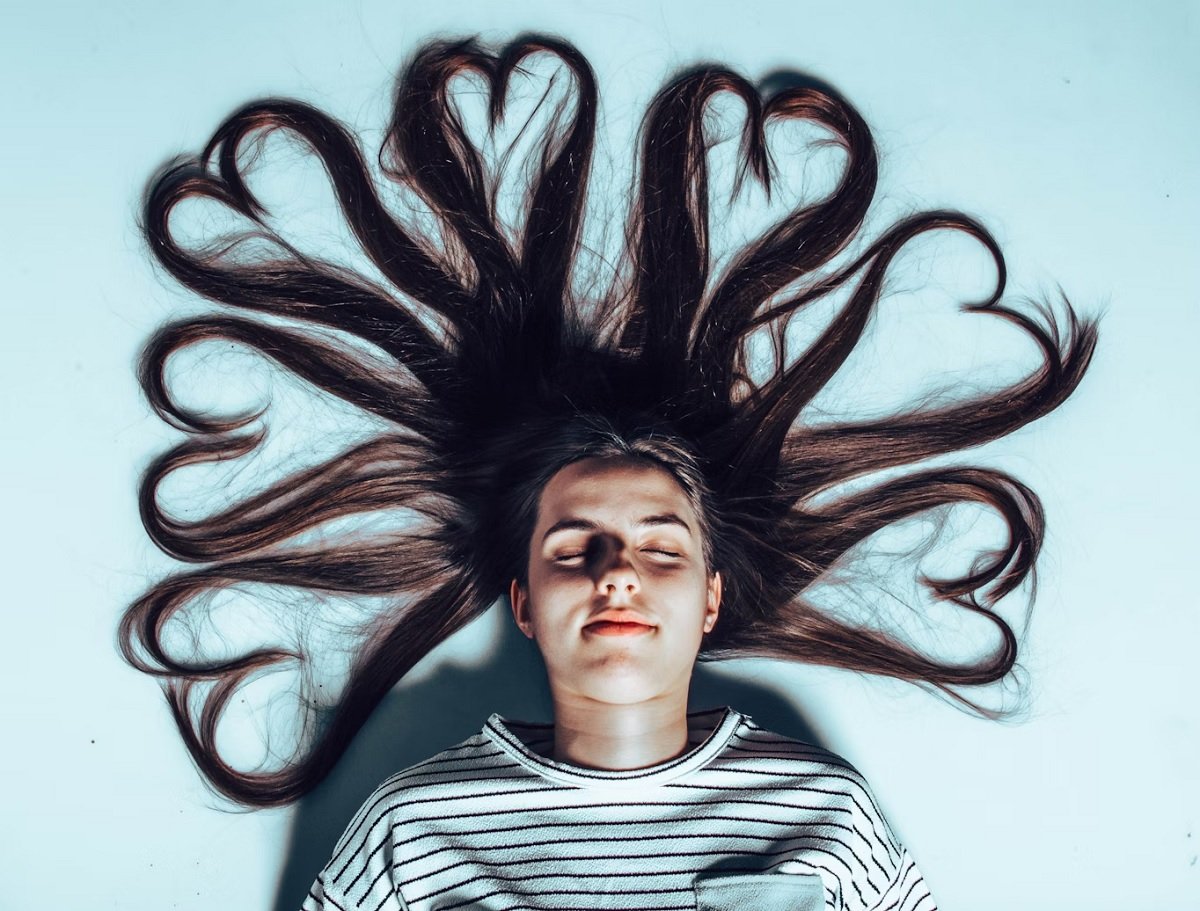
38. Hair Fanned Out
For this overhead portrait, lie on a clean surface and arrange the hair around the head. Let your subject place it herself, or ask before helping.
Choose a stable camera position above the face and leave enough room to show the hair pattern. Keep equipment secure and avoid leaning over her from an unstable support. The composition depends on hair length and texture; it does not require a particular hair type.
© Karl Hedin
Conclusion: Best Female Portrait Poses
Choose three or four poses your subject wants to try, then vary the hands, gaze, and camera position. Start with a supported standing or sitting pose before asking for movement or a reclining position.
Use the photographs as references for shape and framing. Check focus, shadows, and comfort as you work. A varied portfolio comes from the choices you make with each person, rather than repeating one formula for everyone.