Travel apps for photography can help you with anything from finding the best photo spots to editing while on the move.
Here are a few of the best apps for travel photography you need to download before exploring beautiful destinations on your bucket list.
7 Best Travel Apps for Photographers
We list travel apps for both iOS and Android. And there is a mix of free and paid apps.
If you only download one, make it PhotoPills. It tells you where the light will fall on a given date at a given spot, before you book the trip.
Use the rest to fill the gaps around it. Locationscout finds the viewpoint, Citymapper gets you to it, and WeatherBug tells you whether the sky will cooperate. Google Photos protects the files once you have them, and Snapseed and VSCO finish them on the flight home.
7. Snapseed
This is one of the best photography apps out there because of its features. It lets you do anything from color grading to adding all sorts of effects to make your travel photos look professional.
Snapseed may be from Google, but it also supports iPhones. That means you don’t have to worry about any compatibility issues. And the good news is that all the tools it offers on Android are also available on the iPhone.
Like any other editing app, Snapseed has all the basic tools you need, from adjusting exposure to correcting the white balance. But what differentiates it from the rest is the plethora of effects that it features.
For instance, it has dozens of presets that let you create anything from retro film effects to classic black and white images.
It also has advanced editing tools such as HDR. This lets you create vivid pictures even in challenging lighting conditions.
Apart from the editing tools, Snapseed also includes frames and text tools to personalize your images. Using it allows you to create scrapbook-style images by adding borders and captions.
Its limit is that it only ever works on one image at a time, on one device. There is no library, no cloud sync, and no way to copy a look across the 300 frames you shot that morning. Snapseed finishes a photo. It will not manage a trip.
6. VSCO
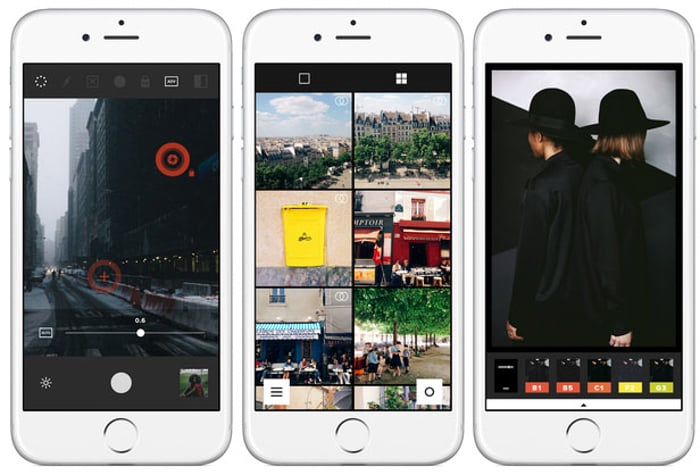
While traveling, you don’t want to spend too much time on your phone editing your images. That’s why VSCO is one of the best apps for photographers because it’s so easy to use.
Unlike Snapseed, VSCO doesn’t offer a lot of tools for advanced editing. Instead, it offers a streamlined experience. It lets you add presets and tweak basic exposure settings quickly.
To use VSCO, all you have to do is tap a preset you like and adjust the sliders to alter the amount of effect you like on your images. You can also use sliders to change the brightness, contrast, saturation, highlights, and other exposure parameters.
VSCO’s main selling point is its ability to recreate a film look. Its presets are based on real film stocks, making the result authentic.
Apart from basic adjustments, you can also add fade and grain, among other effects, to help you customize the vintage style of your photo.
Be clear about what you get for nothing, though. The install is free, but the film emulations that are the whole reason to use VSCO sit behind the paid membership, and the free tier ships a small starter set. If you want the full film library, budget for the subscription before you leave.
5. Google Photos
- App Type: Backup and cloud photo library
- Price: Free with paid storage upgrades
- Platform: iOS and Android
Phones get dropped, stolen, and left in taxis, usually with a week of pictures on them and no copy anywhere else. Google Photos backs the camera roll up automatically, so the pictures survive the trip even when the hardware does not.
Every Google account comes with 15 GB of storage shared across Photos, Drive, and Gmail, and backup runs by itself once you turn it on. Set it to upload over Wi-Fi only and it will wait for the hotel or the airport rather than eating a foreign data plan.
It also does more editing than a backup app has any business doing. Magic Eraser takes the stray tourist out of the corner of a frame, Unblur rescues a shot you took walking, and Portrait Light relights a face after the fact. The search is the underrated part: type "kayaking on a lake surrounded by mountains" and it finds the frame without you having tagged anything.
The catch is the 15 GB. Shoot RAW on a phone or offload a camera card and you will run through it in a couple of trips, and the free tier is shared with your email. Either pay for more storage before you travel or accept that the free plan covers JPEGs and not much else. It is also not an editor for serious work, so keep Snapseed on the phone for that.
4. Locationscout
Looking for the best locations when traveling can be intimidating, even for veteran travelers. When you’re in a place you haven’t been, it’s easy to get lost and miss the beautiful gems you want to capture.
Locationscout is a database of more than 233,000 photo spots across over 184 countries, all submitted by photographers who have stood there and shot them. Open the Explore map before you go, or use Around Me once you land, and it shows what is worth photographing within walking distance.
The detail is what separates it from a social media platform full of pretty pictures. Each spot carries exact coordinates, parking notes, the best time of day, and local access tips, so you know whether the viewpoint above Paris needs a two-hour hike or a metro ticket. You can bookmark spots into a personal bucket list and tick off the countries you have shot, which turns a vague trip into a shot list before you pack.
Two honest limits. Coverage follows the community, so Iceland, Norway, and the Dolomites are covered in obsessive depth while a mid-sized city off the tourist trail may have a handful of entries or none. And the free tier caps how much you can save and filter, so a photographer planning a long trip will want the paid version. If you are travelling somewhere well photographed, it earns its place in your portfolio planning; if you are going somewhere genuinely obscure, do not expect it to do the scouting for you.
3. Citymapper
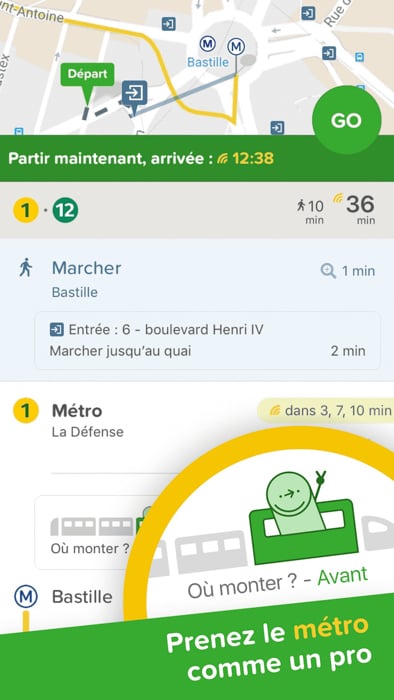
When you’re doing travel photography, your ability to navigate places is just as crucial as your ability to take pictures. Knowing how to get there in the quickest way possible allows you to cover more areas.
You can always use Google Maps to help you figure out where to go. But it doesn’t have all the information you need to get there. Citymapper shows you everything from routes to various transportation options to reach your destination.
One of the biggest features of Citymapper is that it shows you the nearest train and bus stations. And it guides you on how to get there. It even shows the arrival and departure times, so you don’t miss your bus or train.
Citymapper is available in major cities from Asia to Europe. The only catch is that it won’t be much use if you happen to be in lesser-known destinations. But if you happen to find yourself shooting around New York or Paris, this app is definitely for you.
2. WeatherBug
- App Type: Weather forecast and radar
- Price: Free with an ad-free subscription option
- Platform: iOS and Android
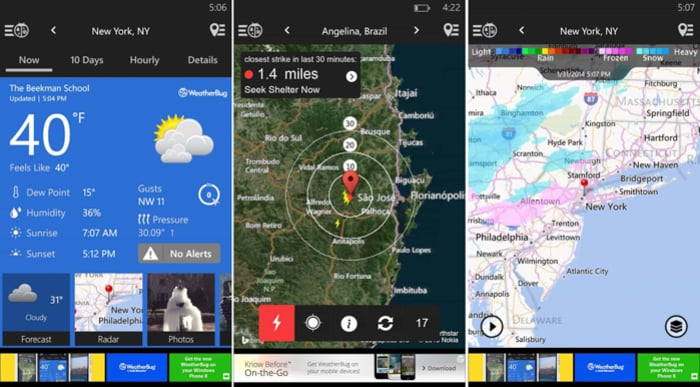
WeatherBug isn’t exactly photography-related. But you’ll find yourself using it a lot, especially in places with unpredictable weather. One of the best reasons to use it is that the ten-day forecast and the hourly view are both free.
That means it’s perfect for helping plan your itinerary for more than a week in advance. Shift the beach day to Thursday because Tuesday is a wash, and you have bought yourself the light you actually wanted.
It also carries a stack of maps rather than one: radar, future radar, lightning, precipitation, pollen, and severe storm risk. Future radar is the one photographers use most, because it answers the only question that matters on the way to a viewpoint, which is whether the cloud will have cleared by the time you get there.
The customizable widgets put tomorrow’s conditions on your home screen without opening anything, and the lifestyle forecasts cover pollen and allergies if you are heading somewhere in bloom.
Read the coverage before you rely on it, though. WeatherBug’s radar is strongest across the US, Canada, Mexico, and Europe, and its lightning network is a US-first product. Travel outside those regions and you are back to a plain forecast that your phone’s built-in weather app gives you for free. It is also ad-heavy unless you pay to remove them.
1. PhotoPills
- App Type: Sun and moon tracker, photography assistant, and calculator
- Price: One-time purchase, no subscription
- Platform: iOS and Android
Think of PhotoPills as your photography instructor and assistant. It has all the tools you may need, from taking photos of the stars to calculating your depth of field.
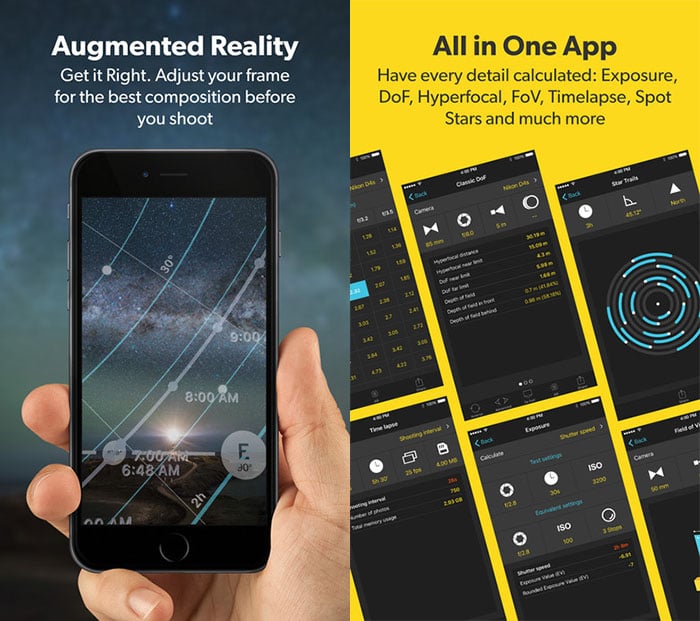
One of its main features is the sun/moon/star tracker. It helps you figure out where the sun or the moon will be at your location at any time of the day. If you want to know where the moon will rise and set, you have to get your phone out.
What’s great about PhotoPills is that it uses augmented reality to show you where the sun or moon will be in a real environment. Even if you use the app in the middle of the day, you can see a digital rendition of the moon on your screen like it’s there.
PhotoPills is also perfect for tracking the Milky Way. You can use it to figure out its location so that when the night comes, you can go to the exact spot where you expect it to appear.
Apart from the tracker, it also has calculators for DOF, FOV, Hyperfocal Table, Long Exposures, Time Lapse and Star Trails. So if you don’t like fumbling around to get your settings correct, you’ll find this app useful.
It takes our top spot because it is the only app here that changes what you shoot rather than how you shoot it. It is also the one that asks something of you. PhotoPills requires a purchase, and the planner rewards an evening spent learning it before you travel rather than a panicked tap at the trailhead. If you photograph in daylight and never chase a sunrise, a moonrise, or the Milky Way, you will not get your money back out of it.
Frequently Asked Questions
What is the best travel app for photographers?
PhotoPills. It plans the shot before you get on the plane, telling you where the sun, the moon, and the Milky Way will be at any location on any date. Every other app on this list supports the trip. PhotoPills decides what the trip is worth photographing.
Are there good free travel apps for photographers?
Yes. Snapseed is free outright with no ads or upsells, and Google Photos, Citymapper, WeatherBug, VSCO, and Locationscout all have usable free tiers. The paid upgrades mainly unlock extra presets, more storage, and heavier trip planning, so you can travel on the free versions and pay later only for what you missed.
Do I need a photo editing app if I shoot RAW?
If you plan to publish anything from the road, yes. Snapseed handles RAW files on a phone and gives you real control over exposure and color, and VSCO adds film-style looks in a couple of taps. Editing on the plane home also means you know which pictures you already have and which gaps you still need to fill.
Conclusion
When doing travel photography, you must have all the tools to capture the places you visit. And having good photography apps on your phone would allow you to do just about anything, even when you move around a lot.
You should also include non-photography travel apps that you’ll find useful when navigating new places. Remember that as a travel photographer, you need to be as skilled at looking for the perfect destinations as you are with your camera.
If you install them in one sitting, do it in this order. Buy PhotoPills and spend an evening with it before you fly, because it is the one that needs learning. Add Locationscout and mark the spots you want. Turn on Google Photos backup while you still have home Wi-Fi. Then leave Citymapper, WeatherBug, Snapseed, and VSCO to earn their place on the trip itself.
Check out our Next Stop: Travel Photography e-book to learn how to take print-worthy photos!