
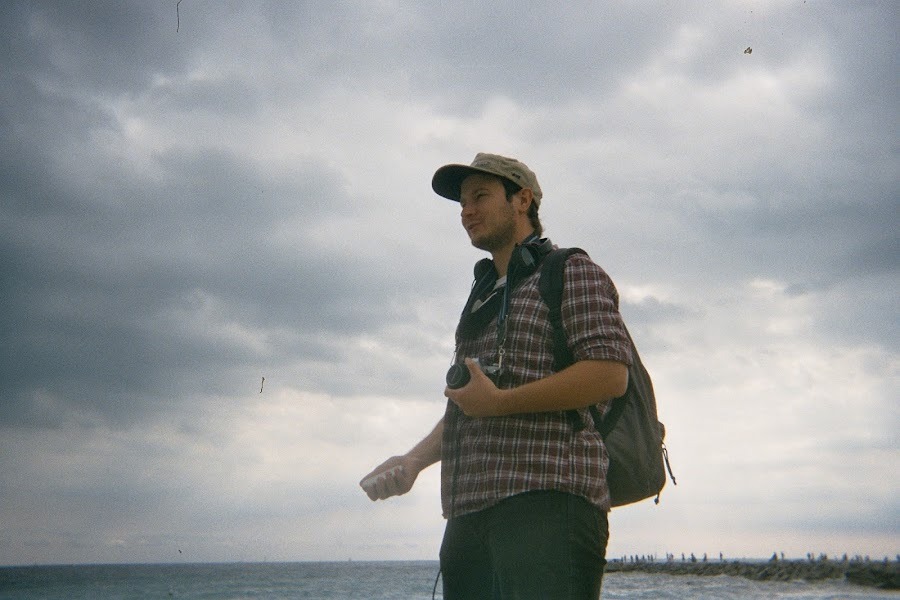
Contemporary portrait photographers offer many ways to photograph a person: a close study of a face, a dancer in the street, a wedding portrait, or an imagined character in a carefully built scene.
This selection brings together 20 photographers with different approaches to portrait photography. Use it to find work you connect with and ideas to try in your own photographs. It is a collection of creative references, rather than a ranking by fame or follower count.
For movement and setting, start with Omar Z. Robles. For quiet, atmospheric portraits, look at Nirav Patel. For fantasy and costume, explore Jovana Rikalo and Bella Kotak. Each profile links to the photographer’s website and Instagram so you can explore beyond the examples here.
20 Contemporary Portrait Photographers to Know
As you look through the photographs, pay attention to light, pose, background, and framing. Choose one element to study at a time.
Omar Z. Robles | @omarzrobles
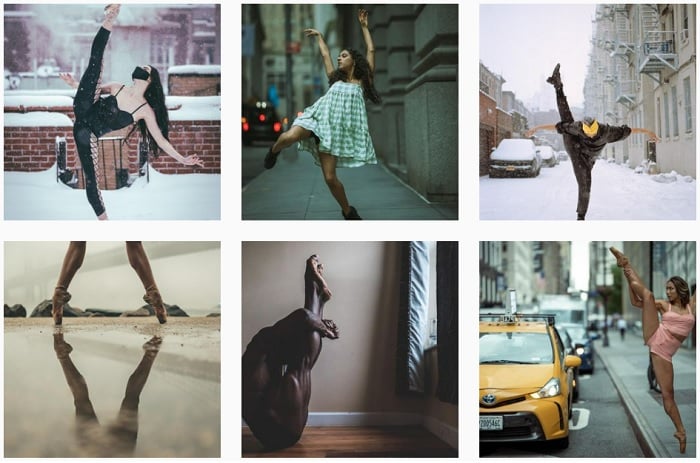
Omar Z. Robles brings dance into everyday surroundings. His portraits make the dancer’s whole body part of the story, with streets and buildings providing a contrast to the pose.
Look at the space around each dancer in the examples below. A clear outline helps a complex movement read quickly. For your own portraits, check how arms and legs sit against the background before pressing the shutter.
© Omar Z Robles
Rosie Matheson | @rosie_matheson
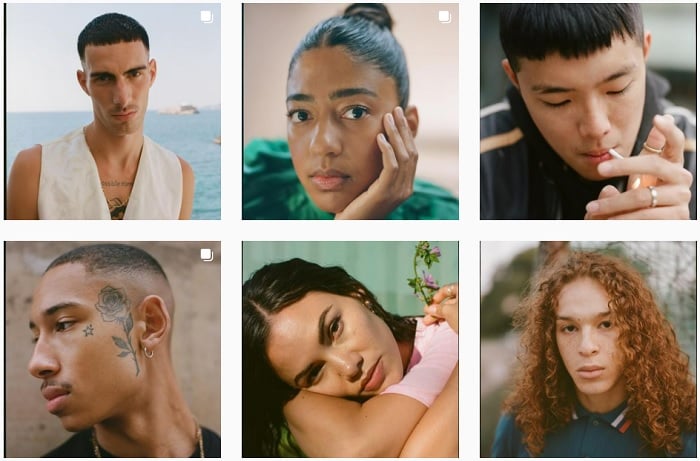
Rosie Matheson’s portraits bring you close to the person in front of the camera. Her ongoing project BOYS explores masculinity, and her work was selected for the Portrait of Britain exhibition in 2016.
In the photographs below, eye contact and small gestures carry much of the expression. Notice how a hand against a cheek or a slight turn of the head changes the mood. These are useful references for soft, intimate portraits.
© Rosie Matheson
Sasha Arutyunova | @sashafoto
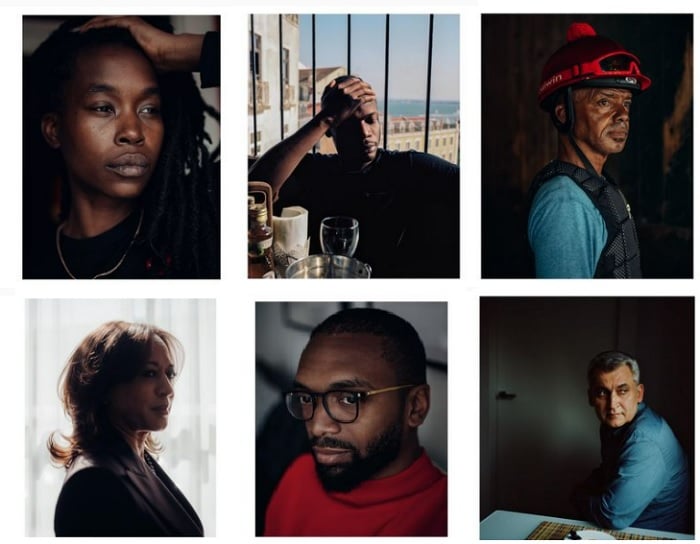
Sasha Arutyunova photographs people in relation to their surroundings. Her own biography describes an interest in familiar places, small gestures, and the way color and shape convey mood.
The portraits below use windows, shadow, and background detail to give each person a setting. If you enjoy photographing people on the street, study what happens when you include a little more of their environment instead of cropping tightly around the face.
© Sasha Arutyunova
Justin Hogan | @thankscamera
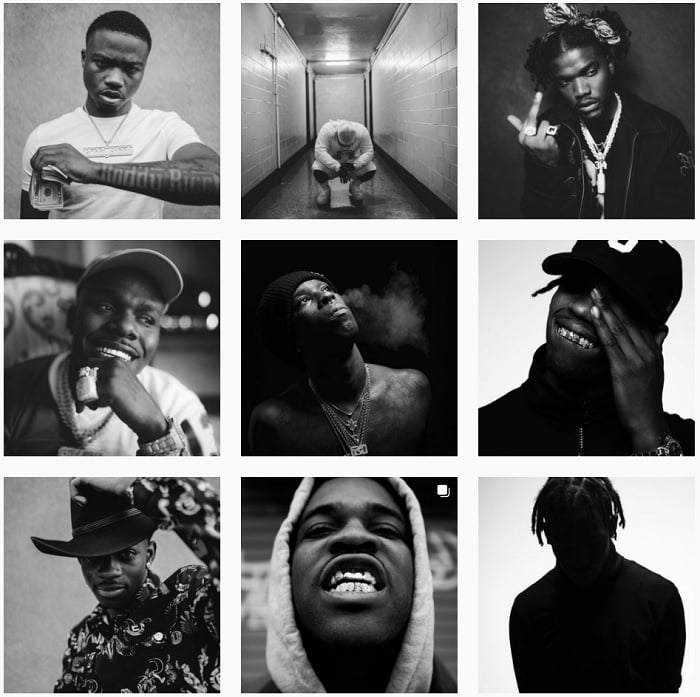
Justin Hogan’s portfolio brings together music and sport. His music photographs include portraits of performers such as J. Cole, Travis Scott, and Jorja Smith.
The black-and-white portraits shown here range from close views of a face to wider compositions. Compare how much information each crop leaves out. Without color, the shape of a hand, the angle of a head, and the separation between light and dark become especially noticeable.
© Justin Hogan
Nirav Patel | @niravphotography
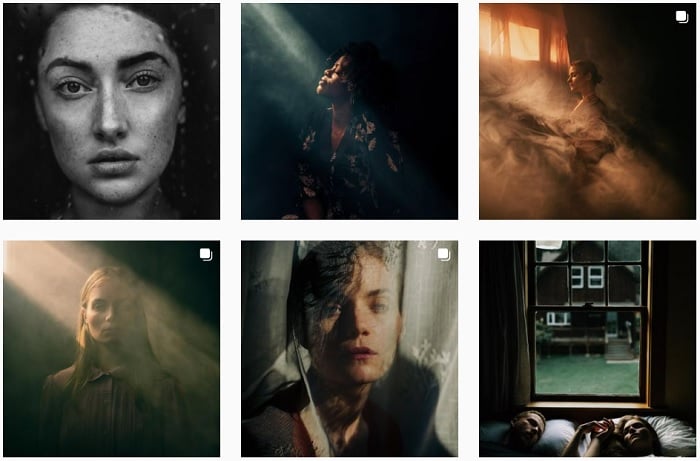
Nirav Patel is a portrait and editorial photographer. On his own site, he describes a long-standing attraction to quiet moments—a useful starting point for understanding his restrained, atmospheric work.
In the examples below, a face can emerge from deep shadow or be framed by a narrow area of light. Study where the light falls, rather than trying to make the entire frame bright. His work offers inspiration for moody portraits.
© Nirav Patel
Jordan Voth | @jordanvoth
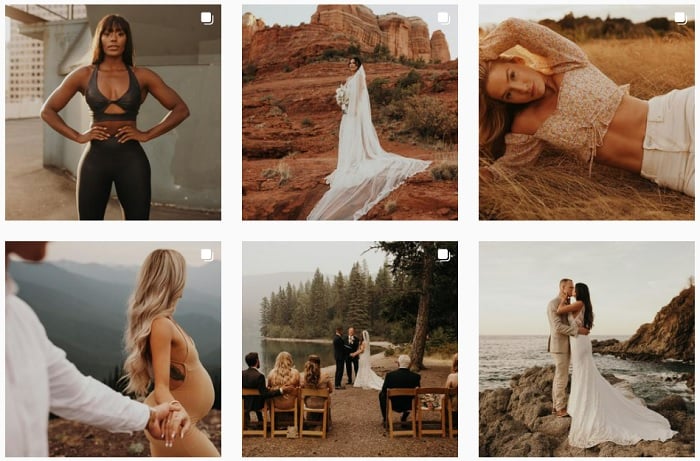
Jordan Voth is a Seattle-based portrait, lifestyle, and wedding photographer. His work combines portraits with the setting and smaller interactions that give a wedding its character.
Compare the close portrait with the wider wedding scenes below. The landscape can establish a sense of place, while a closer frame brings attention back to the people. Try making both views during the same session.
© Jordan Voth
Jovana Rikalo | @jovanarikalo
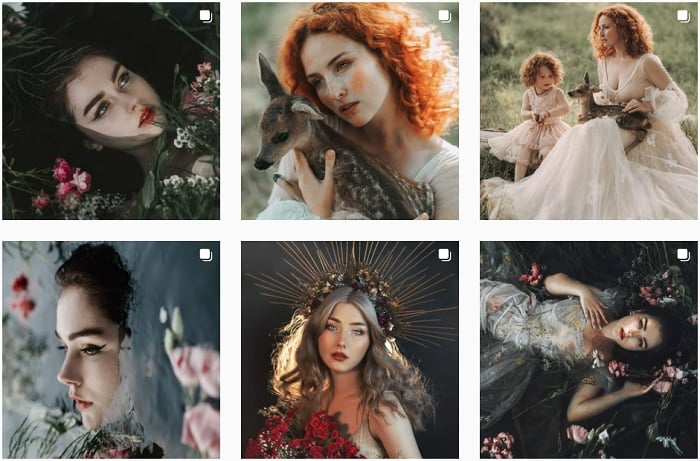
Jovana Rikalo is a fine art photographer whose work combines people, nature, and imagined scenes. She uses portraiture to tell stories through emotion and setting.
Her floral portraits and elaborate styling are useful references for fairy-tale photography. In the examples below, flowers, clothing, and the subject’s expression all contribute to the same mood. Start with one story idea, then choose details that help communicate it.
© Jovana Rikalo
Jared Kocka | @jaredkocka
Jared Kocka works across advertising and editorial photography. His portfolio is a useful place to explore the overlap between portraiture and fashion photography.
The examples below vary the distance from the subject, from a close face to a full-body pose. Look at how clothing and posture work together. A portrait can describe a person through their stance as well as through their expression.
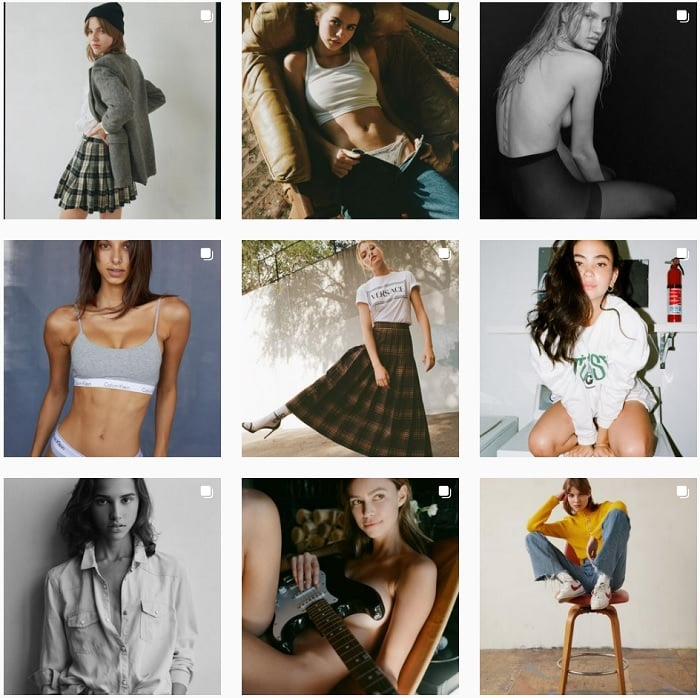
© Jared Kocka
Ira Chernova | @irachernova
Ira Chernova’s site separates her work into portraits, Polaroids, commercial photography, mixed media, and places. That range gives you several ways into her image-making.
The portraits below use both color and black and white, with poses that range from direct eye contact to a turned or lowered head. Compare the effect of each gaze: does the person seem to address you, or do you feel that you are observing a private moment?
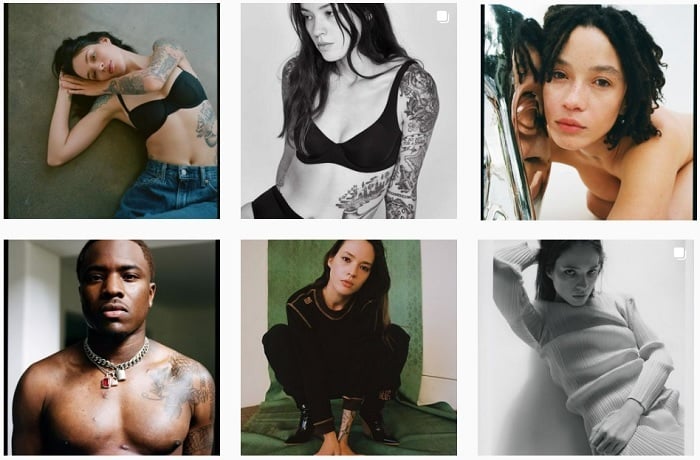
© Ira Chernova
Olivia Bee | @oliviabee
Olivia Bee is a photographer and director whose work explores everyday life, love, and memory. Her projects include Kids In Love and In The Secret Distance.
Her work is a useful reference when you want pictures of people to feel connected to a larger story. Rather than judging each frame alone, look at a sequence and ask how portraits, places, and small details build a feeling together.
© Olivia Bee
Clement Pascal | @cgbp
Clément Pascal’s portfolio includes portraits of artists, musicians, and actors, with work for publications such as The New York Times and WSJ Magazine.
The examples below include seated poses, outdoor settings, and a view from behind the subject. Study how a portrait can feel informal without relying on a smile or direct eye contact. A candid-looking photograph can still have a carefully considered composition; its appearance alone does not tell you how it was made.
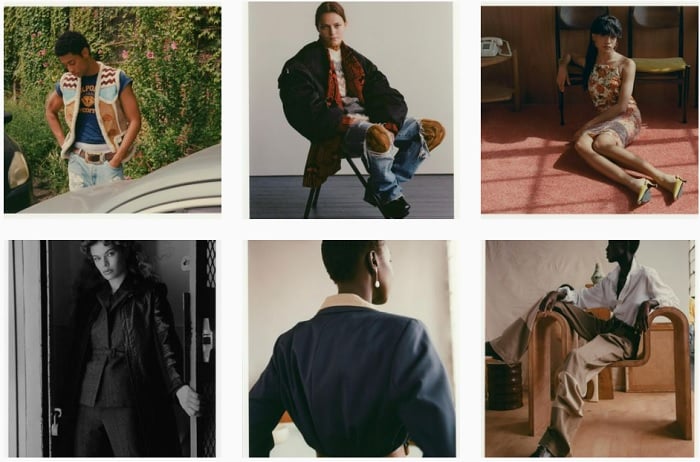
© Clement Pascal
Andi Elloway | @andi.elloway
Andi Elloway works across celebrity portraiture, fashion, music, and advertising. Her portfolio offers a useful mix of close portraits and images where clothing, gesture, and setting take a larger role.
The photographs below move between bright color and black and white. Compare the energy of a full-body pose against a plain backdrop with that of a close face. You can change the character of a portrait by changing the framing, not just the lighting.
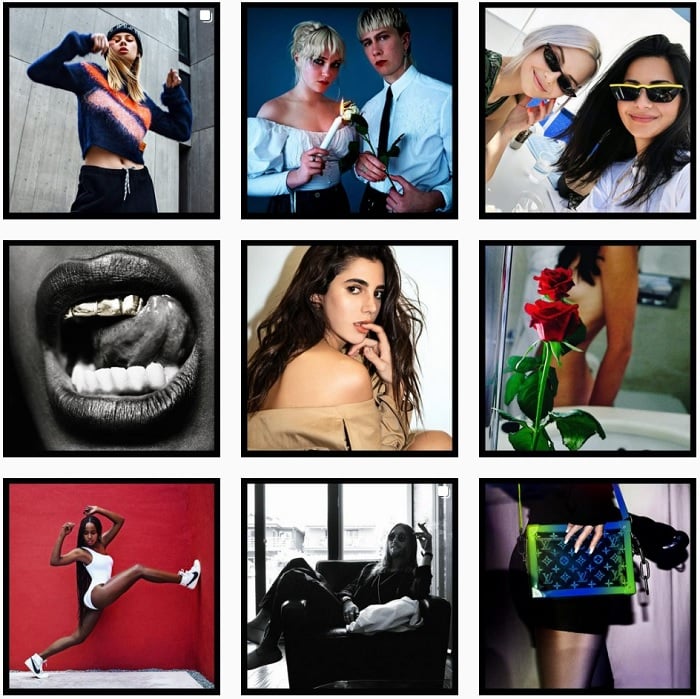
© Andi Elloway
Omar Victor Diop | @omar_viktor
Omar Victor Diop uses portraits and self-portraits to explore identity and history. In Diaspora, he places himself in compositions inspired by portraits of Africans in European history, adding references to football.
This is a useful example of a portrait series built around research and an idea. Look beyond the colorful styling: consider what the clothing, props, and pose communicate about the person being represented.
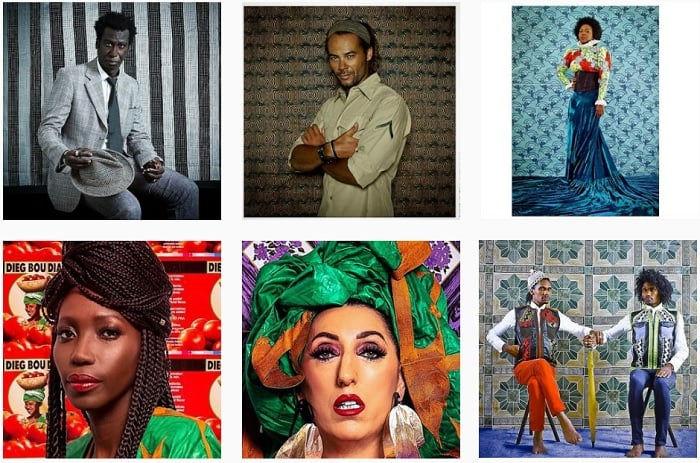
© Omar Victor Diop
Caroline Mackintosh | @carolinemackintosh
Caroline Mackintosh’s portfolio spans fashion, commissioned projects, and portraits. In the examples below, patterned clothes, plants, and outdoor settings play a strong part in the image.
Notice how the body’s position interacts with those surroundings. If you are exploring glamour portraiture, these photographs offer ideas beyond a plain studio backdrop. Some of her work includes artistic nudity.
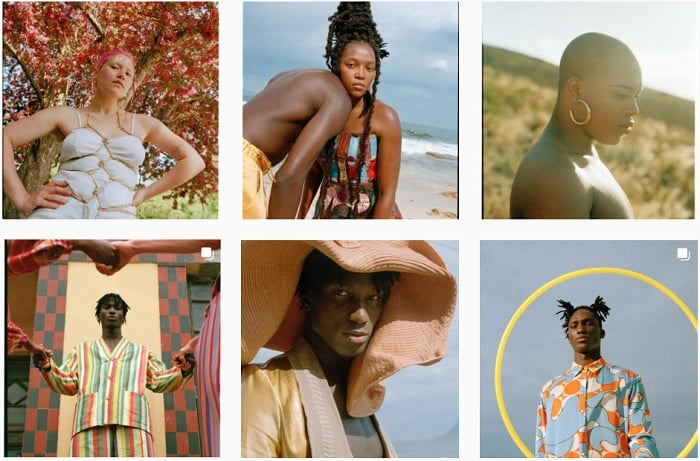
© Caroline Mackintosh
Rhiannon Adam | @rhiannon_adam
Rhiannon Adam’s work includes portraiture and documentary projects such as Big Fence / Pitcairn Island. Her portfolio also has a section called People I’ve Met.
The examples below move between close portraits and wider views that place a person in their surroundings. This is worth studying if you enjoy the work of travel photographers: a portrait can describe both an individual and the place where you met them.
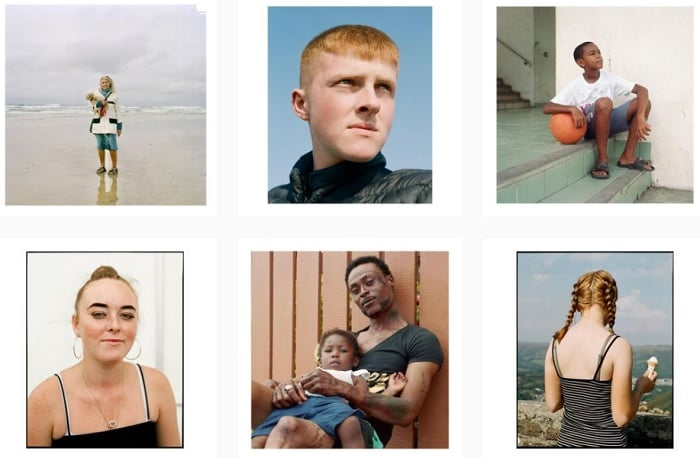
© Rhiannon Adam
Ciro Galluccio | @cirogalluccio
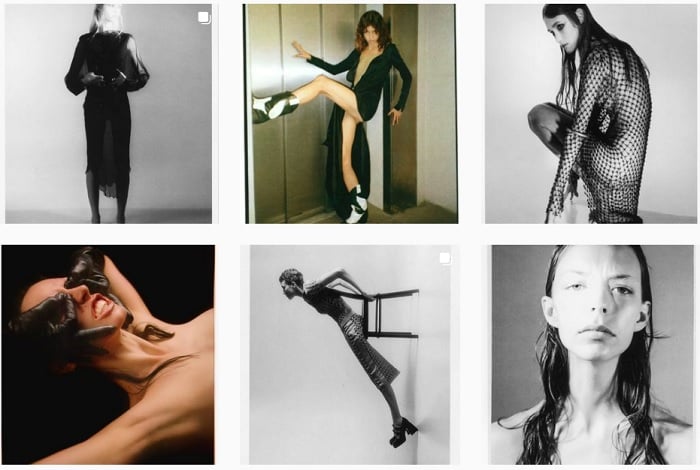
Ciro Galluccio works in photography and art direction. The portraits below combine carefully arranged poses with changes in light, framing, and texture.
Compare the full-body poses with the tight view of a face. Each uses the frame differently, but the position of the body remains important. For readers interested in fine art photographers, these examples are a useful prompt to think about the whole composition before choosing a crop.
© Ciro Galluccio
Chiara Lombardi | @xchiaralombardix
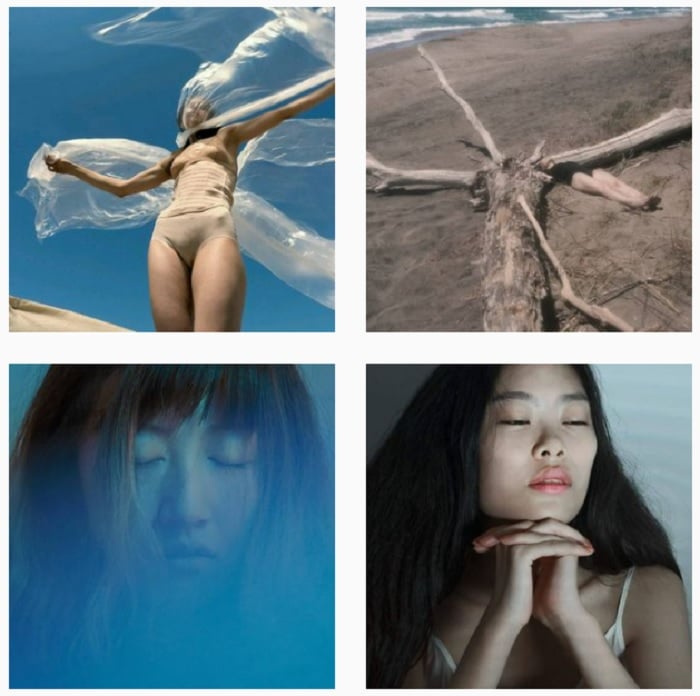
Chiara Lombardi’s It Disappears Slowly brings photographs together with writing, including contributions from the people portrayed. The project explores identity, stigma, and censorship.
The examples below also offer a way to study minimalism: look at the space around the body and how few details are needed to establish a mood. Her work invites you to consider what a portrait communicates beyond a likeness.
© Chiara Lombardi
J. Flynn | @flynn
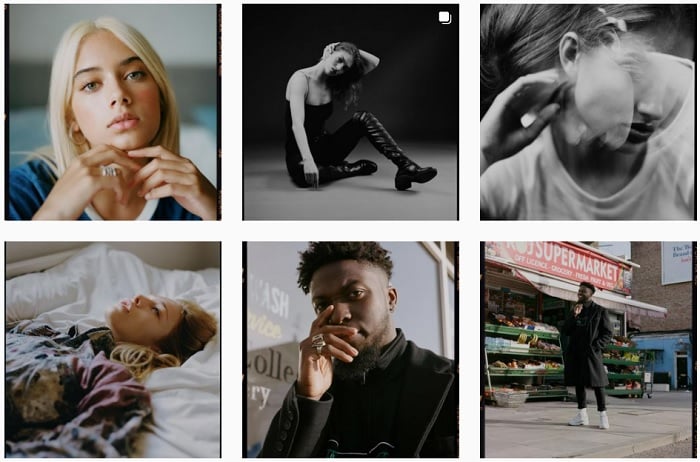
J. Flynn’s current site identifies him as Jonny Flynn, a creative director whose work includes photography and video. He also creates Radical Eye Magazine, a channel about film photography.
The portraits below range from a close face to a wider street scene. Compare the quiet gestures in the closer frames with the information supplied by the surroundings. These are useful references for both street portraits and studio photography.
© J. Flynn
Bella Kotak | @bellakotak
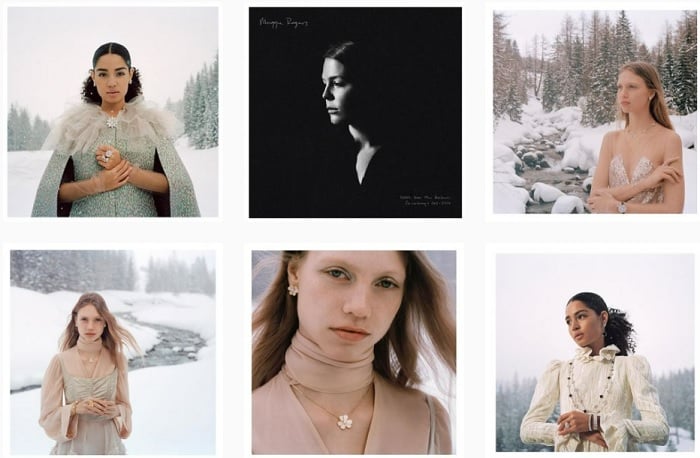
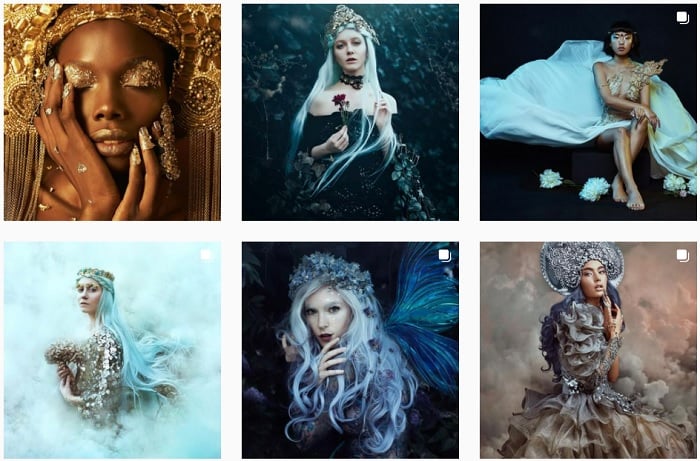
Bella Kotak creates fine art and fashion photographs inspired by fairy tales, flowers, and natural settings. She works with designers, makeup artists, and models to develop these imagined scenes.
Her surreal portraits show how costume and color can help build a character. For your own fantasy photography, choose a simple color relationship and repeat it through the clothing, background, and props before adding more detail.
@ Bella Kotak
Emily Kai Bock | @emilykaibock
Emily Kai Bock is a writer and director who also makes portraits. Her film work includes music videos for Arcade Fire and Grizzly Bear, and her site keeps a separate photography section.
The two portraits below use black and white, direct framing, and distinct areas of light and shadow. Study how these choices create a cinematic mood in a still image, without needing a large set or an elaborate costume.
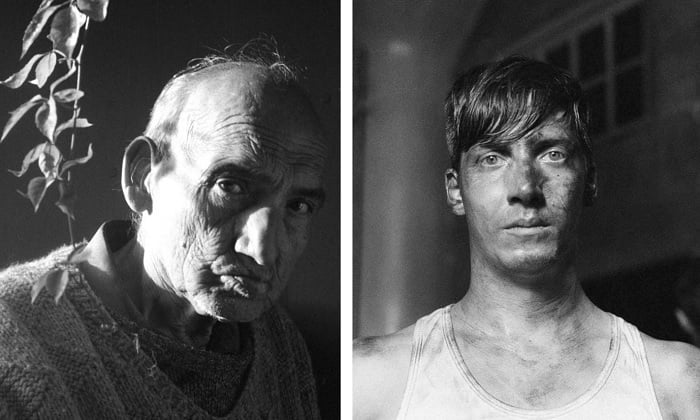
© Emily Kai Bock
How to Use These Portraits as Inspiration
Choose three photographs you like and write down what first draws your eye. Is it a gesture, the direction of the light, a color, or the space around the subject? These principles of composition are more useful to practice than trying to copy a photographer’s entire style.
For your next session, choose one idea and make a few variations. Photograph the same person close up and within their surroundings, or compare direct eye contact with a gaze outside the frame. If you want to be more experimental, change one element at a time so you can see what it contributes.
Take a look at our Profit from Portraits Ebook to take your portraits to the next level!