A wide-angle lens is a great option for landscape and architecture photography, allowing you to capture more of the scene in your frame. Our list covers both Canon mounts, RF for the EOS R mirrorless bodies and EF for the DSLRs, so you can find the best wide angle lens for the Canon camera you actually own.
What Is the Best Wide-Angle Lens for Canon?
The Canon RF 15-35mm f/2.8L IS USM is the best wide-angle lens for Canon. It holds f/2.8 across the whole 15-35mm range, adds five stops of image stabilization, and is weather-sealed to L-series standard. It mounts on every EOS R body Canon currently sells, from the R8 up to the R1.
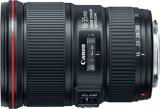
If you shoot a Canon DSLR, the mount decides for you, and the Canon EF 16-35mm f/4L IS USM is the one to buy. It pairs a versatile 16-35mm zoom range with image stabilization, unusual on an ultra-wide zoom, plus the beautiful image quality and quiet autofocus you expect from a Canon lens. At 615 g it is also one of the lighter Canon EF ultra-wide L zooms.
The Best Wide Angle Lenses for Canon
You’ll find a mixture of zoom lenses and primes. They each have their strengths and weaknesses. You’ll also find prices ranging from eye-wateringly expensive to extremely reasonable. As always with photography gear, it’s a case of matching wants, needs and budgets.
The one thing you cannot compromise on is the mount. RF lenses fit the EOS R mirrorless bodies and nothing else. EF lenses fit the DSLRs, and they also fit an EOS R body through Canon’s EF-EOS R adapter, which is why the EF section below is still worth reading if you have a drawer full of DSLR glass.
Before we look at each lens in detail, here’s a summary of all the lenses in this review for you to look at.
The Best RF-Mount Wide-Angle Lenses for Canon Mirrorless
These are the lenses to buy if you own an EOS R body. They focus faster, they stabilize better, and Canon is still developing them.
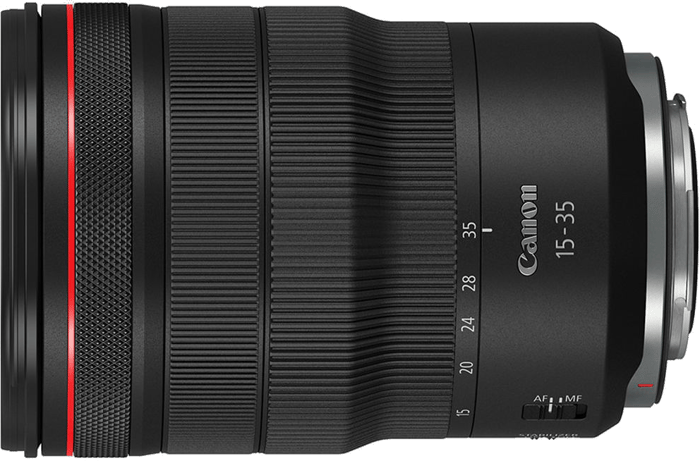
1. Canon RF 15-35mm f/2.8L IS USM
| Brand |
Brand
Canon
|
| Maximum Aperture |
Maximum Aperture
f/2.8
|
| Focal Range |
Focal Range
15-35mm
|
| Image Stabilization |
Image Stabilization
Yes
|
| Best for |
Best for
Professional wide-angle work on an EOS R body when you need f/2.8.
|
The Canon RF 15-35mm f/2.8L IS USM is the lens Canon built to replace the EF 16-35mm f/2.8L III, and it is the one professional Canon shooters reach for. It goes 1mm wider at the short end, holds f/2.8 all the way to 35mm, and adds the stabilization the EF f/2.8 never had.
That combination is what makes it the default. An f/2.8 ultra-wide freezes a moving subject in poor light. Five stops of image stabilization then lets you put the camera on your shoulder instead of a tripod for the static shots. Interiors, weddings, astrophotography and event work all fall inside one lens.
It is built like a professional lens should be. Nine aperture blades, 16 elements in 12 groups with an aspherical and a low-dispersion element, weather sealing, and a fluorine coating on the front element that makes spray and fingerprints wipe off. It takes ordinary 82mm screw-in filters, so your polarizer and ND filters still work, and it focuses to 28cm.
The drawback is size. At 840 g and nearly 127mm long it is the heaviest lens in this list bar the Sigma 14-24mm and the EF 11-24mm, and it is noticeably front-heavy on the smaller R8 and R50 bodies. Carrying it up a hill rather than round a venue is a different job, and the RF 14-35mm f/4L below is 300 g lighter and goes wider.
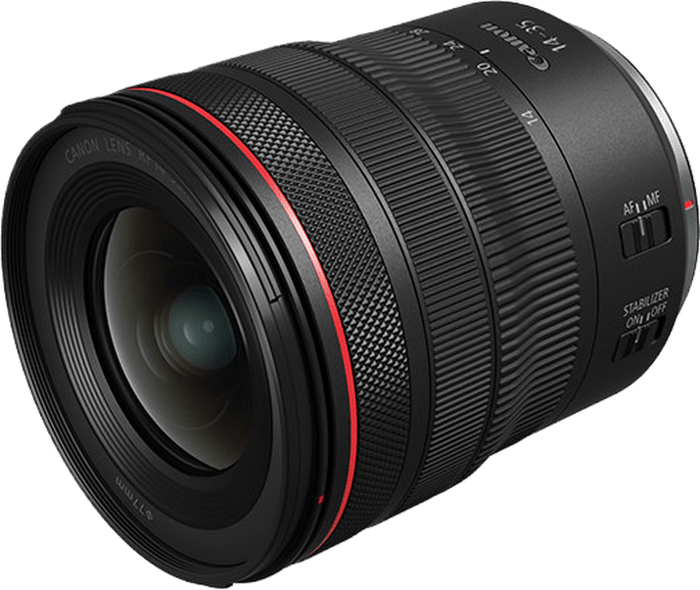
2. Canon RF 14-35mm f/4L IS USM
| Brand |
Brand
Canon
|
| Maximum Aperture |
Maximum Aperture
f/4
|
| Focal Range |
Focal Range
14-35mm
|
| Image Stabilization |
Image Stabilization
Yes
|
| Best for |
Best for
Travel and landscape shooters who want L-series width without the weight.
|
The Canon RF 14-35mm f/4L IS USM is the landscape photographer’s version of the lens above. It trades a stop of light for 1mm more width and 300 g less weight, and for anything on a tripod that is a trade worth making.
14mm is a genuinely different field of view from 15mm or 16mm. It is the difference between fitting the whole cathedral in and standing in the road to try. For real estate interiors and tight architectural work that single millimetre does more for you than the extra stop would.
It carries 5.5 stops of image stabilization, the most of any lens here, and Canon’s USM autofocus motor. It focuses to 20cm, which gives a 1:2.63 maximum magnification, so you can push it right up against foreground rock or foliage and still hold the horizon. It is weather-sealed with a fluorine coating, and it takes standard 77mm filters.
The honest limits are the aperture and the corners. f/4 is not enough for handheld indoor work without pushing ISO, and it gives you very little control over depth of field at these focal lengths anyway. At 14mm the corners lean on Canon’s in-camera correction profile, which is on by default and which you should leave on. If you shoot events or night skies more than landscapes, the f/2.8 above is the better buy.
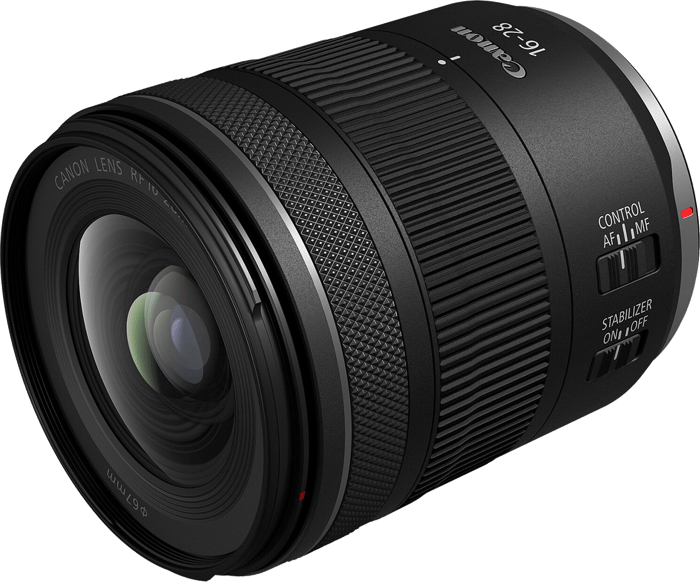
3. Canon RF 16-28mm f/2.8 IS STM
| Brand |
Brand
Canon
|
| Maximum Aperture |
Maximum Aperture
f/2.8
|
| Focal Range |
Focal Range
16-28mm
|
| Image Stabilization |
Image Stabilization
Yes
|
| Maximum Aperture |
Maximum Aperture
f/2.8
|
| Focal Range |
Focal Range
16-28mm
|
| Image Stabilization |
Image Stabilization
Yes
|
| Best for |
Best for
Handheld ultra-wide stills and video on a compact RF body.
|
The Canon RF 16-28mm f/2.8 IS STM arrived in 2025 and it undercuts the L-series f/2.8 in the most useful way possible. It is a constant f/2.8 ultra-wide zoom that weighs 445 g, barely half the RF 15-35mm.
That weight is the point. On a gimbal, on a small body, or on a long walk, the difference between 445 g and 840 g decides whether the lens comes with you. It retracts when it is not in use, so it packs down smaller than its numbers suggest.
It is not a cut-down lens optically. Canon put 16 elements in 13 groups behind it, including four ultra-low-dispersion elements and two aspherical elements, and gave it weather sealing that matches the L-series standard. Stabilization is 5.5 stops on its own and up to 8 stops working with a body that has IBIS. The STM motor is silent and it supports focus breathing correction, which matters if you shoot video.
The compromises are real. You lose the 28mm to 35mm end, so this cannot be your only lens the way a 15-35mm can. Distortion at 16mm is around 8.2% before correction, so the profile is doing serious work and RAW files will look bowed in an editor that ignores it. The retracting barrel adds a step every time you start shooting, and the hood is not in the box. Anyone who wants one lens on the camera all day should buy the RF 15-35mm.
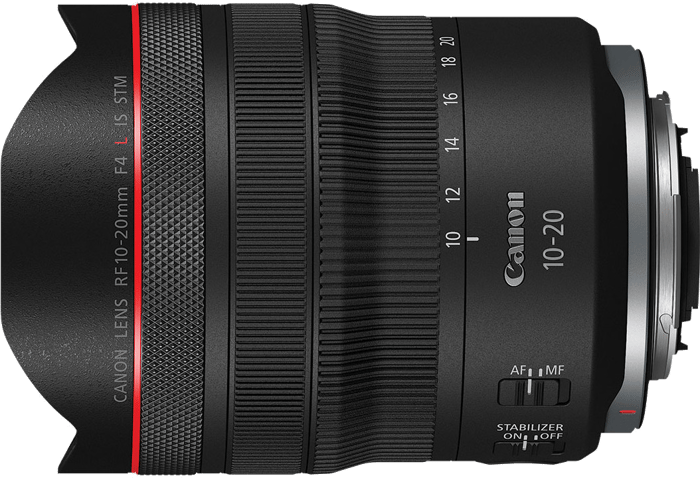
4. Canon RF 10-20mm f/4L IS STM
| Brand |
Brand
Canon
|
| Maximum Aperture |
Maximum Aperture
f/4
|
| Focal Range |
Focal Range
10-20mm
|
| Image Stabilization |
Image Stabilization
Yes
|
| Maximum Aperture |
Maximum Aperture
f/4
|
| Focal Range |
Focal Range
10-20mm
|
| Image Stabilization |
Image Stabilization
Yes
|
| Best for |
Best for
Interiors and architecture that 14mm still cannot fit in.
|
The Canon RF 10-20mm f/4L IS STM is the widest rectilinear zoom with autofocus that anyone makes for a full frame camera. 10mm gives you a 130-degree diagonal field of view, and straight lines stay straight, so this is not a fish-eye lens.
It exists for the jobs where 14mm still is not enough. A small bathroom, a stairwell, a cockpit, the base of a tall building. Interior and architectural photographers buy this lens for the handful of shots per job that nothing else can take.
The engineering is the surprise. It weighs 570 g, less than half the EF 11-24mm f/4L it effectively replaces, with 16 elements in 12 groups including a Super UD element, three UD elements and three aspherical elements. It has five stops of stabilization on its own and six working with a body that has IBIS, full L-series dust and moisture sealing, a control ring and a function button, and an integrated hood.
Two things to know before you buy. Distortion and vignetting at 10mm are extreme and the automatic correction has to stay switched on, so you are trusting Canon’s profile rather than the raw optics. And there is no front filter thread at all. The only filters it takes are rear gelatine squares, 35 x 20mm, which rules out a screw-in polarizer. If you only occasionally need to go wider than 14mm, the RF 14-35mm f/4L is the more sensible lens to own.
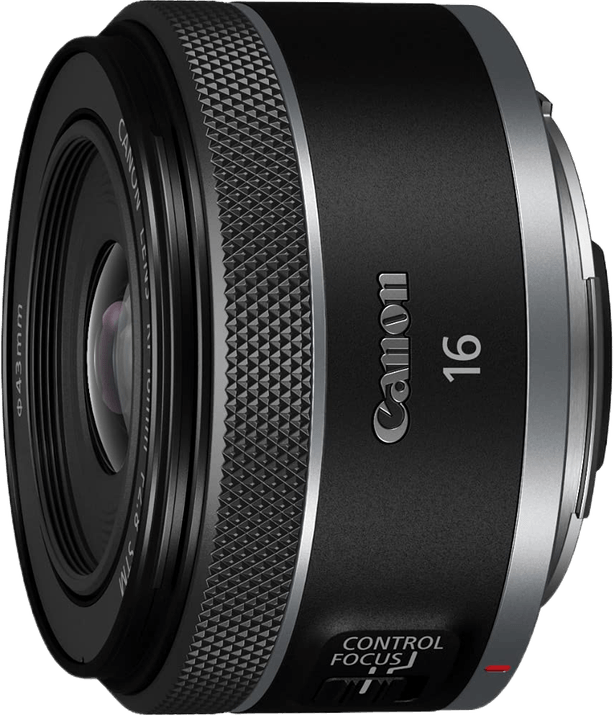
5. Canon RF 16mm f/2.8 STM
| Brand |
Brand
Canon
|
| Maximum Aperture |
Maximum Aperture
f/2.8
|
| Focal Range |
Focal Range
16mm
|
| Image Stabilization |
Image Stabilization
No
|
| Best for |
Best for
The cheapest honest route into RF ultra-wide.
|
The Canon RF 16mm f/2.8 STM is the cheapest way to put a proper ultra-wide on an EOS R body, and for a lot of people it is enough. It is a 107-degree prime that weighs 165 g and is 40mm long, so it disappears in a bag.
A fixed 16mm is a real working focal length rather than a novelty. It is wide enough for interiors, group shots in small rooms and vlogging at arm’s length, and f/2.8 keeps the ISO down when the room is dim. It focuses to 13cm for a 1:3.85 magnification, so you can get very close to a foreground subject.
It is a simple lens by design. Nine elements in seven groups, one aspherical element, seven aperture blades, and a 43mm filter thread that makes filters cheap.
Be clear about what you give up. There is no image stabilization, so handheld video wobbles unless the body steadies it. The STM motor hunts in low light where the USM motors on the L lenses do not. And the extreme edges show distortion in harsh lighting that the correction profile does not fully hide. This is a second lens or a first ultra-wide, not a professional one. Paid interior work starts at the RF 14-35mm f/4L.
The Best EF-Mount Wide-Angle Lenses for Canon DSLRs
These fit the EOS DSLR bodies, and they fit an EOS R body through the EF-EOS R adapter. Canon has stopped developing EF lenses, but the good ones are still made and still excellent.
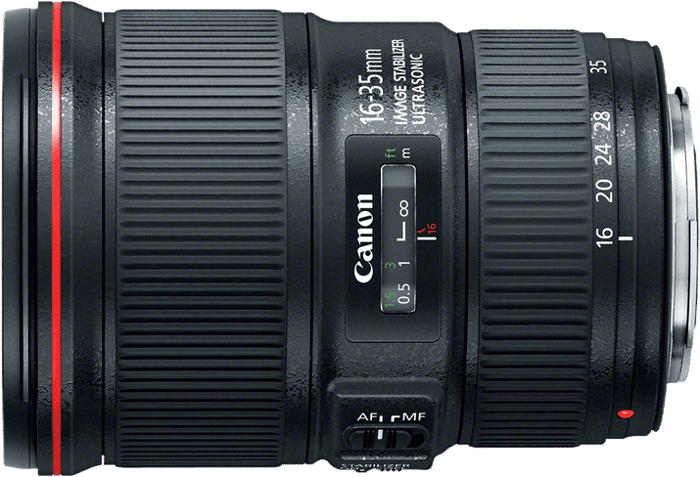
6. Canon EF 16-35mm f/4L USM
| Brand |
Brand
Canon
|
| Maximum Aperture |
Maximum Aperture
f/4
|
| Focal Range |
Focal Range
16-35mm
|
| Image Stabilization |
Image Stabilization
Yes
|
| Best for |
Best for
Real estate and landscape photography in demanding lighting.
|
Landscapes are expansive, interiors are roomy, and everything is pin-sharp. That’s the beauty of the Canon EF 16-35mm f/4L. Even better, it has image stabilization, which is less common on an ultra-wide zoom. It makes low-light photography even easier, and means you won’t always need a tripod.
A 35mm lens used to be the favorite alternative standard lens for photographers. It provides that little bit more width. For genuine wide-angle, 24mm was a favorite. With this Canon EF 16-35mm f/4L IS USM lens, you get both those focal lengths, and an ultra-wide 16mm.
If you’ve never used an ultra-wide lens, you’re in for a treat, and also for a shock. I’ve written elsewhere that when my photographer daughter first used my 16-35mm, she hated it, because everything she pointed it at came out smaller and further away than she expected. That is the lesson: an ultra-wide only works when you get close to something. For comparison, a GoPro has a full frame equivalent of about 16.5mm, so that is the type of field of view you are getting.
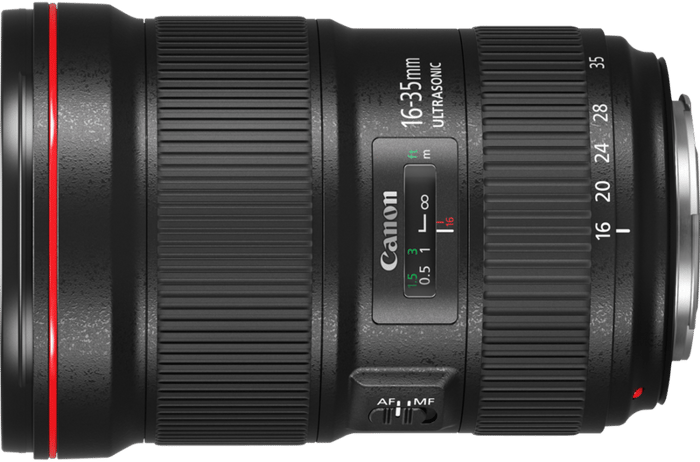
7. Canon EF 16-35mm f/2.8L III USM
| Brand |
Brand
Canon
|
| Maximum Aperture |
Maximum Aperture
f/2.8
|
| Focal Range |
Focal Range
16-35mm
|
| Image Stabilization |
Image Stabilization
No
|
| Best for |
Best for
Action photography needing an ultra-wide-angle lens.
|
The Canon EF 16-35mm f/2.8L III USM is the last and the best of Canon’s EF-mount 16-35mm zooms. You do need a bigger budget for this one. But you won’t regret buying it once you see the quality.
Image stabilization won’t do you much good with a wide-angle lens if your subject is moving. So the f/2.8 maximum aperture is important in this lens if you want to capture a moving object. Think of a goal-mouth view of the whole soccer pitch. Or a worm’s eye view of the steeplechase.
This solid, super-sharp ultra-wide-angle zoom will excel in all of those circumstances. Exceptionally-clear optics, even stopped wide open, will also work well for interiors and landscapes. But you can probably do as well with our top EF choice and its IS for that.
It’s an expensive lens. But it’s superbly-made and utterly reliable. It gives you sharp images across the focal length range and apertures. At 790 g it is 175 g heavier than the f/4L, and it has no optical stabilization, which can matter for handheld work in low light.
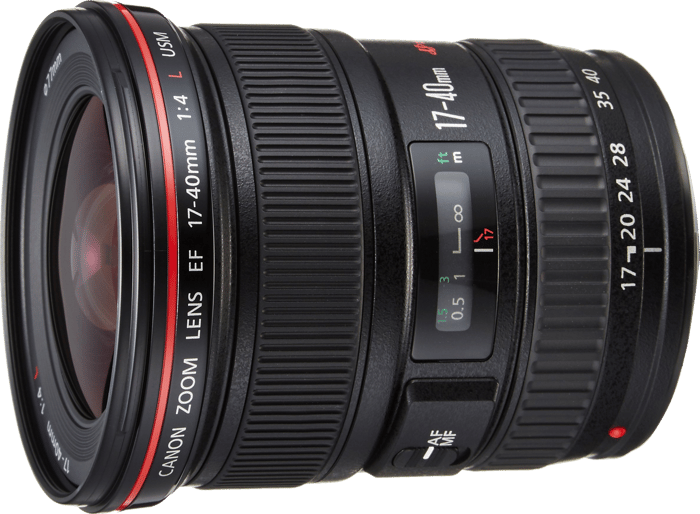
8. Canon EF 17-40mm f/4L USM
| Brand |
Brand
Canon
|
| Maximum Aperture |
Maximum Aperture
f/4
|
| Focal Range |
Focal Range
17-40mm
|
| Image Stabilization |
Image Stabilization
No
|
| Best for |
Best for
Getting a little closer to the action, and if your budget is tighter.
|
The Canon EF 17-40mm f/4L USM is another versatile wide-angle zoom lens. It gives you a good focal length range. You won’t see much distortion, even at the extremes. And budget-conscious photographers will appreciate the price tag.
You sacrifice 1mm of wide-angle, gain 5mm at the other end, and could nearly buy two of these for the price of the 16-35mm f/4L. In other words, this is great value for a lens. It is pretty much as sharp as either of the 16-35mm Canon lenses. And it pulls you that little closer to the subject with its maximum 40mm. At 500 g it is also the lightest EF zoom in this list.
Make no mistake, even though this lens is markedly cheaper than the previous two, it is still a hefty price. But it will deliver reliable results, whether it’s for real estate interiors or landscapes.
That cost saving does mean you have neither the fast f/2.8 maximum aperture, nor the image stabilization. But there are some jobs where you need an ultra-wide lens on a full frame camera. If that’s your situation, this could be the one for you.
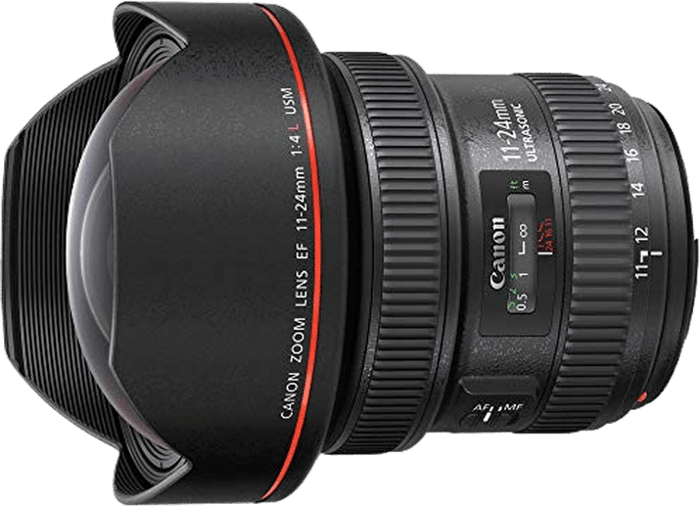
9. Canon EF 11-24mm f/4L USM
| Brand |
Brand
Canon
|
| Maximum Aperture |
Maximum Aperture
f/4
|
| Focal Range |
Focal Range
11-24mm
|
| Image Stabilization |
Image Stabilization
No
|
| Best for |
Best for
Getting extraordinary wide images, almost distortion-free.
|
Don’t be fooled by the bulbous front element. The Canon EF 11-24mm f/4L USM is not a fish-eye lens. Straight lines will, pretty much, stay straight. In tight spaces, or indeed wide-open spaces, this lens will deliver pictures like no other.
Despite the acres of domed glass, Canon have managed to control flare and ghosting. To eliminate it would be impossible. But it never intrudes, nor does it reduce the punch of the contrasty images.
A 16mm lens isn’t always wide enough for real estate interiors. This ultra-wide marvel will enable photos that are otherwise impossible. There’s a hefty price-tag, and there is a weight penalty too: at 1,180 g it is the heaviest lens here, and its domed front element takes no screw-in filters at all. If you shoot RF, the 570 g RF 10-20mm above does the same job for less than half the weight.
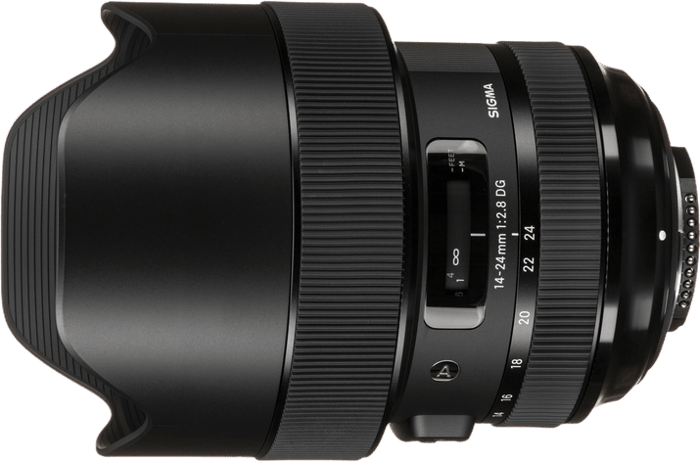
10. Sigma 14-24mm f/2.8 DG HSM
| Brand |
Brand
Sigma
|
| Maximum Aperture |
Maximum Aperture
f/2.8
|
| Focal Range |
Focal Range
14-24mm
|
| Image Stabilization |
Image Stabilization
No
|
| Best for |
Best for
Excellent build quality at a price that's difficult to beat for a zoom lens this fast.
|
The Sigma 14-24mm f/2.8 covers a useful range of wide- to ultra-wide focal lengths. It offers great value for money, for a lens with this range and a maximum f/2.8 aperture. A combination of aspherical and special low-dispersion elements combines to give very low flare and little distortion. Buy the version marked for Canon, which is the EF-mount build.
As with all Sigma Art lenses, the build quality is designed to stand up to everyday use. Sigma Art lenses have devoted followers who love the clarity and light their lenses deliver. I have a wedding photographer friend, whose photos are nothing short of luminous. She shoots exclusively with Canon bodies and Sigma Art lenses.
The compromise with this lens is that its maximum zoom of 24mm won’t get you at all close to the action. In some ways it is less versatile than the 16-35mm. It is also heavy, at 1,150 g, and its curved front element takes no screw-in filters. But it will give you that extra width at the wide end, without the financial pain of the Canon 11-24mm.
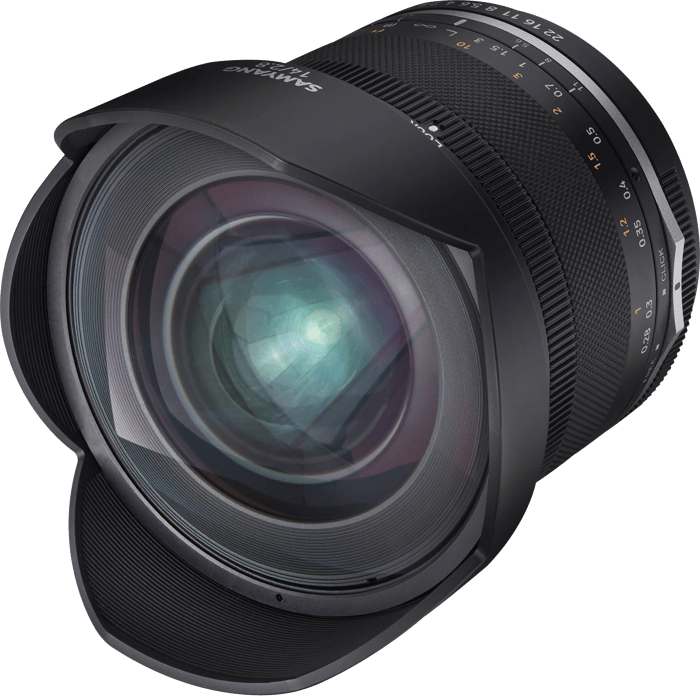
11. Samyang 14mm f/2.8
| Brand |
Brand
Samyang
|
| Maximum Aperture |
Maximum Aperture
f/2.8
|
| Focal Range |
Focal Range
14mm
|
| Image Stabilization |
Image Stabilization
No
|
| Best for |
Best for
The cheapest route to a 14mm prime on a Canon DSLR.
|
Samyang sells this lens as Rokinon in the US, so the Rokinon 14mm f/2.8 ED and the Samyang 14mm f/2.8 are the same optic under two names, and the buy button above finds whichever one is in stock. There’s no denying you won’t get pin-sharp corners from it. But for occasional use, or for on-screen reproduction, it’s worth it.
If you have a number of properties to rent, this lens might be a good choice if you’re advertising them on rental apps. It has a super-wide focal length and a fast f/2.8 aperture.
The thing to understand before you buy is that it focuses manually only, and it has no electronic contacts on most versions, so the camera will not set the aperture for you. It also has no front filter thread and weighs 649 g. Anyone who wants autofocus at this focal length should save up for the Sigma 14mm f/1.8 Art further down this list.
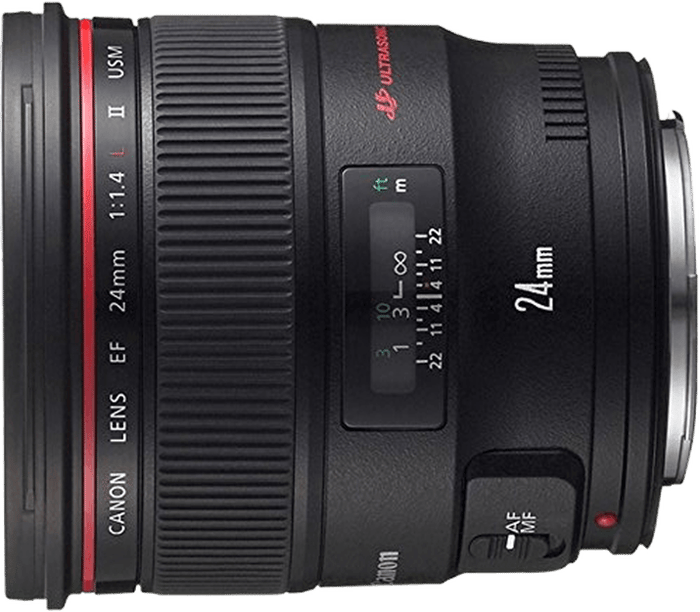
12. Canon EF 24mm f/1.4 II USM
| Brand |
Brand
Canon
|
| Maximum Aperture |
Maximum Aperture
f/1.4
|
| Focal Range |
Focal Range
24mm
|
| Image Stabilization |
Image Stabilization
No
|
| Best for |
Best for
Reliable, fast wide-angle lens for everyday use.
|
The Canon EF 24mm f/1.4 II USM delivers sharp, distortion-free images at most distances, and it performs well in very challenging lighting. Sharpness is superb, even at f/1.4. Remembering, of course, that depth of field at that aperture is very shallow indeed.
There is little to no problem with flare or loss of contrast, even shooting straight into the sun. It’s a professional lens, so that’s no surprise. The eight-bladed diaphragm provides attractive sunstars. Bokeh, never a priority with wide-angle lenses, is not on a par with some of Canon’s longer lenses. But it is acceptable.
This lens will cost you a lot of money, and 24mm is the least wide focal length in this list, so it is not the lens to buy if fitting a room in the frame is the problem you are solving. Buy it because you want f/1.4 at a wide focal length. For that job it will reliably give you sharp, accurately-focused images time after time.
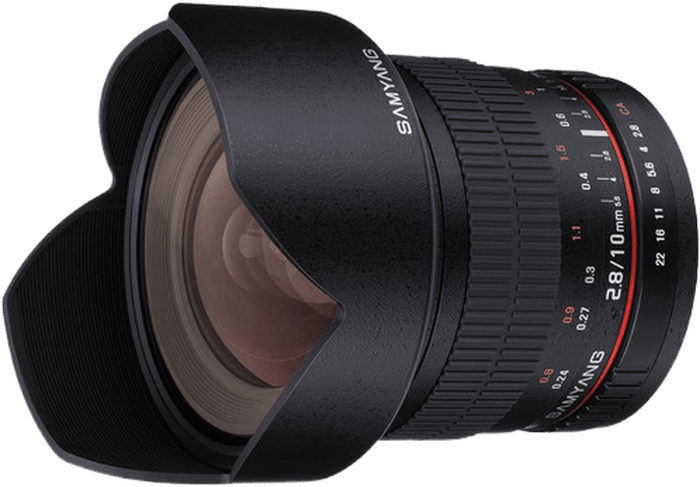
13. Samyang 10mm f/2.8 ED AS NCS CS
| Brand |
Brand
Samyang
|
| Maximum Aperture |
Maximum Aperture
f/2.8
|
| Focal Range |
Focal Range
10mm
|
| Image Stabilization |
Image Stabilization
No
|
| Best for |
Best for
Ultra-Ultra-Wide without extreme distortion.
|
Straight lines pretty much remain straight with this Samyang 10mm f/2.8. So interiors and architecture will look more natural. They won’t look “normal” because of the unusual perspective. But this isn’t a fish-eye lens.
Three aspherical elements, and low dispersion glass help to reduce flare. But on a lens with a bulbous front element, that collects light from almost everywhere, this won’t have the punch of a 16mm.
Read the fine print on this one. It is an APS-C lens, so it belongs on a crop-sensor body like the 90D or the 7D Mark II, where it behaves like a 16mm lens on full frame. It is also manual focus, has no front filter thread, and weighs 590 g. Put it on a full frame body and you will get a black circle. Full frame owners want the Rokinon 14mm instead.
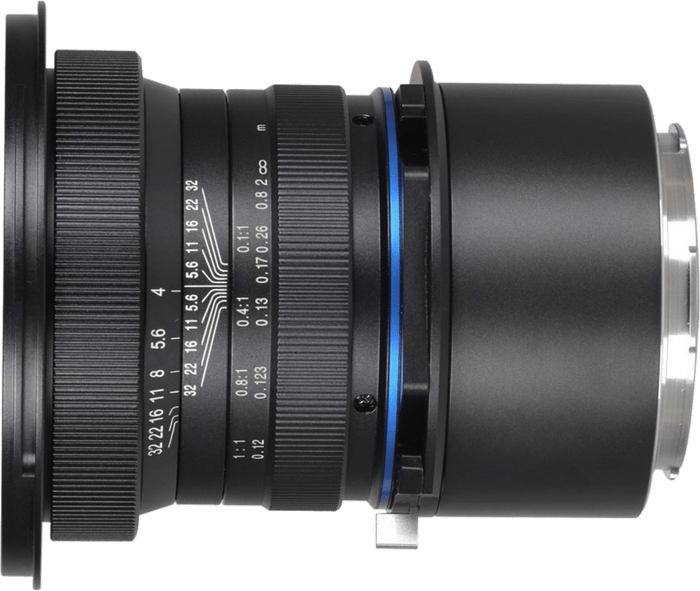
14. Laowa 15mm f/4.0
| Brand |
Brand
Laowa
|
| Maximum Aperture |
Maximum Aperture
f/4
|
| Focal Range |
Focal Range
15mm
|
| Image Stabilization |
Image Stabilization
No
|
| Best for |
Best for
Ultra-wide-angle with macro function makes this a versatile lens.
|
Plenty of lenses say “macro” on the barrel but aren’t. The Laowa 15mm f/4.0 not only offers an ultra-wide 15mm focal length, but also genuine macro 1:1 capability. And it does this for a remarkable price for those features.
It offers impressively sharp pictures even wide open. Of course, that maximum aperture of f/4.0 is not that fast. The 11-bladed diaphragm produces pleasant bokeh shapes, and the lens has plenty of punchy contrast.
A really interesting choice for its macro and wide-angle combination at an enticing price. The catch is that it is fully manual, with no autofocus and no electronic aperture control, and getting a 1:1 subject sharp at 15mm needs patience and usually a tripod. As a wide-angle lens you can raise and shoot, it is not the answer.
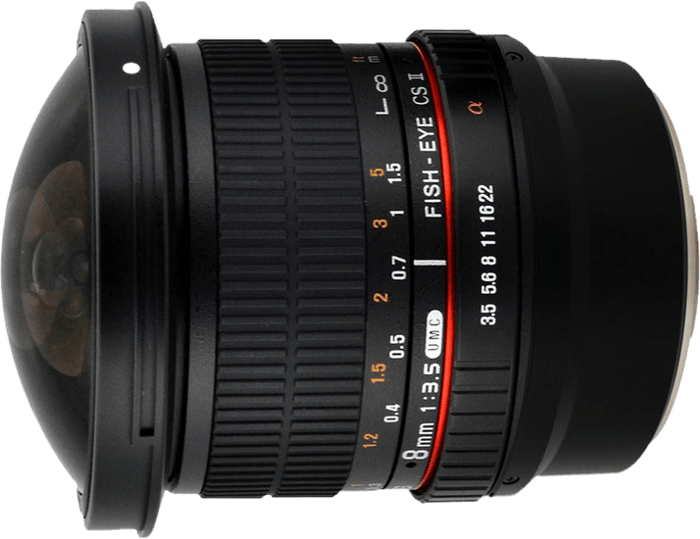
15. Samyang 8mm f/3.5 UMC CS II Fisheye
| Brand |
Brand
Samyang
|
| Maximum Aperture |
Maximum Aperture
f/3.5
|
| Focal Range |
Focal Range
8mm
|
| Image Stabilization |
Image Stabilization
No
|
| Best for |
Best for
Doing what only a fisheye can do, at a remarkable price.
|
It’s not often you need a fisheye lens, and not many people can justify thousands of dollars to buy one. The Samyang 8mm f/3.5 UMC CS II is the affordable way to own one, and the images it produces are beautifully sharp.
This means that you can have one in your arsenal. And let’s remember that for some jobs, a fisheye lens is perfect. Obviously, straight lines become curves. But that’s the point. What’s remarkable about this lens is how well it stands up against properly-expensive fisheyes.
It is manual focus, it has no filter thread, and a fisheye is a look you will get tired of if it is your only wide lens. Buy it as a fourth or fifth lens, never as your first.
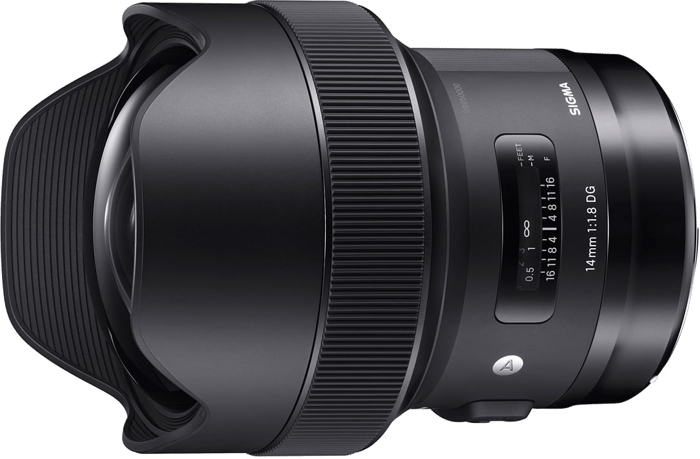
16. Sigma 14mm f/1.8 Art DG HSM
| Brand |
Brand
Sigma
|
| Maximum Aperture |
Maximum Aperture
f/1.8
|
| Focal Range |
Focal Range
14mm
|
| Image Stabilization |
Image Stabilization
No
|
| Best for |
Best for
Astrophotography or other low-light scenarios.
|
The Sigma 14mm f/1.8 Art is a fast, ultra-wide-angle lens. And it’s superb for astrophotography. But you’ll appreciate the sharpness in any situation needing a lens this wide. It even manages to provide some bokeh and subject separation. Not easy to do with a 14mm lens.
The lens has the top-quality construction we expect from an Art series lens. The autofocus is fast and whisper-quiet. A combination of aspherical and low dispersion elements provides low distortion and minimal flare.
This is a premium lens at a premium price. It is also big, and its curved front element takes no screw-in filters, so daytime long exposures need a rear filter holder or an adapter. If you are not shooting the night sky, the f/1.8 is money you do not need to spend. If you are, it will prove a reliable addition to your camera bag.
How to Choose a Wide-Angle Lens for Your Canon
Work through these in order and the list above narrows to one or two lenses.
Mount, first and always. An EOS R body wants an RF lens. A DSLR wants an EF lens. If you have an EOS R body and a bag of EF glass already, the EF-EOS R adapter keeps it all working, so the EF section is not wasted on you.
How wide do you actually need to go? 24mm is wide. 16mm is ultra-wide and fits most rooms. Below 14mm you are in specialist territory and only the RF 10-20mm f/4L and the EF 11-24mm f/4L get you there with straight lines.
Aperture. f/2.8 is for moving subjects, dim venues and stars. f/4 is enough for anything on a tripod, and it buys you a lighter, cheaper lens. Only the Canon EF 24mm f/1.4L II and the Sigma 14mm f/1.8 Art go faster than f/2.8, and both are bought for one specific job.
Filters. The RF 10-20mm f/4L, EF 11-24mm f/4L, Sigma 14-24mm f/2.8 and Sigma 14mm f/1.8 all have curved front elements and no screw-in thread. If a polarizer or a 10-stop ND is part of how you work, choose one of the 77mm or 82mm lenses instead.
Weight. The spread here runs from 165 g for the RF 16mm f/2.8 to 1,180 g for the EF 11-24mm f/4L. A lens you leave at home takes no pictures.
Frequently Asked Questions
What focal length counts as a wide-angle lens on a Canon?
On a full frame Canon body, anything from about 35mm down is wide-angle, and 20mm and below is usually called ultra-wide. On an APS-C body like the 90D or the R7 you multiply by 1.6, so a 10mm APS-C lens frames like a 16mm on full frame.
Can I use an EF lens on a Canon EOS R camera?
Yes. Canon’s EF-EOS R adapter mounts any EF lens on any EOS R body with no loss of image quality or autofocus speed. It adds about 24mm of length. There is no adapter that works the other way, so an RF lens will never fit a DSLR.
Is a wide-angle prime sharper than a wide-angle zoom?
Not reliably, not any more. The RF 15-35mm f/2.8L and the RF 10-20mm f/4L both hold up against primes across the frame. Primes still win on maximum aperture, which is why the Canon EF 24mm f/1.4L II and the Sigma 14mm f/1.8 Art are on this list.
Which wide-angle lens is best for real estate photography?
The RF 14-35mm f/4L IS USM for an EOS R body, or the EF 16-35mm f/4L IS USM for a DSLR. Both are stabilized, both take screw-in filters, and 14mm to 16mm fits almost any room. For the handful of spaces that neither can manage, the RF 10-20mm f/4L is the specialist answer.
Do I need image stabilization on a wide-angle lens?
It helps more than people expect. Wide lenses hide handshake at normal shutter speeds, but stabilization is what lets you shoot a dim interior at 1/8 of a second without a tripod. If you shoot handheld indoors, buy a stabilized lens.
Conclusion
The range of wide-angle lenses available for your Canon camera could be quite bewildering. Especially when you think of how different two lenses, say a 15-35mm and an 8mm lens are.
So you have to tailor your choice to your needs and your budget. Decide the mount first, then how wide you need to go, then the aperture. With that being said, we don’t think you can go far wrong with the Canon RF 15-35mm f/2.8L IS USM on an EOS R body, or the Canon EF 16-35mm f/4L IS USM if you are still shooting a DSLR.