Famous photographers worth knowing include Ansel Adams for landscapes, Henri Cartier-Bresson for street photography, Dorothea Lange for documentary work, Annie Leibovitz for portraits, and Cindy Sherman for staged images. Each offers a different way to see and photograph the world.
This selection brings together 29 photographers across generations and genres. The numbers help you navigate the list; they are not a ranking of talent or fame. Use the examples to find work you want to explore, whether you need new photography themes or a fresh approach to a familiar subject.
29 Famous Photographers and Their Work
Start with a field that interests you, then look beyond it. A portrait photographer can learn from a landscape photographer’s use of light, just as a street photographer can learn from the way an artist arranges a scene.
1. Cindy Sherman
Cindy Sherman uses photography to explore identity and the roles people play for the camera. She appears in her own images, changing her appearance through costume, makeup, pose, and setting.
Her Untitled Film Stills suggest scenes from imaginary movies. The characters look familiar, but the photographs leave their stories open. Study how a glance, camera angle, or piece of clothing can imply a whole narrative without explaining it.
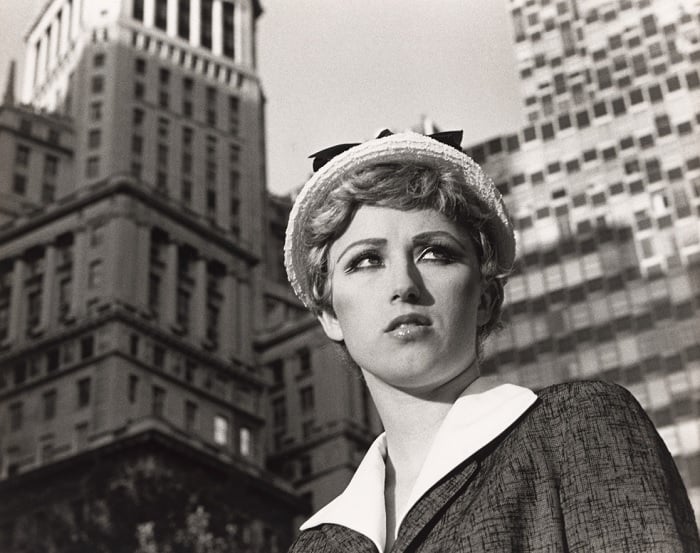
Film Still #21 © Cindy Sherman
2. Ansel Adams
Ansel Adams was an American photographer and environmentalist best known for his black-and-white landscape photographs of the American West, especially Yosemite.
His photographs depend on careful exposure and printing as well as dramatic scenery. He helped develop the Zone System, which relates exposure and film development to the tones in a finished print. He was also a founding member of Group f/64, alongside photographers including Willard Van Dyke and Edward Weston.
Look at the separation between dark rock, bright clouds, and snow in his landscapes. The lesson is to think about the final image while you are still making the exposure.
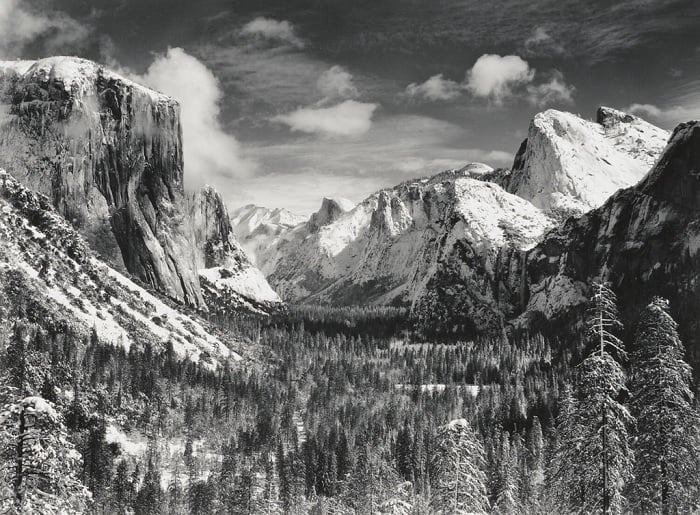
© Ansel Adams
3. Yousuf Karsh
Yousuf Karsh photographed writers, scientists, performers, and political leaders. His carefully lit portraits are useful studies for portrait photographers: the direction of the light, the hands, and the subject’s posture all contribute to the picture.
His 1941 portrait of Winston Churchill became a defining image of his career. The Karsh archive records how he made it in Ottawa after Churchill addressed the Canadian Parliament. The portraits below also show Martin Luther King Jr. and Nikita Khrushchev.
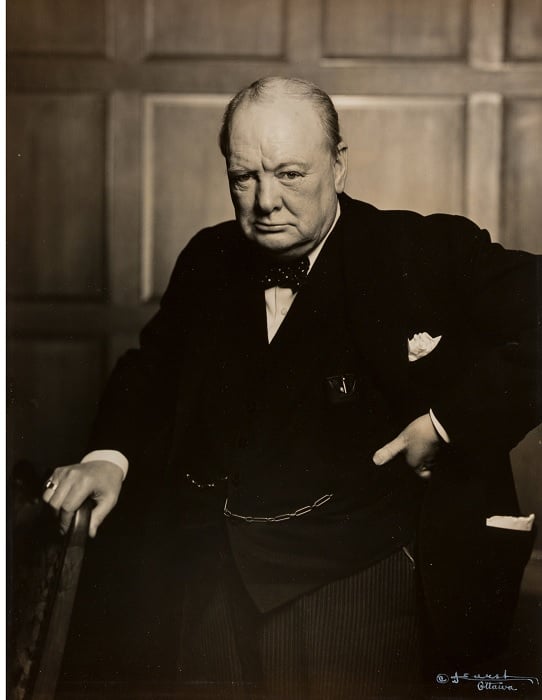
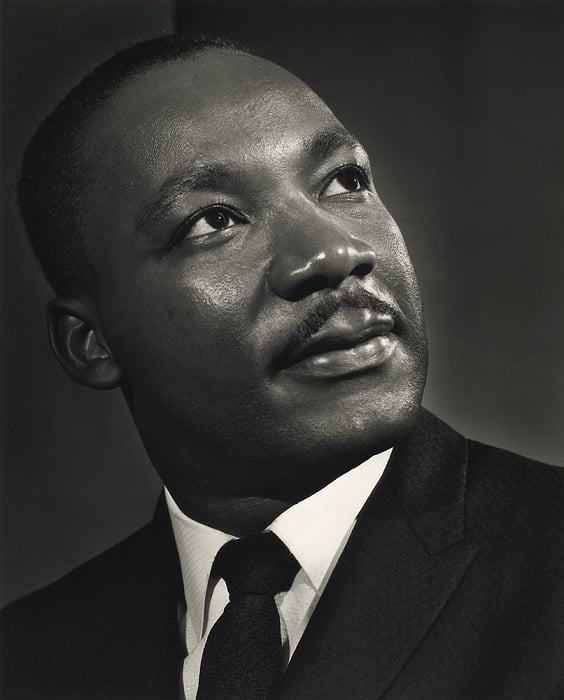
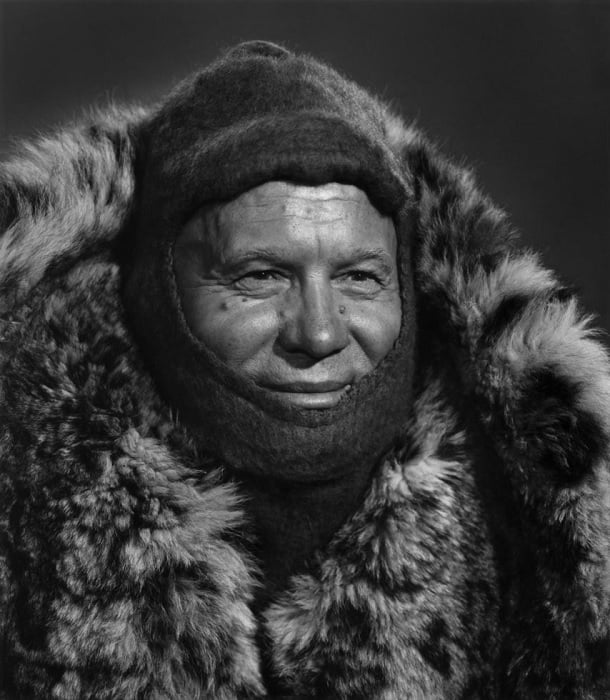
4. Robert Frank
Robert Frank brought a personal, questioning eye to American life. After a brief period as a fashion photographer at Harper’s Bazaar, he worked in advertising and photojournalism.
A Guggenheim Fellowship supported his travels through the United States in 1955 and 1956. The resulting book, The Americans, became his best-known work. Its everyday scenes are often uneasy rather than celebratory.
Frank is a useful starting point among famous street photographers because his work shows how a sequence of photographs can express a point of view. Look for recurring subjects and visual contrasts across a whole book, not just a single image.
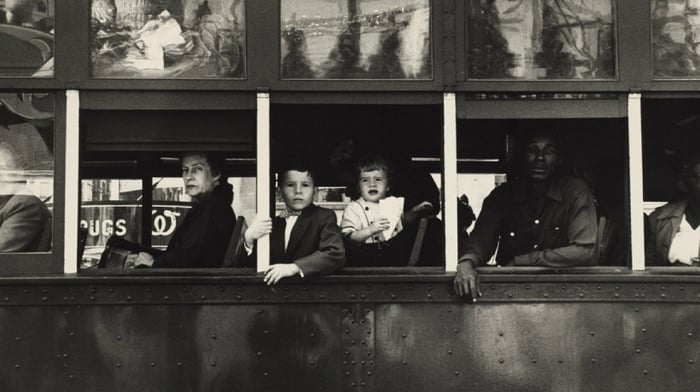
© Robert Frank
5. Annie Leibovitz
Annie Leibovitz is known for portraits of musicians, actors, and other public figures. Her pictures range from intimate observations to elaborate staged scenes.
One of her best-known portraits shows John Lennon with Yoko Ono. She made it on December 8, 1980, the day Lennon was killed, for Rolling Stone. The pose makes their relationship the subject of the photograph. When studying her work, ask what the setting and body language tell you beyond the sitter’s identity.
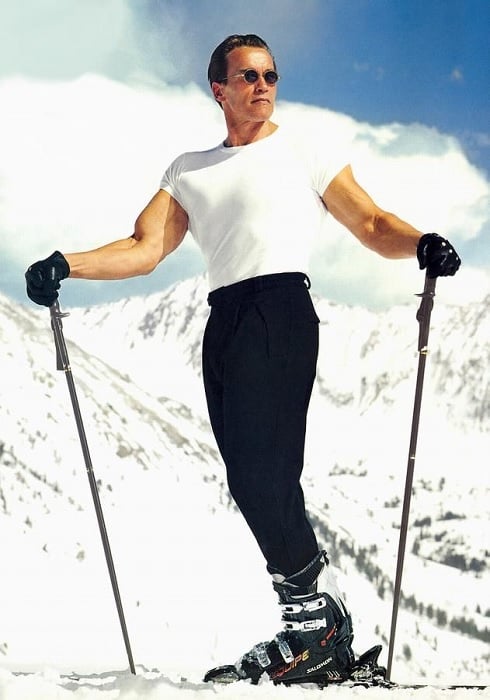
Arnold Schwarzenegger © Annie Leibovitz
6. Henri Cartier-Bresson
Henri Cartier-Bresson was a French photographer whose work joined observation with a strong sense of geometry. He used a Leica to make candid photographs and was a co-founder of Magnum Photos.
His 1952 book, Images à la Sauvette, is known in English as The Decisive Moment. The idea is more useful than simply being quick: watch how a gesture fits the shapes and relationships already in the frame. His photographs encourage you to choose a position carefully, then stay alert to what changes.
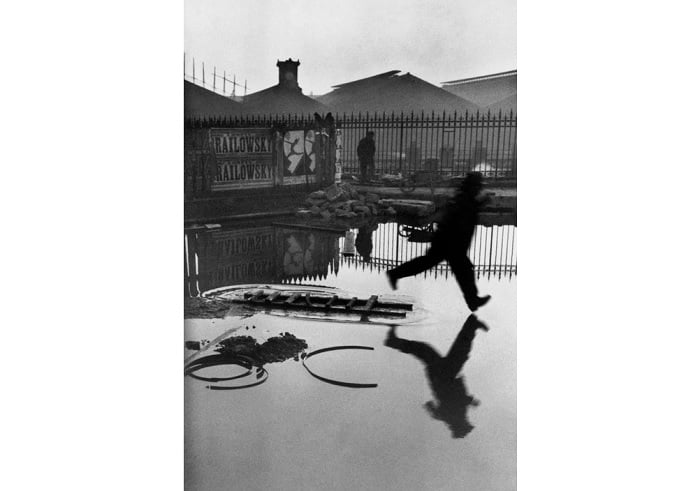
© Henri Cartier-Bresson
7. Richard Avedon
Richard Avedon worked in fashion and portrait photography. Early in his career at Harper’s Bazaar, he photographed models on streets, beaches, and other locations outside the studio. Movement and expression became central to his fashion pictures.
His portraits invite close attention to posture, clothing, and facial expression. Compare the energy of the fashion image below with the more restrained poses in his portrait work. Avedon’s photographs show how much a small gesture can contribute to a picture.
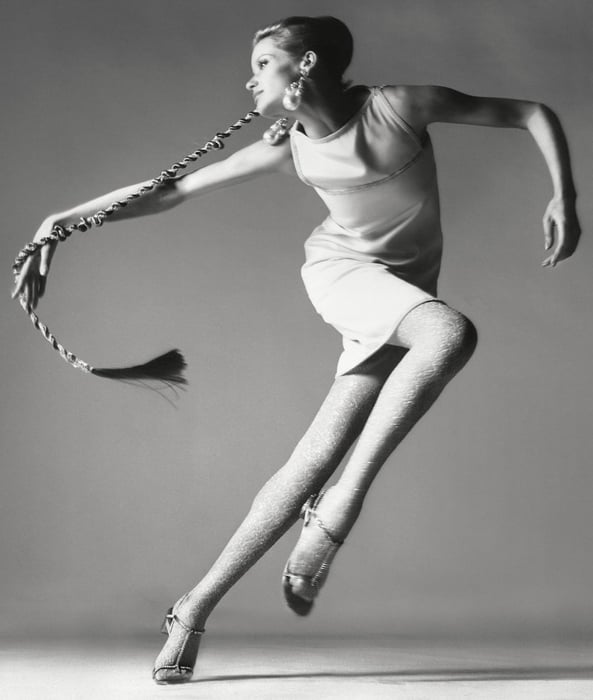
© Richard Avedon
8. Eliot Porter
Eliot Porter was an American photographer known for color photographs of birds, woodlands, and other natural subjects. His work makes a useful contrast with Adams’s black-and-white landscapes.
In 1938, Alfred Stieglitz offered Porter a solo show at his New York gallery, An American Place. Porter took up color photography in 1939 to record birds more accurately.
His 1962 book, In Wildness Is the Preservation of the World, pairs woodland photographs with Henry David Thoreau’s writing. Study the smaller patterns in Porter’s pictures: branches, leaves, and color relationships can hold attention without a sweeping view.
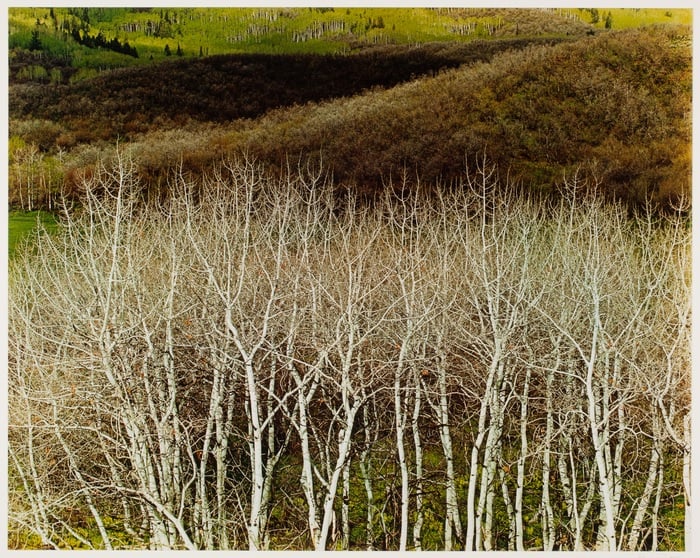
© Eliot Porter
9. Imogen Cunningham
Imogen Cunningham photographed botanical subjects, portraits, industrial forms, and nudes. Her early work used the soft focus associated with Pictorialism. She later became closely associated with sharp, detailed photography and Group f/64.
Her career timeline records both her magnolia studies and experiments with double exposure in the 1920s. The image below is a reminder that her practice was broader than one technique. Compare the forms within the image and consider how they work together.
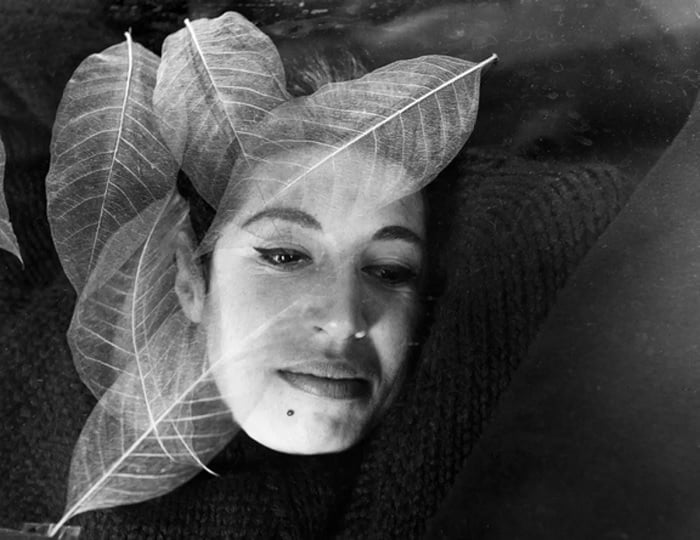
© Imogen Cunningham
10. David Bailey
David Bailey is known for fashion and portrait photographs associated with 1960s London. He worked as John French’s assistant before taking on work for Vogue.
His Box of Pin-Ups portfolio, published in 1965, brought together people from fashion, music, and the wider social scene. The National Portrait Gallery’s exhibition account shows the range of his subjects. Look at how direct framing and a distinctive pose can make a portrait memorable.
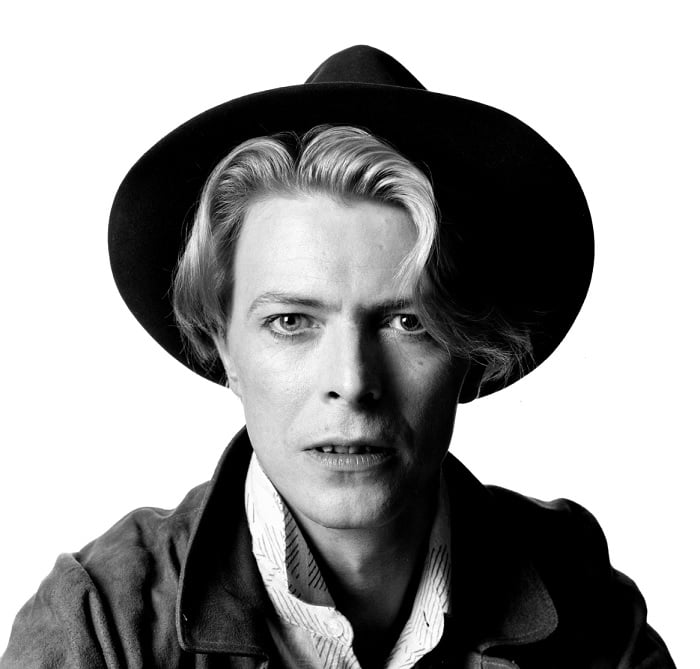
David Bowie © David Bailey
11. Frans Lanting
Frans Lanting is a Dutch photographer specializing in wildlife photography. His work includes animals and habitats from the Amazon to Antarctica, and he has served as National Geographic’s Photographer-in-Residence.
His LIFE: A Journey Through Time project explores the history of life through photographs. Bay of Life, created with Christine Eckstrom, focuses on the Monterey Bay region. Both are described in his WWF profile. His projects are worth studying for the way individual wildlife pictures contribute to a larger story about a place or ecosystem.
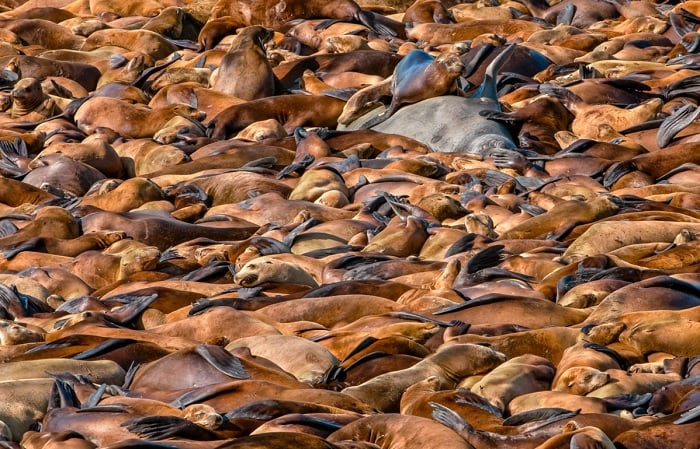
© Frans Lanting
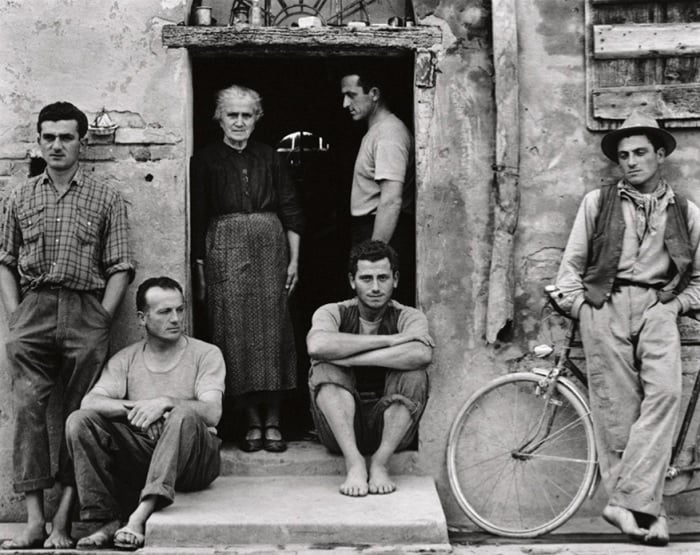
12. Paul Strand
Paul Strand was an American photographer and filmmaker associated with straight photography: pictures that emphasize the camera’s ability to record detail and form.
He studied with Lewis Hine, and Alfred Stieglitz encouraged and published his work. Strand photographed city scenes, people, plants, and machines, later making books about places around the world.
Notice the balance between people and their surroundings in The Family, Luzzara, shown below. A portrait can describe a setting as well as an individual.
The Family, Luzzara © Paul Strand
13. Weegee
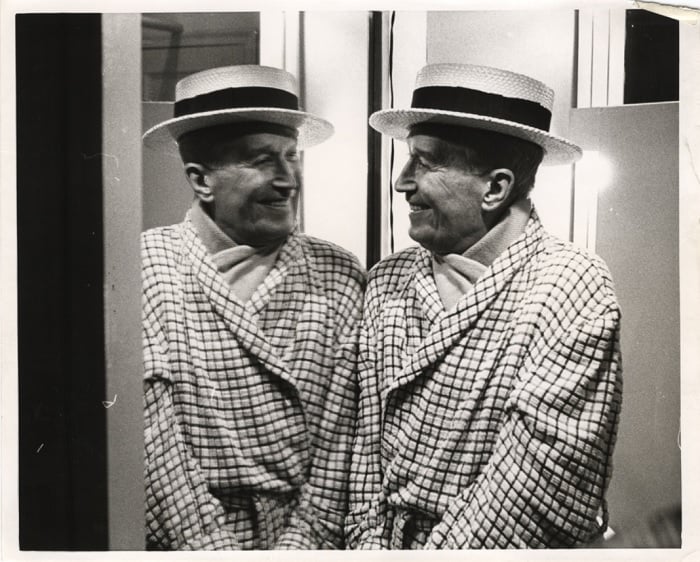
Weegee was the working name of Arthur Fellig, who was born Usher Fellig. He became known as a New York press photographer and photojournalist, photographing crime scenes, crowds, and city life.
He organized his work around police headquarters and obtained permission to install a police radio in his car in 1938. His book Naked City appeared in 1945. Beyond the news events, look at the faces of spectators in his pictures: people’s reactions can tell another part of a story.
14. Steve McCurry
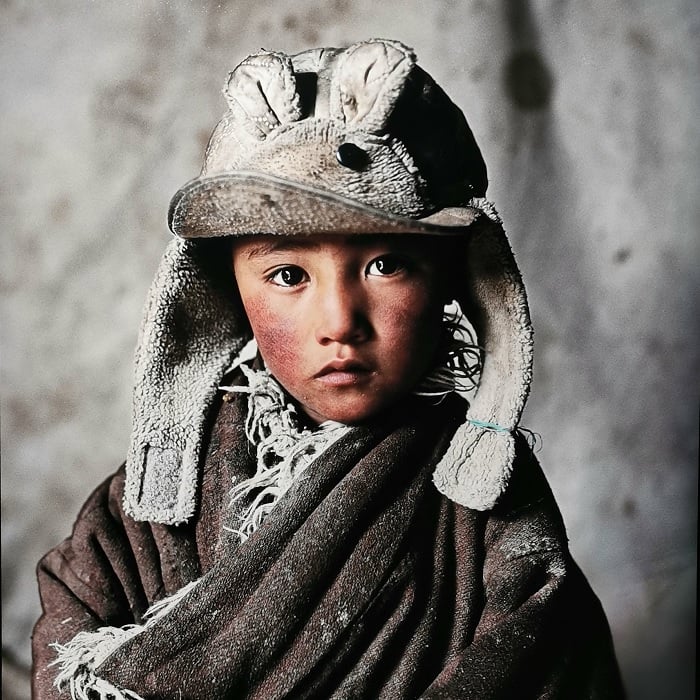
Steve McCurry is an American photographer known for color portraits and stories about people and places. His work includes conflict, cultural traditions, and everyday life.
His portrait Afghan Girl shows Sharbat Gula, photographed in 1984 at a refugee camp in Pakistan. It appeared on the June 1985 cover of National Geographic. The magazine’s account of finding her again gives the person behind the famous image a name and history.
Study how color and framing direct your attention, but also read the context. A memorable portrait represents a person, not just a striking face.
© Steve McCurry
15. Man Ray
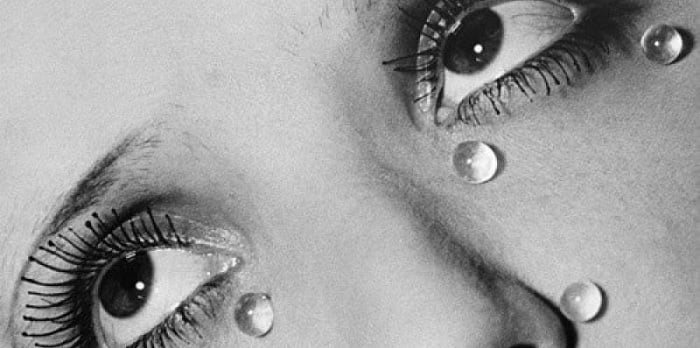
Man Ray was an American artist associated with Dada and Surrealism who spent much of his career in Paris. His photographs include portraits, fashion images, and experiments with the medium itself.
He called his photograms “rayographs.” These camera-free pictures were made by placing objects on light-sensitive paper and exposing it to light. MoMA’s account of a 1923 rayograph explains the process. His work is a good prompt to experiment with shapes and shadows instead of treating a camera as the only route to a photographic image.
© Man Ray
16. David LaChapelle
David LaChapelle works across commercial and fine art photography. His staged scenes use strong color, elaborate settings, and imaginative combinations of people and objects.
His books include LaChapelle Land and Heaven to Hell. His studio biography describes a career that also includes music videos and film. When you look at his photographs, follow how color and set design support the central idea. They are useful examples of building a scene rather than waiting to find one.
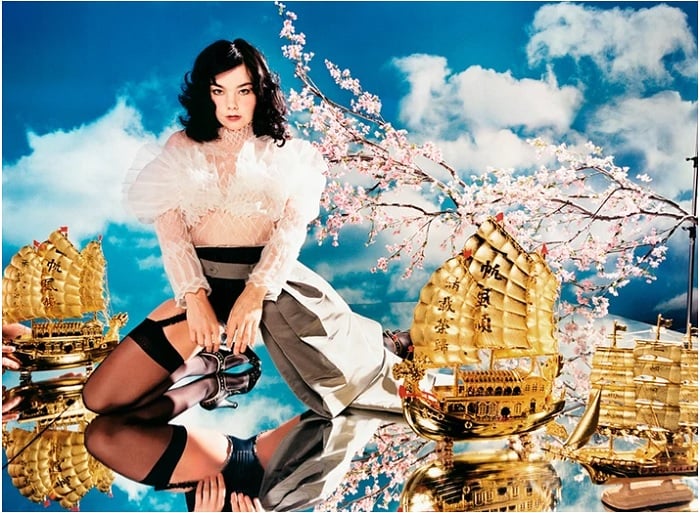
Bjork © David LaChapelle
17. Robert Capa
Robert Capa was a Hungarian-born photojournalist who covered conflicts including the Spanish Civil War and World War II. Born Endre Friedmann, he adopted the name Robert Capa while working with photographer Gerda Taro.
His photographs from the D-Day landings are among his best-known work. He also helped found Magnum Photos in 1947. The Capa Center’s biography places these pictures in the course of his career.
Read the historical context alongside the images. Their meaning depends on the people and events they show, as well as their immediate visual impact.
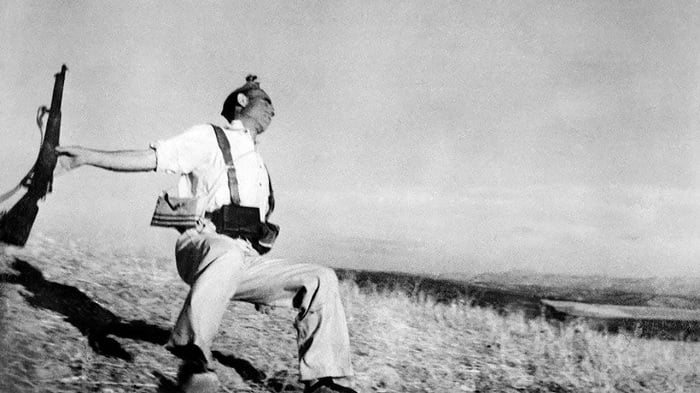
© Robert Capa
18. Don McCullin
Don McCullin is a British photojournalist known for war photography and for photographs of poverty and working-class life. His reporting took him to conflicts in Africa, Asia, and the Middle East.
His work also includes still lifes and landscapes, particularly in Somerset. Looking across these subjects shows how the same attention to light and tone can serve very different stories. Avoid reducing his career to combat images alone.
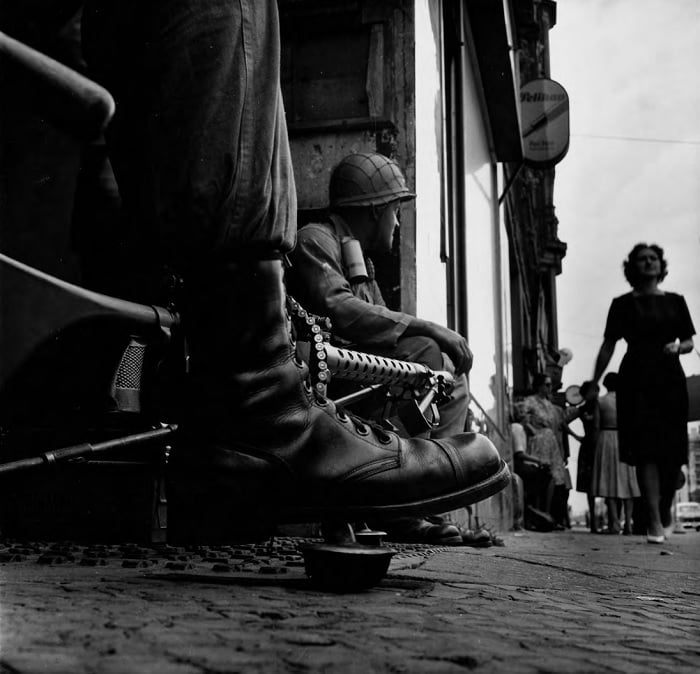
© Don McCullin
19. Edward Weston
Edward Weston was an American photographer whose work includes landscapes, nudes, portraits, and still life.
He moved from soft-focus Pictorialism toward detailed studies of form. His family archive documents the close-ups of shells, peppers, and cabbages he made after returning to California in 1926, as well as his work at Point Lobos.
His photographs turn familiar objects into studies of curves, texture, and light. Try looking closely at an ordinary object before deciding it is too simple to photograph.
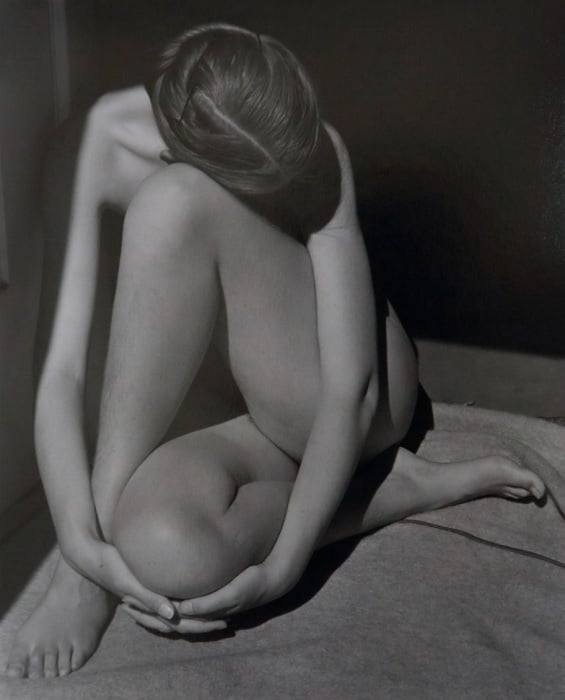
Nude © Edward Weston
20. Anne Geddes
Anne Geddes is known for carefully staged baby photographs. Her images place babies in imaginative settings and have appeared in books and calendars around the world.
Her debut book, Down in the Garden, helped introduce that visual world to a large audience. Her work is useful to study for its consistent themes, color, and styling.
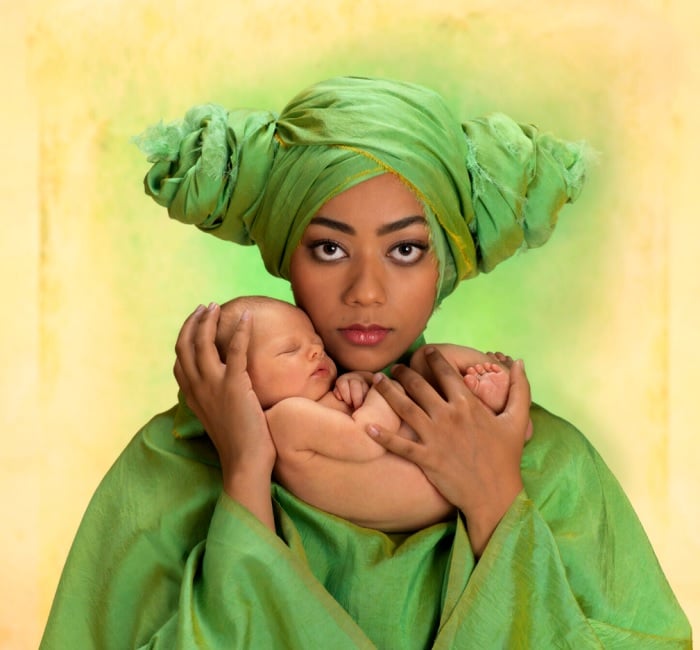
© Anne Geddes
21. Dorothea Lange
Dorothea Lange was an American documentary photographer. She moved from studio portraiture into work about the effects of the Great Depression and the lives of people displaced by economic hardship.
Migrant Mother, made in Nipomo, California, in 1936, is one of her best-known photographs. Her wider body of work is worth exploring too. Read the captions and circumstances alongside each image, then consider how posture, expression, and surroundings contribute to its account of a person’s life.
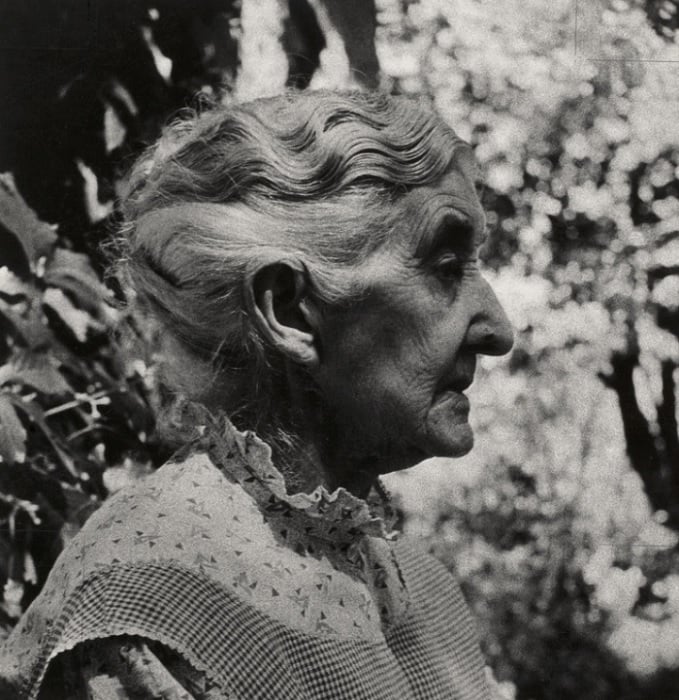
Maryann Savage © Dorothea Lange
22. Robert Doisneau
Robert Doisneau was a French photographer known for pictures of everyday life in Paris and its suburbs. His work often finds humor, tenderness, or an unexpected relationship within an ordinary scene.
His archive includes street pictures as well as commissioned work. Look at the interaction between people and their surroundings, and at the small gestures that hold the scene together. For another approach to ordinary subjects, compare his work with André Kertész below.
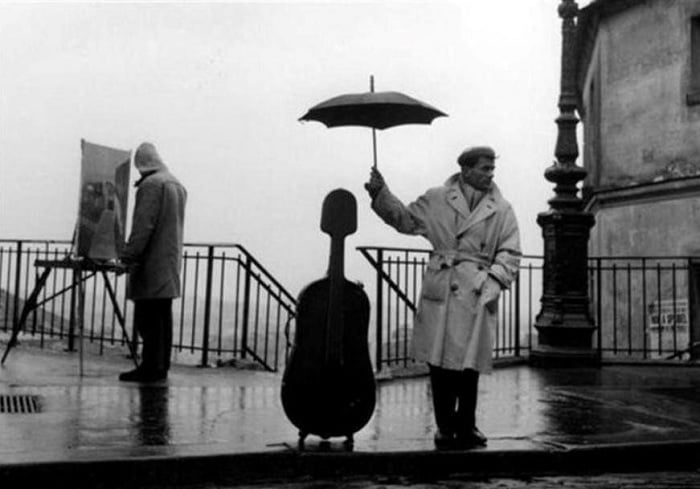
© Robert Doisneau
23. Mario Testino
Mario Testino is a Peruvian fashion and portrait photographer. His work has appeared in Vogue and Vanity Fair and in campaigns for brands including Gucci, Chanel, and Estée Lauder.
His biography traces his move from Lima to London and the development of his fashion work. The portrait of Princess Diana below offers a starting point for studying expression and the relationship between a photographer and a sitter. Compare it with his advertising images to see how the purpose of a photograph changes its presentation.
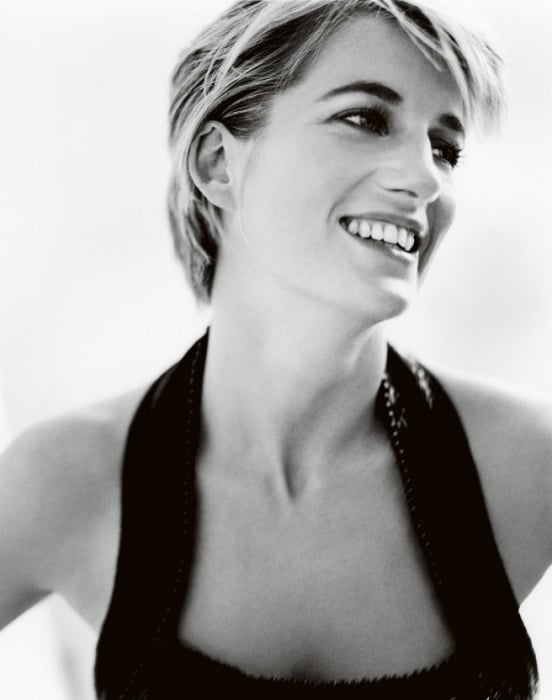
Princess Diana © Mario Testino
24. André Kertész
André Kertész was a Hungarian-born photographer whose work finds unusual compositions in ordinary subjects. His pictures include street photography, interiors, and still lifes.
His 1928 photograph Fork turns a fork, a plate, and their shadows into a carefully balanced image. It is a useful reminder to explore camera position and light before searching for a more dramatic subject.
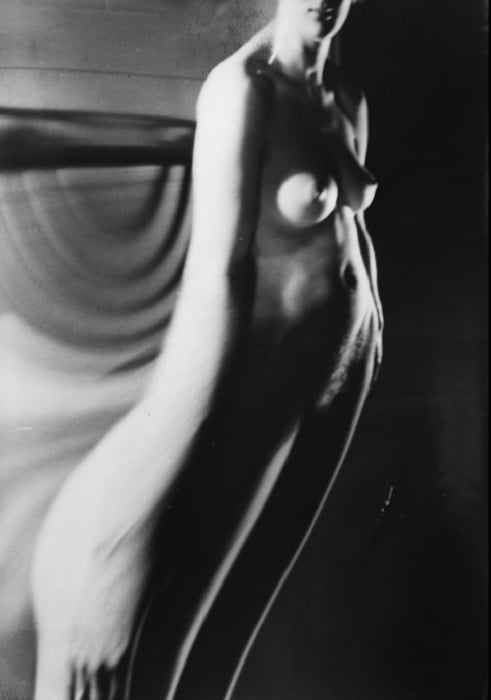
© Andre Kertesz
25. Andreas Gursky
Andreas Gursky is a German photographer known for large-scale photographs that invite you to move between an overall pattern and many small details. His subjects include buildings, commercial spaces, crowds, and landscapes.
His selected works include 99 Cent and Rhine II, both dated 1999. Compare the dense arrangement of goods in the first with the broad horizontal bands in the second. They offer very different ways to organize a photograph.
He also taught at the Art Academy in Düsseldorf from 2010 to 2018, as his official biography records.
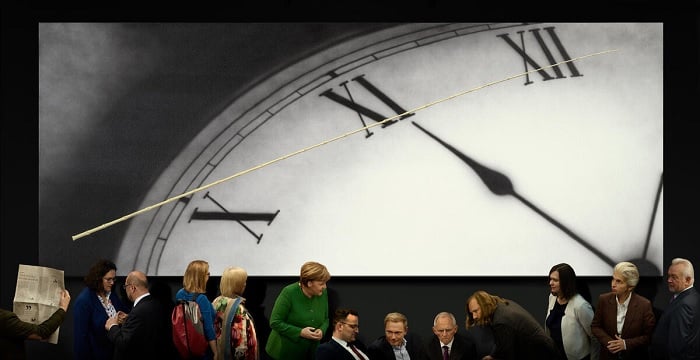
© Andreas Gursky
26. Robert Mapplethorpe
Robert Mapplethorpe was an American photographer known for formally composed portraits, nudes, and still lifes. His subjects included celebrities, himself, and flowers.
His foundation dates his increasing interest in photographing New York’s S&M scene to the late 1970s. The biography also describes his studio portraits and flower studies of the 1980s. Across those subjects, notice how placement, lighting, and a controlled background give form to the image.
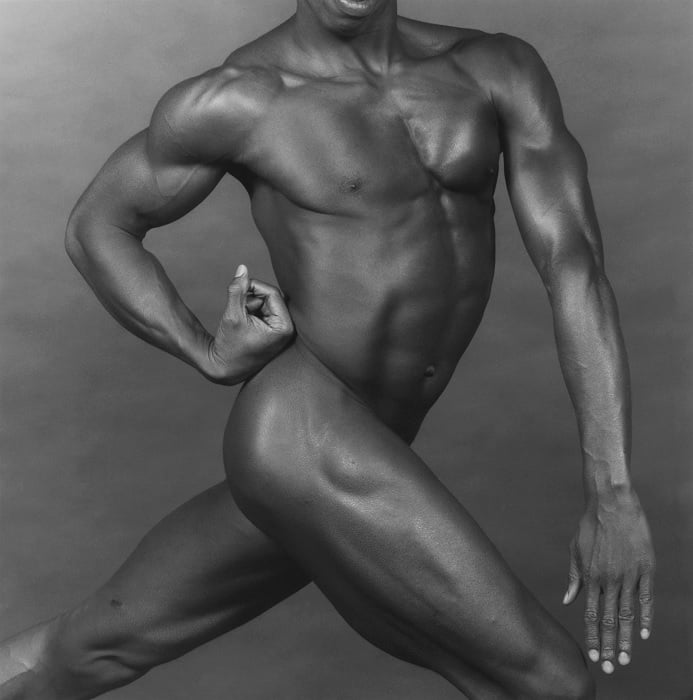
© Robert Mapplethorpe
27. Sebastião Salgado
Sebastião Salgado was a Brazilian documentary and environmental photographer. He died on May 23, 2025. His black-and-white photographs document people, work, displacement, and the natural world.
His projects include Workers, Migrations, and Genesis. He and his wife, Lélia Wanick Salgado, also founded Instituto Terra in 1998 to support forest restoration and environmental education.
Salgado’s work rewards viewing as a series. Look at how a wide scene, a group of people, and a closer view each contribute to the larger subject.
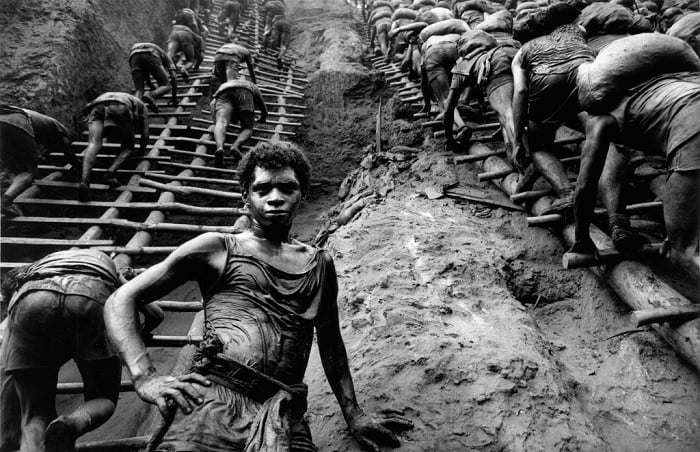
© Sebastiao Salgado
28. Brassaï
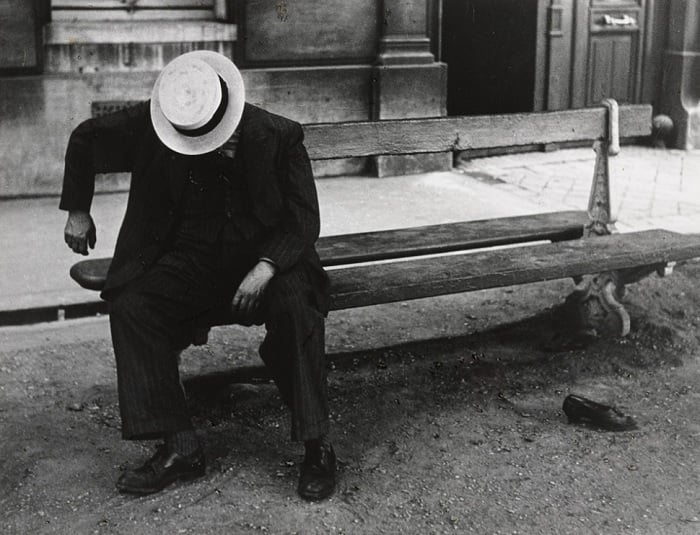
Brassaï was the name used by Gyula Halász, a Hungarian-born photographer closely associated with Paris. His black-and-white street photographs show the city’s streets and social life, often after dark.
His 1933 book Paris de nuit (Paris by Night) is a useful place to start. The Met’s account of his night work describes his photographs of the city after sunset. Study how pools of light and areas of darkness establish the atmosphere.
© Brassai
29. Mick Rock
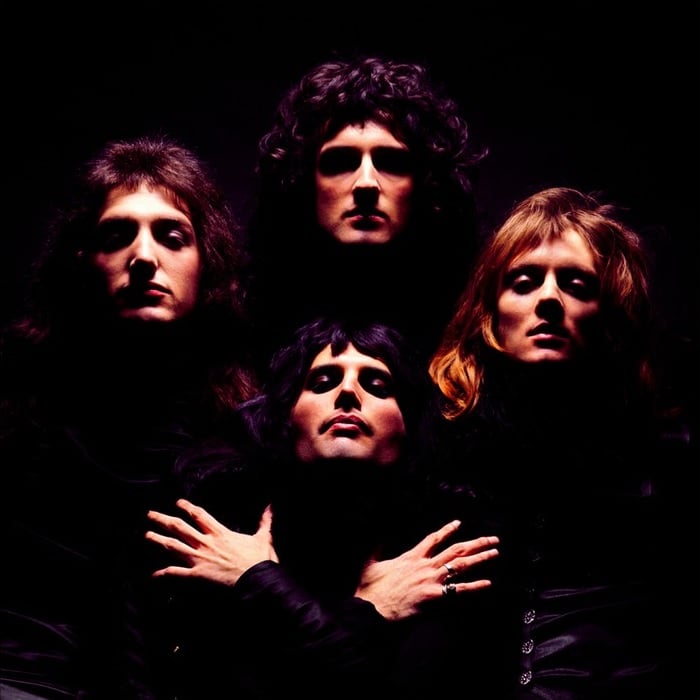
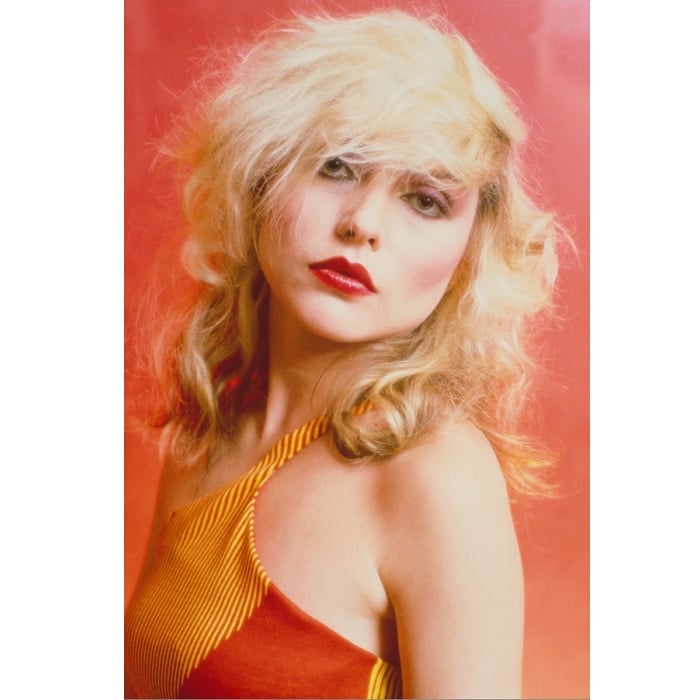
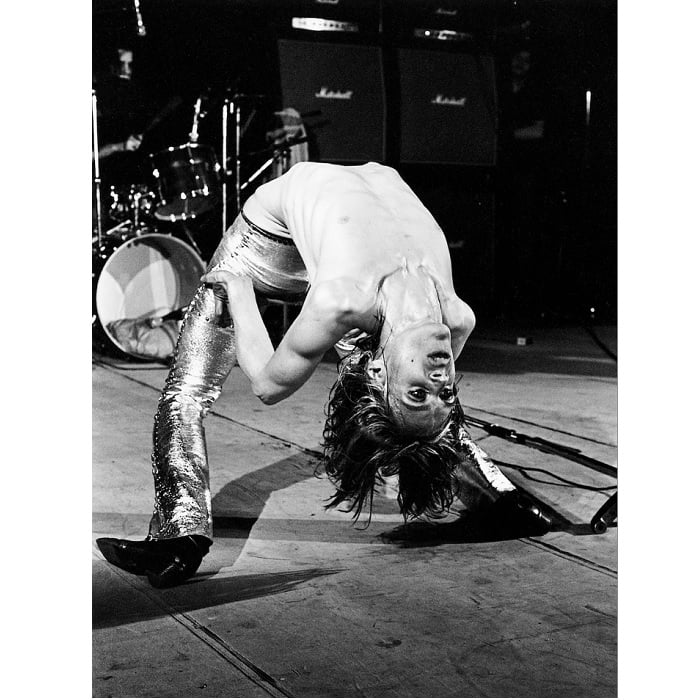
Mick Rock photographed musicians including David Bowie, Lou Reed, Queen, and Blondie. His music photography included performances, portraits, promotional images, and album artwork.
His official biography lists album covers including Transformer, Raw Power, and Queen II. Compare the needs of a live performance photograph with those of an album cover. One records a moment on stage; the other can build a visual identity that listeners return to for years.
What to Look for in Their Photographs
Choose one photographer whose work interests you and study a small series. Look at the light, camera position, timing, and relationship between the subject and background. Read the captions so you understand what each photograph shows.
Then try one observation in your own work. You could study an everyday object like Kertész, look for patterns in nature like Porter, or pay closer attention to gesture in a portrait. Use the exercise to develop your own photography style. If you prefer a guided lesson, our Joel Meyerowitz Masters of Photography review is another starting point.
Try our Wow Factor Photography course to learn how to take breathtaking images!