A telephoto lens uses a long focal length to make distant subjects appear larger in your photo. Its narrow angle of view helps you fill the frame with a bird, an athlete, or a portrait without moving close to them.
On a full-frame camera, the telephoto range commonly starts around 70–85mm. The view also depends on sensor size, so the number on the lens is only part of the story. Below, we explain how telephoto lenses work, when to use one, and eight creative ways to try one.
What Is a Telephoto Lens?
In everyday photography, a telephoto is a lens with a longer-than-normal focal length for the camera format. Compared with a standard lens on the same camera, it captures a smaller part of the scene and makes subjects within that view appear larger.
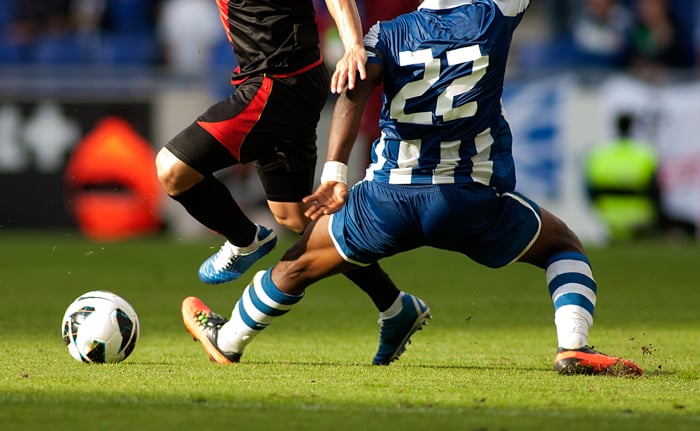
Think of photographing a football match from the stands. A wide view includes the pitch and crowd. A telephoto view lets you concentrate on a player. It is useful whenever you cannot, or should not, move closer.
Telephoto and zoom mean different things. A zoom lens changes focal length, such as a 70–300mm. A prime lens has one focal length, such as 200mm. Both can be telephotos; a wide-angle zoom is still a zoom without being a telephoto.
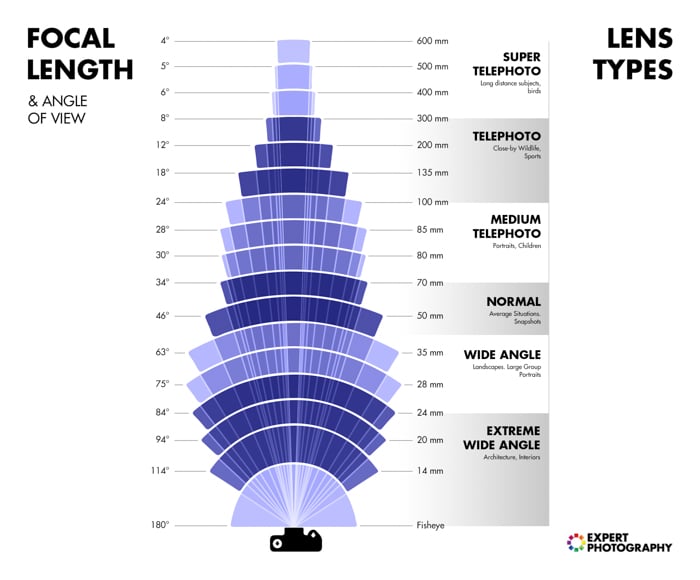
There is no single agreed boundary between normal, short telephoto, and longer telephoto lenses. The infographic below gives approximate full-frame angles of view. Its category labels are a guide, not fixed limits.
What Are the Different Kinds of Telephoto Lenses?
These common full-frame ranges give you a useful starting point:
- Short telephoto, around 85–135mm: Useful for portrait photography, product photography, and event photography. You can frame a person tightly while keeping a comfortable working distance.
- Medium telephoto, roughly 135–300mm: Useful for tighter details, field sports, and wildlife that is not too far away.
- Super-telephoto, around 300mm and beyond: Useful for small or distant wildlife and action. The longer the lens, the harder it can be to find and keep a moving subject in the frame.
Size, weight, and maximum aperture vary greatly. A tripod or monopod can help support a heavy lens, but not every super-telephoto must stay on a tripod. Handheld results depend on the lens, image stabilization, shutter speed, and your technique. If the lens has a tripod collar, use the support point recommended in its manual.
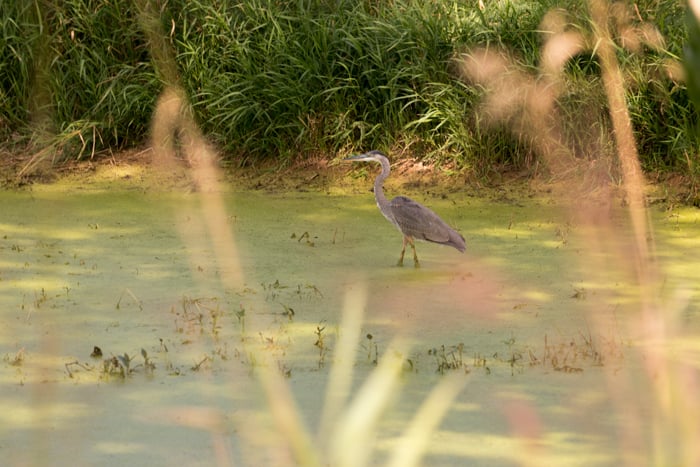
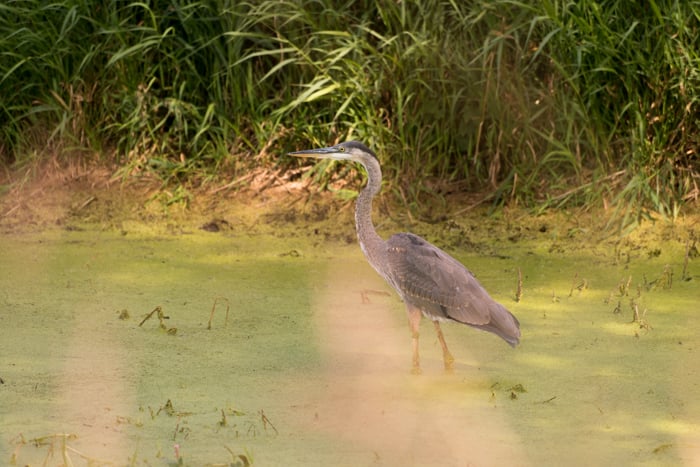
The original comparison below shows photographs made at 165mm and 300mm.
Telephoto Lenses and Sensor Sizes
A 300mm lens remains a 300mm lens when you change camera formats. The size of the camera’s sensor changes how much of its projected image is recorded, not the lens’s focal length.
A smaller crop sensor records a narrower view. To compare that view with a full-frame camera, multiply the focal length by the crop factor:
- On a Nikon DX camera with a 1.5× crop factor, 300mm gives the angle of view of about 450mm on full frame.
- On Micro Four Thirds, the 2× crop factor makes 300mm equivalent to about 600mm on full frame for angle of view.
This is why smaller formats can be useful for wildlife photography. You get tighter framing from the same focal length. It does not mean the lens itself has gained magnification or that the camera has moved closer.
Crop factor also does not tell you the image resolution. Compare the actual camera and lens, rather than assuming that every smaller sensor must produce fewer pixels.
How to Deal With Camera Shake
The camera settings that work with a wide-angle lens may give you blurred photos with a telephoto. A narrow view makes camera shake more obvious.
For an unstabilized handheld camera, use the reciprocal of the full-frame-equivalent focal length as a starting point for shutter speed. With a 100mm lens on full frame, try 1/100 second or faster; at 200mm, try 1/200. At 200mm on a 1.5× crop camera, start around 1/320 second, the next common setting faster than 1/300.
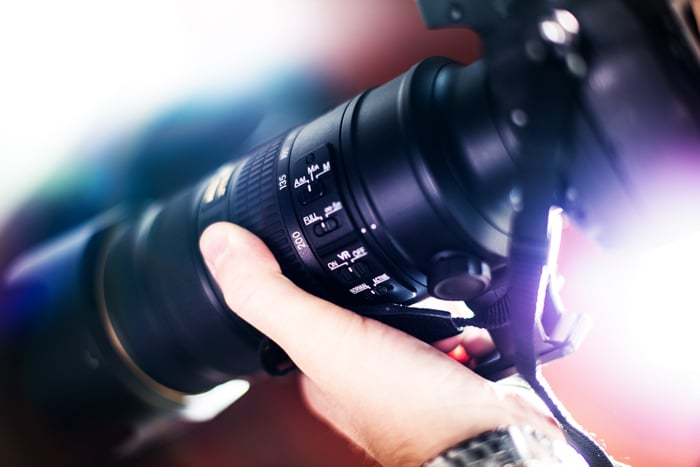
This is a guide, not a guarantee. Check your results at high magnification and increase the speed if needed. Support the lens with your left hand and keep your stance steady. A tripod can help when you need a slower shutter speed.
Stabilization can reduce blur from camera movement. Lens-based systems move optical elements; in-body stabilization moves the sensor. Neither freezes a moving subject. For action, choose a speed that controls motion blur, even if stabilization lets you handhold at a slower speed.
What to Know About Telephoto Lens Apertures
A wide maximum aperture lets in more light, which helps when you need a fast shutter speed in dim conditions. A smaller f-number means a wider aperture: f/2.8 is wider than f/5.6.
You do not need a wide-aperture professional lens for every telephoto photo. In good light, a lens with a smaller maximum aperture can still be useful. In low light, you may need to raise ISO, add light where appropriate, or accept a slower shutter speed for a still subject.
A label such as 70–300mm f/4–5.6 describes a variable maximum aperture: f/4 at the wide end and f/5.6 at the long end. A 70–200mm f/2.8 has a constant maximum aperture across its zoom range; it can still be stopped down to smaller apertures.
A lower f-number does not by itself guarantee sharper photographs. Nor does being a prime lens guarantee macro capability. Choose the aperture for the light and the amount of your subject you need in focus.
How Telephoto Lenses Affect the Background
Telephoto compression describes the way distant layers can seem closer together in a photograph. The important cause is where you stand. With a longer lens, you usually move farther back to keep the subject the same size in the frame. From that more distant position, the background looks larger relative to the subject.
Changing focal length without moving the camera changes framing, but not the relative perspective. Sony’s explanation of perspective makes this distinction clear.
Compression and depth of field are separate ideas. Depth of field depends on focal length, aperture, focus distance, and the standard used to judge sharpness. A telephoto can produce a shallow depth of field, but a soft background is not automatic.
For more background blur, try a wider aperture and place your subject farther from the background. Check that the important parts of your subject remain sharp. The narrow angle of view also helps you choose a small, uncluttered part of the background.
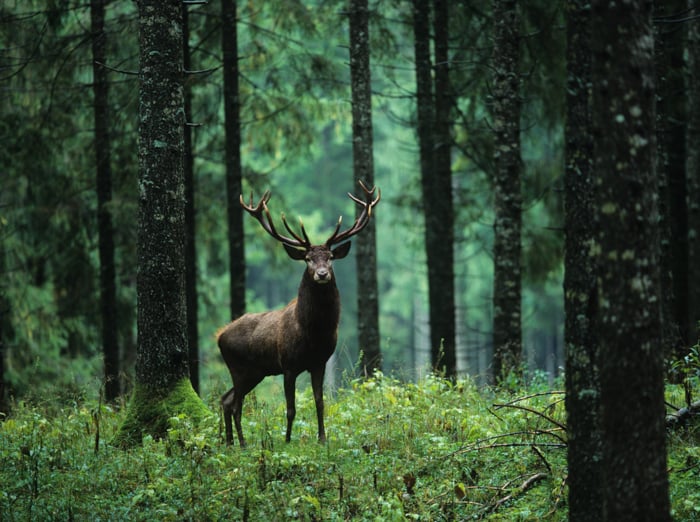
How Telephoto Lenses Affect the Subject
For a tight portrait, a longer lens lets you work farther from the person. That greater distance reduces the exaggerated near-to-far proportions you can get when you put a camera very close to a face. It can make a flattering portrait easier to compose.
This is perspective, not pincushion distortion. Barrel and pincushion distortion bend straight lines outward or inward because of the lens’s optical design. They are different from the apparent size relationships caused by camera position.
Lens-profile corrections can help with optical distortion. They do not replace choosing a good shooting distance. Move to get the perspective you want, then choose a focal length that gives you the framing you need.

8 Creative Tips for Using a Telephoto Lens
A telephoto is useful for more than distant subjects. Try these ideas with the lens you already have.
1. Use It to Fill the Frame
Choose a detail you want the viewer to notice: a player’s expression, a bird’s plumage, or a pattern on a building. Use the longer focal length to fill the frame and leave distractions outside it. For a nearby subject, stay beyond the lens’s minimum focusing distance.
2. Remove Unappealing Foreground Elements
A narrower view can exclude a distracting patch of ground or objects near the edge of the frame. Check the borders before taking the photo. A telephoto cannot see through something that blocks your subject, so change position if necessary.
Cropping afterward is another option, but it discards pixels. Framing tightly in camera lets you use more of the recorded image for the subject.
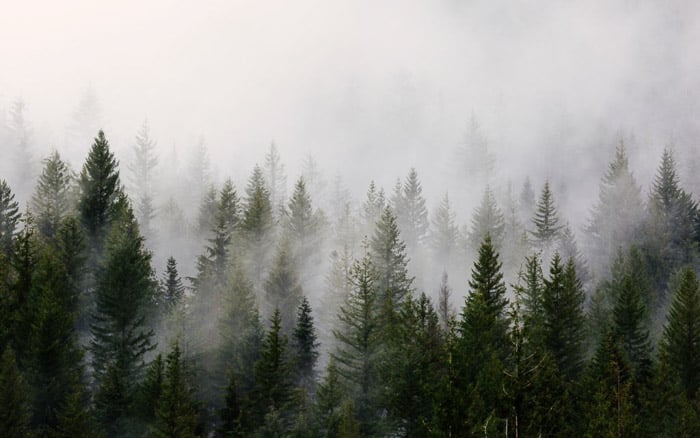
3. Compress the Frame
Look for layers such as trees, buildings, or hills. Photograph them from farther away and use a longer focal length to frame them tightly. The distant viewpoint makes the gaps between those layers appear less pronounced. Simply zooming from one spot will crop the view without changing that perspective.
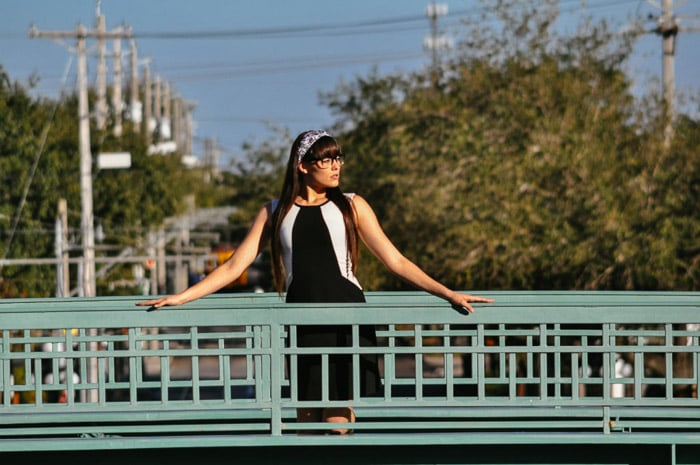
4. Capture Tight Portraits
Different lenses let you frame portraits from different working distances. On full frame, 85–135mm is a useful starting range for head-and-shoulders photos. On smaller sensors, use the equivalent angle of view as your guide.
Leave enough room to step back. Focus carefully on the eyes, and stop down if a wide aperture leaves too little of the face sharp.
5. Use It for Close-Ups
A telephoto can make a useful close-up lens for flowers, insects, or small details. Check its minimum focus distance and maximum reproduction ratio before expecting it to fill the frame with a tiny subject.
At 1:1 reproduction, the image on the sensor is life size. Some telephotos are also dedicated macro lenses: for example, Nikon specifies 1:1 reproduction for its 105mm Z MC lens. Many ordinary telephoto zooms do not reach that magnification.
For macro photography, magnification matters more than the telephoto label. If you are closer than its minimum focus distance, move back so that the lens can focus.
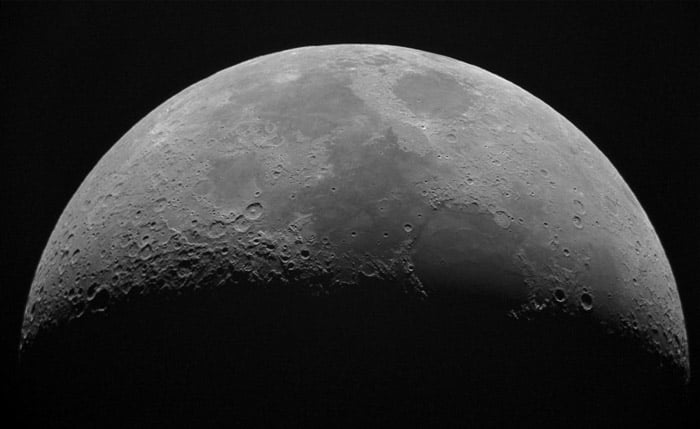
6. Shoot Close-Ups of the Moon
A telephoto lets you record a larger Moon than a wide-angle lens. A 70–300mm zoom is enough to start experimenting, although the Moon will not fill a full-frame image at 300mm.
Support the camera, focus on the Moon, and check the exposure for detail on its bright surface. Do not assume that a dark sky requires a long exposure. Our astrophotography guide and guide to star photos cover related night-sky techniques.
7. Pan for Motion Blur
With panning, you follow a moving subject during the exposure so that it stays relatively sharp against a streaked background. It works well with a telephoto lens to photograph sports from the sidelines.
Try 1/30 second as an experiment, not a fixed limit. Use a faster speed if the subject is too blurred, or a slower one if you want more streaking. Start following the subject before you press the shutter and keep moving smoothly afterward.
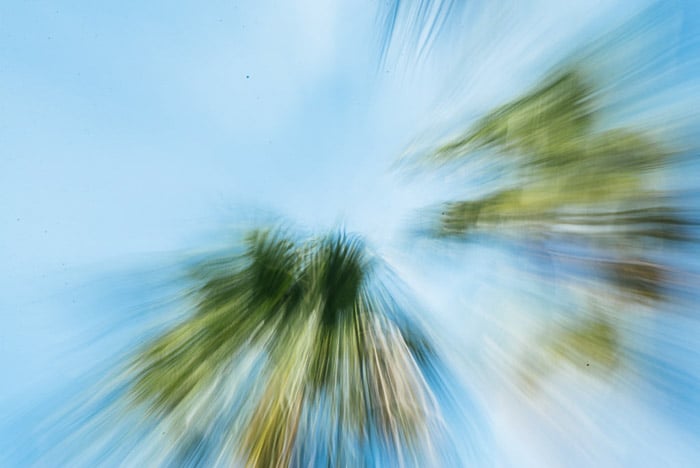
8. Zoom In to Create Zoom Bursts
A zoom burst creates streaks by changing focal length while the shutter is open. You need a zoom lens for this effect; a prime telephoto cannot zoom.
Focus first, then try an exposure long enough to turn the zoom ring smoothly. Start around 1/30 second and adjust the exposure time and zooming speed to suit the result. It is the change in magnification during the exposure, rather than a deliberate change of focus, that produces the streaks.
Conclusion
Use a telephoto when you need a tighter view, more working distance, or a way to pick out details in a busy scene. Remember that sensor size changes angle of view, camera position changes perspective, and shutter speed helps keep the result sharp.
Try a few of these ideas across different kinds of photography. The best reason to use a longer lens is a specific picture you want to make.