

When it comes to freezing the motion on a dark dance floor or getting through dozens of formals during a short cocktail hour, the wedding photography accessories you bring with you matters.
The fact that you'll need a camera and a few lenses is obvious. What's not so clear, however, are the accessories. Some accessories simply make the day a little bit smoother, or your back a little less achy by the last dance. Others can play a significant role in the overall quality of the images.
Photography accessories can quickly break the gear budget, however. And some even end as unused weight in a camera bag. So besides the camera and lenses, what's the best wedding photography gear to help you capture the day?
Here are a few suggestions. If you are building the kit from nothing, buy in this order: a flash first, then spare batteries and fast cards, then a bag you can wear for ten hours. Everything after that is a refinement.
Wedding Photography Accessories & Flashes
Some wedding images are simply impossible without a flash. If you're just starting to accumulate wedding photography accessories, start with a flash (or two). Flash makes those dark dance floor shots possible and will literally add a sparkle in the eye during the portrait sessions.
Wedding flashes differ based on the camera brand that you shoot with. In general, a mid-level flash is usually a good starting point. The budget flash won't have quite enough features for weddings.
Why not get the best in class flash? You could, but chances are, it's probably more power than you need.
With a mid-level Nikon SB-700 flash, I seldom use the flash at full power. If you want that soft light, you don't need the most expensive flash.
If your wedding photo style is more dramatic and you want to overpower the sun for portraits or use flash at the end of your 70-200mm lens, then yes, that pricier flash may be worth it.
But in many cases, a mid-level flash is all you need to add a soft fill light, create catchlights in the eyes or add a bit of depth with some off-camera flash.
In wedding photography, if there's something you absolutely can't shoot without, get two. The flash is one wedding photography accessory that I have a backup in.
Both makers keep the same ladder. Nikon still sells the SB-700 as its mid-level Speedlight and the SB-5000 above it. Canon's current Speedlites are the EL-10 at $239.99, the EL-5 at $349.99 and the EL-1 Ver. 2 at $1,249, and that top price is exactly the point. A wedding does not ask for $1,249 of flash. Buy the mid-level body, then spend the difference on a second one.
Try: The Nikon SB-700 or the Canon Speedlite EL-10. For more power, try the Nikon SB-5000 or the Canon Speedlite EL-5.
Off-Camera Flash Receiver and Transmitter
Wedding flashes are great, but wedding flashes off-camera are incredible. Taking the flash off-camera allows you to create studio-like lighting without hauling around big lighting gear.
A transmitter on the top of your camera and a receiver on the flash allows the camera to communicate with the flash off-camera to fire remotely.
Flash receivers and transmitters come in all different brands and types. The cheapest options will limit the shots by excluding TTL or not allowing you to mount a second on-camera flash above the transmitter. Budget kits can also be unreliable, firing for some shots and not others.
If you're already comfortable with on-camera flash, a flash receiver and transmitter is an excellent way to take your artificial lighting to the next level.
Buy TTL, because a reception moves faster than you can meter. The Godox X2T costs around $59 and does TTL and high-speed sync to 1/8000 s, which older manual-only sets at twice the price will not. Check what it has to talk to first, though: it runs Godox's own radio system, so it pairs with Godox flashes out of the box and needs a matching Godox receiver clipped under any Nikon or Canon speedlight you already own. If your flashes are the maker's own and you would rather not stack adapters, buy the maker's commander instead. Canon's ST-E10 is $139.99 and the ST-E3-RT Ver. 3 is $329.99; Nikon's SU-800 commander sits between them.
Try: The Godox X2T-N for Nikon or the Godox X2T-C for Canon.
Light Modifiers
Flash is essential, but one more, less expensive accessory will help you really love that flash: a modifier. Flash modifiers, in conjunction with using manual flash to control the light output, will help you create photos that don't have that obvious, harsh flash shadow to them.
The trouble with flash modifiers is that they still need to be small enough to use on-camera when necessary. A small diffuser will spread the light out over a wider area, softening those shadows. A bounce card will help get that softer light by bouncing the light even when there's no wall available.
For off-camera flash, a shoot through umbrella is an inexpensive way to get soft light, even for group formals.
Neither of these is a light source in its own right, so do not expect a diffuser to rescue an underpowered flash. A sphere-style diffuser throws light in every direction, which is what softens it and also what eats most of it. Across a dinner table that is a good trade. Across a dark ballroom it leaves you at full power with nothing in reserve, and that is when you take it off.
Try: MagMod MagSphere 2 flash diffuser or the Rogue FlashBender 3 Large Reflector
Video Light
Some wedding photographers prefer video lights over flashes. Others keep both handy, since they have somewhat different uses.
Video lights are constant light sources, which helps photographers visualise exactly how the light will look without taking a test shot first. The constant light source can also help the camera autofocus in a dark scene. Video lights are also handy for lighting macro shots.
If video lights sound more like your style, look for something with adjustable light levels that's not going to take up a lot of room in your bag.
Where a video light loses to a flash is raw output. It cannot freeze a dance floor and it cannot compete with midday sun, so it earns its place in the getting-ready room, over the rings and on the first dance, not as your only light.
Try: Westcott Ice Light 3
Reflector
Wedding flashes and video light allow for the most control, but when the available light is already beautiful, the reflector is a champ at getting well-lit wedding formals. Reflectors bounce the light that's already there, which means light that's perfectly balanced.
Reflectors are great for filling in a backlit bridal portrait or portraits of the couple. Reflectors are also inexpensive compared to other lighting accessories.
The large size can make them harder to handle, however, and reflectors don't really work on a cloudy day or when there's little existing light to work with.
Shoot through reflectors are easier to manage, particularly for photographers working without an assistant, and create a nice, even light. Wedding photographers should also look for a reflector that has several different types of surfaces, like a white for a softer light, silver for stronger light, and black to create your own shade.
Try: Westcott Illuminator QuickGrip 5-in-1 Reflector, 40"
Tripod
When shooting with an off-camera flash, what do you put your flash on? A tripod will hold an off-camera flash, allow you to try panning the dance floor, and help minimize camera shake for night shots and macro ring shots.
Tripods come in all shapes and sizes, but the best wedding tripods tend to overlap pro features with travel tripods, since you'll be hauling the tripod on site for the wedding day.
Be honest about how often it comes out, though. On a tight timeline a tripod is the first thing that gets left in the car, and a heavy studio-grade set of legs will never make it past the ceremony. Weight is the spec that decides whether you use it.
Try: One of the best tripods for photographers, or a lighter set from our best travel tripods list
Polarizing Filter
My polarizing filter doesn't come out of my bag at weddings as often as it does for landscapes, but polarizing filters are inexpensive tools that can boost specific types of photos. Polarizing filters control reflected light that means you can emphasize the bride's reflection in the water, for example. Polarizing filters will also make the sky appear bluer and make the greenery pop.
Polarizing filters do cut down the amount of light that comes into your camera, however, so they aren't ideal for indoors or use at night.
Try: Circular polarizing filters from B+W or Hoya, sized to your lens
Editing Software
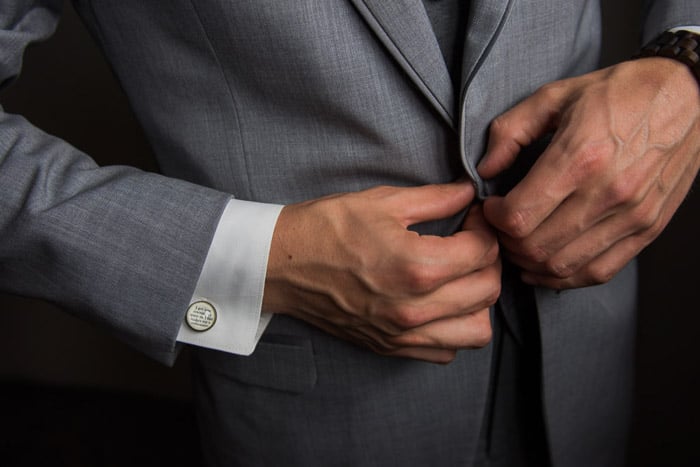
When budgeting for wedding photography gear, don't forget to leave enough wiggle room for editing software (and a decent computer to run it on, if you don't already have one). Editing software puts the final polish on those images, delivering the best shots of the day.
Lightroom and Photoshop are the industry standards. Adobe's Photography plan bundles Lightroom, Lightroom Classic and Photoshop with 1 TB of cloud storage for $19.99 a month, and Lightroom on its own is $11.99. The cheap $9.99 tier that photographers used to quote is gone, so budget for roughly double what the old advice says.
That is a recurring cost forever, which is the honest argument against it. On1 Photo RAW and Skylum Luminar both sell outright, and Photo Mechanic is worth a look for culling alone, because sorting 3,000 wedding frames is where most of your editing hours actually go.
Extra Batteries
Wedding days tend to wear out even the highest rated camera batteries. Even a body rated to 1,200 shots on a single charge needs at least one spare on a wedding day.
Different factors can cause your battery to drain faster than normal. The first time I had to use that backup battery was during a very cold November wedding.
Most photographers now shoot mirrorless, and that changes the maths. An electronic viewfinder and a screen that is live all day drain a battery far faster than an optical finder ever did, so plan on three or four batteries rather than two. Keep enough for the typical full day shoot, plus one more, just in case.
Along with extra batteries for your camera, be sure to keep spare sets for your flash and off-camera flash accessories too.
Fast, High Capacity SD Cards
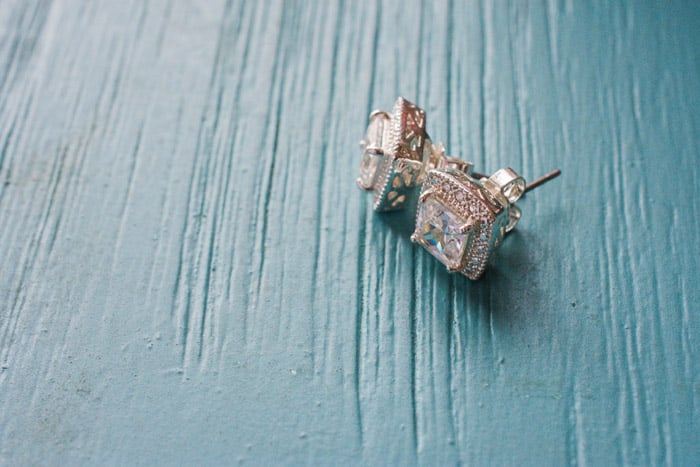
That fancy wedding camera isn't much good without an SD card but all SD cards aren't created equally. Don't skimp and buy the cheapest SD card you can find.
Buy a fast memory card or you'll be waiting on that cheap memory card to catch up before you can take that next shot. The old "Class 10 or faster" rule is far too low a bar now. Read the V rating instead: V30 is the floor for stills bursts, and V60 or V90 if you also shoot video on the same card.
Second, make sure you have enough memory cards to cover the whole day. Some photographers like to use multiple smaller cards to avoid putting all their eggs in one basket. Others are more afraid of losing a card and use one or two higher capacity cards.
If your camera has two slots, the argument is settled: record to both and the card question stops being a risk question at all.
Try: Lexar Professional 1000x UHS-II, SanDisk Extreme PRO or PNY PRO Elite
Cleaning Kit
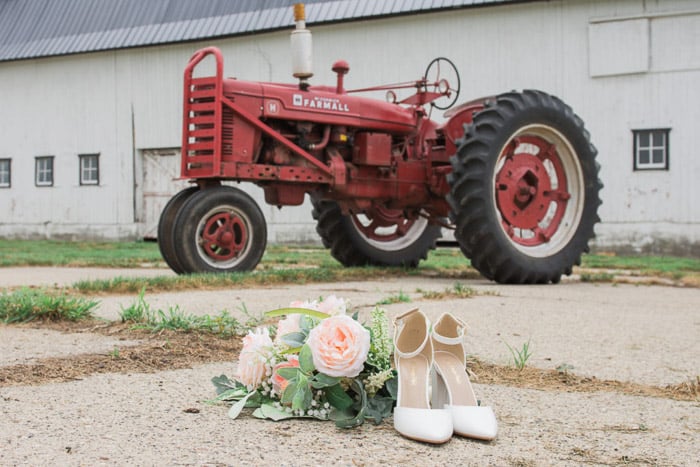
Save yourself lots of editing and make sure your lenses are clean before you shoot. Use a lens cloth to eliminate any smudges from lenses and filters.
A blower brush can also help clean off the sensor but be sure you understand exactly how to clean the sensor, or you'll damage your camera.
Try: Altura Photo Professional Cleaning Kit
Camera Bag
Between the camera, lenses and accessories, you probably have more gear than you do hands. A camera bag will keep it all safe and accessible.
When looking for a camera bag for weddings, look for something that's going to be comfortable enough to wear all day and can handle whatever terrain you might encounter on the wedding day. (Roller bags, for example, aren't ideal for a beach wedding.)
I prefer camera backpacks because dividing the weight between both shoulders is more comfortable than a bag with a single strap, and since I shoot without an assistant, I need to keep my gear easily accessible.
I use a Lowepro Flipside because I like how the bag swings around the front to access everything quickly.
I also use a roller bag for backup gear and other accessories that I only use for the portrait part of the day, which helps keep the backpack lighter during the day.
By keeping things like the reflector and tripod set aside for just the portraits, I'm not bogged down by all my gear while shooting the ceremony and reception.
While you're considering how to carry your gear, consider the camera strap. The options that come with the camera aren't always the most comfortable option.
You don't need to spend a ton of money on a camera strap, but a new strap with softer material may make a difference in how you feel at the end of the day.
Many wedding photographers like to use a camera harness for better ergonomics. Others swear by systems that carry the camera on the hip and take the load off your neck entirely, like a Spider holster paired with a hand strap.
Try: The Lowepro Flipside BP 400 AW III or one of these ten cool photo bags
A Rain Cover
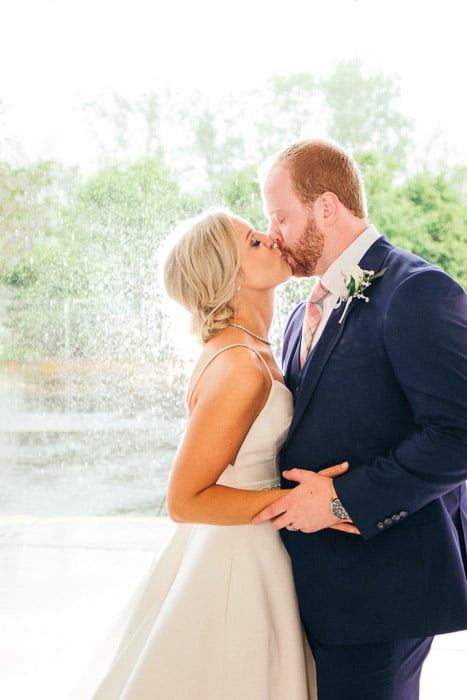
The forecast doesn't care whether you have a wedding that day or not. Inevitably, you'll come across a rainy day wedding.
While you should have a backup sheltered location in case of rain, venturing out in the rain yourself can lead to some great shots that capture the essence of the day.
A rain cover for your camera will allow you to head out and take macro ring photos with rain droplets. Or head out with an adventurous couple willing to wield an umbrella for a few romantic rainy day shots.
Even if you and the couple are standing in a covered area, you can use a camera rain cover to cover up your off-camera flash to backlight the rain. It will make those water droplets pop (like in the photo above).
Thankfully, rain covers are inexpensive and easy to tuck inside a bag.
Try: Op/Tech USA Rain Sleeve
Non-Photo Gear Wedding Photography Accessories
When packing for a wedding day, several items aren't actually items you can find at a photo store. These will still come in handy during the course of the day.
Other essentials you may want to consider, or may already have on hand, include:
- Comfortable shoes you'll be on your feet all day;
- Umbrellas and towels, in case of rain;
- A large picnic blanket to keep the bride's dress clean when shooting formals before the ceremony;
- Water bottles and snacks;
- Business cards, if friends and family ask how to order photos or book you for another shoot.
Frequently Asked Questions
What Accessories Do I Need for My First Wedding?
A flash, spare batteries and enough fast memory cards to cover the day. Everything else on this list improves the pictures; those three decide whether you come home with them at all. Add a bag you can wear for ten hours as soon as the budget allows.
Do I Need Two of Everything?
No, but you do need two of anything the day cannot continue without. That is realistically the camera body, the flash and your cards. A single reflector, one tripod and one rain cover are fine, because losing any of them costs you a shot rather than the wedding.
How Many Memory Cards Should I Bring to a Wedding?
Enough to shoot the whole day without reformatting anything, and then one more. Look at the V rating rather than the old Class 10 marking: V30 is the sensible floor, V60 or V90 if the same card also takes video. If your camera has two card slots, record to both.
Is a Video Light Better Than a Flash for Weddings?
For getting-ready shots, detail shots and slow moments, a video light is easier, because you see the light before you take the frame. It cannot freeze a dance floor or fight midday sun, so most wedding photographers carry a flash as the main light and a video light alongside it.
What Should I Pack That Isn't Camera Gear?
Comfortable shoes, water and snacks, a towel and umbrella for rain, a large blanket so a dress can be laid down cleanly, and business cards. None of it is photographic, and all of it gets used.
Conclusion
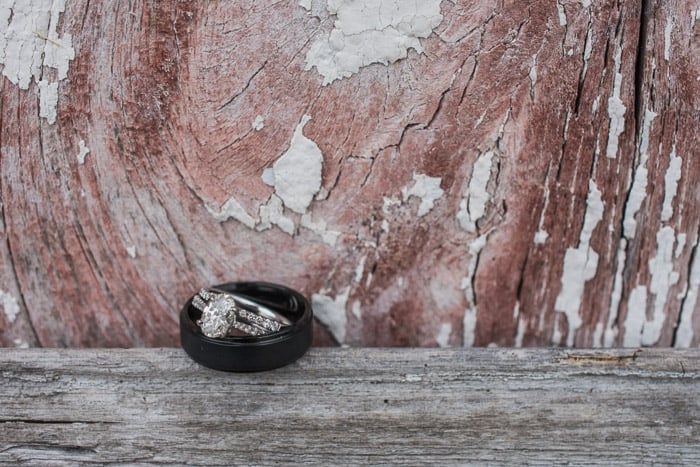
Some accessories are wedding essentials, like a flash. Others, like a polarizing filter, may only be used for a handful of shots.
The key to wedding photography gear isn't to buy everything, but to find out what suits your photography style and the demands of the wedding day, without weighing you down so much that your muscles are protesting at the end of the day.
If you can't carry it, you're not going to use it. Keep this list of wedding photography accessories handy and you’ll soon figure out exactly which gear will help you get that shot without weighing you down.