
The future of photography is likely to bring more help from software, faster image delivery, and new ways to experience pictures. But better technology does not tell us which cameras will survive, what clients will pay for, or what makes a photograph worth keeping.
Some ideas that once sounded futuristic are already practical tools. Others remain predictions. Here, we revisit our seven themes using evidence available in October 2026, with a clear distinction between what exists now and what might come next.
7. Immersive Photography Will Have More Practical Uses
A photograph, a 360-degree view, and a 3D model offer different experiences. 3D photography can create a sense of depth. A 360-degree image lets you look around from the camera's position. A reconstructed 3D model lets you inspect an object from different viewpoints.
The last of these is already possible with photogrammetry: software builds a model from overlapping photographs. In an earlier project, we tried to photograph a statue and turn it into a 3D model. Our How to Create a 3D Model from Photos article shows that process. Apple's Object Capture demonstration also shows how supported iOS devices can capture an object and reconstruct a model.
There are other routes to immersion. 360 camera technology can record a surrounding scene, while Apple's spatial photos can be viewed with depth on Apple Vision Pro. A Viewmaster stereoscope is an older example of viewing pictures with a sense of depth. None of these means that an ordinary photograph becomes a physical object you can touch.
Our prediction: immersive images will become more useful for showing objects and places, particularly when viewers need more than one fixed angle. Their wider use will depend on capture quality, viewing devices, and whether the extra work helps the audience. A simple photograph will still often be the right format.
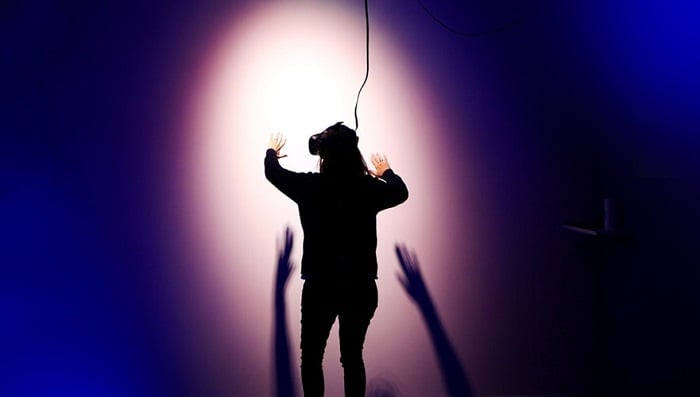
Photo by Stella Jacob
6. Camera-to-Cloud Workflows Will Become More Useful
Connectivity matters when a client or editor needs pictures before the photographer gets home. But wireless transfer is already a feature, rather than a distant prediction. The more useful question is which files a particular camera can send, and how reliably it fits your workflow.
The old claim that wireless transfers only support JPEG files is too broad. Frame.io documents a Camera to Cloud workflow for the Fujifilm X-H2 and X-H2S that can upload RAW, JPEG, and HEIF files while shooting. That is evidence for a specific supported system, not every camera. Check the required firmware, accessories, account, and connection before relying on it.
Phone-transfer apps also have different limits. Nikon's SnapBridge help lists file and connection restrictions, including cases where RAW files are not displayed. Never assume that Bluetooth pairing means you can send full-resolution RAW files.
Cables still have a place. A card reader or tethered connection can be a sensible way to move a large shoot into Lightroom or Capture One, especially when internet access is poor.
If your workflow uses cloud storage such as Dropbox, confirm that the files arrived and that you have a backup. An upload is not a reason to erase your only local copy.
Our prediction: connected workflows will reduce the delay between taking, editing, and delivering photographs. They will not remove the need to plan for weak connections, battery use, and file security. Self-charging cameras remain speculation; they are not a capability photographers should plan around.
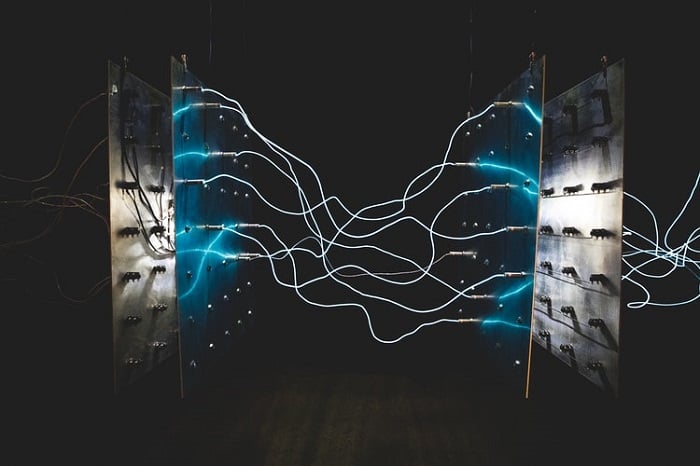
Photo by Israel Palacio
5. Film Will Continue Alongside Digital Photography
Convenient digital cameras have not made film photography pointless. Some photographers enjoy loading a roll, choosing each exposure carefully, and waiting to see the result. That is a reason to use film even when a phone would be quicker.
There is concrete evidence of new investment in film cameras. Ricoh announced the PENTAX 17 in June 2024, a new compact film camera that makes half-size photographs. One new camera does not prove that film will become the dominant format, but it shows that analog photography is not limited to keeping old equipment working.
The appeal also extends beyond one format. You can explore 35mm, medium format, or a hands-on process such as wet plate photography. Each offers different constraints and a different way of working. Film is not automatically warmer or more artistic than digital; those are judgments about the photograph and the experience.
Our prediction: analog and digital methods will continue to coexist. Film can appeal to people who want a slower process or a particular look, while digital remains useful when immediate review and fast delivery matter. Neither preference guarantees a revival of every old camera system.
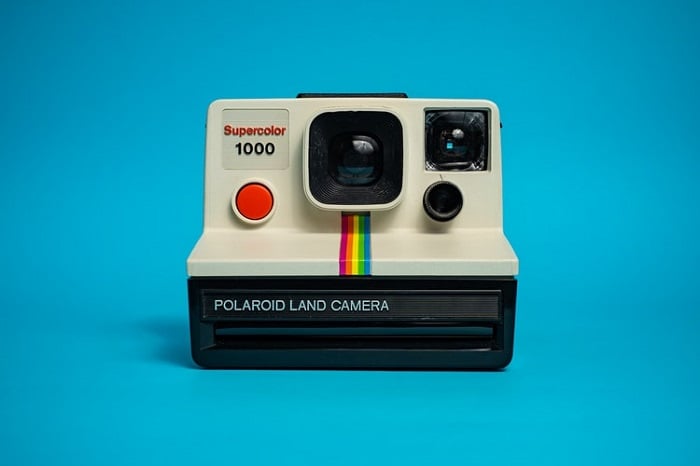
Photo by Patrick
4. Professionals Will Need to Explain the Value of Their Work
There are still different ways to make a living with a camera. But an article about new technology cannot reliably predict one employment outcome for weddings, photojournalism, product photography, and every other field.
AI tools can change the work a client needs. For example, Photoshop's Generative Fill can use a text prompt to generate content within a selected part of an image. That creates possibilities for illustration and editing. It does not document a real wedding, show what happened at a news event, or establish the actual condition of an object.
For a professional photographer, the useful response is to make the service clear. A client may need consistent lighting across a product range, reliable coverage of an event, help directing people, or files that meet a specific brief. Show that result in your portfolio and explain what you deliver.
Our prediction: photographers will face different pressures in different markets. Some tasks may become easier to do without hiring a photographer; others will still depend on access, judgment, and an accurate record of real subjects. We cannot promise that AI will leave every job untouched, or that demand for all professionals will decline.
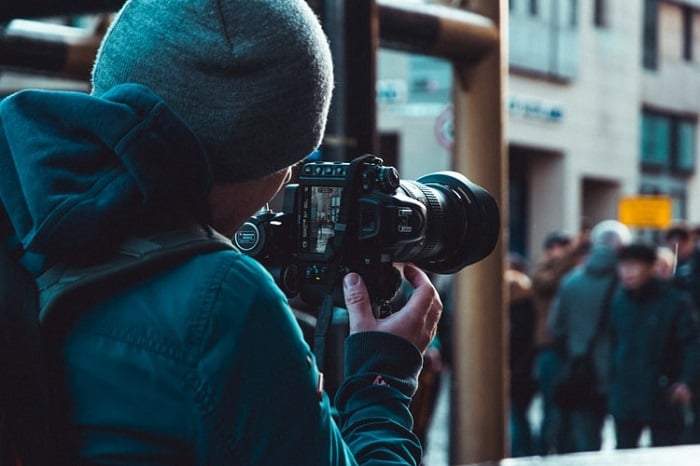
Photo by Gonzalo Facello
3. AI Will Assist More of the Process, and Trust Will Matter More
AI in photography is already more specific than a camera that does everything for you. Sony's Alpha 9 III announcement, for example, describes an AI processing unit for subject recognition and tracking. It can help autofocus follow a subject. That does not mean every autofocus, stabilization, or exposure system uses AI.
Physical tools still have a role. A gimbal supports a camera and helps control its movement; it does not make creative decisions for the photographer.
Computational photography also combines capture with processing. In its dated 2019 iPhone 11 announcement, Apple described Deep Fusion's machine-learning processing for texture, detail, and noise. This is an early example of how processing, as well as a lens and sensor, can shape a photograph.
Editing tools already handle some work that used to need more manual attention. Adobe documents AI Denoise in Lightroom, with file-format and hardware requirements. Skylum’s Luminar also offers AI adjustments; its Enhance AI documentation describes a slider that combines controls such as contrast, exposure, and detail. Check the result at full size rather than treating an automatic adjustment as a finished edit.
Generating new image content raises a different question from reducing noise: what does the final picture represent? Keep original files and make substantial generated changes clear when the context requires an accurate record.
C2PA Content Credentials can record signed information about a file's origin and history. They can help a viewer assess that history, but they do not prove that the scene is true. A missing credential is not, by itself, proof that an image is fake.
Our prediction: AI will assist more capture and editing tasks, while photographers will need to make deliberate choices about what to automate. Explaining how an image was made will become more useful where readers or clients need to trust what it shows.
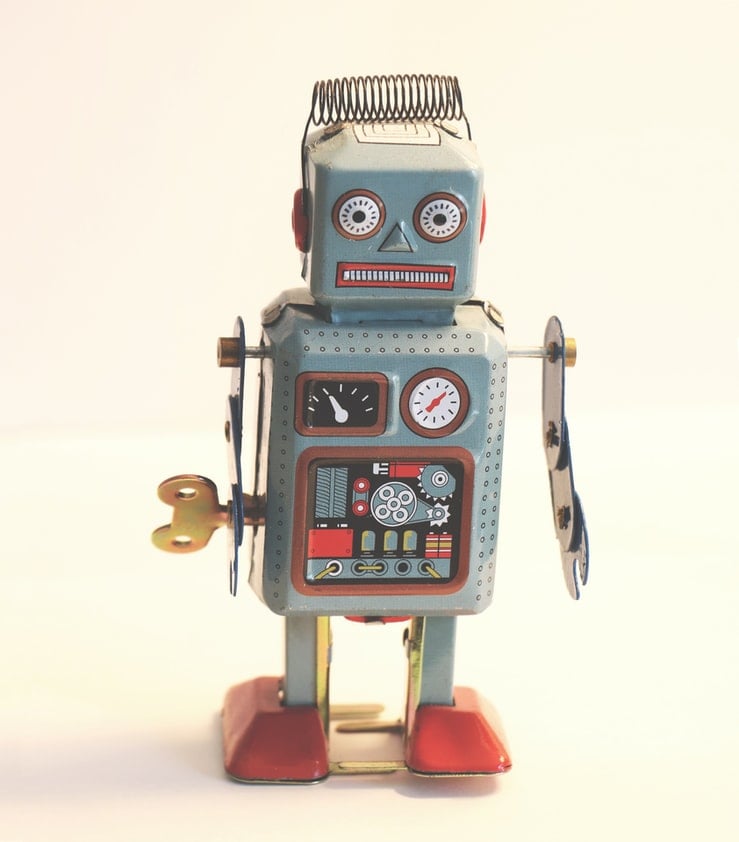
Photo by Rock’n’Roll Monkey
2. Smartphones and Compact Cameras Will Serve Different Needs
A smartphone makes taking, editing, and sharing a picture convenient. That is a strong reason to use it for everyday photographs. But the prediction that phones would kill the compact camera has not held up as a universal claim.
CIPA's full-year 2025 report records 2,436,911 shipments of cameras with built-in lenses, 29.6% more than in 2024. This is a broad fixed-lens category, not just pocket compacts. It covers shipments by CIPA member companies, including overseas production, rather than purchases by every camera buyer. Even with those limits, the figures contradict the idea that the entire category is disappearing.
Our original article described the enjoyment of using an Olympus compact camera. That preference is still a useful reminder: convenience is not the only reason to choose a camera. Someone may want a particular lens, dedicated controls, or a device that keeps photography separate from phone use.
Our prediction: phones will remain a convenient choice for everyday images, while dedicated compacts will need a clear reason to carry them. Which reason matters depends on the photographer. We would not assume that either every compact will disappear or every revived model will remain popular.
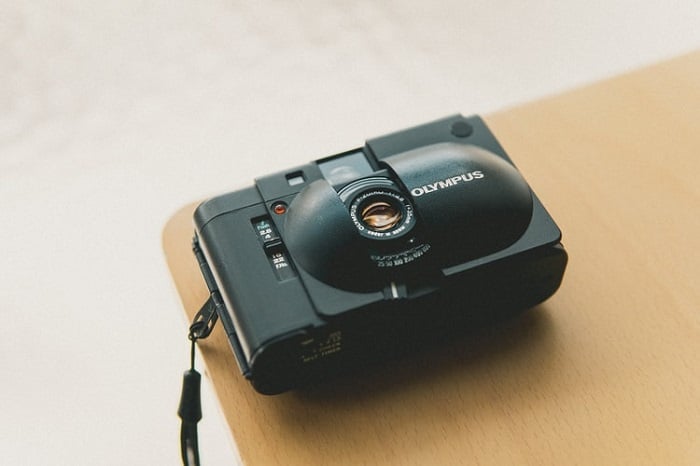
Photo by W. Kei
1. Mirrorless Development Will Continue, but DSLRs Can Still Work
The shift toward mirrorless cameras is already visible in shipments. In 2025, CIPA reported 6,311,054 mirrorless camera shipments and 690,911 DSLR shipments. Those are member-company shipment figures, not a count of all the cameras photographers still use.
There are meaningful technical developments too. Sony's Alpha 9 III uses a full-frame global shutter sensor. Sony describes this as avoiding the image distortion associated with scanning a scene progressively. That is a specific example of camera development, not proof that every future camera will have the same sensor design.
Mirrorless does not automatically mean a smaller system, better image quality, or silence in every mode. Sony's Alpha 9 III documentation describes an electronic shutter; with other models, check the shutter mode and limitations before relying on silent shooting. For sports and wildlife photographers, those details can matter more than the category name.
Our prediction: mirrorless systems will remain an important focus of camera development. But a change in new-camera demand does not stop a working DSLR from taking good photographs. If your existing camera and lenses meet your needs, you do not have to replace them simply because a forecast says the DSLR is dead. Our discussion of whether DSLRs are dead explores that choice further.
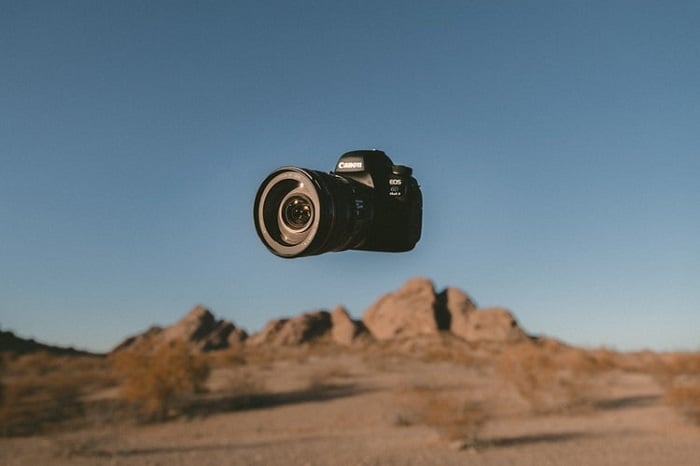
Photo by Jakob Owens
Conclusion: The Future of Photography
As trends emerge from the world of photography, the most useful way to think about the future of photography is to separate a demonstrated tool from a prediction about how people will use it. AI editing, connected delivery, immersive viewing, and new sensor designs already offer specific capabilities. Their long-term effect on creative choices and paid work is less certain.
Learn the tools that solve a problem you have now. Keep practicing light, timing, composition, and working with your subjects. Those skills help you decide what the technology should do, and when a simpler photograph is enough.