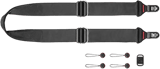
The Peak Design Slide is the best camera accessory for most photographers. You use a strap every time the camera leaves the house. The Slide wears as a neck, shoulder or sling strap, and its quick-release Anchor Links let you take it off in seconds. It suits almost any interchangeable-lens camera.
The rest of this list covers the other jobs a camera cannot do alone. We pick one strong product for each: carrying your kit, storing and backing up photos, holding the camera still, keeping glass clean, shaping light and recording better video. They are ranked in the order most photographers need them, so you can stop wherever your own shooting stops.
The Best Camera Accessories for Every Photographer
Buy accessories for problems you already have. A strap, a bag and a spare memory card help on every shoot. A tripod, filters and a flash help with particular subjects and light. The gimbal and the microphone only matter once you record video. Use the table to find the job you need done first, then read that review for the limits that decide whether the product suits your camera.
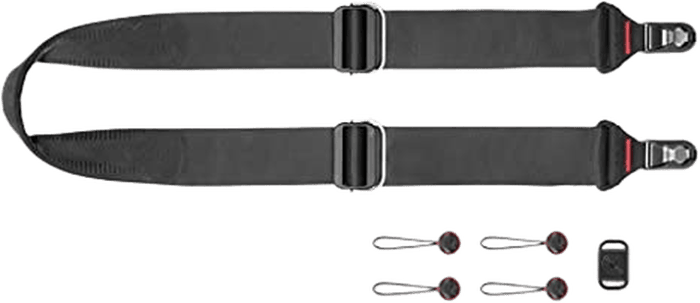
The Peak Design Slide is our top pick because it fixes the most common carrying problem. One strap can hang the camera around your neck, over one shoulder or across your body as a sling. You change between those styles with the aluminum quick-adjusters, and the length runs from 39 to 57 in.
The Anchor Link system is the other reason to buy it. Small anchors stay on the camera, and the strap clips onto them in a second. Each anchor holds over 200 lb, so you can take the strap off for tripod work and put it back on without a worry. An Anchor Mount for the tripod socket is in the box, so the strap can also attach under the camera.
The drawback is size. The strap is 1.8 in wide, which feels like a lot on a small mirrorless body. Peak Design suggests the narrower Slide Lite for mirrorless carry, and it uses the same anchors. If you want to compare other strap styles, see our guide to the best camera straps.
2. WANDRD PRVKE
| Type |
Type
Roll-top camera backpack
|
| Works With |
Works With
WANDRD camera cubes
|
| Key Spec |
Key Spec
15L, 21L, 31L and 41L sizes
|
| Main Trade-off |
Main Trade-off
Camera cube and rain fly cost extra
|
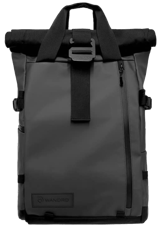
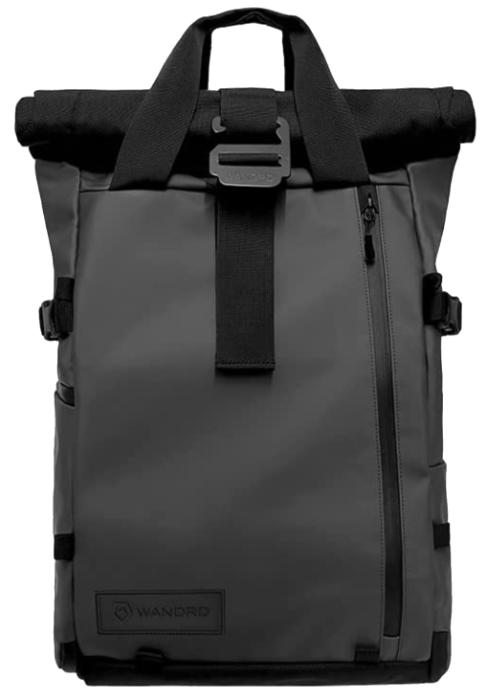
The WANDRD PRVKE is the bag we recommend for photographers who carry more than one lens. It is a roll-top backpack with a tarpaulin and ballistic nylon shell. You add a padded camera cube for your gear and use the rest of the space for a jacket, food or a laptop. The cube lifts out, so the PRVKE also works as an ordinary travel pack.
It comes in 15L, 21L, 31L and 41L sizes. The roll-top adds about 4 liters when you need them, and every size has a laptop sleeve.
We reviewed an earlier version of the PRVKE and it came out top in our camera bag test. Our main criticism of the 21L still applies. Its camera space is modest for the size of the bag, so a pro with several large lenses should look at the 31L. Note that the bag-only version has no camera cube. Buy the Photography Bundle, and add the rain fly if you shoot in heavy rain.
Read our full PRVKE review, or compare more camera backpacks.
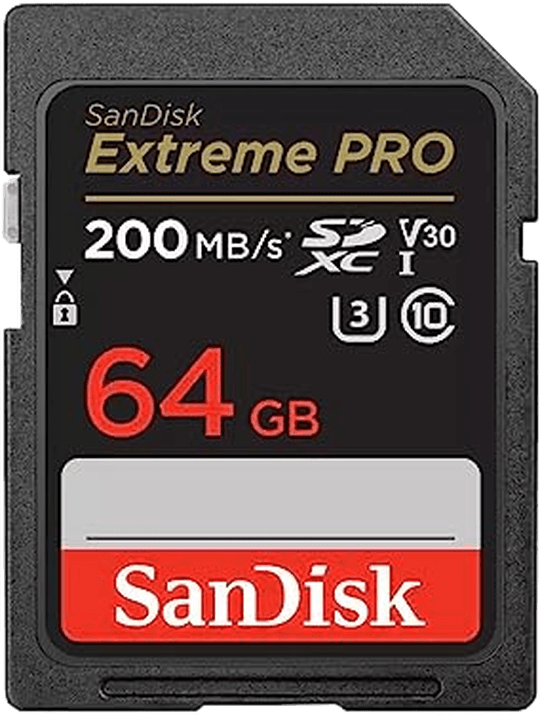
A spare memory card is the cheapest insurance a photographer can buy. The SanDisk Extreme PRO SDXC UHS-I is our pick because it works in almost every SD camera. It carries a V30 video rating, so it is fast enough for 4K recording in most cameras.
The 64GB card reads at up to 200MB/s and writes at up to 90MB/s. The 200MB/s figure needs a reader that supports SanDisk QuickFlow. In a normal UHS-I reader, expect lower read speeds. The card is also sold in sizes from 32GB to 1TB, and SanDisk backs it with a lifetime limited warranty.
The main limit is write speed. A fast camera shooting long RAW bursts fills its buffer, and a UHS-I card empties it more slowly than a UHS-II card. If your camera has UHS-II slots and you shoot sport or wildlife, a UHS-II card is worth the extra cost. For everyone else, two of these cards beat one large card. A failure then costs half a shoot, not all of it.
See our full guide to the best memory cards for UHS-II and CFexpress options.
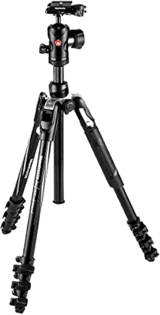
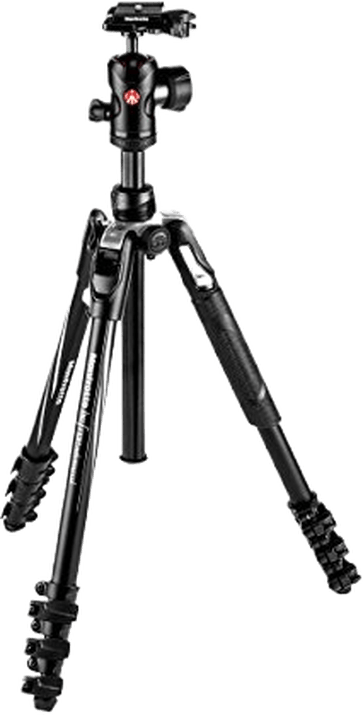
The Manfrotto Befree Advanced is the tripod we suggest most photographers buy first. It is light enough to carry on a day out, at 3.5 lb, and it folds to 15.75 in. Yet it is rated for loads up to 19.8 lb, so a full-frame camera with a large lens sits on it securely.
The four-section aluminum legs use flip locks, which are quick to open and close. The center column takes the camera to 59.5 in. The ball head has separate knobs for the main lock, the friction and the pan. That makes it easy to level a landscape and then fine-tune the framing. The plate fits both Arca-Swiss and Manfrotto RC2 clamps, so it works with many other heads.
A ball head is the wrong head for video. It does not pan smoothly while you record. If you film pans, look at our best video tripods. If you shoot sport and need to move fast, a monopod may suit you better. Our guide to the best camera monopods covers those, and our best tripods list has heavier options.
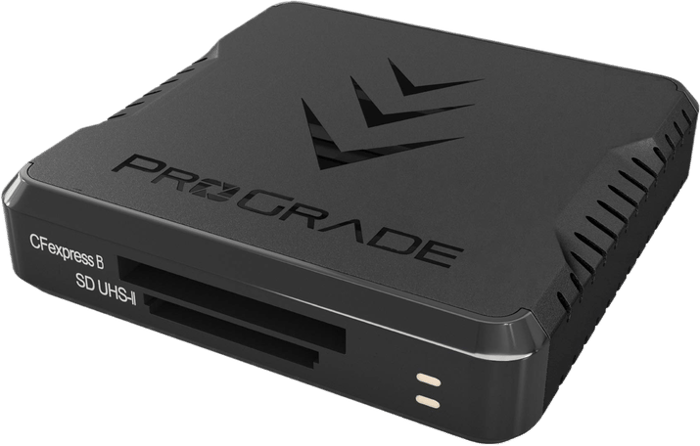
A good card reader moves a day of photos to your computer much faster than a camera cable. We recommend the ProGrade Digital PG05.5 because it reads the two card types most current cameras use. It has one CFexpress Type B slot and one UHS-II SD slot.
Both slots work at the same time, at up to 10Gb/s over USB 3.2 Gen 2. That suits cameras that take one card of each type. You can copy both cards in one go. The reader comes with USB-C to USB-C and USB-A to USB-C cables, so it connects to old and new computers. A magnetic base keeps it from sliding off the desk.
It does not read XQD, CFexpress Type A or microSD cards. Check your camera's card types before you buy. ProGrade also sells a faster USB 4 version, the PG05.7. It only helps if your computer has a USB 4 or Thunderbolt port and you copy very large video files.
See more choices in our best SD card readers guide.
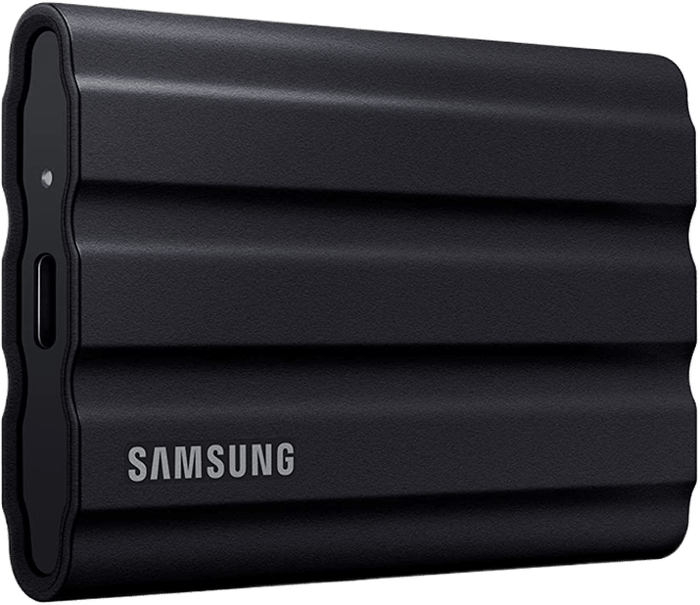
Photos on one card or one computer are not backed up. The Samsung T7 Shield is the portable drive we would carry for a second copy. It is a solid-state drive in a rubber shell. It is rated IP65 for dust and water and survives drops of up to 9.8 ft.
That toughness matters when the drive travels in a camera bag. The T7 Shield weighs 3.5 oz. It reads at up to 1,050MB/s and writes at up to 1,000MB/s over USB 3.2 Gen 2. That is fast enough to back up a full card on a laptop at the end of each day. Samsung sells it in 1TB, 2TB and 4TB sizes. The 2TB model holds tens of thousands of RAW files.
It is not the fastest portable SSD you can buy. Newer USB 4 and Thunderbolt drives copy faster, but only from a computer with a matching port. For backing up a day of photos, the T7 Shield's speed is enough.
Our list of the best external hard drives has larger desktop options.
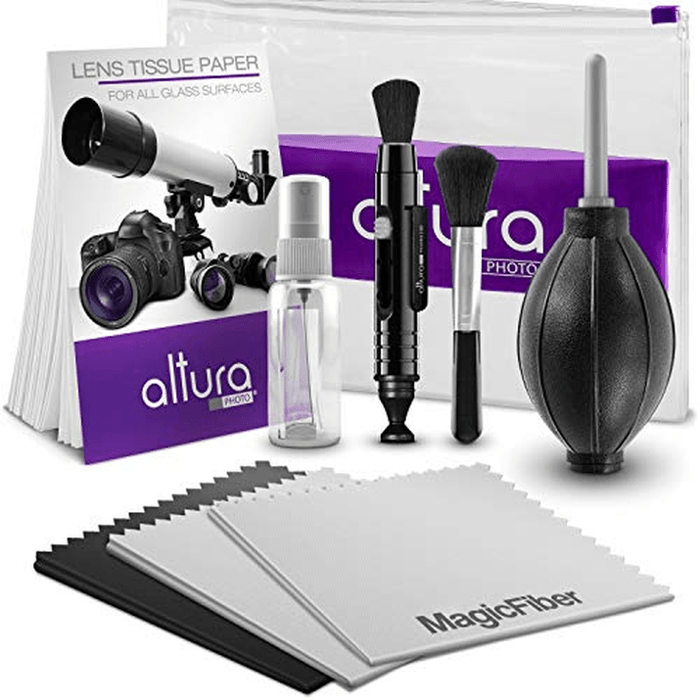
Dust and fingerprints on a lens cost contrast before you press the shutter. The Altura Photo Professional Cleaning Kit has the tools to fix that in one case. You get an air blower, a soft brush, a lens pen, an alcohol-free cleaning spray, three microfiber cloths and 50 lens tissues.
Blow and brush loose grit off first, then use the pen, cloth or spray on smudges. That keeps sand from scratching the coating. The spray is free of alcohol and ammonia. The kit works on lenses, filters, viewfinders and camera bodies from any brand. The blower and the lens pen are small enough to live in your camera bag, so you can leave the rest of the kit at home.
This is a lens kit, not a sensor kit. It has no sensor swabs. The blower can shift loose dust from a sensor, but sticky spots need swabs and fluid made for sensors. If you change lenses outdoors often, budget for a sensor cleaning kit as well.
Our article on camera cleaning kits covers sensor kits and other options.
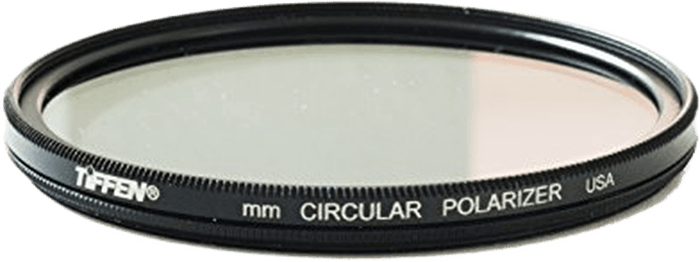
A polarizer is one of two filters that editing cannot replace. We recommend the Tiffen 77mm Circular Polarizer as a first one. It removes reflections from water, glass and wet leaves. It also deepens blue skies and adds color saturation. You see the effect in the viewfinder as you turn the front ring.
Tiffen makes it in the USA with ColorCore glass in an aluminum ring. It comes in sizes from 25mm to 82mm, so check the filter thread on your lens. If you own several lenses, buy the size for your largest thread and use step-up rings on the others.
The glass is not multi-coated, so a coated filter will resist flare a little better when you shoot toward the sun. A polarizer also costs about 1.2 stops of light, which slows your shutter speed in dim light. On very wide lenses, the sky can darken unevenly across the frame.
See more choices in our best polarizing filters guide.
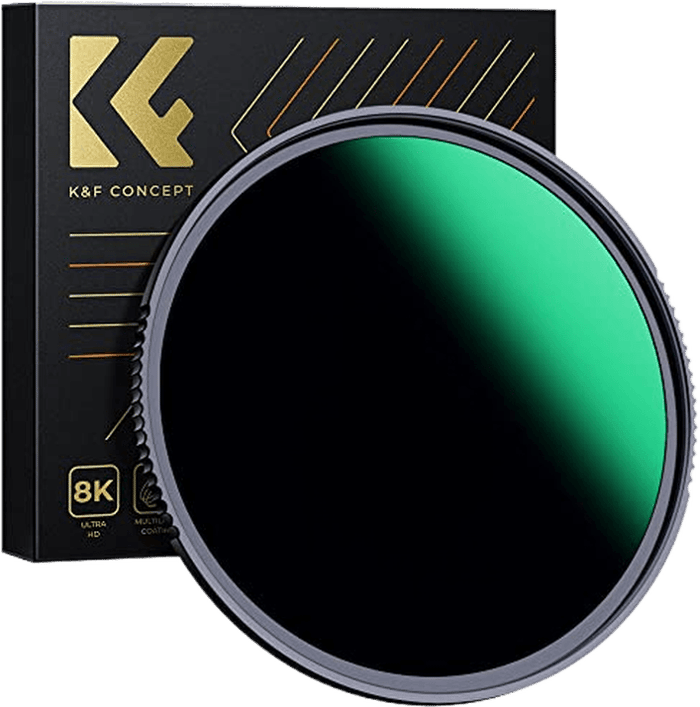
The K&F Concept Nano-X ND1000 is the filter for long exposures in daylight. It cuts the light by 10 stops. A shutter speed of 1/30 s becomes about 30 s. That is what turns moving water into mist and makes clouds streak across the sky.
The filter uses Japanese AGC optical glass with 28 layers of coating. The coating resists water and scratches, which helps on a wet beach. The slim aluminum frame lowers the risk of dark corners on wide lenses. K&F makes it in sizes from 37mm to 112mm.
A 10-stop filter is too dark to see through. You compose and focus first, switch to manual focus, then screw the filter on. You also need a tripod, like the Befree Advanced, for every shot. If you film video and need to change the strength as the light changes, a variable ND suits you better. Our guide to the best variable ND filters covers those, and our camera filters guide covers other types.
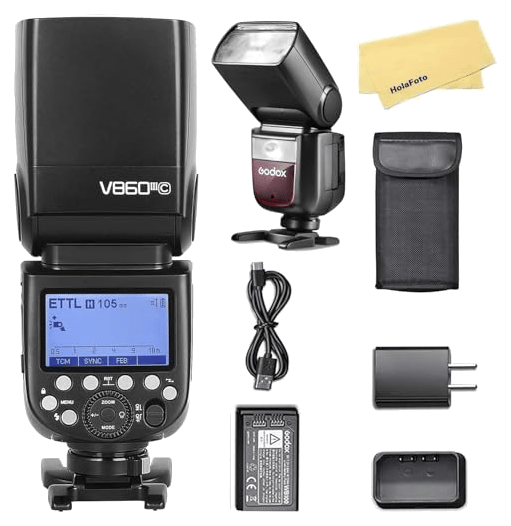
A flash lets you shoot in dark rooms and fill harsh shadows outdoors. We recommend the Godox V860III because it does both well. It has TTL, so the flash sets its own power, and you can switch to manual when you want control.
The rechargeable lithium-ion battery is the main reason to choose it over a flash that uses AA cells. It gives about 480 full-power flashes per charge and recycles in about 1.5 seconds. The guide number is 60 meters at ISO 100 with the head zoomed to 200mm. High-speed sync goes up to 1/8000 s, so you can use flash with wide apertures in daylight.
The flash also has a built-in 2.4GHz radio. It can trigger other Godox flashes or work off-camera from a Godox trigger. A small LED modeling lamp helps you check where light will fall. For softer light from the flash, add a flash diffuser.
The linked model is the Canon version. Godox also sells versions for Nikon, Sony, Fujifilm, Olympus/Panasonic and Pentax cameras, so buy the one that matches your camera. Read more in our best camera flash guide, or see our Nikon flash guide.
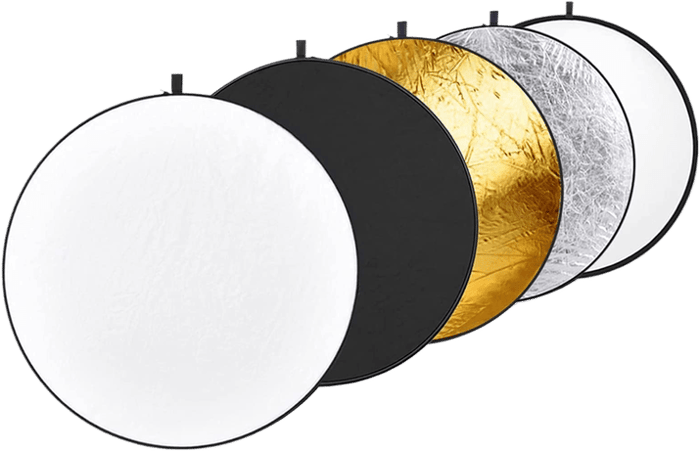
A reflector is the cheapest way to control light. The NEEWER 5-in-1 Reflector gives you five surfaces in one 43-inch disc. White softens shadows. Silver bounces more light. Gold adds warmth. Black removes light from one side of a face. The translucent center diffuses harsh sun when you hold it between the sun and your subject.
The 43-inch size covers a head-and-shoulders portrait from close range. A steel spring frame folds the disc to about a third of its open size, and a carry bag is included. It works with daylight, flash and LED light, so it stays useful as your lighting kit grows.
The drawback is that you need hands. Someone has to hold it, or you need a reflector holder on a light stand. A large disc also catches the wind outdoors. For product photos on a table, the smaller 22-inch or 32-inch versions are easier to place.
See the rest of our lighting kit picks for flashes and studio lights.
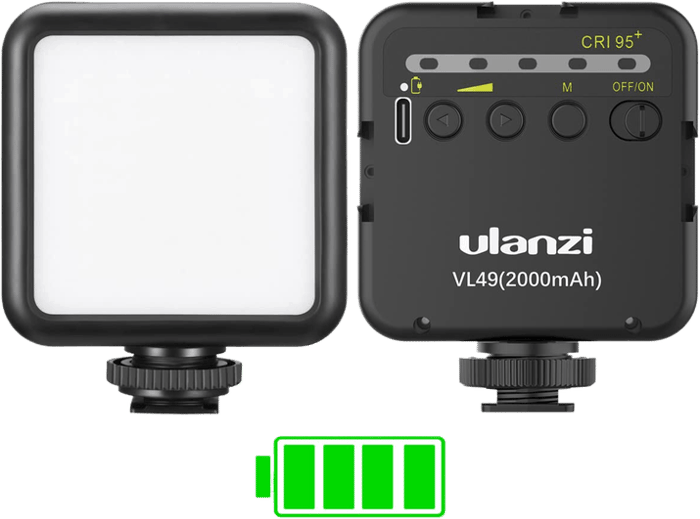
The Ulanzi VL49 RGB is a pocket light for close work. It weighs about 3.5 oz and sits on a cold shoe, a 1/4-inch screw or a metal surface with its magnets. Use it to light a face for a vlog, fill a small product shot or add a splash of color to a background.
White light runs from 2500K to 9000K, so you can match warm room light or cool daylight. The CRI is above 95, which keeps skin tones natural. Full RGB color and 13 effect modes add creative options. It charges over USB-C and runs for 2 to 10 hours, depending on brightness. Three cold shoes on the light let you mount a small microphone or a second light.
This is a small panel. Its output is 800 lux at 0.5 m, so it only lights subjects close to it. It will not light a room or replace a flash outdoors. Ulanzi also makes the VL49 Pro, with a larger battery.
For larger panels, see our best LED panels and LED lights for photography guides.
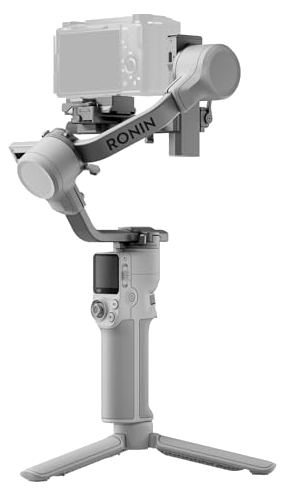
A gimbal makes walking shots look smooth. The DJI RS 4 Mini is the one we would choose for a photographer who also films. It carries camera and lens setups from 0.9 to 4.4 lb. That covers most mirrorless bodies with a standard zoom or a fast prime.
The gimbal weighs 2 lb, so a day of filming does not wear out your arm. It switches to vertical shooting without extra parts, which helps if you post to social media. Bluetooth starts and stops recording on supported cameras, so you do not need a cable. The battery is rated for 13 hours when stationary. DJI's optional tracking module can follow a person as they move.
The payload limit is the main restriction. A full-frame body with a 70-200mm f/2.8 zoom gets close to 4.4 lb. Add a monitor or a microphone and it can pass it. For heavier setups, the DJI RS 5 carries 6.6 lb. A gimbal also does nothing for still photos, so skip it if you never record video.
See all the best camera gimbals, our camera stabilizers guide for mechanical options, or our phone gimbals guide if you film on a smartphone.
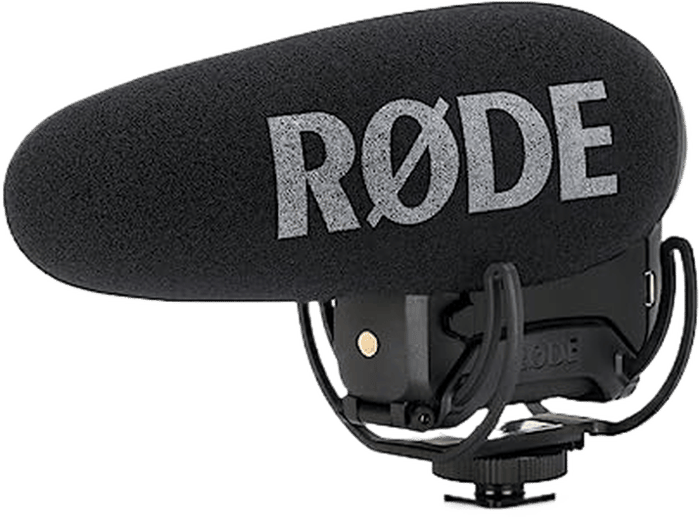
Most camera microphones record thin sound with plenty of room noise. The RØDE VideoMic Pro+ is the simplest big upgrade. It sits on the hot shoe and plugs into the camera's 3.5mm input. Its supercardioid pickup favors sound from the front and reduces sound from the sides and back.
A two-step high-pass filter at 75Hz or 150Hz cuts traffic and wind rumble. A +20 dB setting lets you turn the camera's noisy preamp down. A safety channel records a second copy 10 dB lower, so a sudden shout does not ruin the take. The included rechargeable battery lasts over 100 hours. It can also run on AA batteries or USB power. A Rycote Lyre mount reduces handling noise.
The limit is position. An on-camera mic records from where the camera stands. It sounds best when the subject is within a few feet. For interviews at a distance or walking talks, a wireless lavalier system is the better choice.
Compare more options in our best camera microphones guide.
How to Choose Camera Accessories
These checks help you choose the right size or version of each pick.
Match Accessories to Your Camera Before You Buy
Several picks come in versions. Check these details on your camera and lenses first:
- Card type: Look at your card slots. An SD camera needs the SanDisk Extreme PRO. A camera with CFexpress Type B needs a CFexpress card, which the ProGrade PG05.5 also reads.
- Filter thread: The diameter is printed on the lens barrel or the inside of the lens cap, after the ⌀ symbol. Buy filters for your largest thread and step down to the smaller lenses.
- Flash mount: TTL flashes are made for one camera system. Buy the Godox V860III version that matches your camera brand.
- Gimbal payload: Weigh your camera with its battery, card and heaviest lens. If it is near 4.4 lb, the DJI RS 4 Mini will struggle.
Decide How Much Kit You Carry
Your bag and strap should match how you actually shoot. If you take one camera and one lens on a walk, a strap is enough. You may never need a large backpack. A sling bag or a messenger bag suits a small kit that you want to reach quickly. Our sling bag guide covers those. If you fly with your gear, a backpack built for carry-on travel, such as the Think Tank Airport Essentials, is the safer choice. See our Airport Essentials review. Bags with real rain protection are in our weatherproof bag guide.
Plan a Backup Routine, Not Just a Drive
A card, a reader and a portable SSD only protect your photos if you use them in order. Copy each card to your computer and to the Samsung T7 Shield before you format it. Keep the drive apart from the laptop when you travel, so one theft does not take both copies. Carry at least one spare card, so you never have to delete files to keep shooting.
Conclusion
The Peak Design Slide is the best camera accessory for most photographers, because you use a strap on every shoot. The WANDRD PRVKE is the next buy if you carry more than one lens. Add the Manfrotto Befree Advanced when you start shooting long exposures, group photos or products.
Buy the rest when your photos show you need them. Filters come next for landscapes, lighting for people and products, and the gimbal and microphone only when you film. If you enjoy smaller extras, our list of photography gadgets has more ideas.