The focal length you use will heavily influence the final look of your image. That’s why it’s important to know when to use a wide angle vs telephoto lens.
In this article we’ll go through all you need to know about choosing between a short focal length vs a long one.
Wide Angle vs Telephoto: What Is a Wide Angle Lens?
On full frame cameras, a ‘normal lens‘ gives the same field of view as your eyes. That’s 50mm. A lens with focal lengths shorter than 35mm is considered to be a wide angle.
Wide angle lenses are often broken down into three sub-types depending on the focal length:
- wide angles: from 35 to 24 mm;
- ultra wide angles (UWA): below 24mm;
- fisheye.
Wide angles and UWA produce a rectilinear image. Straight features, such as building walls, appear with straight lines, as opposed to being curved.
In other words, they are lenses with little or no barrel or pincushion distortion.
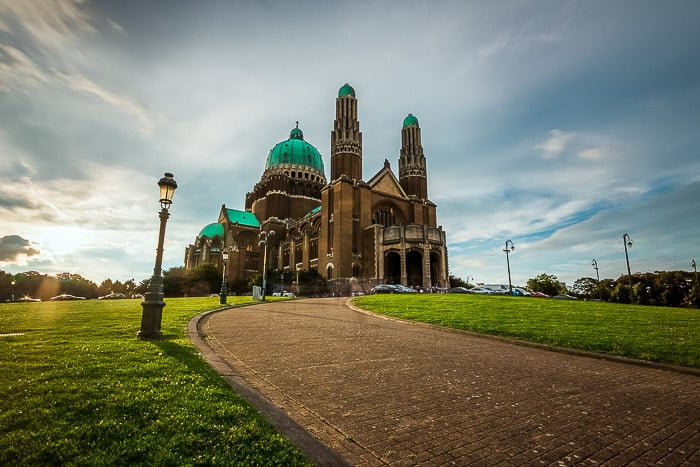 The rectilinear perspective will cause objects to appear increasingly stretched and enlarged as they near the edge of the frame.
These types of lenses are often used to create forced perspective effects.
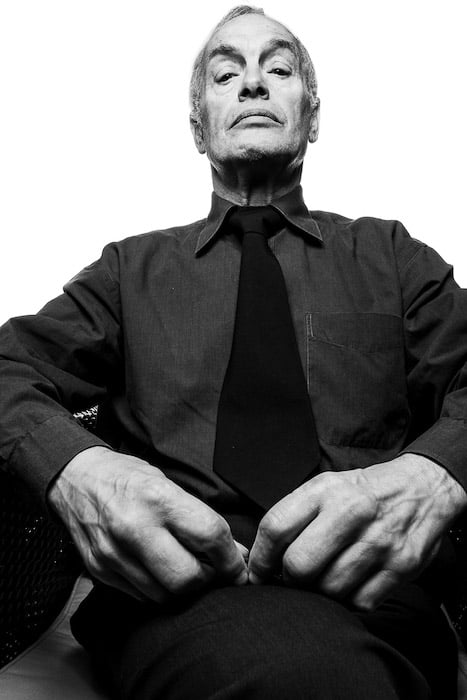
Example of forced perspective in portraiture: by getting close the model at 30mm, I could alter the body proportion and put more “weight” on the hands.
Typical focal length for prime focal lenses are: 35, 28, 24, 21, 18, 16 and 14 mm.
Fisheye lenses have an extremely wide field of view and are not rectilinear. This means they have strong barrel distortion. Straight lines are possible only in the center of the frame.
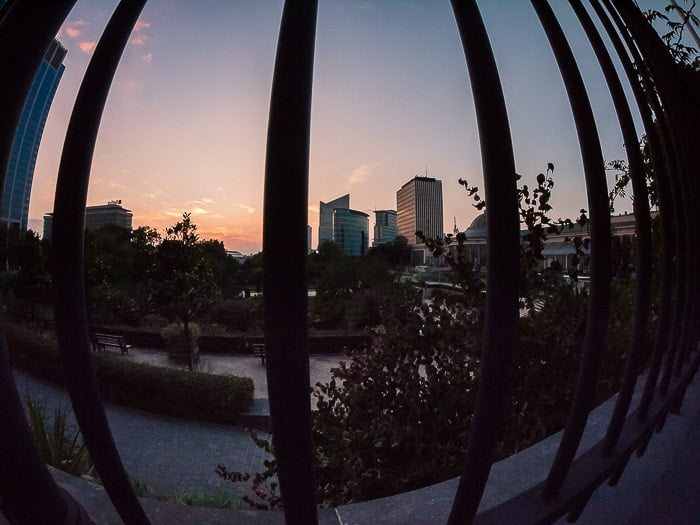
This image illustrates well the curvilinear barrel distortion typical of the fisheye lenses.
What Is a Telephoto Lens
Telephoto lenses have focal lengths longer than those of normal lenses. They’re longer than 50mm on a full frame camera.
Telephoto lenses are also broken into further sub-types, typically:
- medium telephoto: covering a focal range from about 70mm to 135mm;
- super telephoto: focal length longer than 200 mm.
Medium telephotos are often used in portraiture because of the little distortion. You can also use them in landscape photography to isolate a subject like an interesting tree.
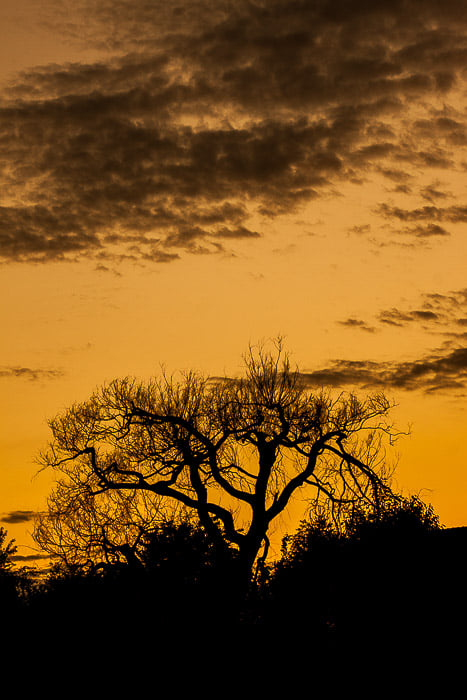
A medium telephoto lens can be used for landscape, to isolate a particular object, like I did here for this tree in silhouette.
Super telephotos are often reserved for wildlife and sports photography. This is where you need to get close to subjects that are rather small and far away.
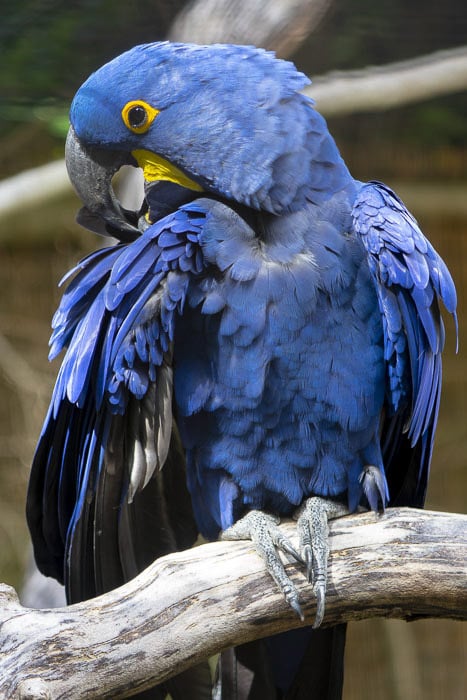
A visit to a zoo is the perfect opportunity to take advantages of long telephoto lenses. Sony RX10 @ 200mm
Stage/concert photography is also a kind of photography that benefits from the use of long focal lengths. If you are not the official even photographer, you won’t be able move from your place and might be far from the scene.
Medium telephotos can also be used to create high resolution panorama stitching. The procedure is usually longer than taking a single wide shot (except if you are using a built-in panorama mode). But the result will be a distortion free image that is much more zoomable to see finer details.
Let’s consider the image below taken with a fisheye. The distortion is evident (and wanted for composition reasons) but the small details are not very visible.
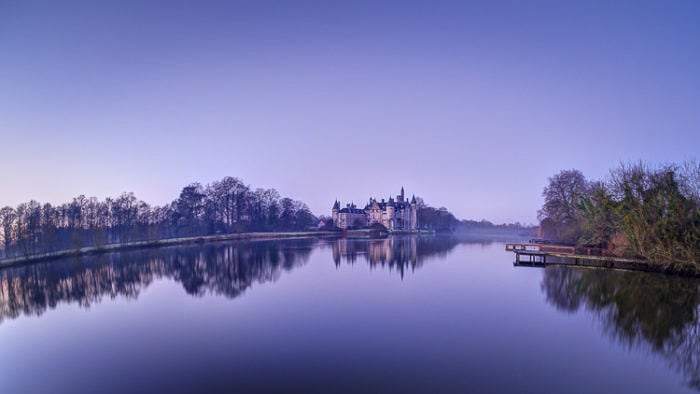
By curving straight lines such the horizon, the left bank of the channel and the dock on the right, the viewer can be guided naturally towards the subject, the castle in this photo.
With a 56mm EFL, I took the following panorama, which is rather wide.
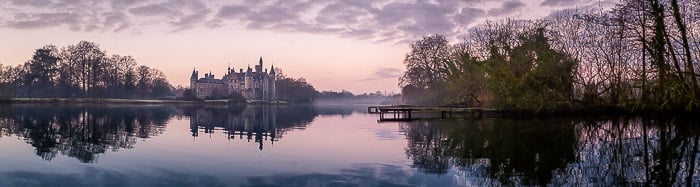
Panorama with a 56mm EFL lens.
The photo below shows 100% crops form the panorama and the single image. The amount of details in the panorama is evident.
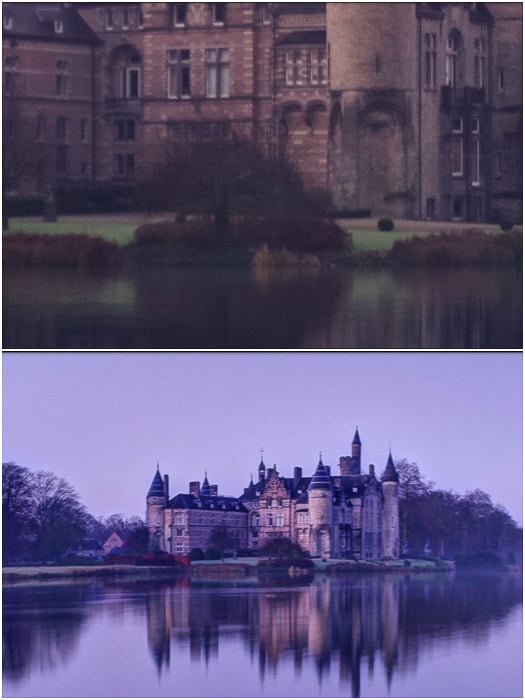
A panorama with a telephoto lens will let you capture much more details than in a single wide angle image.
Finally, a telephoto lens will also allow you to play with perspective to create more compelling images. Those images with a huge moon with people or trees in silhouette take advantage of telephoto lenses and how they alter the perspective.
Take an extreme focal length (1000+mm), put some space between you and the target (go like kilometres away) and wait for the moon to rise behind it to get photos like this one.
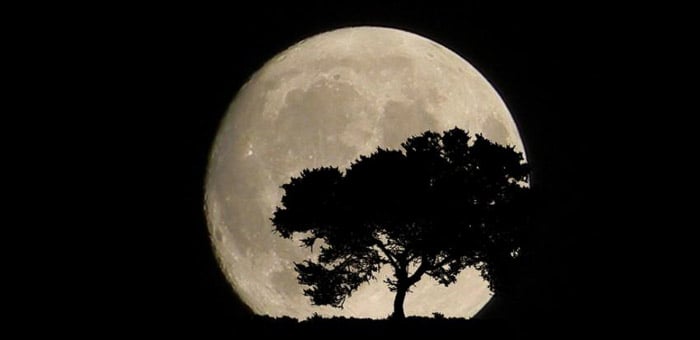
Big moon rising. Image Credit: blingrocks, CC BY
Wide Angle and Telephoto Lenses On Cropped Sensor Cameras
Until now we have referred to full frame cameras, but what happens when you use a cropped sensor camera?
If you don’t know much about sensors, I suggest you to have a look at our article for an in-depth discussion of the subject.
In a nutshell, a cropped sensor camera has a sensor that is smaller than the full frame format (36mm x 24mm). The size of the sensor will affect your photography in many ways.
The most obvious effect of using a small sensor is on the field of view. For a given focal length, a crop sensor camera will give you a narrower field of view than a full frame camera.
Wide Angle vs Telephoto Lenses
The focal length you use it directly influence the way you frame and compose the shot and the feeling the resulting image will convey.
It is also responsible for introducing some optical effects in your images. These include depth of field, perspective and distortions.
Let’s break down the most important differences in shooting with a wide angle lens vs shooting with a telephoto lens.
Field of View
As said before, the main difference in using a wide angle or telephoto lens is in the field of view you get. Wide angle lenses (on full frame) cover fields of view in the range 64° to 84°, with UWA arriving to more than 100°.
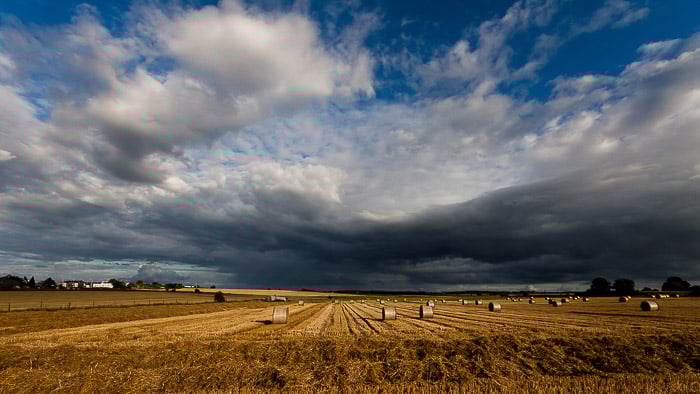
A typical wide angle landscape.
Fisheyes cover an even larger field of view, up to 180°.
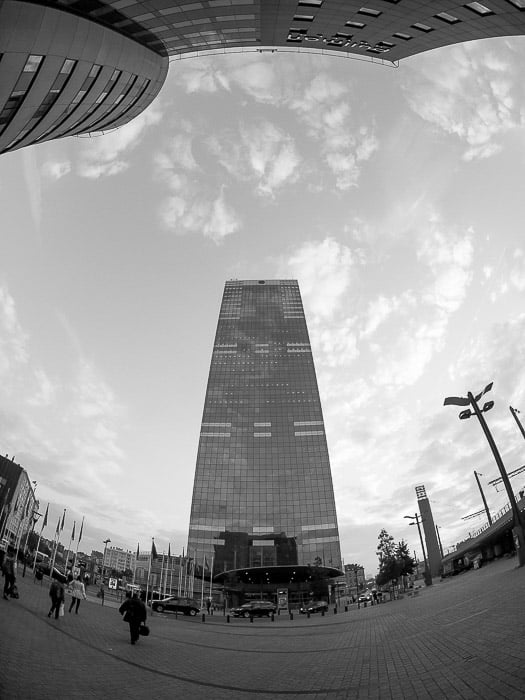
The extremely wide field of view of a fisheye lens allowed me to photograph the tall skyscraper in front of me as well as part of the building behind me.
Telephoto lenses, instead, cover a much narrower field of view than wide angle lenses. Medium telephoto lenses will cover a FoV in the range of 30°-10°. Super telephoto lenses giving a FoV of only 8° – 1°.
The image below illustrates how the Moon will look like moving from medium to extreme telephoto lenses.
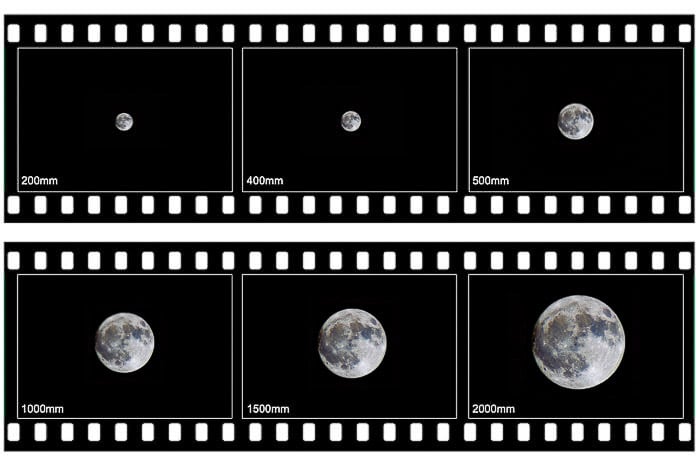
The full moon, at different focal lengths
Depth of Field
A less obvious difference between wide angle and telephoto lenses is in the resulting depth of field.
In general, for a given sensor, aperture and camera-to-subject distance, short focal lengths produce larger the depth of field than telephoto lenses.
This is very useful, for example, in landscape photography. A rule of thumb says to focus 1/3rd into the scene and you will have everything in focus, from a few meters away up to infinity.
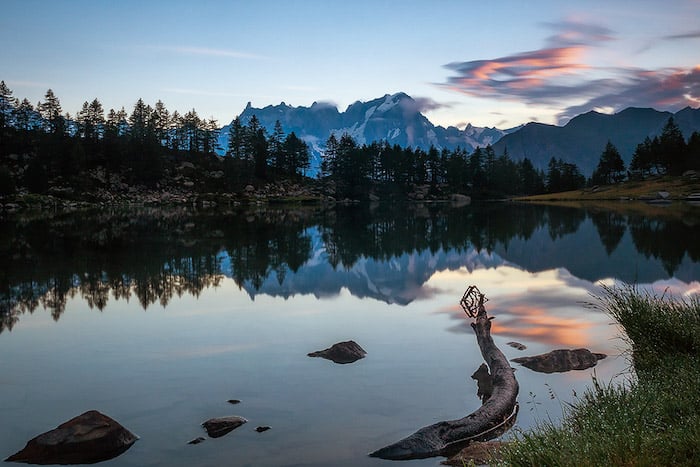
The huge depth of field of a wide angle lens allowed the photographer to have both the foreground and the background sharp. Image Credit: Alessandro Torri.
With telephoto lenses, particularly if you are working with wide apertures, the DoF is rather narrow and focus is much more critical.
On the other hand, in portrait and wildlife photography, the narrow DoF from telephoto lenses is welcome. The blurred background (bokeh) will allow a better separation between the subject and the rest of the scene.
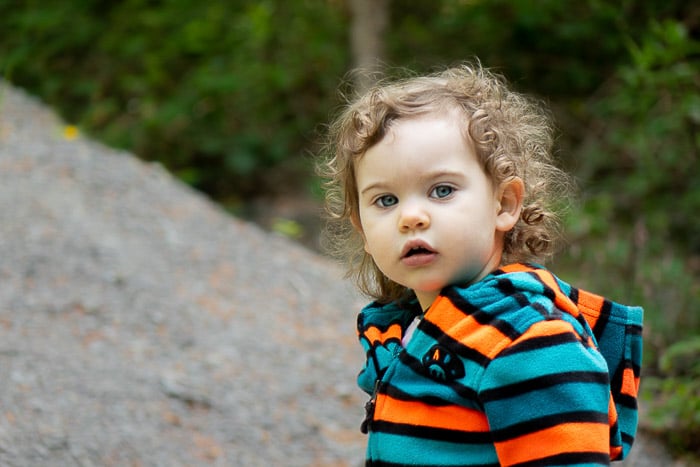
Candid shot of my daughter playing in the woods during a family outing. Shooting at 200mm with my Sony RX10 camera allowed me to make her stand out from the busy, distracting forest in the background.
Perspective
When switching from a wide angle lens to a telephoto one, there is also a change in perspective. Telephoto lenses that tend to compress the distances between different planes in the image.
The images below show my kids playing. At 24mm (EFL), you see a great depth in the image, you can see that my daughter and my son are well apart.
At 200mm (EFL), you see the perspective is much more compressed and the kids seem to be closer.
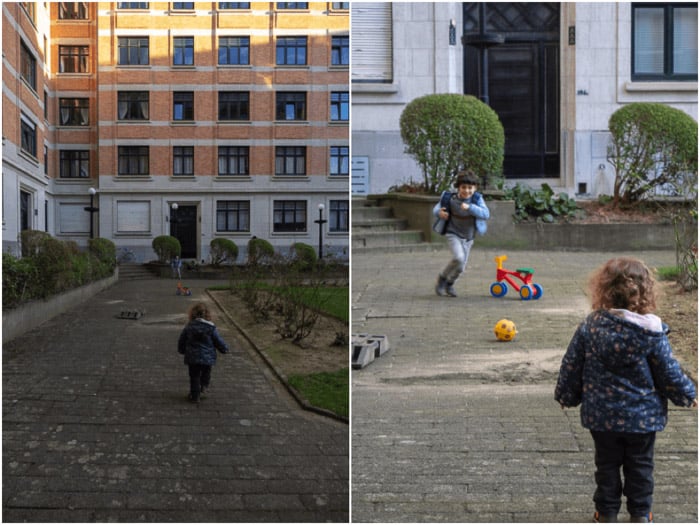
The effect of perspective compression when moving from 24mm to 200 mm.
Distortions
Along with a large field of view, come distortions. No wide angle lens will be distortion free, except in the middle of the frame.
This is not a problem in landscape photography, where normally there are no straight lines to make distortions evident. But it can be a problem in architecture photography or portraiture.
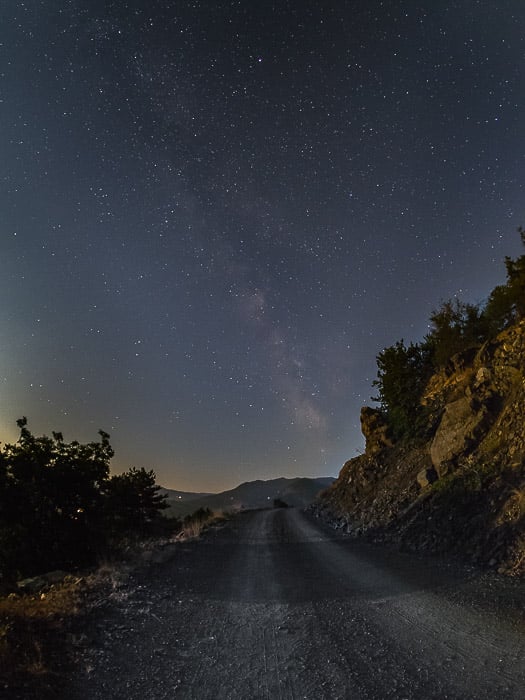
This image was taken with a fisheye lens, but since a natural landscape has few straight lines, distortions can be “hidden”.
If you want to make a portrait with a wide angle, you will have to get close to your model to fill the frame.
With headshots, the use of the wide angle form up close will give a portrait where the natural proportions between the model’s nose, eyes, ears, etc., are altered. The result is not very flattering.
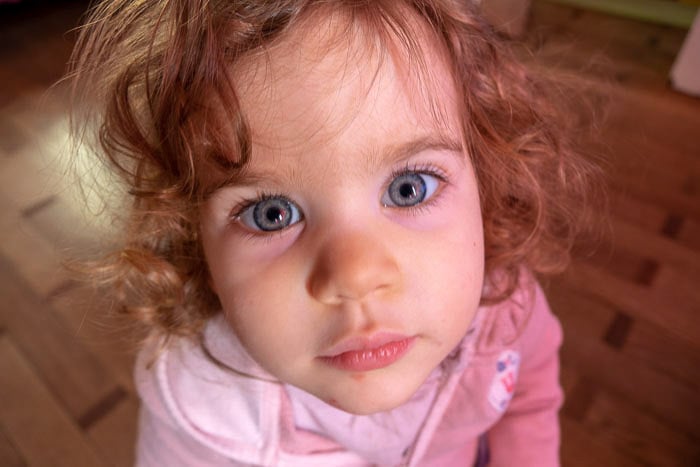
This photo of my daughter was taken at 24mm from less than half meter away: the typical big nose effect is evident.
This is good if you are after creative portraits, or if you are photographing the model in full rather than looking for a headshot.
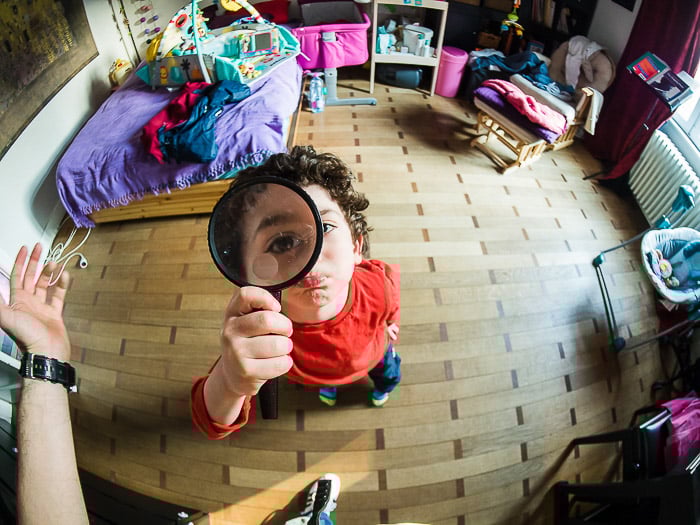
A typical funny fisheye portrait.
Telephoto lenses have much less distortions. They are ideal for portraiture or to isolate a building or a particular element in a landscape. You don’t need to go up close, keeping the image distortion-free.
Size, Aperture, Filters and the Shooting Experience
Other than the main differences illustrate above, there are also some practical differences when using a wide angle vs a telephoto lens.
- Size: A wide angle lens is usually more compact than a long telephoto lens, lighter and portable. You will never find a wide angle with a tripod foot;
- Aperture: Wide angles are usually faster than telephoto lenses, particularly in the low-budget area;
- Filters: Virtually any telephoto can mount screw filters, but fisheye and wide angles with bulging front element (e.g. Olympus Zuiko M. 7-14 f/2.8 PRO) can’t take filters. Some fisheye and lenses may have a slot on the rear of the lens to accommodate a small filter and some third-party mounting systems are available for those wide angles.
- Camera shaking: Telephoto lenses have narrow field of views, so camera shake is a problem. Wide angle lenses are much more forgiving. It’s easier to shoot wide handheld, even in low light and without stabilization. A rule of thumb to avoid camera shake when photographing handheld is to keep a shutter speed faster than the inverse of the focal length used. For a 200mm that would be a shutter speed faster than 1/200s.
The Best of Two Worlds: Super Zoom Lenses
In the latest years, so-called super-zoom lenses have become more and more common. These are lenses that cover an extremely wide range of focal lengths, from as wide as 18 mm up to 300 mm or more, like the Sigma 18-300mm f/3.5- 6.3 DC Macro OS HSM C for Canon.
Interestingly, bridge and compact cameras such as Sony RX10 IV (24-600 mm) and RX100 VI (24-200 mm) have super-zoom lenses. This makes them perfect travel cameras.
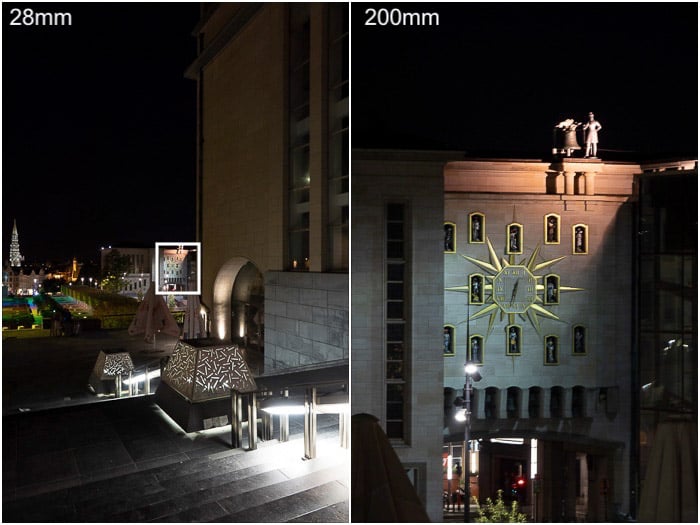
A fast superzoom is a must when it comes to travel photography. Sony RX10.
The queen of the super-zoom cameras, though, is the new Nikon P1000. It sports an incredible super-zoom lens to cover from EFL of 24mm to 3000 mm.
Let’s consider the Moon. With a Nikon P1000 in a compact package, you can go from this shot of the Moon in a landscape…
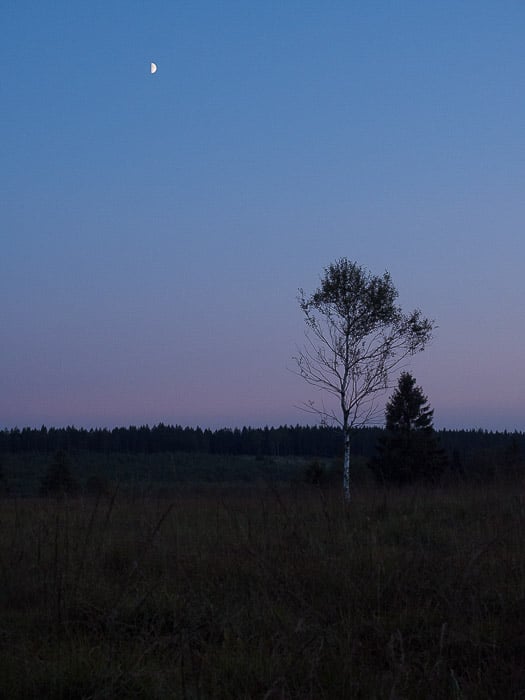
The Moon at 24mm EFL.
…to this kind of lunar close-ups.
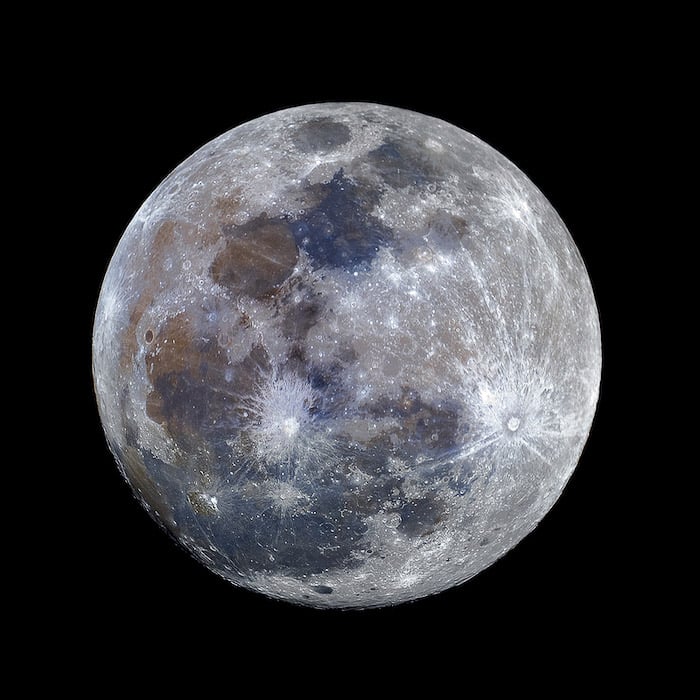
The latest Super Moon I photographed at EFL 2500. The Nikon P1 would give even stronger magnification.
Conclusion
This article has presented you some of the difference in shooting with a wide angle and with a telephoto lenses.
To master those lenses you have to practice shooting with them in different contests. Do not be afraid to be creative and break some rules.